Namdaemun vs Dongdaemun: Which Seoul Market to Visit
Namdaemun vs Dongdaemun comes down to one question: are you shopping in daylight or after midnight? Namdaemun (남대문시장) is Seoul's daytime everything-store — kitchenware, socks, ginseng, glasses, street food — and most of it is shut by around 17:00. Dongdaemun (동대문) is a fashion-wholesale district whose trading floors open at midnight and run until the following afternoon. Pick wrong and you'll arrive at a shuttered street.
The short answer, before the detail: first-time visitors and anyone shopping with a family should go to Namdaemun; anyone chasing clothes, fabric, or Seoul's night energy should go to Dongdaemun. Both are worth it for different trips, and this guide covers what each one actually gives you.
The Short Answer
| Namdaemun 남대문시장 | Dongdaemun 동대문 | |
|---|---|---|
| What it is | General market — clothes, kitchenware, ginseng, glasses, food alleys | Wholesale apparel district plus retail malls |
| Retail hours | Roughly 07:00–17:00, stall by stall (some open 06:30, some close 17:30) | Doota Mall (두타몰) 10:30–24:00, open year-round |
| Wholesale hours | Not a night market at all | Day floors (청평화·동평화·신평화·디오트) open around midnight and trade into the next day; night floors run evening to dawn |
| Closed | Many stalls shut on Sundays | Varies by building; retail malls stay open |
| Nearest station | Hoehyeon (회현) Line 4 — information centres at Exits 3 and 5 | Dongdaemun History & Culture Park (동대문역사문화공원) Lines 2/4/5 |
| Signature meal | Braised hairtail, 갈치조림 — about ₩14,000 per person as of May 2026 | Not a food destination; eat in Gwangjang or Myeongdong instead |
| Signature alley hours | Galchi-jorim alley (갈치조림골목), 남대문시장4길 18-6, runs 03:00–21:00 | — |
| Cards accepted | Widely, but small stalls prefer cash | Wholesale floors are cash-only in practice |
Prices and hours checked August 2026 against the market's own listings and Seoul tourism data. Individual shops vary by about 30 minutes either way.
A Korean traditional market is not just a place where old people buy vegetables.
That is the mistake many visitors make.
They imagine traditional markets as nostalgic photo spots: a few food stalls, narrow alleys, maybe a souvenir shop, maybe one famous pancake stand. Then they arrive in Seoul and realize something stranger is happening. Markets are still part of the city's daily operating system. They feed restaurants. They move clothing through the night. They sell school supplies, kitchen tools, ginseng, socks, suitcases, fish, fabric, street food, and things you did not know you needed until you saw ten versions of them in one alley. If red ginseng catches your eye as a health-oriented gift, use EpicKor's Korean red ginseng guide before buying; product format, label language, and recipient safety matter more than a premium-looking box.
That is why Namdaemun Market and Dongdaemun still matter.
They are not polished like a department store. They are not simple like a convenience store. They are crowded, specialized, practical, sometimes confusing, and deeply alive.
For travelers, that confusion is the point.
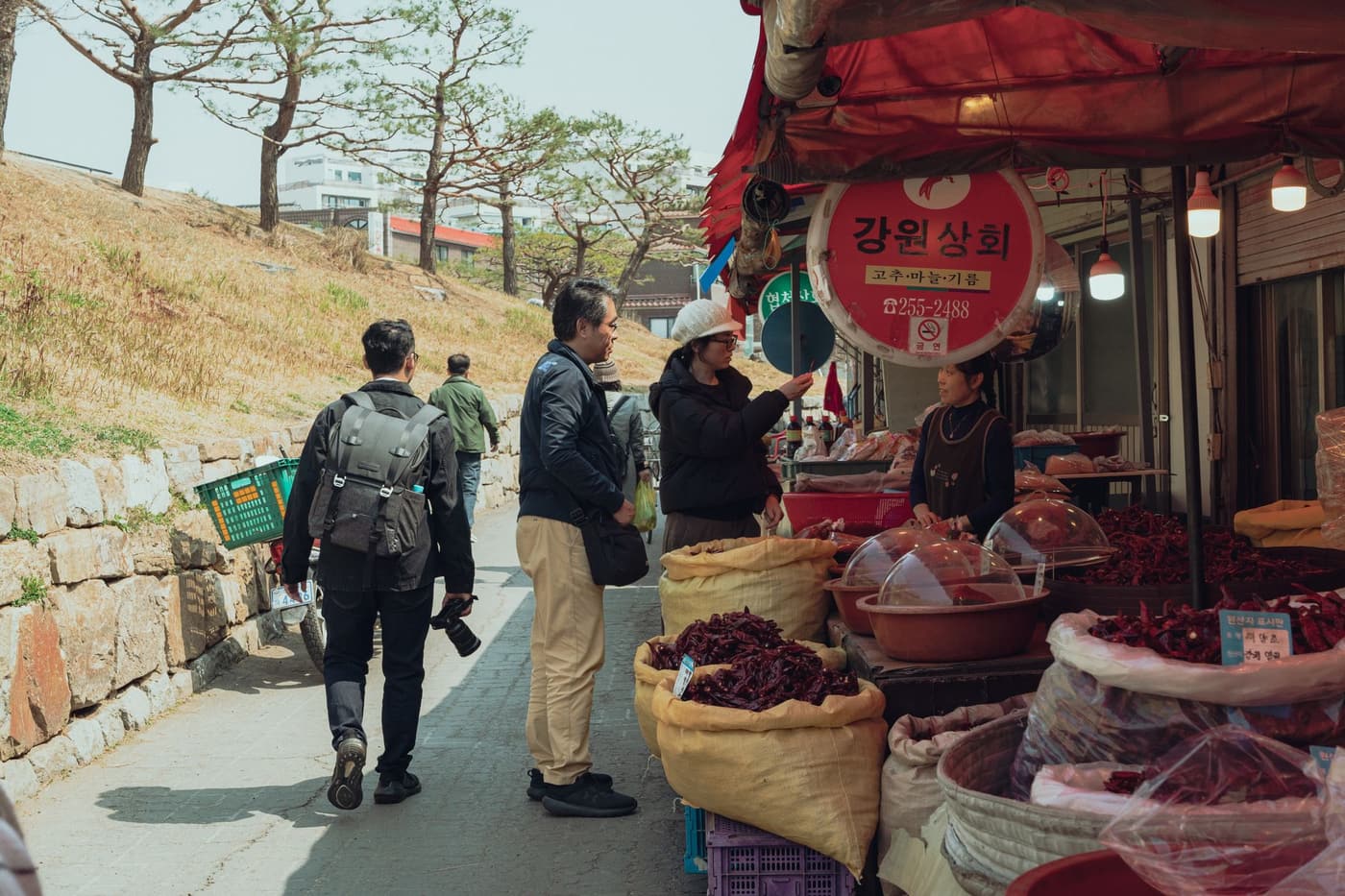
Seoul's traditional markets still work because they are not only attractions. They are places where shopping, food, labor, and local routine overlap.
Korean bokjumeoni (복주머니) lucky pouches, set of 8 — compare on AmazonAffiliate link. As an Amazon Associate, EpicKor earns from qualifying purchases at no extra cost to you.
Why Korean Traditional Markets Still Feel Different
Seoul can look extremely modern from the outside.
You see glass towers, skin clinics, subway lines, delivery apps, self-order kiosks, cosmetic chains, and coffee shops that look designed for Instagram before they are designed for sitting. If you only follow that surface, Korea can feel like a country that replaced old shopping culture with faster, brighter, cleaner versions of everything.
Then you step into a Korean traditional market and the city changes speed.
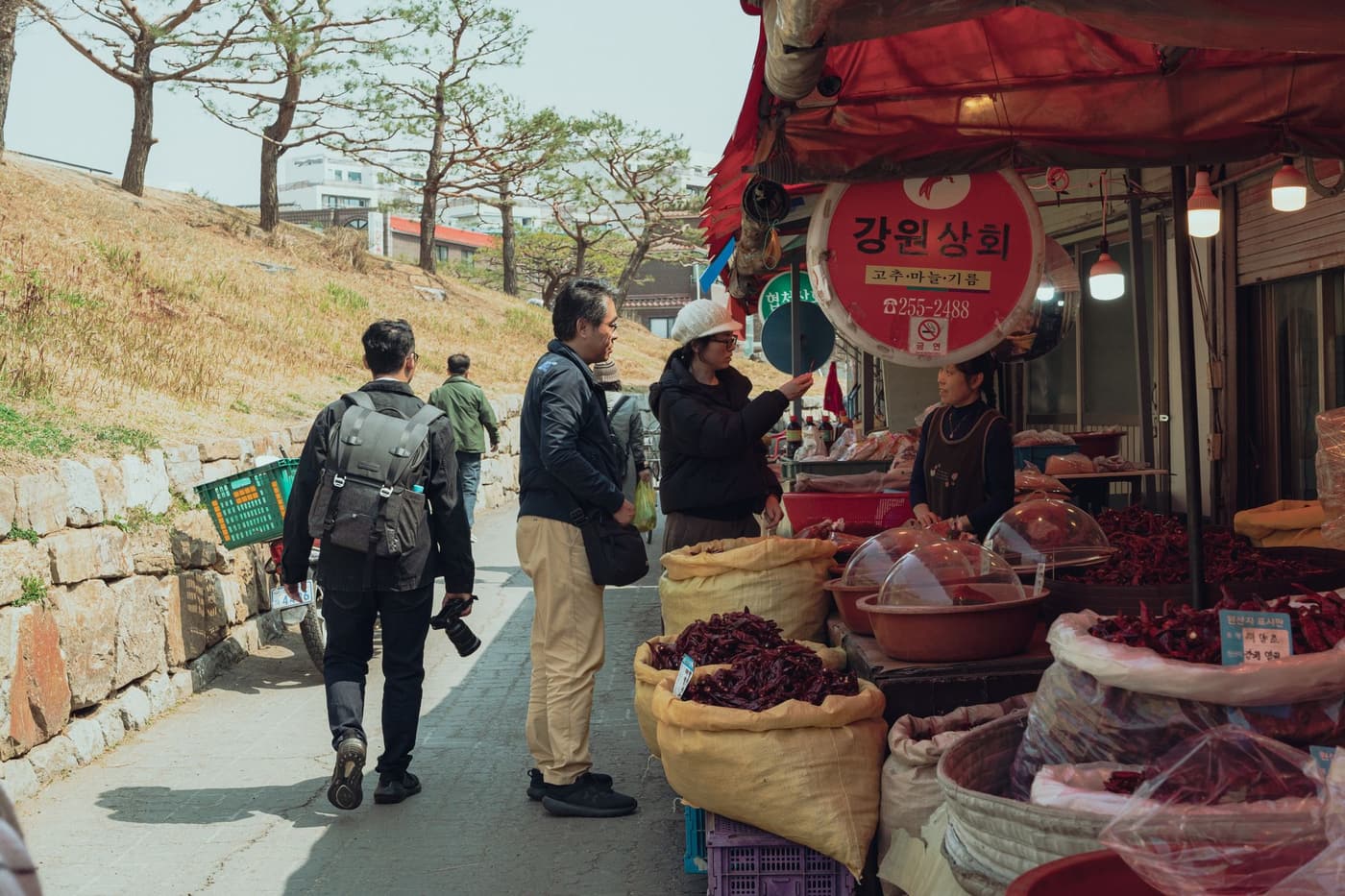
The signs are dense. The aisles are narrow. Store owners call to customers. Delivery carts squeeze through gaps. Prices may be written by hand. A fish stall can sit near a bedding shop. A food alley can turn into a hardware corner. You might walk five minutes and pass socks, seaweed, hanbok, ginseng, children's clothes, luggage, bowls, dried anchovies, hair accessories, and a lunch counter serving workers who have been coming for years.
That mix is hard to recreate in a shopping mall.
What makes a Korean traditional market unique is not only what it sells. It is the way categories live next to each other. A mall separates your needs into clean floors and branded sections. A market compresses life into lanes. It reminds you that Seoul did not become a shopping city because of duty-free stores or flagship beauty shops alone. It became a shopping city because small merchants, wholesalers, makers, delivery workers, restaurant owners, office workers, parents, tourists, and bargain hunters all learned how to move through the same commercial maze.
This is why markets still matter even when online shopping is easier.
Online shopping is convenient, but it cannot give you the smell of grilled fish near lunch, the sound of fabric being moved at midnight, the tiny negotiation over a bag of socks, or the feeling that a city is revealing its backstage. Traditional markets show you commerce before it becomes packaging.
They also show you a more honest version of Korean speed.
In other parts of Seoul, speed feels digital: tap, scan, order, arrive. In markets, speed is physical. Vendors stack, sort, shout, wrap, cut, carry, and calculate. Customers point, compare, taste, ask, and move on. Everyone seems to know that lingering too long in the wrong place can block the rhythm.
For first-time visitors, that can feel intimidating. But if you slow down, watch the flow, and choose one mission, markets become much easier.
Do not try to "complete" a market.
Choose one reason to go: food, clothing, souvenirs, street photography, cookware, fabric, local atmosphere, or a specific alley. Seoul's markets reward focus more than checklist energy.
If you want the most useful comparison, start with Namdaemun and Dongdaemun. They sit close enough to visit on the same trip, but they teach you two different versions of Seoul.
Bokjumeoni (복주머니) lucky pouches, set of 8 — the embroidered market souvenir. Namdaemun sells these in a hundred grades; if you want one before you land, or want to know what a good one looks like before you haggle, start here. As an Amazon Associate, EpicKor earns from qualifying purchases at no extra cost to you.
See the bokjumeoni pouches on AmazonNamdaemun Market Is Seoul's Everyday Survival Kit
Namdaemun Market feels old because it is old. Seoul Metropolitan Government describes it as Korea's largest traditional market, with a history of around 600 years and more than 20,000 wholesale and retail shops. In 2025, the city also announced a major Namdaemun Market innovation project designed to improve pedestrian space, convenience, and the market's identity as a cultural tourism resource.
That matters because Namdaemun is not being preserved like a museum.
It is being updated because it still has a job.
Namdaemun sits near Sungnyemun Gate, Myeongdong, City Hall, and Hoehyeon Station (회현역, Line 4). That location is powerful. Tourists can reach it easily, office workers can pass through during the day, and merchants can keep using it as a practical distribution space. It is not hidden. It is right in the middle of Seoul's old and modern city layers.
Here is the thing almost every English guide gets wrong: Namdaemun is not a night market. Despite sitting a few subway stops from Dongdaemun, it runs on the opposite clock. Shops open between about 06:30 and 07:00 and most have pulled their shutters down by 17:00 to 17:30, with roughly half an hour of variation between buildings. A large share of stalls also close on Sundays. Arriving at 19:00 on a Sunday expecting a lively market is the single most common way to waste an evening here.
There is one exception worth knowing, and it goes the other direction. The flower market inside the Daedo building (대도종합상가 E동 3층) trades from 03:00 to 15:00, closing at 16:00 on Fridays and Saturdays and shutting entirely on Sundays. If you want to see Namdaemun working rather than serving, that is the room to find.
The best way to understand Namdaemun is to think of it as Seoul's everyday survival kit.
You can find clothing, bags, accessories, children's goods, kitchenware, bedding, imported goods, dried seafood, ginseng, traditional crafts, souvenirs, camera accessories, eyeglasses, food alleys, and small items that feel too specific for normal shops. The charm is not that everything is luxury. The charm is that almost everything feels useful. For ginseng specifically, do not buy only by price or packaging; compare the practical notes in the Korean red ginseng buying guide first.
Namdaemun is the kind of market where you go in looking for one thing and leave with three practical purchases you did not plan.
For travelers, it is especially good when you want gifts that are not too precious. Socks, hair clips, pouches, kitchen tools, seaweed, snacks, small craft items, and casual accessories all make sense here. It also works when you want to see how Korean shopping feels outside of the big retail route of Olive Young, Daiso, Musinsa, and department stores.
If you have read EpicKor's guide to Korea's new tourist shopping route, think of Namdaemun as the older relative of that route. The new route is polished and app-friendly. Namdaemun is messier, more local, and more human. Both belong to modern Korea, but they answer different needs.
Food is another reason Namdaemun still works.
The market is known for simple, filling, worker-friendly food. You are not going there for a quiet tasting menu. You are going for heat, speed, smell, and portions. Galchi-jorim (갈치조림), spicy braised hairtail, is the dish the market is actually known for, and it has its own alley — 갈치조림골목 at 남대문시장4길 18-6, a row of shops all cooking the same thing and competing on it. Expect about ₩14,000 per person as of May 2026, served with rice you will want a second bowl of.
That alley also breaks the market's own clock: it runs 03:00 to 21:00, which makes it one of the few places in Namdaemun you can eat long after the shopping has closed. If you arrive in the evening and find the market dark, this is where the lights still are.
That is why Namdaemun feels honest.
It does not ask you to admire it from a distance. It asks you to enter, look around, buy something small, eat something hot, and accept that you will probably not understand the full layout on your first visit.
Here is the simplest way to visit:
- Arrive between 09:00 and 15:00. Before that many shutters are still down; after 16:00 they start closing.
- Avoid Sunday unless you only want the food alley — a large share of stalls do not open.
- Use Hoehyeon Station (회현역) Exit 5, or Exit 3 — both have market information centres where you can pick up a map.
- Bring some cash even if you usually rely on cards.
- Pick one lane or category instead of trying every alley.
- Eat before you get too tired, because decision fatigue arrives fast.
Namdaemun is not the cleanest, calmest version of Seoul. It is one of the most useful versions.
You might like: Why Is Fruit So Expensive in Korea? The Country That Has Never Imported an Apple, and How to Buy Fruit Anyway
Dongdaemun Is Where Seoul Fashion Moves At Night
Dongdaemun is different.
If Namdaemun feels like an everything market, Dongdaemun feels like a fashion machine. The area around Dongdaemun is not one simple market. It is a district of wholesale apparel markets, retail malls, fabric stores, accessory shops, design spaces, logistics routes, late-night buyers, and fashion workers who keep Seoul's clothing ecosystem moving.
Seoul Metropolitan Government describes Dongdaemun Wholesale Apparel Market as the largest wholesale apparel market in Korea. It includes markets such as Pyeonghwa Market, New Pyeonghwa Market, Jeil Pyeonghwa Market, and Cheongpyeonghwa Market, and it has been designated as a Seoul Future Heritage site. The city also connects Dongdaemun to Korea's fashion industry through DDP, showrooms, design programs, and the area's wholesale network.
In simple terms, Dongdaemun is where clothes move before most travelers notice them.
That is what makes it fascinating.
Many tourists hear "Dongdaemun night market" and imagine a cheerful street-food night bazaar. That can lead to disappointment. Dongdaemun is not a relaxed tourist night market in the Southeast Asian sense. It is a working fashion district, and it runs on two different clocks depending on which building you walk into.
The wholesale floors split into what Korean buyers call 낮시장 (day market) and 밤시장 (night market), and the names are misleading in English. The day markets — 청평화, 동평화, 신평화, 디오트, 테크노 and the shoe arcade — open around midnight and trade through into the following day. The night markets start in the evening and run to dawn. Either way, the hours a buyer cares about are the hours you would normally be asleep.
The retail side is the opposite and much simpler. Doota Mall (두타몰) runs 10:30 to midnight, year-round — it is the one large Seoul mall that stays open until 24:00, which is why it absorbs most of the visitors who came looking for "Dongdaemun at night."
That is why expectations matter.
If you go to Dongdaemun expecting one easy street full of snacks and cheap T-shirts, you may feel lost. If you go expecting a fashion supply chain that happens to be visible to the public, the area becomes much more interesting.
You will see how Seoul's fashion speed works.
Korean style often feels fast because trends circulate quickly through idols, influencers, online shops, street photos, university districts, and shopping apps. Dongdaemun is one of the physical engines behind that speed. Fabric, samples, accessories, small brands, wholesalers, and retailers all connect in the same area. The result is not always glamorous, but it is revealing.
Dongdaemun also shows a different kind of Seoul night.
This is not just nightlife as drinking. It is nightlife as labor. While some visitors are ending the day, buyers and merchants may be beginning theirs. Clothes are checked, packed, moved, and negotiated. The city feels less like a tourist postcard and more like a production system that happens to glow after dark.
For casual visitors, the best approach is to keep Dongdaemun simple.
Start with the easier retail malls and the DDP area if you want a comfortable first look. Walk near Cheonggyecheon Stream if you need a visual break. If you are curious about the wholesale side, go with patience — and go knowing the rules the floors actually run on, because they are not written down anywhere in English:
- Cash. Wholesale vendors generally do not take cards. Buyers bring notes.
- Minimum two pieces. First-time buyers are normally expected to take at least two of anything. Single-piece buying is something vendors extend to buyers they know.
- You may be asked for a business registration. If you do not read as a trade buyer, a vendor can ask to see one, and is within their rights to decline the sale.
None of that is hostility. It is a supply chain that happens to be visible to the public, and the public is not its customer. If you want to buy one shirt, the retail malls exist for exactly that.
Dongdaemun is worth visiting because it reveals the business side of K-fashion.
You may not buy much. You may even leave overwhelmed. But if you care about Korean street style, shopping culture, or how fast Seoul turns ideas into products, Dongdaemun explains more than a trend report can.
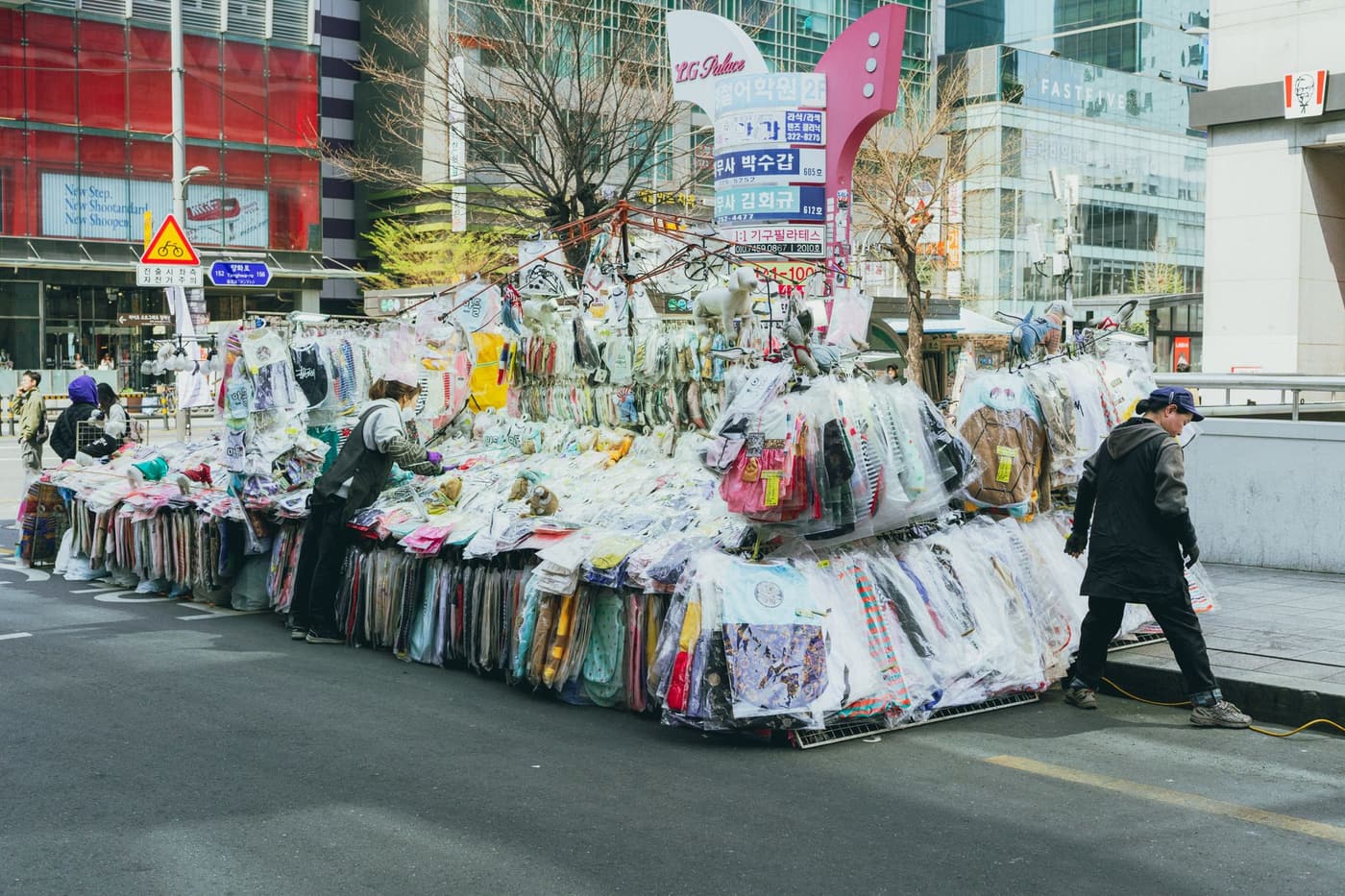
Dongdaemun is easiest to understand when you stop treating it as one market and start seeing it as a fashion district with retail, wholesale, design, and logistics layered together.
Namdaemun vs Dongdaemun: Which Market Should You Visit?
If you only have time for one, choose based on what kind of Seoul you want to understand.
Namdaemun is better for first-time market energy, everyday goods, simple souvenirs, food alleys, and daytime wandering. Dongdaemun is better for fashion curiosity, night movement, design culture, clothing markets, and seeing how wholesale Seoul works.
Neither one is "better." They answer different questions.
Namdaemun asks: what does Seoul still buy in person?
Dongdaemun asks: how does Seoul move fashion so quickly?
| Market | Best For | Go When | Traveler Mindset |
|---|---|---|---|
| Namdaemun 남대문시장 | Souvenirs, food, everyday goods, street-market atmosphere | 09:00–15:00, and not on a Sunday | Browse slowly, buy small things, eat when you find a busy stall |
| Dongdaemun 동대문 | Fashion, fabrics, retail malls, wholesale culture, night shopping | Retail from 10:30 to midnight; wholesale from midnight onward | Expect a working fashion district, not one simple tourist market |
If this is your first Seoul trip, Namdaemun is usually easier.
It has a stronger classic-market feeling, and it fits naturally with nearby stops like Myeongdong, Sungnyemun Gate, City Hall, or Namsan. You can spend one to two hours there without needing a complicated plan. It is also easier to leave when you get tired.
Dongdaemun works better when you already have a little Seoul confidence.
It becomes more interesting if you like clothes, design, people-watching, late-night districts, or the business side of shopping. The area can feel less warm than Namdaemun because parts of it are built around serious trade, not tourist browsing. But that is also what makes it useful.
The biggest mistake is trying to do both markets as if they are the same experience.
They are not.
At Namdaemun, look for texture: steam, signs, bowls, stacked goods, people eating quickly, a vendor wrapping something in paper, an older shopper who clearly knows the best stall. At Dongdaemun, look for systems: buildings, buyers, clothes racks, delivery bags, wholesale signs, DDP's design presence, and the strange feeling that fashion is being assembled while the rest of Seoul sleeps.
If you want to connect this with public transport, read EpicKor's Seoul subway etiquette guide before you go. Both markets are subway-friendly, but crowded routes and station exits are easier when you already know the quiet rules.
And if you enjoy market culture more broadly, EpicKor's older guide to Majang, Gwangjang, and Dongmyo markets gives a different market triangle: beef, street food, and vintage.
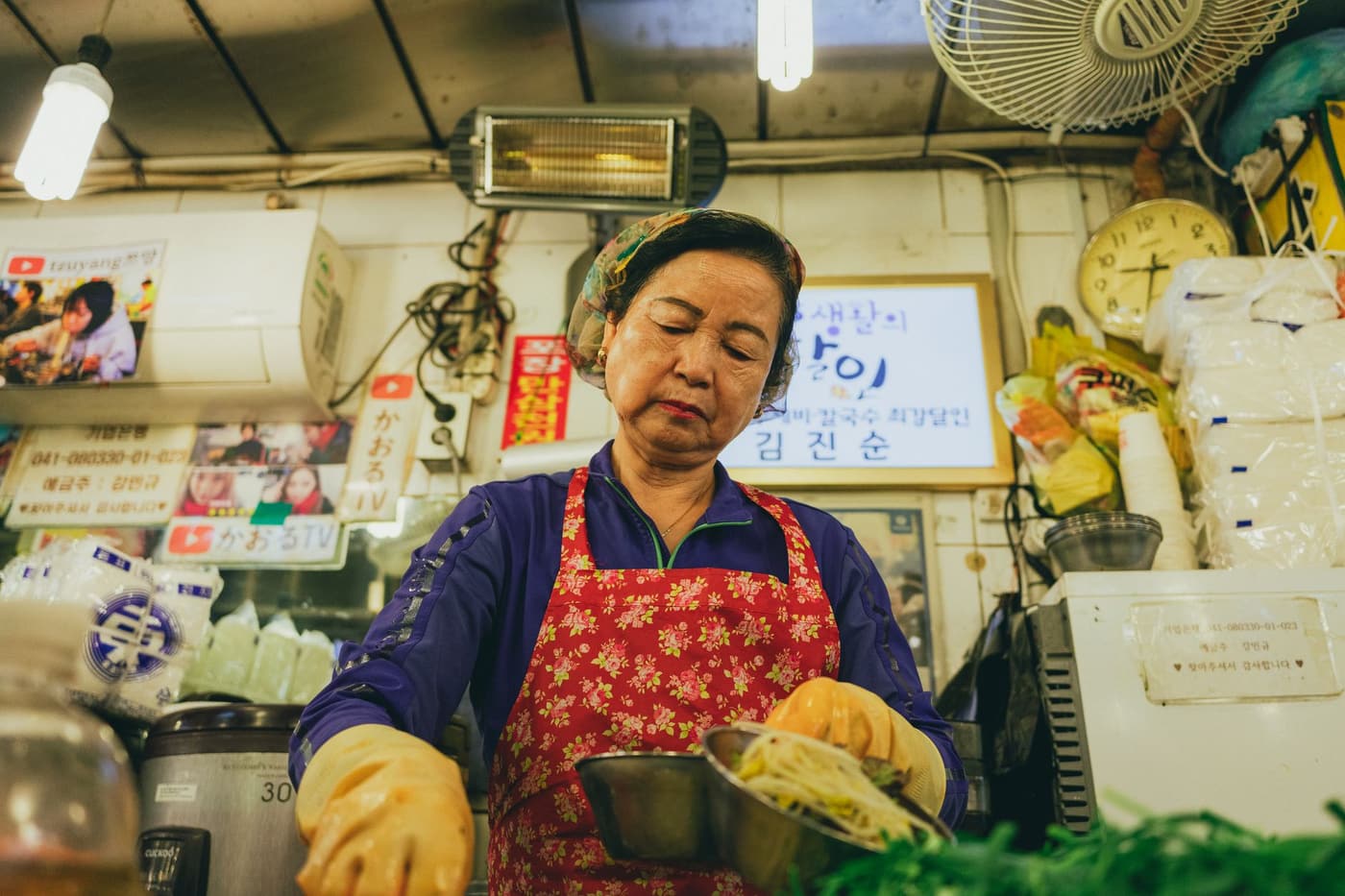
The best market visit usually has one clear mission: eat, browse, buy gifts, study fashion, or simply watch the city work.
Korean bokjumeoni lucky pouch — the colour-block gift pouch every market stall hangs by the dozen. Light, flat and traditional; the souvenir that takes no luggage space and reads as Korean the moment it is opened. As an Amazon Associate, EpicKor earns from qualifying purchases at no extra cost to you.
See the lucky pouch on AmazonFAQ About Korean Traditional Markets
Q: What is a Korean traditional market?
Simply put, a Korean traditional market is a local market where small merchants sell food, household goods, clothing, produce, street snacks, specialty products, and everyday items in a dense, open shopping environment. Some markets are tourist-friendly, but many still serve local residents, restaurant owners, wholesalers, and workers.
Q: Is Namdaemun Market better than Dongdaemun Market?
Simply put, Namdaemun is better for classic market wandering, food, souvenirs, and everyday goods. Dongdaemun is better for fashion, fabrics, wholesale clothing culture, and late-night shopping energy. If it is your first market visit in Seoul, Namdaemun is usually easier.
Q: Can tourists shop at Dongdaemun wholesale markets?
Simply put, sometimes, but not every shop is focused on tourists buying one item. Dongdaemun has retail-friendly malls and more wholesale-oriented buildings. If a seller seems busy with bulk buyers, do not take it personally. Move to a retail area or browse more casually.
Q: Do I need cash at Korean traditional markets?
Simply put, cards are common in Korea, but cash is still useful in traditional markets. Some smaller stalls may prefer cash, and it can make small food purchases or quick bargaining easier. On Dongdaemun's wholesale floors it is not a preference — vendors there generally do not take cards at all.
Q: What time does Namdaemun Market close?
Simply put, most of it is shut by 17:00 to 17:30, and shops start opening around 06:30 to 07:00. Many stalls also close on Sundays. The exception is the galchi-jorim alley (갈치조림골목), which runs 03:00 to 21:00, and the flower market, which trades 03:00 to 15:00 and closes Sundays. Namdaemun is not a night market, whatever the name similarity with Dongdaemun suggests.
Q: How much does galchi-jorim cost at Namdaemun?
Simply put, about ₩14,000 per person as of May 2026, in the alley at 남대문시장4길 18-6 near Hoehyeon Station. Shops there all cook the same dish and prices sit within a narrow band, so pick by how busy the room looks rather than by the menu board.
Q: Are Korean traditional markets good for food?
Simply put, yes, but each market has a different food personality. Namdaemun is good for hearty market meals and quick snacks. Dongdaemun is more about fashion, though you can find food nearby. For a food-heavy market, many travelers also visit Gwangjang.
The Real Reason These Markets Still Matter
Namdaemun and Dongdaemun still matter because they show Seoul before it becomes neatly packaged.
That is rare now.
So much of travel has become optimized. You search a place, save it, follow the route, take the photo, buy the recommended item, and leave. Markets resist that pattern. They make you look up. They make you choose. They make you notice who the place is really built for.
Namdaemun reminds you that shopping can be practical, crowded, old, and still useful. Dongdaemun reminds you that fashion is not only a glossy final image. It is fabric, samples, wholesalers, buyers, late nights, and people moving quickly through buildings most visitors do not fully understand.
Together, they show why Seoul's old markets are not leftovers from the past.
They are still part of how the city works.
Next time you are in Seoul, do not only ask where the prettiest market is. Ask what kind of city each market reveals. Then choose the one that matches your curiosity.
That is when a market stops being a stop on your itinerary and starts becoming a map of Seoul itself.
You Might Also Like
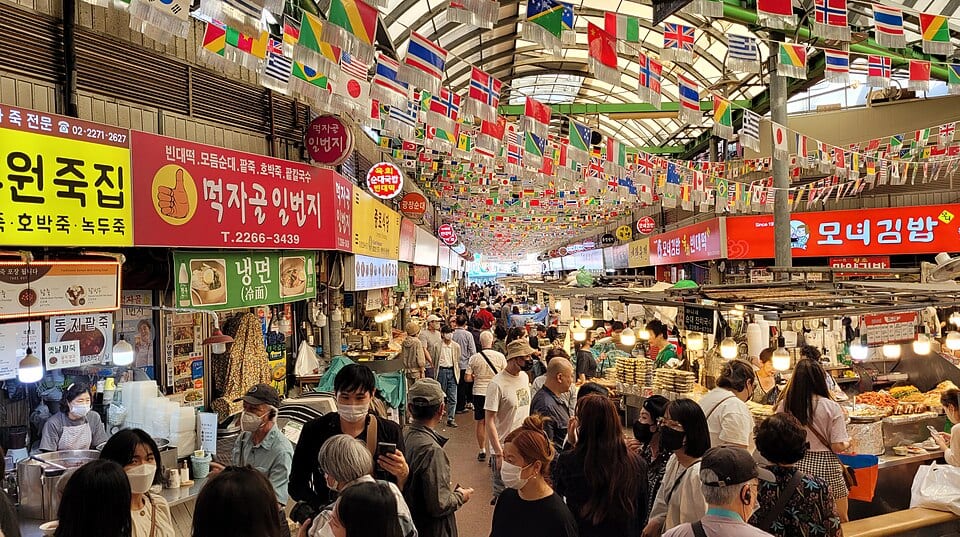
Three Seoul Markets: Gwangjang, Majang and Dongmyo
Plan Gwangjang, Majang and Dongmyo markets with the right food, shopping, subway stops, timing, etiquette, and realistic expectations.

Korean McDonald's: Why the Burgers Are Named After Farm Counties, and What to Order Now
McDonald's Korea has bought 459.2 tonnes of named Korean produce since 2021 and prints the county on the burger — Changnyeong garlic, Jindo spring onion, Jinju pepper. 24 million sold, ₩61.7 billion of measured regional value. Here is what is on the menu now.
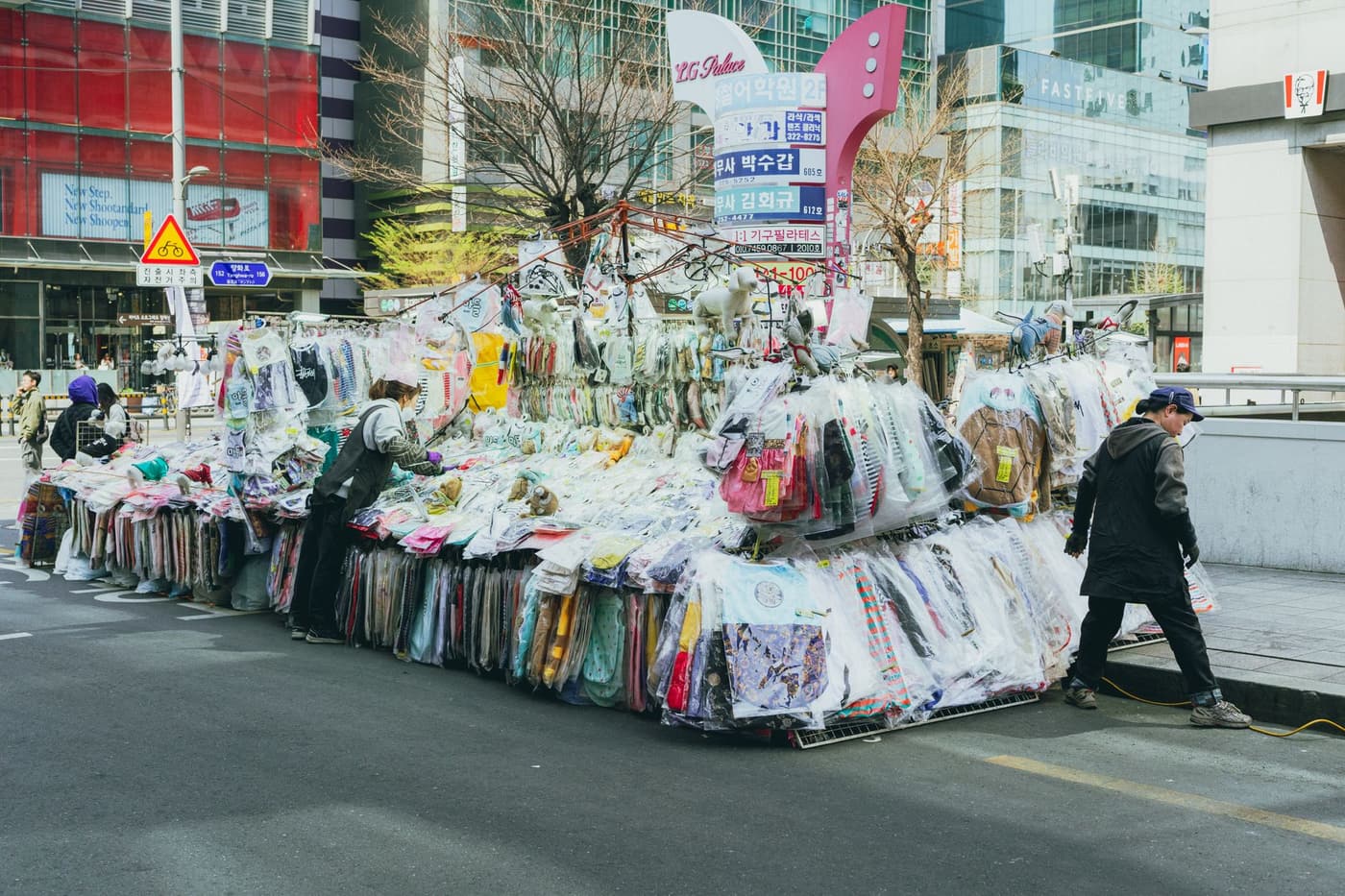
Hongdae vs Itaewon vs Gangnam: Seoul Nightlife Guide
Hongdae vs Itaewon vs Gangnam guide for Seoul travelers: compare nightlife, shopping, food, transit, and where to stay or spend your night.