Seoul Climate Card: Tourist Pass Prices After the 30-Day Pass Ended
Last updated: 28 October 2026. Read that day on Seoul Metropolitan Government's transport site (news.seoul.go.kr/traffic): the short-term pass page (updated 12 October 2026), its FAQ, the 30-day pass shutdown FAQ, the Climate Pass page (updated 18 September 2026) and its FAQ, plus Seoul Media Hub articles of 16 January 2024, 27 August and 8 September 2026. ₩1,334 = US$1 (Federal Reserve, 16 October 2026). Sources at the end.
Is the Korea Climate Card ending? Only the 30-day pass. Seoul's unlimited-ride Climate Card (기후동행카드, gihu donghaeng kadeu) stopped selling 30-day top-ups after 31 August 2026; the last 30-day rides ran on 29 September, and the city shut the 30-day product completely on 1 October. The Climate Card tourist pass, officially the short-term pass (단기권, dangigwon), carries on unchanged: ₩5,000 (US$3.75) for 1 day, ₩8,000 for 2, ₩10,000 for 3, ₩15,000 for 5 and ₩20,000 (US$15) for 7, unlimited on Seoul's subway and Seoul-licensed buses. Seoul residents who used the monthly card are moved to the Climate Pass (기후동행패스), a Seoul layer on the government's rebate card, 모두의카드 (Modu-ui Card, run through K-Pass).
So the climate card price for a visitor has not changed. What changed is the map: from 1 October 2026 the official scope is Seoul only, plus the right to get off (not on) at Incheon Airport Terminals 1 and 2. This guide gives the prices, what the pass covers and excludes, where to buy it with a foreign card, when it beats paying ₩1,550 a ride, the refund catch, and what residents switch to.
Lose a charged Climate Card and Seoul does not credit the days left. A flat RFID passport wallet keeps the card, passport and receipts in one place. See it on AmazonAffiliate link. As an Amazon Associate, EpicKor earns from qualifying purchases at no extra cost to you.
Quick Guide: the Seoul Climate Card in October 2026
| Question | Answer | Source |
|---|---|---|
| Short-term pass prices | 1 day ₩5,000 ($3.75) · 2 days ₩8,000 ($6.00) · 3 days ₩10,000 ($7.50) · 5 days ₩15,000 ($11.24) · 7 days ₩20,000 ($14.99) | Seoul short-term pass page |
| Teen 7-day pass (13–18) | ₩13,000 ($9.75) since 1 September 2026, after age verification | Seoul teen discount page |
| Physical card | ₩3,000 ($2.25), bought once and recharged. The ₩4,000 card is the residents' Climate Pass, a different product | Seoul Media Hub, 27 Aug 2026 |
| Covers (from 1 Oct 2026) | Subway inside Seoul; Seoul-licensed city, village, night and circular buses; getting off at Incheon Airport T1/T2 | Short-term pass page |
| Does not cover | Sinbundang Line, GTX, subway outside Seoul, red wide-area and airport buses, other regions' buses, taxis, Ttareungyi bikes, Han River Bus | Short-term pass page |
| When a day starts and ends | From the 04:00 first train on the day you charge to the last service of the final day. No advance charging | Short-term pass page |
| Foreign credit cards | Accepted for short passes at the new machines in Seoul Metro Line 1–8 stations since 17 March 2026 | Short-term pass FAQ |
| Refund | Charge minus fares used minus ₩500, only inside the validity period and only for a registered card. Seoul's two pages disagree on whether a visitor without a Korean bank account can get cash; confirm with T-money first | Short-term pass page and FAQ |
| 30-day pass | Last top-up 31 Aug, last ride 29 Sep, product ended 1 Oct 2026 | Shutdown FAQ |
| Residents' replacement | Climate Pass (기후동행패스) on 모두의카드 / K-Pass, from 1 September 2026, for people registered at a Seoul address, 19+ | Climate Pass page |
Anker 10,000mAh power bank — a pocket battery for your phone. If you carry the Climate Card on an Android phone instead of a plastic card, Seoul's FAQ is blunt: a phone that has switched off cannot be tapped at the gate, NFC or not. A small battery keeps the card, and your map, alive through a long sightseeing day. Plastic-card users can skip this. As an Amazon Associate, EpicKor earns from qualifying purchases at no extra cost to you.
See the Anker power bank on AmazonIs the Climate Card ending? What stopped and what stays
The Climate Card went on sale on 23 January 2024 and could be used from the first train on 27 January 2024, as a pilot of Korea's first unlimited public-transport season ticket: ₩62,000 a month for subway and bus, or ₩65,000 with Ttareungyi bikes (Seoul Media Hub, 16 January 2024). In 2026 the national government launched its own rebate card, 모두의카드 (Modu-ui Card, "everyone's card"), built on the K-Pass rebate system and borrowing the Climate Card's idea of a monthly cap. Seoul's shutdown FAQ gives the reason in one line: two near-identical subsidy schemes were confusing riders, so the city merged its monthly product into the national one.
The climate card ending applies to the monthly product only. Seoul's FAQ sets out the dates:
| Date (2026) | What happened |
|---|---|
| Until 31 August | Prepaid 30-day passes could still be charged; each ran to its own expiry |
| 1 September | 30-day charging stopped. The Climate Pass launched for Seoul residents |
| 29 September | Last day of use for a prepaid 30-day pass |
| 30 September | Last day of the postpaid (credit-card) Climate Card discount |
| 1 October | Prepaid and postpaid Climate Card monthly service ended. Short-term passes continue, Seoul only |
The same FAQ says repeatedly that the short-term passes (1, 2, 3, 5 and 7 days) "will be kept as before", including for people who cannot use the new rebate card: no Korean phone, no bank account for refunds, or no K-Pass sign-up. For a visitor, that is the whole story: the tourist pass is still on sale.
One detail for anyone who bought a plastic card for the monthly pass: Seoul will not refund the ₩3,000 card. Its advice is to keep using it for short-term passes.
Climate Card price: what each short-term pass costs
The prices are on the city's short-term pass page, last updated 12 October 2026. In US dollars at ₩1,334:
| Pass | Price | US$ | Per day | Subway rides at ₩1,550 to break even |
|---|---|---|---|---|
| 1 day | ₩5,000 | $3.75 | ₩5,000 | 4 (3.2) |
| 2 days | ₩8,000 | $6.00 | ₩4,000 | 6 (5.2) |
| 3 days | ₩10,000 | $7.50 | ₩3,333 | 7 (6.5) |
| 5 days | ₩15,000 | $11.24 | ₩3,000 | 10 (9.7) |
| 7 days | ₩20,000 | $14.99 | ₩2,857 | 13 (12.9) |
| 7 days, teen (13–18) | ₩13,000 | $9.75 | ₩1,857 | 9 (8.4) at the adult fare |
Three rules decide how much of that you actually get:
- A "day" is a service day, not 24 hours. Validity runs from the 04:00 first train on the day you charge to the last service of the final day, which in practice means until about 04:00 the next morning. A 1-day pass charged at 6 p.m. gives you one evening.
- You cannot charge in advance. The charge date is the start date, so buy it on the morning you start riding.
- One card, one person. No group taps, no lending; Seoul's FAQ warns that sharing a card is fare evasion, charged at the fare plus 30 times the fare.
Teen passes need the rider's birth date verified on the T-money website (tmoney.co.kr) and renewed each year. Seoul's page links the check to the birth date on the Korean resident register; it does not explain how a visiting teenager without one would verify.
Climate Card tourist pass coverage: subway, buses, and the airport catch
The scope on the city's page, headed "from 1 October 2026", is short: ① subway inside Seoul, plus getting off at Incheon International Airport T1 and T2; ② Seoul-licensed city and village buses, including night and circular buses. Everything else is out:
| Covered | Not covered |
|---|---|
| Seoul subway stations on every line that runs inside Seoul, including the Seoul stations of the airport railroad (AREX) | Sinbundang Line and GTX, even their Seoul stations |
| Blue trunk, green branch, village, night (N) and circular buses with a Seoul licence, even where they run outside Seoul | Wide-area (red) buses and airport limousine buses |
| Getting off at Incheon Airport T1 and T2 by AREX | Boarding at Incheon Airport T1 or T2 |
| Unlimited transfers, no distance surcharge | Subway stations outside Seoul; buses licensed by Gyeonggi, Incheon or anywhere else; taxis; Ttareungyi bikes; Han River Bus |
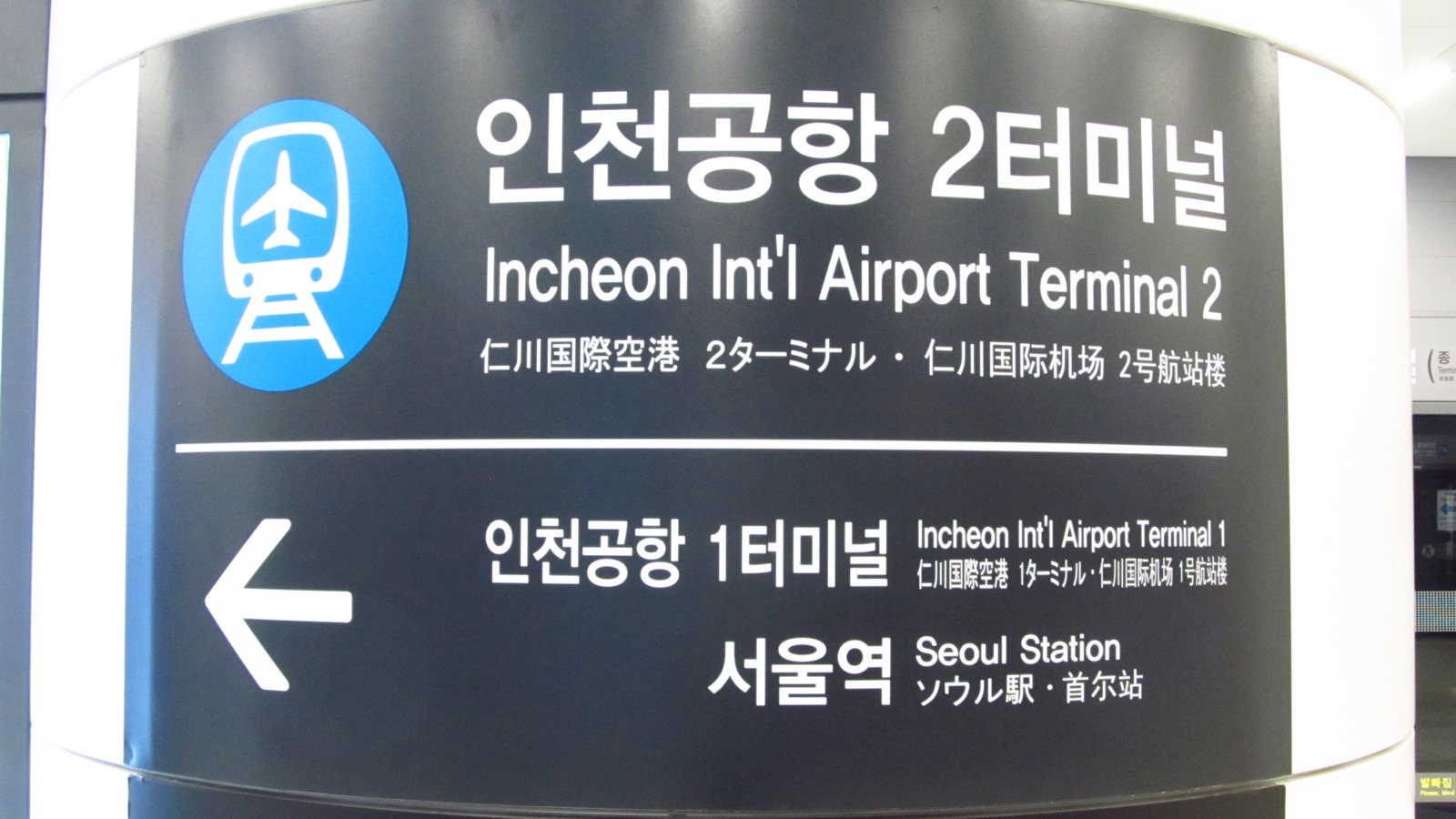
The airport catch runs one way. Since 13 September 2024, any Climate Card can be used to ride AREX from a Seoul station and exit at Incheon Airport T1 or T2 at no extra cost, so a short pass can take you to your flight home. You cannot tap in at the airport with it, so on arrival you pay the AREX fare separately with T-money or a single ticket. Seoul's 2024 release lists the Seoul AREX stations where the card works both ways: Seoul Station, Gongdeok, Hongik University, Digital Media City, Magongnaru and Gimpo Airport. The city's pages do not mention the non-stop AREX Express train; do not assume it is included.
Crossing the city line costs you the whole fare. If you board inside Seoul and get off outside the covered area, the card does not work at the exit gate. The city's own example: board at Jongno 3-ga in Seoul, get off at Indeogwon in Gyeonggi Province, and station staff charge the full fare from Jongno 3-ga. Day trips to Suwon, Incheon or the Gyeonggi side of the Sinbundang Line need a separate T-money balance.
Buses work the other way round: what counts is the licence, not where the bus is. A Seoul-licensed bus is covered even on the part of its route outside Seoul; a Gyeonggi-licensed bus is not covered even in central Seoul. Seoul's FAQ suggests searching the route number on a portal such as Naver to see where it is licensed.

You might like: Incheon Airport Layover Guide: Getting Around ICN, Leaving the Airport for Seoul, AREX Last Trains, Night Buses, Rest and Food
Where to buy and charge the Climate Card with a foreign card
There are two forms of the card, and for most visitors only one is practical.
The plastic card (실물카드). It costs ₩3,000 once and is recharged each time. It is sold at the new transport-card machines in Seoul Metro stations on Lines 1 to 8, and at convenience stores near Line 9, Ui-Sinseol and Sillim line stations. You charge it at the unmanned top-up machines in stations on Lines 1–8, Line 9, the Ui-Sinseol and Sillim lines, or by holding it to an NFC phone in the Mobile T-money app. Payment is cash or a credit or debit card (no company cards). Since 17 March 2026 the new machines in Lines 1–8 stations accept cards issued abroad, for short-term passes only.
The mobile card. It runs on Android phones with OS 12 or later through the Mobile T-money or Samsung Wallet app; iPhone users are told to use the plastic card. The catch for visitors is identity: Seoul's FAQ says a mobile card cannot be issued without verifying a phone in your own name, which in Korea means a Korean mobile contract. Most short-stay visitors should buy the plastic card.
Can you buy it before you fly? No. Seoul's FAQ says the card is sold and used only in Korea.
Climate Card or pay per ride? A worked example
Without a pass, an adult pays ₩1,550 ($1.16) per subway journey by transit card and ₩1,500 ($1.12) on a Seoul city bus, with free transfers between them inside the time limit and ₩100 extra for each 5 km beyond the first 10 km. Our guide to getting around Korea has the full fare rules.
That free transfer matters for the maths. A subway ride plus a connecting bus is one fare on T-money, so count journeys, not vehicles:
| Trip | Pay per ride (₩1,550 a journey) | Short-term pass | Better buy |
|---|---|---|---|
| 1 day, 3 journeys | ₩4,650 ($3.49) | ₩5,000 | T-money, by ₩350 |
| 1 day, 4 journeys | ₩6,200 ($4.65) | ₩5,000 | Pass, by ₩1,200 |
| 3 days, 2 journeys a day | ₩9,300 ($6.97) | ₩10,000 | T-money, by ₩700 |
| 3 days, 3 journeys a day | ₩13,950 ($10.46) | ₩10,000 | Pass, by ₩3,950 |
| 7 days, 2 journeys a day | ₩21,700 ($16.27) | ₩20,000 | Pass, by ₩1,700 |
| 7 days, 3 journeys a day | ₩32,550 ($24.40) | ₩20,000 | Pass, by ₩12,550 |
Long rides tilt it further towards the pass, since the ₩100 distance add-ons do not apply. Day trips outside Seoul tilt it back, because those fares come out of a separate balance anyway.
When not to buy it:
- A single light day. Three journeys is cheaper on T-money; the 1-day pass only pays from the fourth.
- An airport-heavy itinerary. The arrival leg from Incheon is never covered, and neither are airport limousine buses.
- A trip based outside Seoul. If you sleep in Incheon, Suwon or Bundang, much of your riding falls outside the map.
- When you need the card for something else. A Climate Card in short-pass mode cannot pay a taxi; Seoul's FAQ says to switch the phone's main transit card back to an ordinary one first.
The refund catch: registration and a Korean bank account
On paper the refund rule is generous: refund = amount charged − fares actually used − ₩500 fee (US$0.37), applied for within the validity period. Leave on day four of a 7-day pass after ₩6,200 of riding and you would get back ₩13,300.
In practice three conditions apply:
- The card must be registered on the T-money Card&Pay website; an unregistered plastic card cannot be refunded, and a lost card's remaining days are never credited.
- Sign-up needs Korean identity. Seoul's FAQ says foreigners can join T-money's site with a phone in their own name or an I-PIN, and that an I-PIN requires an alien registration number. It does not describe a route for a tourist without either.
- Money goes to a Korean account, and Seoul's own pages disagree on the exception. The short-term pass page says foreigners without a Korean bank account can visit T-money's head office for a cash refund. The short-term pass FAQ (Q53 and Q55) says the opposite: refunds are applied for on the T-money Card&Pay website and paid only into a domestic account in the cardholder's own name, and it offers no in-person or cash route. Ask T-money before you count on getting money back.
For a short stay, the honest plan is to assume no refund and buy the shortest pass that covers your heavy riding days. If that leaves a light day at the end, put ₩5,000 on a regular T-money card instead; our Korea payment guide covers T-money and its alternatives.
The pass also brings small extras. On the city's benefits page, short-term passholders get 50% off admission at Seoul Botanic Park and Seoul Grand Park, 20–30% off featured performances at the Seoul Namsan and Donhwamun gugak (traditional music) theatres, and 30% off The Painters show, with one companion included. Staff check that the card is in your name and still valid, and the discounts do not stack with others. If Namsan is on your list, our Namsan cable car guide covers the circular buses up the hill, which are Seoul-licensed.
You might like: Living in Seoul for a Month: Cost, Apps, Neighborhoods
What Seoul residents switch to: the Climate Pass
If you live in Seoul, the monthly Climate Card's replacement is the Climate Pass (기후동행패스, gihu donghaeng paeseu), launched on 1 September 2026. It is not a new card scheme of its own: it is the government's 모두의카드 / K-Pass rebate card with Seoul extras on top. Seoul's page defines who gets those extras as people aged 19 or over whose address on the resident register (주민등록) is in Seoul. Seoul's Climate Pass FAQ (Q2) says Seoul residents who were already using 모두의카드 or K-Pass before the launch had the Climate Pass benefits applied automatically from 1 September, with no card change.
The big change in how it works: the old card charged a flat price up front for unlimited rides; the Climate Pass charges the normal fare and pays some of it back the next month. Seoul's FAQ gives the national scheme's thresholds:
| Rider type | Monthly rebate under the cap | Standard cap: fares above it refunded | "Plus" cap for wide-area riders |
|---|---|---|---|
| General | 20% | ₩62,000 ($46.48) | ₩100,000 ($74.96) |
| Youth, older people, two-child families | 30% | ₩55,000 ($41.23) | ₩90,000 ($67.47) |
| Three-child families | 50% | ₩45,000 ($33.73) | ₩80,000 ($59.97) |
| Low income | 53.3% | ₩45,000 | ₩80,000 |
The system picks whichever option pays you most. A rider who spends ₩77,500 in a month (50 journeys at ₩1,550) gets ₩15,500 back and ends up at ₩62,000, the old monthly price; a lighter month of ₩46,500 (30 journeys) returns 20%, ₩9,300, for a net ₩37,200. You need 15 or more rides a month to qualify, except in the month you join. For T-money cards the rebate arrives on the last business day of the following month, as T-mileage or into a bank account.
What Seoul adds on top:
- Youth up to 39. The national youth band stops at 34; Seoul pays youth rates to residents aged 19 to 39, worked out from your birthday.
- A cultural discount at Seoul Botanic Park. Ttareungyi bike and veterans' discounts are still being negotiated, and the Seoul Dal balloon discount does not apply.
- Wider coverage. 모두의카드 counts fares on transport nationwide, including the Sinbundang Line, GTX and wide-area buses that the Climate Card never covered.
The card. A prepaid Climate Pass plastic card costs ₩4,000 ($3.00) (Seoul Media Hub). Seoul's FAQ says it is sold from the kiosks in Seoul Metro (Lines 1–8) stations from 1 September, with convenience stores following gradually, and that the card itself can be bought with cash or a credit or debit card (Q8). Topping up the prepaid card is a different matter: the same FAQ says charging it is cash only (Q7), in ₩1,000 or ₩10,000 steps. You can also use a 모두의카드 credit or debit card from a card company, or Mobile T-money, the only app that runs it on an iPhone. Whatever you use must be registered on the K-Pass website or app before the rebate counts. Seoul swapped old Climate Cards for new Climate Pass cards free at 12 stations from 1 September to 2 October; that offer has ended.
Residents of the seven Gyeonggi cities that had joined the Climate Card (Gimpo, Goyang, Gwacheon, Seongnam, Hanam, Namyangju and Guri) cannot get the Climate Pass; Seoul tells them to move to Gyeonggi's own version, The Gyeonggi Pass.
Can foreign residents use it?
Partly, on the official wording. Seoul's Climate Pass FAQ says a foreigner with an alien registration number who can pass Korean identity verification (a simple-authentication certificate, phone verification in their own name, or a joint certificate) can join 모두의카드 (K-Pass), and should call the 모두의카드 helpline on 031-427-4415 if they cannot. The Seoul extras, however, are defined by a Seoul address on the resident register (주민등록), which is the register for Korean citizens; foreigners are recorded separately. The city's page does not say whether a registered foreign resident's Seoul address qualifies for the Seoul extras, such as youth rates to 39. Ask the helpline before relying on them. If you are planning a longer stay, our digital nomad visa guide covers the residence card and monthly costs.
FAQ
Q: Is the Seoul Climate Card ending?
A: Only the 30-day pass. Charging stopped after 31 August 2026, the last 30-day rides ran on 29 September and the monthly service ended on 1 October. Short-term passes for 1, 2, 3, 5 and 7 days are still sold, and Seoul says they will continue.
Q: How much is the Climate Card tourist pass?
A: ₩5,000 for 1 day, ₩8,000 for 2, ₩10,000 for 3, ₩15,000 for 5 and ₩20,000 for 7 (about US$3.75 to $15), plus ₩3,000 once for the plastic card. Teenagers aged 13 to 18 can get the 7-day pass for ₩13,000 after age verification.
Q: Does the Climate Card cover the airport?
A: Only one way. You can ride AREX from a Seoul station and get off at Incheon Airport T1 or T2, but you cannot board at the airport with it, and airport limousine buses are excluded. Pay for the ride in from Incheon separately.
Q: Can I buy the Climate Card with a foreign credit card?
A: Yes, for short-term passes, at the new transport-card machines in Seoul Metro Line 1–8 stations since 17 March 2026. You can also pay cash. The mobile version needs a Korean phone in your own name, so visitors should buy the plastic card.
Q: Is the Climate Card worth it for a 3-day trip?
A: Only if you make 7 or more paid journeys in those three days. At 2 journeys a day, T-money costs ₩9,300 against ₩10,000 for the pass; at 3 a day it costs ₩13,950, so the pass saves ₩3,950. Count journeys, not vehicles, because subway-to-bus transfers are free on T-money.
Q: What replaced the 30-day Climate Card?
A: The Climate Pass (기후동행패스), launched 1 September 2026: the national 모두의카드 / K-Pass rebate card with Seoul extras, for people aged 19 or over registered at a Seoul address. You pay normal fares and get 20% back, or everything above ₩62,000 a month, whichever is larger.
Sources
- Seoul Metropolitan Government, 기후동행카드(단기권) 소개, news.seoul.go.kr/traffic/archives/510651 (updated 12 October 2026): prices, scope from 1 October 2026, exclusions, Jongno 3-ga to Indeogwon example, validity, card types, where to buy and charge, payment methods, refund formula and ₩500 fee, cash refunds at T-money head office for foreigners without a Korean account (contradicted by the FAQ, below).
- Seoul, 기후동행카드(단기권) FAQ, news.seoul.go.kr/traffic/public/climatecard-faq/faq-short: foreign-issued cards from 17 March 2026, refunds by website application to a domestic account in the holder's own name only (Q53, Q55), no purchase abroad, foreigners' T-money sign-up (own-name phone or I-PIN with alien registration number), mobile card needs own-name phone, lost cards, teen 7-day ₩13,000 from 1 September 2026, licence rule for buses, taxis, unlimited transfers, no distance fare, fare plus 30 times for shared cards, night-bus use on the expiry date.
- Seoul, 기후동행카드(30일권) 운영종료 FAQ, news.seoul.go.kr/traffic/public/climatecard-faq/faq-stop: reason for the shutdown, 31 August / 29 September / 30 September / 1 October dates, Climate Pass launch on 1 September (Q24), short-term passes kept, no refund of plastic cards, Gyeonggi cities and The Gyeonggi Pass.
- Seoul, 기후동행패스 출시 안내, news.seoul.go.kr/traffic/archives/category/public-news_c1/climate-accompany-card_c1/climatepass-info (updated 18 September 2026): eligibility (resident-register address in Seoul, 19+), youth age 19–39.
- Seoul, 기후동행패스 FAQ, news.seoul.go.kr/traffic/public/climatecard-faq/faq-climatepass: rebate table (20/30/50/53.3%, ₩62,000/55,000/45,000 and ₩100,000/90,000/80,000), 15 rides a month, rebate timing, card purchase by cash or credit/debit card (Q8), cash-only charging of the prepaid card (Q7), sale at Seoul Metro stations, automatic benefits from 1 September for existing 모두의카드/K-Pass users in Seoul (Q2), iPhone via Mobile T-money, Seoul extras, foreigners with an alien registration number can join 모두의카드.
- Seoul, 기후동행카드(단기권) 할인권종 안내, news.seoul.go.kr/traffic/archives/515047 (teen discount, ages 13–18, born 2008–2013) and 부가혜택, news.seoul.go.kr/traffic/archives/512236 (cultural discounts), both updated 12 October 2026.
- Seoul, 「기후동행카드, 공항철도 인천공항역(T1·T2) 하차 서비스 개시」, news.seoul.go.kr/traffic/archives/512841 (11 September 2024): exit-only at Incheon Airport, the six Seoul AREX stations, top-up counts and stations in July–August 2024; Seoul Media Hub, mediahub.seoul.go.kr/archives/2012205, on the 13 September 2024 start.
- Seoul Media Hub, 「기후동행카드 23일 판매 시작! 27일 사용 시작!」, 16 January 2024, mediahub.seoul.go.kr/archives/2010027: sale from 23 January 2024, use from 27 January, ₩62,000 and ₩65,000 cards, pilot to 30 June 2024.
- Seoul Media Hub, 27 August 2026 (updated 17 September), mediahub.seoul.go.kr/archives/2019207: Climate Card ₩3,000 and Climate Pass card ₩4,000, free exchange, 30-day payback. Seoul Media Hub, 8 September 2026, mediahub.seoul.go.kr/archives/2019275: exchange at 12 stations from 1 September to 2 October.
- Seoul, 교통 요금 안내, news.seoul.go.kr/traffic/traffic_price: ₩1,500 city bus fare, 10 km base distance, ₩100 per extra 5 km, transfer rules. Subway fare ₩1,550 from 28 June 2025: Seoul Metropolitan Government as reported by Hankyung and eToday, June 2025.
You Might Also Like
Drunk Driving in Korea: 0.03% Covers Bikes and E-Scooters Too
Korea's 0.03% drink limit covers bikes and e-scooters: ₩30,000 (US$22) on a Ttareungi, ₩100,000 on a scooter, up to ₩20 million for a first offence in a car.
Smoking and Vaping in Korea: Where It's Banned and the ₩100,000 Fine
Smoking is legal in Korea from 19 by birth year, but every restaurant, café, pub, PC bang, station and school is a no-smoking zone with a ₩100,000 (US$75) fine. Since 24 April 2026 synthetic-nicotine vape liquid is legally tobacco too.
Korea Visa Overstay: What Happens, Fines by Length, How to Leave
Overstaying in Korea is a crime under Immigration Act Art. 94: up to 3 years or ₩30 million. In practice it is a fine set by length, ₩500,000 to ₩2,000,000 for under a month depending on the row applied, then a departure order. Illegal work: same scale.