Where to Stay in Gyeongju, Korea: Old-Town Hanok, Bomun Lake or KTX Station
Last updated: 10 October 2026. Hanok counts are EpicKor's tally of Gyeongbuk Province's hanok-stay register (경상북도 한옥체험업 현황, as of 31 December 2025). Bus fares and timetables were read from Gyeongju's official traffic centre and the bus operator on 10 October 2026; taxi fares use the February 2026 tariff. Sources are at the end.
Most English answers to "where to stay in Gyeongju" name three areas — Hwangnidan-gil for the cafés, Bomun Lake for the resorts, near the KTX station for late arrivals — and then list hotels. They leave out the three numbers that decide between them.
First, the hanok rooms are almost all in one place. Gyeongbuk Province's register lists 356 hanok stays (한옥체험업) in Gyeongju, with 1,020 rooms between them. By our count of their addresses, 171 of the 356 are in the old town around the Daereungwon tombs, and 118 of those 171 have one or two rooms. Bomun Lake has 11.
Second, the KTX station is in Geoncheon-eup, about 10 km of road west of the tombs (our Busan–Gyeongju guide explains why).
Third, the station and Bomun Lake both sit outside the circle where Gyeongju taxis charge the normal fare, so rides there carry a 55% surcharge.
So pick the base first. Then pick the train or bus that ends closest to it.
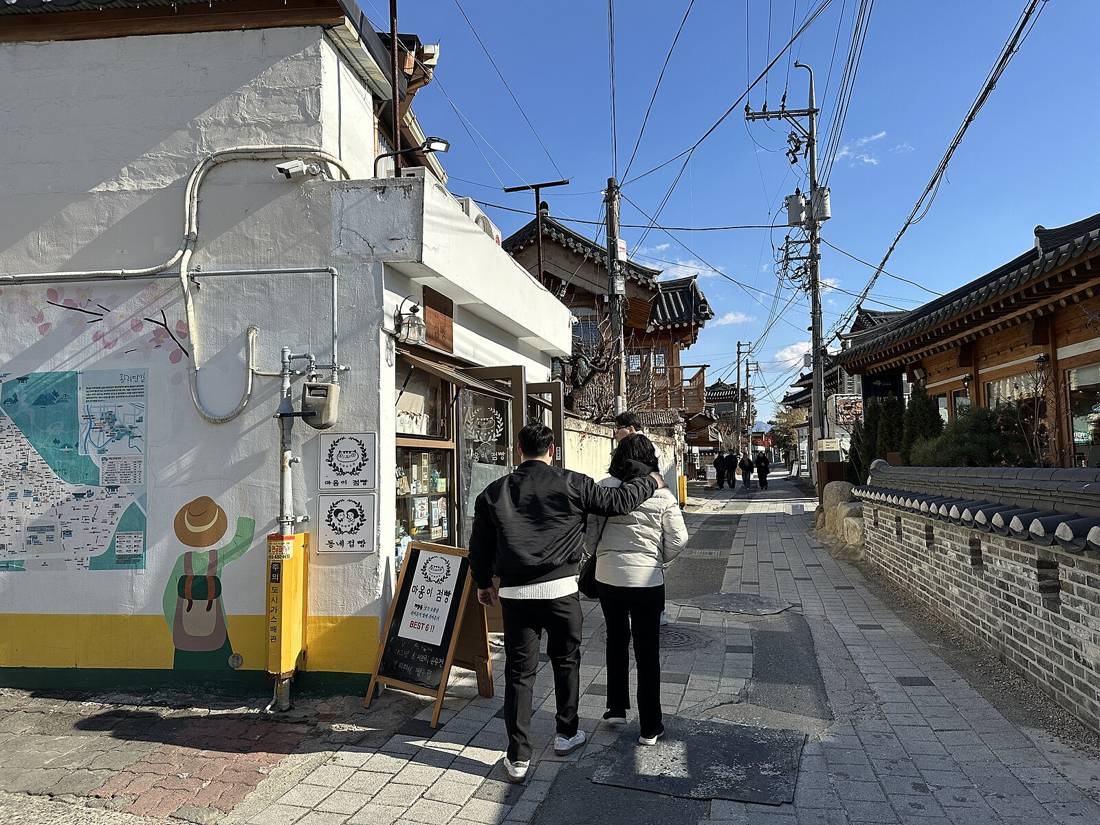
For a two-room hanok with paper-screen doors and a busy lane outside: Loop Quiet 2 reusable ear plugs, on AmazonAffiliate link. As an Amazon Associate, EpicKor earns from qualifying purchases at no extra cost to you.
Quick Guide: Gyeongju's three bases compared (as of October 2026)
| Base | Best for | From the KTX station (Gyeongju Station, 경주역) | Walk to the sights | Typical room | The catch |
|---|---|---|---|---|---|
| Old town — Hwangnidan-gil, Hwangnam-dong, Sajeong-dong (황리단길·황남동·사정동) | First visits, one or two nights, arriving by bus, evenings at Donggung Palace and Wolji Pond | City bus 70, 51 or 50: ₩1,450 by card, 30–40 min. Taxi about ₩18,000–20,000 with the surcharge (our estimate) | Daereungwon, Cheomseongdae and Hwangnidan-gil on foot; Donggung and Wolji about 20 minutes' walk | Small hanok: 171 registered stays, most with one or two rooms; some motels and small hotels | Small rooms, often floor bedding; busy and noisy at weekends; Bulguksa is 30–37 min away by bus 10 or 11 |
| Bomun Lake (보문관광단지) | Resort hotels, families, conference visitors, travellers with a car | Bus 710: posted 12 runs a day, about 45 min. Taxi about ₩29,000 with the surcharge (our estimate) | Lake path and Gyeongju World on foot; nothing historic within walking distance | Large resort hotels and condos; only 11 registered hanok stays | Every trip to the tombs is a bus or a surcharged taxi |
| Near Gyeongju Station (Geoncheon-eup, 건천읍) | A late arrival and an early train out, or a car | On foot | None: the tombs are about 10 km of road away | A handful of hotels and motels; the hanok register lists none in Geoncheon-eup | You commute to everything; taxis into town are surcharged both ways |
The line that matters most: if this is your first time in Gyeongju and you are staying one or two nights, stay in the old town. Bomun only makes sense if the resort is the point of the trip, and the station area only makes sense for a single late-night stop.
Gyeongju stays on Agoda — compare old-town hanok, Bomun resorts and station hotels on one map Search the whole city, then use the map to see where each property really is: by the tombs, on the lake, or out by the KTX station. EpicKor may earn a commission if you book through this Agoda link, at no extra cost to you. Confirm dates, taxes, cancellation terms, room type, bathroom arrangement and the final price on Agoda before booking.
Compare Gyeongju stays on AgodaYou might like: Busan to Gyeongju, Korea: KTX, the Donghae Line Train and the Bus Compared
What the hanok register says: 356 stays, mostly tiny, mostly by the tombs
Gyeongbuk Province publishes a yearly list of every business registered as a hanok experience business (한옥체험업) — the licence category, under Korea's Tourism Promotion Act, for a traditional-style house that rents rooms to travellers. The latest file, with figures as of 31 December 2025, has 722 entries for the whole province. Gyeongju accounts for 356 of them, with 1,020 rooms.
We sorted Gyeongju's 356 entries by the neighbourhood (동/면) in each address. The area split is our own, so treat it as approximate; the register lists registrations, not businesses open tonight, and the province notes some data is missing.
| Area (by registered address) | Hanok stays | Rooms | Stays with 1–2 rooms |
|---|---|---|---|
| Old town: Hwangnam-dong, Sajeong-dong, Inwang-dong, Hwango-dong and Gyo-dong (incl. Gyochon), the blocks around Daereungwon | 171 | 456 | 118 |
| Downtown, just north (Seobu-dong, Bukbu-dong, Dongbu-dong, Seongdong-dong, Seonggeon-dong, Noseo-dong) | 17 | 24 | 15 |
| Bomun area: Bomun-dong, Sinpyeong-dong, Cheongun-dong, Bukgun-dong, Ha-dong | 11 | 35 | 4 |
| Yangdong Folk Village and the rest of Gangdong-myeon | 19 | 53 | 12 |
| Everywhere else (Namsan, Naenam, Bae-dong and Poseokjeong, Yul-dong, the coast…) | 138 | 452 | 70 |
| Gyeongju total | 356 | 1,020 | 219 |
Three things follow.
Most Gyeongju hanok are one- or two-room houses. The median is two; 149 of the 356 list a single room, and the largest has 37. In the old town, 78 are single-room and only 26 have five rooms or more. The host may not live on site, and check-in can be a door code sent by message.
The old town is where the choice is. Sajeong-dong (77 stays) and Hwangnam-dong (60) alone hold 137.
Bomun is a hotel district, not a hanok one. Its 11 hanok stays are small houses in Bukgun-dong, Bomun-dong, Ha-dong and Cheongun-dong, two of them named as hanok pool villas; the lake shore is resort hotels and condominiums.
You might like: Gyeongju Travel Guide: Korea's Silla Capital, Temples, and Cafes
Base 1: the old town (Hwangnidan-gil and Hwangnam-dong)
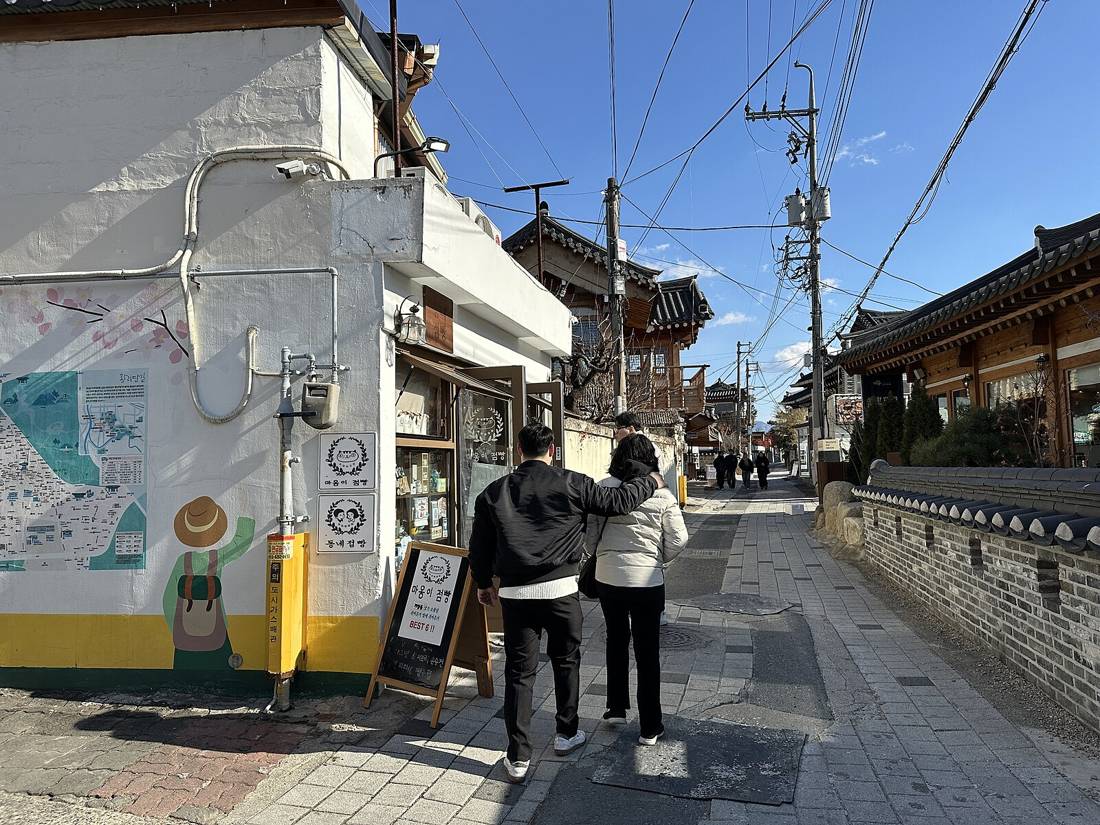
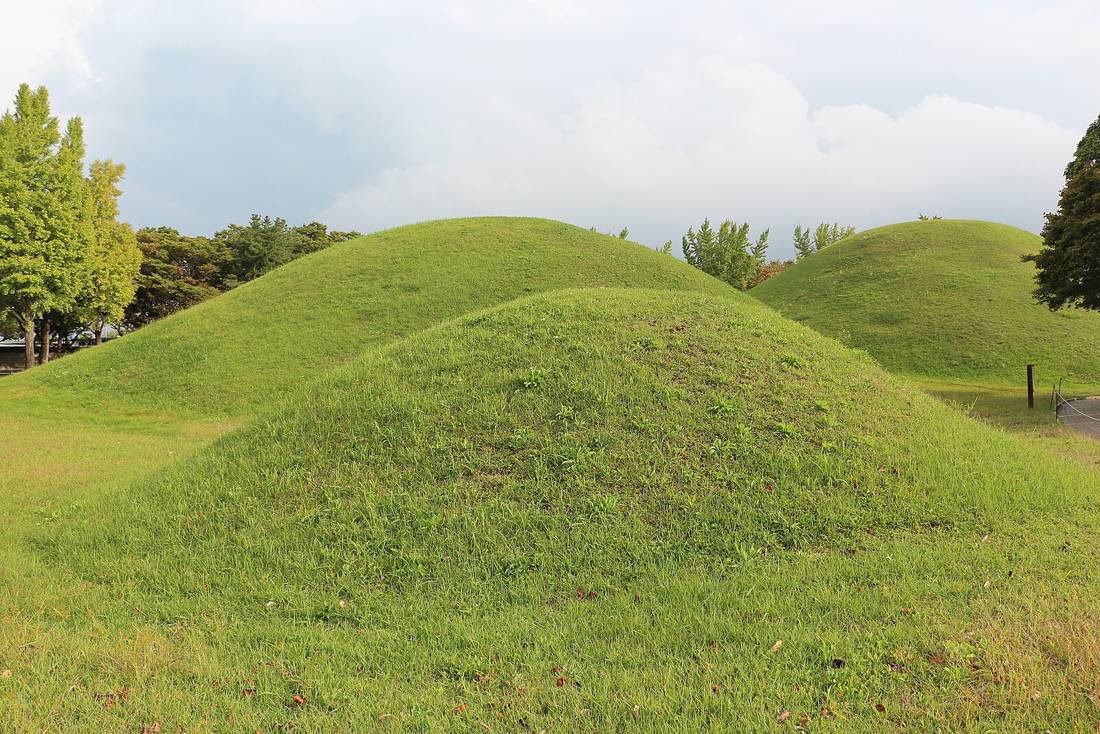
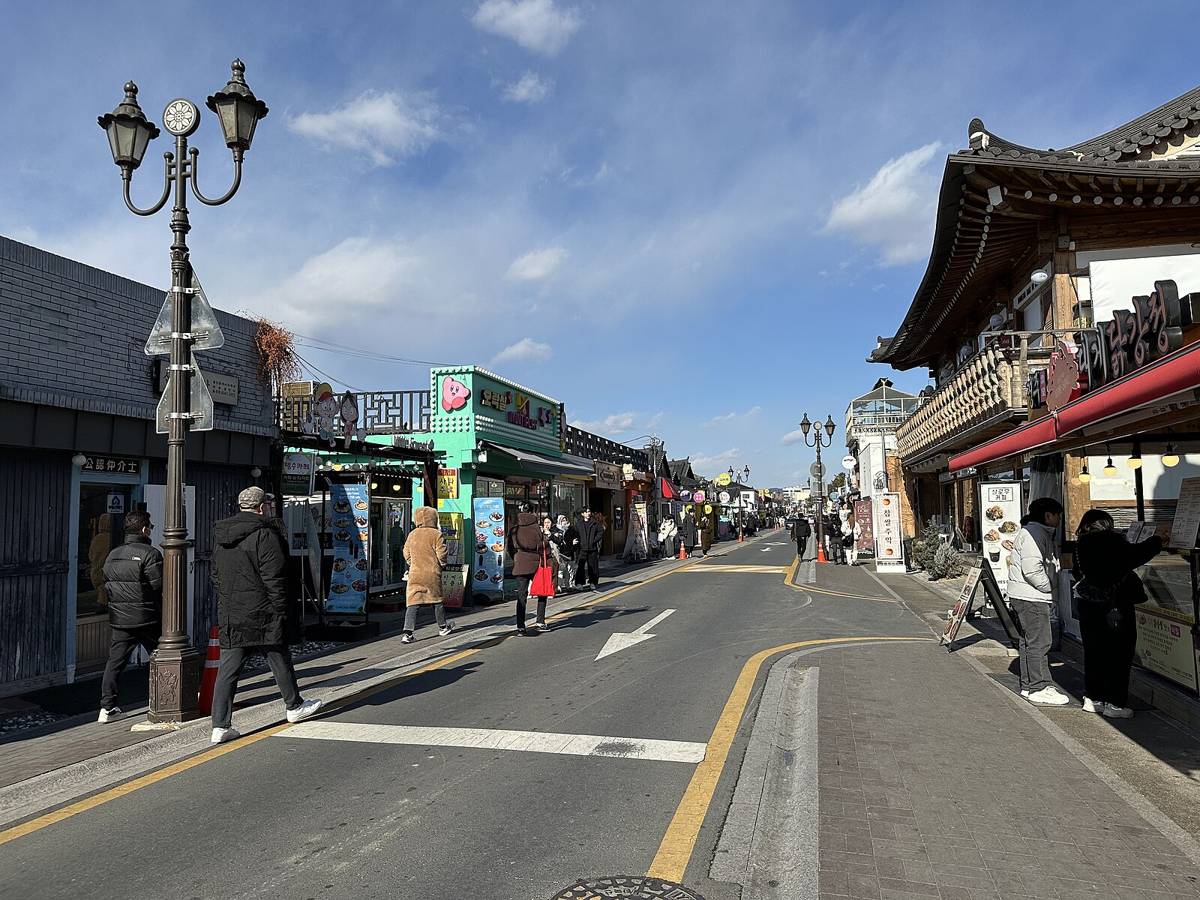
This is the Gyeongju most visitors picture: low tiled roofs, the grass mounds of the Silla royal tombs, and Hwangnidan-gil (황리단길), the café street along Poseok-ro.
What you get by staying here:
- The central sights on foot. Daereungwon, Cheomseongdae, Gyochon and Gyerim forest are a short walk; Donggung Palace and Wolji Pond, the night view, is about 20 minutes (our estimate), so you walk home after dark.
- The first stop of the two tourist buses. City buses 10 and 11 start and finish at the Hwangnidan-gil public car park (황리단길공영주차장). Bus 10 goes via the bus terminal, the old Gyeongju Station building, Bunhwangsa, Bomun Lake, Bulguksa, then back by the National Museum. Bus 11 runs the same loop the other way, reaching Bulguksa via the museum first. The operator's timetables, in force from 14 January 2026, show 28 departures a day on each route: bus 10 from 06:00 to 21:10, bus 11 from 06:15 to 21:30. Bulguksa is 30–37 minutes away on either one.
- The bus terminals are close. Intercity buses from Busan stop downtown, about 15–20 minutes' walk from the tombs (our estimate).
What you give up:
- Space and privacy. A two-room hanok is a house, not a hotel. Doors can be thin, rooms may open onto a shared courtyard, and some stays share a bathroom or put it across the yard. Read the listing for "private bathroom" before you book.
- Beds. Many hanok rooms have floor bedding (요, yo) on a heated ondol (온돌) floor. If your back objects, look for "bed" in the room type. Our guide to Korean floor culture explains ondol heating.
- Quiet at weekends. Hwangnidan-gil is packed on Saturdays; a stay one or two lanes back is calmer than one above a café.
- Parking. The lanes are narrow and many small hanok have no parking of their own.
Who should not stay here: anyone who wants a pool, a lift or a bed they don't have to think about, and anyone whose plan is mostly Bulguksa, Seokguram and the coast.
You might like: Seoul Hanok Experience Guide: Bukchon and Seochon
Base 2: Bomun Lake (보문관광단지)
Bomun Lake Resort is a planned tourist complex around a reservoir, about 6 km east of the tombs in a straight line. It has the big hotels and condominiums, the HICO convention centre (화백컨벤션센터), Gyeongju World and a lakeside path. HICO hosted the APEC leaders' meeting of 31 October–1 November 2025, and several Bomun hotels were renovated for it; one, the four-star Sono Belle Gyeongju of 2006, was fully renovated and reopened as the five-star Sono Calm Gyeongju on 26 September 2025.
What you get by staying here:
- Space. Beds, family rooms, pools and parking.
- A closer start for Bulguksa. By road it is about 10 km from the lake hotels, half the distance from Hwangnidan-gil (our estimate), and buses 10 and 11 pass both.
- The lake path, lined with cherry blossom in spring.
What you give up:
- Walking to the history. Daereungwon, Cheomseongdae and Wolji Pond all mean a bus or a taxi.
- Cheap taxis. Bomun is outside the taxi surcharge zone (next section). By our arithmetic, a taxi from Hwangnidan-gil back to a lake hotel at night is about ₩11,000 on the normal meter and about ₩17,000 if the 55% surcharge is applied, as of October 2026.
- An easy arrival by train. From the KTX station, the direct bus is the 710 (Gyeongju Station → bus terminal → Hwangnidan-gil → Donggung → Bunhwangsa → Bomun → Gyeongju World). The operator's posted timetable shows 12 departures a day from the station, 06:30 to 20:46, about 45 minutes to Gyeongju World. That timetable is dated 14 September 2023 and the buses around the station were rearranged on 15 July 2026, so check the live times in Kakao Map or Naver Map. The 700 also passes Bomun on its way to Bulguksa and the coast, but runs only four times a day (07:50, 08:50, 13:50 and 14:50 from the station on its March 2023 timetable).
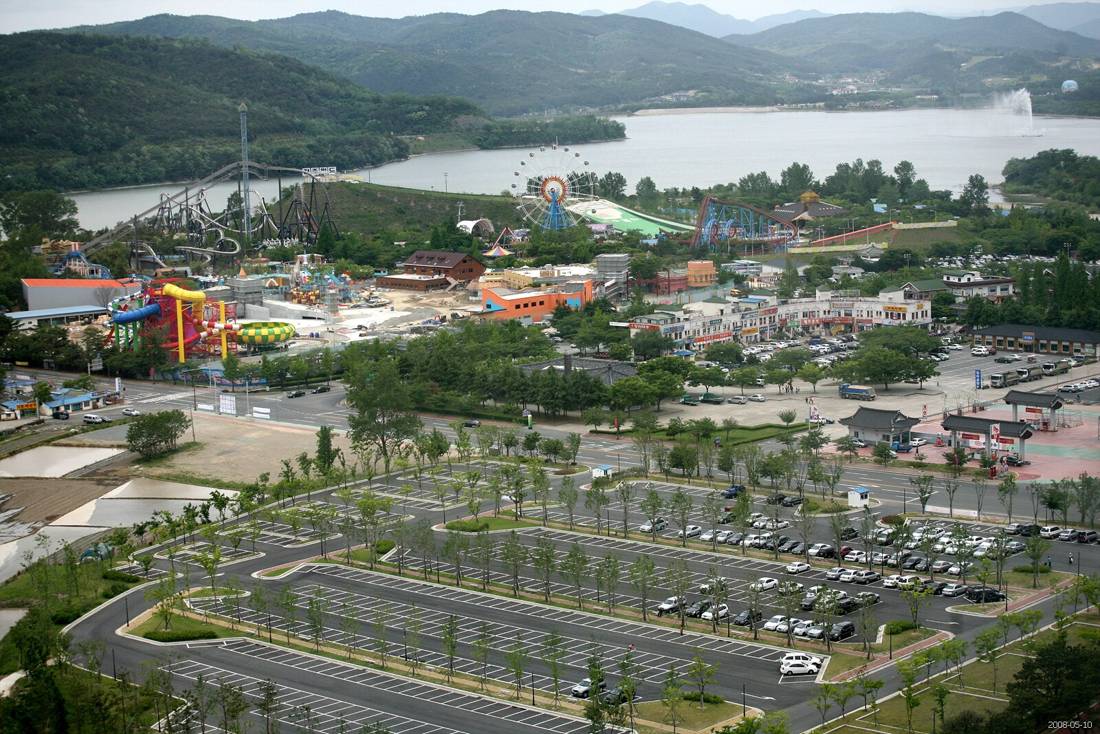
Who should stay here: families, drivers, and anyone whose days centre on Bulguksa and the coast. Who should not: a first-timer on a one-night stop with no car.
Base 3: near the KTX station (Gyeongju Station, formerly Singyeongju)
The KTX station opened in 2010 as Singyeongju (신경주, "New Gyeongju"). Gyeongju then had two stations. The old downtown Gyeongju Station closed at the end of 2021, when the Jungang and Donghae lines were rerouted; its building now appears on bus timetables as 경주문화관 (구.경주역), the Gyeongju Culture Hall (former Gyeongju Station), a stop on buses 10 and 11. On 28 December 2023, Singyeongju was renamed Gyeongju Station (경주역). Every KTX stops here, and it is in Geoncheon-eup, outside the city.
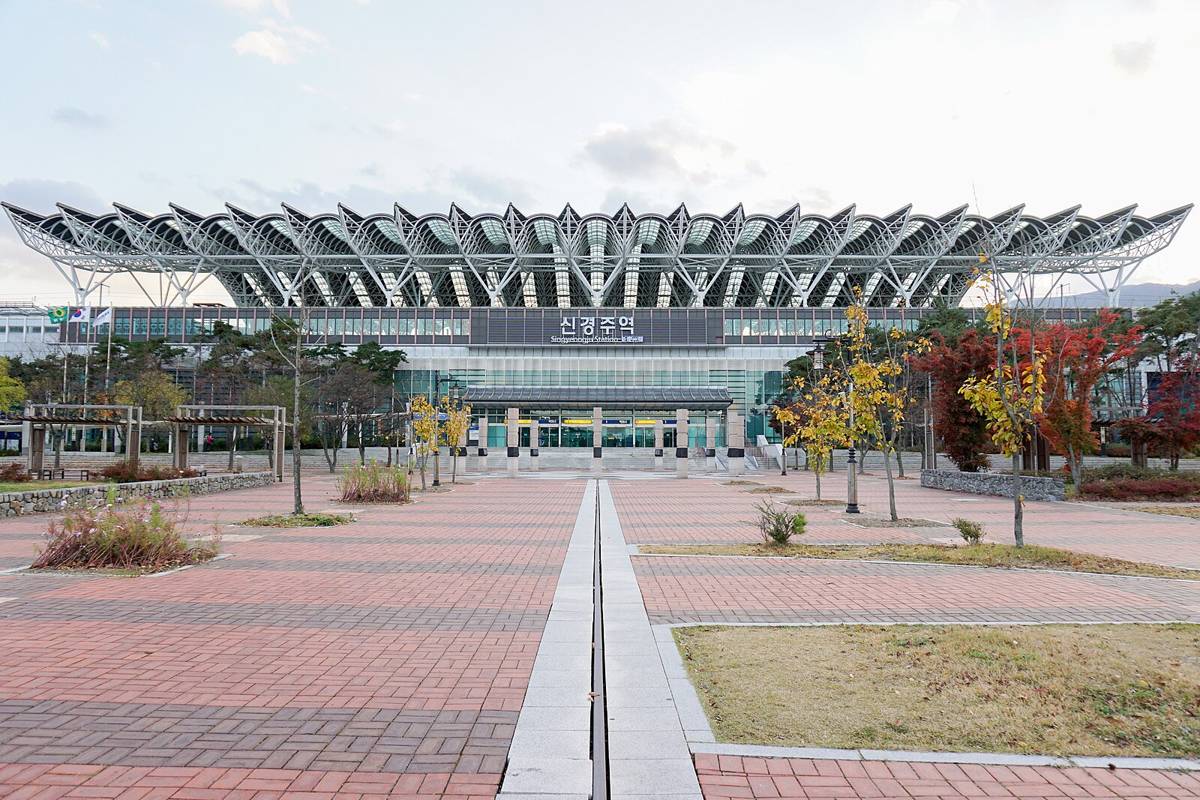
Getting from the station to the old town, as of October 2026:
| Option | Fare | Time | Notes |
|---|---|---|---|
| City bus 70 | ₩1,500 cash, ₩1,450 by transit card | 30–40 min | 77 runs a day on the operator's route page; via the intercity and express bus terminals and Hwangnidan-gil |
| City bus 51 / 50 | same | 30–40 min to the terminals | 51 lists 55 runs a day; both continue north to Yonggang |
| City bus 710 | same | about 45 min to Gyeongju World at Bomun | 12 runs a day on the 2023 timetable; check live times |
| Taxi to Hwangnidan-gil | about ₩18,000–20,000 (our estimate) | about 15 min | about 10 km by road; 55% surcharge applies because the station is outside the zone |
| Taxi to a Bomun Lake hotel | about ₩29,000–31,000 (our estimate) | about 25 min | about 20 km by road; both ends are outside the zone |
Adult city-bus fares are from the Gyeongju City Traffic Information Center: ₩1,500 cash, with ₩50 off by transit card. You get one free transfer within 30 minutes of tapping off, and children and teenagers ride free with a card. Since 15 July 2026, six routes serving the station, including 50, 51, 70, 700 and 711, use the new outer Gwangmyeong–Hwacheon road. Between them they make about 211 runs a day.
When the station area is the right base: a late KTX in and an early train out. Otherwise it is the wrong one — two surcharged taxis a day can cost more than the difference in room price.
You might like: 7-Day Korea Itinerary: Seoul, Gyeongju, and Busan by KTX
The 55% taxi surcharge zone, and why it decides the map
Gyeongju taxis charge a combined surcharge (복합할증) of 55% on trips that start or end outside a radius of about 5 km from the Gyeongju Arts Center (경주예술의전당), in Hwangseong-dong. The 2019 fare revision moved the centre of that circle from the Shinhan Bank crossroads to the Arts Center and widened it from 4 km to about 5 km. In February 2026, the base fare rose from ₩4,000 to ₩4,500 (for the first 1.7 km), and the distance fare went to ₩100 per 128 m. The surcharge itself did not change.
Here is where the places in this guide fall, measured in a straight line from the Arts Center on a map:
| Place | Distance from Gyeongju Arts Center | Inside the normal-fare zone? |
|---|---|---|
| Hwangnidan-gil / Daereungwon | about 2.6 km | Yes |
| Bomun Lake (lake centre) | about 6.7 km | No |
| East shore of Bomun Lake / Gyeongju World | about 7.4–7.6 km | No |
| Gyeongju Station (KTX) | about 9.4 km | No |
| Bulguksa | about 13.9 km | No |
English guides call Bomun "a 10-minute taxi" from town; the ride is short, but it can be surcharged. And a taxi from the station to the old town costs more than the KTX from Busan (₩10,100). So:
- Old-town base: arrive by intercity bus to the downtown terminal and walk, or take the KTX and then bus 70. Use buses 10 and 11 for Bulguksa and Bomun.
- Bomun base: arrive by KTX and take the 710, or drive. Expect taxis in the evening.
- Station base: for one night only, and only around late or early trains.
Practical notes before you book
- Bathroom line: "shared", "private (outside the room)" and "en-suite" are three different nights.
- Bed or floor: ondol floor bedding is warm but firm.
- Check-in: many small hanok have no front desk; make sure you can receive a door code by message.
- Book the old town first for cherry-blossom week and autumn weekends; Bomun's big hotels have far more rooms each.
- Use Naver Map or Kakao Map for buses; Google Maps transit directions are unreliable in Korea (our map app guide).
Gyeongju on Agoda — old town for walking, Bomun for space, the station only for one night Open the Agoda map and stay inside your base: Hwangnam-dong, Sajeong-dong and Gyo-dong for the old town, the lake shore for Bomun. Check bed versus floor bedding and whether the bathroom is private. EpicKor may earn a commission if you book through this Agoda link, at no extra cost to you. Confirm dates, taxes, cancellation terms and the final price on Agoda.
See Gyeongju stays on AgodaFAQ
Q: Is it better to stay in Hwangnidan-gil or Bomun Lake in Gyeongju? A: For a first visit of one or two nights without a car, Hwangnidan-gil and the old town: you can walk to Daereungwon, Cheomseongdae and Wolji Pond, and buses 10 and 11 start there for Bulguksa (30–37 minutes). Bomun suits families, drivers and resort stays, but it is outside Gyeongju's 55% taxi-surcharge zone.
Q: How many hanok stays are there in Gyeongju? A: 356 registered hanok experience businesses with 1,020 rooms, in Gyeongbuk Province's register as of 31 December 2025. By EpicKor's address count, 171 are in the old town around the tombs and 11 in the Bomun area; most have one or two rooms.
Q: Should I stay near Gyeongju KTX station? A: Only for one night around a late arrival or early departure. The station (formerly Singyeongju) is about 10 km by road from the tombs; buses 70, 51 and 50 take 30–40 minutes for ₩1,450 by card, and taxis carry a 55% surcharge (as of October 2026).
Q: How do I get from Gyeongju Station to Bomun Lake? A: City bus 710, which runs via downtown and Hwangnidan-gil to Bomun and Gyeongju World: 12 departures a day on its posted timetable, 06:30 to 20:46, about 45 minutes. A taxi is about ₩29,000–31,000 by our estimate.
Q: What are buses 10 and 11 in Gyeongju? A: Opposite-direction loops from the Hwangnidan-gil public car park via the bus terminals, Bunhwangsa, Bomun Lake, Bulguksa and the National Museum. Each runs 28 times a day (bus 10 06:00–21:10, bus 11 06:15–21:30, timetable from 14 January 2026). Adult fare ₩1,500 cash or ₩1,450 by card.
Sources
- Hanok stays: Gyeongsangbuk-do Province, 경상북도_한옥체험업 현황_20251231 (public data portal, registered 9 February 2026; columns: city, name, rooms, address). Area counts are EpicKor's classification of the 356 Gyeongju addresses by neighbourhood (동/면), made and re-checked on 10 October 2026.
- Bus fares: Gyeongju City Traffic Information Center, 경주시 버스요금 안내, read 10 October 2026.
- Bus routes, run counts and timetables (10, 11, 50, 51, 70, 700, 710, 711): city-bus operator Cheonnyeon Miso (천년미소), 노선별 시간표, read 10 October 2026 (10 and 11 timetables from 14 January 2026; 710 from 14 September 2023; 700 from 31 March 2023).
- Station route changes from 15 July 2026 (six routes, about 211 daily runs): Newsis via Financial News, 9 July 2026.
- Taxi surcharge zone (55%, about 5 km from the Gyeongju Arts Center): Kyongbuk Maeil on the 2019 fare revision. February 2026 base fare ₩4,500 and ₩100 per 128 m, surcharges unchanged: Gyeongju city announcement reported on 26 January 2026. Taxi fares in this guide are EpicKor estimates from that tariff and road distances on OpenStreetMap routing, before time charges; your meter will differ.
- Station names: Singyeongju renamed Gyeongju Station on 28 December 2023 (Kyongbuk Maeil, 29 December 2023); old downtown station closed at the end of 2021. See also our Busan–Gyeongju guide.
- APEC 2025 hotel renovations in Bomun (Sono Belle Gyeongju, opened 2006, relaunched as the five-star Sono Calm Gyeongju on 26 September 2025): New Daily, 28 August 2025.
The short version: sleep where you want to walk. For most first visits that is the old town, among the 171 small hanok by the tombs. Choose Bomun for space and a car, and the station area only for one night between trains.
You Might Also Like
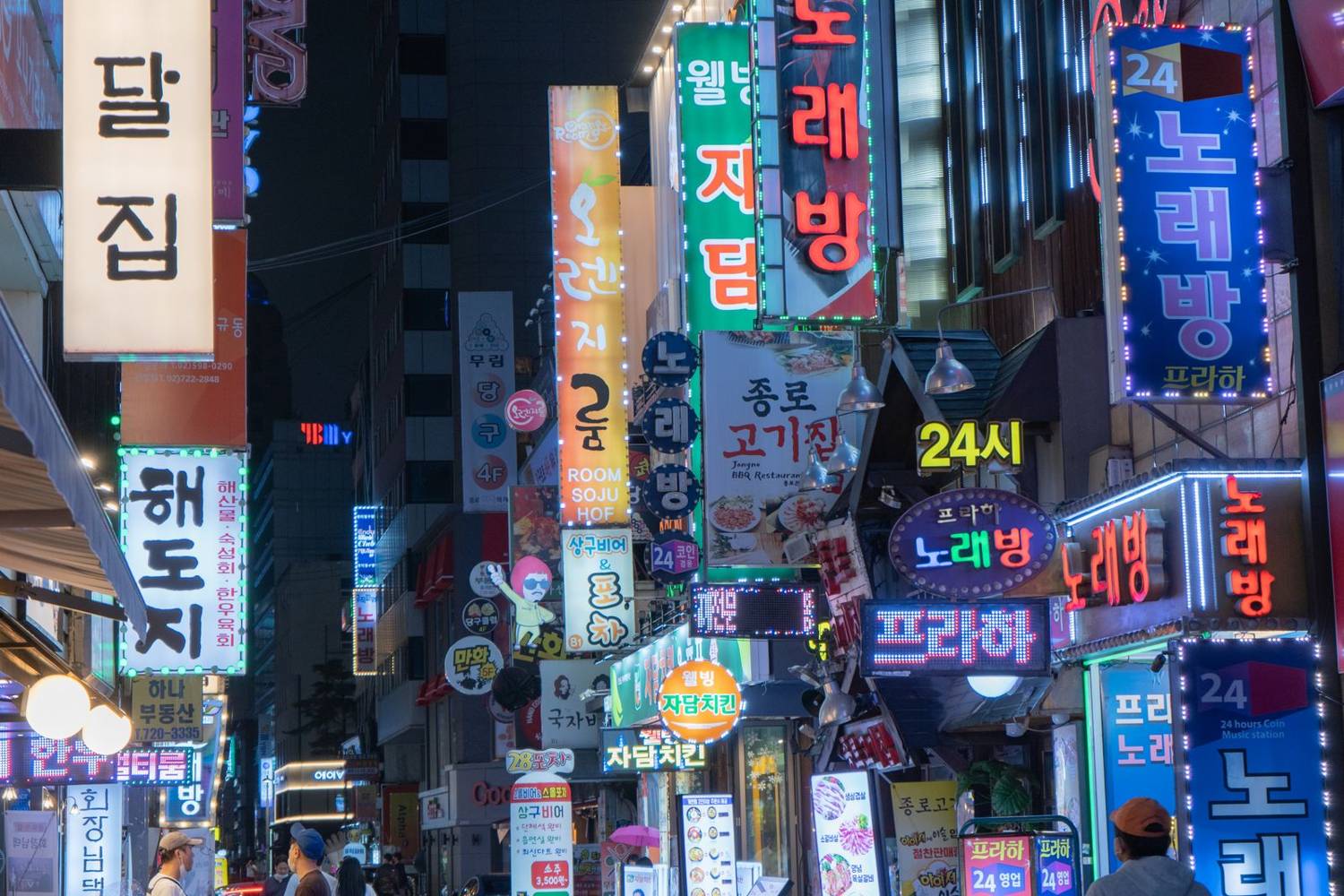
How Much Does a Trip to Korea Cost? $238 a Day in the Official Survey
$238.30 a day before flights: what foreign visitors actually spent in Korea in 2025, from the government's survey of 16,110 travellers. Americans stayed 8.3 days at $214 a day. Where it went, why the Bank of Korea says $177.80, and a daily budget.
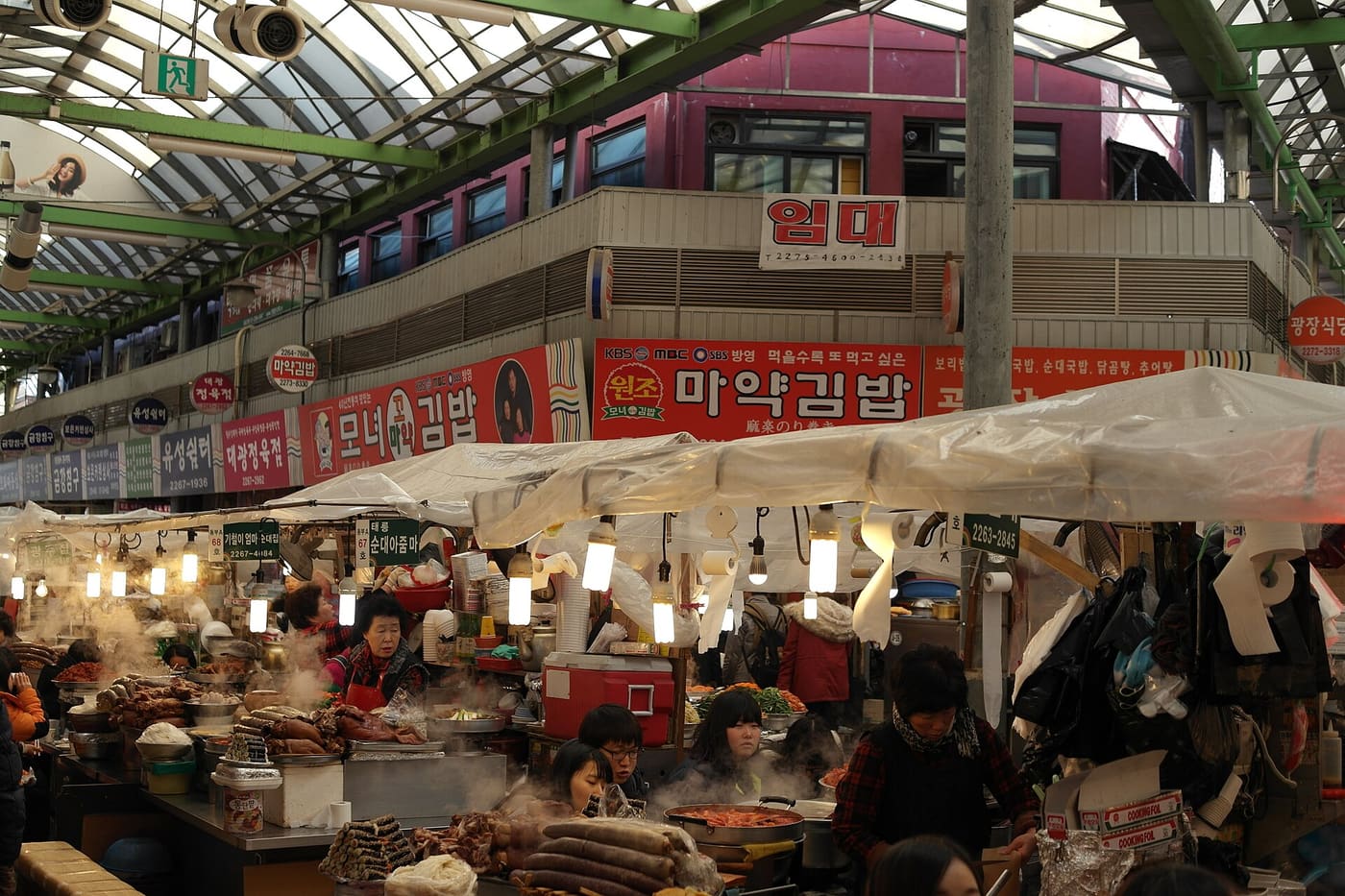
Gwangjang Market's Second Floor: Seoul's Vintage Arcade, and the One Day It's Shut
Everyone knows Gwangjang for the food alley that never closes. Above it is a vintage arcade signed 수입구제 where most items run under ₩20,000 — and it shuts every Sunday, which is exactly when visitors turn up.
Where to Buy Luggage in Seoul: Namdaemun, Real Prices, and When Not to Bother
You shopped too well and now you need another suitcase. Namdaemun is the answer, but the underground arcade shuts on the 2nd and 4th Sunday, the bag shops close for Chuseok, and a cheap case is not always cheaper than shipping.