Dental Implant Cost in Korea (2026): The Government's Own Price Data Says ₩1.19 Million, Not the ₩1.5–3 Million the Clinic Ads Quote
Last updated: September 2026. Figures are from the Health Insurance Review and Assessment Service (건강보험심사평가원, HIRA) non-covered fee disclosures — the 2026 release published on 3 September 2026 and the 2024 release published by the health ministry — plus the ministry's foreign-patient statistics for 2025. Where a number comes from the Korean press rather than an official table, the text says so.
Search "dental implant Korea cost" in English and nearly every result on the first page is a dental clinic: a Gangnam practice's price guide, a medical-tourism booking site, a "save 70 percent" landing page. Their numbers are their own, and they agree with each other more than they agree with anything else. The most common floor is ₩1.5 million per implant, and ranges run to ₩3 million.
Korea has a better source, and hardly anyone in English uses it. Every year the government makes every hospital and clinic in the country report what it charges for treatments that national health insurance does not cover — 비급여 (bigeubyeo), non-covered care — and publishes the lot. The 2026 release came out on 3 September 2026: 753 items, from about 74,000 medical institutions. Resin fillings and crowns are the non-covered items the most dental clinics report, and implants are on the list with them.
What it says about implants is simple. The national median for one implant in 2026 is ₩1,190,000, the average ₩1,181,000, and the average at ordinary dental clinics — the 치과의원 on every Seoul high street — ₩1,140,000. The ₩1.5 million figure that English pages treat as a floor is, in the government's own data, the median at dental hospitals (치과병원), the larger and pricier tier. This guide sets out the official numbers, shows you how to look up any Korean clinic's reported price yourself, and explains the one charge that depends on your visa.
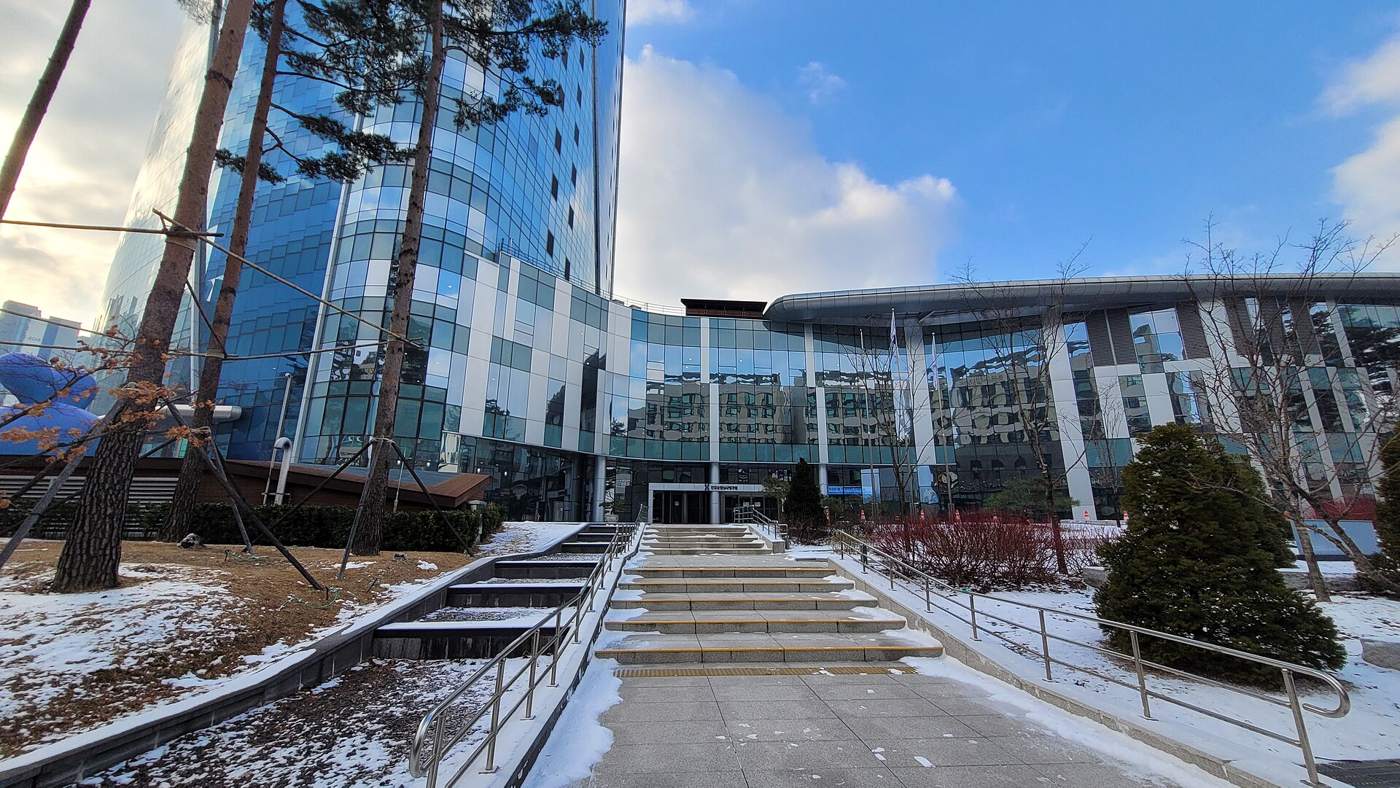
The Health Insurance Review and Assessment Service (HIRA) headquarters in Wonju, the agency that collects and publishes every Korean clinic's non-covered prices. Photo: Aspere, Wikimedia Commons, CC0 (2023).
The part of an implant that fails years later is usually not the implant — it is the gum around it, which is why dentists tell implant patients to clean around the post every day. A Waterpik Aquarius water flosser (WP-660) is the standard home tool, and it is worth having before the crown goes on, not after. As an Amazon Associate, EpicKor earns from qualifying purchases.
Quick Guide: what Korean dental work costs, by the government's numbers
| Treatment | National figure | Data year | What to know |
|---|---|---|---|
| Implant, one tooth (fixture, abutment and crown) | Median ₩1,190,000; average ₩1,181,000 | 2026 | Average down 0.9% on 2025 (₩1,191,000); median down from ₩1,200,000 |
| Implant at a dental clinic (치과의원) | Average ₩1,140,000 | 2026 | In 2025: median ₩1,200,000, lowest ₩550,000, highest ₩2,500,000 (all unchanged from 2024) |
| Implant at a dental hospital (치과병원) | Median ₩1,500,000; average ₩1,658,000 | 2025 | The "from ₩1.5 million" figure in English ads |
| Implant, highest reported anywhere | ₩5,937,000 | 2026 | Up 28.8% in a year; the gap between clinics is widening |
| Zirconia crown (지르코니아 크라운) | Average ₩510,875 | 2024 | Seoul ₩532,495; North Jeolla ₩489,251 |
| Resin filling (레진), one surface | Average ₩92,516 | 2024 | Seoul ₩100,982 is the highest region; South Jeolla ₩77,000 the lowest |
| Scaling (스케일링) | Insured residents pay a small co-pay once a year; tourists pay the clinic's own price | 2026 rules | See the scaling section below — this is the one price that depends on your visa |
Median Dental IQ 93% — the Korean toothpaste on every pharmacy shelf If you are flying home with new crowns, this is the everyday Korean brand you will see stacked at Olive Young and every pharmacy; it is on Amazon if you would rather not fill a suitcase with tubes. As an Amazon Associate, EpicKor earns from qualifying purchases.
See Median Dental IQ on AmazonWhere the ₩1.5 million number comes from
Korean dental care comes in two tiers, and the price data splits them. 치과의원 (dental clinics) are the one- or two-dentist practices you see on every other building in Seoul, and they do most of the country's implants. 치과병원 (dental hospitals) are larger institutions with more specialists and more equipment, often attached to universities or run as multi-floor practices in Gangnam. In the 2025 figures (medians unchanged from 2024), clinics had a median implant price of ₩1,200,000; dental hospitals had a median of ₩1,500,000 and an average of ₩1,658,000.
So a clinic-marketing page that opens at "₩1.5 million to ₩3 million" is quoting, at its bottom, the middle of the expensive tier, and at its top, a price above the highest figure any ordinary clinic reported in 2024 or 2025. That does not make those clinics dishonest — Gangnam rents are real, and a practice aimed at foreign patients pays for interpreters and coordinators — but it does mean the English web's "normal price" is not Korea's normal price.
| What English clinic pages say | What the HIRA data says |
|---|---|
| Implant "₩1.5M–₩3M" | Floor is the dental-hospital median; the national median is ₩1,190,000 (2026) |
| Implant "$700–$2,000" | Roughly consistent: covers the median and the clinic range |
| Zirconia crown "₩500,000–₩900,000" | The bottom matches the ₩510,875 average; the top is well above it |
| Resin filling "₩80,000–₩200,000" | The bottom matches the ₩92,516 average; ₩200,000 is about twice the Seoul average |
| "Save 70% versus the US" | No Korean official source makes any cross-country comparison |
The direction of travel matters too. The average implant price fell again in 2026, from ₩1,191,000 to ₩1,181,000, and the dental press's per-material series shows implant prices falling every year since 2023. At the same time the spread between clinics is widening — the highest reported price jumped 28.8% in 2026 and HIRA's own dispersion measure rose from 26.6 to 29.2. Across all 593 items that could be compared with 2025, 73.5% went up in nominal terms, but after 3.2% inflation 75.5% of all 593 fell in real terms. Korean medical prices are, on the whole, getting relatively cheaper while the gap between the cheapest and the dearest provider grows.
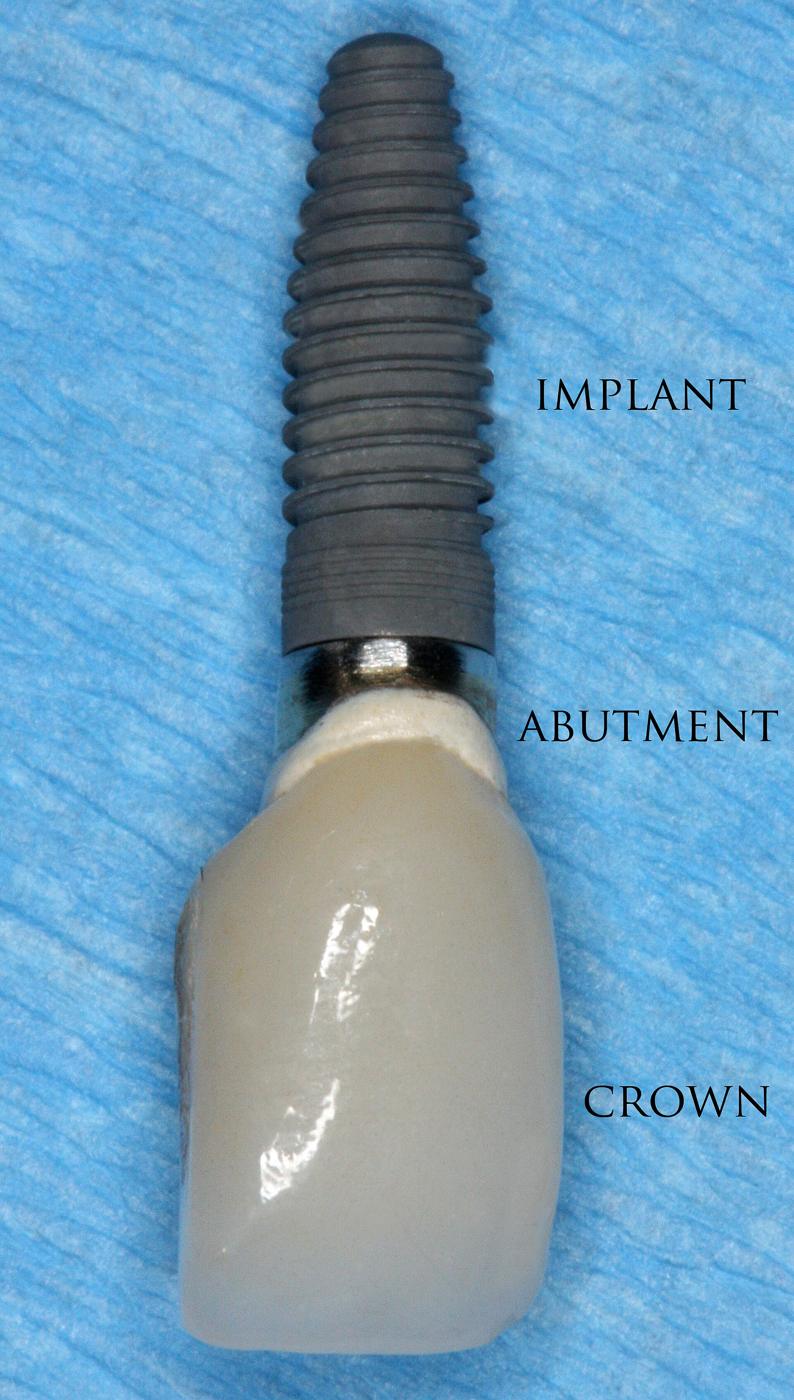
What the implant price covers: the titanium fixture in the bone, the abutment, and the crown. HIRA's implant item is the whole unit for one tooth. Photo: Coronation Dental Specialty Group, Wikimedia Commons, CC BY-SA 3.0.
How to look up a specific Korean clinic's price yourself
The same data that produces the national averages is searchable clinic by clinic, and it is free. The catch is that it is in Korean. Here is the route.
- Go to hira.or.kr and open 비급여 진료비용 정보 (non-covered fee information) — the direct address is
hira.or.kr/npay/index.do. The same data is in HIRA's phone app 건강e음. - Close the notice that pops up. It says, in effect, that using this data for commercial patient-brokering or illegal advertising is punishable under the Medical Service Act — which is a useful thing to know when a clinic's ad quotes a "government price".
- Search one of two ways: 병·의원으로 조회하기 (by clinic — type the clinic's Korean name or its street address), or 항목으로 조회하기 (by item — pick a region and type the treatment). The Korean terms to type are 임플란트 (implant), 지르코니아 (zirconia), 레진 (resin), 스케일링 (scaling).
- For an item search, the results list every clinic in the area with its reported lowest and highest price, and the site also compares prices by region and clinic size for the most frequently used items (다빈도 항목 지역별·규모별 금액 비교).
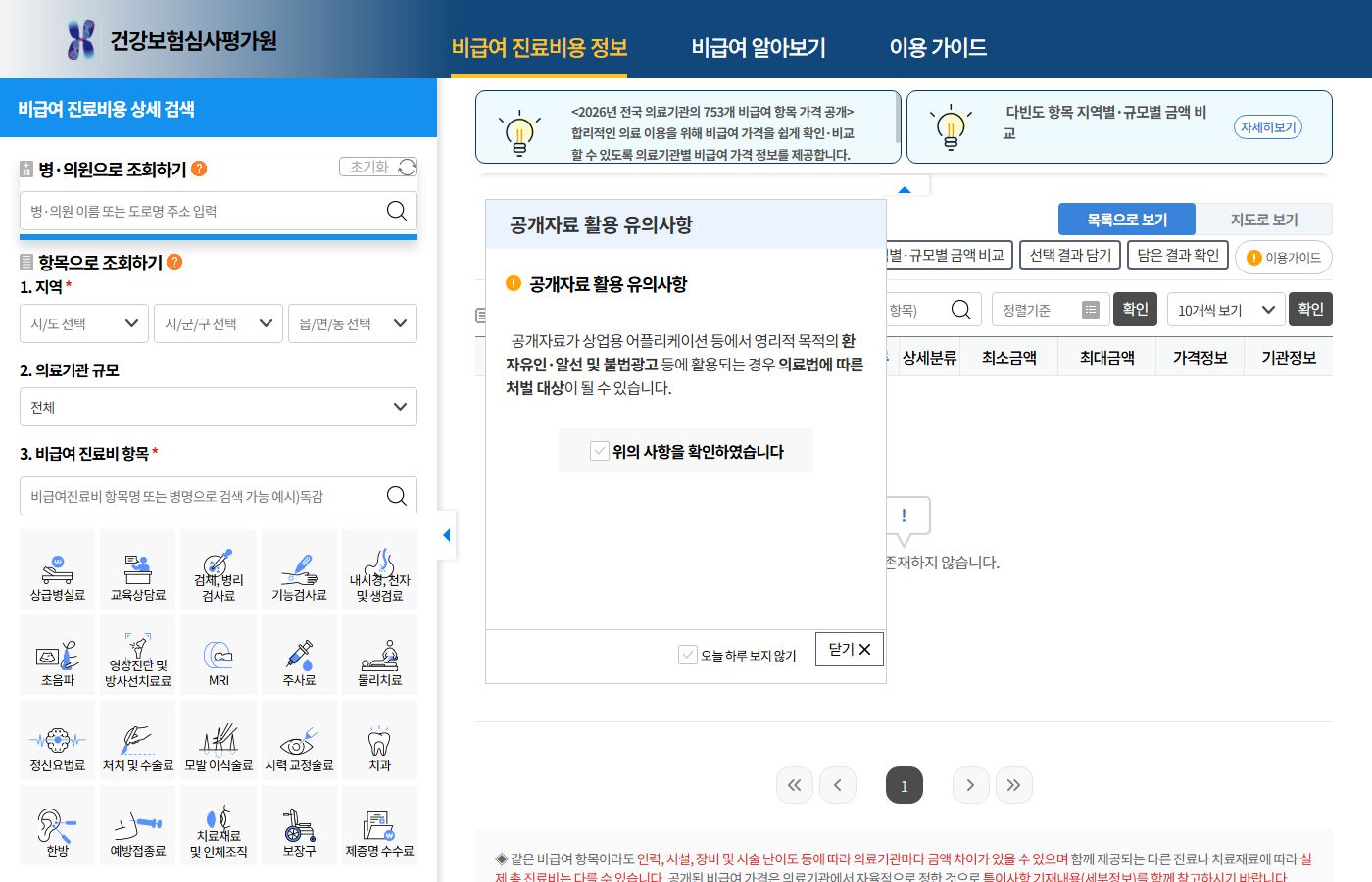
The HIRA lookup at hira.or.kr/npay: search by clinic name or address on the left, or by treatment item and region below it. The tooth icon (치과) filters to dental items. Screenshot by EpicKor, September 2026.
Two things to understand before you trust a number. First, clinics set these prices themselves and report them; HIRA publishes them, it does not approve them. Second, a clinic's reported range can be wide because the same item covers different brands and cases — so treat the reported figure as the benchmark for the question you ask the clinic, not as the price you will be charged. Korean clinics are also required by the Medical Service Act to display their non-covered fees at the clinic, so the price list at the reception desk and the one on HIRA should match.
You might like: Korean Healthcare Guide for Tourists: Emergencies and Pharmacies
Scaling: the one price that depends on your visa
Scaling is where a foreign visitor's bill differs most from a Korean's, and the reason is insurance, not nationality.
Korea's national health insurance covers one scaling a year for adults aged 19 and over, counted by calendar year — January to December. For an insured patient at an ordinary clinic, the co-pay is small; clinic notices put it at roughly ₩15,000 to ₩20,000. Foreign residents who have lived in Korea for more than six months are enrolled in national health insurance by law (since 16 July 2019) and get the same benefit.
A tourist is not insured, so the same cleaning is a non-covered service at whatever price that clinic charges. Clinic price lists commonly show ₩50,000 to ₩60,000 for uninsured scaling — still modest by American standards, but three times what the Korean patient in the next chair pays. There is nothing improper about it; it is simply the uninsured price. If you are a student or worker already enrolled, bring your alien registration card and it is the insured price.
The foreign-patient boom, in numbers
Foreign patients came to Korea in record numbers in 2025 — 2.01 million, up from 1.17 million in 2024, the third record year in a row, according to the health ministry's April 2026 figures. Dermatology dominates: 62.9 percent of all foreign patients, followed by plastic surgery at 11.2 percent. Dental care is a small share but one of the fastest-growing: dental patients were up 79.0 percent on the year, and at ordinary dental clinics up 128.9 percent — the fastest of any category — while dental hospitals actually fell 4.5 percent. The growth, in other words, is in exactly the tier whose prices the English web leaves out. American patients hit a record 173,000, up 70.4 percent, and 87.2 percent of all foreign patients were treated in Seoul.
One change affects what cosmetic dental work costs this year. From April 2016 foreign patients could reclaim the 10% VAT on cosmetic procedures, and for dentistry that included whitening, veneers (라미네이트), gum contouring and jaw surgery. That refund ended on 31 December 2025. A bill to restore it until 2029 had not passed as of August 2026. Ordinary treatment — fillings, crowns for decay, implants, orthodontics for medical reasons — is VAT-exempt medical care anyway, so this only changes the cosmetic end. Our tax refund guide covers the shopping refund, which still exists.
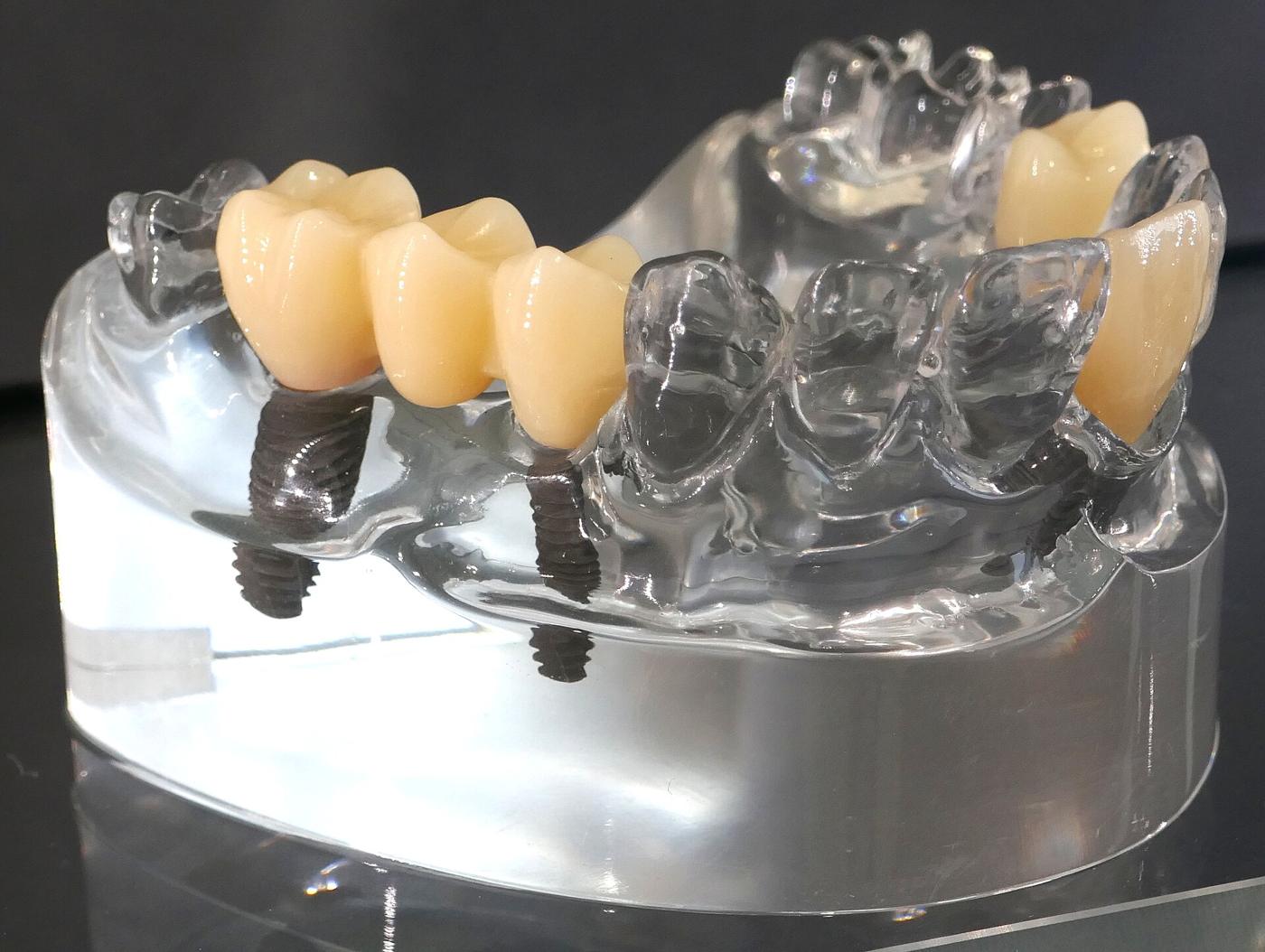
A jaw model showing implants under a bridge of crowns. Multi-tooth work is where the gap between the cheapest and the dearest clinic becomes large in money terms. Photo: Tiia Monto, Wikimedia Commons, CC BY 4.0 (2026).
What to check before you book
- Is the clinic registered to take foreign patients? Under Korea's foreign-patient law, any clinic that solicits foreign patients must register with its city or provincial government; registration runs three years. A clinic with an English site and a coordinator should be registered — ask.
- Ask for the itemised quote in the HIRA terms. Fixture brand (Korean-made or imported), abutment, crown material, and whether a bone graft is included. Then check that clinic's own reported range on HIRA.
- Count the visits, not just the won. An implant is not a one-trip job: the fixture has to fuse with the bone before the crown goes on, usually a wait of about three to six months. If you cannot come back, the cheapest implant in Seoul is not a saving — ask about a local dentist finishing the crown, and get the component details in writing.
- Cash or card. Dental clinics take international cards; our payment guide covers which foreign cards fail at which terminals. Some clinics offer a cash price; that is a negotiation, not a rule.
- When to skip it. For a single filling or a routine cleaning, the saving rarely justifies planning a trip around it. Korea's value is in implants, crowns and multi-tooth work, where the price difference is large and the data lets you check it.
Korean clinics also sell a lot of cosmetic work to visitors on the same trip — our beauty clinic versus Olive Young guide is the equivalent decision for skin treatments.
FAQ
Q: How much does a dental implant cost in Korea in 2026? The government's 2026 non-covered fee data puts one implant (fixture, abutment and crown) at a national median of ₩1,190,000 and an average of ₩1,181,000. Ordinary dental clinics averaged ₩1,140,000; larger dental hospitals had a median of ₩1,500,000 in the 2025 data.
Q: Why do Korean clinic websites quote higher implant prices than the government data? Most English pages are run by clinics aimed at foreign patients, often large Gangnam practices, and their floor of about ₩1.5 million matches the median at dental hospitals rather than the national median. Rent, interpreters and coordinators cost money, but the English web's "typical price" is above Korea's typical price.
Q: Can tourists get insured scaling in Korea? No. The once-a-year insured scaling is for people enrolled in national health insurance, which includes foreign residents who have lived in Korea more than six months. Tourists pay the clinic's uninsured price, commonly ₩50,000 to ₩60,000.
Q: How can I check a Korean dental clinic's prices before I go? Use HIRA's non-covered fee lookup at hira.or.kr/npay or the 건강e음 app. Search by the clinic's name or address, or by item (임플란트, 지르코니아, 레진, 스케일링) and region. The site is in Korean, so a browser translator helps.
Q: Do foreigners pay more than Koreans at Korean dental clinics? There is no official data comparing what Koreans and foreigners pay for the same procedure. The real difference for most visitors is insurance: services Korean patients receive on insurance are uninsured, full-price services for a tourist.
Q: Is there still a VAT refund for dental treatment in Korea? No. The refund on cosmetic procedures, which covered whitening, veneers and gum contouring, ended on 31 December 2025. Implants, fillings and medically necessary treatment were never subject to VAT.
Sources
- Health Insurance Review and Assessment Service (건강보험심사평가원), non-covered fee information (hira.or.kr/npay), 2026 release: 753 items; site banner and lookup interface read September 2026.
- Ministry of Health and Welfare / HIRA, 2024 non-covered fee release (5 September 2024): the dental items most often reported (resin fillings and crowns).
- Daily Dental (10 September 2025): implant prices at dental clinics and dental hospitals, 2024–2025; per-material implant prices 2023–2025.
- Korean press reporting of the 3 September 2026 release (Asia Economy, K-Health, Kyunghyang, DocDocDoc): 2026 implant average, median and maximum and their 2025 values; 74,449 institutions; 593 comparable items and the inflation-adjusted trend; the dispersion index.
- Dental trade press (Dental News, 2024 data): zirconia crown and resin filling averages by region.
- National Health Insurance Service: scaling coverage (once per calendar year, age 19+) and mandatory enrolment of foreign residents after six months (from 16 July 2019).
- Ministry of Health and Welfare, 2025 foreign-patient results (April 2026): 2.01 million patients; specialty and nationality shares; dental growth.
- Korean press (Newsis, Daily Dental, K-Health): the end of the foreign-patient VAT refund on 31 December 2025, qualifying dental items, and the pending restoration bill.
- Medical Overseas Expansion and Foreign Patient Attraction Act, Article 6 (registration of foreign-patient clinics).
You Might Also Like

Is Korea Kid-Friendly? What Foreign Parents Report — and What Korean Data Shows: Strangers Who Hand Out Tangerines, 114 No-Kids Zones, and the 68% Who Accept Them
Foreign parents say older Koreans shower babies with snacks and department-store nursing rooms beat London's. Korean data adds 114 no-kids zones, 68% public acceptance, and 64% of Korean parents who feel watched. What that means for your trip.
Car Seat Taxis in Korea: The Law Requires a Seat for Every Child Under 6, Ordinary Taxis Don't Carry One — What Tourists Can Actually Book in Seoul
Korea's Road Traffic Act requires a car seat for children under 6 in any car, taxis included, and fines the driver ₩60,000. Ordinary taxis carry none and police paused taxi enforcement in 2018. TADA, whose app takes foreign phones and cards, runs about 300 car-seat vans.
Seoul Subway With a Stroller: Every Seoul-Run Station Now Has a Street-to-Platform Elevator — at Half of Seoul Metro's on Just One Exit — and Only 108 Have a Nursing Room
Since December 2025 all 338 Seoul-run subway stations have a lift route from street to platform, but in Seoul Metro's own register 116 of 217 stations have it at one exit only: Myeongdong exit 1, Gyeongbokgung 4, Hongik 8. Just 108 have a nursing room.