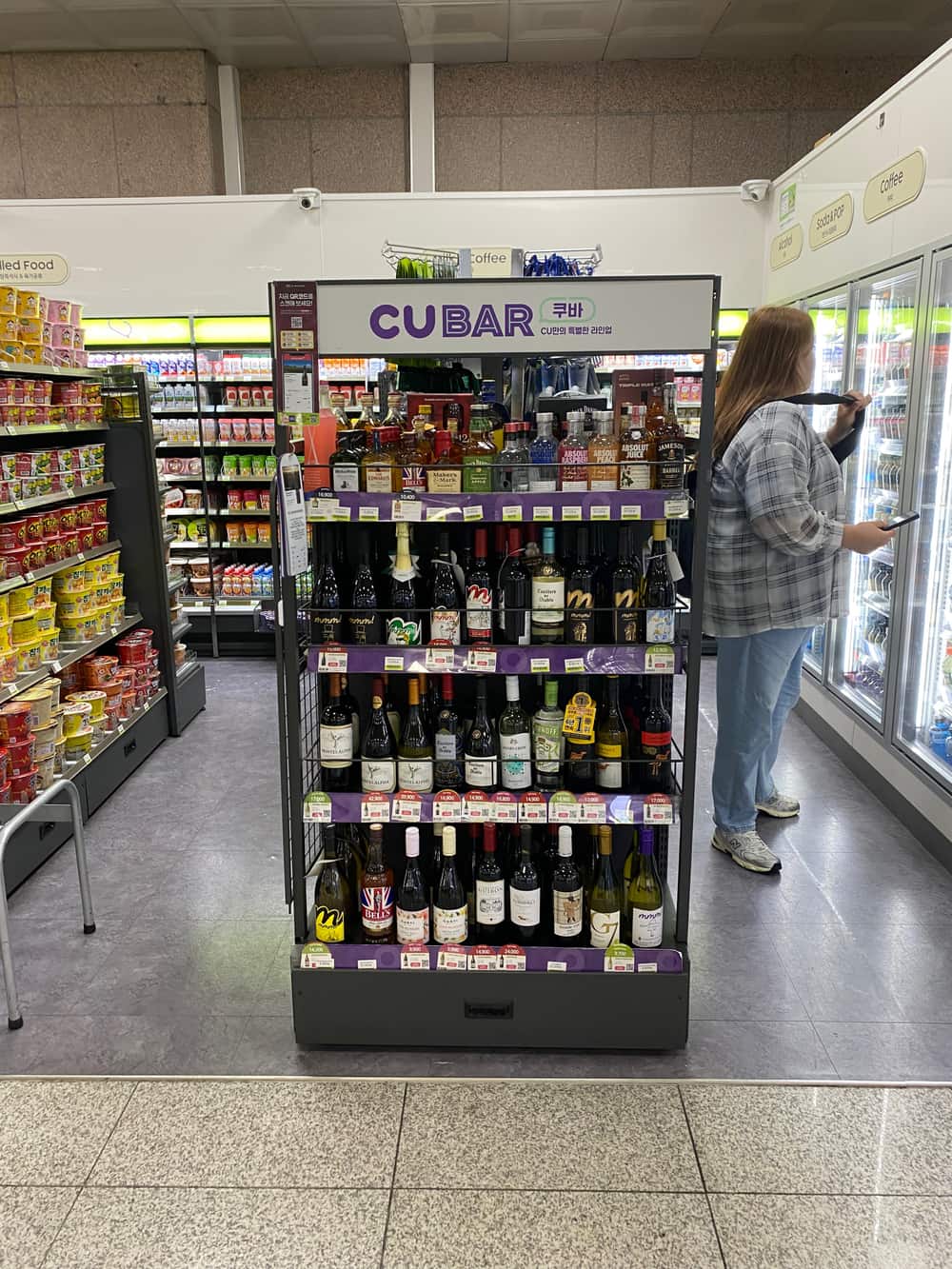
How to Buy Alcohol in Korea: The Rule Nobody Tells Tourists
Here is a rule that catches almost every visitor to Korea, and that no guidebook seems to print:
Almost no alcohol can be delivered to your door in Korea. You can order imported wine or whisky on a phone app and collect it at a convenience store — while the soju and beer on that same shelf are excluded from that system entirely. And one category, traditional Korean liquor, can be shipped to your door outright.
That asymmetry is not a glitch. It is the deliberate shape of Korean liquor law, and once you understand it, buying a drink in Korea stops being confusing.
Korean soju shot glasses, set of 8 — the bottle cannot be shipped home, the glasses canAffiliate link. As an Amazon Associate, EpicKor earns from qualifying purchases at no extra cost to you.
Quick Guide
| What you want | Can you order it online? | How you actually get it |
|---|---|---|
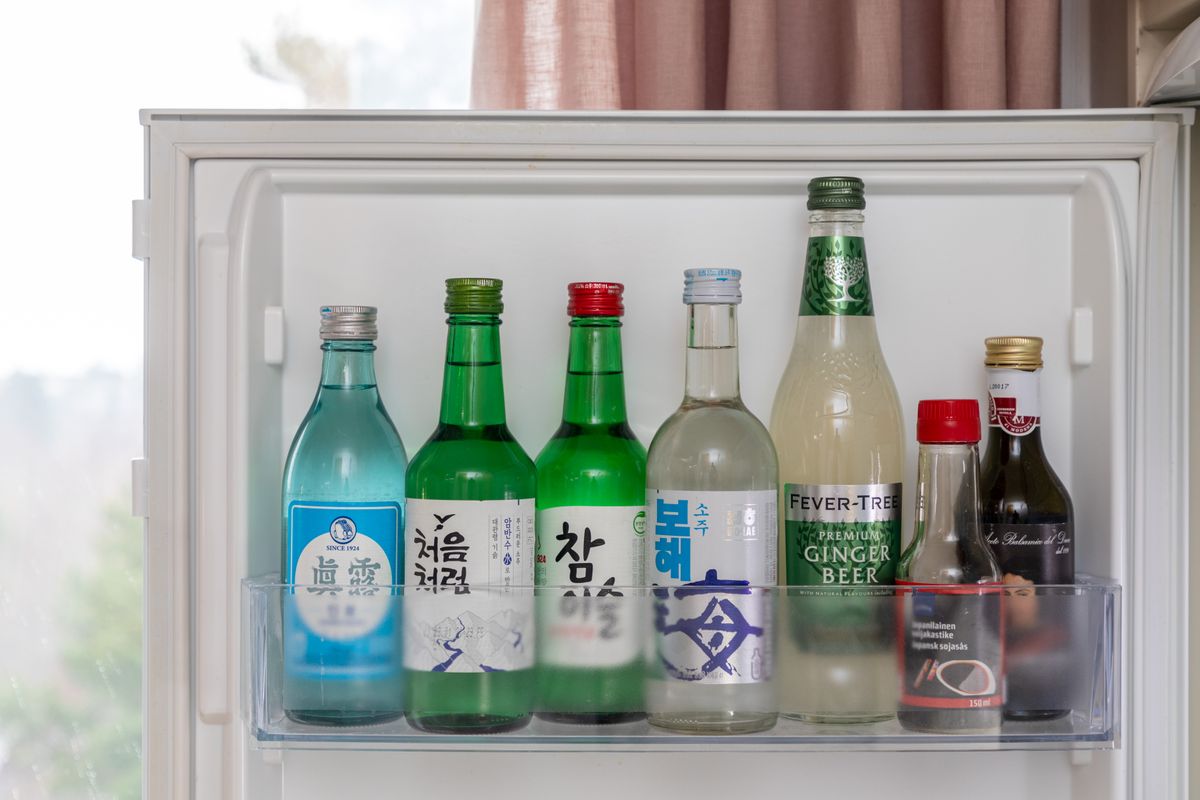
| Domestic soju (참이슬, 처음처럼) | No | Walk into any convenience store or supermarket |
| Domestic beer (카스, 테라) | No | Same — offline only |
| Imported wine | Yes, "smart order" | Order and pay in an app, collect at a chosen store |
| Whisky, sake, imported spirits | Yes, smart order | Same route |
| 전통주 (traditional liquor) | Yes — genuine delivery | The one category that ships to an address |
| Mass-market makgeolli | Generally no | Convenience store chiller, or a restaurant |
| Soju or beer, delivered to your door | No | Does not exist. Go and collect it. |
The Law in One Paragraph
Korea prohibits selling alcohol over the internet for delivery, with one carved-out exception covered further down. The stated concern is age verification — a courier handing a box to whoever answers the door cannot check a national ID the way a cashier can — alongside a straightforward public-health argument that alcohol is already easy enough to obtain.
What the authorities permitted instead is smart order: you buy online, and you collect in person from a licensed seller who checks your age at handover. The transaction is online; the handover is not. That single distinction is what makes the whole thing legal.
And the permission is not blanket. Imported liquor — wine, whisky, sake — qualifies for smart order. Domestic soju and beer do not. Those remain restricted to physical stores and restaurants, which is why you will never find a way to app-order a bottle of Chamisul no matter how long you scroll.
Wine25Plus: The Convenience Store That Became a Wine Shop
The clearest example is GS25's Wine25Plus (와인25플러스), launched in 2020.
You verify your age once in the GS Retail app, browse the liquor catalogue, pay in the app, choose which GS25 branch to collect from, and pick it up. There is no delivery fee because there is no delivery. The store is the last mile.
This did something unexpected to the category. A convenience store chain with thousands of branches suddenly became one of Korea's largest liquor retailers by footprint — not because each store stocks a big range, but because any store can become the pickup point for a range held centrally.
The composition of what people buy has shifted too. In the first half of 2026, single malt whisky became the top-selling liquor category on Wine25+ for the first time, after whisky overtook wine the year before. A service built and named around wine is now, in revenue terms, a whisky service.
Korean makgeolli bowls with handles, set of 4 — the 사발 a Korean table pours into Alcohol cannot be shipped internationally, but the vessels can, and they change the drink more than people expect: a wide bowl gives the aroma somewhere to go, which is why makgeolli tastes different from a bowl than from a cup. As an Amazon Associate, EpicKor earns from qualifying purchases at no extra cost to you.
See the makgeolli bowls on AmazonWhy the Convenience Store Won This, Not the Wine Shop
It is worth sitting with how strange this outcome is.
Korea has wine shops. It has department-store food halls with serious cellars. What it did not have, before smart order, was a way to browse a large selection anywhere except by physically standing in a shop that could afford to hold one.
Smart order broke that constraint apart. The catalogue lives centrally; the store only has to be a place a person can walk to. And the retailer with the most places a person can walk to is, by an enormous margin, a convenience-store chain.
That is why the wine business landed with GS25, CU and 7-Eleven rather than with specialist retailers. It was never really a wine competition. It was a competition over pickup density, and convenience stores had already won that fight for entirely unrelated reasons.
The other chains run their own versions of the same mechanism, so the choice of app usually comes down to which chain's sign you pass most often rather than to catalogue differences.
Traditional Liquor Is the Interesting Edge Case
There is one more asymmetry buried in the rules, and it is the one worth knowing if your interest goes past a cold beer.
전통주 — traditional Korean liquor — is the only category of alcohol that can legally be sold online and shipped to a Korean address. Not smart order. Actual delivery.
The exception is old and deliberate. Mail-order sales through the post office were permitted in 1998, and online shopping-mall sales followed in 2017. The reasoning was industrial rather than moral: soju and beer makers have national distribution and can put a bottle in every shop in the country, while a small regional brewery cannot. Without an online channel, those producers have no route to a customer more than a short drive away.
So the rule that looks like a blanket ban is really a filter, and it is pointed at exactly the drinks a visitor is least likely to find by accident.
The practical effect for a visitor is that the interesting bottles — regional makgeolli, 약주, aged 소주 made from actual grain rather than diluted ethanol — live in a different distribution world from the green bottle in the chiller. You will not find them by browsing a convenience store. You find them at specialist shops, at breweries, and increasingly at 전통주 bars that pour flights.
If you have a limited number of drinking occasions in Korea, spending one of them on a bottle you could have bought anywhere is the mistake. The green bottle will still be there.
What This Means If You Are Standing in a Convenience Store
Practically, for a visitor:
- Soju and beer are the easy case. Walk in, take it from the chiller, pay. You will be asked for ID if you look under about 30 — a passport works; a photo of a passport often does not.
- Wine and whisky are worth checking the app for, because the shelf selection at a small branch is thin while the app catalogue is not. If you want something specific, reserve it and collect.
- Nothing arrives at your hotel. If a delivery app appears to offer alcohol, it is attached to a food order from a licensed restaurant — that is a different legal category from retail delivery, and it usually requires the food.
One more thing that surprises people: Korea does not restrict the hours of retail alcohol sales. Plenty of countries do — some ban sales after a set hour, some ban them in parks — and Korean policy commentary tends to note that outside the online-sales ban, the country regulates alcohol lightly. In practice, a convenience store will sell you beer at four in the morning. The restriction is on who buys, not when.
What It Actually Costs
Prices for the two things most visitors buy, as of 2026:
| Item | Convenience store | Supermarket |
|---|---|---|
| Soju, 360 ml (참이슬 · 처음처럼) | ₩1,900 | ₩1,320–1,340 |
| Cass beer, 500 ml can | about ₩2,500 on a 2+1 promotion | ₩2,750 in a 12-pack |
| Cass 1.6 L PET | — | ₩4,840 |
Two things follow. A supermarket six-pack of soju runs roughly 30% below convenience-store pricing, so if you are drinking more than a bottle or two, the walk to an E-Mart or Homeplus pays for itself. And convenience-store beer is only competitive on promotion — the 2+1 offers rotate monthly, and the sticker price without one is the worst deal in the room.
Restaurant pricing is a different world again: a bottle that costs ₩1,900 in a shop is commonly ₩6,000–7,000 on a table. That gap is normal and not a tourist markup.
The Age Rule Is Not the Number You Expect
Korea's drinking age is 19 — but not nineteen the way you count it.
The legal line is set by calendar year of birth, not by your birthday. Korea's Youth Protection Act (청소년보호법) Article 28 makes you eligible from 1 January of the year you turn 19 — so in 2026, that means anyone born in 2007 or earlier, whether or not their birthday has arrived. In practice a cashier is comparing the year on your ID against a threshold year, not doing arithmetic on months.
This trips up visitors in both directions. Someone who is 19 by their own country's counting may be refused; someone who has not yet had their nineteenth birthday may be served. Carry your actual passport. Korean cashiers are held responsible for the check, and a friendly one who guesses wrong loses their job, so they will not take your word for it.
You might like: Why Korean Soju Keeps Getting Weaker, Pricier, and Less Drunk: The 100-Year Slide from 35% to 15.7%
Makgeolli Is the Exception Worth Knowing
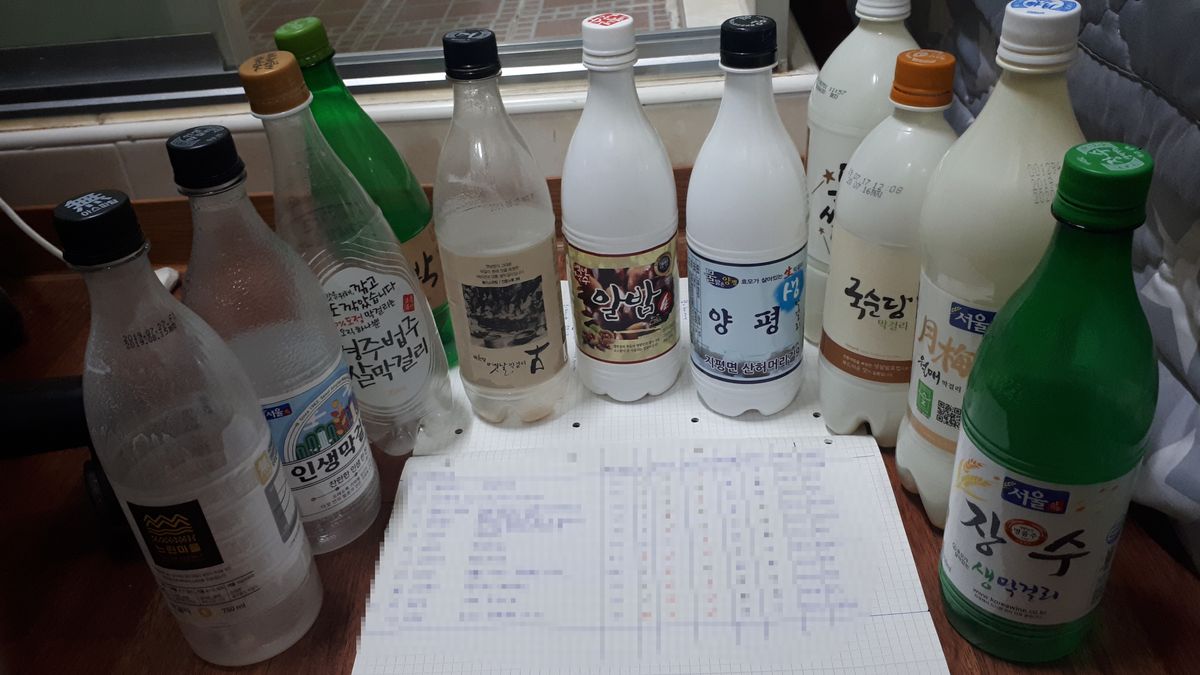
Makgeolli sits awkwardly in this system. It is domestic, so it is largely outside smart order, and it is perishable in a way that shelf-stable soju is not.
That gives it an unusual retail life. Convenience stores carry a small chilled selection with short dates. The interesting bottles — unpasteurised, single-brewery, seasonal — are found at makgeolli-focused bars and at specialist shops, not at a GS25 counter.
If you only ever drink the mass-market plastic bottle, you have tried the category's floor. The gap between that and a good unpasteurised makgeolli is larger than the gap between mass-market and craft beer.
What to Do With This on an Actual Trip
A workable sequence:
- Day one, buy nothing in advance. Convenience stores are everywhere and open all night. There is no need to plan.
- If you want a specific wine or whisky, open the GS25 app when you arrive, verify your age once, and reserve for the branch nearest your accommodation. The verification is the slow part; do it before you need it.
- For makgeolli, go to a bar rather than a shop. The good stuff does not survive a convenience-store supply chain.
- Do not plan on drinking in your hotel room from a delivery. Buy it on the way home instead — which, in Seoul, means passing three convenience stores.
Skyley porcelain soju cups, set of 6 — the small cup Korean drinking etiquette is built on If the drinking table is what you want to bring home, the cups are the part that travels. A soju cup is small enough that pouring for each other stays constant, which is the actual mechanism of Korean drinking etiquette. As an Amazon Associate, EpicKor earns from qualifying purchases at no extra cost to you.
See the soju cups on AmazonThe Honest Summary
Korea's alcohol rules look restrictive from the outside and feel invisible from the inside. You cannot get a bottle delivered, and you will never need to, because the shop is fifty metres away and open. The one piece worth learning in advance is the smart-order asymmetry — imported yes, domestic no — because it is the only part that is genuinely counterintuitive.
Everything else follows from a single principle: Korea does not mind you buying alcohol at any hour. It minds not being able to see your face when you do.
If you want to know what to order once you have it, EpicKor's Korea drinks guide covers makgeolli, somaek and the rest, and how a Korean drinking table works explains the pouring rules that the glassware above exists to serve. And if you have wondered why the canned highballs beside the soju cost twice as much, that is a tax story — a 1999 WTO ruling, still shaping the chiller.
You might like: Can a Foreigner Win Korea's Lotto? Every Korean Lottery, Sports Toto, and the Casino Rule That Flips for Tourists
Sources Checked
GS25 Wine25Plus launch and mechanics from Korean business press (2020); Korean reporting on the online alcohol sales restriction and the imported-versus-domestic split, including Korea Times coverage of the resulting complaints (2025); Wine25+ category-share reporting showing single malt whisky overtaking wine in the first half of 2026; Korean policy coverage of the 전통주 online-sales exception, permitted by post in 1998 and through online malls from 2017, and of the small-producer rationale behind it; the Youth Protection Act (청소년보호법) Article 28 age rule; and 2026 Korean retail pricing for soju and beer. Liquor regulations, prices and app features change; confirm the current rules before relying on any of it.
Frequently Asked Questions
Q: Can I get alcohol delivered to my hotel in Korea?
Not ordinary alcohol. Retail delivery of soju, beer, wine and spirits is prohibited — what looks like delivery is usually alcohol attached to a food order from a licensed restaurant, a separate legal category that generally requires ordering food too. The exception is 전통주, traditional Korean liquor, which has been legally sellable by mail order since 1998 and online since 2017.
Q: Why can I order wine on an app but not soju?
Because "smart order" — pay online, collect in person — was permitted for imported liquor such as wine, whisky and sake, but not for domestic soju and beer. Those stay restricted to physical stores and restaurants.
Q: What is Wine25Plus?
GS25's liquor smart-order service, launched in 2020. You verify your age in the GS Retail app, pay for the bottle in the app, and collect it from the GS25 branch you choose. In the first half of 2026, single malt whisky was its best-selling category.
Q: What ID do I need to buy alcohol in Korea?
A passport. Korean cashiers are personally accountable for age checks, so photographs of documents are frequently refused. Eligibility runs from 1 January of the year you turn 19 under the Youth Protection Act — in 2026, birth year 2007 or earlier — so the year printed on your ID is what the cashier is actually reading.
Q: Is there a time when convenience stores stop selling alcohol?
Not in practice. Korea does not impose the kind of cut-off hour common elsewhere, which is why a convenience store will sell you beer at 4am. The check that does apply is age, not the clock.
You Might Also Like
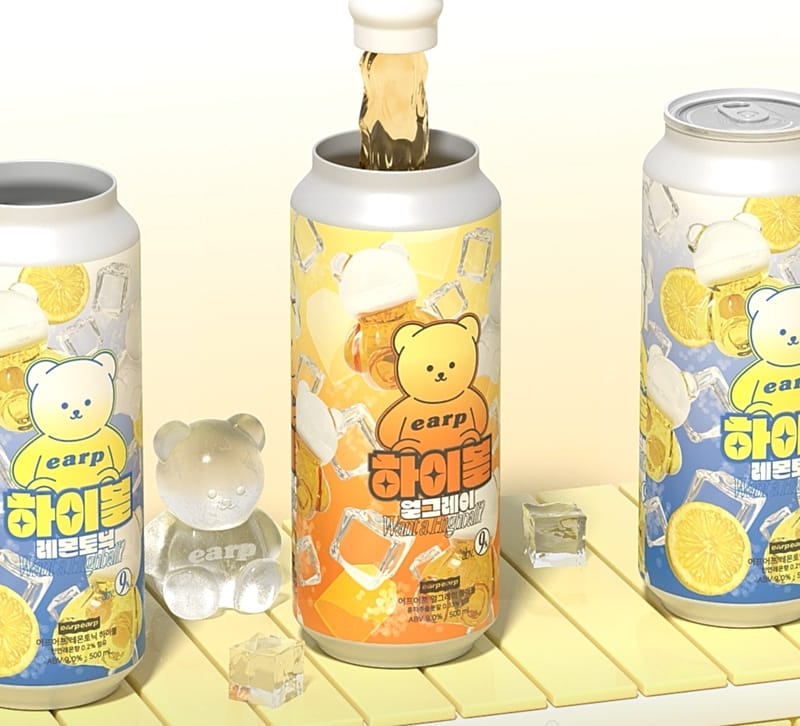
Why Korean Highballs Cost More Than Beer: A Tax Story
A canned highball in a Korean convenience store carries the same 72% liquor tax as single malt whisky, because Korea lost a WTO case in 1999. What that means for what you should actually buy from the chiller.
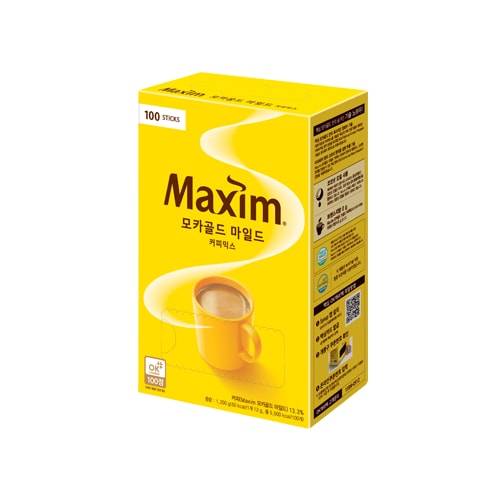
Maxim vs G7: Why Korea's Coffee Mix Tastes Nothing Like Vietnam's
Korea grows no coffee and drinks 405 cups a person a year. Vietnam is the world's second-biggest producer. That difference is why a Maxim stick is sweet and creamy and a G7 stick is bitter — and why one company holds 88% of Korea's coffee mix market.
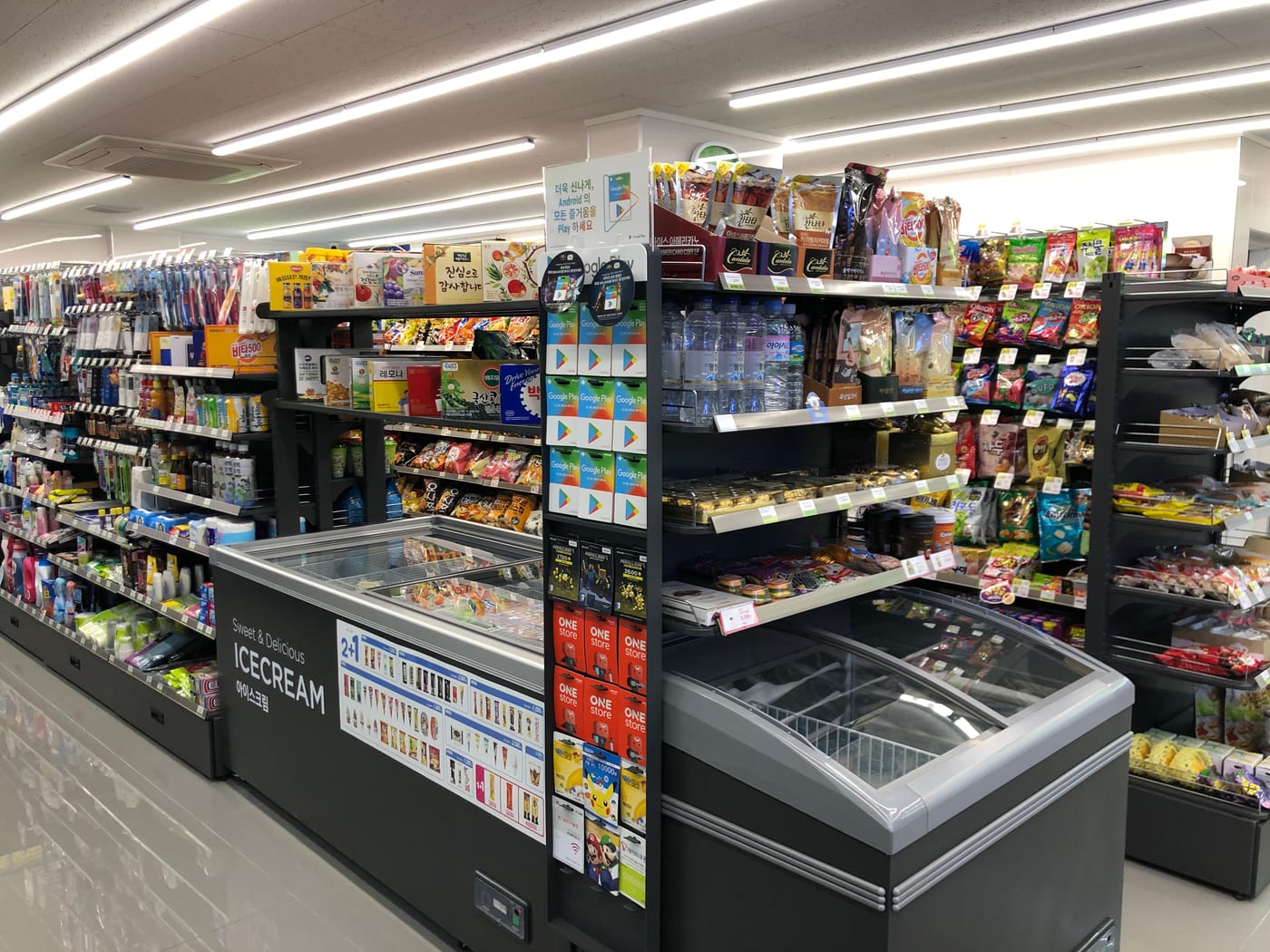
Delaffe: Korea's Convenience-Store Coffee Brand That Cut Its Price to ₩900
델라페 is not a drink, it is CU's own label — 150 million units a year, sold as a pouch you pour into a separate cup of ice. In March 2026 five of them dropped to ₩900, which makes the convenience store cheaper than Korea's cheapest café chain.