Makgeolli Got Clean and Korean Traditional Liquor Got Beautiful: Why Koreans Still Rarely Drink It, and the One Alcohol Korea Lets You Buy Online
Last updated: September 2026
If you know one Korean drink besides soju, it is probably makgeolli (막걸리): the milky rice wine that comes in a plastic bottle, gets shaken before pouring, and is drunk out of a bowl with a savoury pancake when it rains. That picture is about twenty years out of date, and the ways it is out of date are the interesting part.
The makgeolli on a Korean shelf in 2026 is clean. It is filtered, often sweetener-free, sometimes sparkling, sometimes 18 percent and ₩110,000 a bottle, and it is the drink a Korean in their twenties orders at a pairing bar in Seongsu-dong on a first date. Above it on the same shelf sits a whole category of "traditional liquor" (전통주) that has never looked better: hand-thrown ceramic, folk-painting tigers, a rapper's soju that sells out online in minutes. And underneath all of that is a fact the industry does not put on the label: traditional liquor is about 1.5 percent of everything Korea drinks, Koreans themselves mostly do not buy it, and a good part of the reason is the rice.
This post is three things at once. It is what happened to makgeolli, which we have covered before as a rainy-day pairing and as part of the drinking table but never as a drink that changed. It is an honest look at traditional liquor, including the part Koreans say quietly about why it is not as good as sake. And it is the story of the strangest rule in Korean alcohol law: you cannot buy beer, soju or whisky online in Korea, but you can buy this, and the reason is an accident of definitions that made a Korean-American rapper's brand into a "traditional" one.
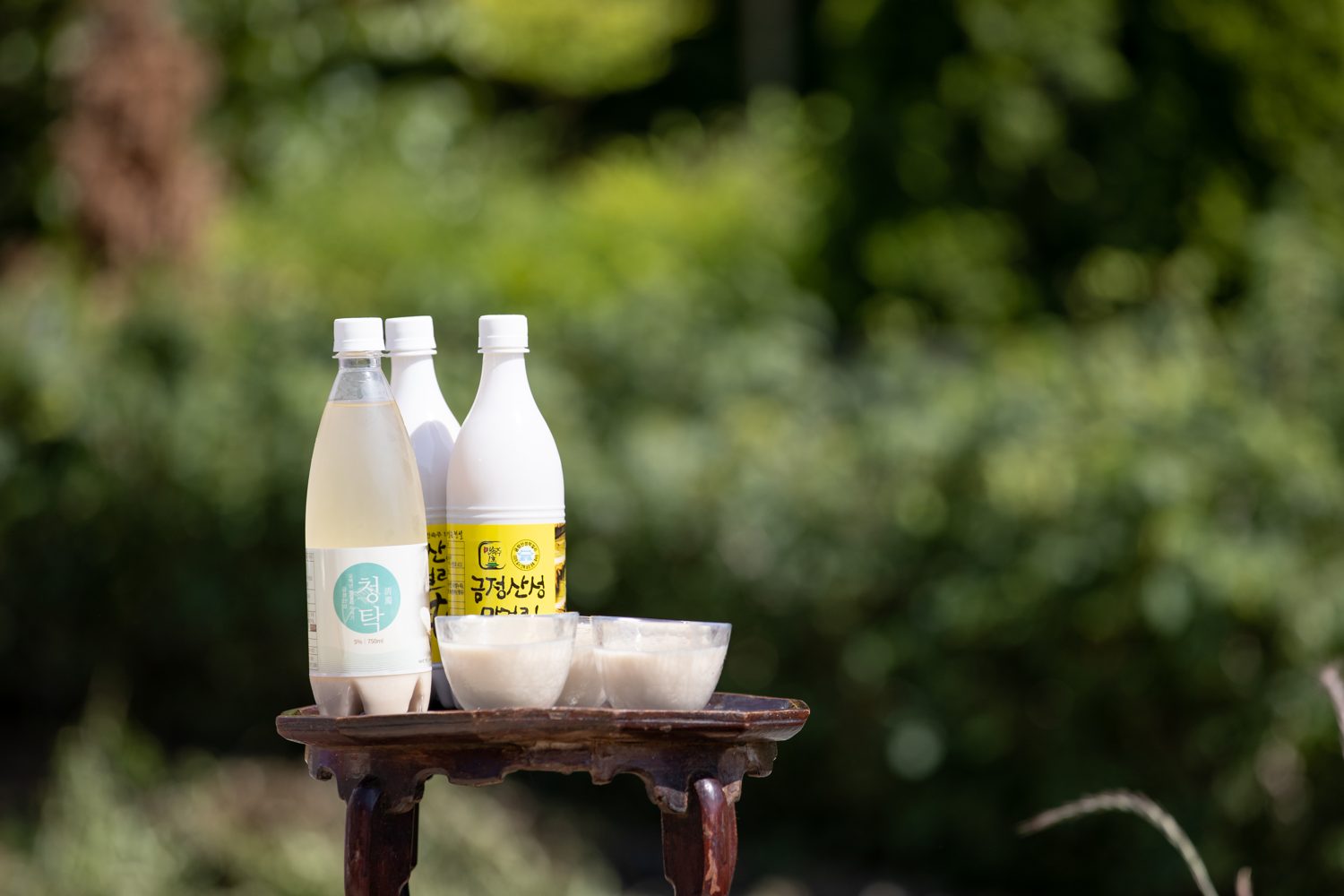
Geumjeongsanseong makgeolli, brewed in a fortress village above Busan and designated Korea's first folk makgeolli in 1980. Photo: Korea.net (KOCIS), CC BY-SA 2.0.
If you want to make it at home: the K-Makgeolli DIY kit is pre-cultured rice powder and a fermentation jar that turn into makgeolli in about a day, and it ships in the US. As an Amazon Associate, EpicKor earns from qualifying purchases.
Quick Guide
| Question | Short answer |
|---|---|
| What is makgeolli? | Rice, water and nuruk (a wheat fermentation cake), fermented about a week, 5 to 8 percent, cloudy. The oldest Korean alcohol still made in quantity |
| What changed? | Filtering, refrigeration, the end of aspartame, and a premium tier from ₩12,000 to ₩110,000 a bottle. The old sour, yeasty, sediment-heavy bottle is now the exception |
| Is it popular? | Volume is falling (380,000 kL in 2020 to 318,000 in 2025) but the money is rising; Seoul Jangsu alone sells 200 million bottles a year |
| What is "traditional liquor"? | A legal category, not a style: liquor made by a heritage-designated master, or by a farmer or agricultural company from local produce. 1.5 percent of the market by value |
| What do Koreans eat with it? | Pajeon and other pancakes, chicken or duck baeksuk, tofu with kimchi. Makgeolli is a food wine |
| Can I buy it online? | In Korea, traditional liquor is the only alcohol that can be sold online and delivered. Everything else must be bought in person |
| Where does it fall short? | Rice. Korea has about three rice varieties bred for brewing; Japan has more than a hundred and its breweries grow their own |
You might like: Korean Drinks Guide: what to buy in a Korean convenience store, with the price, sugar and caffeine of every bottle
What makgeolli was
Makgeolli is the simplest alcohol in Korea and the oldest. Steamed rice, water and nuruk (누룩), a pressed cake of wheat that has been left to grow wild moulds and yeasts, go into a jar together; the moulds turn the starch to sugar and the yeasts turn the sugar to alcohol at the same time, which is why it takes a week rather than a month. Strain the result through a cloth and you have makgeolli, at six to eight percent, white with suspended rice solids. Strain it finer and let it settle and you get the clear yellow layer on top, which is yakju or cheongju, the "clear wine." Distil either and you get the original soju, the one that existed before the green bottle was invented.
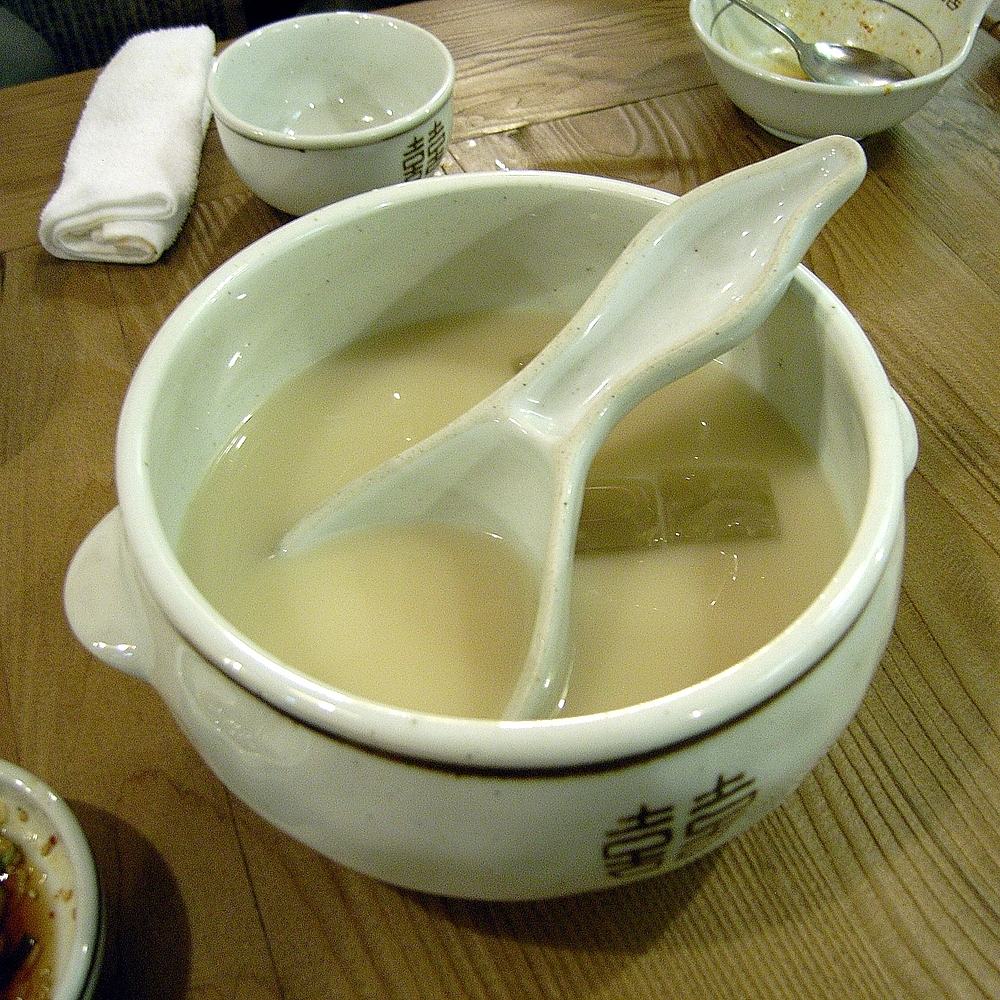
Makgeolli the old way, 2006: a communal bowl, a ladle, and a sediment you stirred back in. Photo: CC BY-SA 2.5, via Wikimedia Commons.
For most of the twentieth century it was a farmer's drink, and it tasted like one. The 1965 grain law that banned distilling from rice also took rice out of makgeolli: from the mid-1960s the mash was 80 percent imported wheat flour and 20 percent corn, and the product that came out of the 1970s and 1980s was cheap, sour, yeasty, unstable, and thick with sediment that Koreans over fifty still describe with a slight wince. It went flat in a day, went off in three, and gave a hangover out of proportion to its strength, which everyone blamed on the sediment and the additives and which nobody has ever quite explained. Rice came and went with the harvest, briefly allowed in 1971 and mandated in 1977, and only settled for good in the early 1990s when surplus rice piled up in government warehouses. The drink you find today began there.
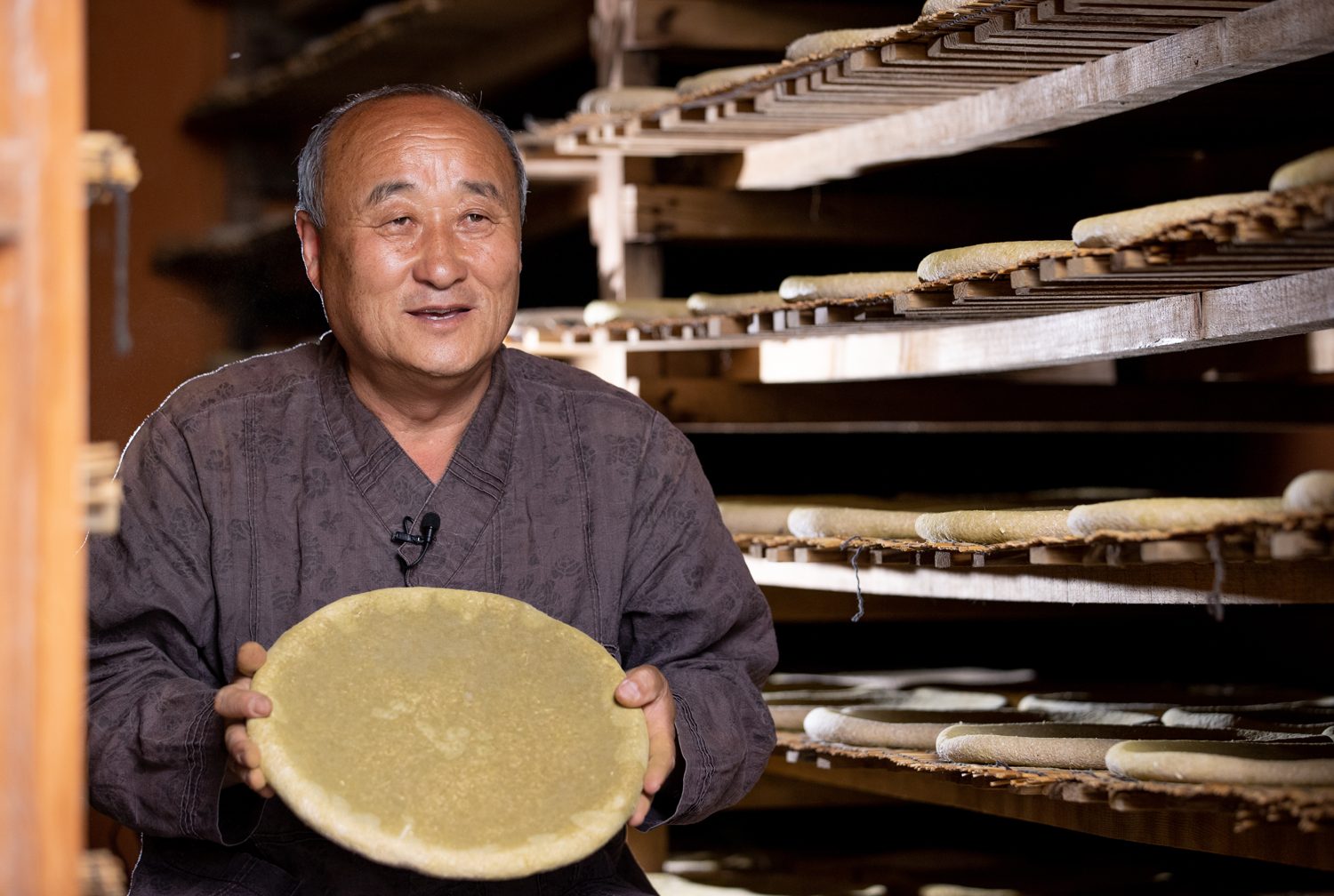
The nuruk disc: wheat, water, and whatever grows on it in the mountain air. This is the whole difference between Korean and Japanese brewing. Photo: Korea.net (KOCIS), CC BY-SA 2.0.
What changed: the clean generation
Three things turned makgeolli from a farmer's drink into the one on a first-date table.
Refrigeration and filtering. Almost all makgeolli sold in cities is now 생막걸리, "live" makgeolli, unpasteurised and sold cold with a ten-day shelf life, and the fermentation is stopped early and filtered so the bottle is smooth rather than chunky. Seoul Jangsu (서울장수), the company that grew out of a 1962 association of 51 Seoul breweries, holds roughly 40 percent of the national market and 70 percent of Seoul's with a single product, Jangsu Saeng Makgeolli, that sells about 200 million bottles a year at ₩1,900 for 750 ml. It is six percent, mildly sweet, faintly fizzy, and it is the taste most Koreans mean by the word.
The end of aspartame. In July 2023 the World Health Organization's cancer agency classified aspartame as "possibly carcinogenic." It turned out that most mass-market makgeolli, including Jangsu, Kooksoondang and Jipyeong, used it, in tiny amounts (about 0.0025 percent; the industry pointed out you would need to drink 33 bottles a day to reach the intake limit), because live makgeolli keeps fermenting in the bottle and eats its own sugar. The brands could have argued the science. Instead almost all of them reformulated, and "no aspartame" became the label claim of 2024. Makgeolli got cleaner because of a headline.
The premium tier. In Haenam, on the south-west coast, the Haechang brewery (해창주조장) makes makgeolli from local rice with no sweeteners at all and sells the 12 percent version for ₩12,000, and an 18 percent version, aged and sold in a gold-topped bottle Koreans call "the Rolls-Royce makgeolli," for ₩110,000, the most expensive makgeolli ever sold in Korea. Boksoondoga (복순도가) in Ulsan makes a naturally sparkling one that opens like champagne. Neurin Maeul (느린마을), Baesangmyun's brand, sells at ₩3,400 in convenience stores, almost twice Jangsu, on a no-additives promise. Jipyeong (지평), a brewery founded in 1925, went from a regional name to a national one on the same wave. None of these tastes like the bowl in the photograph above. They are dry, clean, slightly acidic and drinkable by the glass, which is what a wine drinker means by "good," and it is why the pairing bars in Seongsu, Yeonnam and Hannam pour them by the flight.
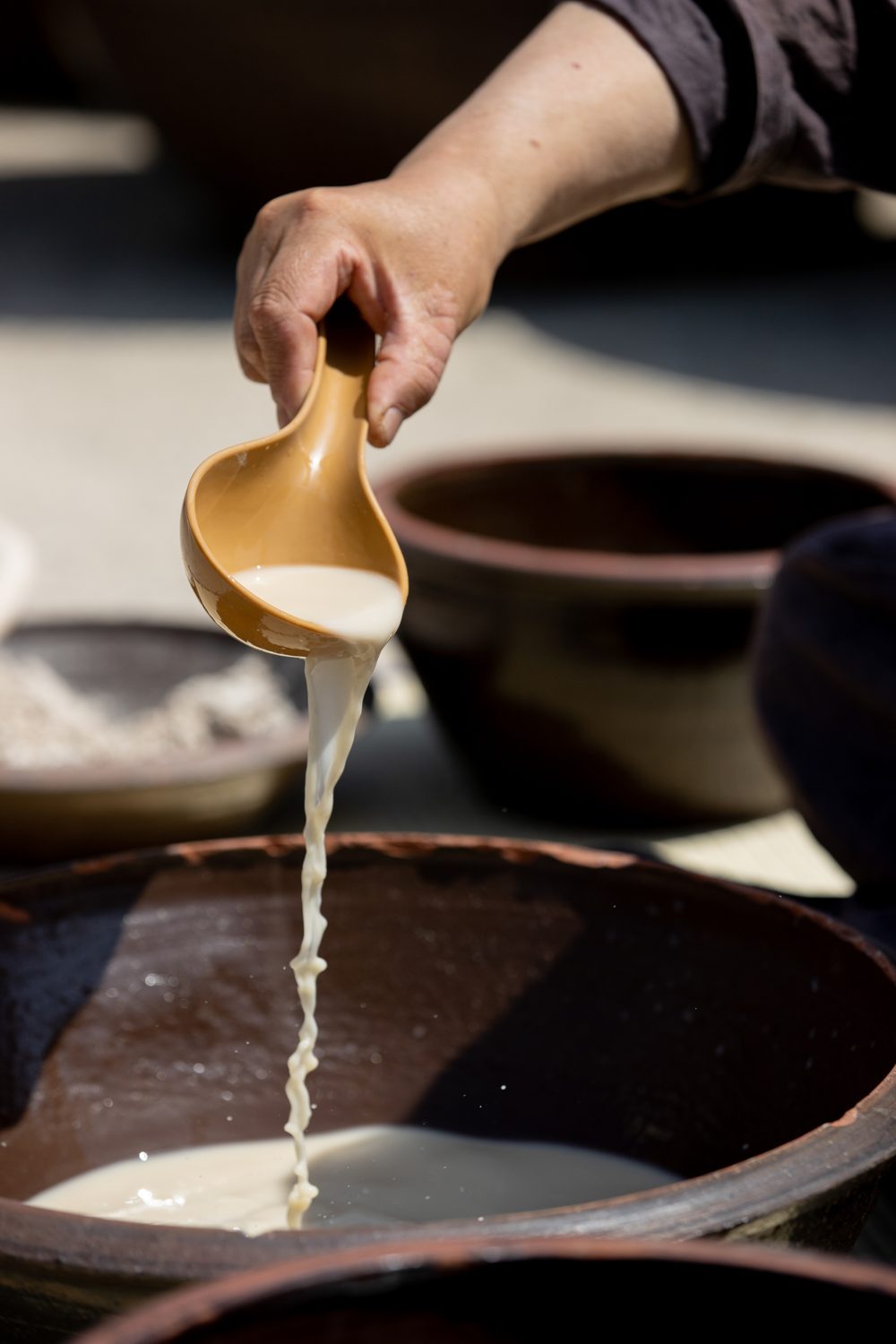
The pour. The technique has not changed; the filtering afterwards has. Photo: Korea.net (KOCIS), CC BY-SA 2.0.
The numbers tell a story of less volume and more money. National makgeolli shipments fell from 380,000 kilolitres in 2020 to 318,000 in 2025, in line with the whole Korean drinks market, which is shrinking fast. But the makgeolli counted as regional specialty liquor rose 5 percent in volume and 26 percent in value in 2025 alone, to ₩61 billion, and the average bottle got dearer every year. Koreans are drinking less makgeolli and paying more for it, and the ones paying are young: at 7-Eleven, people in their twenties and thirties are 36 percent of traditional-liquor sales, up eight points in five years, and Lotte Department Store's sales of the category to that age group rose 130 percent in 2025.
One thing did not change. It still gives you a headache if you drink too much of it. Six to eight percent, sweet, fizzy, in a bowl, with fried food, at a pace set by the person pouring: makgeolli goes down faster than anything in Korea except beer, and the hangover is the same as it always was. Every Korean survey on why people avoid traditional liquor puts it near the top of the list. The clean generation cleaned up the taste, not the morning.
K-Makgeolli DIY kit with container — a 24-hour makgeolli, three flavours Pre-cultured rice powder in brown rice, black raspberry and Jeju mandarin, with a reusable fermentation jar. Mix with warm water, wait a day, chill, shake. It will not be Haechang, but it will be recognisably the thing, and it is the cheapest way to understand why the bottle fizzes. As an Amazon Associate, EpicKor earns from qualifying purchases.
See the kit on AmazonWhat Koreans eat with it
Makgeolli is a food wine, and Koreans order it for specific dishes rather than as a general drink. The famous pairing is pajeon (파전), the scallion pancake, and every other pancake in the jeon family: kimchi-jeon, seafood pajeon, mung-bean bindaetteok. The second is the boiled-bird family: baeksuk (백숙), a whole chicken or duck simmered with garlic and rice, the kind of thing a family drives into the hills to eat on a Sunday, where the restaurant's own makgeolli is on the table before you have sat down. The third is tofu: dubu-kimchi, warm tofu with stir-fried kimchi and pork, the standard order at a makgeolli house. All three are mild, rich and a little greasy, and a cold, slightly sour, slightly sweet makgeolli is what cuts them. If the restaurant has a local brand, order that. The Jangsu is fine, but the point of makgeolli is that it does not travel well, so the bottle brewed twenty kilometres away is a different drink from the one brewed in Seoul.
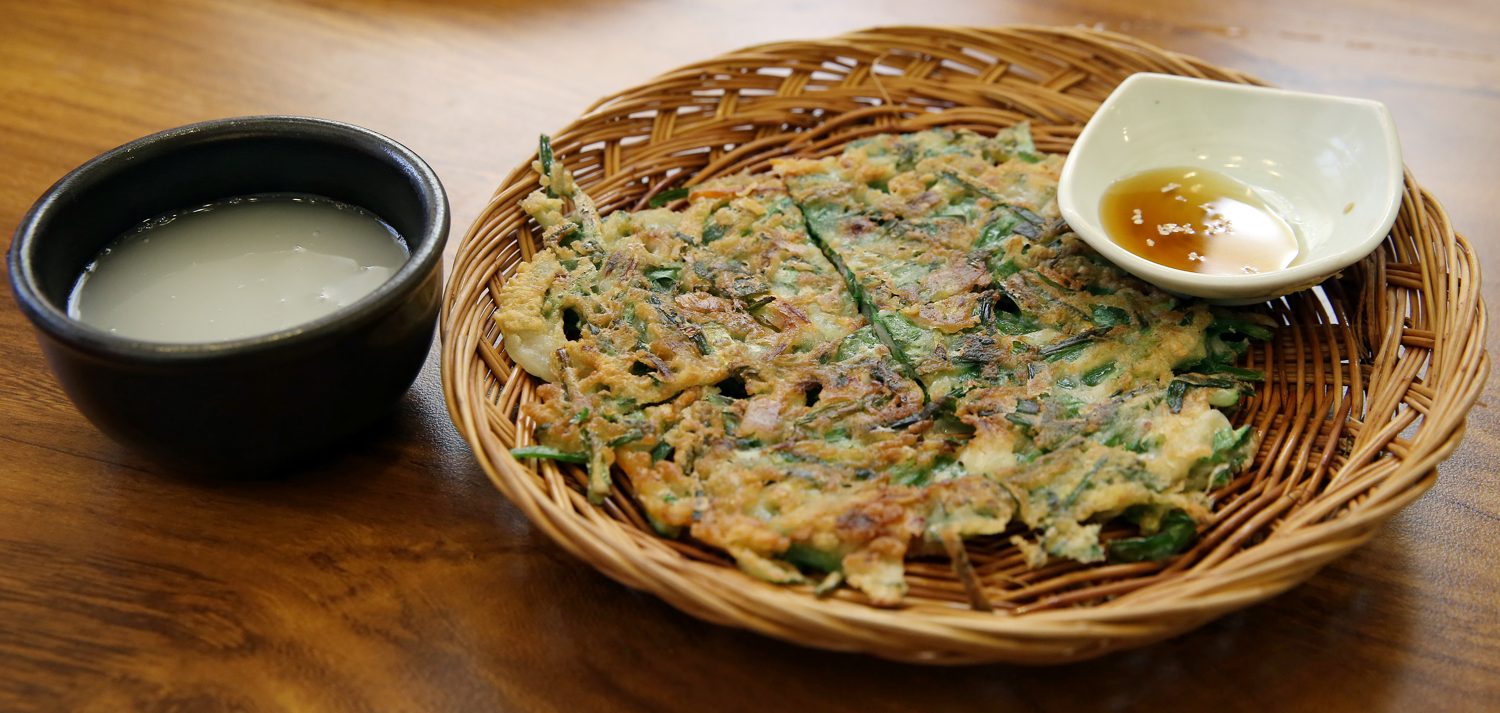
The pairing that made it famous: pajeon and a bowl of makgeolli, Gwacheon, 2015. Photo: KOCIS, CC BY-SA 2.0.
"Traditional liquor" is a legal category, and a strange one
Here is the part of this subject that is genuinely odd, and that makes the online-sales rule work.
In Korean law, 전통주 does not mean "made the traditional way." It means one of two things, under the 2010 Traditional Liquor Industry Promotion Act. Folk liquor (민속주) is liquor made by a holder of a national or provincial intangible cultural heritage designation, or by a government-certified Food Master, from Korean ingredients. Regional specialty liquor (지역특산주) is liquor made by a farmer or an agricultural corporation, mainly from agricultural produce grown in the brewery's own district or a neighbouring one. That is the whole definition. The method does not appear in it.
The consequences are absurd in both directions, and Koreans argue about them every year. Seoul Jangsu's makgeolli, the country's best-selling one, is not traditional liquor, because a brewery that big cannot source all its rice from one district and uses government rice from all over the country. Kooksoondang's Baekseju, the herbal rice wine every foreigner in the 1990s was given as "Korea's traditional drink," is not traditional liquor. Hwayo, the beautifully packaged distilled soju that sells for ₩10,000 and up, is not traditional liquor, because its parent is a ceramics company rather than an agricultural corporation. Meanwhile a wine, a cider, a sake or a gin qualifies as "traditional liquor" if a farming corporation makes it from local fruit or grain, and several do.
And Won Soju (원소주) qualifies. When the rapper Jay Park launched it in February 2022, a distilled soju in a squat clear bottle at ₩14,900, the first batch sold 1.72 million bottles and the online launch that March was limited to six bottles per person per day. It could be sold online at all only because it is made by an agricultural corporation from 100 percent Wonju rice, which makes it, legally, a regional specialty liquor. Korean newspapers asked, in so many words, why a Korean-American rapper's soju was receiving the tax break and the online channel meant for village brewers, and the honest answer was that he had read the law and the village brewers had not.
There is a tax break, and it is real: makers under a size threshold pay half the liquor tax, and in February 2025 the government doubled the thresholds and loosened the local-produce rule from 100 to 95 percent. There is also a reform on the table that would split "regional specialty" from "traditional" and let Jangsu's makgeolli and Baekseju back in, but it has been on the table for years.
The one alcohol you can order online
Every other alcohol in Korea must be bought in person from a licensed seller; the law is strict enough that the "online" wine shops in convenience stores are really reservation systems where you still collect the bottle at the counter, which we explained in the post on buying alcohol in Korea. Traditional liquor is the exception, and has been in stages: mail order through the post office from 1998, general online malls from 2017, and since April 2019 a traditional-liquor maker may also sell other makers' traditional liquor online through its own shop. The reasoning was industrial, not moral. A soju company has a bottle in every shop in Korea; a brewery in a village in Jeolla has no route to a customer in Seoul without a delivery van. So the government gave the small producers the internet and kept it from everyone else.
The effect for a visitor is that the interesting Korean drinks live in a different distribution system from the boring ones. You will not find Haechang or Andong soju by browsing a convenience store, although that is changing: CU now sells Silla-ju, a distilled soju, at ₩18,600 for 375 ml, and 7-Eleven says its traditional-liquor sales were up 55 percent in 2026 and seven times what they were in 2021. You find them at traditional-liquor shops, at breweries, at the pairing bars, and, if you have a Korean address, on the internet.
You might like: How to Buy Alcohol in Korea: The Rule Nobody Tells Tourists
Andong soju, and the distilled revival
If makgeolli is the base of the pyramid, Andong soju (안동소주) is the top of it. It is what soju was before the 1965 grain law: rice, nuruk and water, fermented, then distilled once in a traditional still to 45 percent, and aged. The city of Andong, in the mountains of North Gyeongsang, has had the recipe since at least the Goryeo period, and in 1987 the province designated the method an intangible cultural asset with the late Cho Ok-hwa as its holder; a second lineage under the Food Master Park Jae-seo has its own designation. A 375 ml bottle of the folk-liquor version is ₩22,000 to ₩25,000. It smells of rice and burnt sugar, hits like a good grappa, and is the drink to bring out when someone tells you soju is a cheap chemical spirit.
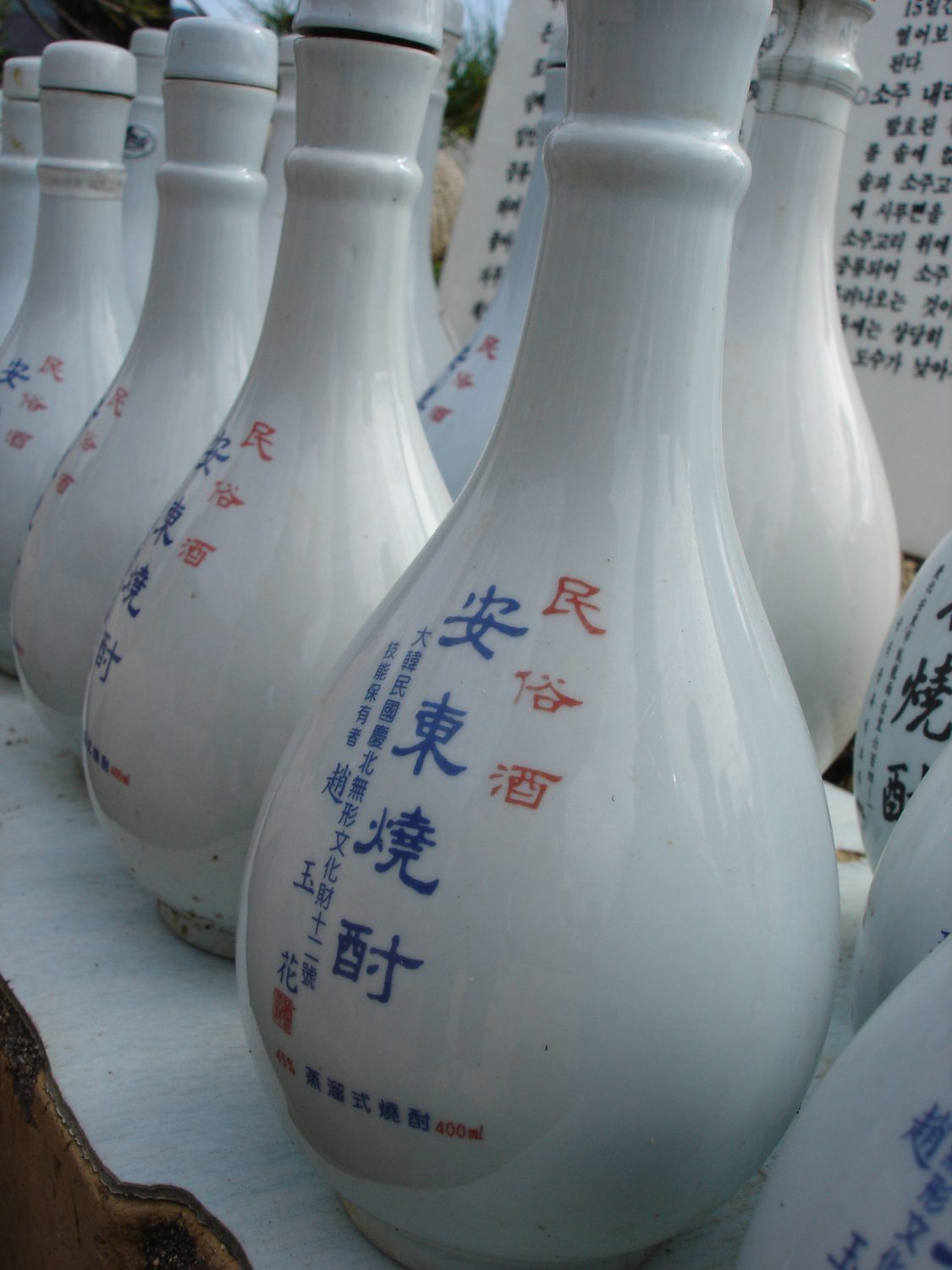
Andong soju in the folk-liquor bottle: 45 percent, distilled from rice, the drink the green bottle replaced. Photo: CC BY 2.0, via Wikimedia Commons.
The category is growing in a way the rest of the market is not. Gyeongsangbuk-do has made Andong soju a provincial project: in June 2026 it opened a ₩12 billion distillery in Andong, the largest distilled-soju plant in Korea, with capacity for 600,000 litres a year, about 1.6 million bottles, backed by a Nasdaq-listed importer. Andong soju exports went from ₩817 million in 2023 to ₩1.27 billion in 2025, to fourteen countries. Across the whole traditional category, shipments by value rose 6.2 percent in 2025 to ₩146 billion while volume fell 3 percent; the market is trading up, not out.
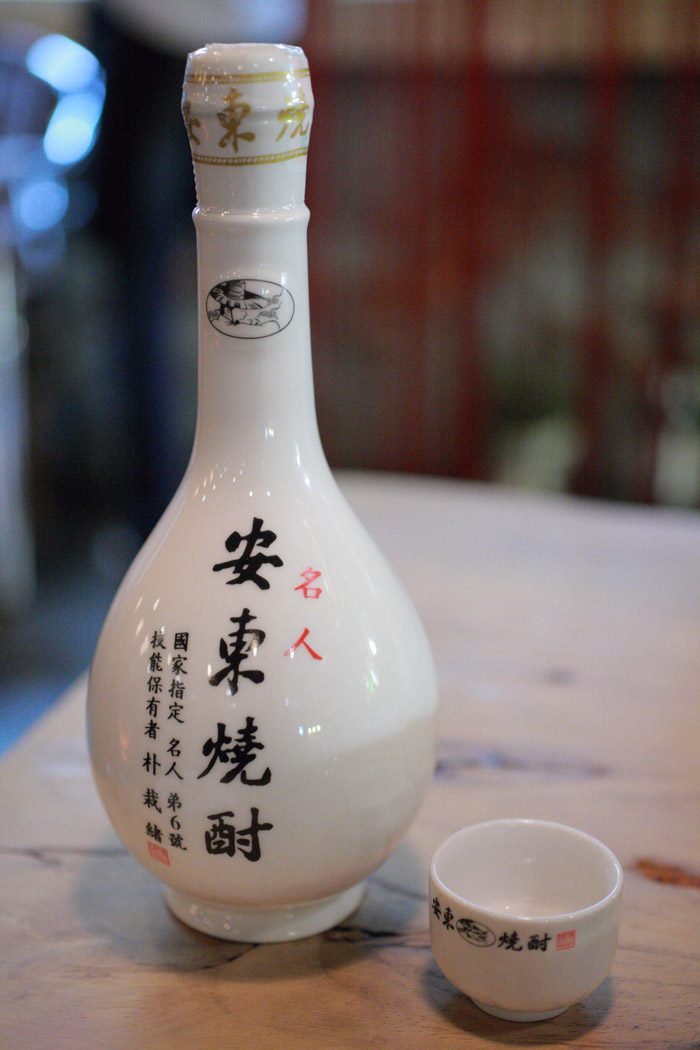
Park Jae-seo's Andong soju in the gourd bottle. The label is the same style Korean tigers and magpies are now painted on. Photo: CC BY-SA 3.0, via Wikimedia Commons.
The bottles have got very good. The past five years of Korean liquor design have run through folk painting: minhwa tigers, magpies, mountains, the same magpie-and-tiger image that KPop Demon Hunters put on a million T-shirts in 2025 was on soju labels first. Hand-numbered ceramic, hangul calligraphy, a story on the back about the brewer's grandmother. A shelf of Korean traditional liquor in a Seoul department store now looks like a shelf of Japanese whisky, and it is priced like one.
The part Koreans say quietly
And here is the honest part. Koreans, on the whole, do not drink it, and do not think of it as a luxury, however it is packaged. Traditional liquor is 1.5 percent of the Korean drinks market by value. When the Farmers' Newspaper surveyed the reasons in 2023, the answers were: you cannot find it (most restaurants stock soju, beer and Jangsu and nothing else), it seems expensive (a ₩15,000 bottle of makgeolli competes with a ₩15,000 bottle of imported wine, and loses on status), and it gives a bad hangover. A liquor-shop owner added the one that explains the others: most people have never tasted a good one, so they have no reason to pay for it.
There is a deeper problem, and Korean brewers will tell you about it after a drink or two. It is the rice. Japanese sake is made from rice grown to be made into sake: more than a hundred registered brewing varieties, led by Yamada Nishiki, bred for big grains with the starch concentrated in the centre so the protein and fat can be polished away. Serious breweries contract or farm the rice themselves, polish it to 60, 50, even 23 percent of the grain, and the whole premium system, junmai, ginjo, daiginjo, is a polishing ratio written into law. Korea has, by the Farmers' Newspaper's count, about three rice varieties bred for brewing, of which one, Seolgaeng, was developed jointly by Kooksoondang and the Rural Development Administration and is used almost only by Kooksoondang. Nearly every other brewer in the country, including the premium ones, makes its liquor from ordinary table rice, the same rice as dinner, bought from the local cooperative because the law says local. Domestic rice costs about three times imported rice, raw materials are 47 percent of a traditional brewer's costs, and there is no polishing grade because nobody polishes. "Made with 100 percent Wonju rice" sounds like terroir; it is a sourcing rule. There are exceptions, a few small breweries growing named heritage varieties, and Haechang, Boksoondoga and a handful of others are doing the work of a whole industry. But the layer of the craft that sake built over a century, from the seed to the polish to the classification, mostly does not exist in Korea yet. The bottles got beautiful before the rice did.
What to try, and where
| If you want | Try | About |
|---|---|---|
| The standard | Jangsu Saeng Makgeolli (장수 생막걸리) | ₩1,900, 6%, any convenience store; drink within days of the date on the cap |
| The clean one, cheaply | Neurin Maeul (느린마을) or Jipyeong (지평) | ₩2,300 to ₩3,400, no additives; the best convenience-store makgeolli |
| The one that changes your mind | Haechang 12 (해창 12도) | About ₩12,000; dry, dense, sweetener-free. The 18 is ₩110,000 and you do not need it |
| Sparkling | Boksoondoga (복순도가) | Open over a sink the first time |
| Real distilled soju | Andong soju (안동소주), 45% | ₩22,000 to ₩25,000 for 375 ml; the folk-liquor bottle from the Cho or Park lineage |
| The famous one | Won Soju (원소주) | ₩14,900, 22%; fine, and mostly a lesson in law |
| The regional makgeolli | Whatever the baeksuk restaurant makes | Ask 여기 막걸리 있어요? and take what comes |
Where to drink it: the pairing bars in Seongsu-dong and Yeonnam-dong pour flights of five for about ₩20,000; the Andong Soju Museum and the breweries around Andong pour the real thing; and any restaurant with 백숙 on the sign has a local makgeolli in the fridge whether or not it is on the menu. Where to buy it: a traditional-liquor shop (전통주 전문점) in a department store basement, or, if you have a Korean address, online, which for this one category of alcohol is legal.
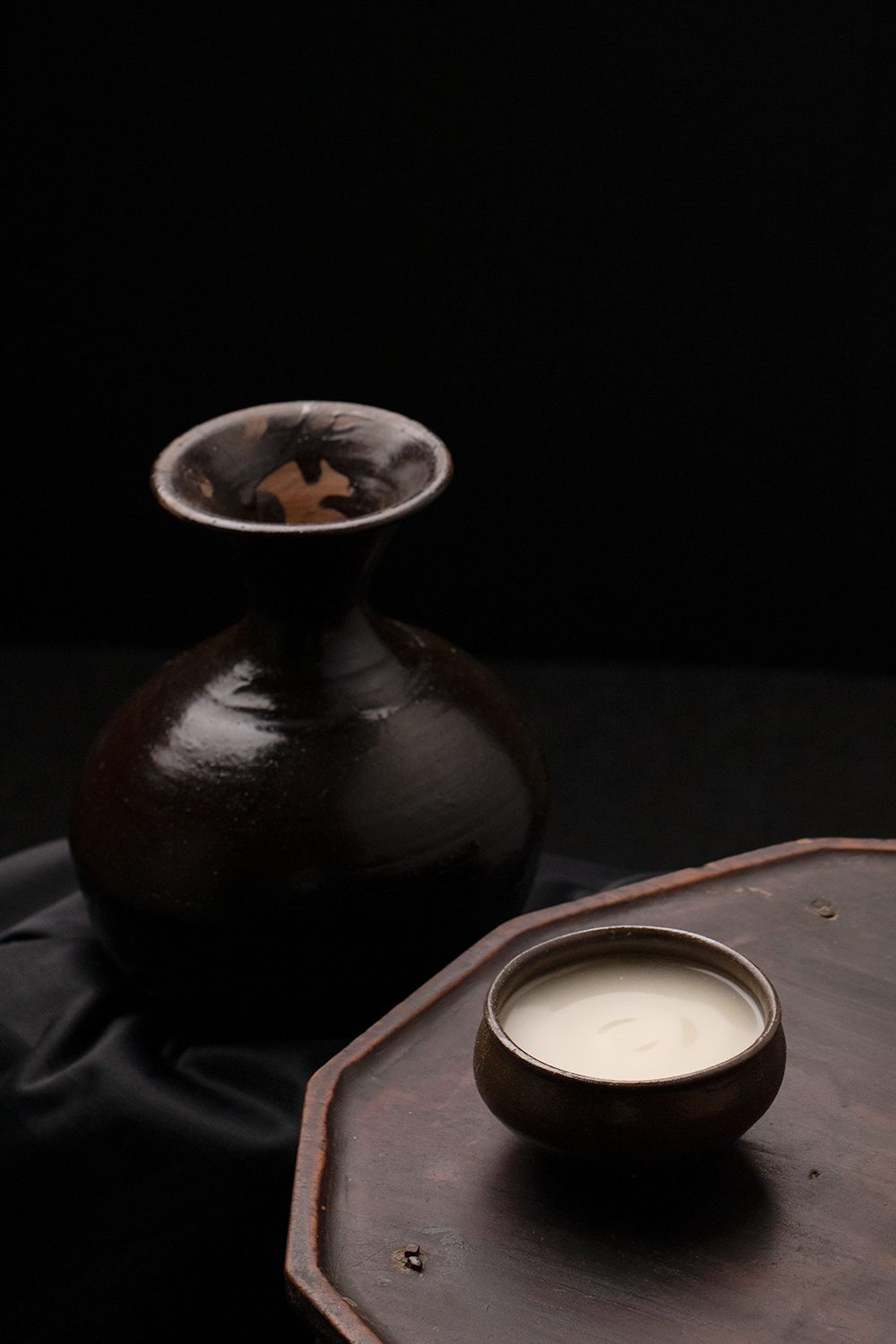
The kettle and the bowl: how makgeolli is still served in the places that take it seriously. Photo: Korea.net (KOCIS), CC BY-SA 2.0.
FAQ
Q: What does makgeolli taste like now? Mass-market makgeolli is lightly sweet, faintly sour, slightly fizzy and creamy, at about six percent. The premium tier is drier, denser and more acidic, closer to a natural wine than to the sweet bottle of old. Almost none of it uses aspartame any more.
Q: Is makgeolli healthy? It has live yeast and lactic-acid bacteria and Koreans like to say so, but it is alcohol with sugar in it. What is true is that it is low-strength and drunk with food. The hangover complaint is real and is mostly about how fast it goes down.
Q: What should I eat with makgeolli? Pajeon or any Korean pancake, baeksuk (boiled chicken or duck), and dubu-kimchi. Anything rich, mild and slightly greasy.
Q: Why can traditional liquor be sold online in Korea when nothing else can? To give small regional brewers a route to market that the soju and beer giants did not need. Post-office mail order since 1998, online malls since 2017. The definition is legal, not stylistic, which is why Jay Park's Won Soju qualifies and Seoul Jangsu's makgeolli does not.
Q: Is Korean traditional liquor as good as Japanese sake? The best bottles are excellent. As an industry, no, and Korean brewers say so: Korea has about three rice varieties bred for brewing against Japan's hundred-plus, no polishing grades, and most premium liquor is made from table rice. The craft is real; the agricultural base under it is not there yet.
Bottom Line
Makgeolli went from a farmer's sour bowl to a clean, cold, sweetener-free glass, and the best of it is now sold at prices that would have been a joke in 2005. Traditional liquor followed with the most beautiful bottles in Korea and a law that lets you buy them online when you cannot buy anything else. What has not followed is the Korean drinker, or the rice. If you have one bottle to try, make it a Haechang or a local makgeolli at a baeksuk house; if you have two, add an Andong soju; and if someone hands you a Won Soju, enjoy it and know that what you are drinking is mainly a very well-read reading of the tax code.
You might like: Why Korean Soju Keeps Getting Weaker, Pricier, and Less Drunk and Cass vs Terra vs Kelly: Korean Beer Compared.
Sources
- 2026 National Tax Statistics Yearbook via the Korea Sool blog on takju and traditional-liquor shipments; Busan Ilbo on 2025 liquor shipments (23 August 2026).
- Farmers' Newspaper, "Traditional liquor is 1% of the market: why don't we drink it?" (15 September 2023) and "Interest in rice varieties grows with the premium boom" (20 September 2023); OhmyNews, "Why is Japanese liquor clear and Korean liquor cloudy?" (2 April 2019).
- Farmers' Newspaper, "Won Soju can be sold online but Baekseju cannot" (19 June 2022); Tax Watch on the traditional-liquor definition debate (25 June 2024); Ministry of Agriculture and Farmers' Newspaper on the February 2025 tax-relief expansion; Ilgan NTN on the April 2019 online-sales rule.
- Asia Economic Daily, Hankook Ilbo and Segye Ilbo on the 2023 aspartame episode; Farmers' Newspaper on Haechang's products (August 2024); Asia Economic Daily and Newsis on Seoul Jangsu (2022, 2023); Convpick for September 2026 convenience-store prices.
- Kyunghyang Shinmun on the Andong distillery and exports (25 June 2026); Andong Soju maker pages for 2026 prices; daum/Herald on 7-Eleven and CU traditional-liquor sales (24 August 2026); Daily An and Biz Hankook on Won Soju's launch and online sales (2022 to 2023).
You Might Also Like
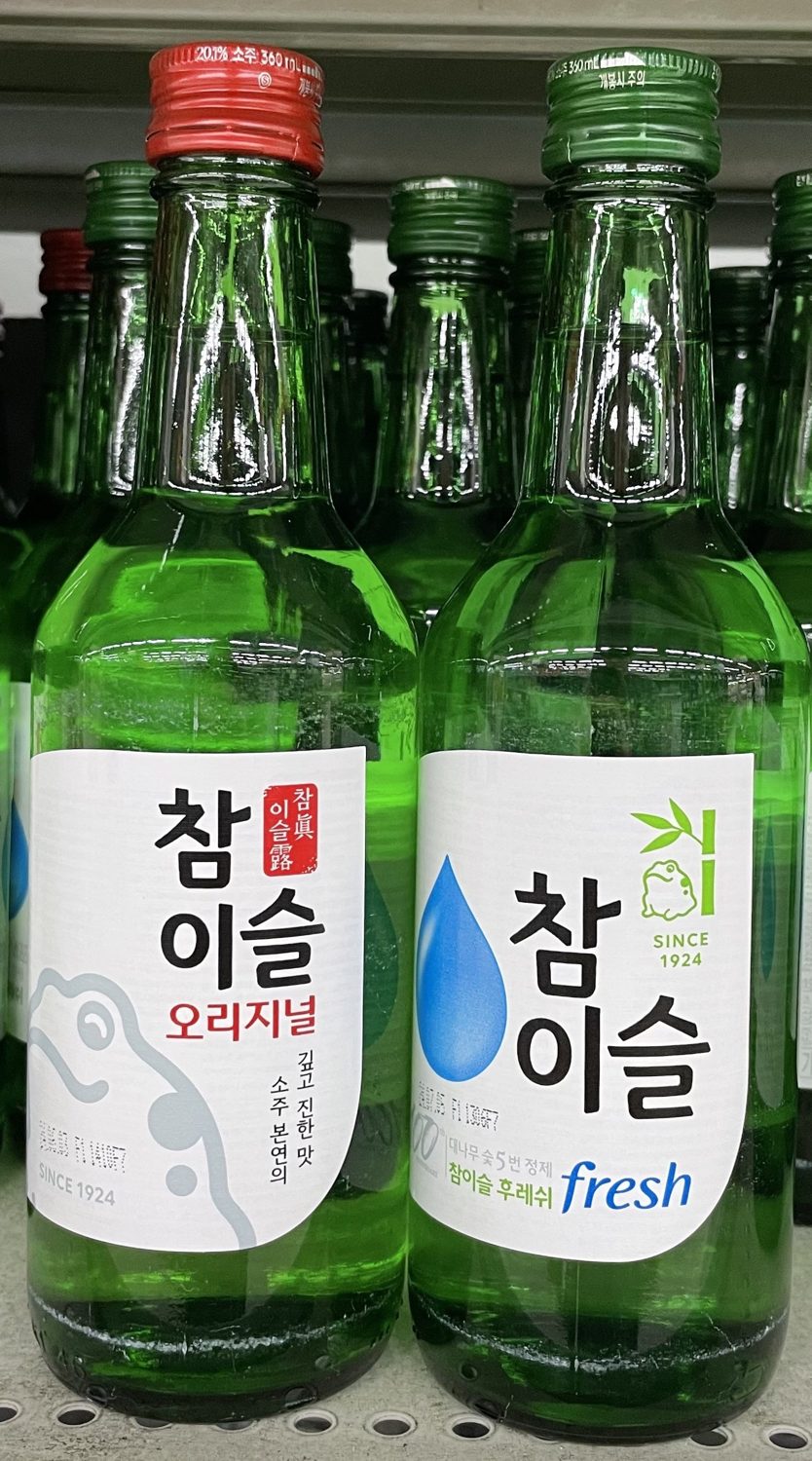
Why Korean Soju Keeps Getting Weaker, Pricier, and Less Drunk: The 100-Year Slide from 35% to 15.7%
Soju was 35% in 1924 and is 15.7% in 2026, and the price rose every time the strength fell. Why Korea's national drink is being watered, what a bottle costs from factory to table, and why Koreans in their twenties now drink less than their grandparents.
Korean Rainy Day Food: Pajeon, Makgeolli, Noodles, and Soups
A Korean rainy day food guide covering pajeon, makgeolli, kalguksu, ramyeon, jeon, soups, delivery food, comfort meals, and rainy-season travel tips.

Korea Drinks Guide: Makgeolli, Somaek, Beer, and More
A Korea drinking guide for travelers covering makgeolli, beer, somaek, traditional sool, highballs, non-alcoholic options, etiquette, and food pairings.