Korean Lottery for Foreigners: Lotto Price, Toto Prizes, Tax, and the Casino Rule That Flips for Tourists
Last updated: 21 October 2026
Yes, a foreigner can buy a Korean lottery ticket and collect the prize. Korea's Lotto 6/45 (로또 6/45) costs ₩1,000 a game at any lottery shop or convenience-store terminal, the only rule is that you are 19 or over, and a passport is enough ID to be paid. At least twenty-five foreigners have taken first prize. The tax is 22 percent up to ₩300 million and 33 percent above it, nothing at all on prizes of ₩2 million or less, and a first prize is paid at exactly one address: NH Bank's headquarters in Seoul. Sports Toto (스포츠토토) works the same way at the counter. The casino is the one place the rule flips: seventeen of Korea's eighteen casinos admit foreigners and refuse Korean citizens.
That is the short answer. The long one starts on 21 March 2016, two days after the 694th Lotto 6/45 draw, when a man from Myanmar in his late thirties walked into the headquarters of NH Bank (NH농협은행) at the Seodaemun intersection with a passport, an alien registration card and a ₩5,000 slip carrying the numbers 7, 15, 20, 25, 33 and 43. The Korean lottery paid him like anyone else: the slip was worth ₩1.554 billion, and after tax he was paid about ₩1.07 billion. He then tried to wire all of it to Myanmar in one go, ran into transfer limits, and came back to the bank almost every afternoon for weeks to send it home in pieces. A bank employee told the Segye Ilbo it was the first time the branch had watched a foreign national collect a first prize in person.
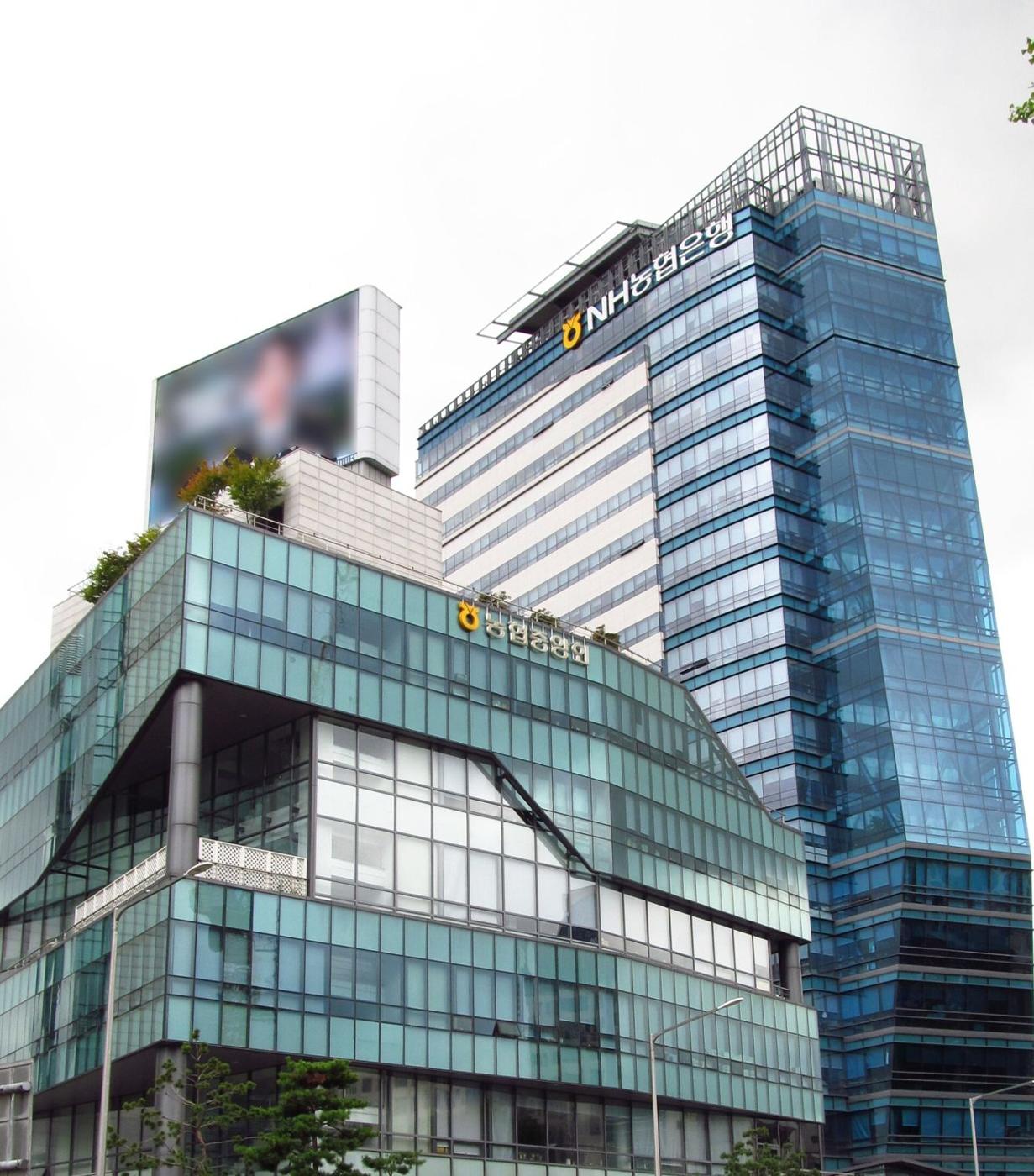
Every Lotto 6/45 first prize in Korea is paid at one address: NH Bank's headquarters at the Seodaemun intersection (Tongil-ro 120, Jung-gu), Seoul. This is where the Myanmar winner came back day after day. Photo: LERK, Wikimedia Commons, CC BY-SA 4.0.
Korean bokjumeoni (복주머니) lucky pouch: the silk New Year fortune bag a Korean grandmother would tell you to keep a lottery slip inAffiliate link. As an Amazon Associate, EpicKor earns from qualifying purchases at no extra cost to you.
Watch the 6-minute episode: Korea Lotto 6/45: Can Foreigners Win? At Least 25 Have — the Myanmar winner at NH Bank, the 1-in-8,145,060 odds, the tax, and the casino rule that turns Koreans away, in the order this post covers them.
Quick Guide: every legal bet in Korea, as of October 2026
| Game | Price | Draw | Top prize | Odds of the top prize | Can a foreigner play? |
|---|---|---|---|---|---|
| Lotto 6/45 (로또) | ₩1,000 a game, five games on a ₩5,000 slip | Saturday 20:35 on MBC; sales close 20:00 | Shared pool; 2025 average ₩2.06 billion before tax; draw 1246 (17 Oct 2026) paid ₩1.88 billion to each of 16 winners | 1 in 8,145,060 | Yes, in any shop, on any visa; online only with an alien registration number and a Korean phone |
| Pension Lottery 720+ (연금복권720+) | ₩1,000 | Thursday evening | ₩7 million a month for 20 years (₩1.68 billion), ₩5.46 million a month after tax | 1 in 5 million | Yes |
| Speetto 500 / 1000 / 2000 (스피또, scratch cards) | ₩500 / ₩1,000 / ₩2,000 | Instant | ₩200 million / ₩500 million / ₩1 billion | 1 in 4 million / 1 in 5 million / 1 in 5 million | Yes |
| Electronic lotteries (Powerball, Speed Keno and others) | ₩100 to ₩1,000 | Every few minutes, online only | Small, fixed | Varies | Only with a verified Donghaeng Lottery account |
| Sports Toto and Proto (스포츠토토·프로토) | From ₩100 a unit, ₩100,000 per person per round | Match results | Toto: shared pool that can roll over; Proto: ₩100 million cap per ticket | Pool or fixed odds | Yes in shops; online at Betman with an alien registration number since April 2023 |
| Casinos (카지노) | Free entry with a passport | — | — | — | Yes, at all 18. Koreans: only Kangwon Land, ₩9,000 a visit, 15 days a month |
Two things every visitor gets wrong are in that table. Prizes are shared, not fixed, so the Korean jackpot is small by American standards and changes every week, and the casino rule runs backwards: it is the local who is turned away at the door. The one object that matters in all of it is the slip, because nothing is paid without it.
TOPBAG RFID passport wallet — the slip and the passport in one flat place A Korean lottery slip is thermal paper with a one-year payment deadline printed on it, and you need the slip and your passport together to collect anything over ₩2 million. ₩58.1 billion of 2025 winnings went unclaimed. Keep both flat and in one pocket until you have checked the draw. As an Amazon Associate, EpicKor earns from qualifying purchases at no extra cost to you.
See the TOPBAG wallet on AmazonYes, foreigners can play, and the winners are on record
There is no residency requirement to buy a Korean lottery ticket and none to collect. The operator, Donghaeng Lottery (동행복권), requires only that you are 19 or over and physically hold the winning ticket; the bank asks for a government ID, and for a foreigner that means a passport, or an alien registration card (외국인등록증) if you have one. Nothing in the Lottery and Lottery Fund Act (복권 및 복권기금법) distinguishes citizens from anyone else.
The records back it up. Between December 2007 and March 2016, twenty-five foreigners won first prize in Lotto 6/45, ten of them in 2015 alone; the biggest single win was ₩4.061 billion in draw 639 in February 2015, the smallest ₩565 million in 2010. In the same period 26,020 foreign residents and 1,552 short-term visitors won a prize of some size. The Seoul Economic Daily's earlier count, from late 2007 to November 2011, found 14,500 foreign winners of fourth prize or better, ₩13 billion in prize money and six first prizes, the largest a ₩2.7 billion win by an ethnic Korean from China. In a case from 2005, a Thai worker who had overstayed his visa won, paid the immigration fine, collected, and flew home.
Since 2016 the operator has not published winners by nationality, so the real number is higher and nobody outside the operator knows by how much. A widely repeated 2023 story about a Nepali factory worker in Hwaseong who won first prize in draw 1068 comes from an online forum, not a newspaper, and we could not confirm it.
What is worth noticing in the 2016 numbers is a gap. Of the 1,552 short-term visitors who won something in eight years, none won first or second prize. The 25 first prizes went to residents. That is not luck; it is volume. Residents buy every week, and Lotto 6/45 is a game of volume.
Lotto 6/45: how ₩1,000 works
Lotto 6/45 started in December 2002 and is the reason Korea has around 9,300 dedicated lottery shops (9,338 counted at the end of 2025), with convenience stores selling it from a terminal at the counter too. You pick six numbers from 1 to 45, or let the terminal pick them, at ₩1,000 a game; the slip has five rows, A to E, so a full slip is ₩5,000. Koreans call the three methods 자동 (jadong, auto), 수동 (sudong, manual, you mark all six) and 반자동 (banjadong, semi-auto, you mark some and the machine fills the rest). Tell the clerk "자동 오천 원" (jadong ocheon won) and you get five auto games for ₩5,000, which is what most people buy. Shops take cash; many take a Korean debit card, few take a foreign credit card, so bring a ₩5,000 or ₩10,000 note.
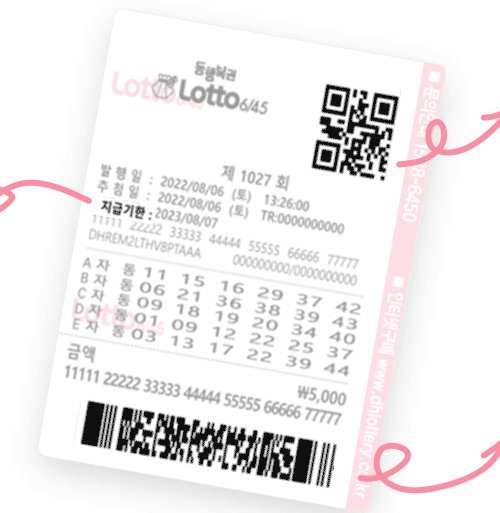
What the terminal prints: five games, the draw number, the payment deadline printed on the face (one year), and a QR code you can scan on the Donghaeng Lottery mobile site to check the result. Image: Donghaeng Lottery official guide, shown for identification.
The draw is on Saturday at 20:35, live on MBC, and sales stop at 20:00 that day; on other days shops sell from 06:00 to midnight. The odds of matching all six are 1 in 8,145,060. Second prize (five numbers plus the bonus ball) is 1 in 1,357,510, third (five numbers) 1 in 35,724, fourth (four numbers, a fixed ₩50,000) 1 in 733, and fifth (three numbers, a fixed ₩5,000) 1 in 45.
| Prize | You match | Odds | Prize money | Tax |
|---|---|---|---|---|
| 1st (1등) | 6 numbers | 1 in 8,145,060 | Shared pool; ₩1.6 to ₩3.0 billion each in recent draws | 22% to ₩300 million, 33% above |
| 2nd (2등) | 5 + bonus | 1 in 1,357,510 | Shared pool; ₩78.4 million each in draw 1246 | 22% |
| 3rd (3등) | 5 | 1 in 35,724 | Shared pool; ₩1.5 million each in draw 1246 | Usually none (₩2 million or less) |
| 4th (4등) | 4 | 1 in 733 | ₩50,000 fixed | None |
| 5th (5등) | 3 | 1 in 45 | ₩5,000 fixed | None |
The jackpot is a pool, not a fixed sum, and that is why Korean first prizes look small and move around. Half of every ₩1,000 goes to prizes, about 42 percent to the public Lottery Fund, 5.5 percent to the shop and about 2.5 percent to running costs. Two recent draws show the swing: draw 1245 on 10 October 2026 had ten first-prize winners at ₩3.007 billion each, and draw 1246 a week later had sixteen at ₩1.881 billion each. In 2025 Koreans bought about ₩6.2 trillion of Lotto 6/45 tickets, 4.6 percent more than the year before, and 812 people won first prize, an average of ₩2.06 billion each before tax and about ₩1.41 billion after. That is the lowest yearly average since the game began, not counting the four draws of 2002, and it keeps falling because more people win each week. Draw 1128 in July 2024 had 63 first-prize winners sharing about ₩420 million each. The record still belongs to April 2003, when one ticket took ₩40.7 billion; the ticket price was halved to ₩1,000 in 2004 and the rollover rules tightened, and a ₩10 billion jackpot has not come back.
There is a legal purchase cap of ₩100,000 per person per visit, written into the enforcement decree of the Lottery Act. Korean reporters have tested it and found it is almost never enforced; the clerk sells you the next slip. It is still the law.
The other lotteries: a pension, a scratch card, and a screen
Pension Lottery 720+ (연금복권720+) is the one Koreans in their thirties talk about, because the prize is a salary. First prize is ₩7 million a month for twenty years, ₩1.68 billion in total, paid as ₩5.46 million a month after the 22 percent tax. Second prize is ₩1 million a month for ten years. A ticket is ₩1,000; you choose a group (조, jo, 1 to 5) and a six-digit number or take a random one, and the draw is on Thursday evening. The appeal is exactly that it cannot be spent at once; Korean papers write about first-prize winners who kept their jobs.
Speetto (스피또) is the scratch card, sold at the same counters, in three prices. Speetto 500 costs ₩500 and tops out at ₩200 million with first-prize odds of 1 in 4 million; Speetto 1000 costs ₩1,000, tops out at ₩500 million, odds 1 in 5 million; Speetto 2000 costs ₩2,000, tops out at ₩1 billion, odds 1 in 5 million. Roughly one card in three wins something, mostly its own price back, and 60 percent of sales go back out as prizes. Scratch three matching amounts and you have won that amount. Speetto is the lottery that travellers actually win: the ₩500 million first prize of Speetto 1000 round 108, announced in July 2026, came from a card bought at the Anseong rest area on the Gyeongbu Expressway (Busan-bound), the kind of counter you pass on a road trip.
Electronic lotteries (Powerball, Speed Keno, Triple Luck and the rest) exist only on the Donghaeng Lottery website, draw every few minutes, and need a verified Korean account. They are not for visitors and, honestly, not for anyone; Koreans call them the ones that turn into a habit.
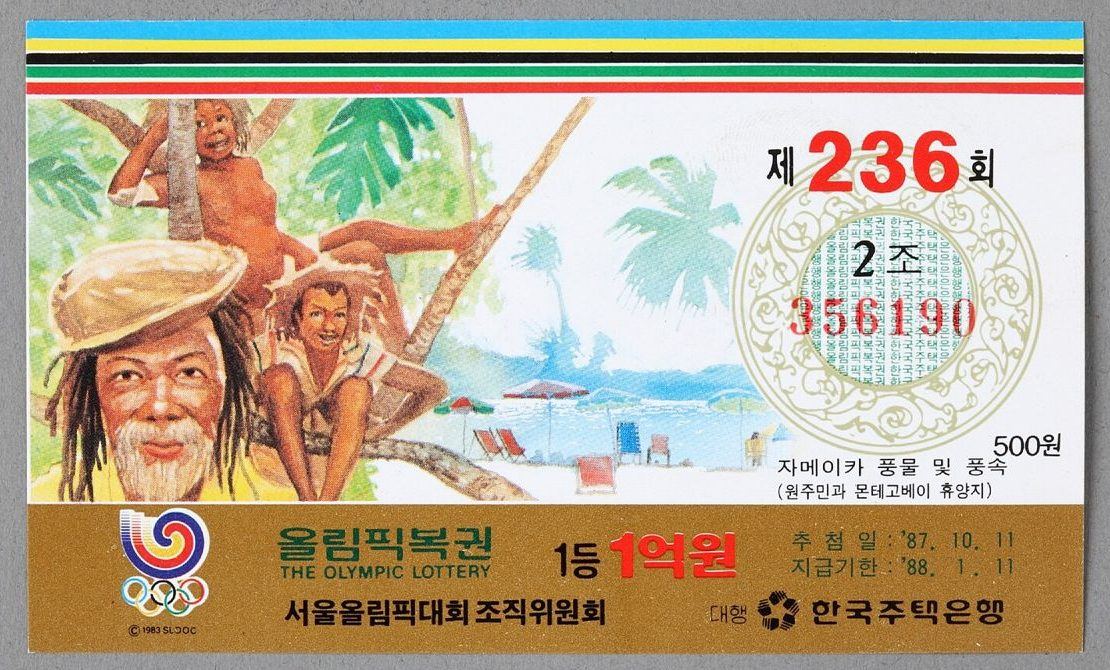
Before Lotto: the Olympic Lottery of 1983 to 1988 cost ₩500 and paid a ₩100 million first prize, and paid for the 1988 Seoul Games and public housing. This is the 236th issue, drawn 11 October 1987. National Folk Museum of Korea collection, KOGL Type 1.
Korea's lottery is older than Lotto. The Olympic Lottery ran from 1983 to 1988 at ₩500 a ticket with a ₩100 million top prize, and the housing lottery before it goes back to 1969. Lotto's arrival in 2002 folded most of the old paper draws into one game, and total lottery sales went from ₩3.555 trillion in 2015 to ₩7.3 trillion in 2024 and about ₩7.7 trillion in 2025. In April 2026 the Lottery Commission (복권위원회), which since January 2026 sits under the new Ministry of Planning and Budget (기획예산처), set its 2027 plan at ₩8.42 trillion of sales, with all twelve lottery products, their prices and their prize rules unchanged.
You might like: How to Buy Alcohol in Korea: The Rule Nobody Tells Tourists
What the tax takes, for you and for the man from Myanmar
Korean lottery tax is withheld at the counter and that is the end of it; there is no return to file. Since 1 January 2023, any single prize of ₩2 million or less is tax-free, which covers fourth and fifth prizes and most third prizes. Above ₩2 million the rate is 22 percent (20 percent income tax plus 2 percent local income tax) on the portion up to ₩300 million, and 33 percent (30 plus 3) on everything above ₩300 million. The bands are applied in slices, not to the whole prize.
| Prize before tax | Tax withheld | You receive |
|---|---|---|
| ₩5,000 or ₩50,000 (5th, 4th) | ₩0 | The full amount, at the shop |
| ₩1.5 million (3rd, draw 1246) | ₩0 | ₩1.5 million |
| ₩78.4 million (2nd, draw 1246) | About ₩17.2 million (22%) | About ₩61.1 million |
| ₩1.881 billion (draw 1246, 1st) | About ₩588 million | About ₩1.29 billion |
| ₩2.06 billion (2025 average 1st) | About ₩647 million | About ₩1.41 billion |
On the 2025 average first prize the arithmetic is ₩300 million at 22 percent (₩66 million) plus ₩1.76 billion at 33 percent (₩580.8 million), a total of ₩646.8 million and ₩1.413 billion in hand. The Myanmar winner in 2016 was paid under the same two bands and kept about 69 percent.
Foreigners are taxed by residence, not nationality. If you live in Korea, meaning an address here or 183 days or more in the year, you pay exactly what a Korean pays. If you are a non-resident, a tourist, the withholding depends on the tax treaty between Korea and your country. Korean lottery officials have said in print that non-residents from treaty countries generally owe no Korean tax on lottery winnings; the National Tax Service (국세청) is more careful: the treaty decides, an exemption has to be applied for with a certificate of residence, and if there is no treaty Korea taxes the whole prize. What is certain is that your own country will want to hear about it; the United States, for one, taxes a citizen's foreign lottery win as ordinary income in the year it is received. If you are a tourist holding a large winning ticket, call the National Tax Service helpline (126, with an English service) before you go to the bank, and expect the bank to withhold first and let you reclaim later.
Where you actually collect, and the one-year clock
Prizes are paid by size, not by which shop sold the ticket.
| Prize | Where | What to bring |
|---|---|---|
| 4th and 5th prize | Any Lotto shop; online purchases are credited to your account | The ticket |
| 2nd and 3rd prize | Any NH Bank (NH농협은행) branch nationwide | Ticket, passport or alien registration card, a Korean bank account for the transfer |
| 1st prize | NH Bank headquarters only, Seodaemun intersection, Seoul | Ticket, passport or alien registration card; you fill in a claim form on the spot |
| Pension Lottery 1st and 2nd | Donghaeng Lottery head office | Same |
| Speetto over ₩100 million | Designated NH Bank branch after Donghaeng verification; over ₩2 million to ₩100 million at any NH branch; ₩2 million or less at the shop | Same |
| Sports Toto / Proto | Small wins at the shop; for larger ones ask the shop or Betman for the claim route before you travel | Ticket and ID; claim within one year |
The deadline is one year from the day payment opens for that draw, and it is printed on the slip. After that the money goes to the Lottery Fund. Koreans leave a startling amount behind: ₩43 billion unclaimed in 2021, ₩52.1 billion in 2023, ₩58.1 billion in 2025, including ₩8.4 billion of first prize. Most of it is ₩5,000 and ₩50,000 wins nobody bothered to check, but not all: a ₩1.285 billion first prize from draw 1159 was claimed only in February 2026, days before its deadline. Since 18 August 2026 there is a fix for paper tickets: scan the slip's QR code into the Payco app and the system watches it for you, tells you on draw night, and on the deadline automatically pays anything unclaimed, as app points up to ₩2 million and to a bank account above that. That requires a Korean phone and a Korean account, so for a visitor the rule stays the old one: check the slip before you fly.
A first-prize claim at NH headquarters is a routine appointment, not an event. You sign a form, the tax comes off, and the money is transferred to an account you name; the bank does not hand over cash. For a foreigner without a Korean account this is the step to solve first, because the Myanmar winner's weeks of daily visits were entirely about moving money, not about being paid.
Buying online: possible for residents, not for tourists
Donghaeng Lottery sells Lotto 6/45 on its website and, since 9 February 2026, on its mobile web page, on weekdays only; on Saturday the online route is PC only. The mobile sale began as a pilot; the government's June 2026 guide to second-half changes said it would review the results before deciding whether to widen it, and as of October 2026 the weekday-only rule and the limits below still stand. There is still no Lotto app; the mobile route is the browser.
Membership needs Korean phone identity verification (본인인증), which a foreign resident with an alien registration number and a Korean carrier contract can pass; the registered name has to match the card exactly, which is where most foreigners' attempts fail. Online purchases are capped at ₩5,000 a draw per person, PC and mobile combined, and total online sales are capped at 5 percent of the previous year's Lotto sales, so the website is for one slip a week, not for volume. A tourist with a foreign phone cannot register, and the honest answer is that a tourist does not need to: the shop on the corner sells the same ticket.
The lucky shops, and what they actually sell
Two shops in Korea have produced first-prize winners so many times that people queue for them.
Spa (스파), a lottery shop in a 1980s apartment shopping arcade in Sanggye-dong, Nowon-gu, Seoul (동일로 1493, in the Sanggye Jugong 10 complex arcade), is Seoul's most famous. Counts differ by source and by whether manual and auto wins are tallied together, but the shop has produced first prize more than fifty times and second prize well over two hundred. It is a five-minute walk from Madeul station (Line 7, exit 5) or seven minutes from Nowon station (Lines 4 and 7, exit 8); there is no parking, a traffic camera on the main road, and a queue at most hours. Buil Car Service (부일카서비스) in Beomil-dong, Busan (자성로133번길 35, eight minutes from Beomil station on Line 1, exit 4) is a car-repair shop that sells Lotto from a window and has produced first prize more than forty times, second in the country only to Spa; the queue forms on Friday and Saturday before the draw.
Neither shop changes your odds. Every ticket in Korea is 1 in 8,145,060, and these two shops win often because they sell enormously more tickets than anyone else; the queue is the cause of the reputation, not the effect. What they sell is the ritual: the JoongAng Daily found people driving hours to buy at Spa and framing the receipt. If you want the experience, go on a weekday and bring cash; the shop is a counter, a wall of newspaper clippings and a queue.
Sports Toto: how the prizes work
Korea's legal sports betting is a state pool, not a bookmaker. Sports Toto is issued by the Korea Sports Promotion Foundation (국민체육진흥공단, KSPO) and run by a contracted operator, Korea Sports Leisure (한국스포츠레저), and it is enormous: KSPO's 2025 revenue was ₩6.33 trillion, and ₩5.62 trillion of it, 88.8 percent, came from Toto sales. There are two products with confusingly similar names, and they pay in completely different ways.
| Toto (토토), e.g. football 승무패 | Proto (프로토) 승부식 | |
|---|---|---|
| What you predict | Win, draw or lose in all 14 listed football matches (other sports use scores) | Your choice of 2 to 10 matches from the list |
| How the prize is set | Pool: 50% of the round's sales goes back as prizes | Fixed odds printed before the match; stake × combined odds |
| Split of the pool | 1st (14 correct) 60%, 2nd (13) 10%, 3rd (12) 10%, 4th (11) 20%, shared equally within each tier | No pool; every correct ticket is paid its odds |
| Rollover | If nobody gets 14, first prize rolls over, up to five rounds, then drops to the next tier | None |
| Cap | None beyond the pool | ₩100 million per ticket |
That pool is why Toto first prizes jump around. In football Toto round 21 of 2025, thirty people got all fourteen and each took ₩38.67 million. In August 2026, round 42 had no first-prize winner and round 43 opened with ₩4.6 billion waiting for anyone who got all fourteen. Proto is what most Koreans mean when they say "toto": you pick, the odds are on the screen, and you know your payout before kick-off.
Both are sold at shops with the 스포츠토토 sign (usually next to the Lotto sign) and online at Betman (betman.co.kr), the only legal site. The limits are strict: ₩100,000 per person per round, and a Proto ticket cannot pay more than ₩100 million; the terminal refuses a bet whose stake times odds would exceed that. Football, basketball, baseball and volleyball are covered, including foreign leagues, which is why a Premier League match on a Sunday morning has a Korean betting line. Since a new system went live on 21 April 2026, Proto match numbers have four digits instead of three, so an older guide's screenshots will not match the slip.
Foreigners could always buy at a shop. Online was closed until 27 April 2023, when Betman opened membership to foreign residents; before that it accepted only holders of a Korean resident registration number. Registration needs an alien registration number and phone verification, the same as the lottery site, so this too is for residents.
The tax rule is different from the lottery's. A Toto or Proto win is tax-free when the ticket's total stake is ₩100,000 or less and either the payout is ₩100,000 or less, or the odds were 100 times or less and the payout ₩2 million or less. Above that the lottery rates apply, 22 percent to ₩300 million and 33 percent beyond. Winnings have to be claimed within a year; in July 2026 ₩970 million of unclaimed 2025 Proto winnings, across 14,667 tickets, was about to lapse to the National Sports Promotion Fund.
The warning that belongs here: any sports betting site other than Betman is illegal in Korea, however professional it looks and whatever language it is in, and using one is an offence for the bettor as well as the operator. The illegal market is estimated at many times the legal one, the ads are on every second video, and foreign residents are prosecuted along with Koreans. If it is not Betman or a shop with the official sign, it is not legal.

Inspire, at Incheon Airport, opened its casino in 2024 and is the newest of Korea's foreigner-only casinos. A Korean citizen cannot enter the gaming floor. Photo: Whoisim, Wikimedia Commons, CC BY-SA 4.0.
The casino rule that runs backwards
Korea's Tourism Promotion Act (관광진흥법) licenses casinos as a foreign-currency business, and it means that literally: seventeen casinos in Korea admit only foreign passports. Three are in Seoul (Seven Luck Gangnam at COEX, Seven Luck at Seoul Dragon City in Yongsan, which moved there from the Millennium Hilton in January 2023, and Paradise Walkerhill), two in Busan, two at Incheon Airport (Paradise City and Inspire), eight on Jeju, one in Daegu and one in Gangwon. Entry is free, you show a passport at the desk the first time, and you must be 19. A Korean citizen who walks onto the floor is committing a crime, and so is the casino that lets them. The business is growing: Korea's casinos took about ₩3.7 trillion in 2025, and the foreigner-only casinos grew more than 21 percent.
The single exception is Kangwon Land (강원랜드) in Jeongseon, three hours east of Seoul in a valley of closed coal mines, opened in 2000 under a separate law meant to give the mining towns an economy after the pits shut. It is the only casino in the country where a Korean can gamble, and the state makes it deliberately inconvenient: ₩9,000 entry per visit for Koreans, an ID check, a limit of fifteen days a month, and tighter limits for residents of the surrounding county. Foreigners enter Kangwon Land free, on a passport, with no day limit. Since February 2025 it has run a foreigner-only zone with eight dedicated tables, foreign-language staff and far higher table limits, to compete with Macau; it has not changed the crowd much, and from 1 January to 4 October 2026 foreigners were 20,986 of 1,859,015 visitors, 1.13 percent.
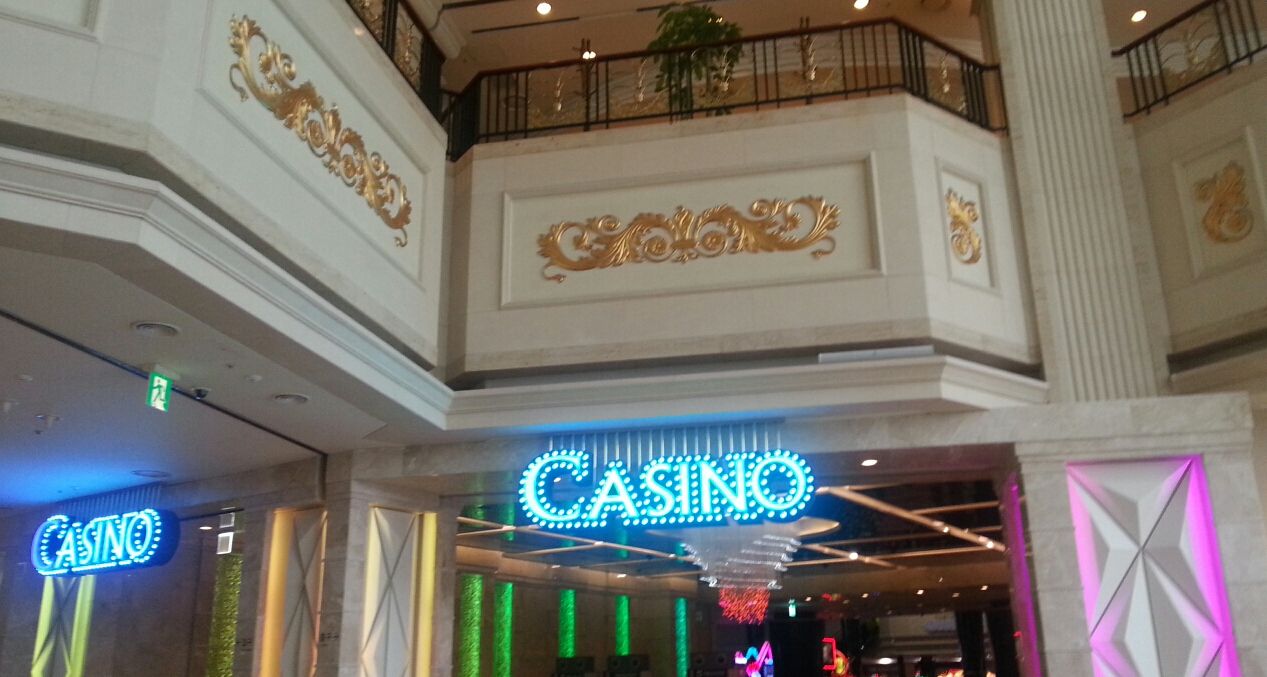
The door a Korean citizen can enter, for ₩9,000 and no more than fifteen days a month: Kangwon Land, Jeongseon. Photo: Roadgo, Wikimedia Commons, CC BY-SA 3.0.
The logic, which Koreans will explain without being asked, is that gambling addiction is treated as a public-health problem and the casino is quarantined from the public it would harm; foreign tourists are outside the quarantine. The same country that bans its citizens from a card table sells them ₩7.7 trillion of lottery tickets a year, and a Korean will also explain that: the lottery is capped at ₩100,000 a visit, the Lottery Fund pays for public housing, scholarships and welfare, and nobody has ever lost a house on a Saturday night at a ₩1,000 counter.
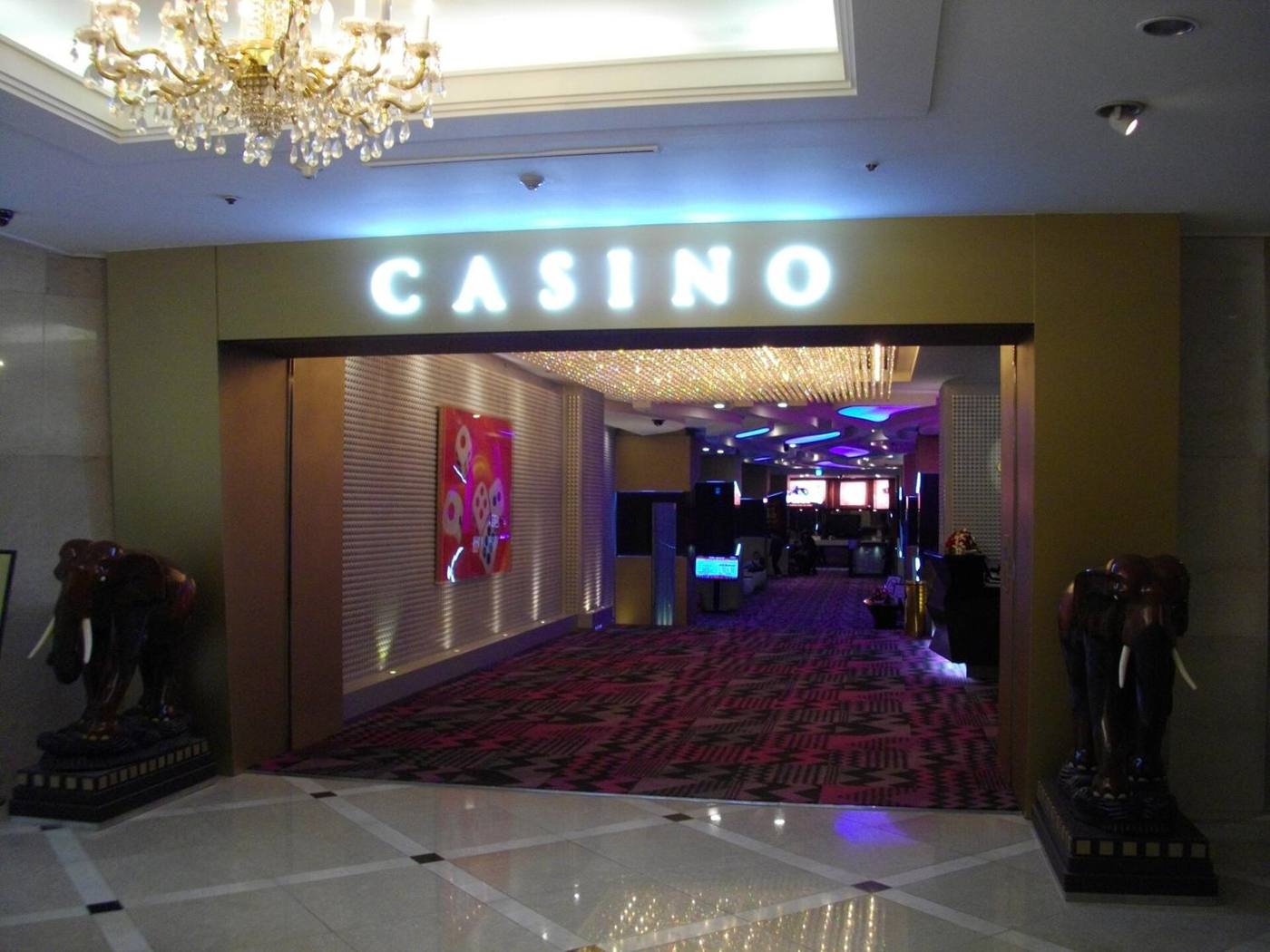
Paradise Casino Jeju Grand, one of the eight foreigner-only casinos on Jeju. Photo: Wikimedia Commons, public domain.
For a visitor the practical version is: bring the passport itself, not a photocopy or a phone photo; entry is free at all of them; minimum table bets at the Seoul casinos start around ₩25,000 to ₩50,000 depending on the game; the floors are open 24 hours; and Kangwon Land is the only one worth a trip for the place itself, because the resort, the ski slopes and the valley are the point and the casino is one large room inside it.
FINTIE slim RFID passport holder — the ID every casino desk asks for A foreigner-only casino checks the physical passport at the door, and so does NH Bank if you win; a photocopy does not get you in. A slim cover keeps it in a jacket pocket for a night out. As an Amazon Associate, EpicKor earns from qualifying purchases at no extra cost to you.
See the FINTIE passport holder on AmazonDon't do this
- Don't post a photo of a winning slip before you have claimed it. The QR code and barcode on it are the claim; a clear photo is a copy of your ticket. Koreans cover the barcode with a finger for the celebration photo.
- Don't buy from a "lotto agent" or a site that sells Korean Lotto abroad. Resale of Korean lottery tickets is illegal and the operator will not pay a prize claimed through one.
- Don't miss the year. ₩58.1 billion went unclaimed in 2025. The deadline is printed on the slip.
- Don't assume the online cap is a bug. ₩5,000 a draw online is the rule, and buying more through several accounts is a reason to void a prize.
- Don't use any sports betting site except Betman. Not one of the others is legal in Korea, and residents on visas have been charged.
- Don't take a Korean friend to a foreigner-only casino. They cannot come in, and if they somehow do, the crime is theirs.
FAQ
Q: Can a foreigner buy a lottery ticket in Korea? Yes. Anyone 19 or over can buy Lotto 6/45, Pension Lottery 720+ and Speetto scratch cards at any lottery shop or convenience-store terminal, on any visa or none. Online purchase needs a Korean phone and an alien registration number, so it is for residents.
Q: Can a foreigner collect a Korean lottery prize? Yes, with a passport or alien registration card. At least 25 foreigners won Lotto 6/45 first prize between 2007 and 2016, and a Myanmar worker collected ₩1.554 billion at NH Bank headquarters in 2016. Prizes over ₩2 million are paid at NH Bank branches, and first prize only at the Seoul headquarters.
Q: What does Korean Lotto cost and when is the draw? ₩1,000 a game, five games on a ₩5,000 slip. The draw is Saturday at 20:35 on MBC and sales close at 20:00. The odds of first prize are 1 in 8,145,060, the 2025 average first prize was ₩2.06 billion before tax, and draw 1246 on 17 October 2026 paid ₩1.88 billion to each of 16 winners.
Q: How much tax does Korea take from lottery winnings? Nothing up to ₩2 million per prize. Above that, 22 percent up to ₩300 million and 33 percent on the rest, withheld at payment. Residents, foreign or Korean, pay the same; non-residents are taxed according to the tax treaty with their country and should check with the National Tax Service before claiming.
Q: How are Korea Sports Toto prizes paid? Toto is a pool: half of each round's sales goes back as prizes, 60 percent of that to everyone who called all 14 matches, and an unwon first prize rolls over for up to five rounds. Proto pays fixed odds printed before the match, up to ₩100 million a ticket. Small wins are tax-free; larger ones are taxed at 22 and 33 percent like the lottery.
Q: Can foreigners use Sports Toto? Yes. Toto and Proto are sold at shops with the 스포츠토토 sign to anyone 19 or over, up to ₩100,000 per round. The online site Betman has accepted foreign residents with an alien registration number since 27 April 2023. Every other betting site is illegal.
Q: Can tourists gamble in Korean casinos? Yes, that is who they are for. Seventeen casinos admit only foreign passports, with free entry; Kangwon Land in Gangwon admits both, charging Koreans ₩9,000 and foreigners nothing. Korean citizens are barred from every casino except Kangwon Land.
Bottom Line
Korea's betting laws sort people by residence and by citizenship, and they sort them in opposite directions. The lottery ignores your passport: a ₩1,000 slip, a Saturday draw, one bank in Seodaemun, and a tax bill that is the same for a Myanmar worker as for the mayor. The casino reads your passport and admits you because of it, while sending the Korean beside you to a valley in Gangwon with a ₩9,000 ticket and a fifteen-day limit. Between them sits Sports Toto, a state pool worth ₩5.6 trillion a year, open to anyone at the counter and to residents online since 2023. If you want to play, the ticket costs ₩1,000, the odds are 1 in 8 million, the shop with the queue in Nowon does not improve them, and the one thing you must not lose is the slip, because a year later ₩58 billion belongs to nobody.
You might like: Korea Payment Guide: T-money, WOWPASS, and the Card You Cannot Tap and Seoul Safety Guide: Taxi Scams, Street Recruiters, and Etiquette.
Sources
- Segye Ilbo, "Twenty-five foreigners have won Lotto first prize" and "Third foreign first-prize winner this year collects ₩1.5 billion" (21 April 2016); Seoul Economic Daily on foreign lottery winners 2007 to 2011 (3 October 2012); Ilgan NTN, "Income tax when a foreigner wins a Korean lottery" (31 August 2021); SBS on the ₩2 million tax-free threshold (2023).
- Donghaeng Lottery (dhlottery.co.kr): game rules, winner's guide and payment locations, revenue allocation, Speetto odds and prize tables; SBS Biz and Kyunghyang Shinmun on 2025 Lotto sales, 812 first-prize winners and the ₩2.06 billion average (2 February 2026); Asia Economy, Kyunghyang and Digital Times on draw 1246 (17 October 2026); Herald Economy on the Lottery Commission's 2027 issuance plan, ₩8.4175 trillion (27 April 2026).
- Kyunghyang Shinmun, Newsis and Toss Bank on weekday mobile Lotto purchase from 9 February 2026 and the ₩5,000 cap; Ministry of Planning and Budget, 2026 second-half changes (30 June 2026); Asia Economy, Financial News and Nongmin Shinmun on Payco automatic payment from 18 August 2026 and unclaimed totals 2021 to 2025; Herald Economy on the draw 1159 claim (19 February 2026); Le Desk and Sky Daily on the ₩100,000 purchase limit; Baby News on lottery shop numbers (December 2025).
- Dailian and Segye Ilbo (8 July 2026) on the Speetto 1000 round 108 first prize at Anseong rest area; Newsworks, Tour Tok Tok and Econovill on Spa (Nowon) and Buil Car Service (Busan); Korea JoongAng Daily, "All about Korea's lottery hot spots".
- Sports Toto / Betman Proto rules and FAQ; Daum/Sports Toto on Betman opening to foreign residents (April 2023); Ilgan Sports on the football Toto round-43 carryover (3 August 2026) and The Fact on round 21 (2025); Sports Kyunghyang on unclaimed Proto winnings and the one-year claim rule (30 June 2026); Korea Sports Leisure on the April 2026 system change; sootax and MBC on the Enforcement Decree of the Income Tax Act tax-free threshold for sports-betting refunds; KSPO 2025 revenue figures.
- Kangwon Land / High1 casino entry rules; Maeil Shinmun on the foreigner-only zone and the 1.13 percent foreign share (10 October 2026); SiGMA and Jeonbuk Ilbo on 2025 casino revenue; Ministry of Culture, Sports and Tourism casino status on the seventeen foreigner-only casinos; the Tourism Promotion Act and the Special Act on Assistance to Abandoned Mine Areas.
You Might Also Like
Korea's Neighbourhood Bathhouses Are Disappearing, and the Bath Is Not: Where the Hot Water Went
Seoul had 1,764 public bathhouses in 1995 and has 510 now. Koreans have not stopped soaking; they moved to private-bath hotels, ₩60,000 scrub studios and the apartment-basement sauna. Why the old tang died, what Japan did differently, where to bathe in 2026.
Why Korea Has 100,000 Cafés: The ₩2,000 Americano, the ₩222 Bean, and Why Half of Them Will Close
Korea has one café for every 536 people, twice as many as convenience stores, and drinks 405 cups a head a year. How a ₩2,000 americano and a ₩4,700 one share a street, what the beans cost, who owns the chains, and why cafés now close faster than they open.
Korean Bathhouse Prices: What a Mogyoktang Costs in Every Region
A Korean neighbourhood bathhouse (mogyoktang) now costs ₩11,000 in Seoul, the highest in Korea, and ₩8,100 in Gwangju. Government prices for September 2026 by region, what the ticket covers, scrub prices, the age-4 rule and how to use one.