Maxim vs G7: Why Korea's Coffee Mix Tastes Nothing Like Vietnam's
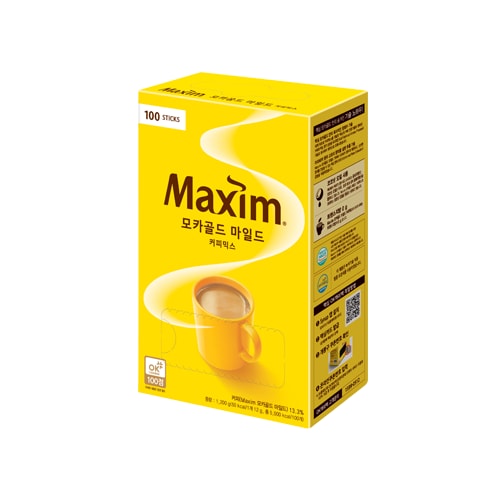
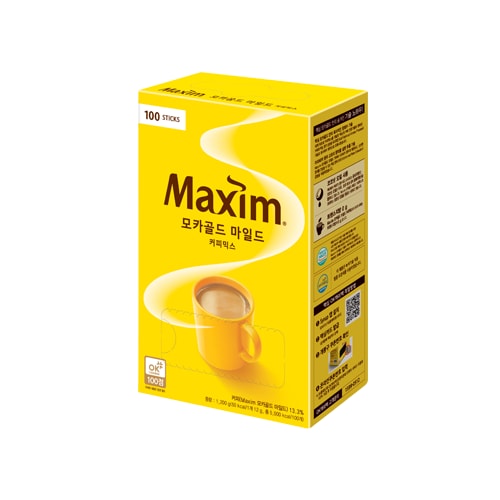
맥심 모카골드 마일드, the 100-stick box that sits in most Korean office kitchens. Image: Dongsuh Foods official brand page.
If you have tried both, you already know they are not the same drink. A Korean coffee mix stick — almost certainly Maxim — makes something sweet, soft and milky. A G7 stick from Vietnam makes something dark and bitter that tastes like coffee that has been argued with.
Both are 3-in-1 sticks. Both cost pocket change. English write-ups compare them on taste and stop there, usually landing on "depends what you like."
The more useful answer is that the two products were designed by countries in opposite positions. Vietnam is the world's second-largest coffee producer. Korea grows none at all — and drinks more of it per person than the United States.
The Short Answer
| Maxim (맥심) | G7 | |
|---|---|---|
| Maker | 동서식품 Dongsuh Foods, Korea | Trung Nguyên, Vietnam |
| Flagship since | 1989 (Mocha Gold) | 2003 |
| Bean character | Milder, blended for sweetness | Robusta-forward, bold and bitter |
| The stick | Coffee, creamer, sugar — creamer and sugar lead | Coffee, creamer, sugar — coffee leads |
| Home country grows coffee | No | Yes — world's No. 2 producer |
| Home market share | 88.3% of Korean coffee mix | Vietnam's leading 3-in-1 brand |
| Price | About ₩197 a stick (₩19,680 / 100, Aug 2026) | Varies by import route |
| Name means | "Maxim," a Maxwell House-era brand name | Group of Seven — the seven largest advanced economies |
| Buy it if | You want a soft, sweet, milky cup | You want bitterness and strength |
Maxim Mocha Gold coffee mix — the Korean stick this comparison is aboutAffiliate link. As an Amazon Associate, EpicKor earns from qualifying purchases at no extra cost to you.
If you only remember one line: G7 tastes like the country that grows it, and Maxim tastes like the country that had to import it.
You might like: Korean Drinks Guide: what to buy in a Korean convenience store, with the price, sugar and caffeine of every bottle
Korea Drinks 405 Cups a Year and Grows None of Them
This is the number that reframes everything else.
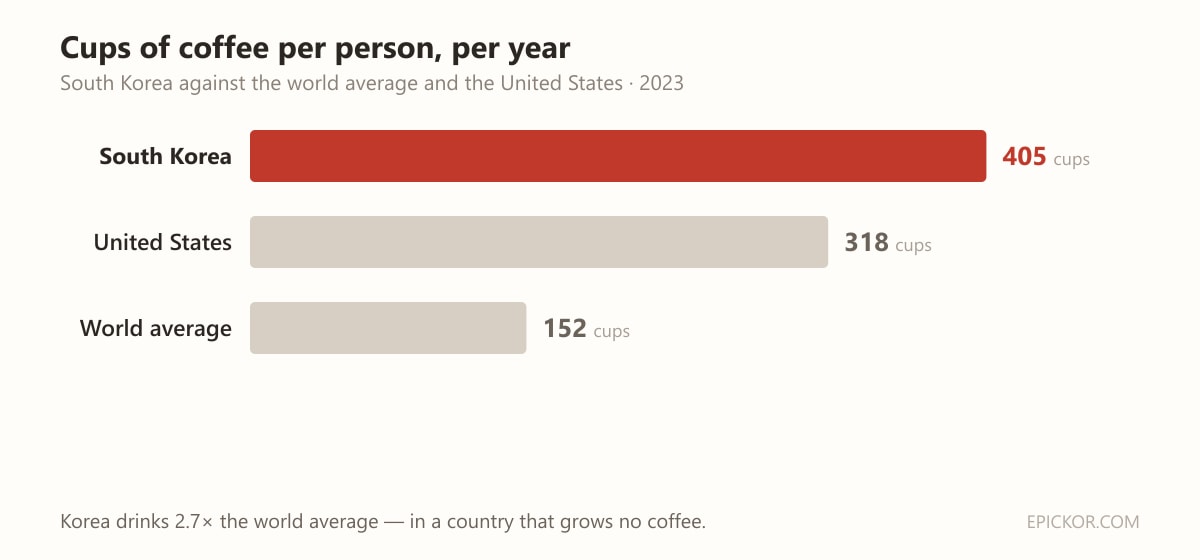
Per person, per year, 2023. Chart: EpicKor, from Korean agricultural ministry figures.
South Korea drank 405 cups per person in 2023, against a world average of 152 and the United States' 318. That is 2.7 times the global rate, in a country whose climate grows no commercial coffee whatsoever. Every bean is imported.
That combination — enormous demand, zero domestic supply, no inherited brewing tradition — is the condition Maxim was built for. Korea did not arrive at instant coffee because it was cheap. It arrived at instant coffee because instant coffee is what a country with no coffee culture can standardise, and then it stayed for forty years because the product got very good at being what Koreans wanted.
Vietnam's condition is the mirror image. The country is the world's second-largest coffee producer and exporter, its industry employs an estimated two to three million people, and it specialises in robusta — the harsher, higher-caffeine, more bitter species. G7 is what you build when the raw material is right there and it tastes like that.
You might like: Why Korean Highballs Cost More Than Beer: A Tax Story
What Is Actually In the Stick
Both are "3-in-1": coffee, creamer, sugar. The ratio is where they part.
Maxim's stick is a dairy-and-sugar product with coffee in it. A Mocha Gold Mild stick is 12g and runs about 50 kcal, which for a drink with no milk added tells you what most of the weight is. The coffee is there to flavour a sweet creamy base, not the other way round. That is a deliberate formulation choice, and it is why people who grew up on it describe black coffee as the strange-tasting one.
G7's stick leads with the coffee. It is a robusta-and-arabica blend, and the bitterness that English reviewers call "too strong" is not a defect — it is robusta doing what robusta does. Trung Nguyên's own positioning leans on that; the brand's blind-test claim from 2012 put its selection rate at 89% in Vietnam's 3-in-1 category.
The practical consequence for you: if you dislike G7, adding milk fixes it. If you dislike Maxim, nothing fixes it, because the sweetness is structural. Buy a small pack of either before committing to a hundred sticks.
One Company Holds 88% of Korea's Coffee Mix
This is the part no English article about Maxim mentions, and it is more interesting than the flavour notes.
Dongsuh Foods held 88.3% of the Korean coffee mix market in Nielsen's measurement, with more recent Korean reporting putting it around 90%. That is not market leadership. That is a category with one company in it and a rounding error behind.
Maxim Mocha Gold has been on sale since 1989 and moved roughly 5.3 billion sticks in a recent twelve-month period. For a country of about 52 million people, that is on the order of a hundred sticks per citizen per year, infants included.
Trying both before you pick a side: As an Amazon Associate, EpicKor may earn from qualifying purchases at no extra cost to you. The honest way to settle this is a small pack of each rather than a hundred-stick box of the wrong one — Maxim sticks and G7 3-in-1 both sell in small counts. Check the per-stick price rather than the headline price; the big boxes are where the value is, and they are also where a mistake gets expensive.
Compare on AmazonWhat It Costs in Korea Right Now
| Where | Product | Price | Per stick |
|---|---|---|---|
| Emart online | Mocha Gold Mild, 100 sticks | ₩19,680 | ₩197 |
| Nonghyup Hanaro | Mocha Gold Mild, 100 sticks | ₩19,710 | ₩197 |
| Costco Korea | Mocha Gold Mild, 12g × 210 × 2 | Bulk format | Lower per stick |
Checked 27 August 2026. Convenience stores sell small boxes at a large premium over the 100-stick price; buy at a supermarket if you are staying more than a few days.
The price moved recently and the reason is worth knowing. On 15 November 2024 Dongsuh raised shipping prices across instant coffee, coffee mix and coffee drinks by an average of 8.9% — Mocha Gold coffee mix 2.16kg went from ₩23,700 to ₩25,950, and the 500g refill from ₩17,450 to ₩19,110. The company's stated cause was global abnormal weather cutting coffee production, compounded by sugar and palm oil costs and the exchange rate.
That is the same climate pressure that has moved coffee prices worldwide. It reaches a Korean office kitchen as roughly ₩20 more per stick.
The Decade Maxim Spent Losing, and the Year It Stopped
Korea's coffee market grew to ₩3.74 trillion in 2024, up 35.6% from 2018. But the growth did not go to coffee mix.
Roasted coffee — beans, cafés, americanos — grew at about 15.8% a year over that period. Prepared coffee, the category holding coffee mix, shrank by about 0.5% a year. Korea spent a decade moving from a desk stick to a café cup, and there are now over 100,000 cafés in the country to prove it. Our guide to why Koreans drink iced americanos year-round covers the drink that took those cups.
Then, in 2024, coffee mix sales rose 0.5% — the first increase since 2014.
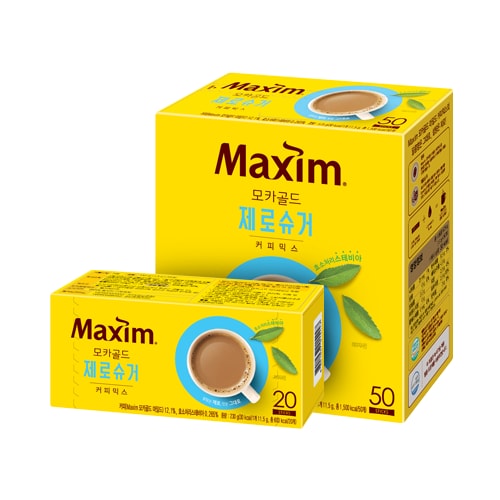
모카골드 제로슈가, about 30 kcal a stick against the standard 50. A ten-year decline is the context for a line extension like this. Image: Dongsuh Foods official brand page.
A single half-percent year is not a turnaround yet, and it should not be reported as one. But it is the first time in a decade the line pointed the other way, and it arrived alongside reformulations like the zero-sugar version above — the category answering the specific objection that pushed people to the café in the first place.
Which One to Buy
Buy Maxim if you want the drink Korean offices actually run on, you take coffee sweet and milky, or you want the thing that tastes like the country. Mocha Gold Mild is the default and the right first purchase. White Gold is lighter and creamier still; Supreme Gold is the fuller-bodied one; Zero Sugar exists if the sweetness is the problem.
Buy G7 if you want strength and bitterness, you drink coffee black, or Maxim tasted like dessert to you. It is the more conventionally coffee-like of the two.
For everything else in the Korean drinks aisle, our Korea drinks guide covers what to reach for — and if you are buying something to bring home in a jar rather than a box, Korean yuja tea explains why the big percentage on the front of that jar is not the fruit content.
Buy neither if you are chasing café quality in a stick. Neither product is trying to be that, and both are honest about it — which is more than can be said for a lot of instant coffee.
FAQ
Q: What is Korean coffee mix?
A: A single-serve stick containing instant coffee, creamer and sugar, dissolved in hot water. In Korea it is overwhelmingly Maxim, made by Dongsuh Foods, which holds about 88% of the category. The flagship Mocha Gold has been sold since 1989.
Q: Is Maxim or G7 better?
A: They are built for different palates and the difference is structural, not a quality gap. Maxim leads with creamer and sugar and tastes soft, sweet and milky. G7 is robusta-forward and tastes bitter and strong. If you drink coffee black, G7 will suit you; if you take it sweet and white, Maxim will.
Q: How much does Maxim coffee mix cost in Korea?
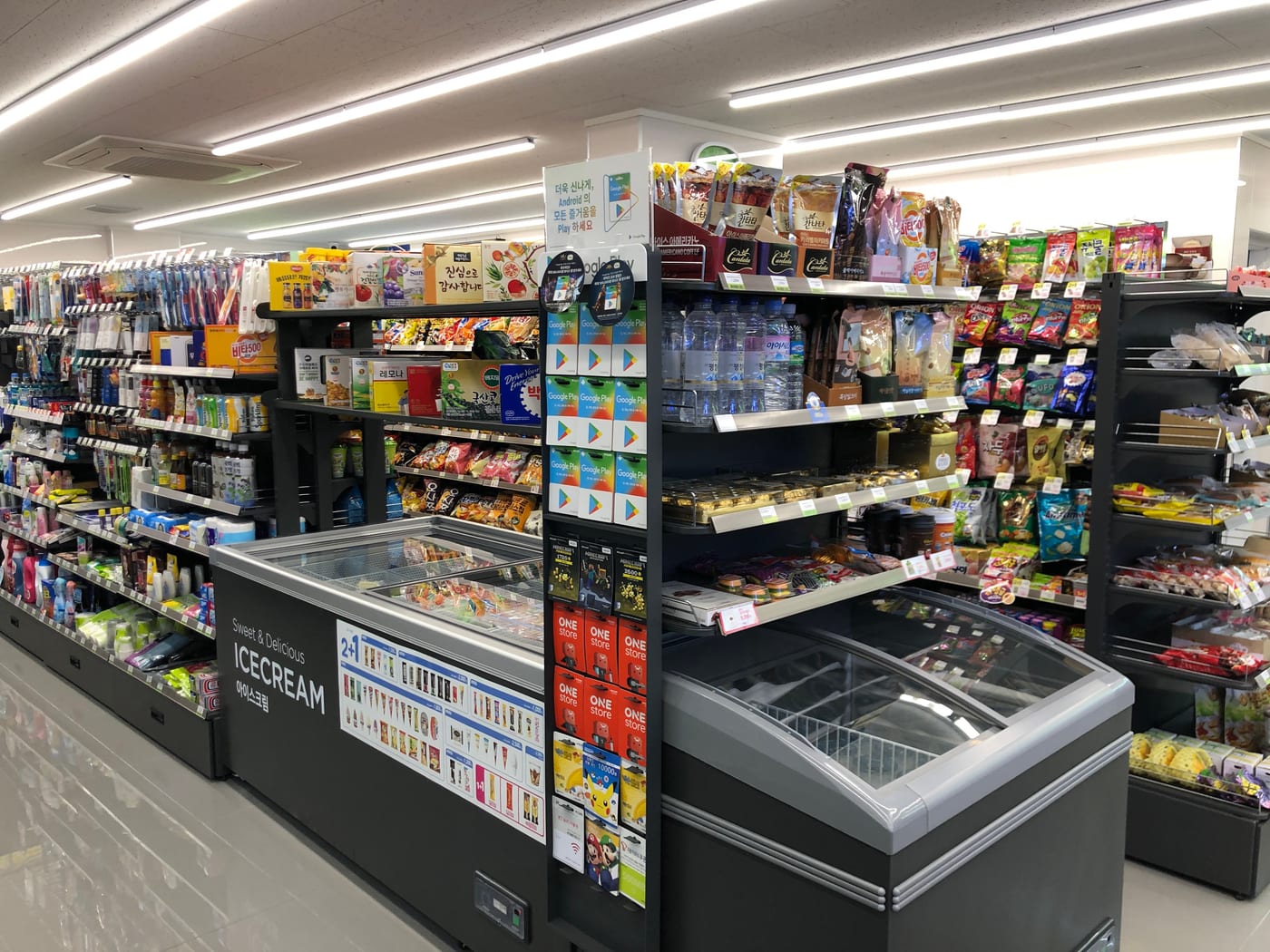
A: About ₩19,680 for a 100-stick box of Mocha Gold Mild at Emart, roughly ₩197 a stick, checked August 2026. Nonghyup Hanaro lists ₩19,710. Convenience stores charge a large premium for small boxes, so buy at a supermarket if you can. Our Korean convenience store food guide covers what the premium buys you elsewhere in the shop.
Q: Which Maxim should a first-timer buy?
A: Mocha Gold Mild. It is the default in Korea and the reference point everything else is described against. White Gold is milkier and sweeter, Supreme Gold is fuller-bodied, and Zero Sugar drops from about 50 kcal a stick to about 30.
Q: Why is Korean instant coffee so sweet?
A: Because it was formulated that way for a market with no domestic coffee production and no inherited brewing tradition. Korea imports every bean it drinks and arrived at coffee through a sweetened, standardised product rather than through beans. Forty years later that is simply what a great many Koreans think coffee tastes like.
Q: Why is G7 called G7?
A: For the Group of Seven, the world's seven largest advanced economies. Trung Nguyên launched the brand at the end of 2003 with the explicit ambition of competing in those markets, and it now sells in more than 80 countries.
The One Thing to Remember
Maxim and G7 are the same format solving opposite problems. Vietnam had the beans and built a product around them. Korea had the demand and built a product around that — a sweet, creamy, extremely consistent stick that one company sells 5.3 billion of a year.
Neither is the better instant coffee. They are two countries' answers to the question, and you can have both for about ₩200 a cup.
Sources and Further Reading
- Korean retail listings for 맥심 모카골드 마일드 커피믹스 100입 — Emart online ₩19,680 and Nonghyup Hanaro Mart ₩19,710, checked 27 August 2026
- Korean business reporting on Dongsuh Foods' 15 November 2024 shipping-price increase averaging 8.9%, with the itemised Mocha Gold 2.16kg (₩23,700 → ₩25,950) and 500g refill (₩17,450 → ₩19,110) figures and the company's stated cause of climate-driven production shortfalls
- Nielsen-based Korean reporting on Dongsuh's 88.3% coffee mix share, and Korean trade press on Mocha Gold's 1989 launch and roughly 5.3 billion sticks in a recent twelve months
- Korean agricultural and food-industry data on per-capita consumption — 405 cups in Korea (2023) against 152 worldwide and 318 in the United States
- Korean market data on the coffee industry reaching ₩3.74 trillion in 2024, roasted coffee growing about 15.8% a year while prepared coffee declined about 0.5% a year, and the 2024 coffee-mix uptick of 0.5% — the first since 2014
- Trung Nguyên and coffee-trade sources on G7's end-2003 launch, the Group of Seven naming, the robusta-arabica blend, the 2012 blind-test selection rate, distribution in 80-plus countries, and Vietnam's position as the world's second-largest coffee producer
- Per-stick calorie figures read from the Korean packaging shown in this post's images
- Image sources and licensing are documented in this post's
image-sources.md
Prices checked 27 August 2026. Korean retail pricing moves and import pricing for G7 varies widely by route; confirm before buying.
You Might Also Like
Delaffe: Korea's Convenience-Store Coffee Brand That Cut Its Price to ₩900
델라페 is not a drink, it is CU's own label — 150 million units a year, sold as a pouch you pour into a separate cup of ice. In March 2026 five of them dropped to ₩900, which makes the convenience store cheaper than Korea's cheapest café chain.
Coolpis: The Korean Drink That Exists to Put Out Tteokbokki
쿨피스 is on every spicy Korean table for a reason, and it is not the one people assume. It does not neutralise capsaicin — milk does. Launched 1980, 80 million units a year, and in 2026 its first new flavour since 2011.
Korean Convenience Store Ice Cups: The Best-Selling Item Is a Cup of Ice
A cup of ice outsells everything else in a Korean convenience store. What it costs in August 2026 after June's price rise, why the drink is sold separately, what Koreans pour into it, and why the ₩800 cup tested cleaner than café ice.