Korean Hangover Drinks: Which One to Grab, and What Korea Made Them Prove
There is a small shelf beside the counter of every Korean convenience store, usually at eye level, holding little bottles and foil sticks with names you cannot read. Koreans reach for one on the way into the night, not on the way home. That is the first thing worth knowing.
The category is called 숙취해소제 (sukchwi-haeso-je), hangover relief, and Korea buys roughly ₩350 billion of it a year — a record set in 2023. It has existed since 1992, it is dominated by a single brand that has led for 33 straight years, and in January 2025 the whole industry was told to prove it works on actual humans or stop saying it does.
Three products failed.
상쾌환 (Sanggwaehwan) ships in the 20-pack — on AmazonAffiliate link. As an Amazon Associate, EpicKor earns from qualifying purchases at no extra cost to you.
The Short Answer
| Question | Answer |
|---|---|
| When do Koreans take it? | Before drinking, mostly — or at the first drink |
| Where do I buy it? | Any convenience store, the shelf beside the till |
| What does it cost? | ₩3,600–3,900 for a stick, as of August 2026 |
| Do I need Korean to choose? | No — the formats tell you most of it |
| Does it actually work? | Since 2025 the claim requires human trial evidence. That is not the same as a cure |
| The one that made the category | 컨디션 (Condition), 1992, still about 44% of the market |
Before or after: the split that decides what you buy
Almost every product on that shelf belongs to one of two camps, and getting this wrong is the most common visitor mistake.
Before, or with the first drink. This is where the market lives. 컨디션 (Condition) and 여명808 (Yeomyeong 808) are both taken ahead of drinking, and Korean colleagues will hand you one in the lift on the way to dinner. The logic is preventative — you are meant to take it while sober.
After, or the next morning. This is the smaller half and it is mostly 헛개 (heutgae) drinks, made from the oriental raisin tree, sold in large bottles and drunk like a soft drink. It overlaps with the food answer, which in Korea is 해장국 (haejang-guk), hangover soup — a whole separate ritual we cover in the Korean drinking culture guide.
If someone hands you something before dinner and you save it for the morning, you have used it backwards. It will not hurt you. It also will not do what it was designed to do.
What is actually on the shelf
Four things account for most of what you will see.
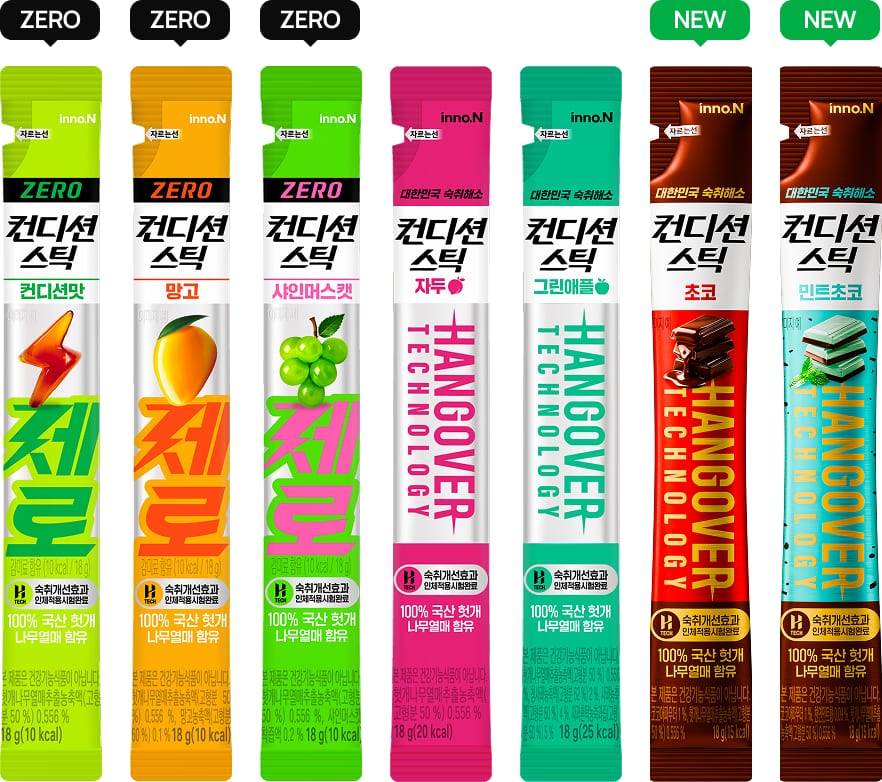
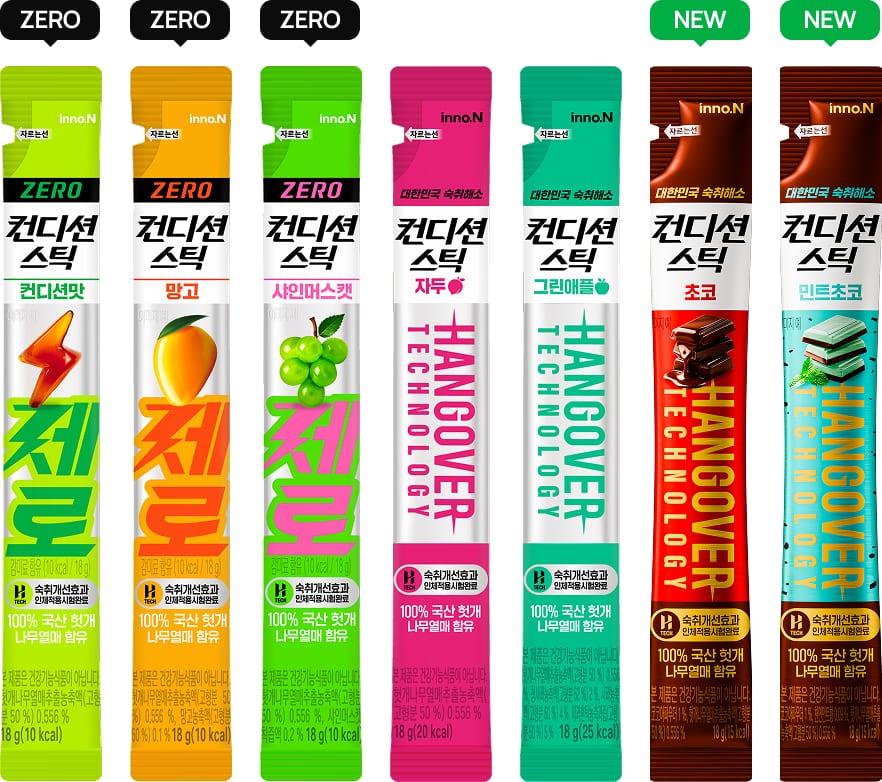
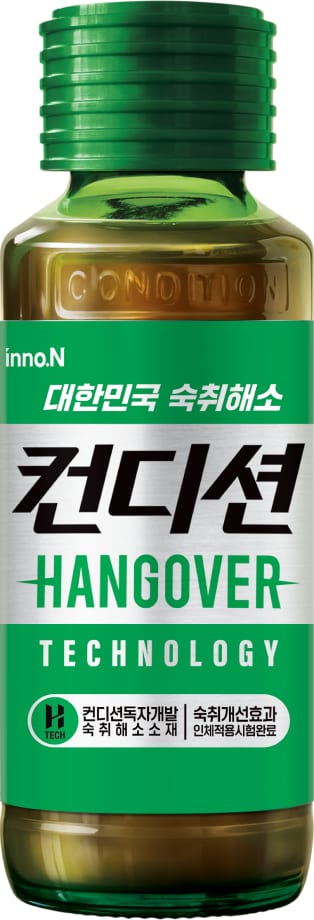
컨디션 (Condition) — the original, launched in 1992 by CJ제일제당, now made by HK inno.N. It created the category and has been the number one seller for 33 consecutive years, holding roughly 44% of the market. It now spans a range: the original drink, 컨디션헛개, a pill (환), and a stick.
여명808 (Yeomyeong 808) — invented in 1996 by 남종현 of Gramy and launched in 1998, marketed as the world's first hangover-relief natural tea. Korean coverage notes that its inventor, now in his eighties, still drinks it daily and still personally inspects production runs. This is the one older Koreans swear by and younger ones pull a face about, and the face is the point — see below.
상쾌환 (Sangkwaehwan) — Samyang Corp's entry, and the one that changed the format. It arrived in 2013 as a pill, then in 2019 as a stick you swallow without water. There is now a zero-sugar version sweetened with allulose at 11 kcal a stick.
헛개수 and the hovenia drinks — large bottles, mild taste, sold cold, drunk after. 헛개 is the fruit of the oriental raisin tree, used in Korean folk medicine for liver complaints long before anybody bottled it, which is why it turns up as an ingredient inside the other products as well as a drink in its own right. These are the closest thing to a normal beverage on the shelf, and the easiest entry point if the idea of a medicinal shot puts you off.
Korea made them prove it
This is the part that has not been written in English, and it is the most useful thing on this page.
From 1 January 2025, any food sold in Korea that advertises itself with hangover language has to hold scientific backing for the claim. The Ministry of Food and Drug Safety requires 인체적용시험 — a human trial — or a qualitative literature review of human trial results, and the labelling and advertising must then pass self-regulatory review by the Korea Food Industry Association.
Without that evidence, a product may no longer describe itself using the phrases the category was built on: 숙취해소 (hangover relief), 술 깨는 (sobering up), or 음주 전후 (before and after drinking).
Korean media reported that of 28 products the ministry reviewed, 25 cleared the bar. The three that could not produce evidence judged objective and valid were barred from making the claim from 2026.
Two things follow from this, and they pull in opposite directions.
It raises the floor. A product on a Korean shelf in 2026 saying 숙취해소 has, at minimum, a human trial behind the claim. That is more than most supplement categories anywhere can say.
It is not a health authorisation. A trial demonstrating a measurable effect is a long way from a cure, and the regulation deliberately governs what you may print, not what the product does for you. Read it as a floor on advertising honesty, not as a medical endorsement.
How to read the package without reading Korean
You do not need the language to make this decision. Three marks do the work.
The badge. Look near the bottom of the front face for a small oval or boxed mark reading 숙취개선효과 인체적용시험완료. It is on both products photographed above. It means the human trial exists. Its absence in 2026 is not proof of anything sinister — plenty of drinks on that shelf are ordinary beverages that never claimed anything — but on a product that is claiming, you want to see it.
전 or 후. 음주 전 means before drinking, 음주 후 means after. Some packages print 음주 전후, meaning either. This is the single most useful pair of characters on the shelf.
The format tells you the rest. A foil stick is designed to be taken dry, standing at the counter, in about three seconds. A small glass bottle is a shot. A large plastic bottle is a drink for the morning. If you match the format to the moment you are in, you will be right more often than not.
From a bottle you endured to a jelly you swallow
There is a generational story on that shelf that Koreans will tell you if you ask.
For a long stretch, the serious option was a small brown bottle, and drinking it was something you got through rather than enjoyed. That reputation is why the format changed rather than the marketing: 상쾌환 went to a pill in 2013 and a water-free stick in 2019, and the rest of the category followed — HK inno.N now sells 컨디션 as a stick and a pill alongside the bottle, and the zero-sugar versions arrived after that.
The market numbers track the same curve. It began around ₩10 billion in 1992 and hit ₩70 billion by 1994 — seven times larger in two years. By 2019 it was ₩270 billion, and by 2023, ₩350 billion, the largest it has ever been.
What changed was not the science. It was that the thing became portable, sweet enough to swallow, and small enough to keep in a jacket pocket.
What it costs, August 2026
| Product | Format | Typical convenience store price |
|---|---|---|
| 컨디션 (Condition) stick | Stick, no water | ₩3,900 |
| 상쾌환 (Sangkwaehwan) stick | Stick, no water | ₩3,900 |
| 모닝이즈백 stick | Stick, no water | ₩3,600 |
| 헛개수-type drinks | Large bottle | Usually under ₩2,500 |
Sticks sit in a narrow ₩3,600–3,900 band and they have been rising: Condition went from ₩3,300 to ₩3,900, and GS25's Morning Is Back stick went from ₩3,300 to ₩3,600, a 9.1% increase. Note what this means against the rest of the shelf — one stick costs roughly twice a bagged ramyun and more than most convenience store breakfast items.
The honest part
None of this makes you sober. Nothing on that shelf reduces blood alcohol, and no product there will keep you safe to drive, work, or make decisions. Korea's 2025 rule tightened what may be printed; it did not turn a drink into a cure.
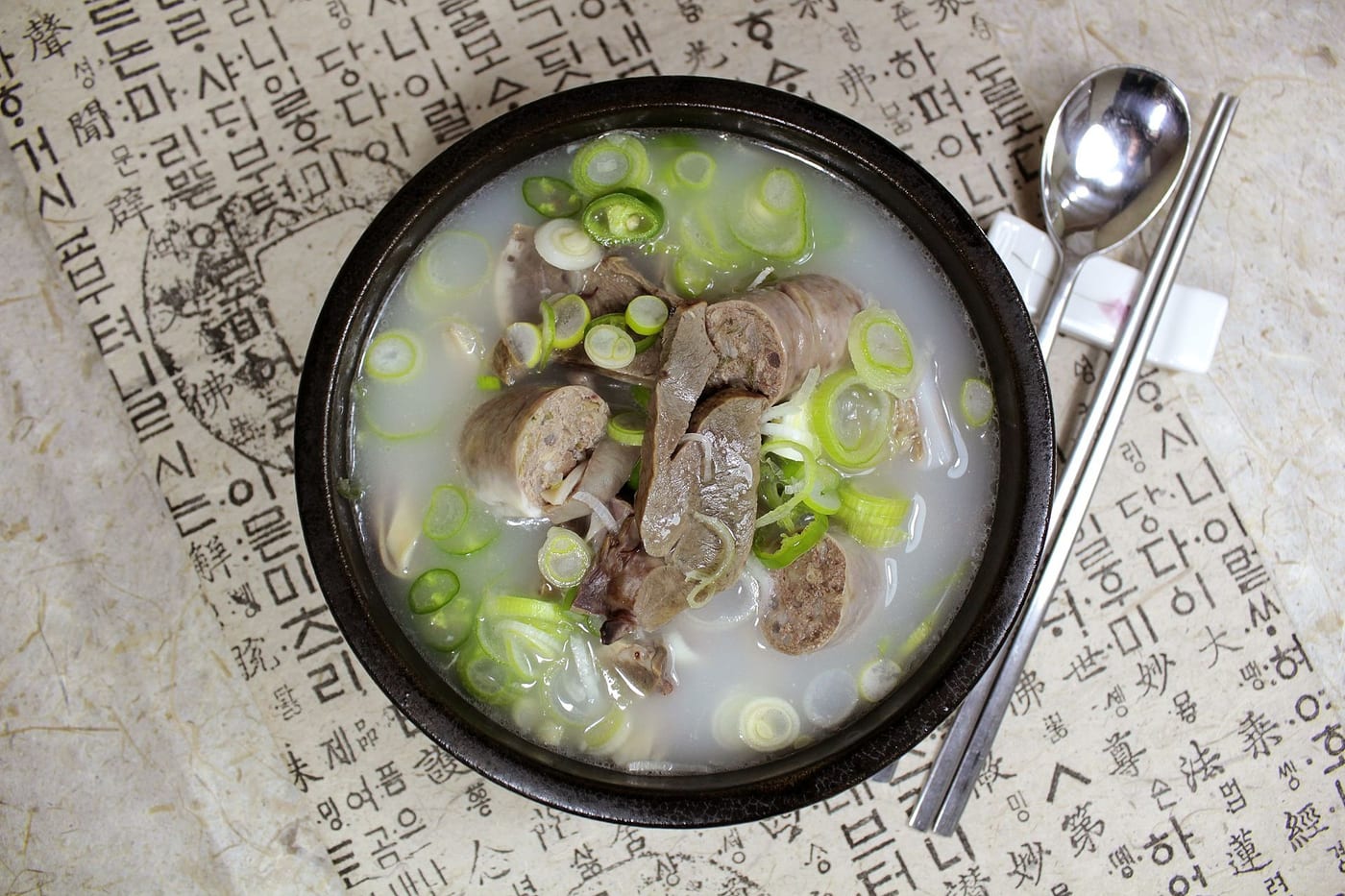
The rest of the honest answer is unglamorous. What actually moves a Korean hangover is the same thing that moves anybody's — water, food, and time — which is why 해장국 remains the real national remedy and why the little bottle is a supplement to the routine rather than a replacement for it.
If you take one thing from the shelf: take it before, take it with water, and treat it as insurance rather than permission.
FAQ About Korean Hangover Drinks
Q: When are you supposed to drink Korean hangover drinks? Most of the market is designed to be taken before drinking or with the first drink, including Condition and Yeomyeong 808. The after-drinking half of the shelf is mostly heutgae (hovenia) bottles. Taking a preventative product the next morning is the most common visitor mistake.
Q: Do Korean hangover cures actually work? Since 1 January 2025 a product cannot use hangover-relief language in Korea unless it holds human trial evidence, reviewed by the Korea Food Industry Association. Of 28 products the ministry examined, 25 cleared it. That means the claim has evidence behind it — it does not mean the product is a cure, and none of it lowers blood alcohol.
Q: How much do they cost in a Korean convenience store? Sticks are ₩3,600–3,900 as of August 2026, and prices have risen recently. Large hovenia bottles are usually under ₩2,500.
Q: Which Korean hangover product is the most popular? 컨디션 (Condition), launched in 1992 and the first product in the category, has been the top seller for 33 consecutive years with roughly 44% of the market.
Q: Can I buy these outside Korea? Several brands export and appear on international marketplaces, though the lineup is narrower than a Korean shelf and prices are higher. The stick formats travel best because they need no water and survive a suitcase.
What to do with this at the counter
Walk to the shelf by the till. If the night has not started, take a stick and swallow it there — no water needed, which is the whole reason the format exists. If the night is over, take a cold hovenia bottle and find soup.
The rest of that counter is worth knowing too: the 1+1 and 2+1 shelf tags that decide what you actually pay, the breakfast basket waiting for you tomorrow, and the full convenience store guide for everything in between.
Korea built a ₩350 billion industry on the space between the first drink and the next morning. The least you can do is take it in the right order.
You Might Also Like
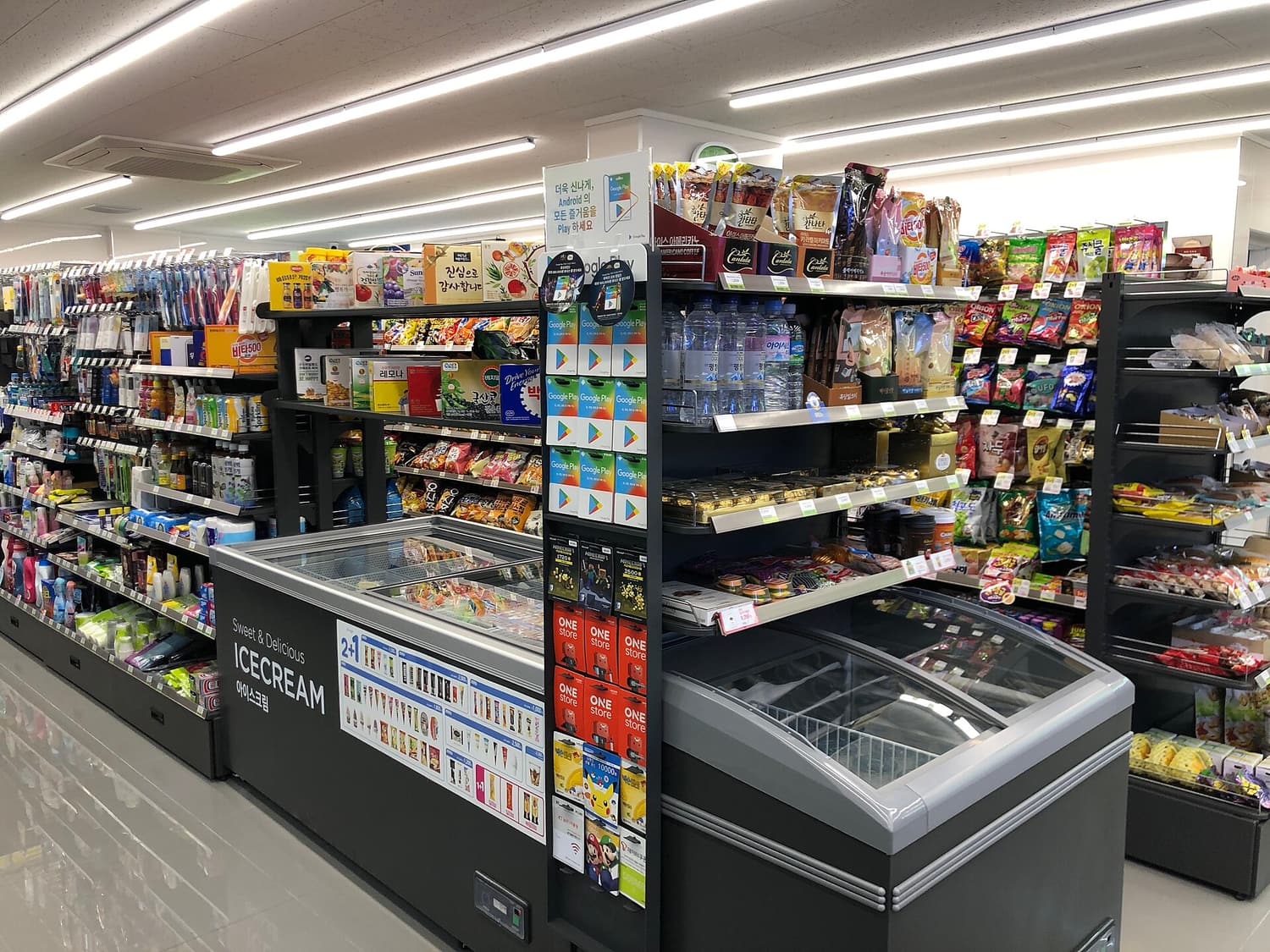
Korean Convenience Store 1+1: How It Works and Who Can Bank the Free One
The free item in a Korean convenience store 1+1 can be banked in the chain's app and collected at any branch later. Every English guide recommends it. Almost no short-term visitor can actually do it, and the reason is worth knowing before you try.
Seoul Fireworks Festival 2026 Moved Three Weeks Earlier: What That Changes
Korea's biggest fireworks night is 5 September 2026 — moved three weeks earlier to dodge Chuseok. A million people come, the nearest subway station stopped taking passengers at 6:19pm last year, and the free view is the good one.
Korea's Exam Day: Why Planes Stop for Suneung and How to Plan Around It
For about 35 minutes on Korea's exam day, aircraft stop taking off nationwide, artillery drills halt, and the stock market opens an hour late — all for one English listening test. What happens on Suneung day, and how to plan a trip around it.