Jokbal vs Bossam: Which Korean Pork Dish Should You Order?
Almost every Korean delivery app has a category that reads 족발·보쌈 — jokbal and bossam, welded together as though they were one thing. Half the shops in the country sell both, at nearly the same price, with the same lettuce, the same garlic, and the same little dish of pink salted shrimp.
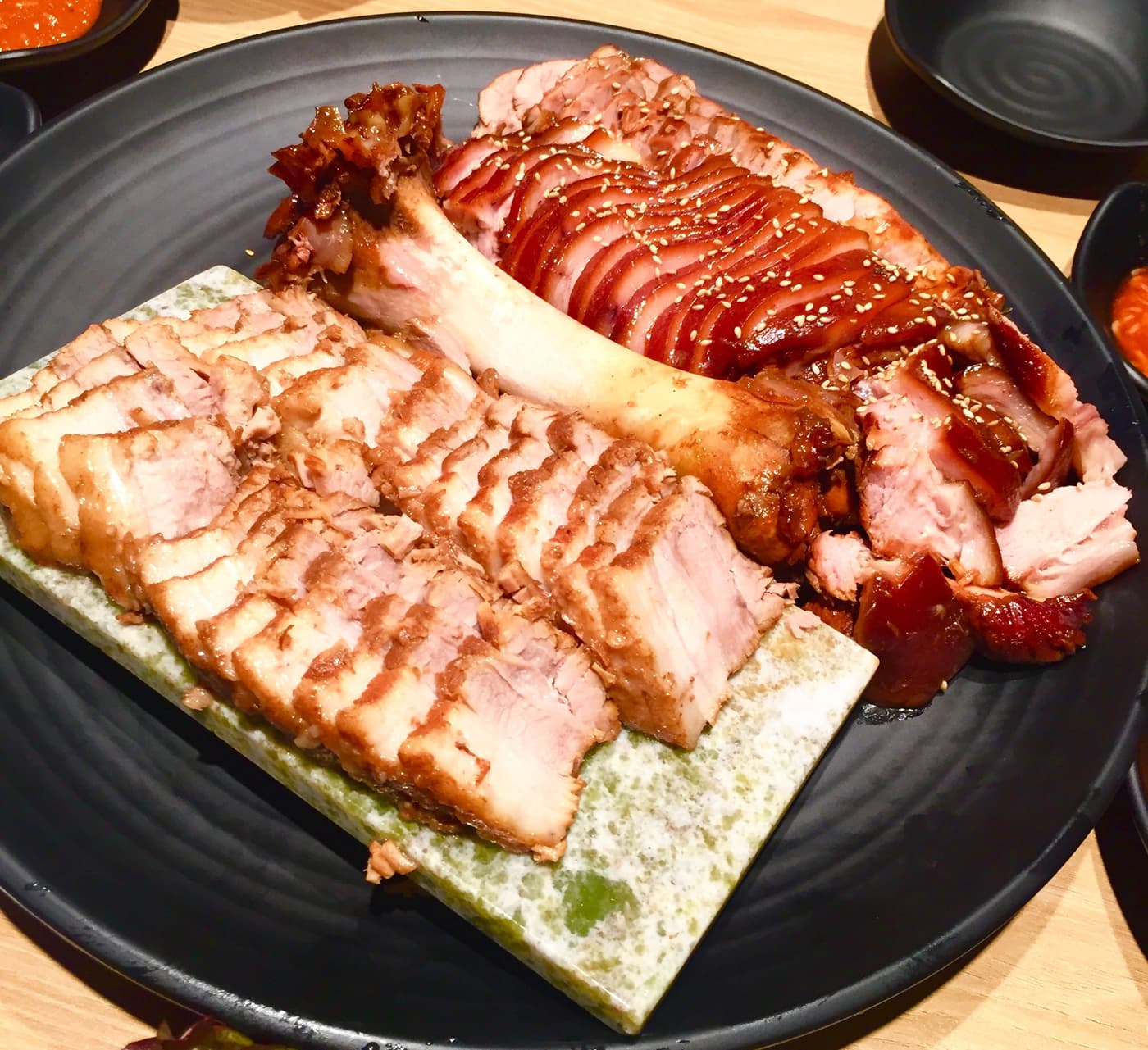
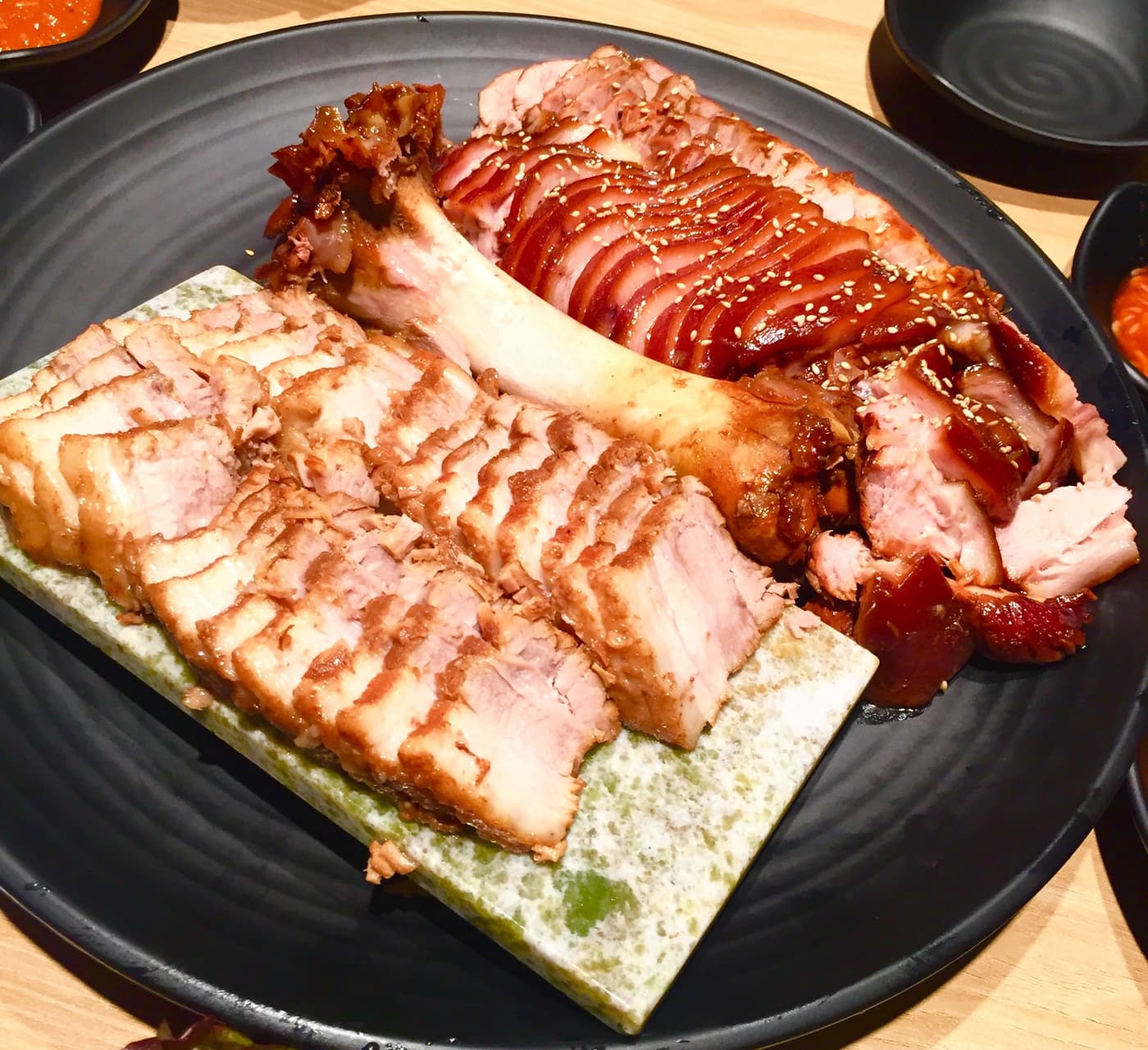
They are not the same dish. One is a pig's trotter braised dark in soy sauce. The other is pork belly boiled plain in water. If you order the wrong one you will not get a bad meal, but you will get the opposite of what you wanted.
Here is how to tell them apart before the plate arrives.
The Short Answer
| 족발 Jokbal | 보쌈 Bossam | |
|---|---|---|
| Cut | Pig's trotter — the leg and foot | Pork belly or shoulder |
| Cooked in | Soy sauce, ginger, garlic, rice wine, cinnamon, star anise | Water and aromatics only — no soy |
| Colour | Dark amber, glossy | Pale ivory-pink |
| Texture | Gelatinous, sticky, some cartilage and bone | Tender, soft, clean-tasting |
| Flavour | Sweet-salty, strongly seasoned | Mild — the sauce is on the side |
| Comes with | Lettuce, garlic, 새우젓 (salted shrimp) | Same, plus 보쌈김치 and often steamed cabbage |
| Price, Aug 2026 | Small ₩31,900–32,900 | Small ₩27,000, medium ~₩31,000 |
| Portion reality | "Small" feeds 2–3 people | Same |
| Order it if | You want bold, sticky, drinking food | You want mild pork you assemble yourself |
Prices are the August 2026 delivery band for mid-tier shops; franchise dine-in runs higher — 부드러운족발 ₩35,000–38,000, 모둠보쌈 ₩31,000–53,000.
The one-line rule: jokbal is seasoned, bossam is not. Everything else follows from that. Jokbal arrives already tasting of something. Bossam arrives deliberately blank, because you are supposed to build each bite yourself.
Korean ssamjang wrapping sauce — compare on AmazonAffiliate link. As an Amazon Associate, EpicKor earns from qualifying purchases at no extra cost to you.
Jokbal Is Refugee Food That Got Famous Because of a Sports Arena
This is the part almost no English write-up carries, and it is the more interesting half of the story.
The soy-braised trotter Koreans eat today is not an ancient national dish. It descends from 갱엿돼지족조림, a home dish from Hwanghae Province — pig trotters simmered slowly with dark malt syrup, soy sauce and ginger until the skin turns chewy. Hwanghae is in what is now North Korea.
After the Korean War, displaced grandmothers from the North (실향민) settled around Jangchung-dong in central Seoul and cooked the dish they knew from home to make a living. Three shops still trade on being the original — 평안도족발집, 장충동할머니집, 뚱뚱이할머니집 — and they are all said to have started selling trotters from the late 1950s. Every one of them was opened by someone who had come south.
Then geography did the rest. Jangchung Arena opened next door in 1963. Seoul's big indoor events — boxing, wrestling, basketball — happened there, and crowds poured out afterwards looking for something to eat and drink. By the 1970s the alley had gone national.
So jokbal's fame is an accident of a stadium being built beside a refugee kitchen. If you want to eat where it happened: Dongguk University Station (동대입구역), Line 3, Exit 3 — the original shops are a one- to two-minute walk. Most open around 10:30–11:00 and close near 21:00, and several close one weekday (평안도족발집 on Mondays, 원조장충족발 on Tuesdays), so check before you cross the city for it.
What the braise actually does
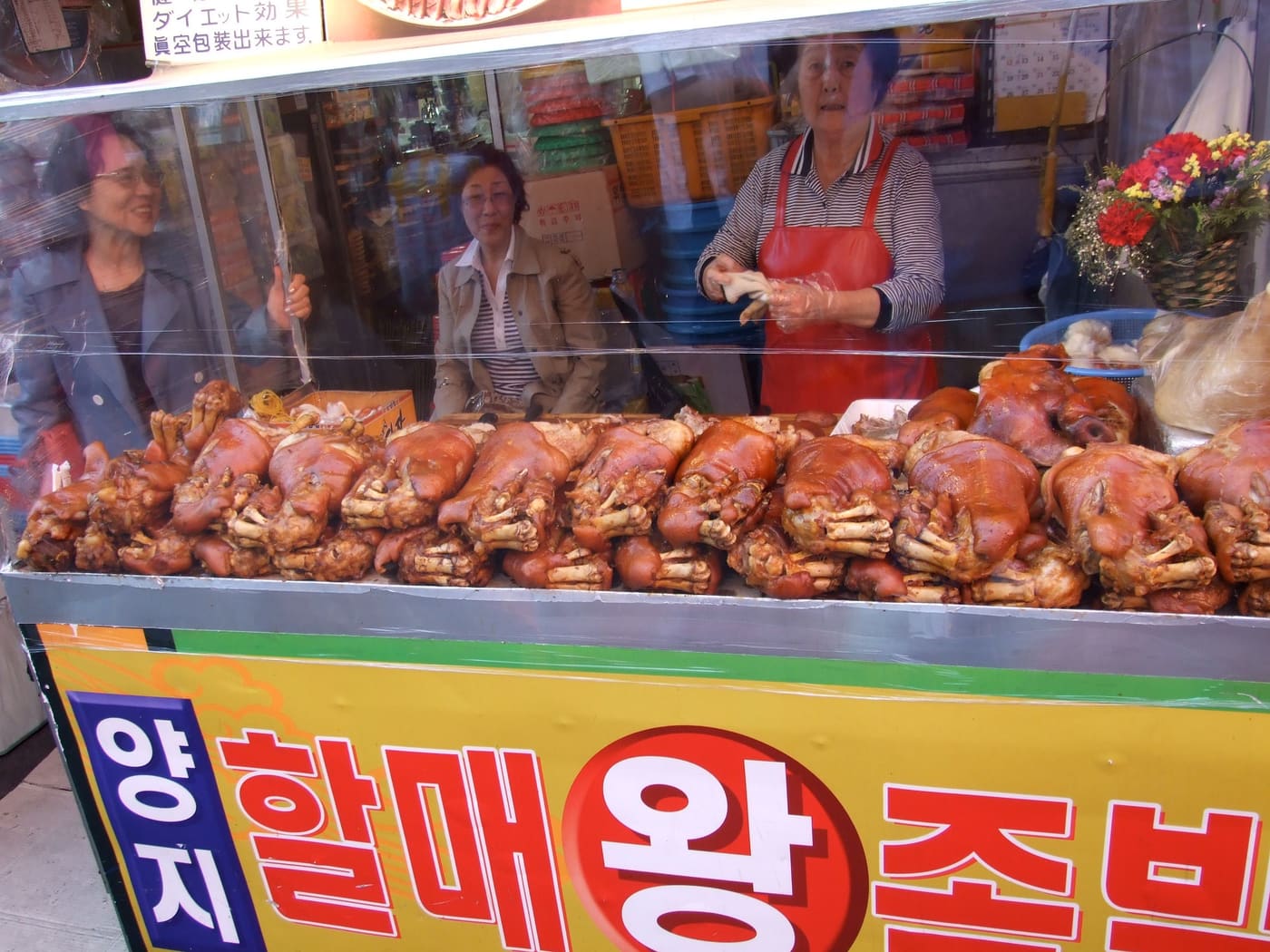
The soy braise is not a marinade brushed on at the end. The trotters go into a pot of soy sauce, ginger, garlic, onion, rice wine and warm spices — cinnamon and star anise are common — and simmer for hours until the collagen in the skin breaks down.
That is the whole engineering problem of the dish. A trotter is mostly skin, tendon and bone, with relatively little muscle. Cooked briefly it is inedible; cooked long enough it turns into something closer to a savoury jelly wrapped around a bone. The ginger and rice wine are there to strip the porkiness, and the malt syrup or sugar is what gives the surface its lacquered shine.
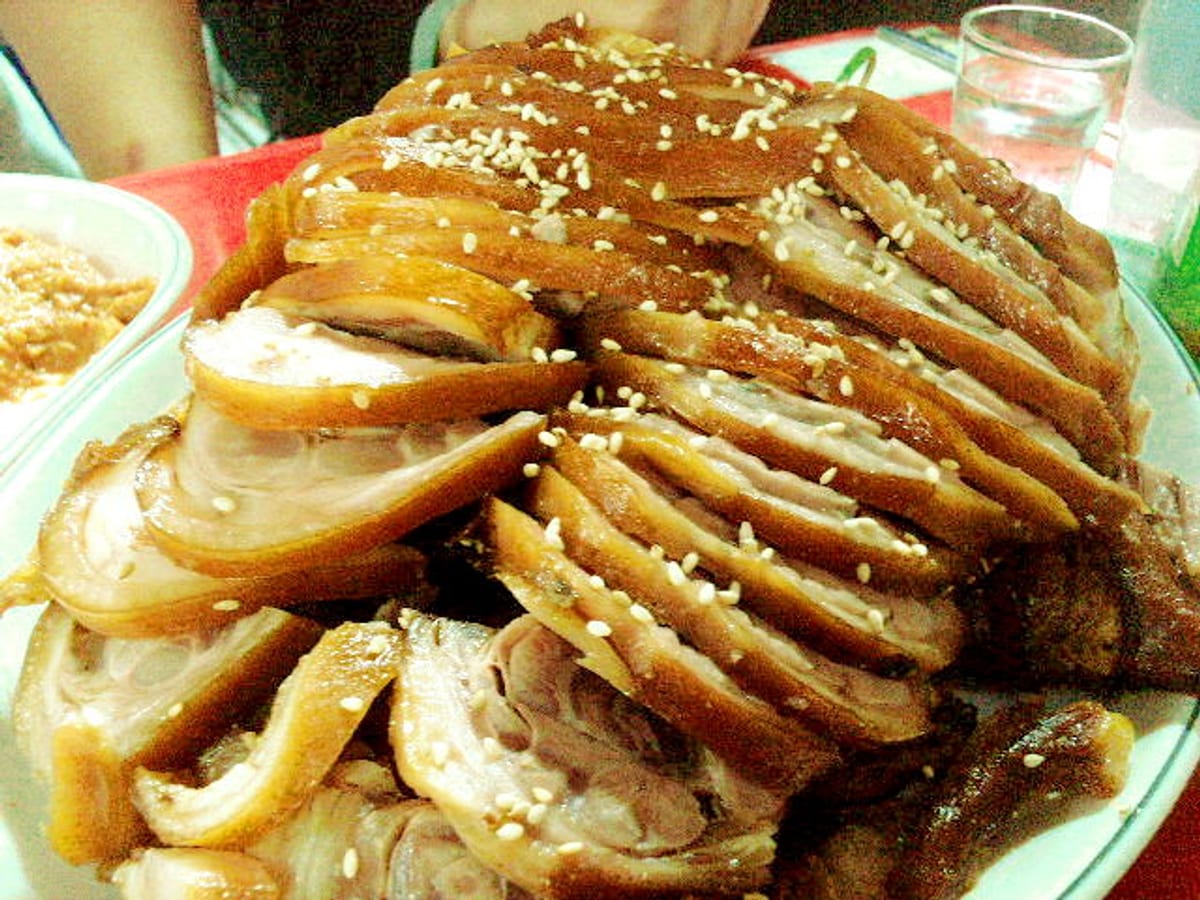
It also explains why jokbal is drinking food. It is salty, sweet, rich, and it holds up for hours on a table without going cold in any way that matters. Korean drinking culture calls that class of dish 안주 — food built around alcohol rather than the other way round, which our Korean drinking culture guide unpacks properly.
Bossam Was Payment for a Day of Hard Labour
Bossam's origin is a workday, not a war.
보 (bo) means a wrapping cloth — the same word as in 보자기. The dish is defined by the wrap, not the pork.
It belongs to kimjang (김장), the late-autumn ritual where a household makes its entire winter supply of kimchi in one exhausting day. In the Joseon era, the yangban household that needed dozens of hands would provide a pig for the workers. The pork was boiled, sliced, and eaten wrapped in the cabbage leaves that were right there — with kimchi so fresh it had not begun to ferment.
That is why bossam is unseasoned. It was never meant to compete with the kimchi; it was meant to carry it.
The modern restaurant version has a dated beginning too. 원할머니보쌈 started in 1975 in a 15-pyeong (about 50㎡) shop near Cheonggye 8-ga, run by a woman named Kim Bo-bae (김보배). It had no sign. Customers called it "the grandmother's bossam place," and that nickname — 할머니 보쌈 — became the brand that turned bossam into a nationwide franchise category.
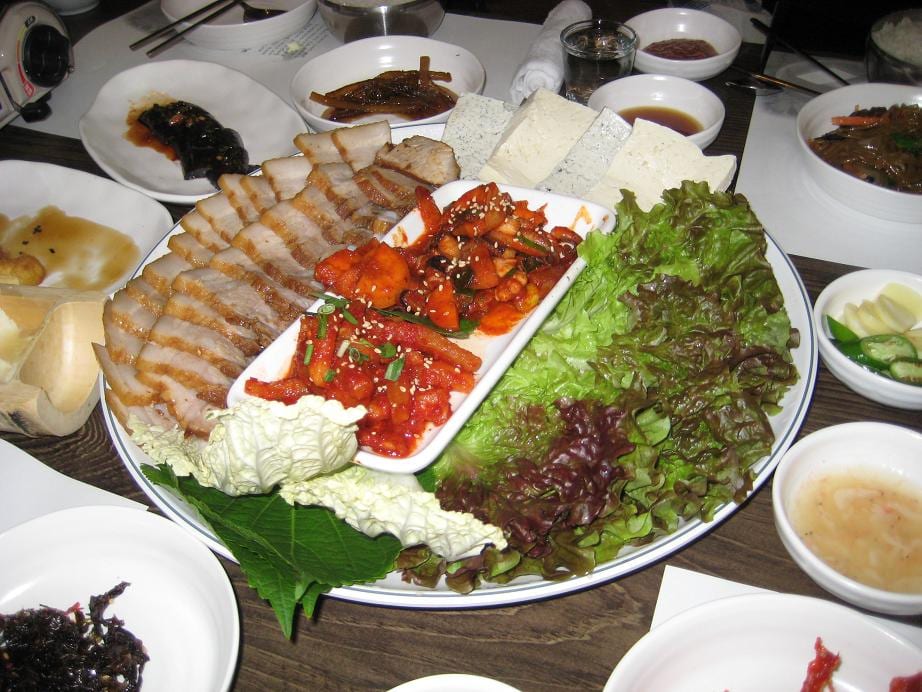
The Pink Shrimp Is Not a Garnish
Both dishes come with a small dish of 새우젓 (saeujeot) — tiny salted, fermented shrimp. Visitors routinely ignore it, or taste it once, decide it is aggressively salty, and leave it.
It is not there for flavour balance alone. During fermentation, saeujeot develops protease (which breaks down protein) and lipase (which breaks down fat). Korean food writing treats the pairing as functional: fatty boiled pork is heavy, and the shrimp paste is the enzyme that helps you get through a plate of it.
Use it the way Koreans do — a very small amount smeared on the pork inside the wrap, not a dip. It is a seasoning agent, and it is salty enough to ruin a bite if you treat it like sauce.
Building the wrap at home: As an Amazon Associate, EpicKor may earn from qualifying purchases. Bossam is the easiest Korean pork dish to recreate abroad because nothing is grilled — you boil, slice, and assemble. The one thing worth buying rather than improvising is the wrapping sauce: compare Korean ssamjang, and if you want the chilli-forward version alongside it, gochujang. Our [Korean pantry starter kit](/blog/277) covers what else earns shelf space.
See Korean ssamjang on AmazonHow to Actually Order
Portions are the trap. A "small" (소) of either dish is built for two to three people. Korean 족발·보쌈 shops are group-and-drinking restaurants, and the sizing assumes that. A solo traveller who orders a small jokbal at ₩31,900 will be eating trotter for two days.
If there are two of you, one small of either dish plus a bowl of noodles is a full meal. Many shops sell 쟁반국수 (cold noodles on a tray) as the standard partner — that pairing is why the noodle dish is on the menu at a pork restaurant at all.
If there are more of you, the move most Koreans make is to order neither one alone. Shops sell a half-and-half (반반) plate precisely because the two dishes complement each other: the seasoned one and the plain one on the same board. If your table cannot decide, that is the decision.
Read the menu for these words:
| Korean | What it means |
|---|---|
| 앞다리 / 뒷다리 | Front / rear trotter. Rear is meatier, front is more gelatinous |
| 불족발 | Spicy fire jokbal — genuinely hot, not tourist-hot |
| 냉채족발 | Cold jokbal with mustard sauce and vegetables, a summer version |
| 마늘보쌈 | Garlic bossam |
| 굴보쌈 | Oyster bossam — seasonal, autumn to winter |
| 반반 | Half jokbal, half bossam |
Be Honest About Which One You Will Like
We would rather you skip a dish than have a bad first experience with Korean food, so here is the unflattering side of each.
Skip jokbal if you dislike gelatinous texture. It is a trotter, and the skin-and-collagen mouthfeel is the entire point — a lot of first-timers find it sticky in a way they did not expect. There will also be bone and cartilage on the plate. It is not hidden and it is not a mistake.
Skip bossam if you want the meat itself to taste of something. Boiled pork belly with nothing on it is deliberately plain. If you eat a slice bare, decide it is bland, and stop, you have not eaten bossam — you have eaten one component of it.
Neither is a good solo-diner order at a restaurant. If you are eating alone and want to try one, delivery to your accommodation or a convenience-store portion is a more sensible first contact than a table for one at a shop sized for groups. Our eating alone in Korea guide covers where that is and is not comfortable.
Delivery adds up. The ₩27,000–32,900 band is the food. Delivery fees, packaging, and the minimum order can push a two-person order past ₩40,000 in Seoul.
FAQ
Q: What is the difference between jokbal and bossam?
Jokbal is pig's trotter braised in soy sauce with ginger, garlic and spices, so it arrives dark and already seasoned. Bossam is pork belly or shoulder boiled in plain water with aromatics, so it arrives pale and mild and is meant to be wrapped with kimchi and sauce. Same restaurants, same side dishes, opposite approaches.
Q: Which one should I order first?
Bossam, if you are new to Korean pork or eating with someone cautious — it is mild, boneless, and closer to familiar boiled pork. Jokbal, if you want the more distinctly Korean experience and do not mind gelatinous texture and bones. If the table cannot agree, order 반반 (half and half).
Q: How much do jokbal and bossam cost in Korea?
As of August 2026, a small bossam runs about ₩27,000 and a medium about ₩31,000; a small jokbal runs about ₩31,900–32,900. Franchise dine-in is higher — roughly ₩35,000–38,000 for jokbal and ₩31,000–53,000 for assorted bossam. A "small" is sized for two to three people.
Q: Why do jokbal and bossam always come with salted shrimp?
Saeujeot (새우젓) develops protease and lipase during fermentation, which help break down the protein and fat in the pork. Korean food writing treats it as a digestive pairing, not just a seasoning. Use a small smear inside the wrap rather than dipping.
Q: Where is the original jokbal street in Seoul?
Jangchung-dong, a one- to two-minute walk from Dongguk University Station (동대입구역) Line 3, Exit 3. The shops that claim origin — 평안도족발집, 장충동할머니집, 뚱뚱이할머니집 — were opened by families displaced from the North after the Korean War and date to the late 1950s. Most run roughly 10:30/11:00 to 21:00 with one weekday closure each.
Q: Is bossam related to kimchi-making?
Directly. Bossam belongs to kimjang, the autumn day when a household makes its winter kimchi. Households provided a boiled pig for the workers, who ate the pork wrapped in cabbage leaves with kimchi that had not yet fermented. The dish is unseasoned because it was built to carry the kimchi, not to compete with it.
The Takeaway
Jokbal and bossam share a menu because they solve the same problem — a lot of pork, a lot of people, a long evening — from two directions. One brings the flavour with it. The other hands you the parts and expects you to build the bite.
Order the seasoned one when you want the food to lead. Order the plain one when you want to.
You Might Also Like
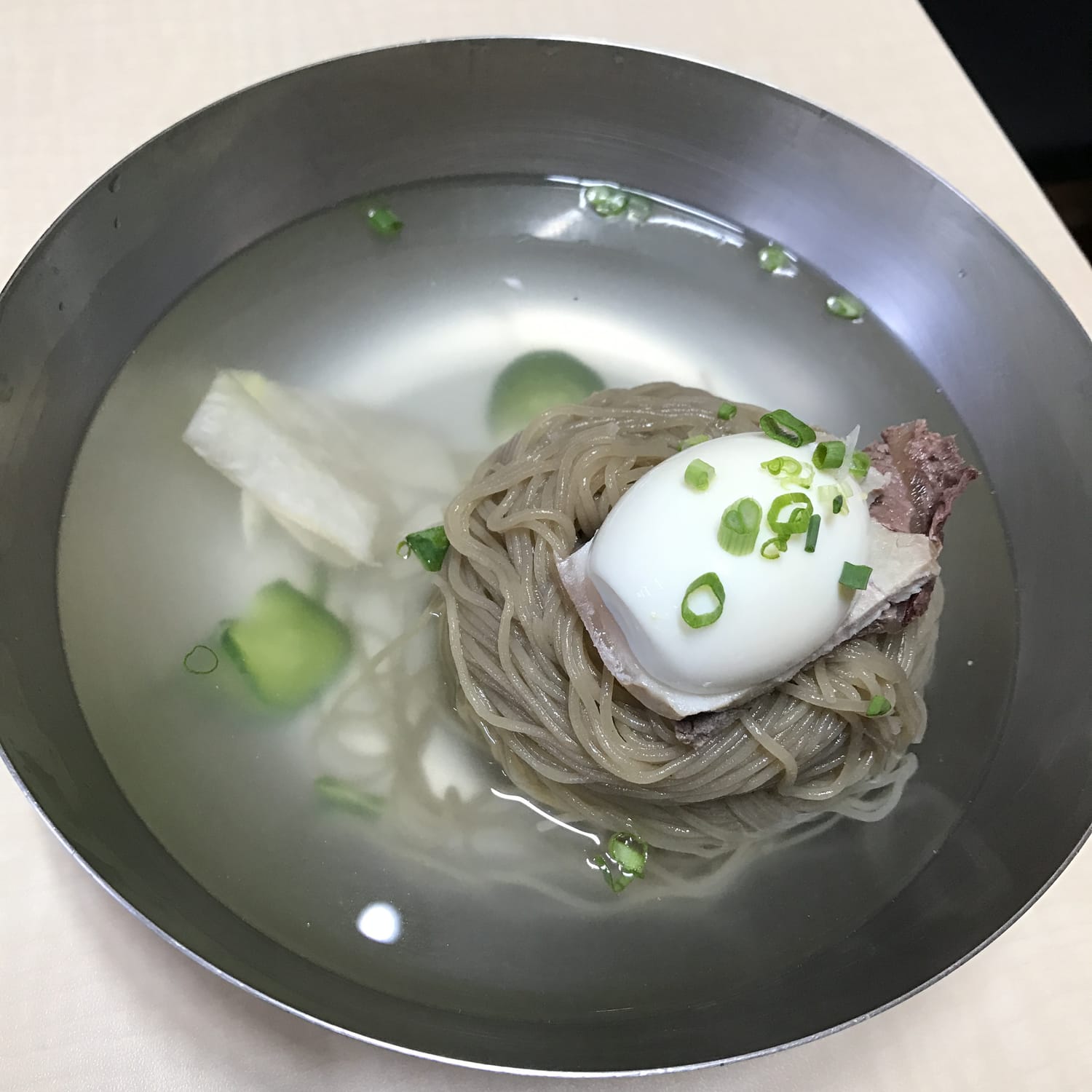
The One Korean Food Foreigners Never Learn to Love: Hamheung Naengmyeon, and Why Koreans Can't See the Problem
Foreigners who eat cheonggukjang and even hongeo still will not pay for this twice. A Korean creator who fed foreigners for years says naengmyeon was the overwhelming number one refusal, and Koreans, who rank it first every summer, cannot see why.
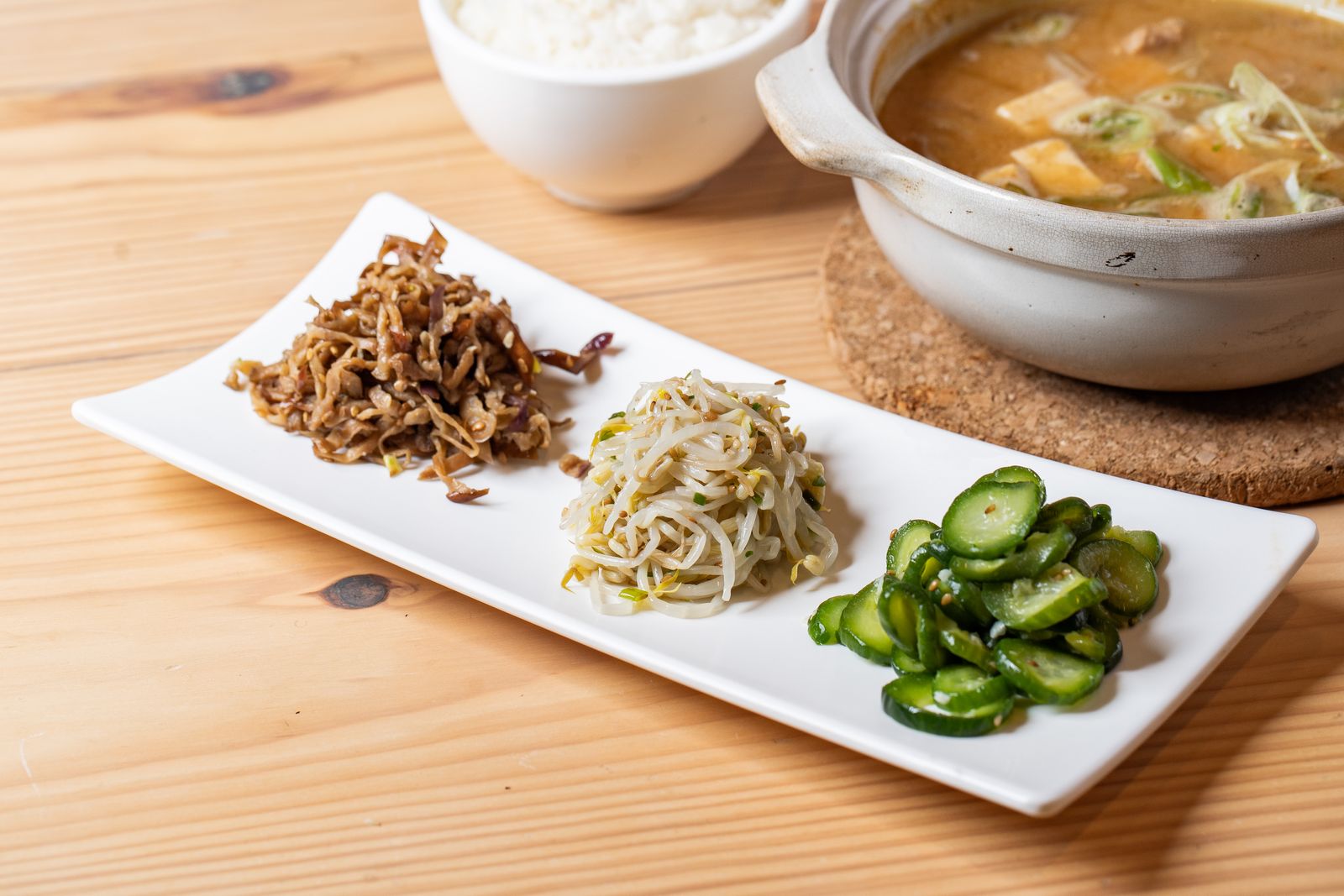
What Do Koreans Eat for Breakfast? 12 Real Meals, and Why a Third Skip It
About a third of Korean adults skip breakfast entirely, and people in their 20s score worst of any age group in the national health survey. What the other two-thirds eat, with August 2026 prices: gimbap ₩3,800, kimchi-jjigae set ₩8,654, abalone juk ₩18,900.
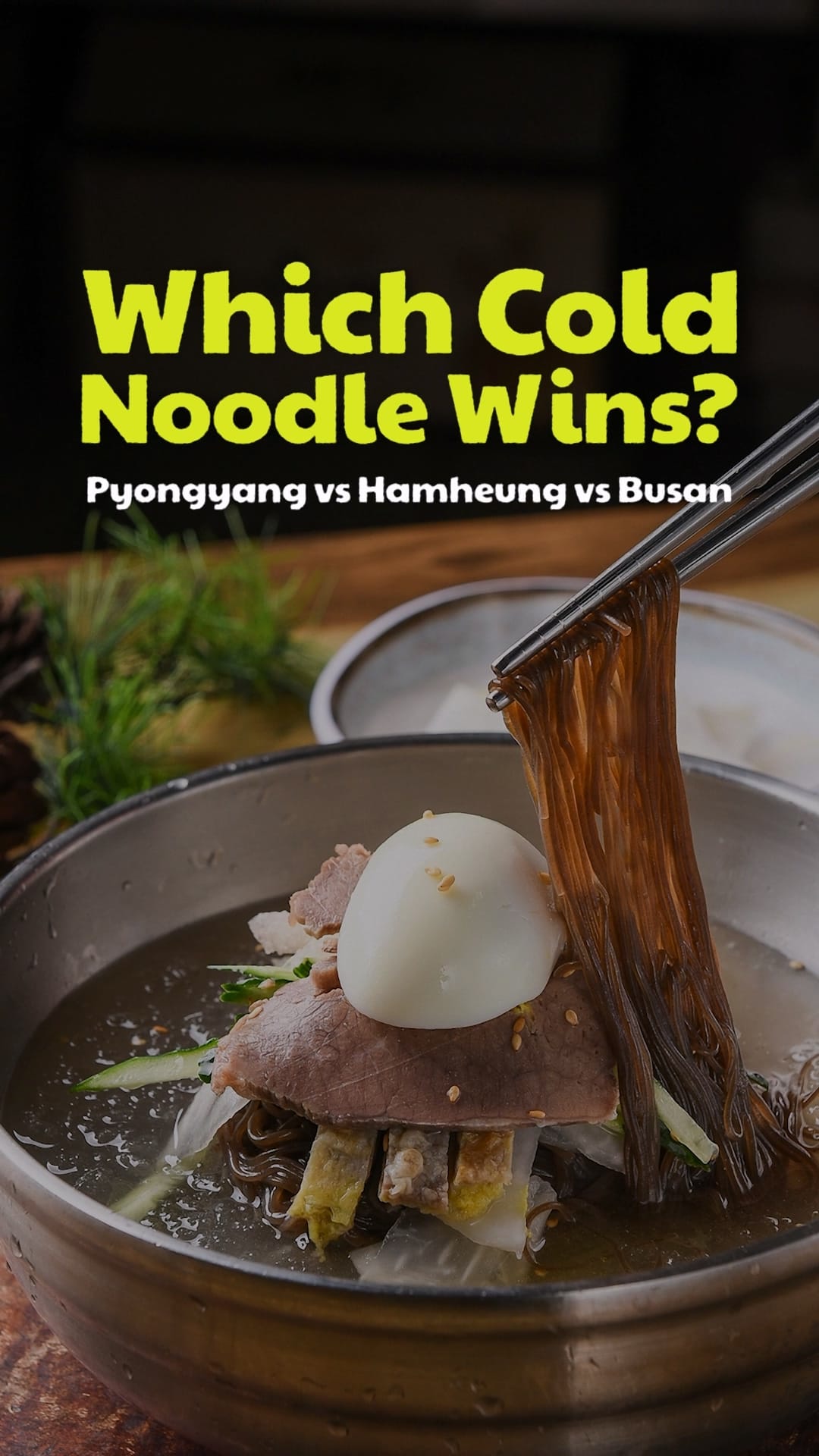
Pyongyang vs Hamheung Naengmyeon: Which Korean Cold Noodle to Order
Pyongyang vs Hamheung naengmyeon compared — and the part guides leave out: the mild one costs ₩15,000–18,000 while the spicy one is ₩11,000. Prices, subway exits, opening hours, and which bowl to order first, as of August 2026.