Tongyeong Oysters, Korea: First-Auction Price per 10 kg, the Season and Where to Eat Them
Last updated: 23 Oct 2026. The auction price and volume come from two Korean regional papers that covered the first auction on 22 October 2026 (Sidae and Kyeongnam Domin Ilbo). The consumer price is the government's KAMIS retail survey for 22 October 2026. Restaurant prices are menu listings read on 23 October 2026. Bus fares are the Kobus express-bus timetable for Monday 26 October 2026, cross-checked on the Asamaru timetable. Sources are at the end.
Most of the oysters Korea eats come from one stretch of water. In 2025 the country produced 45,730 tonnes of shucked farmed oysters, and 40,730 tonnes of that came from Gyeongsangnam-do: the bays of Tongyeong (통영), Geoje and Goseong on the south coast. When a Korean supermarket sells a bag of fresh oysters in winter, the label usually says 통영.
The Tongyeong oyster season opens each autumn with a first auction, the 초매식 (chomaesik). The 2026 one was held on Thursday 22 October 2026 at the auction hall of the oyster farmers' cooperative in Yongnam-myeon. The first lots of shucked oysters (알굴, algul) sold for ₩80,000–90,000 per 10 kg box (about $60–67), or ₩8,000–9,000 a kilo. On the same day, the government's retail survey put the national average shop price at ₩23,992 a kilo.
So the useful question for a visitor is not just "when is Korea's oyster season?" It is what a kilo costs at each step from the auction hall to your table, where in Tongyeong you can buy and eat them, and when raw oysters are a bad idea. This guide covers all of that.
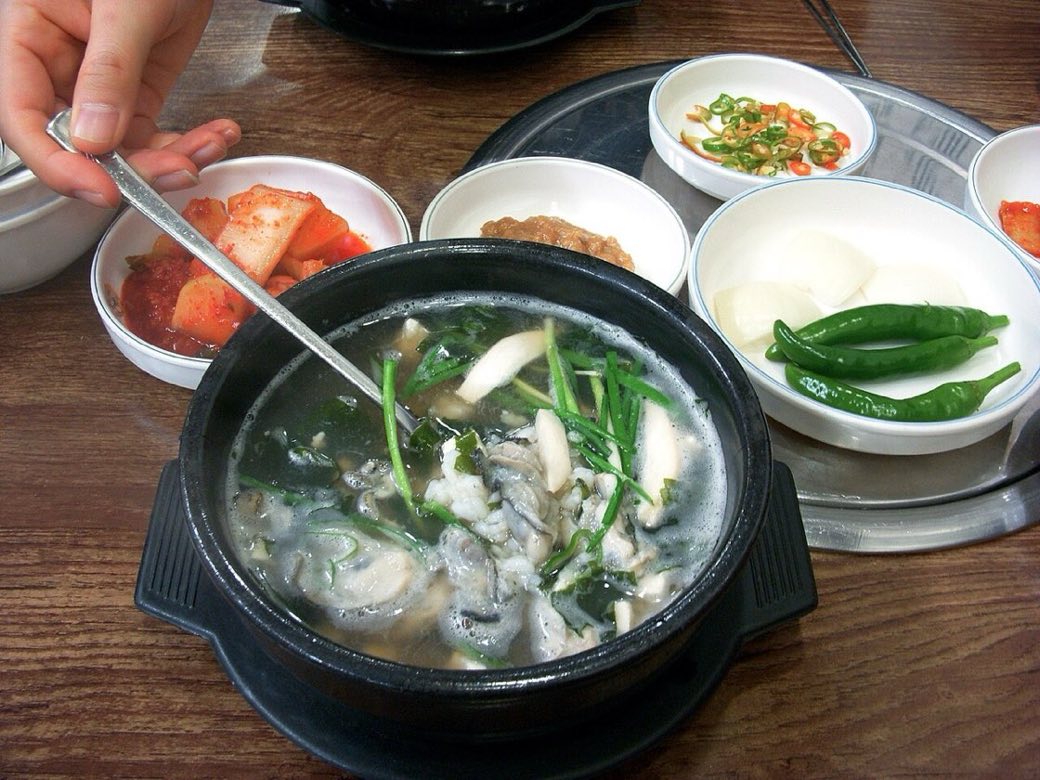
Oyster soup (굴국밥) arrives in a ttukbaegi, the clay pot that keeps it boiling at the table: a 5.5-inch direct-fire ttukbaegi on AmazonAffiliate link. As an Amazon Associate, EpicKor earns from qualifying purchases at no extra cost to you.
Quick Guide: Tongyeong oysters as of October 2026
| Question | Answer |
|---|---|
| Season | From the first auction on 22 October 2026 to about June 2027 |
| First-auction price | ₩80,000–90,000 per 10 kg of shucked oysters (about $60–67), similar to last year |
| First-day volume | About 5,400 boxes of 10 kg (Domin Ilbo); Sidae reports 5,800, the same figure Busan Ilbo gave for last year's first auction |
| Shop price, same day | ₩23,992 per kg national average (about $18); ₩14,600–38,300 across surveyed shops |
| Expected harvest | About 40,000 tonnes from the Tongyeong, Geoje and Goseong seas this season |
| Where visitors buy | Tongyeong Jungang Market (통영중앙전통시장) by Gangguan harbour, and the early-morning Seoho Market (서호시장) by the ferry terminal. Not at the auction |
| Oyster set meal | ₩14,000–26,000 a person at Hyangtojip (향토집), from its listed menu |
| Raw or cooked | Bags marked 가열조리용 are for cooking: 85°C at the centre for at least 1 minute. Norovirus peaks December–February |
| From Seoul | Express bus from Seoul Express Bus Terminal, about 4 h 10 min, ₩42,200 (premium-class buses ₩54,900) |
| From Busan | Intercity bus from Busan Seobu (Sasang) terminal, about 1 h 20 min–2 h, from ₩15,100 |
Dollar figures use the Federal Reserve's rate of ₩1,334.03 to the dollar on 16 October 2026, rounded.
Sleep in Tongyeong, not Busan, if the market is the point The first express bus from Seoul leaves at 07:00 and is scheduled to arrive about 11:10, by which time Seoho's dawn market is winding down. One night near Gangguan or the ferry terminal puts both markets and an oyster breakfast within walking distance. EpicKor may earn a commission if you book through this Agoda link, at no extra cost to you. Confirm dates, taxes, cancellation terms, room type and the final price on Agoda before booking.
Compare Tongyeong stays on AgodaThe 2026 first auction: what ₩80,000 per 10 kg means
The first auction is run by the Gul Suhasik Suhyup (굴수하식수협), the fisheries cooperative of Tongyeong's hanging-culture oyster farmers. Suhasik (수하식) means the oysters grow on ropes hung from floats in the bay, which is why the sea around Tongyeong is lined with rows of white buoys. The day starts with a shamanic rite for the fishermen, the south-coast byeolsingut (남해안 별신굿), then the bidding.
Here is what the two papers that covered it reported on 22 October 2026:
| Item | Sidae (시대) | Kyeongnam Domin Ilbo (경남도민일보) |
|---|---|---|
| Price per 10 kg box of shucked oysters | ₩80,000–90,000 range (8만~9만 원대) | In the ₩80,000s (8만 원대) |
| Volume on the first day | About 5,800 boxes | 5,400 boxes |
| Against last year | Price and volume similar | Price similar |
| Ceremonial bids | Tongyeong mayor Kang Seok-ju: ₩215,000 for 10 kg | Co-op chairman Ji Hong-tae called ₩300,000 |
Ignore the ceremonial bids. At a Korean first auction, local dignitaries buy the first box at a showpiece price for luck and publicity. ₩215,000 or ₩300,000 for 10 kg is not a market price, and nobody should use it as one.
The real number is ₩8,000–9,000 a kilo at the dock. That is what a wholesale buyer paid for shucked oysters, before washing, packing, transport and the shop's margin. It is also a first-day price, on a small early harvest.
Be careful with a higher number you may see. Ten days before the auction, on 12 October, Busan Ilbo quoted industry sources saying oysters were already trading at ₩110,000–120,000 per 10 kg, even lower-grade ones, more than 10% above a normal year. It expected the price to settle in the high ₩90,000s as volume grew. That was a pre-season trade quote, not the auction result. The auction itself came in lower.
Why the season started tight. Hankyung reported on 18 October that strong spring exports to Japan had used up much of the older two-year oysters, and that the summer's high sea temperatures and bad weather off Tongyeong and Geoje slowed the growth of this year's crop. Chairman Ji told Kyeongnam Domin Ilbo that despite high water temperatures and low-oxygen water masses (빈산소수괴), he expected the harvest to be a little better than last year.
The scale behind it. Last year the co-op sold 10,873 tonnes of shucked oysters at auction, the most of any fisheries co-op in Korea. Sidae counts about 300 shucking houses (박신장) around Tongyeong, Geoje and Goseong, each employing 20 to more than 50 people, and about 10,000 people in the wider trade. This season, Busan Ilbo expects about 40,000 tonnes from those waters, running to June 2027.
You might like: Noryangjin Fish Market Guide 2026: Buy Seafood In Seoul
From the dock to your plate: Korean oyster prices per kilo
Here is the same week's oyster price at each step, all per kilo of shucked oysters:
| Where | Date | Price per kg | About |
|---|---|---|---|
| Tongyeong first auction (산지 위판) | 22 Oct 2026 | ₩8,000–9,000 | $6–7 |
| Noryangjin, Seoul, wholesale auction average | 5–10 Oct 2026 | ₩13,800 (₩9,400 the week before; ₩8,600 a year earlier) | $10 |
| Busan Bujeon Market (부전시장), traditional market | 22 Oct 2026 | ₩16,000 | $12 |
| Seoul Gyeongdong Market (경동시장) | 22 Oct 2026 | ₩22,500 | $17 |
| National average, all surveyed shops | 22 Oct 2026 | ₩23,992 (₩27,514 the day before) | $18 |
| Lotte Mart promotion, 150 g bag of fresh Tongyeong oysters for ₩4,990 | 15–21 Oct 2026 | about ₩33,300 | $25 |
| Highest surveyed shop | 22 Oct 2026 | ₩38,300 | $29 |
The retail figures are from KAMIS (농산물유통정보), the price survey run by the state agri-food trade agency aT, which samples big supermarkets and traditional markets in each city. The Noryangjin figure is the market operator's data as reported by Hankyung. The cheapest surveyed price that day was ₩14,600 a kilo.
How to read that table.
- Traditional markets near the coast beat supermarkets. Busan's Bujeon Market was at ₩16,000 a kilo, while the national average was ₩23,992. KAMIS doesn't survey a market in Tongyeong. A Tongyeong stall, on the day the oysters come off the boats, should be at the low end of the range, not the high end. But we could not find a published Tongyeong stall price this week, so treat that as an expectation, not a quote.
- Small bags hide the price. A 150 g supermarket bag at ₩4,990 looks cheap until you scale it to ₩33,300 a kilo. In a market, ask for the price by the kilo: "1킬로에 얼마예요?" (il-kilo-e eolmayeyo, "how much for a kilo?").
- Early-season prices move fast. The national average fell 12.8% in one day, from ₩27,514 on 21 October to ₩23,992 on 22 October, the day the auction opened. As the harvest grows in November, expect lower prices, not higher ones.
Where to buy them in Tongyeong: Jungang Market and Seoho Market
You can't buy at the auction. The first auction is a trade sale: bidding is for the co-op's registered buyers, and the hall is out in Yongnam-myeon, not in the town centre. Visitors buy at two markets near the harbour.
Tongyeong Jungang Market (통영중앙전통시장), 14-16 Jungangsijang 1-gil, by Gangguan harbour (강구안), near Dongpirang mural village and Sebyeonggwan hall. This is the one most visitors see: a live-fish street, fresh-fish stalls, dried seafood and side dishes. Stall hours vary by shop. Oysters here are sold shucked by weight, in bags or tubs, and in the shell (seokhwa, 석화) by the net or box.
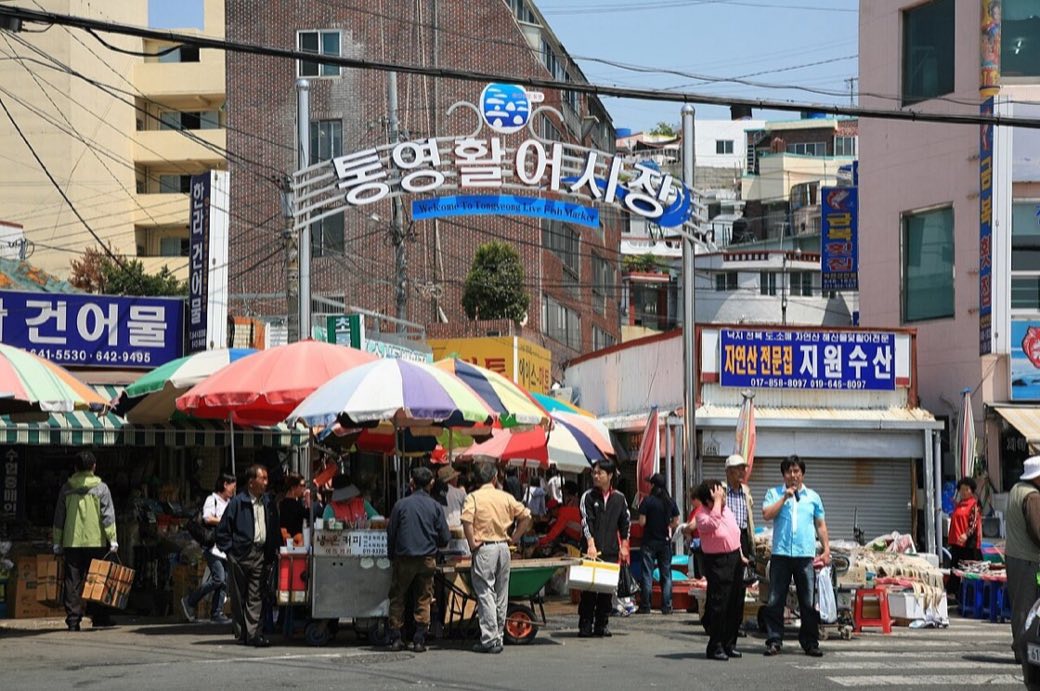
Seoho Market (서호시장), 42-7 Saeteo-gil, opposite the Tongyeong Port Ferry Terminal (통영항 여객선터미널). Locals call it Saeteo Market (새터시장). It is a dawn market (새벽시장) that opens before sunrise; hours vary by stall.
Buying tips that matter in a market.
- Know the two forms. Shucked oysters (알굴 or 깐굴) are what the auction priced and what goes into soup, pancakes and kimchi. Oysters in the shell (석화, seokhwa, or 각굴) are for grilling and steaming, and are sold by count or by the box.
- Ask what the bag is for. Packed oysters in Korea are marked either for eating raw (생식용) or for cooking (가열조리용). If you plan to eat them raw, ask "생으로 먹어도 돼요?" (saeng-euro meogeodo dwaeyo?, "can I eat these raw?").
- Don't try to fly them home. Fresh shellfish is a poor travel souvenir: it needs to stay cold, and most countries restrict bringing it in. Eat them here.
- Cash still helps at small stalls, though cards are widely taken.
You might like: Kimjang Season in Korea 2026: What Kimchi-Making Costs, Salted Cabbage Prices, When It Happens and Where You Can Join
How Koreans eat Tongyeong oysters, and what it costs
In Tongyeong the standard way to eat oysters is a set course (굴코스, gul koseu): a run of small dishes from raw to grilled to rice. Here is one long-running oyster restaurant's listed menu:
| Dish at Hyangtojip (향토집), Mujeon-dong | What it is | Listed price | About |
|---|---|---|---|
| Hyangto course (향토코스), per person | Raw, pancake, grilled, seasoned, steamed oysters and oyster rice | ₩26,000 | $19.50 |
| Oyster A course (굴A코스), per person | Raw, pancake, grilled, steamed and rice | ₩21,000 | $16 |
| Oyster B course (굴B코스), per person | Raw, pancake and rice | ₩14,000 | $10.50 |
| Grilled oysters (굴구이) | Shucked oysters grilled | ₩13,000 | $9.75 |
| Oyster pancake (굴전) | Oysters dipped in egg and pan-fried | ₩13,000 | $9.75 |
| Fried oysters (굴튀김) | Battered and fried | ₩15,000 | $11 |
| Steamed oysters (굴찜), small / medium / large | In the shell | ₩20,000 / 25,000 / 30,000 | $15 / 19 / 22.50 |
| Oyster bossam (굴보쌈) | Boiled pork, kimchi and raw oysters wrapped together | ₩50,000 | $37.50 |
Those prices are the menu on Diningcode, read on 23 October 2026, and they match a November 2025 write-up of the restaurant from a TV food show. Diningcode doesn't date its menus, so confirm at the door. The listing gives the address as 37-41 Mujeon 5-gil, hours 10:00–20:00, and phone 055-645-4808. Mujeon-dong is away from the harbour, on the bus-terminal side of town.
A second example, Hanmaeum Sikdang (한마음식당) at 6 Haesongjeong 1-gil in Dongho-dong near the harbour, lists an oyster set meal (굴정식) at ₩35,000, a premium version at ₩50,000, oyster porridge (굴죽) at ₩10,000 and raw oysters (생굴) at ₩20,000. The listing doesn't say whether the set price is per person or per table, so ask before ordering.
The dishes, in plain words:
- 굴회 (gul-hoe): raw shucked oysters, eaten with vinegared chilli sauce (초고추장). The first course in most sets.
- 굴구이 (gul-gui): grilled oysters. In shell-roasting places it means a tray of whole shells over a fire; in set menus it is often shucked oysters on a griddle.
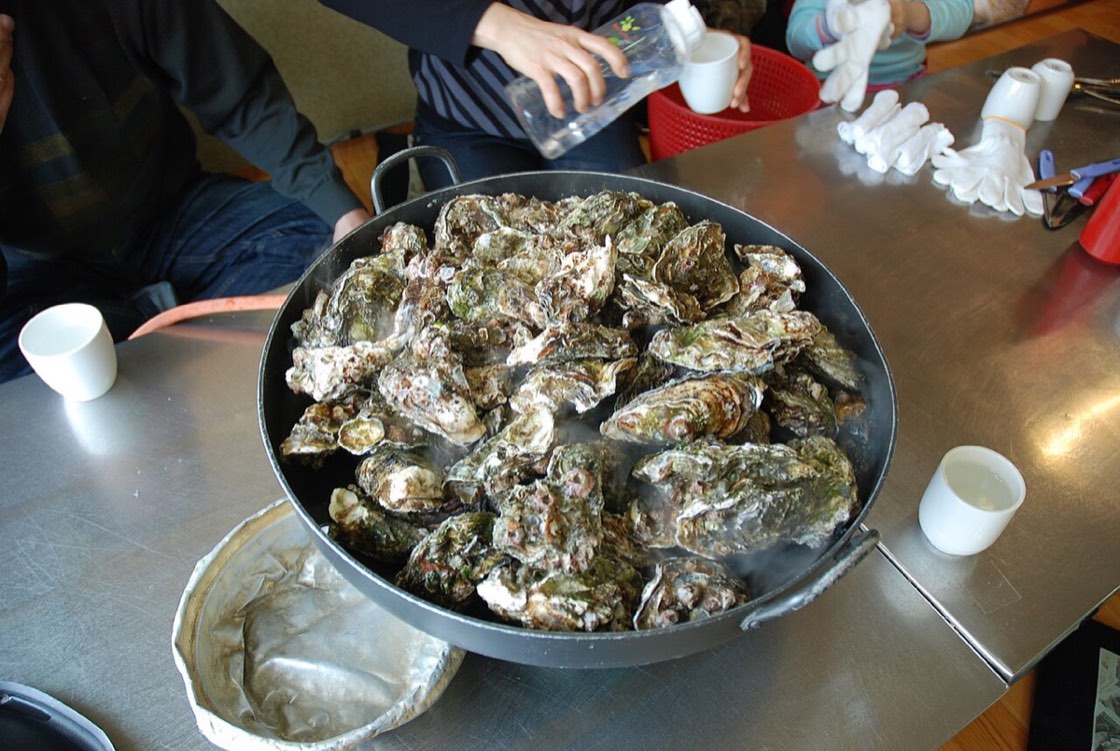
- 굴찜 (gul-jjim): a pot of oysters steamed in the shell, poured out on the table. You get cotton gloves and a short knife.
- 굴전 (gul-jeon): oysters coated in flour and egg and pan-fried. The safest first oyster for someone unsure about the texture.
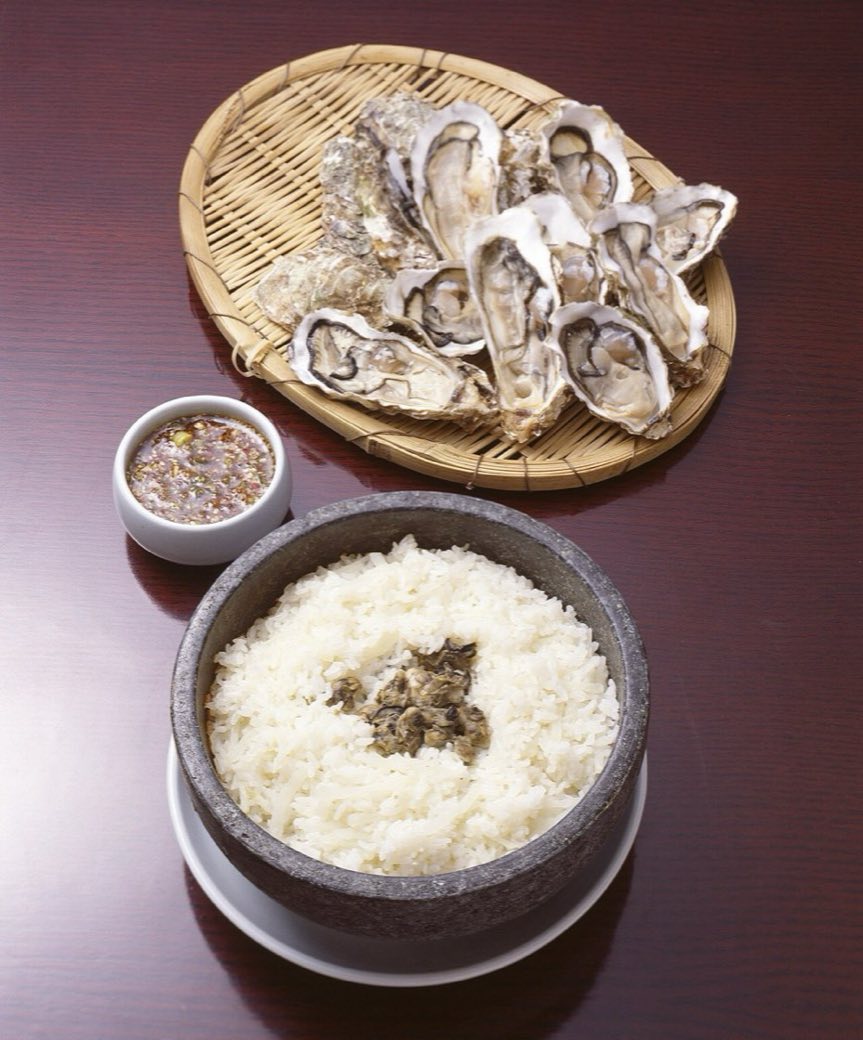
- 굴밥 (gul-bap): rice cooked with oysters in a stone pot, mixed at the table with soy-sesame sauce.
- 굴국밥 (gul-gukbap): oysters, seaweed and rice in a hot broth, the everyday oyster lunch, and the cheapest way to eat Tongyeong oysters on your own.
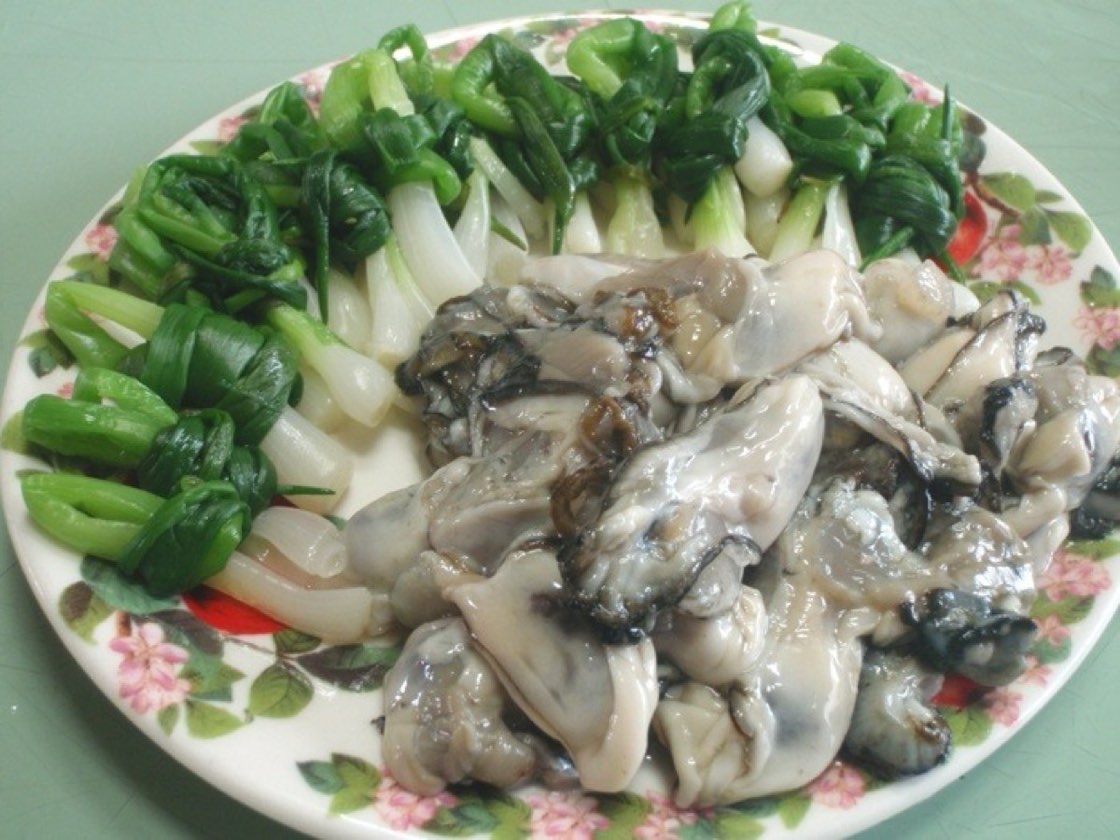
Ordering tips. Courses are priced per person. If you are alone, ask whether a course can be served for one (1인분 돼요?); if not, order 굴국밥 or a single dish such as 굴전. Oyster bossam is the dish Korean families order in kimjang season; if you know bossam already, it is the same boiled pork with raw oysters added.
You might like: Bossam vs Jokbal: Korea's Two Pork Dishes Compared — Cut, Taste and Price
Raw oysters and norovirus: the honest warning
Korean food-safety officials repeat the same warning every winter, and you should take it seriously on a short trip.
- Norovirus is a winter illness in Korea. The Ministry of Food and Drug Safety (식품의약품안전처, MFDS) counted 243 norovirus food-poisoning outbreaks and 4,279 patients from 2019 to 2023. 119 of them, about 49%, happened from December to February. The virus survives the cold, and raw shellfish such as oysters are a main food source of infection.
- The rule is 85°C for 1 minute. MFDS says oysters labelled 가열조리용 (for cooking) or 익혀 먹는 (to be eaten cooked) must be heated to 85°C at the centre for at least one minute. A quick dip in soup is not enough.
- The co-op's own view. At the 2026 auction the co-op told Sidae that norovirus usually shows up in some areas in January and February and then disappears, and that oysters shipping now have no problem. That is the producer speaking, and it matches the MFDS season.
When to skip the raw course: in January and February; if you are pregnant, elderly or have a weak immune system; and on the last day before a long flight. Ask for the course without the raw plate, or choose cooked dishes: 굴전, 굴찜, 굴국밥 and 굴밥 are all cooked through. Symptoms (vomiting, diarrhoea, stomach pain) usually start 12–48 hours after eating.
And don't pick wild oysters off the rocks. Korean authorities warn that oysters gathered by individuals carry a risk of paralytic shellfish toxins as well as norovirus, especially in spring.
When Korea's oyster season is best
The farmed oyster season in Korea runs from late October to about June, so the honest answer to "when is Tongyeong oyster season?" is the cold half of the year. Within it:
- Late October to November: the start. Prices are high and volume small; by November the harvest is in full swing and the price usually comes down. It is also kimjang season, when Korean families buy oysters in bulk for kimchi.
- December to February: the peak eating months, when oysters are plump and the restaurants are busiest. Also the norovirus peak, so this is when cooked dishes make most sense.
- March to June: the tail of the season. Oysters are still sold, but from late spring the shellfish-toxin warnings start, and most Koreans turn to other seafood.
Tongyeong's waters are, in Kyeongnam Domin Ilbo's words, clean waters designated by the US FDA, which is one reason so much of the crop is exported.
Getting to Tongyeong from Seoul and Busan
From Seoul: express bus, no train. Tongyeong has no KTX station. Express buses leave Seoul Express Bus Terminal (Gyeongbu side, 서울경부) for the Tongyeong Bus Terminal (통영종합버스터미널). The Kobus timetable, cross-checked on Asamaru, showed this for Monday 26 October 2026:
| Seoul Express Bus Terminal → Tongyeong | Detail |
|---|---|
| Departures | 15 a day, first 07:00, last daytime bus 19:40, plus a 23:00 late-night bus |
| Scheduled time | About 4 h 10 min (372 km) |
| Executive class (우등) | ₩42,200 (about $32) |
| Premium class (프리미엄) | ₩54,900 (about $41) |
| Late-night premium (심야프리미엄), 23:00 | ₩65,800 (about $49) |
Those fares include the 1 October 2026 bus fare rise (see our KTX vs bus fare guide). Book on kobus.co.kr or at the terminal. Buses to Tongyeong also run from Seoul Nambu Terminal and Dong Seoul; those are sold on T-money's intercity booking site (txbus.t-money.co.kr).
From Busan: intercity bus, about 1 h 20 min to 2 h. The main route is from Busan Seobu Bus Terminal (부산서부버스터미널) at Sasang, joined to Sasang station on Metro Line 2. A timetable aggregator updated on 16 October 2026 listed 58 buses a day, 06:00–22:30, at ₩15,100 for standard and ₩19,600 for executive. Some buses run direct in about 1 h 20 min, others stop on the way and take about 2 hours. Confirm on the terminal's booking site (Bustago) or at the counter. If you are basing yourself in Busan, see where to stay in Busan in winter.
From the terminal to the oysters. The bus terminal is in Jungnim (죽림), on the northern edge of the city, not by the harbour. For the markets, take a taxi or a city bus towards Gangguan or Jungang Market (중앙시장). Hyangtojip in Mujeon-dong is on the way.
FAQ
Q: When is Tongyeong oyster season? A: From the first auction in late October to about June. In 2026 it opened on 22 October, and the co-op expects the season to run to June 2027. The peak eating months are December to February.
Q: How much were Tongyeong oysters at the 2026 first auction? A: ₩80,000–90,000 per 10 kg box of shucked oysters (about $60–67), or ₩8,000–9,000 a kilo, similar to last year. The ₩215,000 and ₩300,000 bids were ceremonial.
Q: How much do oysters cost in Korean shops? A: KAMIS put the national average at ₩23,992 a kilo on 22 October 2026, with surveyed shops ranging from ₩14,600 to ₩38,300. Busan's Bujeon Market was at ₩16,000.
Q: Is it safe to eat raw oysters in Korea? A: Oysters sold for eating raw are widely eaten, but norovirus peaks from December to February. Bags marked 가열조리용 must be cooked to 85°C at the centre for at least one minute. When in doubt, choose cooked dishes.
Q: Where can I eat oysters in Tongyeong? A: At oyster restaurants serving set courses (굴코스), such as Hyangtojip in Mujeon-dong, with courses listed at ₩14,000–26,000 a person. For a cheap solo meal, look for 굴국밥 (oyster rice soup).
Q: How do I get from Seoul to Tongyeong? A: By express bus from Seoul Express Bus Terminal: about 4 h 10 min, ₩42,200 in executive class, 15 buses a day. There is no KTX to Tongyeong.
Sources
- 2026 first auction, 22 October: price ₩80,000–90,000 per 10 kg, about 5,800 boxes (note: Busan Ilbo on 12 October gave 5,800 boxes as last year's first-auction volume), similar to last year, mayor's ₩215,000 bid, season to June, 300 shucking houses, norovirus comment: Sidae, 22 October 2026.
- 2026 first auction: price in the ₩80,000s, 5,400 boxes, chairman's ₩300,000 bid, 2025 co-op sales 10,873 t, national 45,730 t and Gyeongnam 40,730 t, harvest outlook, US FDA clean waters: Kyeongnam Domin Ilbo, 22 October 2026.
- Pre-auction trade quote ₩110,000–120,000 per 10 kg, 40,000 t expected, season to June 2027: Busan Ilbo, 12 October 2026.
- Noryangjin auction price per kg, Lotte Mart 150 g bag at ₩4,990, export and growth reasons: Hankyung, 18 October 2026.
- Retail oyster prices per kg by city and shop, 21 and 22 October 2026: KAMIS (aT) retail price by item, oysters, read 23 October 2026.
- Norovirus outbreaks 2019–2023, 49% in December–February, 85°C for 1 minute: MFDS via Korea.kr, 22 November 2024.
- Hyangtojip menu, address and hours: Diningcode, read 23 October 2026. Hanmaeum Sikdang menu: Diningcode, read 23 October 2026.
- Market addresses: Tongyeong Jungang Market and Seoho Market listings, K-Trip Tips, read 23 October 2026.
- Seoul–Tongyeong express bus departures, times and fares for 26 October 2026: Kobus timetable (고속버스통합예매), read 23 October 2026, cross-checked on the Asamaru timetable (updated 20 October 2026).
- Busan Seobu–Tongyeong intercity buses: Asamaru timetable, updated 16 October 2026; book on Bustago.
- Exchange rate: Federal Reserve H.10, 16 October 2026.
The short version: Tongyeong's oysters left the dock at about ₩8,000–9,000 a kilo on 22 October 2026 and sold in Korean shops for about three times that. Go between November and February, buy in the harbour markets rather than supermarkets, eat the raw course early in the season and the cooked dishes in mid-winter, and sleep one night in Tongyeong so you can be at Seoho Market at dawn.
You Might Also Like
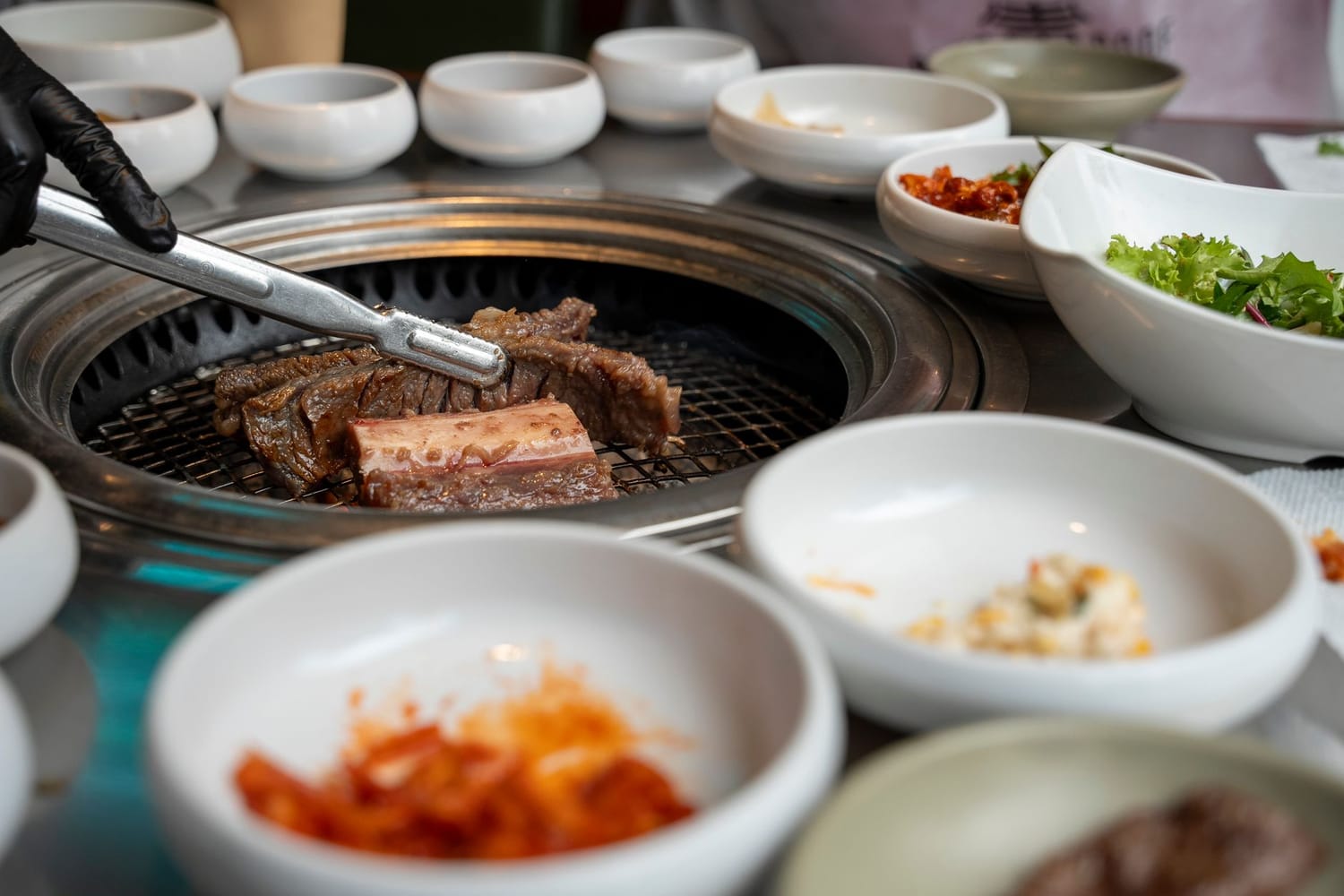
Korean Kitchen Scissors: Why Koreans Cut Meat and Noodles at the Table, and Why It Is Not an Office Scissor
Scissors on a restaurant table look wrong to most of the world and normal to every Korean. The tool is not a desk scissor: thick blades, one serrated edge, big rings, often detachable, built for galbi and cold noodles. Where it came from, and which one to buy.
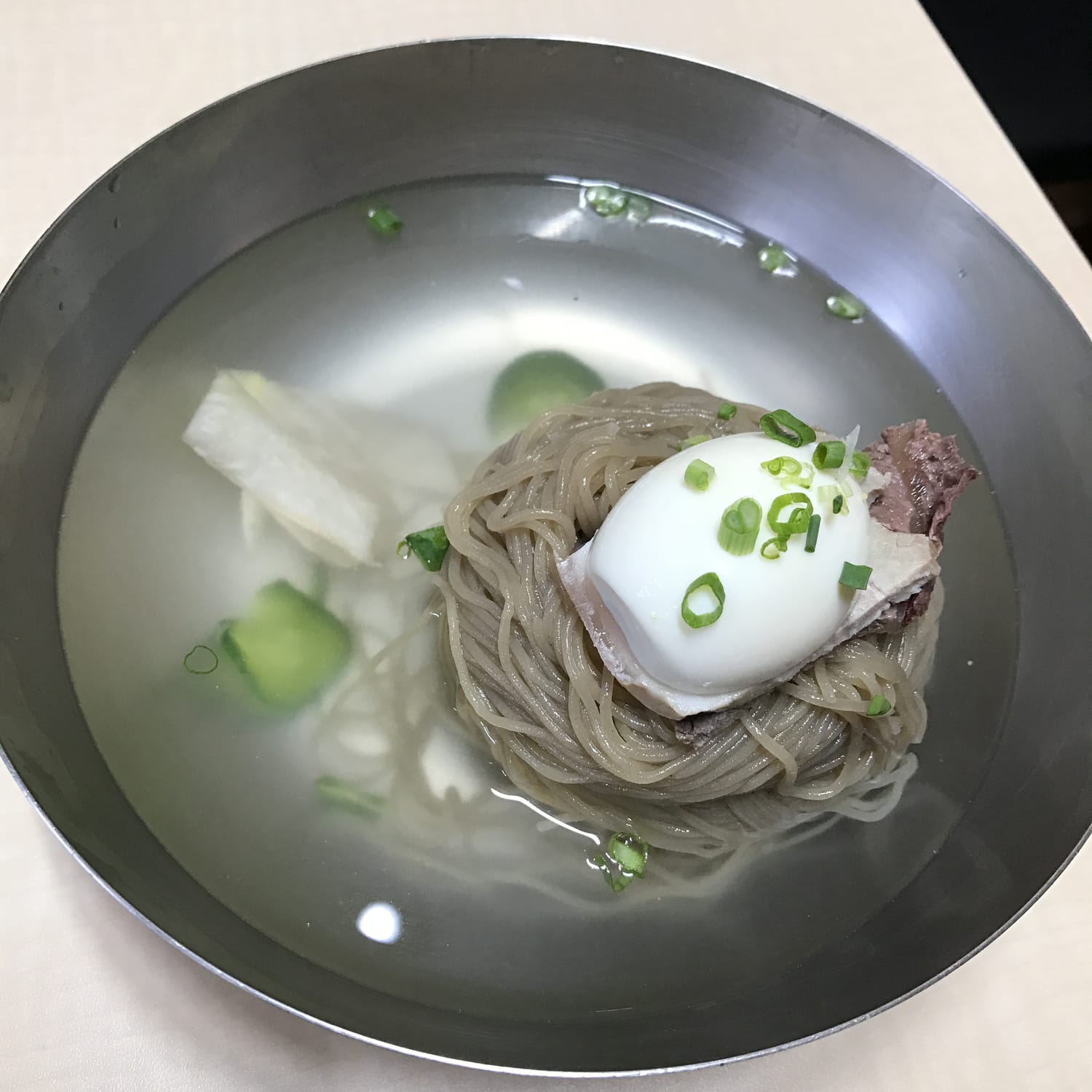
The One Korean Food Foreigners Never Learn to Love: Hamheung Naengmyeon, and Why Koreans Can't See the Problem
Foreigners who eat cheonggukjang and even hongeo still will not pay for this twice. A Korean creator who fed foreigners for years says naengmyeon was the overwhelming number one refusal, and Koreans, who rank it first every summer, cannot see why.
Postick: The Korean Snack That Used to Come With a Ketchup Packet
Postick (포스틱) has been on Korean shelves since 1980, it is only 23% potato, and it shipped with a ketchup sachet until the sachet got too expensive. What it costs now, and the ramyun-powder trick Koreans use on it.