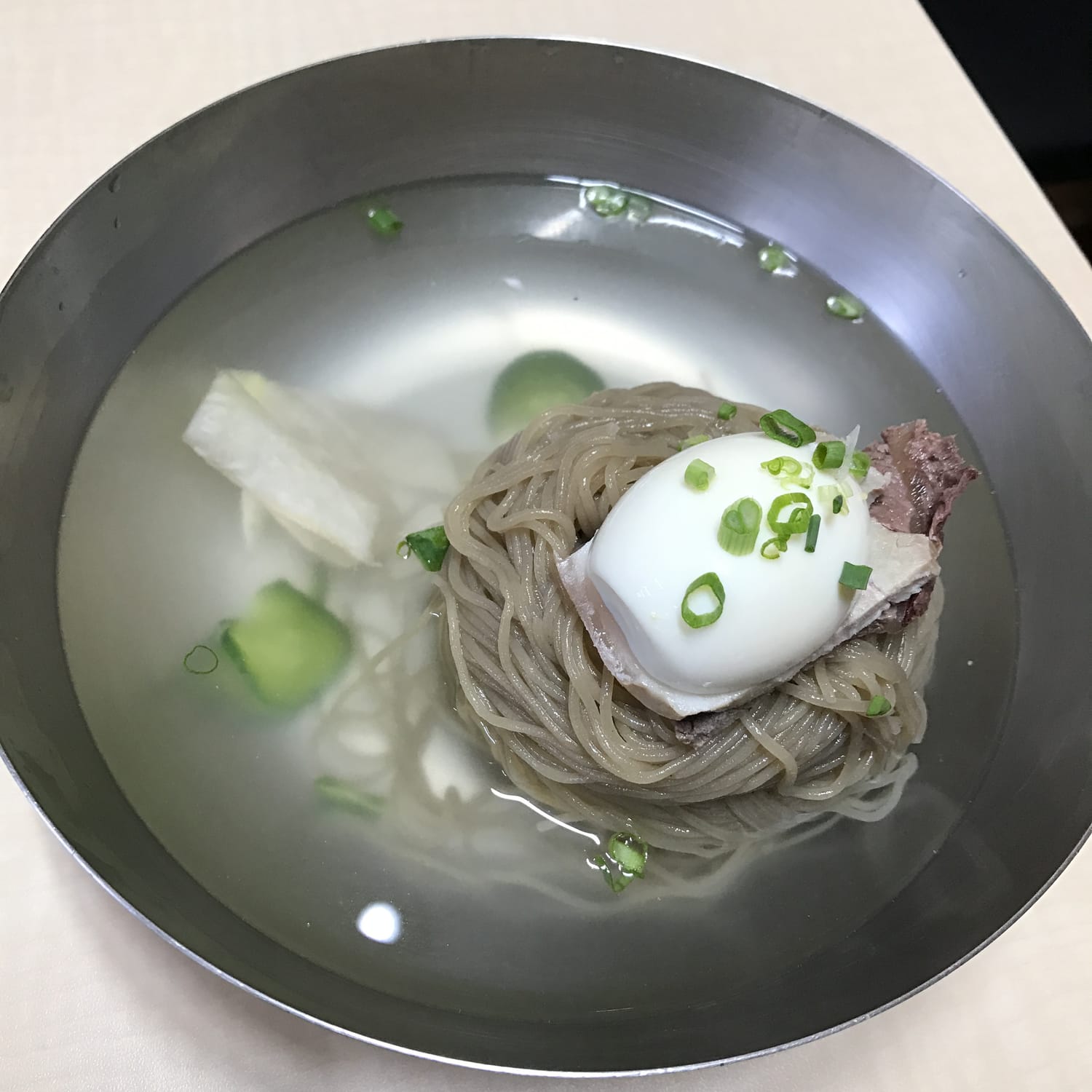
The One Korean Food Foreigners Never Learn to Love: Hamheung Naengmyeon, and Why Koreans Can't See the Problem
There are foreigners in Korea who eat 청국장, the fermented soybean stew that clears a room. There are foreigners who eat 홍어, the fermented skate that clears a building. You can find both on YouTube, grinning.
What you will struggle to find is a foreigner who orders 함흥냉면 with their own money, twice.
A Korean creator who ran a series for years — feed foreigners Korean food, film the reaction — was asked in 2026 which dish they refused most. He did not have to think. "Overwhelmingly, number one: naengmyeon. There was almost no 'like'. The ones who said they liked it were being polite: 'not bad, the meat we ate with it was good.' The noodles themselves — never again with my own money." And he was specific: not the pale Pyongyang bowl that Korean food writers argue about, which foreigners mostly rated "hmm, okay". The ordinary one. The chewy, spicy, cold one.
That is what makes this interesting. Koreans have no argument about Hamheung naengmyeon. Pyongyang naengmyeon divides Korea — half the country calls it bland, half calls the other half philistines. Hamheung naengmyeon divides nobody; it is simply what you eat after galbi in summer. And it is the one dish that people who have made peace with every other Korean smell, texture and heat cannot get past. This guide is about why, and about what to do with that if you are about to be handed a bowl.
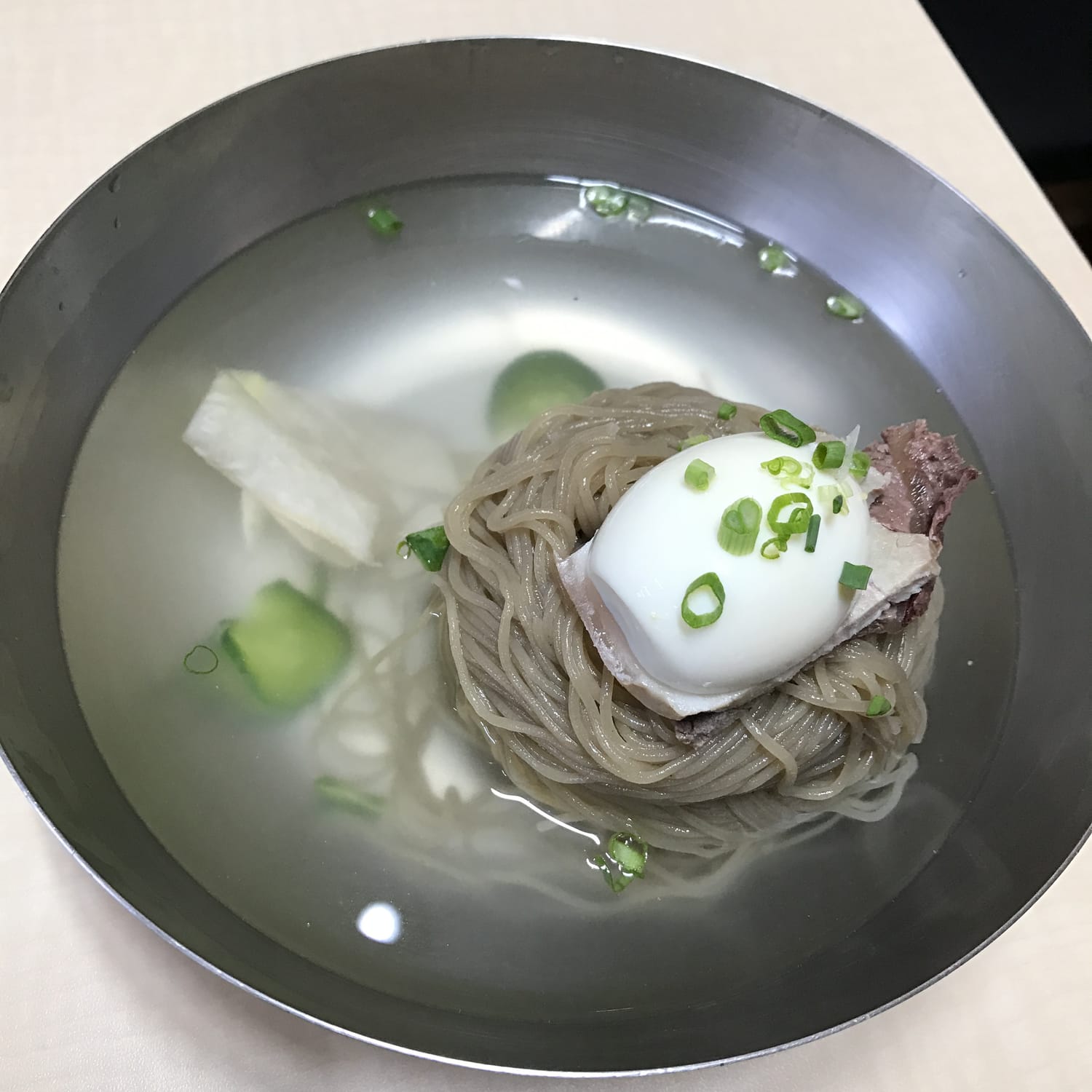
If you want to find out at home first — the Choung Soo naengmyeon kit, on AmazonAffiliate link. As an Amazon Associate, EpicKor earns from qualifying purchases at no extra cost to you.
Quick Guide
| Question | Short answer |
|---|---|
| Which Korean food do foreigners reject most? | Naengmyeon, and specifically the Hamheung style: chewy starch noodles, sweet-hot sauce, served cold — often with ice |
| Is it a strong flavour, like hongeo? | No. That is the point. There is no offending flavour to get used to. It asks three unfamiliar things at once — see below |
| Do Koreans argue about it? | About Pyongyang naengmyeon, endlessly. About Hamheung, never. Naengmyeon topped a Korean summer-food survey at 69.8%, and cold-noodle restaurant visits rose 38% in 2025 |
| Why "no foreigner pays twice"? | A cold main course, a noodle you cannot bite through, and a sauce with no anchor flavour — all in one bowl, usually eaten wrong |
| Eaten wrong? | Yes. It is a finisher after grilled meat, not a meal. Foreigners order it as lunch |
| What is Hamheung naengmyeon, really? | A South Korean invention: refugees from Hamheung opened the first shop in Sokcho in 1951, Ojangdong in Seoul from 1954. In Hamheung it was 농마국수 — starch noodles |
| How to give it a fair chance | After galbi, as 물냉면 first, half portion, scissors, then the vinegar and mustard. Our Pyongyang vs Hamheung guide has the ordering script |
The dish Koreans do not argue about
It helps to see how unremarkable naengmyeon is to Koreans, because that is the half of the gap Koreans cannot feel.
When a Korean jobs portal asked 1,194 adults for their favourite summer food, naengmyeon came first with 69.8% — ahead of shaved ice (50.8%), ice cream (38.4%) and samgyetang (33.5%). It is not a delicacy or a dare. It is the default. In summer 2025 the restaurant-booking platform 캐치테이블 reported cold-noodle restaurant visits up 38%, twenty-somethings rising from 16.5% to 22.6% of the customers, and one Pyongyang-naengmyeon shop running a thousand-person daily waitlist. Searches for Pyongyang naengmyeon outnumbered Hamheung eleven to one — not because Hamheung is unloved, but because nobody needs to look it up. It is everywhere, it is cheap, and it comes free with galbi.
Now look at the other side. When Korea's food-promotion agency surveyed 9,000 people in 18 foreign cities about Korean food, the most-liked dish was Korean fried chicken (16.5%). The usual foreign favourites list runs bibimbap, kimchi, samgyetang, bulgogi, tteokbokki. Naengmyeon does not appear. When a Korean travel outlet listed the five Korean foods foreigners refuse, naengmyeon was on it, with the two complaints that come up every single time: "면발 자체에서 아무 맛도 느껴지지 않는다" — the noodle tastes of nothing — and "고무 씹는 맛" — like chewing rubber.
So: the food Koreans rank first is the food foreigners rank nowhere. That is not true of any other Korean dish. Kimchi is loved by both. Hongeo is disliked by both, and Koreans know it. Naengmyeon is the only one where the two sides are looking at the same bowl and seeing completely different things.
Why it is not like mala, cilantro or wasabi
The obvious comparison is to the other foods foreigners famously cannot handle, and it is the wrong one.
Mala numbs your mouth. Cilantro tastes like soap to a measurable minority of people. Wasabi goes up your nose. Hongeo smells of ammonia. Each of those is one strong thing — you can name what you dislike, and you can imagine someone else liking exactly that thing. There is a taste to acquire.
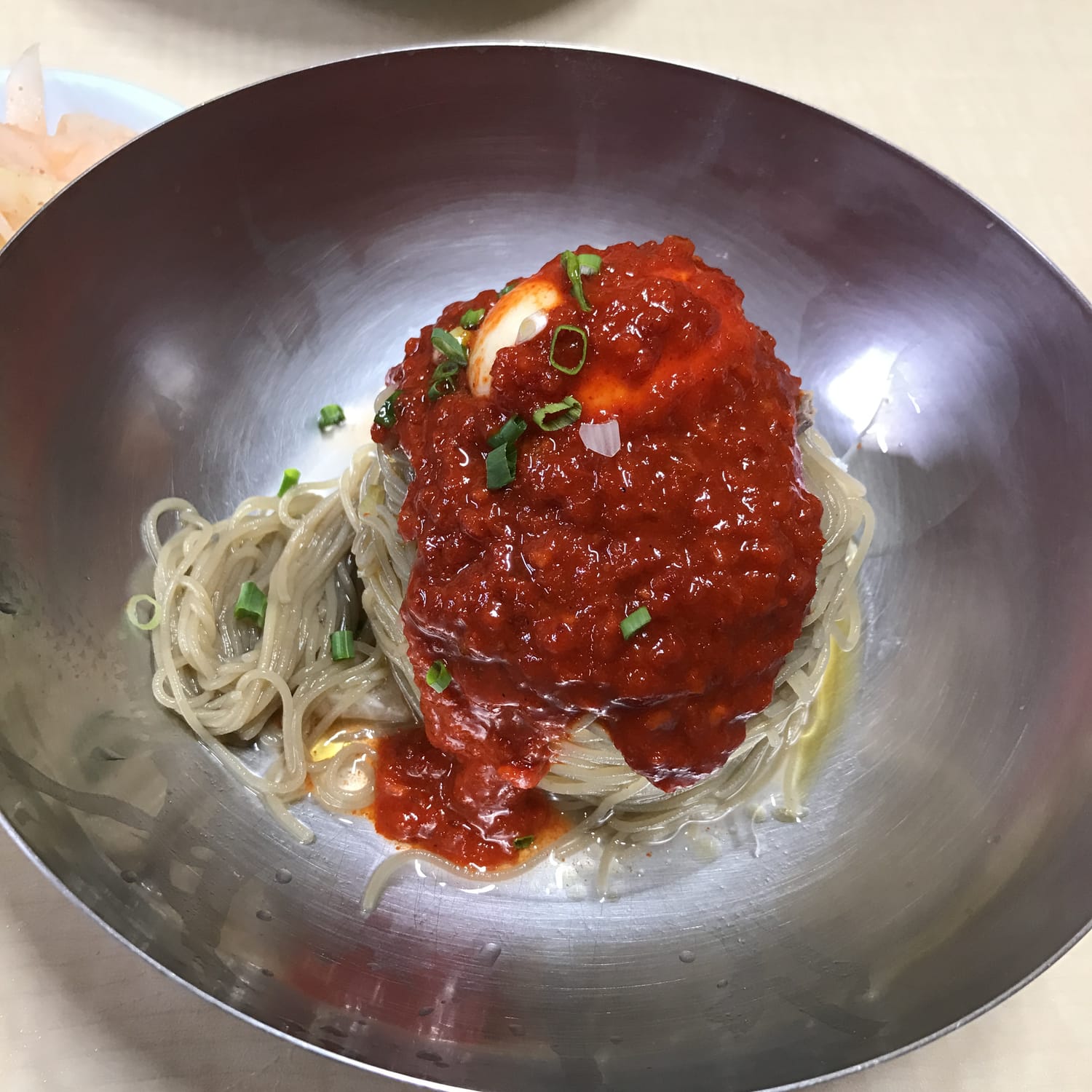
Naengmyeon has no strong thing. There is nothing in the bowl a foreigner objects to on its own: chilli, sugar, vinegar, sesame, a boiled egg, cucumber, a starch noodle, ice. The problem is that it asks you to accept three unfamiliar ideas at the same time, and none of them is a flavour.
One: a cold main course. In most food cultures a cold dish is a side, a starter or a dessert; the main course is the hot one. A cold main, in a steel bowl, with ice floating in it, reads as something having gone wrong in the kitchen — and when you have paid for it, as being short-changed. Koreans do not feel this at all, because they have never eaten naengmyeon as a main course in the first place; the reason is in the section on eating order below.
Two: a noodle you cannot bite. Hamheung noodles are made from potato or sweet-potato starch, and they are engineered for a texture Koreans call 쫄깃 — springy, resistant, bouncing back. (The scissors that arrive with the bowl are a purpose-built tool, not a desk scissor — we wrote that up too.) English does not have a positive word for this. Chewy is a complaint. Al dente means a firm centre that still yields; a Hamheung noodle does not yield, it stretches, which is why every restaurant hands you scissors and why the foreign reviews say rubber bands and gum. A Korean reads that texture as quality. A first-time foreigner reads it as a mistake in the kitchen.
Three: a sauce with no anchor. Western palates locate a dish by its dominant note — the tomato, the cheese, the butter, the meat. Hamheung sauce is sweet, sour, hot and sesame-nutty in roughly equal measure, then you are handed vinegar and mustard and told to adjust it yourself. There is no centre to hold on to. The creator quotes his guests exactly: "What is this? How am I supposed to understand it? What category of eating is this?" That is not disgust. It is disorientation, and disorientation does not become fondness with repetition the way a strong flavour can.
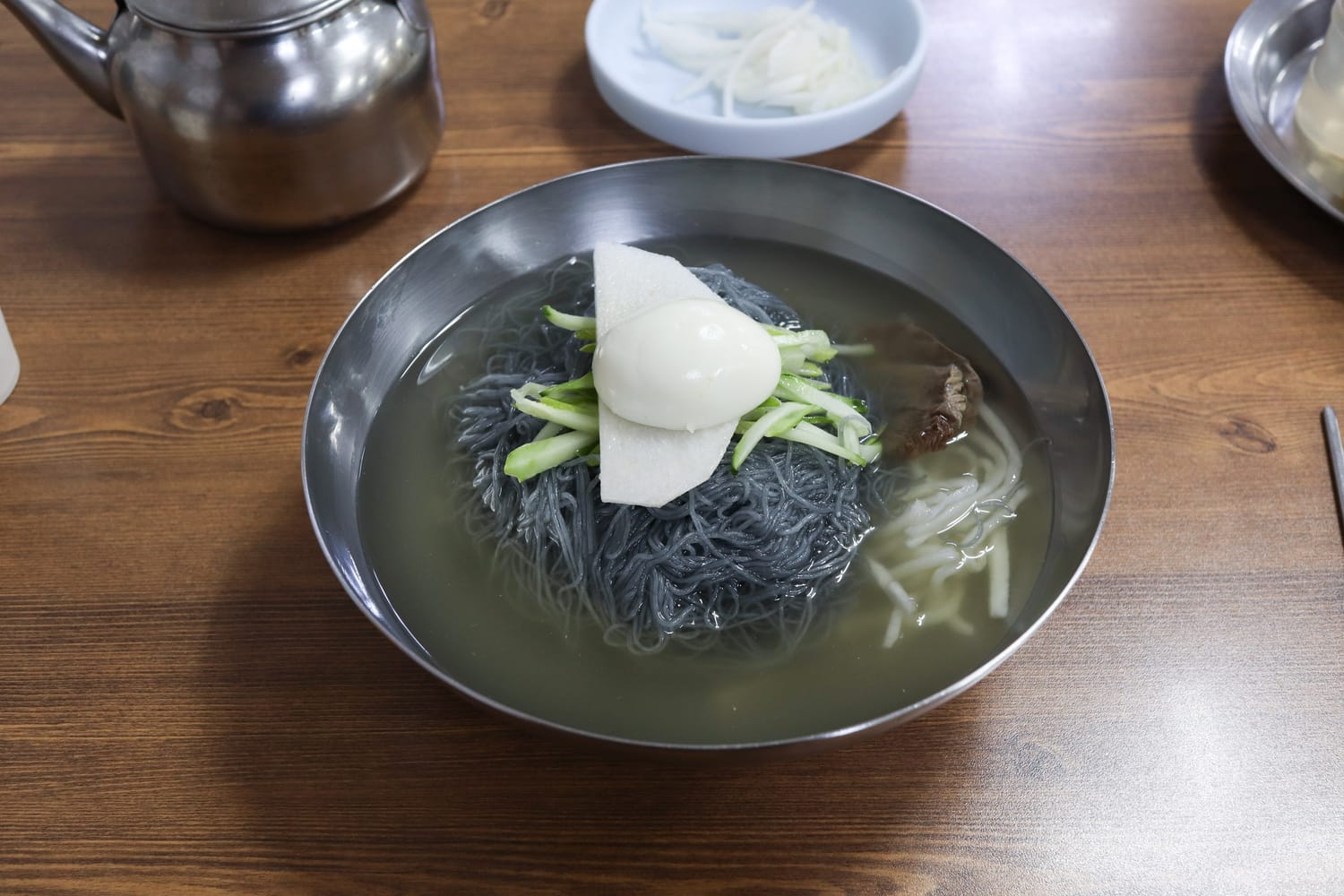
Pyongyang naengmyeon, for what it is worth, asks only one of the three — the cold — and does it gently, with a soft buckwheat noodle and a broth foreigners describe as "not much, but fine". That is why the same people who rated Hamheung never again rated Pyongyang okay. Korea has the argument backwards from the foreign point of view: the "difficult" bowl is the easy one.
Choung Soo mul-naengmyeon kit (물냉면) — find out at home, before you are sitting in a restaurant in Seoul feeling cheated. Noodles plus a concentrated broth sachet you dilute with iced water; it is genuinely how most Koreans eat it at home, and at a fraction of the ₩15,000 restaurant bowl it is the cheapest way to learn which of the three ideas above is the one you cannot get past. As an Amazon Associate, EpicKor earns from qualifying purchases at no extra cost to you.
See the naengmyeon kit on AmazonWhat Hamheung naengmyeon actually is
The name suggests a dish from Hamheung, a city on North Korea's east coast. It is more accurate to say it is a dish by people from Hamheung, invented in the South.
In Hamgyeong province, where potatoes and sweet potatoes grew better than wheat, people ate 농마국수 — starch noodles — and 회국수, the same noodles mixed hot with marinated raw fish, usually pollock or flounder. When the war sent refugees south, the largest group from Hamgyeong settled in Sokcho, on the east coast, and the first "Hamheung naengmyeon" shop opened there in 1951. From 1954 the Hamgyeong refugees around Seoul's Cheonggyecheon markets opened shops in Ojangdong, which is still the address Koreans associate with it. The name 함흥냉면 was coined here, in the South, to sell a refugee food to a Seoul that already knew Pyongyang naengmyeon. In Hamheung itself, nobody called it that.
Three things follow from the history, and they are the three things a foreigner meets in the bowl:
- The starch noodle is not a choice of texture; it is what Hamgyeong had instead of buckwheat. The 쫄깃 that Koreans now prize was originally just what potato starch does.
- The raw fish — 회, hence 회냉면 — is the original. The bibim version without fish, which is what most tourists are served, is the simplified one.
- The heat and sugar are the Seoul layer. The Ojangdong shops sweetened and reddened the sauce for a southern palate over seventy years, which is why the modern bowl tastes like a candied gochujang and why it is now the thing Koreans have no opinion about: it was tuned to them.
The part foreigners get wrong before the first bite
Here is the sentence that resolves most of the gap, and it is hiding in the creator's own account: "the meat we ate with it was good."
Naengmyeon is a finisher. In Korean eating, the bowl arrives after the grilled meat — 갈비 or 삼겹살 — as the cold, sharp, slippery thing that ends a heavy, hot, fatty meal. That is the context in which 69.8% of Koreans love it. The ice, the vinegar, the mustard and the cold starch noodle all make sense as a palate reset after an hour over a charcoal grill; the small size of a naengmyeon "half" portion, 반냉, exists for exactly this. Order it as a stand-alone lunch at noon on a cool day, as most visitors do, and you have removed the one condition under which the dish is designed to work.
The creator's guests, tellingly, praised the meat and rejected the noodles. They were describing a naengmyeon eaten in the right sequence and still not liking it — which is fair — but it is worth knowing that the sequence is not optional. A Korean who says "you have to eat it after galbi" is not being precious. They are telling you what the dish is for.
How to give it a fair trial
If you are going to try it once, try it in the conditions Koreans eat it in, so that if you still hate it you at least hated the real thing.
- After meat, not instead of it. Go to a galbi restaurant, not a naengmyeon restaurant. Finish the grill. Then order.
- Order 물냉면 first, and a half portion. The clear-broth version asks only one unfamiliar thing of you. 반냉 (ban-naeng) is the half bowl; every galbi place has it.
- Take the scissors. They will be offered. Cut the noodles twice, across, before you touch anything else. The "rubber band" problem is mostly a length problem.
- Taste the broth before you add anything. Then the vinegar, a little; then the mustard, less. This is the step Koreans do without thinking and foreigners skip, which is why the bowl arrives tasting of nothing.
- Drink the hot broth cup. Many shops put a small kettle of warm broth, 온육수, on the table. It is for exactly the moment the cold gets to you.
- Only then, Hamheung. If 물냉면 after galbi was fine, order 비빔냉면 or 회냉면 next time, at Ojangdong, where the sauce is the reference version. If 물냉면 after galbi was not fine, you have your answer, and it cost you about ₩6,000–8,000 for a half bowl rather than a whole afternoon.
And if the answer is no: that is allowed. The creator's point was not that foreigners are wrong. It was that this is the one place where a person who has made their peace with fermented skate can still say I do not understand what this is for — and a Korean, for whom it needs no explaining, will not know what to say back. Our guide to why Koreans seem cold to foreigners is about that same silence in another setting.
Korean BBQ scissors and tongs set — the tool the "rubber band" complaint is really about. Cutting food at the table is standard in Korea, not improvised, and naengmyeon is the dish that explains why: a Hamheung noodle cut twice is a completely different thing from one you fight with chopsticks. Look for blades that separate for cleaning. As an Amazon Associate, EpicKor earns from qualifying purchases at no extra cost to you.
See the scissors set on AmazonFrequently Asked Questions
Q: What Korean food do foreigners dislike the most?
Naengmyeon, the cold noodle dish, and specifically the Hamheung style: chewy potato-starch noodles in a sweet-hot sauce, served cold. A Korean creator who filmed foreigners eating Korean food for years called it the overwhelming number one refusal, with almost nobody willing to pay for it a second time. It beats the famously difficult dishes — hongeo, cheonggukjang — because those have one strong flavour to get used to; naengmyeon has none, and asks for three unfamiliar ideas at once.
Q: Why do foreigners not like naengmyeon?
Three reasons, none of them a flavour. It is a cold main course, which most food cultures read as something gone wrong; the starch noodle is deliberately unbiteable, which English can only call "chewy" or "rubbery"; and the sauce is sweet, sour and hot in equal measure with no dominant note, then you are told to adjust it yourself. Each is manageable alone. Hamheung naengmyeon delivers all three in one bowl.
Q: Is Hamheung naengmyeon from Hamheung?
Not by that name. In Hamgyeong province people ate 농마국수, starch noodles, and 회국수, the same noodles mixed with raw fish. Refugees from the region opened the first "Hamheung naengmyeon" shop in Sokcho in 1951 and the Ojangdong shops in Seoul from 1954; the name and the sweeter, redder sauce are South Korean.
Q: Which naengmyeon should a first-timer order?
물냉면, the clear-broth version, as a half portion after grilled meat. It asks only one unfamiliar thing of you — the cold — and it is soft. Foreigners who reject Hamheung mostly rate Pyongyang or ordinary 물냉면 as "okay". Cut the noodles with the scissors provided and taste the broth before adding vinegar or mustard.
Q: Do Koreans actually like naengmyeon?
More than any other summer food: 69.8% named it first in a survey of 1,194 Korean adults, ahead of shaved ice and samgyetang, and cold-noodle restaurant visits rose 38% in 2025. Koreans argue about Pyongyang naengmyeon's blandness; nobody argues about Hamheung. It is the default finisher after galbi.
Q: Why do Koreans eat naengmyeon after barbecue?
Because it is designed to end a hot, fatty meal: cold, sharp with vinegar and mustard, slippery, and served in a half portion (반냉) for exactly that purpose. Eaten on its own as lunch — the way most visitors first meet it — it loses the contrast that makes it work.
Bottom Line
The Korean food foreigners never learn to love is not the smelliest or the spiciest. It is the one Koreans find least remarkable — a cold, chewy, sweet-hot bowl of starch noodles that 70% of the country puts first in summer and that a foreigner who happily eats fermented skate will not pay for twice. The gap is not a flavour. It is three ideas — cold as a main, chewy as a virtue, a sauce with no centre — that Korea absorbed so completely it can no longer see them as ideas.
If you want to close the gap, eat it the way it was built to be eaten: after galbi, clear broth first, half a bowl, scissors, then the vinegar. If it still does not land, you are in the majority, and you have found the one place Korea will not be able to explain itself to you.
Sources
- 지식 쇼츠, "외국인들이 이해 못하는 한국음식 압도적 1위" (YouTube, 5 August 2026; about 830,000 views at time of writing) — a Korean creator's account of a long-running series feeding Korean food to foreigners; naengmyeon the overwhelming refusal, Pyongyang-style rated "okay". Quotations translated by EpicKor.
- 잡코리아, 여름 음식 선호 조사 (1,194 adults, 22–28 June 2015, reported by 경향신문) — naengmyeon 69.8%, patbingsu 50.8%, ice cream 38.4%, samgyetang 33.5%, kongguksu 25.5%.
- 캐치테이블 (와드), 2025 냉면 트렌드 (reported 20 June 2025) — cold-noodle restaurant visits up 38%; twenty-somethings 16.5% → 22.6% of customers; Pyongyang searches 11× Hamheung; one shop with a ~1,000-person daily waitlist.
- 한식진흥원, 해외 한식 소비자 조사 (9,000 respondents, 18 cities) — Korean fried chicken the most-liked Korean dish abroad at 16.5%; commonly reported foreign favourites bibimbap, kimchi, samgyetang, bulgogi, tteokbokki.
- 여행톡톡, "외국인들은 '절대' 안먹는다는 한국 음식 BEST5" — naengmyeon listed, with the complaints "면발 자체에서 아무 맛도 느껴지지 않는다" and "고무 씹는 맛".
- 한국민족문화대백과사전 · 위키백과, 함흥냉면 — Hamgyeong 농마국수/회국수; first Hamheung naengmyeon shop in Sokcho, 1951; Ojangdong shops from 1954; potato and sweet-potato starch noodles.
You Might Also Like
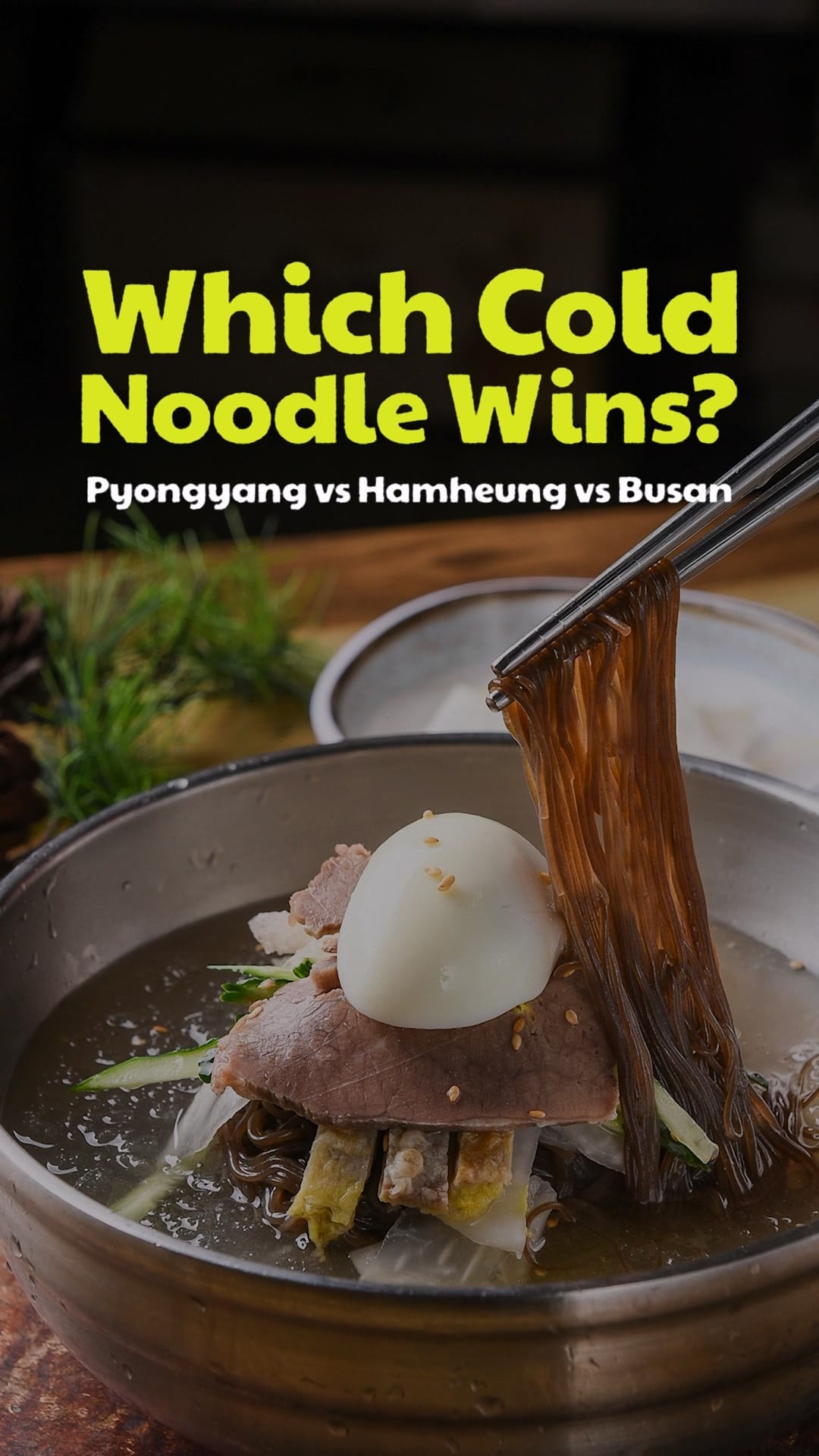
Pyongyang vs Hamheung Naengmyeon: Which Korean Cold Noodle to Order
Pyongyang vs Hamheung naengmyeon compared — and the part guides leave out: the mild one costs ₩15,000–18,000 while the spicy one is ₩11,000. Prices, subway exits, opening hours, and which bowl to order first, as of August 2026.
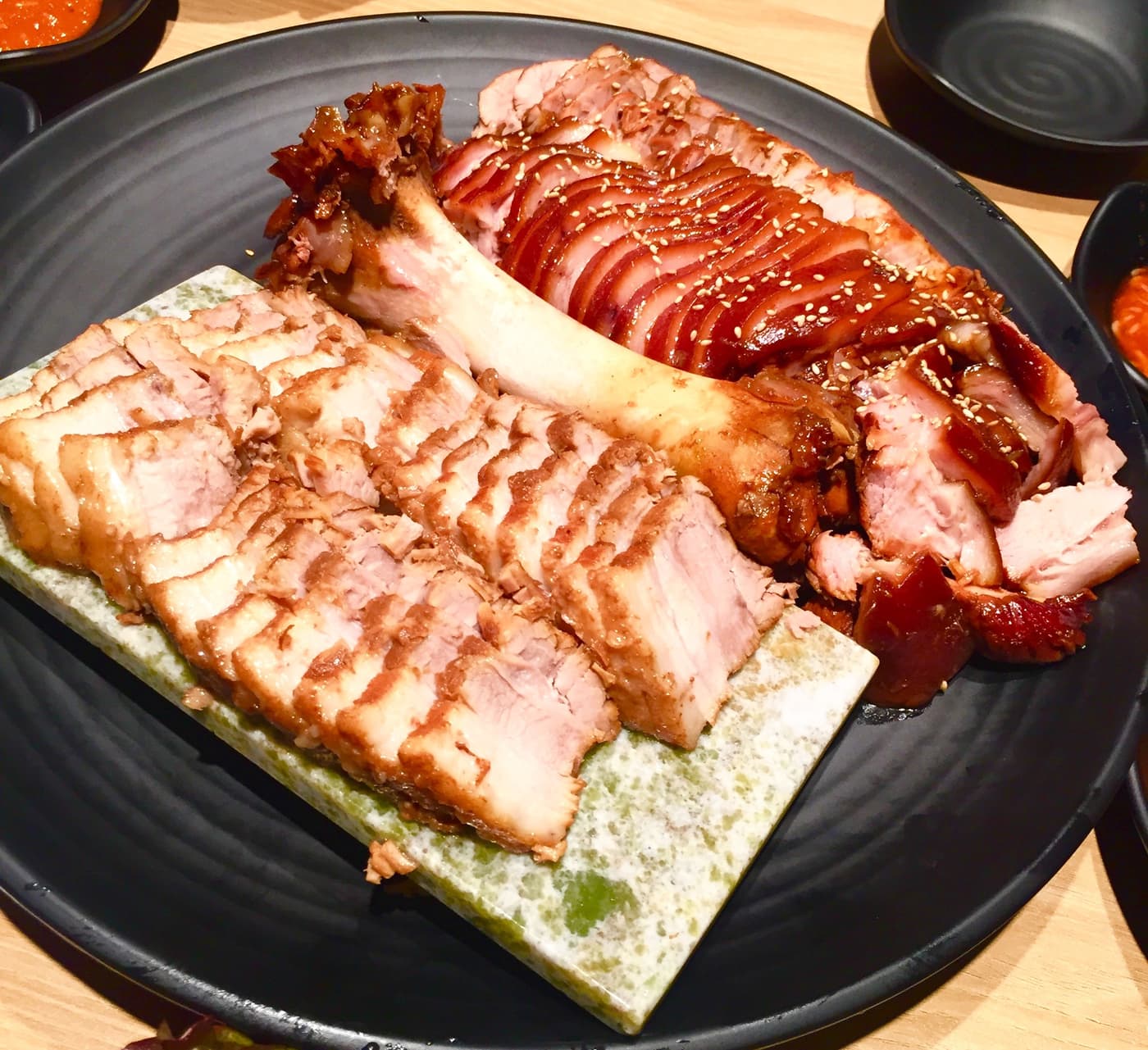
Bossam vs Jokbal: Korea's Two Pork Dishes Compared — Cut, Taste and Price
At one Wonhalmeoni branch jokbal costs ₩7,000 more than bossam; at the chain's flagship it is the reverse. One is soy-braised trotter on the bone, the other plain-boiled belly you wrap yourself. Cut, texture, October 2026 prices, 반반, Jangchung-dong.
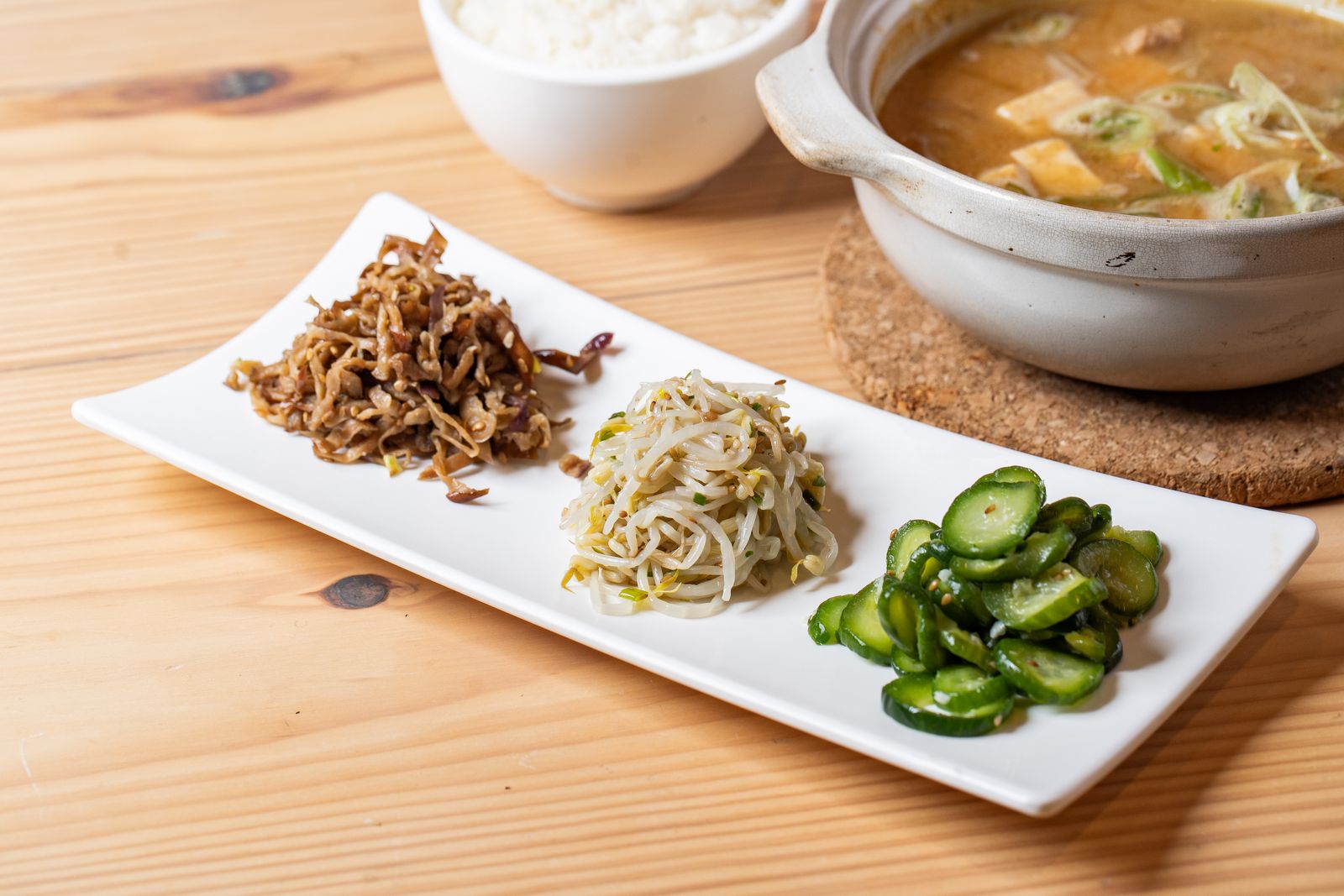
What Do Koreans Eat for Breakfast? 12 Real Meals, and Why a Third Skip It
About a third of Korean adults skip breakfast entirely, and people in their 20s score worst of any age group in the national health survey. What the other two-thirds eat, with August 2026 prices: gimbap ₩3,800, kimchi-jjigae set ₩8,654, abalone juk ₩18,900.