Korean Board Game Cafe Guide 2026: How to Play in Seoul
A Korean board game cafe can expose a friendship in under twelve minutes.
One person wants strategy. One wants “something easy.” One says they do not care, then rejects every box. Someone chooses a game with a forty-page rulebook because the art looks cute. By the time the pieces are sorted, your hourly timer has started, the tteokbokki has arrived, and nobody knows whose turn it is.
This sounds like failure. In Seoul, it is the opening scene.
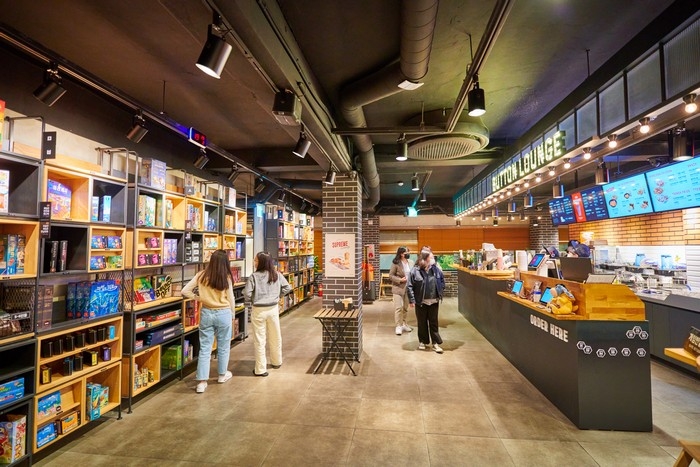
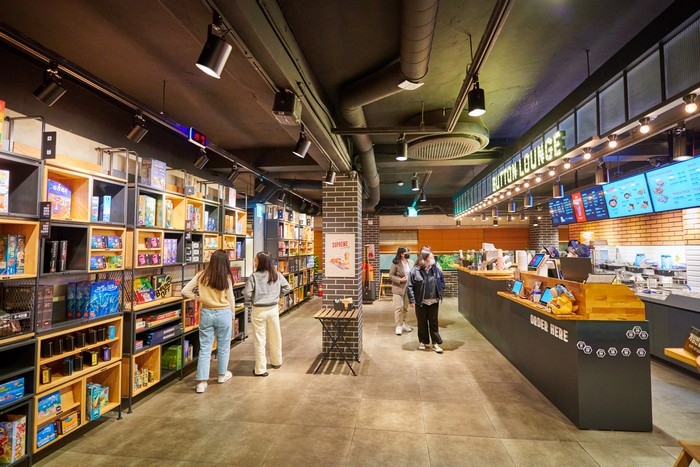
Korean board game cafes take an activity that usually requires a host, a game collection, a large table, and one patient person who reads rules—and turn it into a serviced room. The shelves are already there. Many venues organize games by player count or difficulty. Major chains use tablets or dedicated apps for recommendations, explanations, time checks, and food orders. You only need to bring people capable of losing with dignity.
This guide explains how board game cafes work, what they cost, how tourists handle Korean-language games, what to order, and how to choose a first game without spending half the session in committee.
Quick Answer: How Does a Korean Board Game Cafe Work?
Choose a branch, check its current hours and pricing, enter as a group, and tell staff how many people you have. The venue assigns a table or booth and starts your time. You browse the game shelves or use a tablet/app to filter by player count, difficulty, or style. At some chains, the same device provides rules videos and takes food orders. When you finish, return every component to the correct box and settle the time fee plus food and drinks.
There is no single national price. Some branches charge per person per hour. Others offer packages, unlimited-time promotions, youth rates, weekday discounts, or a minimum food-and-drink order. Hours, age policies, reservations, and last entry also vary. Check the exact branch on its official page or Korean map listing on the day.
The first decision is not which game to play. It is which kind of cafe you need.
| Cafe Type | Best For | What to Check |
|---|---|---|
| Large franchise | First-timers, couples, groups needing structured help | Branch pricing, waiting system, room type |
| Independent hobby cafe | Experienced players and deeper strategy collections | English support, reservation, game library |
| Language-exchange game space | Meeting people and conversational play | Event schedule and participation rules |
| Comic/game hybrid cafe | Mixed groups who may not all want one activity | Whether board games are the main service |
Gonggi game set — compare on AmazonAffiliate link. As an Amazon Associate, EpicKor earns from qualifying purchases at no extra cost to you.
For the larger cultural picture, connect this with EpicKor’s Korean PC bang guide, study cafe rules, screen sports guide, and Korean cafe culture guide. Together they show a Seoul habit that visitors often miss: if an activity is difficult to host at home, Korea will probably build a room for it.
Why Board Game Cafes Fit Korean “Bang” Culture
The Korean word bang means room. It appears in noraebang, PC bang, jjimjilbang, and many other commercial spaces that package privacy, equipment, and time. A board game cafe is not always called a bang, but it follows the same emotional logic. The room removes the need to own the setup.
Apartments can be small. Young people may live with family, roommates, or limited dining space. Cafes provide a neutral meeting point, but an ordinary cafe is built around conversation. A board game cafe adds a reason for the conversation to become competitive.
That makes it useful for dates. Silence is less frightening when both people are trying to stack something, decode something, or accuse each other of lying. It works for friend groups because nobody needs to clean a home afterward. It works during rain, heat, cold, yellow-dust days, and the awkward gap between dinner and the last subway.
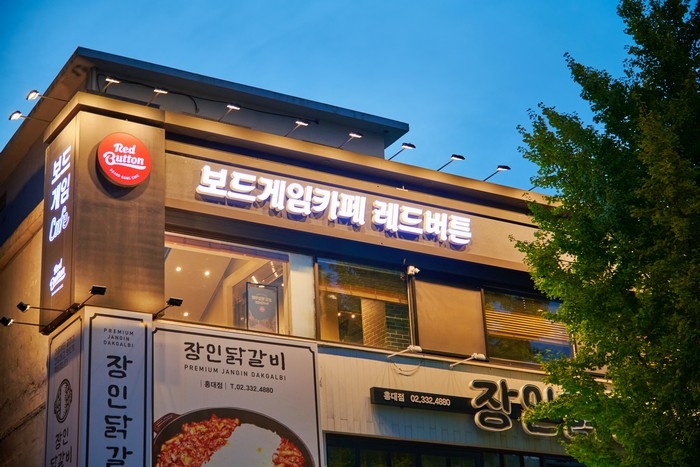
The Korea Tourism Organization includes board game cafes in its guide to Korean room culture and uses Red Button’s Hongdae branch as an example. The important point is not one chain. It is that the activity is presented as a complete service: game library, room, instructions, snacks, and time management.
What You Pay For—and What You Do Not
At a normal cafe, the drink buys your seat. At a board game cafe, the seat has a clock.
Most visitors should budget for two separate categories: a time fee and food or drink. The exact formula varies. One branch may charge hourly and expect one order per person. Another may offer a flat package. Promotions shown in old blogs expire, so avoid planning the night around a screenshot from last year.
Before entering, check:
- Is the fee per person or per table?
- Is there a minimum time?
- Is one food or drink order required?
- Does the branch offer unlimited play, and on which days?
- Is a reservation possible for a larger group?
- Are minors allowed late at night?
- Does the waiting app require a Korean phone number?
If the answer is unclear, show the staff the Korean map listing and ask I-yong-ryo eolmayeyo?—“How much is the usage fee?” A calculator screen can solve the rest.
The timer changes behavior in a useful way. A beautiful three-hour strategy game is a bad choice when your group has seventy minutes before dinner. A quick party game is a bad choice if everyone came specifically to build an empire. Decide the available time before touching a box.
Play-at-home note: As an Amazon Associate, EpicKor may earn from qualifying purchases. If the cafe visit makes you curious about a genuinely Korean hand game, compare this gonggi game set; it is a different tradition from a modern cafe library, but an easy piece of Korean play culture to pack home.
See gonggi game set on AmazonHow to Choose a Game in Five Minutes
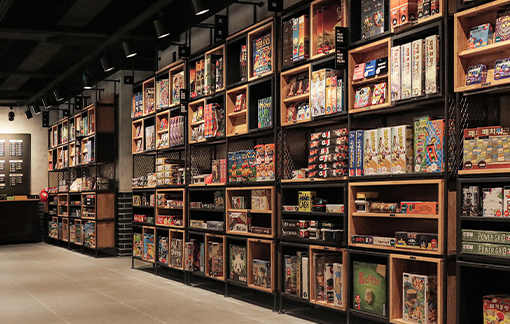
The wall of boxes is designed to create possibility. It also creates decision paralysis.
Red Button’s official materials say its stores display roughly 400 selected games, with quantity and type updated periodically. Its dedicated room app supports game search, recommendations by player count, related-game suggestions, and explanation videos. Other chains may use staff recommendations, printed categories, QR codes, or their own tablets.
Ignore any tourism copy that promises a specific number of games at every location. Inventory changes, translations can be messy, and one “kind” may be counted differently from one physical box. The useful question is whether the branch has a good game for your group right now.
Use this decision table:
| Your Group | Choose This Style | Avoid at First |
|---|---|---|
| Two people on a date | Fast duel, pattern, deduction, or cooperative game | Games that need a large social group |
| Three or four beginners | Party, wordless pattern, light bluffing, simple race | Heavy rules with long setup |
| Five or more friends | Team, social deduction, drawing, speed game | Slow games with long individual turns |
| Mixed Korean ability | Low-text, icon-based, physical, or cooperative game | Dense Korean wordplay or trivia |
| Experienced hobby players | Reserve time and ask for the branch’s deeper titles | Assuming every cafe stocks the same edition |
Set a five-minute limit. If nobody agrees, let the app or one person choose. Play one round. If it is wrong, return it carefully and switch. The cafe is a library, not a marriage contract.
The Language Barrier Is Real but Manageable
A familiar international game may use the same core rules in Korea, but the cards or manual can be Korean. Do not assume that recognizing the box means you can play the edition without help.
Start with low-text games. Symbols, colors, blocks, dexterity, visual patterns, and simple number systems travel better than puns, trivia, negotiation cards, or secret roles with paragraphs of Korean. If the venue provides an explanation video, watch it before opening every packet. Turn on live translation only after you understand what information is supposed to remain secret.
Useful phrases include:
- Du myeong-i hal su inneun geim isseoyo? — Do you have a game for two people?
- Swieoun geim chuchonhae juseyo. — Please recommend an easy game.
- Yeongeo seolmyeongseo isseoyo? — Is there an English rulebook?
- I geim eolmana geollyeoyo? — How long does this game take?
Staff English ability varies. That is not a service failure; you are in Korea. Ask a short question, show the box, use numbers, and keep the translation specific. “Easy, four people, thirty minutes” communicates more than a paragraph about your group’s gaming history.
Do not use your phone to photograph every card if the game depends on hidden information. Translate one sample or ask for a different title. The easiest victory is choosing a game that does not require continuous translation.
Small language advantage: A phrasebook will not explain a strategy game, but the Lonely Planet Korean phrasebook covers check-in, pricing, food and staff recommendations — which is most of what a board-game cafe counter actually asks you, and it is useful if your trip includes local venues rather than only English-led tours.
See Lonely Planet Korean phrasebook on AmazonFood, Tablets, and the Korean Cafe Upgrade
The funniest moment in a Korean board game cafe is often when the game stops because the food arrives.
Major venues may offer coffee, ades, shakes, tteokbokki, fries, chicken, pizza, waffles, or branch-specific snacks. Red Button’s official current menu demonstrates the cafe side of the business, but exact items and stock vary. The room tablet can make ordering feel effortless: tap, wait, receive a notification, collect or accept the food.
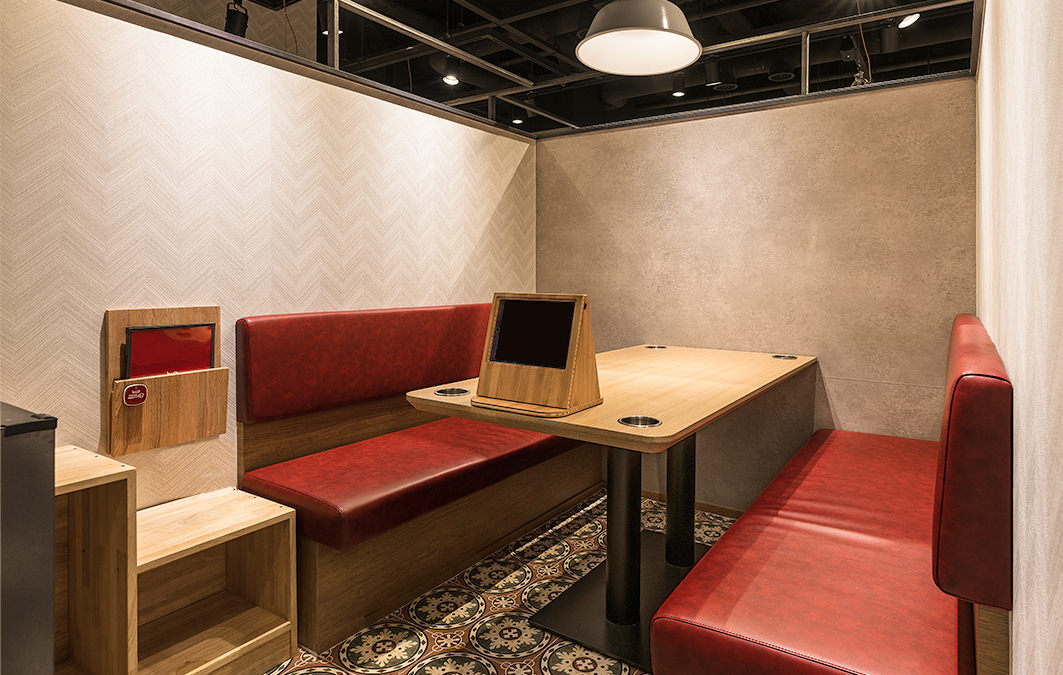
Protect the game. Keep drinks in holders. Move cards before placing hot tteokbokki on the table. Wipe fingers after fried food. Do not balance a sauce cup beside a stack of cards and trust destiny.
Food also changes the budget. Two hours plus drinks and a shared dish can cost more than visitors expect from the word “cafe.” Check the full order screen before confirming. If you only want coffee, an ordinary cafe may be cheaper. You are paying for the room, library, equipment, and the right to discover that your closest friend cheats at bluffing games.
Board Game Cafe Etiquette
Return games exactly as you found them. Use the component list if one exists. Count important pieces. Put cards into the correct bags. If something was already missing or damaged, tell staff rather than inventing a replacement from another box.
Take one game at a time unless the venue says otherwise. Hoarding three popular boxes at your table while deciding is bad library behavior. Keep the aisles clear and return rejected games promptly.
Control the volume. Excitement is expected; screaming every time a wooden block falls is not. Booth walls reduce noise but do not create a private universe. Avoid pounding tables, throwing components, or using game pieces as food tools.
Watch the clock. If a waiting list is growing, decide whether another round is worth the fee. If the venue closes at midnight, “one more game” at 11:57 is not a plan.
Ask before moving between rooms or joining strangers. Some apps support social matching features, but participation should always be explicit. A solo visitor should look for scheduled meetups, language exchanges, or hobby cafes rather than expecting a private group to adopt them.
Finally, losing is not a cultural emergency. A cafe date goes better when the result becomes a story, not a performance review.
A Rainy-Day Seoul Route That Actually Works
Use a board game cafe as the middle of a day, not a desperate placeholder.
In Hongdae, browse shops or exhibitions before the afternoon rush, eat a light meal, then book two hours at a board game cafe. Choose one quick game, one main game, and stop before fatigue turns every rule dispute into constitutional law. Finish with dinner, karaoke, or a walk when the rain softens.
In Gangnam, pair the cafe with shopping, a personal-color appointment, or a meal that requires waiting nearby. Around university districts, expect more student energy and potentially busier evenings. Wherever you go, choose the branch closest to your next plan, not the branch with the most impressive old blog review.
EpicKor’s Seoul rainy-day itinerary, Korean kiosk guide, reservation culture guide, and Naver Map guide cover the practical parts around the game itself.
FAQ About Korean Board Game Cafes
Q: What is a Korean board game cafe?
It is a paid cafe or room venue with a board game library, tables or private booths, and food or drinks. Many charge by time, and some provide tablets, recommendations, or rule videos.
Q: How much does a board game cafe in Seoul cost?
There is no universal price. Branches use hourly fees, packages, promotions, minimum orders, or unlimited-play plans. Check the exact branch’s official listing before visiting.
Q: Can tourists play if they do not speak Korean?
Yes. Choose low-text games, ask for English rules, use explanation videos where available, and request a game matched to your player count and time. Staff English support varies.
Q: Are Korean board game cafes good for two people?
Yes. Couples are a common audience, and many libraries include two-player duel, cooperative, deduction, pattern, and puzzle games.
Q: Do I need a reservation?
Often not for a small group, but popular branches can have waits on weekends or rainy evenings. Larger groups should check reservations, room capacity, and app waiting requirements in advance.
Q: Can I visit alone?
You can, but a normal private-booth cafe is designed around groups. Look for a meetup, language exchange, scheduled event, or hobby-focused cafe if you want people to play with.
Sources
You Might Also Like
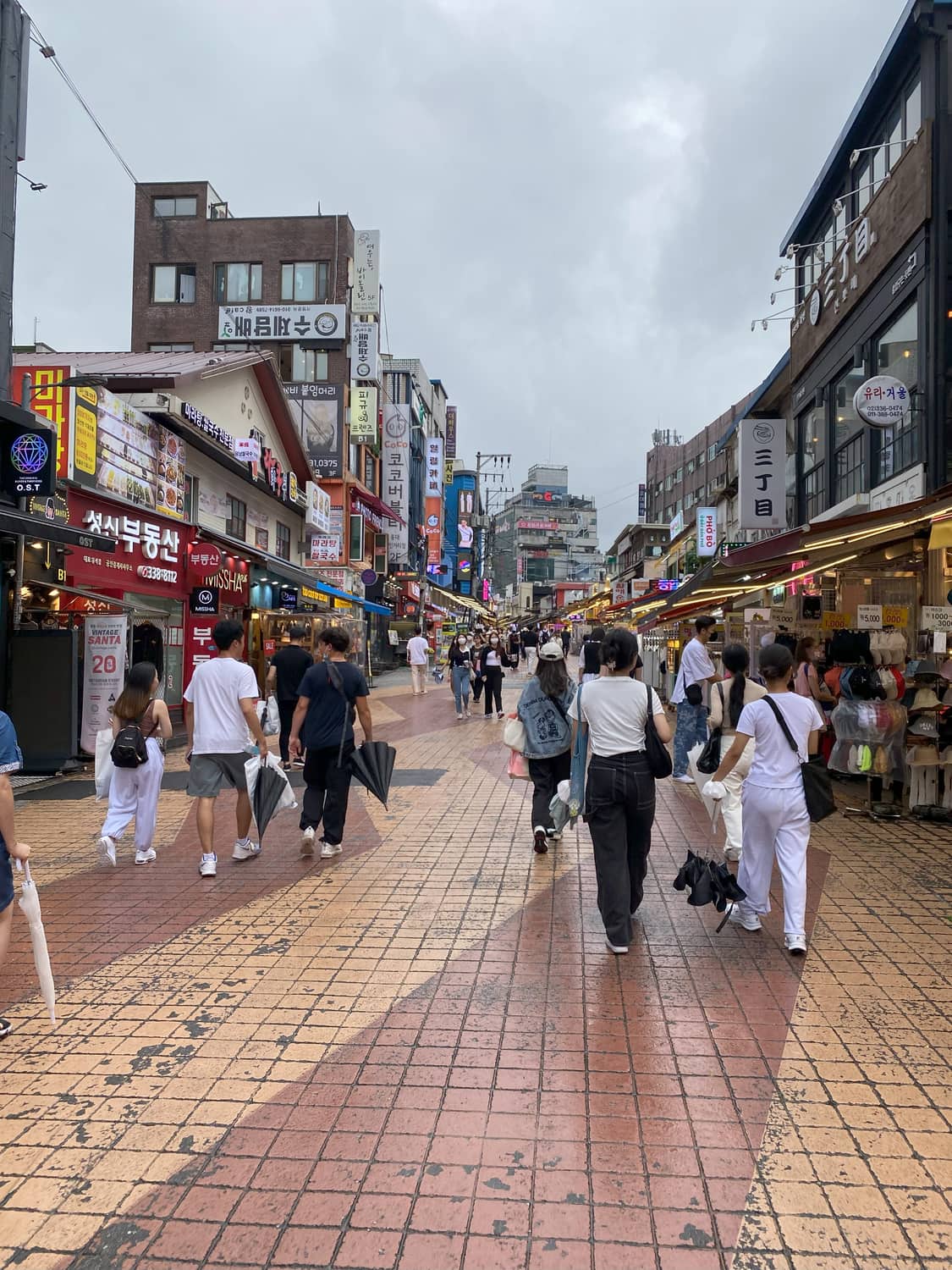
Do Koreans Speak English? Ask Someone Under 35 — What Actually Happens on a Seoul Street
Yes, if you ask the right person. Stop a Korean in their twenties or thirties on a Seoul street and you will almost always get an answer in English. The forum answer that says otherwise is twenty years old. Who to ask, how to ask, where English is built in.
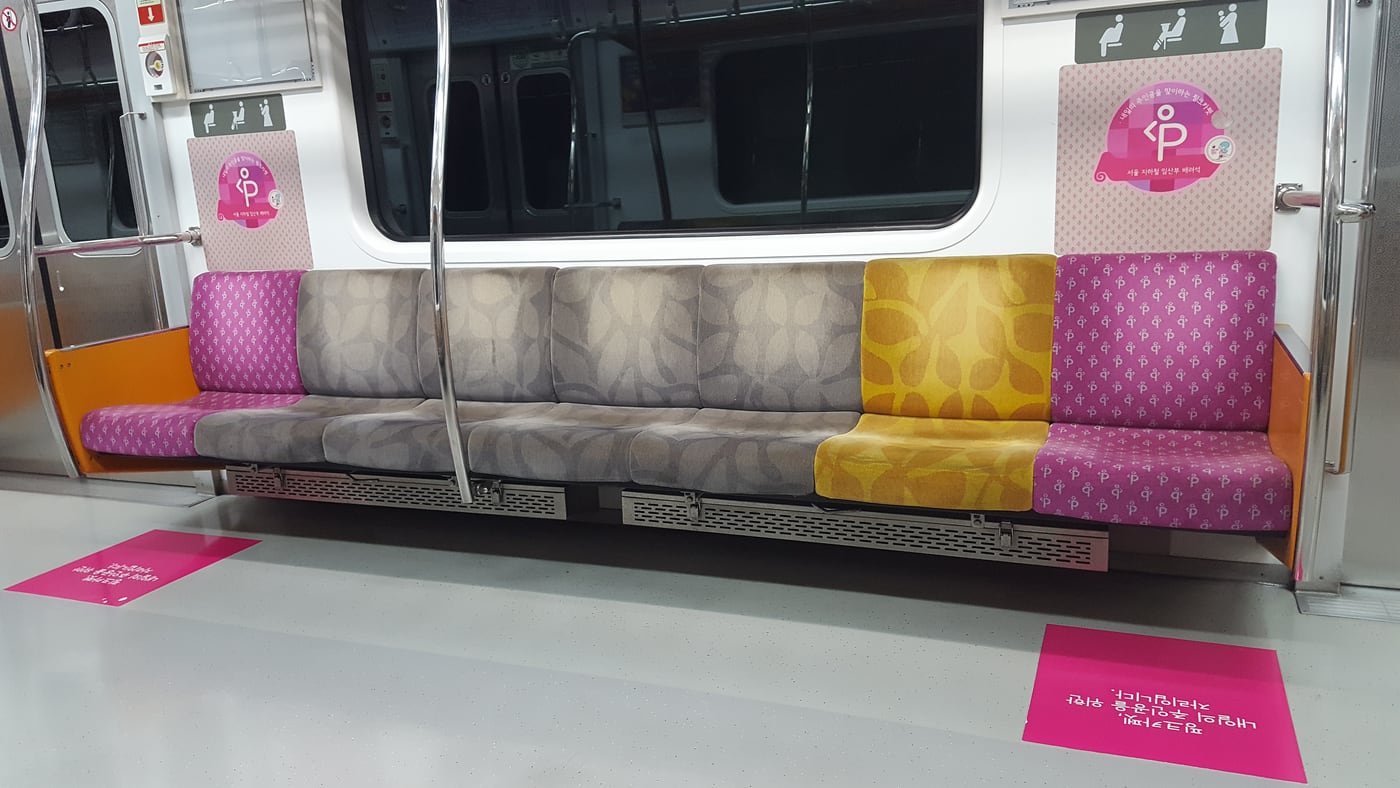
Seoul Deleted Its Women-Only Parking: What Korean Gender Policy Actually Is in 2026
Most English writing on Korean gender policy describes rules that were removed, renamed, or never existed. Seoul scrapped women-only parking in 2023, the ministry was renamed in 2025, and the famous five-point exam bonus went to men and ended in 1999.
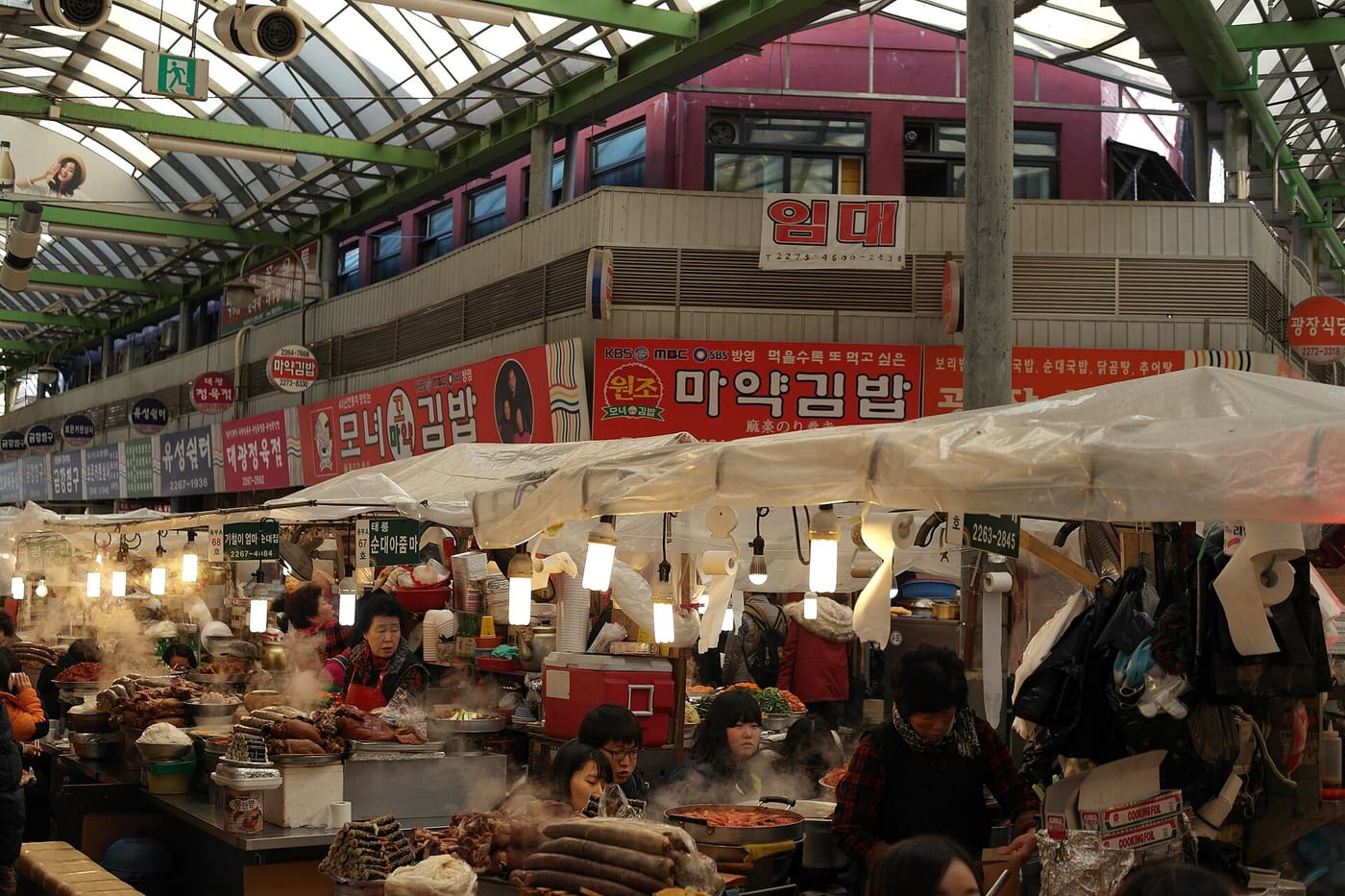
Gwangjang Market's Second Floor: Seoul's Vintage Arcade, and the One Day It's Shut
Everyone knows Gwangjang for the food alley that never closes. Above it is a vintage arcade signed 수입구제 where most items run under ₩20,000 — and it shuts every Sunday, which is exactly when visitors turn up.