Korean Funeral Etiquette: How Much Money to Give and What to Do at the Funeral Hall
No black tie in your suitcase? A plain solid black necktie, on AmazonAffiliate link. As an Amazon Associate, EpicKor earns from qualifying purchases at no extra cost to you.
Last updated: 19 November 2026. The amounts below come from Korean sources checked for this guide: the Chosun Ilbo and Tillion Pro survey of 1,500 adults (8–11 May 2026), Kakao Pay's ten-year remittance report as reported in May 2026, the Sungkyunkwan Confucian association's funeral guideline (December 2024), the 청탁금지법 and its Enforcement Decree, the National Institute of Korean Language on envelope wording, and a Korean florist price guide updated October 2026. Dollar figures use ₩1,335 = US$1 (Bank of Korea ECOS, 17 November 2026). Sources at the end.
Short answer: if a Korean colleague, friend or neighbour loses a family member, go to the funeral hall on the first or second evening, put ₩100,000 (about $75) in a white envelope marked 부의 (賻儀), bow twice at the altar, bow once to the chief mourner, eat a bowl of yukgaejang, and leave within an hour. ₩50,000 (about $37) is still acceptable and is the legal maximum for gifts connected to the work of a public official, teacher or journalist. Nobody expects a foreigner to get every gesture right. They do notice whether you came.
Korean funerals are not held at home or in a church for most families. They happen in a jangnyesikjang (장례식장, funeral hall), usually attached to a hospital, over three days. Guests drop in at any hour, pay respects in a few minutes, and then sit down to eat with other mourners. Foreigners therefore ask practical questions: how much, what do I write, when do I go, what do I do with my hands. This guide answers each one with the Korean data that exists, and says plainly where none does.
Quick Answer: How Much Money to Give at a Korean Funeral
There is no official rate. The figures below come from the May 2026 survey and the Kakao Pay data; the split by relationship is EpicKor's working guide built on them, because we found no 2026 Korean survey that asks about funeral amounts by relationship.
| Your relationship | Amount to give | What the data says |
|---|---|---|
| Colleague, classmate or acquaintance | ₩100,000 (about $75) | Overall, 61.8% of 1,500 adults said ₩100,000 is what they usually give at funerals; average ₩95,300 (Chosun Ilbo / Tillion Pro, May 2026). The survey did not split by relationship |
| Not close, or money is tight | ₩50,000 (about $37) | 25.7% give ₩50,000 or less; 34.3% of people in their 20s do. The Sungkyunkwan Confucian association called ₩50,000 "enough" (Dec 2024) |
| Your boss's or a close colleague's parent | ₩100,000; some give more | 7.2% give ₩150,000 and 4.6% give ₩200,000 (May 2026 survey). Many offices also send one group envelope or wreath |
| Close friend, or a friend's parent you knew | ₩100,000–200,000 (about $75–150) | EpicKor working estimate: closer relationships usually mean a larger envelope. People 60 and over average ₩108,400 (May 2026 survey) |
| You or the family member is a public official, teacher or journalist | ₩50,000 cash maximum | 청탁금지법 (Anti-Graft Act) limit for work-related gifts; under the Enforcement Decree, cash plus a wreath together may not exceed ₩100,000 |
| You cannot attend | Same amount, by transfer | Account numbers are often in the mobile obituary; Kakao Pay has condolence envelopes. See below |
| The obituary says 부의금 사절 | Nothing | "Condolence money declined." Go, bow, eat. Do not push cash on the family |
Plain solid black necktie — for the day a colleague's obituary arrives. If you live in Korea or travel for work, keeping one black tie in your bag saves a scramble when a colleague's obituary arrives at 4pm. Honest note: if you are already in Korea, a convenience store tie does the job just as well for one evening. As an Amazon Associate, EpicKor earns from qualifying purchases at no extra cost to you.
See the black tie on AmazonKakao Pay reported in May 2026 that in its digital condolence envelopes, ₩100,000 overtook ₩50,000 for the first time this year. Weddings crossed that line in 2023. If you are unsure between the two, ₩100,000 is the safer choice for anyone you actually know.
What Koreans Actually Give: the 2026 Numbers
The only large 2026 survey of funeral money we found was run by the Chosun Ilbo's weekend section with SM C&C's survey platform Tillion Pro, asking 1,500 adults nationwide between 8 and 11 May 2026. For condolence money (조의금 or 부의금):
| Amount usually given | Share of respondents |
|---|---|
| ₩100,000 | 61.8% |
| ₩50,000 or less | 25.7% |
| ₩150,000 | 7.2% |
| ₩200,000 | 4.6% |
| Average | ₩95,300 (about $71) |
By age the average rises steadily: about ₩89,000 for people in their 20s, ₩93,700 in their 30s, ₩94,700 in their 40s, ₩97,500 in their 50s and ₩108,400 for those 60 and over. Younger givers are the ones still using ₩50,000: 34.3% of respondents in their 20s and 28% in their 30s gave that much or less.
Two older reference points show how fast this moved. A 2023 Realmeter poll put the average "appropriate" funeral amount at ₩73,900. In December 2024 the Sungkyunkwan Confucian association (성균관유도회총본부), the body Koreans quote on ritual questions, published a funeral guideline saying ₩50,000 is a suitable condolence gift, because the point of the custom is neighbours chipping in to cover a big cost, not matching each other. Seventeen months later, most people were giving double that.
One more detail from the survey: 28.1% said they had received a small return gift after giving condolence money. If a family sends you a thank-you text or a small gift after the funeral, that is normal, not a sign you gave too much.
You might like: How Much Money to Give at a Korean Wedding
The Envelope: White, 부의, Your Name on the Back
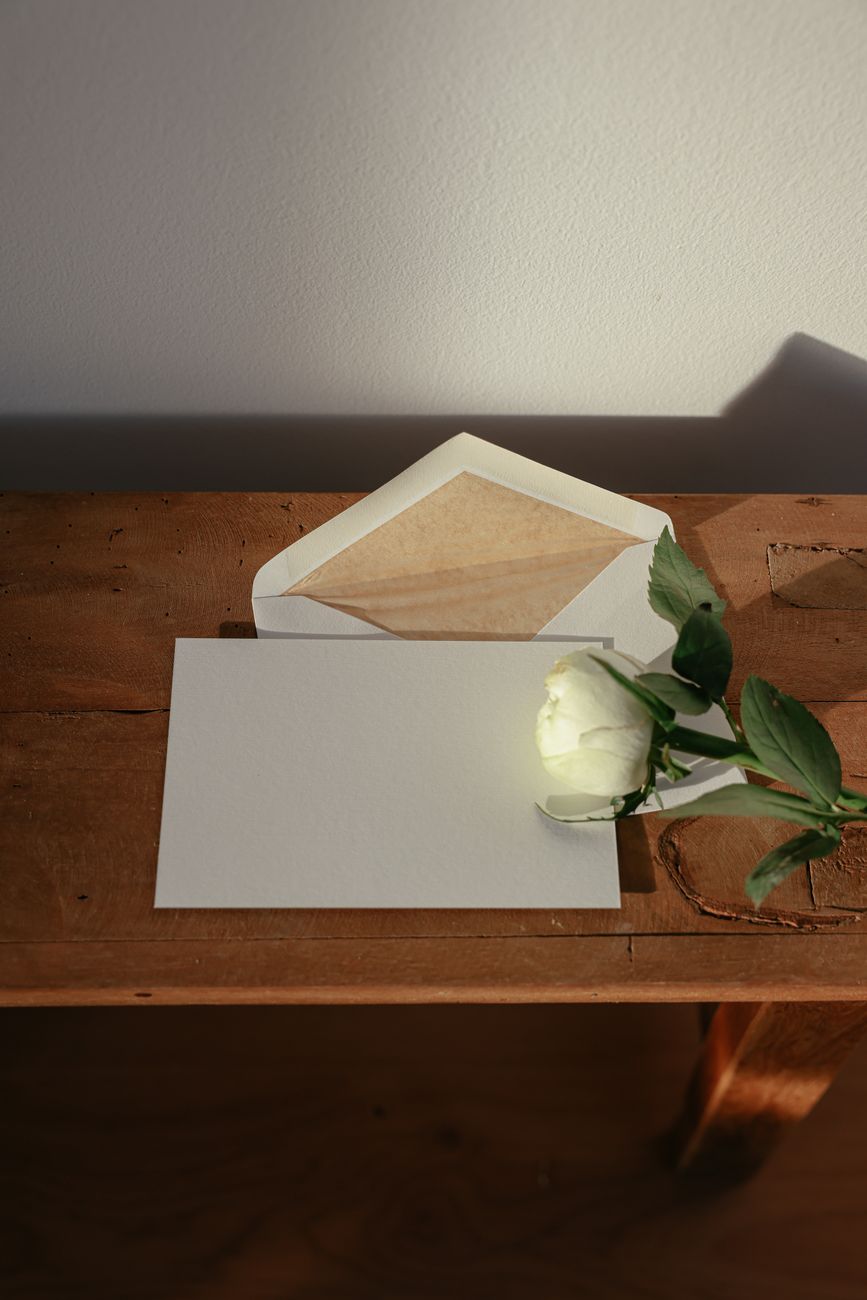
You do not need to buy anything. Funeral halls normally keep plain white envelopes, often already printed with 賻儀, and pens at the reception table by the entrance. Convenience stores near hospitals usually sell them too.
| Where | What to write | Notes |
|---|---|---|
| Front, centre | 賻儀 (부의, buui) or 謹弔 (근조, geunjo) | The National Institute of Korean Language names 부의 as the most common, with 근조 also correct. Writing it in Hangul is fine |
| Back, bottom left | Your full name | NIKL: the giver's name goes on the back. Common practice: add your company or team above it if the family knows you through work (e.g. "ABC Korea 마케팅팀") |
| Inside (optional) | A folded note: 삼가 조의를 표합니다 ("I respectfully express my condolences") | NIKL calls this note a 단자 (danja) and says including one is the formal way. In practice most people skip it |
Use clean notes and round amounts. These are folk customs, not rules from any authority. Many Koreans prefer odd numbers of ₩10,000 notes, 3, 5 or 7, with ₩100,000 and ₩200,000 treated as normal round amounts. Some avoid amounts built on 4 (사, which sounds like the word for death). New bills are not expected at funerals, but avoid torn ones.
Do not seal it. Folding the flap in is the common habit. Then drop the envelope into the 부의함 (condolence box) at the reception table, or hand it to the person sitting there, who is usually a relative or a colleague of the family. Most guests do this on arrival; some put it in on the way out instead. Either is fine. You do not hand money directly to the chief mourner.
What to Wear to a Korean Funeral
Black is the standard. Navy or dark grey works if you are coming straight from the office.
| Safe choice | Avoid | |
|---|---|---|
| Men | Black or dark suit, white shirt, plain black tie | Patterned or coloured ties, bright socks |
| Women | Black dress, skirt or trousers with a black top; covered shoulders | Short hemlines, bright colours, flashy jewellery, strong perfume |
| Everyone | Clean socks or tights without holes | Bare feet; loud logos; a big puffer in red or white |
Socks matter more than foreigners expect. Some 빈소 (binso, the mourning room where the altar stands) still have a raised floor where you take off your shoes to bow. If a man forgot his tie, a black tie from a convenience store or the hall's shop costs a few thousand won and is completely normal.
When to Go: the Three-Day Schedule
Most Korean funerals are a 3일장 (samiljang, three-day funeral). The obituary, usually a mobile link sent by text or KakaoTalk, gives the hall name, the room number (for example 특1호실) and the 발인 (barin) date and time, which is when the coffin leaves.
| Day | What happens | Should you go? |
|---|---|---|
| Day 1 | Death; the family sets up the 빈소. Visitors are commonly received from the evening | Commonly yes, from the evening, once the obituary has gone out |
| Day 2 | 입관 (ipgwan, encoffinment), usually family only. Commonly the busiest day for visitors, especially after work | Usually the best day for most guests |
| Day 3 | 발인 early in the morning, then cremation or burial | Only if you are close and the family invited you. Do not turn up to pay respects that morning |
Two things are changing this. First, shorter funerals are spreading. Money Today reported in May 2026 that at the Goyi Funeral Research Institute (고이장례연구소), 무빈소 (no-hall) funerals rose from 17.3% of its cases in 2024 to 20.0% in 2025 and 22.2% for January–April 2026, and The Korea Times put the industry estimate at about one in five services skipping the reception hall. A 1일장 (one-day funeral) still takes two calendar days, because the law requires 24 hours between death and cremation or burial. Second, more families now keep set visiting hours. Read the obituary closely. If it says 무빈소 or gives hours, follow it.
Evening visits are common; colleagues often go together after work. Avoid the small hours unless you are family.
You might like: Korean Gift-Giving Culture: What to Bring and Avoid
Step by Step at the Funeral Hall
The whole ritual takes three to five minutes. If you arrive with Korean colleagues, stand behind them and copy; one person can lead and the rest follow.
- Coats off, phone silent. Take off your coat and hat before entering the 빈소. Put your phone on silent.
- Sign the guest book (방명록, bangmyeongnok). At the reception table. Some halls now use a tablet. Write your name clearly; the family uses it later to know who came.
- Put in your envelope. Into the 부의함 box or to the person at the table.
- Enter and greet the chief mourner with a slight bow. The 상주 (sangju, chief mourner, usually the eldest son or the spouse) and family stand to one side of the altar.
- Offer incense or a flower. Look at what is on the altar table.
- 분향 (bunhyang, incense): take one stick (or three), light it from the candle, put the flame out by waving it with your hand, never by blowing, and stand it in the burner.
- 헌화 (heonhwa, flower): take one white chrysanthemum, hold it with both hands, and lay it on the altar with the flower head facing the portrait.
- Bow twice to the deceased (재배, jaebae). Step back, place your hands together, kneel, touch your forehead towards your hands on the floor, rise, and repeat once. In mourning the hand position is the reverse of a festive bow: men put the right hand on top, women the left. If you cannot kneel, or your religion does not allow bowing, stand and observe a moment of silence (묵념, mungnyeom) with your head lowered. That is fully accepted.
- Bow once to the chief mourner. Turn to the family. You and the 상주 exchange one bow (맞절, matjeol), or a deep standing bow. Many guests now bow twice at the altar and then simply nod or bow standing to the family; nobody minds.
- Say very little. See the next section. Then step back two paces and leave the room.
What to Say, and What Not to Say
Silence is a correct answer. Many Koreans say nothing at all to the chief mourner, because grief is understood not to need words. If you want to say something:
| Korean | Romanised | Meaning, and when to use it |
|---|---|---|
| 삼가 고인의 명복을 빕니다 | samga goinui myeongbogeul bimnida | "I pray for the deceased's peace." The standard phrase; also written on wreath ribbons |
| 얼마나 상심이 크십니까 | eolmana sangsimi keusimnikka | "How great your grief must be." Said to the chief mourner |
| 위로의 말씀을 드립니다 | wiroui malsseumeul deurimnida | "I offer my condolences." Safe for any religion |
명복 comes from Buddhist vocabulary, so at a Christian funeral the neutral 위로의 말씀을 드립니다 is a better fit. In English, a quiet "I'm so sorry" with a bow is perfectly fine.
Do not: ask how the person died; call it a 호상 (hosang, "a good death") because they were old; greet anyone with a cheerful 안녕하세요; laugh loudly in the dining room; or try to hand money to the chief mourner.
The Meal: Yukgaejang, and How Long to Stay
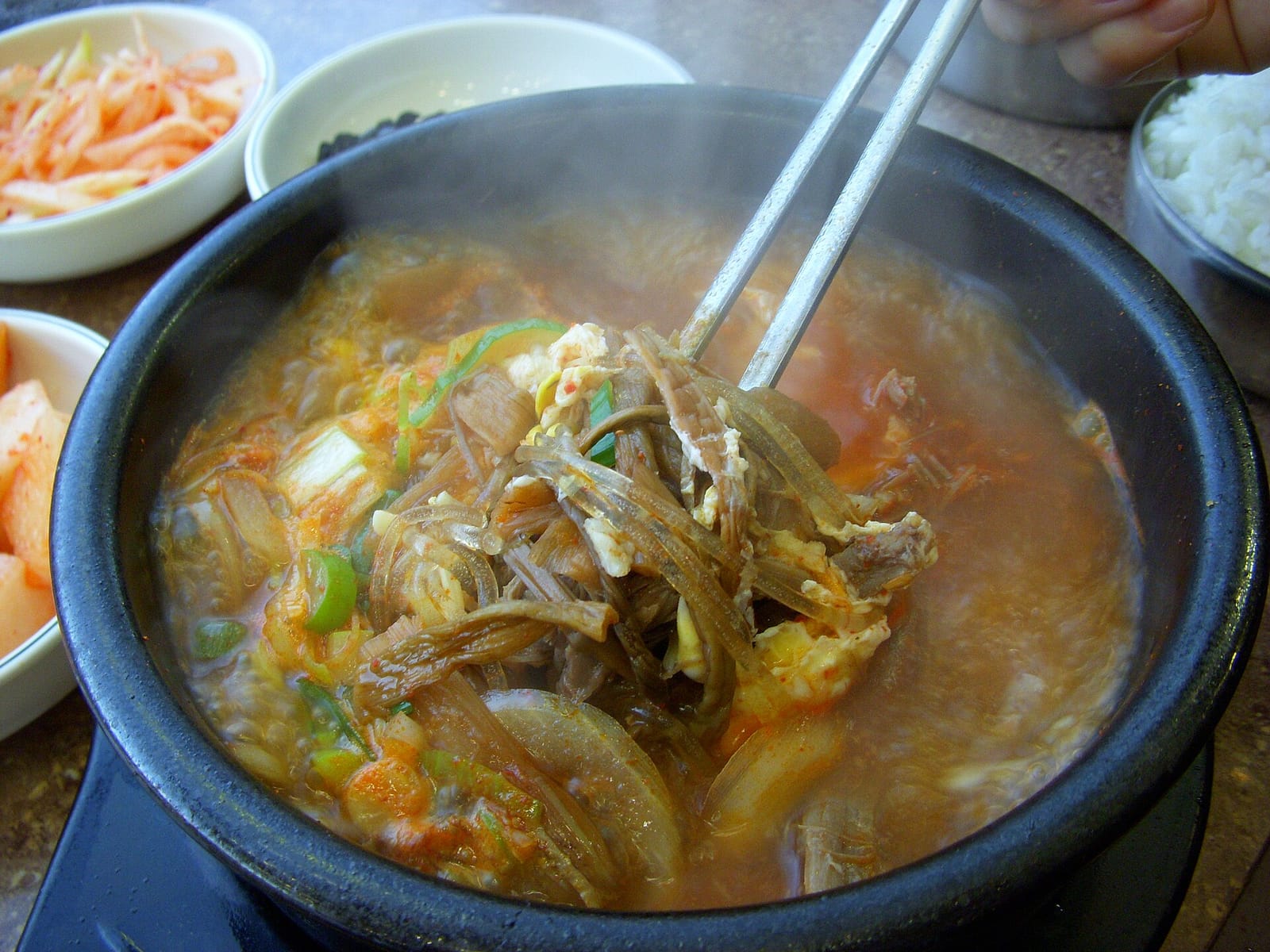
After the bows, a staff member or a family member will lead you to the 접객실 (jeopgaeksil, dining room next door). Sitting down to eat is part of paying respects; it tells the family you came to stay with them, not just to drop off an envelope. The classic menu is yukgaejang (육개장, spicy shredded beef soup) with rice, sliced boiled pork (편육), rice cakes, fruit, and soju or beer on the table. The family pays for all of it.
- Stay 30 minutes to an hour. Colleagues often sit together longer. You do not need to stay until the end of anything.
- Never clink glasses. No 건배, no "짠" (cheers). Drink quietly.
- Pour for others, not for a toast. Normal drinking etiquette applies, minus the celebration.
- Say goodbye to the chief mourner if they are free with a short bow. If they are busy greeting others, just leave.
If you have to leave straight away, that is acceptable too. A short "I'm sorry, I have to go" and a bow is enough.
If You Cannot Go: Bank Transfer or Kakao Pay
Sending money without attending is now ordinary. A large funeral firm official told Money Today in May 2026 that since the pandemic "the sense that you must attend in person has weakened," and The Korea Times noted that electronic condolence transfers became normal during COVID-19.
- Mobile obituary account: many mobile obituaries (모바일 부고) include a section such as 마음 전하실 곳 ("where to send your heart") with the chief mourner's bank account. Transfer the amount and put your name in the memo.
- Kakao Pay: condolence money is also sent through Kakao Pay's digital envelopes (송금봉투). In that data, ₩100,000 condolence envelopes overtook ₩50,000 ones for the first time in 2026.
- Through a colleague: ask someone who is going to put your envelope in the box. Write your own name on the back. This is very common in Korean offices.
- Follow up with a message: a short text such as "삼가 고인의 명복을 빕니다. 직접 찾아뵙지 못해 죄송합니다" ("My condolences. I'm sorry I couldn't come in person") is appreciated.
Funeral Wreaths (근조화환): Prices and Rules
The tall white standing wreaths lining the corridor are 근조화환 (geunjo hwahwan). Companies, schools and groups send most of them. Typical prices, from a Korean florist price guide updated 23 October 2026:
| Type | Typical price | Note |
|---|---|---|
| 3단 (three-tier) basic | About ₩50,000–55,000 (about $37–41) | More chrysanthemums cost more |
| 3단 premium | ₩70,000–100,000 (about $52–75) | Fuller arrangement |
| 3단 top grade | ₩100,000 and up (about $75+) | Over 2m tall |
| Delivery | May add ₩10,000–30,000 (about $7–22) | Depends on region |
The ribbon usually reads 근조 or 삼가 고인의 명복을 빕니다 on one side and the sender's name on the other. Order through a florist delivery service and give the hall name, room number and the chief mourner's name; same-day delivery is widely offered. Check first. Some families write 조화 사절 (wreaths declined) in the obituary, and some halls limit how many wreaths fit in the corridor. As an individual foreigner, the envelope is the normal gesture; a wreath on top is not expected.
Kim Young-ran Act: the Limit for Officials
If you are a public official, a teacher at a public or private school, or a journalist, or the person whose family is grieving is one, the 청탁금지법 (Improper Solicitation and Graft Act, the "Kim Young-ran Act") applies. Its Enforcement Decree (Appended Table 1) sets these limits for condolence gifts; a Seoul Shinmun review of the law on 15 July 2026 gives the same ₩50,000 and ₩100,000 figures as the current standard:
| Gift | Maximum |
|---|---|
| Condolence money (조의금) | ₩50,000 |
| Wreath sent instead of money (조화) | ₩100,000 |
| Money and wreath together | ₩100,000 combined, with the cash part still no more than ₩50,000 |
The meal limit was raised to ₩50,000 in August 2024; the condolence limit stayed at ₩50,000. Seoul Shinmun counted 19 amendment bills pending in the National Assembly as of July 2026. The ₩50,000 figure is the ceiling for gifts allowed in connection with an official's work. Separately, Article 8 of the Act bans any gift above ₩1 million at a time or ₩3 million a year from one person, whatever the reason. If you are giving to a teacher at your child's school, or your contact is a ministry official, stick to ₩50,000.
Religious Differences: Christian, Catholic, Buddhist
Follow the family's religion, not your own. The altar tells you which version you are at.
| Funeral | What you will see | What you do |
|---|---|---|
| Protestant (기독교) | Cross, flowers, no incense; scheduled worship services (예배) | 헌화 and a silent prayer; no bow to the portrait. A standing bow to the family |
| Catholic (천주교) | Crucifix, candles; incense often present; prayers (연도) | Incense or flower, and bowing is allowed. Copy the guests before you |
| Buddhist (불교) | Incense, sometimes chanting | 분향 and the full two bows |
| No stated religion | Incense and/or chrysanthemums | The standard sequence above |
If your own faith rules out bowing to a portrait, lay a flower and stand in silence. Korean families see this often and do not take offence.
You might like: Jeong (정) Explained: the Korean Bond That Has No English Word
Honest Caveats: When the Rules Bend
- Practices vary. Region, family, religion and the hall all change details. The family and the obituary outrank any guide, including this one.
- "부의금 사절" is real. More families now decline money in the obituary (부의금은 정중히 사양합니다). Respect it; do not slip an envelope in anyway.
- You may not be told at all. The Korea Times, citing a 2023 health ministry report, notes that obituaries increasingly go only to close relatives and acquaintances. Hearing about a death late, or after the funeral, is not an insult. Send a message and, if you like, a transfer.
- ₩100,000 is not compulsory. The country's main Confucian body still says ₩50,000 is enough, and a quarter of Koreans give that or less. Give what fits your relationship and budget.
- Getting it slightly wrong is fine. A foreigner who shows up in dark clothes and bows clumsily is remembered warmly. One who skips it is remembered too.
FAQ: Korean Funeral Etiquette
Q: How much money should I give at a Korean funeral? ₩100,000 (about $75) for anyone you know reasonably well; 61.8% of Koreans in a May 2026 survey said that is what they give. ₩50,000 (about $37) is acceptable if you are not close, and is the maximum for work-related gifts to public officials, teachers and journalists.
Q: What do I write on a Korean condolence envelope? 賻儀 (부의) or 謹弔 (근조) on the front and your name on the back, bottom left. The funeral hall provides pre-printed white envelopes.
Q: Do I have to bow at a Korean funeral? No. Two bows to the deceased and one to the chief mourner is the custom, but a standing bow or a moment of silence is accepted, especially for foreigners or people of other faiths.
Q: When should I visit a Korean funeral hall? Commonly the evening of day 1 or any time on day 2. Avoid the morning of day 3, when the coffin leaves (발인), unless you are close to the family.
Q: Do I have to eat at the funeral hall? It is polite to sit down for a short meal, usually yukgaejang, because it shows you came to keep the family company. Stay 30 minutes to an hour, and never clink glasses.
Q: Can I send condolence money by bank transfer? Yes. Many mobile obituaries list an account, and Kakao Pay has condolence envelopes. Sending money without attending became common after the pandemic.
Q: Should I send a funeral wreath? Usually not as an individual. A three-tier wreath typically costs from about ₩50,000 to ₩100,000 or more, plus delivery, and most are sent by companies and groups. Check the obituary for 조화 사절 first.
Sources
- Chosun Ilbo (아무튼, 주말), 16 May 2026: survey of 1,500 adults with Tillion Pro, 8–11 May 2026 — condolence amounts, averages by age, return gifts, 2023 Realmeter figure
- Digital Times, 8 May 2026: Kakao Pay ten-year remittance report — ₩100,000 overtakes ₩50,000 in condolence envelopes for the first time
- Asia Business Daily, 18 December 2024: Sungkyunkwan Confucian association funeral guideline, ₩50,000 condolence money
- National Institute of Korean Language, 새국어소식: 부의 and 근조 on condolence envelopes, name on the back, 단자
- Seoul Shinmun, 15 July 2026: 청탁금지법 at ten — current limits (condolence money ₩50,000, wreaths ₩100,000), 19 pending bills
- National Law Information Center: Enforcement Decree of the 청탁금지법, Appended Table 1 (cash ₩50,000, wreath ₩100,000, combined ₩100,000 with cash ≤ ₩50,000)
- National Law Information Center: 청탁금지법 (Improper Solicitation and Graft Act), Article 8 (₩1 million per occasion, ₩3 million a year)
- Money Today, 1 May 2026: one-day and no-hall funerals; Goyi Funeral Research Institute figures 17.3% (2024), 20.0% (2025), 22.2% (Jan–Apr 2026); attendance no longer felt compulsory
- The Korea Times, 2 August 2026: about one in five funerals skip the reception hall; electronic condolence transfers; narrower obituaries
- Florist price guide, updated 23 October 2026: three-tier basic about ₩50,000–55,000, premium ₩70,000–100,000, top grade ₩100,000+, delivery ₩10,000–30,000 extra by region
- Bizforms: condolence-call order (guest book, incense or flower, bows, greeting the family)
- Esquire Korea: bowing and hand position at funerals
- Exchange rate: Bank of Korea ECOS, ₩1,335.0 per dollar, 17 November 2026.
Practices vary by family, religion and hall; the obituary and the family are the final authority.
You Might Also Like
How to Use a Korean Boiler (Ondol): Every Button on the Panel, Explained, and Why Korean Floors Mean Shoes Off
The number on a Korean boiler panel is often water temperature, not air: 40–50 is normal in 온돌 mode, about 20 in 실내 mode. Seoul says use 외출 only for trips of three days or more. Every button, which mode suits your flat, and the floor culture behind it.
Korean Stare Meaning: Why Koreans Stare at Foreigners, and How to React
The Korean stare almost always means curiosity, not hostility: outside central Seoul a non-Asian face is still rare. Sometimes it means you broke a quiet public rule. How to tell which, and the nod and 안녕하세요 that end it.
Why Koreans Seem Cold to Foreigners: The Gap Between How Korea Sees Itself and How You See It
Foreigners abroad rate Korea 82.3% favourable, yet only 17% of expats in Korea find local friends easy to make and 84% of Koreans would not trust a stranger. Where the gap comes from, what service norms mean, and how to cross it.