Korean Gift-Giving Culture: What to Bring and Avoid
In Korea, a gift is rarely only an object.
It can mean gratitude, apology, respect, obligation, celebration, social awareness, or "I thought about you." The gift itself matters, but the situation around it matters just as much: who gives it, when they give it, how expensive it feels, how it is wrapped, and whether the other person can comfortably accept it.
This is why Korean gift-giving culture can feel confusing to visitors.
The good news is that it is less mysterious than it looks, because Koreans use numbers. There is a going rate for a wedding envelope, a normal band for a housewarming gift, and a price tier for holiday gift sets that every department store organises its shelves around. And for one group of people — teachers, journalists, public officials — the amount is not custom at all. It is written into law, and a foreigner can put someone in real trouble by not knowing it.
Here is what to bring, what to avoid, and what it should cost.
Korean honey yakgwa (약과), 200 g, on AmazonAffiliate link. As an Amazon Associate, EpicKor earns from qualifying purchases at no extra cost to you.
Quick Answer: What Gifts Are Appropriate In Korea?
Good gifts in Korea are usually practical, shareable, neatly presented, and appropriate to the relationship. Safe choices include fruit, quality snacks, tea, coffee, small local specialties from your home country, hand cream, stationery, modest souvenirs, baby items for new parents, and useful household goods for housewarming.
For formal events — weddings, funerals, first birthdays — cash is normal, and the amount matters more than the envelope.
Avoid gifts that feel too intimate, too cheap for a formal relationship, too expensive for a casual one, or difficult for the other person to reciprocate.
The simplest rule is this:
Match the gift to the relationship, not to your own excitement.
How Much: The Numbers Koreans Actually Use
Most English guides stop at "modest but thoughtful," which tells you nothing when you are standing in a shop. These are the working amounts as of August 2026.
| Occasion | Usual amount | Why that number |
|---|---|---|
| 축의금 wedding, close friend or colleague | ₩100,000 | The average passed ₩100,000 for the first time in 2025 — double the ₩50,000 of 2019 |
| 축의금 wedding, attending but not close | ₩50,000–100,000 | ₩50,000 is now the floor, not the default |
| 축의금 invited but not attending | ₩50,000 | You are not eating the meal, and everyone knows it |
| 부의금 funeral | ₩50,000–100,000 | ₩100,000 overtook ₩50,000 here too |
| Visiting a home (first time) | ₩20,000–50,000 | Fruit, a cake, a good coffee |
| 집들이 housewarming | ₩20,000–50,000 | See the symbolism below — the classic gifts are cheap on purpose |
| Office team gift | ₩20,000–50,000 | One shareable box for the group, not per person |
| 명절 선물세트 for a colleague or relative | ₩30,000–50,000 | The volume band; department stores build their floors around it |
| 명절 선물세트 for a boss, client, or in-laws | ₩50,000–150,000 | 한우 beef, premium fruit, 홍삼 red ginseng territory |
| Anyone covered by 청탁금지법 | ₩50,000 hard cap | Law, not custom. Read the next section before you give it |
The wedding number has a specific cause worth understanding, because it explains a lot of Korean gift logic. Wedding hall catering in Gangnam now averages ₩88,000 per head — the highest in the country. So a ₩100,000 envelope from a guest who attends and eats is close to break-even for the couple, and that arithmetic is why the old ₩30,000 envelope has effectively disappeared and why ₩50,000 is now read as the minimum rather than the norm.
You are unlikely to be caught by this as a tourist. But if you live in Korea, work in Korea, or get invited to a Korean colleague's wedding, this is the number people are quietly running.
The Ceiling That Is Actually Law: 청탁금지법
This is the part of Korean gift culture that a foreign visitor is most likely to get wrong, because the equivalent does not exist in most countries.
Korea's 청탁금지법 (Improper Solicitation and Graft Act, universally called 김영란법 after the official who proposed it) sets legally binding limits on what certain people may accept. It covers roughly 2.4 million people directly and about 4 million including spouses — and crucially, it is not limited to government.
Who is covered:
- public officials at every level of government
- employees of public institutions and public-interest bodies
- all school teachers and staff, including at private schools — about 600,000 people
- journalists
- the spouses of everyone above
The limits:
| Category | Limit |
|---|---|
| Meals (음식물) | ₩50,000 — raised from ₩30,000 on 27 August 2024 |
| Gifts (선물) | ₩50,000 |
| Agricultural, livestock, forestry and fishery products | ₩150,000 |
| Those same products during a 명절 window | ₩300,000 |
| Congratulatory or condolence money (경조사비) | ₩50,000 |
| Funeral wreath or congratulatory flowers | ₩100,000 |
Two things visitors get wrong here.
First, the holiday window is defined, not vague. The ₩300,000 allowance runs from 24 days before to 5 days after Seollal and Chuseok. For Seollal 2026 the Anti-Corruption and Civil Rights Commission (국민권익위원회) published it as 24 January to 22 February. Chuseok 2026 falls on Friday 25 September, so the equivalent window lands roughly across September — but the ACRC announces the exact dates each season, so check rather than assume. For posted gifts, the send date is what counts.
Second, and more important: the limit drops to zero when there is a direct interest. If you are applying for a permit, bidding on a contract, or subject to that person's evaluation, audit, or hiring decision, no amount is permitted at all — not ₩10,000, not a coffee. The ₩50,000 figure only applies to ordinary social and courtesy giving with no business in play.
The practical takeaway for a visitor: if the person you want to thank is a teacher, professor, journalist, or any kind of official, keep it clearly under ₩50,000 and clearly social. A box of tea is fine. And note the awkward collision this creates with the table above — the social norm for a wedding envelope is now ₩100,000, but the legal ceiling for a covered official is ₩50,000. When those two conflict, the law wins.
Korean honey yakgwa (약과) — the easy Korea-themed gift, and shareable rather than personal. The traditional honey pastry works as a gift to bring home or to send ahead; it does not work as a gift for a Korean host, who can buy it for less. The sections below cover what does. As an Amazon Associate, EpicKor earns from qualifying purchases at no extra cost to you.
See the honey yakgwa on AmazonWhy Gift-Giving Matters In Korea
Korean social life pays attention to relationship balance.
People remember who helped, who brought something, who showed respect, who acknowledged an occasion, and who made a situation easier. A gift can be a small way to keep that balance warm.
This does not mean every Korean interaction is transactional. It means gifts often carry relational meaning. The gift says, "I noticed the occasion," "Thank you for including me," or "I respect your effort."
That is why even a small gift can feel meaningful if it is timed well.
Visiting A Korean Home
If someone invites you to their home, bringing a small gift is usually a good idea.
You do not need anything extravagant. Fruit, dessert, a nice drink, coffee, tea, or a small specialty from your country can work well. Budget ₩20,000–50,000. If the host has children, a small kid-friendly snack or item can be thoughtful, but avoid anything messy or allergy-sensitive unless you know the family well.
For a first visit, avoid gifts that require the host to use them immediately. A complicated food item, strong alcohol, or large decoration may create pressure.
Bring something easy to accept.
Housewarming Gifts: 집들이 And Its Puns
Korean housewarming is called 집들이 (jipdeuri), and it has the most specific gift convention in Korean life: 휴지 (toilet paper) and 세제 (laundry detergent).
To a foreigner this reads as a joke or an insult. It is neither, and the reason is wordplay that does not survive translation.
- A roll of 휴지 unspools smoothly and without catching. The Korean phrase for life going smoothly is 일이 술술 풀리다 — literally, "things unravel easily." You are wishing the household a year in which nothing snags.
- 세제 foams up. 거품처럼 복이 피어오르다 — "may fortune bubble up like the suds." You are wishing them prosperity that rises.
Both also trace back to older Korean practice around moving house, where a new home was ritually cleaned of bad luck before it was lived in — so a cleaning product is doing double duty as a purification object. And both are genuinely practical: they never spoil, and no household fails to use them.
Modern gifts have widened. Towels, diffusers, candles, kitchen goods, plants, coffee, desserts, and small appliances are all normal now depending on the relationship. But if you want to give something that reads as knowingly Korean rather than merely nice, a good bundle of tissue and detergent is a better joke than you think — and Korean friends will register that you knew why.
If you are not close, keep it practical and modest. If you are close, ask what they need. Housewarming is not the time to surprise someone with a giant object they did not request.
Workplace And Business Gifts
Workplace gift-giving in Korea requires more caution.
Small snacks for the team, coffee, regional specialties, or travel souvenirs can be fine. Expensive personal gifts can feel awkward or inappropriate, especially across hierarchy. And if the office is a public institution, a school, a newsroom, or a company doing business with one, re-read the 청탁금지법 section above before you buy anything.
If you are visiting a Korean office, a shareable gift is safer than an individual gift.
Think:
- individually wrapped snacks
- quality tea or coffee
- local sweets from your country
- something the team can place in a shared space
Avoid perfume, clothing, jewelry, or anything that feels too personal.
명절 선물세트: The Gift Institution You Have Not Heard Of
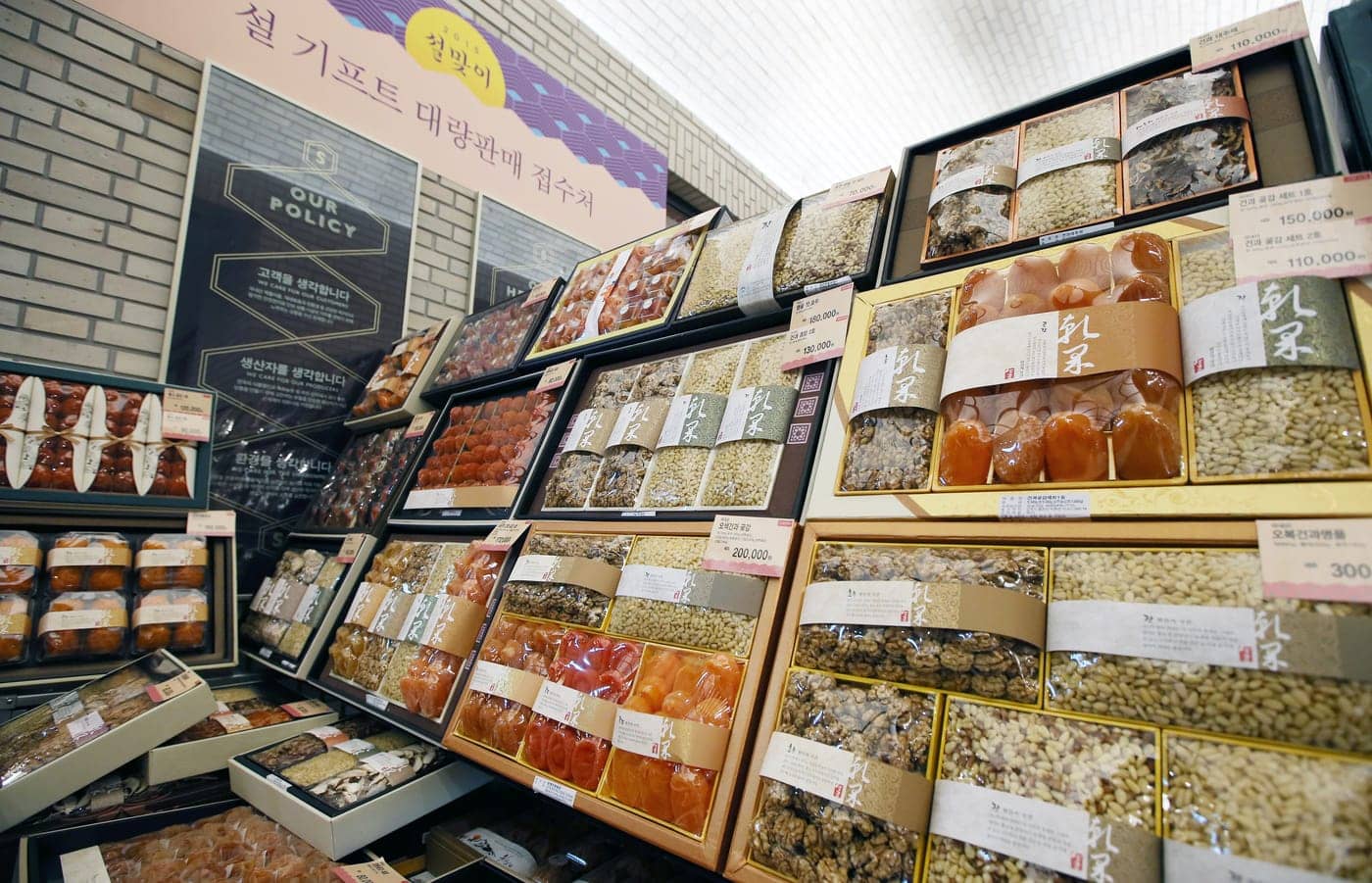
Twice a year — at 설날 (Seollal, Lunar New Year) and 추석 (Chuseok) — Korea's entire retail sector reorganises around a single product category: the 명절 선물세트, the holiday gift set.
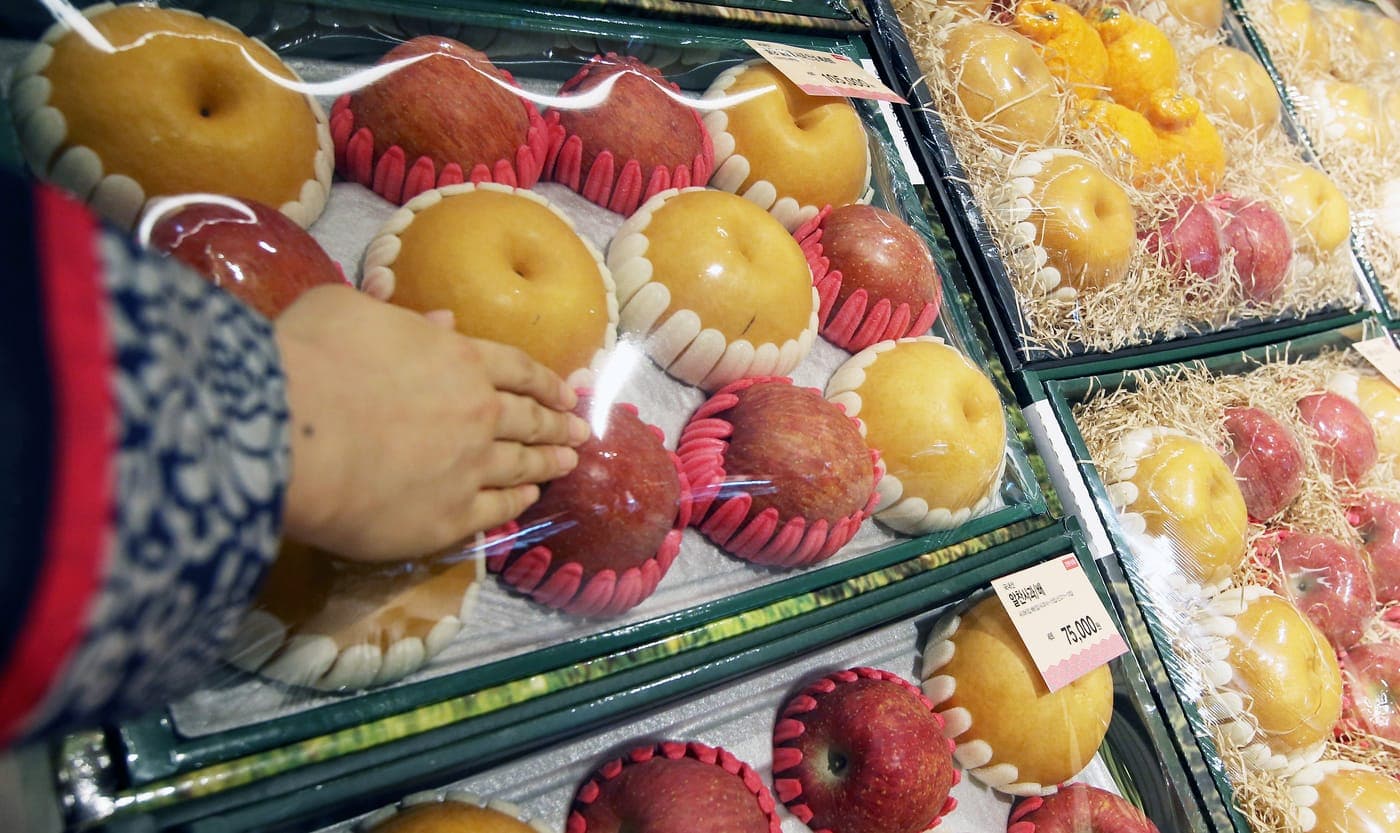
Whole floors of department stores and supermarkets become walls of boxed goods, sorted by price rather than by type. The bands are standardised enough that Emart's own online gift shop navigates by them: ₩30,000–50,000, ₩50,000–70,000, ₩70,000–100,000, ₩100,000–200,000, ₩200,000–300,000, and above ₩300,000.
What is in them:
- ₩10,000–20,000 — cooking oil, 김 seaweed, basic pantry sets. Given widely and in volume.
- ₩30,000–40,000 — canned goods, and specifically 스팸 Spam and tuna sets. This is the most recognisably Korean gift in the whole system, and yes, giving Spam is completely normal and completely respectable.
- ₩50,000–100,000 — fruit boxes, 홍삼 red ginseng, better dried goods.
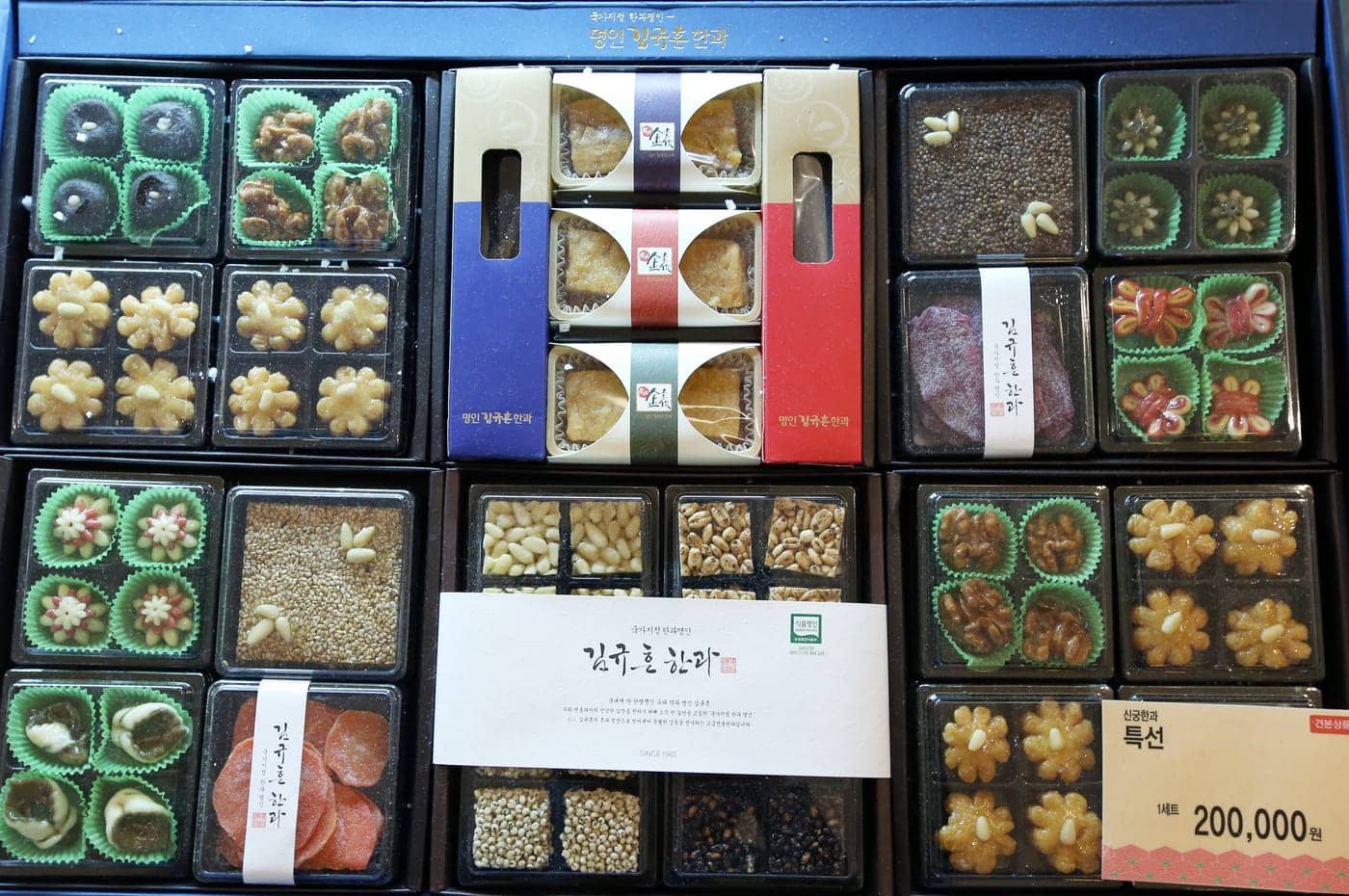
- ₩100,000+ — 한우 Korean beef, premium fruit, traditional 한과 confections.
Department stores have been expanding the bottom end rather than the top: for a recent season, one chain increased its sub-₩50,000 volume by about 20% and its number of products in that band by 30%, on the reasoning that people wanted to give without overreaching.
Chuseok 2026 falls on 24–26 September, with the holiday day itself on Friday the 25th. Gift sets appear in stores roughly three weeks beforehand, which puts the shelves up in early September. If you are in Korea then, it is worth walking a department store basement even if you buy nothing — it is one of the clearest windows into how Korean obligation actually works.
What To Bring From Your Home Country
Foreign visitors often overthink this.
You do not need the most expensive item from your country. A good local gift is something easy to explain, easy to share, and not too hard to pack.
Good options include:
- local chocolate or cookies
- tea or coffee from your region
- small craft items
- packaged snacks
- a local postcard with a short note
- a modest item connected to your hometown
Avoid anything that may be restricted by customs, spoil quickly, leak in luggage, or require complicated preparation.
Gifts To Avoid Or Handle Carefully
Some gift taboos are traditional, and not everyone treats them the same way. Still, if you want to be careful, avoid gifts that carry awkward meanings.
| Gift type | Why it can be awkward | Safer alternative |
|---|---|---|
| Shoes for a romantic partner | Old superstition says the person may run away | Accessory, dessert, or shared experience |
| Very expensive gift | Creates repayment pressure | Modest but well-presented gift |
| Knives or sharp objects | Can symbolize cutting a relationship | Kitchen towel, tea, or food gift |
| Red-ink message | Red names can carry death-related superstition | Black or blue ink card |
| Overly intimate items | May feel too personal for the relationship | Shareable food or neutral household item |
| Anything over ₩50,000 to a teacher or official | Not a superstition — a legal limit under 청탁금지법 | Tea, coffee, or a handwritten card |
For more on symbolic beliefs, read EpicKor's guide to Korean superstitions travelers should know.
Presentation Matters
Korean gift-giving values neat presentation. Gift wrapping is not only decoration — it tells the receiver that you prepared.
Even a simple box can feel more respectful than handing someone a loose item from a shopping bag. You do not have to make it fancy. Just make it clean and intentional.
Practical points:
- Offer and receive a gift with both hands, or with your right hand supported at the wrist by your left. This is the same gesture used for pouring drinks and handing over a business card, and it is the single easiest way to look like you know what you are doing.
- Expect a light refusal before acceptance. It is politeness, not rejection; offer once more.
- Do not be offended if it is not opened in front of you.
For a reusable Korean presentation method, EpicKor's bojagi wrapping guide explains cloth size, a basic box wrap, knot choices, and how to distinguish practical wrapping cloth from decorative souvenirs.
Cash Gifts: When They Are Normal
Cash can feel impersonal in some cultures, but in Korea it is expected for certain occasions, and giving an object instead can actually be the awkward choice.
Weddings involve 축의금 in a white envelope handed in at a reception desk before you enter; EpicKor's Korean wedding guest guide explains the desk, naming the envelope, dress code, and meal flow. Funerals involve 부의금. First birthdays (돌), milestone birthdays, and major family events may also involve cash depending on relationship and custom.
The amounts are in the table above. Two practical notes:
- Use clean bills and a proper envelope. Envelopes are sold at stationery shops, convenience stores, and often at the venue itself. Your name goes on the back.
- Casual cash between friends is a different thing. Outside a marked occasion, handing someone money can feel strange. Send a 기프티콘 — a mobile coffee or cake voucher through KakaoTalk — instead. That is the normal small-gesture currency in Korea and costs ₩5,000–20,000.
Korean 축의금 money envelope set — cash gifts in Korea go in an envelope, and the envelope is part of the gift. Weddings, first birthdays and funerals all run on the same envelope; the hall keeps plain white ones, but arriving with a decorated one already filled reads as prepared. As an Amazon Associate, EpicKor earns from qualifying purchases at no extra cost to you.
See the envelope set on AmazonGifts For Korean Friends
For Korean friends, the best gift is often something that shows you know them.
If they like coffee, bring coffee. If they like cute stationery, bring stationery. If they helped you during a trip, bring something small with a sincere note. If you stayed at their home, send a thank-you gift afterward.
Friend gifts do not need to be formal. But they should not feel careless. In Korea, a small thoughtful gift can be more comfortable than a dramatic expensive one.
Gifts For Teachers, Hosts, And Helpers
If someone teaches you Korean, helps you move, guides you around Seoul, introduces you to family, or solves a travel problem, a modest thank-you gift can land well.
Good options include snacks, coffee, tea, a handwritten card, or something from your home region.
If that person is a teacher at any school, private or public, the ₩50,000 legal ceiling applies to them and not just to their employer's policy. Korean parents navigate this every year; the safe move is something small and obviously social, or a card and nothing else.
Tourist Souvenirs That Actually Work
If you want to bring Korean gifts home, choose things that travel well.
Good Korea souvenirs include:
- packaged snacks
- tea
- instant coffee mixes
- sheet masks
- socks
- stationery
- small pouches
- chopstick sets
- postcards
- traditional-pattern items
Avoid fragile ceramics unless you can pack them safely. Avoid bulky food boxes if you still have multiple cities left.
At The Top Of The Range
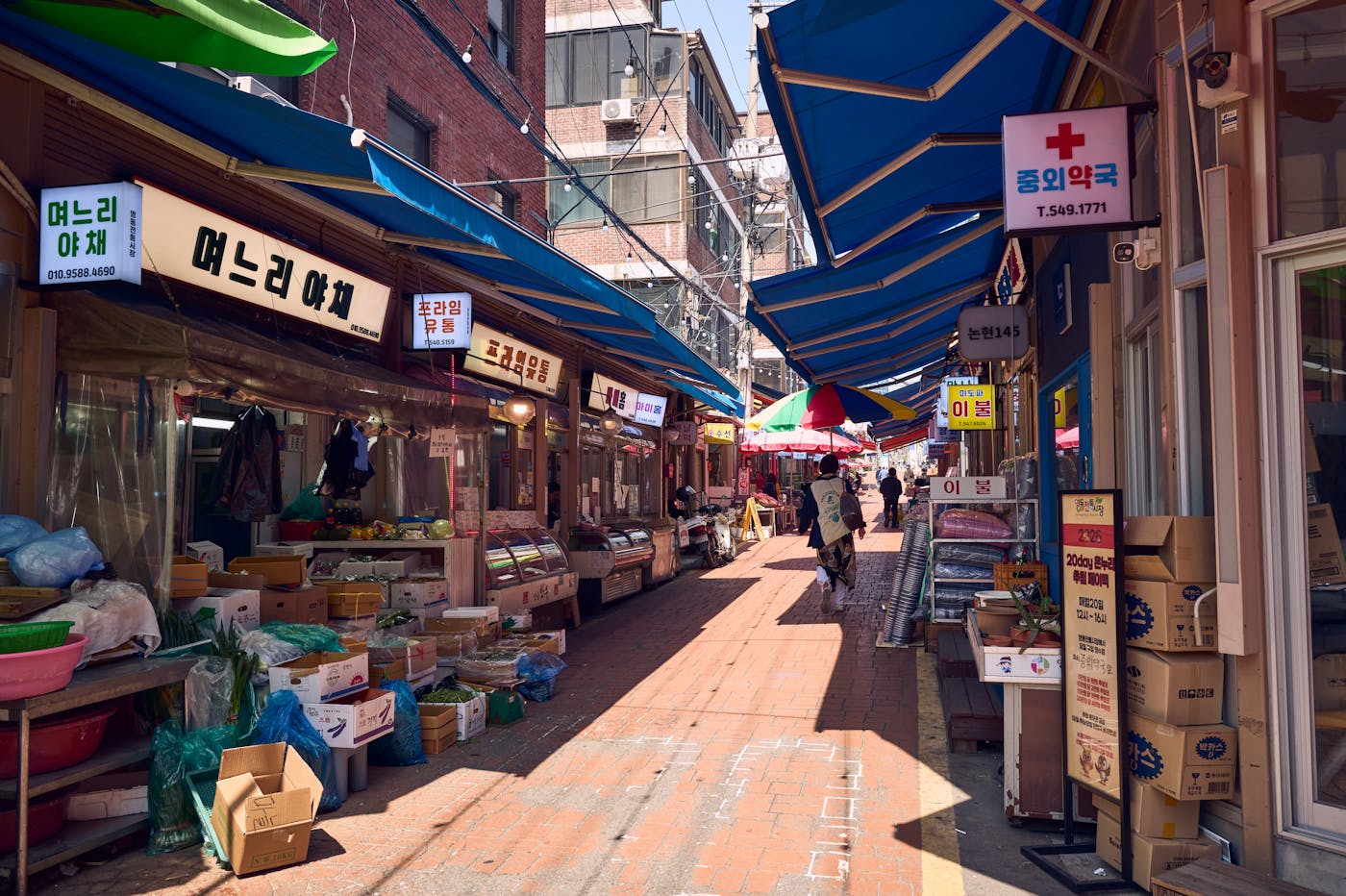
At the very top of the Korean gift ladder sits one object worth knowing about even if you never buy it. Korean adult children buy their parents a massage chair at Seollal and Chuseok, and our guide to Korea's filial-gift massage chair industry explains how a recliner became the definitive "rest your body" present — including the child-safety warning Korea's consumer agency issues every winter.
The danger at this end is not only spending too little. Spending too much can make the other person uncomfortable, because in a culture that tracks reciprocity, an oversized gift is a bill.
FAQ
Q: How much should I put in a Korean wedding envelope?
₩100,000 if you are attending and reasonably close, ₩50,000 if you are attending but distant or if you are not attending at all. The average passed ₩100,000 for the first time in 2025, driven by venue catering costs that reach ₩88,000 per head in Gangnam.
Q: Is there a legal limit on gifts in Korea?
Yes, for about 2.4 million people. Under 청탁금지법 (the Kim Young-ran Act), public officials, journalists, and all school teachers and staff — including at private schools — may accept gifts worth at most ₩50,000, meals up to ₩50,000, and ₩150,000 for agricultural and fishery products (₩300,000 during holiday windows). If you have any business interest in their decisions, the limit is zero.
Q: Why do Koreans give toilet paper and detergent for a housewarming?
Wordplay. A roll of tissue unspools without catching, echoing 일이 술술 풀리다, "may things unravel smoothly." Detergent foams up, echoing a wish that fortune bubbles up like suds. Both also connect to older rituals of cleansing a new home, and both are things nobody fails to use.
Q: Should I bring a gift when visiting a Korean home?
Yes, especially for a first visit. Bring something modest and easy to share — fruit, dessert, tea, coffee, or a local specialty from your home country. ₩20,000–50,000 is the normal range.
Q: What is a 명절 선물세트?
A holiday gift set, sold twice a year around Seollal and Chuseok. Stores merchandise them by price band rather than by product, from about ₩10,000 for oil and seaweed sets up past ₩300,000 for Korean beef. The ₩30,000–50,000 canned-goods band, Spam included, is the volume centre and is entirely respectable.
Q: Is it rude to open a gift immediately in Korea?
It depends on the setting. Some people open gifts right away, but others wait to avoid making the giver or receiver feel awkward. Follow the host's cue.
Q: What is the safest Korean souvenir gift?
Packaged snacks, tea, small stationery, sheet masks, socks, pouches, and simple traditional-pattern items are usually safe because they are light, shareable, and easy to explain.
Final Takeaway
Korean gift-giving culture is about fit.
The best gift fits the occasion, the relationship, the receiver's comfort, and your real level of closeness. It does not need to be expensive. It needs to feel considered — and, in the case of anyone covered by 청탁금지법, it needs to stay under ₩50,000.
When in doubt, choose something practical, modest, shareable, neatly presented, and easy to accept. Hand it over with both hands. That is the safest way to make the gift feel warm instead of heavy.
Sources: 국민권익위원회 2026 설 명절 청탁금지법 선물 바로 알기 — 정책브리핑 · 부정청탁 및 금품수수 금지 — 찾기쉬운 생활법령정보 · 축의금·부의금 10만원이 대세 — 매일신문 · 강남 예식장 평균 식대 8만8000원 · 집들이 선물 휴지·세제의 의미 — 한국경제 · 이마트몰 명절 선물세트 가격대
You Might Also Like
What to Call a Stranger in Korea: Jeogiyo, Sajangnim, Imo
You need a waiter's attention in Korea and you do not know their name. Jeogiyo is the safe answer, sajangnim works in any shop, and imo is warmer than a foreigner should risk. Here is what to actually say, and what never to shout.
Korean Superstitions You Should Know Before Visiting Korea
A practical travel guide to Korean superstitions, from red ink and the number four to fan death, exam food, dating taboos, and what visitors should actually do.
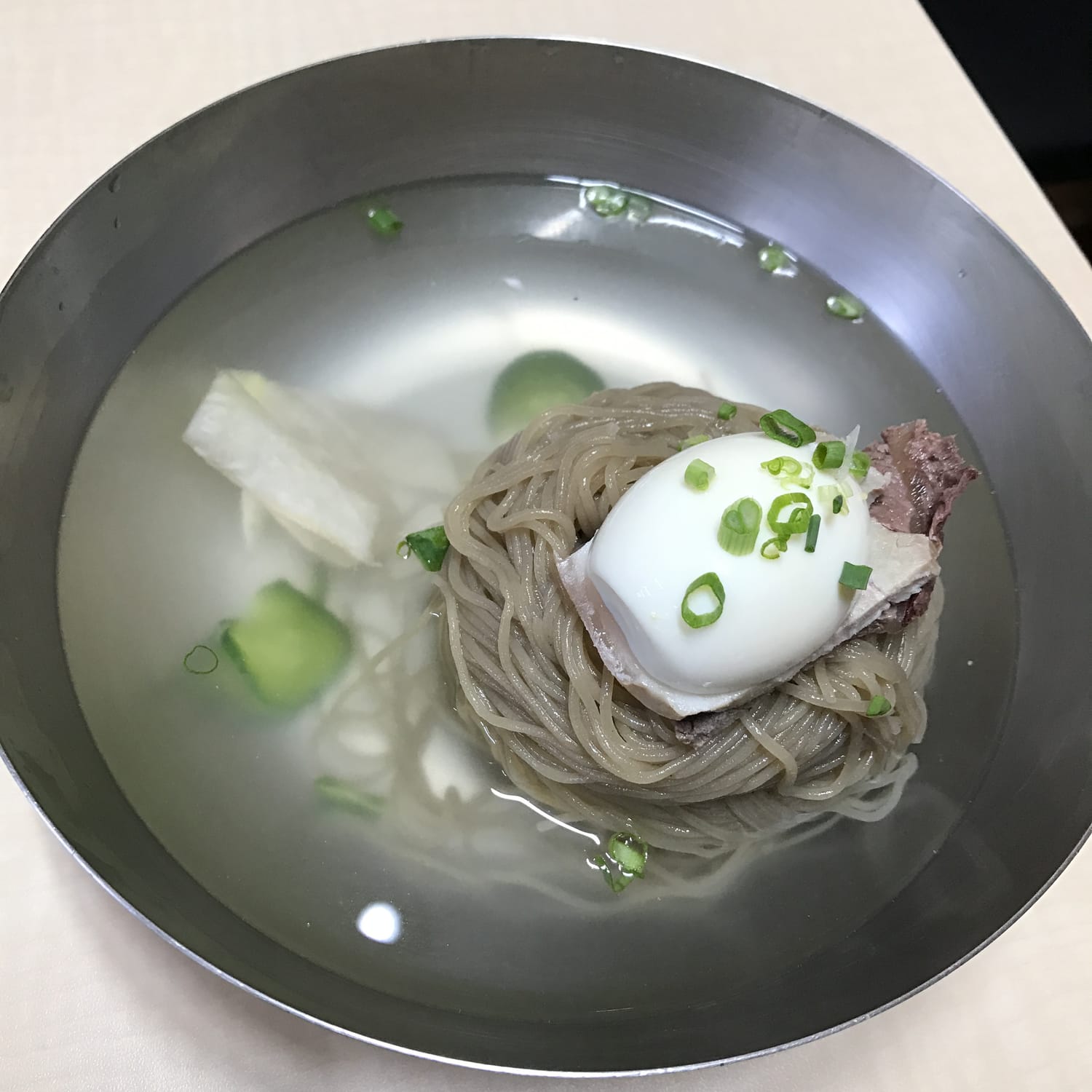
The One Korean Food Foreigners Never Learn to Love: Hamheung Naengmyeon, and Why Koreans Can't See the Problem
Foreigners who eat cheonggukjang and even hongeo still will not pay for this twice. A Korean creator who fed foreigners for years says naengmyeon was the overwhelming number one refusal, and Koreans, who rank it first every summer, cannot see why.