Jeong (정) Explained: The Korean Bond That Has No English Word
Here's what nobody tells you about jeong (정): Koreans don't just feel it, they diagnose it. You'll hear someone say "정 떨어졌어" (jeong tteoreojyeo — "the jeong just dropped") after a friend does something petty, or "우리 진짜 정들었다" (we really built jeong) after surviving a rough group project together. There's no single English word for it, so most guides just call it "affection" and move on. That undersells it. Jeong is closer to a whole emotional operating system — the invisible glue behind why a market vendor tosses in extra banchan, why Korean coworkers who annoyed each other for years cry at a farewell dinner, and why "우리" (uri, "our") shows up in sentences like "our mom" and "our company" instead of "my."
This guide explains what jeong actually means, where you'll feel it firsthand as a visitor, how it differs from Western ideas of warmth or friendship, and its less romantic side — because jeong is not always a compliment. It's a social-concept explainer in the same family as our guide to ahjussi and Korean address terms — words that unlock how Korea actually works underneath the surface. If what you have actually run into is the opposite — Koreans who seem cold — start with why Koreans seem cold to foreigners, which measures the gap this word sits inside.
The Birth of Korean Cool — on AmazonAffiliate link. As an Amazon Associate, EpicKor earns from qualifying purchases at no extra cost to you.
What Jeong Actually Means
Jeong is usually written 정 in Hangul and 情 in the Chinese character it borrows from, and the character itself is a clue: it's the same root used in words for emotion, sentiment, and human feeling generally. But jeong narrowed into something more specific in Korean — a slow-built bond of familiarity, warmth, and shared history that attaches to people, places, animals, and even objects.
What makes jeong unique is that it isn't really an emotion you choose to feel — it's something that accumulates. You don't fall into jeong the way you fall in love. It builds through repetition: the same bus driver every morning, the same convenience store clerk, the coworker whose desk is next to yours for three years. Korean explicitly separates the feeling from the choice. Liking someone is a decision. Jeong is closer to residue — it's what's left over after enough time and shared experience, whether you meant to build it or not.
That's also why Korean has a specific compound for jeong that grows through friction rather than fondness: 미운정 (miun-jeong), literally "hateful jeong," versus 고운정 (goun-jeong), "pretty jeong." Miun-jeong is the bond you build with someone who annoyed you constantly — a difficult sibling, a strict boss, a roommate you fought with — and somehow still care about. This is the detail most explainers skip, and it's the one that actually proves jeong isn't just a synonym for liking someone. You can have deep jeong for people you don't particularly like.
Where You'll Feel Jeong as a Visitor
Jeong is not something Koreans explain to you — it's something you notice happening, usually in a transaction that had no obvious reason to include it.
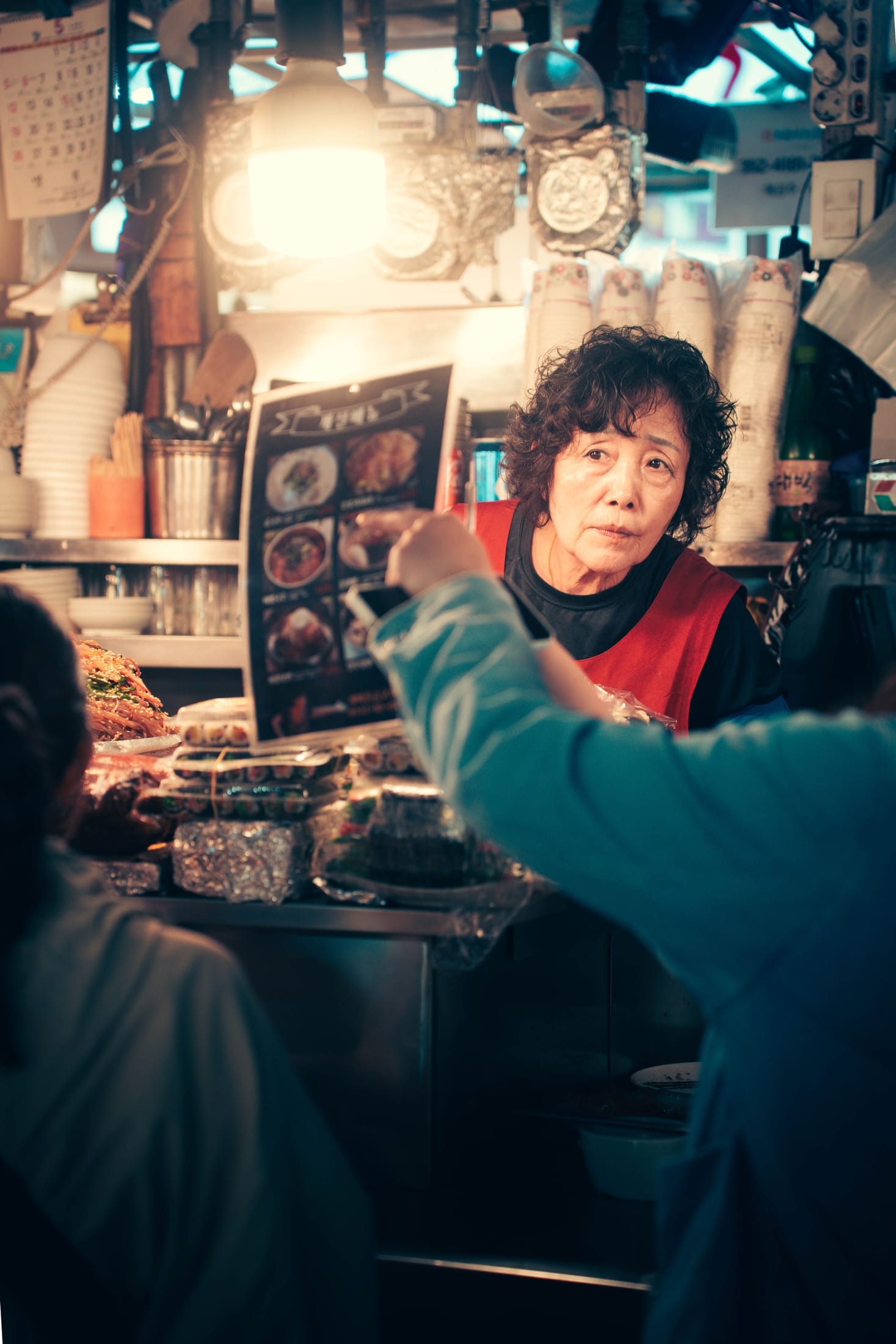
- The extra side dish. A street food vendor tosses on a free extra piece, or an ajumma at a market "accidentally" over-fills your bag. This is called 서비스 (seobiseu, "service") and it's jeong in its most literal, edible form.
- The restaurant owner who remembers you. Return to the same small restaurant two or three times and don't be surprised if the owner starts treating you like a regular — a free banchan refill without asking, a comment about your day.
- Unsolicited advice from strangers. An older Korean correcting how you're wearing a backpack, or telling you it's about to rain — it can read as intrusive to a Western visitor, but it's frequently jeong: a stranger extending unrequested care because that's simply what you do for another person in front of you.
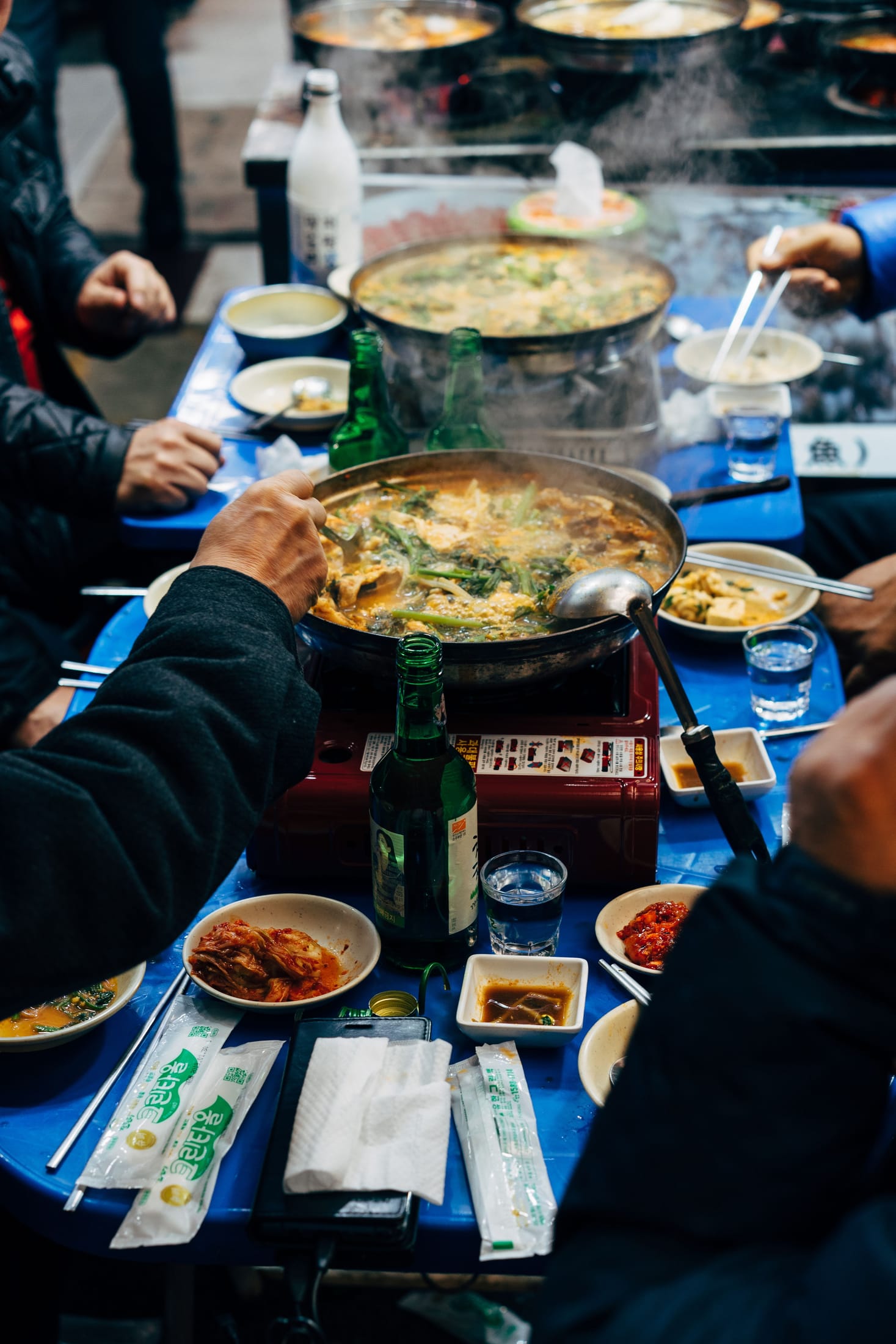
- Group meals that never split evenly. Bill-splitting culture is loosening in Korea, but the older, jeong-driven instinct is that someone pays the whole thing, and it evens out — invisibly, over months — because everyone stays close enough to keep taking turns.
None of these are transactions in the economic sense. They're small deposits into a relationship account that Koreans track instinctively, even with people they've just met.
Jeong vs. Western Ideas of Friendship and Warmth
Jeong refers to something Korean speakers treat as structurally different from friendship, love, or likability, and the difference matters if you're trying to actually understand Korean social behavior rather than just translate around it.
Western friendship tends to be framed as a choice you renew: you pick your friends, and the relationship is understood to be voluntary and revocable. Jeong, by contrast, is often described by Koreans as something that happens to you whether you consented or not. It attaches through proximity and time — a childhood neighbor, a former classmate you haven't spoken to in a decade, a distant relative — categories of people Koreans will describe as having jeong with, even without warmth in the day-to-day sense of the word.
This is also why jeong extends past people. Koreans talk about having jeong for a childhood house (정든 집, "the house you built jeong with"), a hometown, even a well-worn object. The emotional attachment isn't reserved for humans; it's really about time invested plus shared context, which any long-term relationship — with a place, a pet, or a person — can generate. If you've ever felt oddly sad giving away a beat-up car or leaving an apartment you didn't even like that much, Korean would simply call that jeong and consider the feeling completely unremarkable.
Want the deeper cultural context? As an Amazon Associate, EpicKor may earn from qualifying purchases. If jeong has you curious about the social logic behind Korean life more broadly, The Birth of Korean Cool is the readable English-language account of it — well beyond the tourist-guide version, and 정 turns up in it constantly without ever being the subject.
See The Birth of Korean Cool on AmazonThe Less Romantic Side of Jeong
Jeong gets romanticized a lot in tourism writing, but treating it as pure warmth misses half the concept — and Koreans themselves are often the first to point out its costs.
Because jeong is sticky and involuntary, it can trap people in relationships or obligations they'd otherwise walk away from. A Korean employee might stay at a job they dislike partly because they've built jeong with coworkers over years and leaving feels like a betrayal, not just a career decision. Family obligation, workplace loyalty, and reluctance to cut off a toxic friend are all sometimes explained — and sometimes excused — by jeong. It's one reason Korean workplace culture can look, from outside, unusually tolerant of relationships that would be considered clearly unhealthy elsewhere: jeong makes the exit costlier than the logic would suggest.
Jeong can also run out. 정 떨어지다 (jeong tteoreojinda), "jeong falls off/drops," describes the exact moment a relationship's accumulated warmth collapses — usually after someone acts selfishly, dishonestly, or cruelly in a way that retroactively poisons the shared history. It's a strong phrase, closer to "I'm completely done with them" than a simple falling-out, and it signals that jeong, once lost, is genuinely hard to rebuild. The same culture that builds deep bonds through nothing but repeated proximity can also withdraw them completely and permanently over a single bad act.
How to Notice — and Return — Jeong on a Trip to Korea
You can't manufacture jeong on a one-week trip; it's built on repetition you likely won't have time for. But you can recognize it when it happens and respond in kind, which is more than most visitors do.
If a vendor or shopkeeper gives you something extra, a simple, genuine thank-you (and returning to that same stall later in your trip, if you can) reads as exactly the right response — reciprocity, even small, is how jeong is supposed to work. If an older Korean stranger corrects you or offers unsolicited help, resist the urge to read it as rude; a polite "감사합니다" (thank you) usually lands better than pushing back. And if you make a genuine local friend or connect with a host, staying in touch afterward — even a message months later — is precisely the kind of low-effort, long-horizon gesture jeong runs on. Koreans don't expect visitors to understand jeong instinctively, but showing you noticed it tends to earn real warmth back.
Ready before your trip? As an Amazon Associate, EpicKor may earn from qualifying purchases. A few well-chosen Korean phrases go a long way toward the kind of small, genuine exchanges that build jeong, and the Lonely Planet Korean phrasebook is enough to start them. 정 is a thing you accumulate rather than announce.
See Lonely Planet Korean phrasebook on AmazonYou might like: Famous Koreans Beyond BTS: Nine Artists the World Has Followed for 30 to 70 Years
Jeong in Korean Pop Culture
If you've watched more than a couple of Korean dramas, you've already absorbed a fair amount of jeong logic without necessarily naming it. The genre's favorite plot engine — two characters who start out as rivals, roommates forced together by circumstance, or coworkers who can't stand each other — and slowly become inseparable is, structurally, a miun-jeong arc. The drama rarely uses the word "jeong" out loud, but Korean audiences read the emotional beats through that lens automatically: proximity plus friction plus time equals a bond neither character asked for.
Variety shows lean on the same instinct. Long-running Korean reality and variety programs often keep the same cast for years specifically because production teams understand that jeong between cast members reads as more entertaining, and more trustworthy to audiences, than rotating in fresh faces every season would. When a long-time cast member eventually leaves such a show, the on-air farewell is frequently treated with a seriousness that looks disproportionate to outsiders — until you understand that what's ending isn't just a working relationship, but years of accumulated jeong that the whole audience watched build in real time.
The Word "Uri" Is Jeong's Fingerprint
One of the clearest everyday signals of jeong-based thinking is a grammar habit that trips up almost every Korean learner: 우리 (uri), "our" or "we," shows up in places English would use "my." Koreans say uri eomma ("our mom") even as an only child, uri hoesa ("our company") as a regular employee with no ownership stake, and uri nara ("our country") in casual conversation. It isn't a grammatical quirk — it's jeong showing up structurally in the language itself, treating close relationships and shared institutions as communally held rather than individually possessed.
This matters for visitors because it explains a pattern of behavior that can otherwise read as confusing: Koreans extending group-level warmth or group-level obligation toward people they've just met, simply because that person has been folded into a shared "uri" context — the same tour group, the same exchange program, the same workplace team. You don't need to earn that inclusion the way you might need to earn individual friendship in a more individualist culture. Once you're inside the "uri," a baseline of jeong-driven goodwill tends to apply automatically, at least provisionally, until you do something to lose it.
Frequently Asked Questions
Q: What does jeong (정) mean in Korean? Jeong is a Korean concept of emotional attachment and warmth that builds gradually through shared time and experience, rather than being chosen instantly. It can attach to people, places, and even objects, and has no single-word English equivalent.
Q: Is jeong the same as love? No. Love (사랑, sarang) is typically a chosen, declared feeling. Jeong is closer to accumulated familiarity — it can exist without romantic love, and it can even exist for people you don't especially like, as in the concept of miun-jeong ("hateful jeong").
Q: What is 미운정 (miun-jeong)? Miun-jeong, literally "hateful jeong" or "pretty-ugly jeong," describes the bond that forms with someone through friction, annoyance, or conflict rather than affection — a difficult coworker or sibling you still end up caring about after years of proximity.
Q: Can jeong disappear? Yes. The phrase 정 떨어지다 (jeong tteoreojinda), "jeong drops," describes the moment accumulated warmth collapses, usually after a selfish or dishonest act. Once jeong is lost this way, it's considered genuinely hard to rebuild.
Q: Will I experience jeong as a short-term visitor to Korea? You can notice it and receive small versions of it — an extra side dish, unsolicited help from a stranger, a shopkeeper who remembers you after a few visits — even without the years of proximity that build it fully. Responding with genuine gratitude is the right reaction.
Q: Is jeong always a positive thing? Not entirely. Because jeong makes relationships feel obligatory rather than optional, it can make it harder for Koreans to leave unhealthy jobs, friendships, or family situations. It's a real cultural strength and a real cultural cost at the same time.
The Bottom Line
Jeong isn't a mood, and it isn't just Korean for "nice." It's a whole framework for how relationships accumulate weight over time — through shared meals, small kindnesses, long proximity, even mutual annoyance — and how that weight can turn into both the deepest warmth Korean culture offers and one of its stickiest obligations. You'll feel a small piece of it the moment a stranger hands you something extra for no stated reason. Understanding the word just means you'll finally know what to call it.
Next time someone in Seoul does something quietly, unnecessarily kind, you won't need a translation — you'll just recognize the jeong.
Sources and further reading:
You Might Also Like
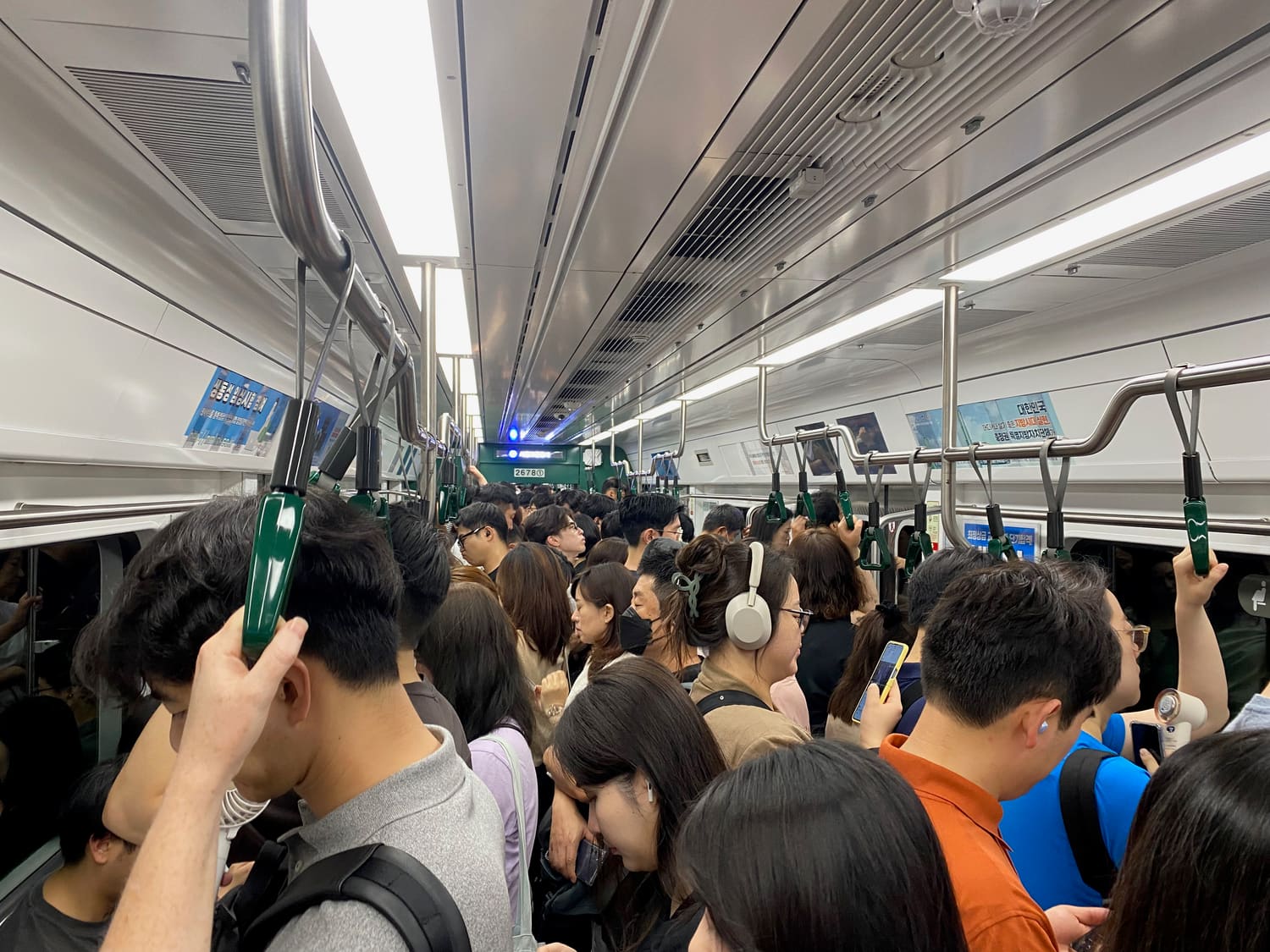
Why Koreans Seem Cold to Foreigners: The Gap Between How Korea Sees Itself and How You See It
Foreigners abroad rate Korea 82.3% favourable. Foreigners living in Korea rank Koreans 39th of 46 countries for friendliness, and 84% of Koreans say they would not trust a stranger. Where the gap comes from, and how to get to the other side of it.
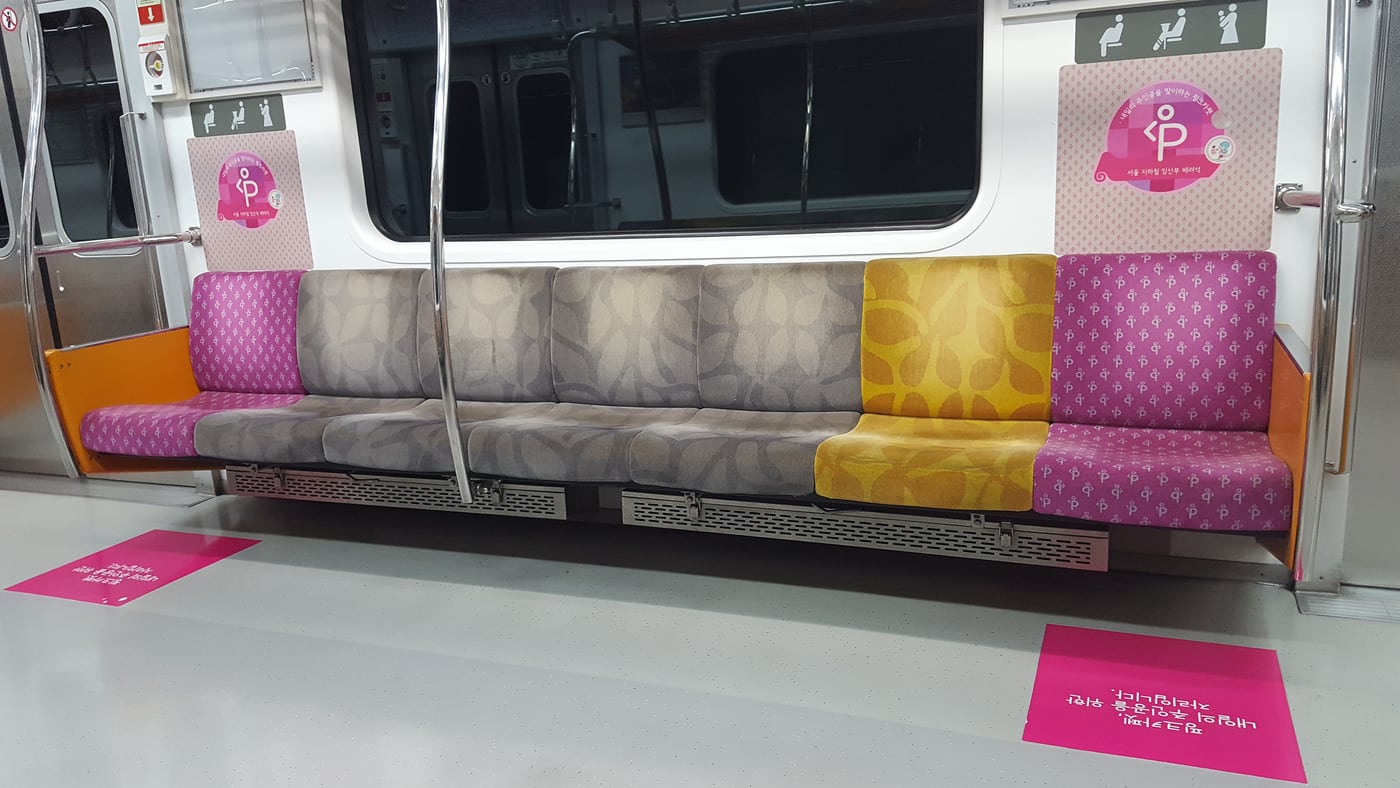
Seoul Deleted Its Women-Only Parking: What Korean Gender Policy Actually Is in 2026
Most English writing on Korean gender policy describes rules that were removed, renamed, or never existed. Seoul scrapped women-only parking in 2023, the ministry was renamed in 2025, and the famous five-point exam bonus went to men and ended in 1999.
Kkondae (꼰대) Explained: Korea's Word for the Boss Who Knows Best
Kkondae (꼰대) explained: Korea's word for a condescending senior who won't listen — and why survey data shows it's about behavior, not age.