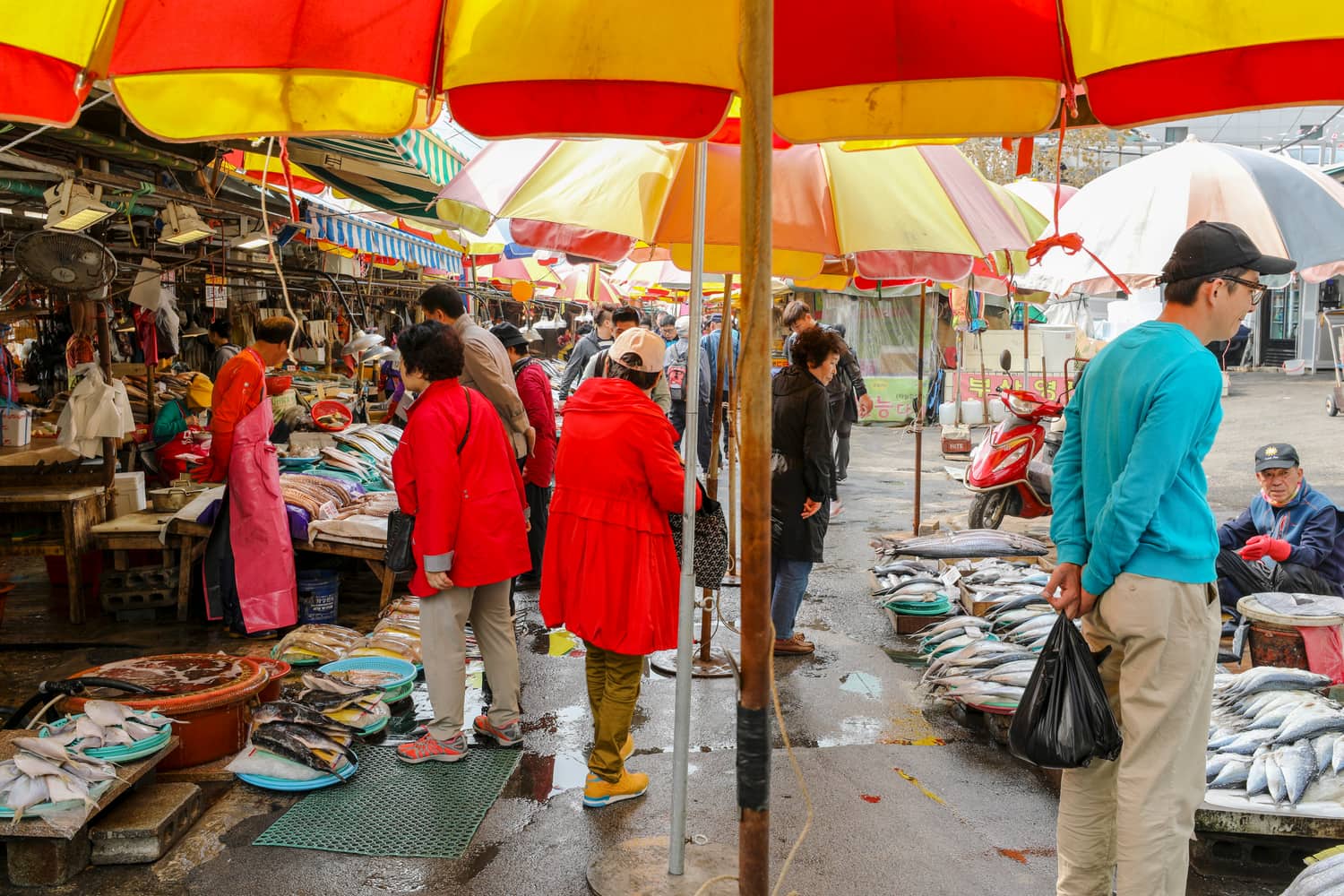
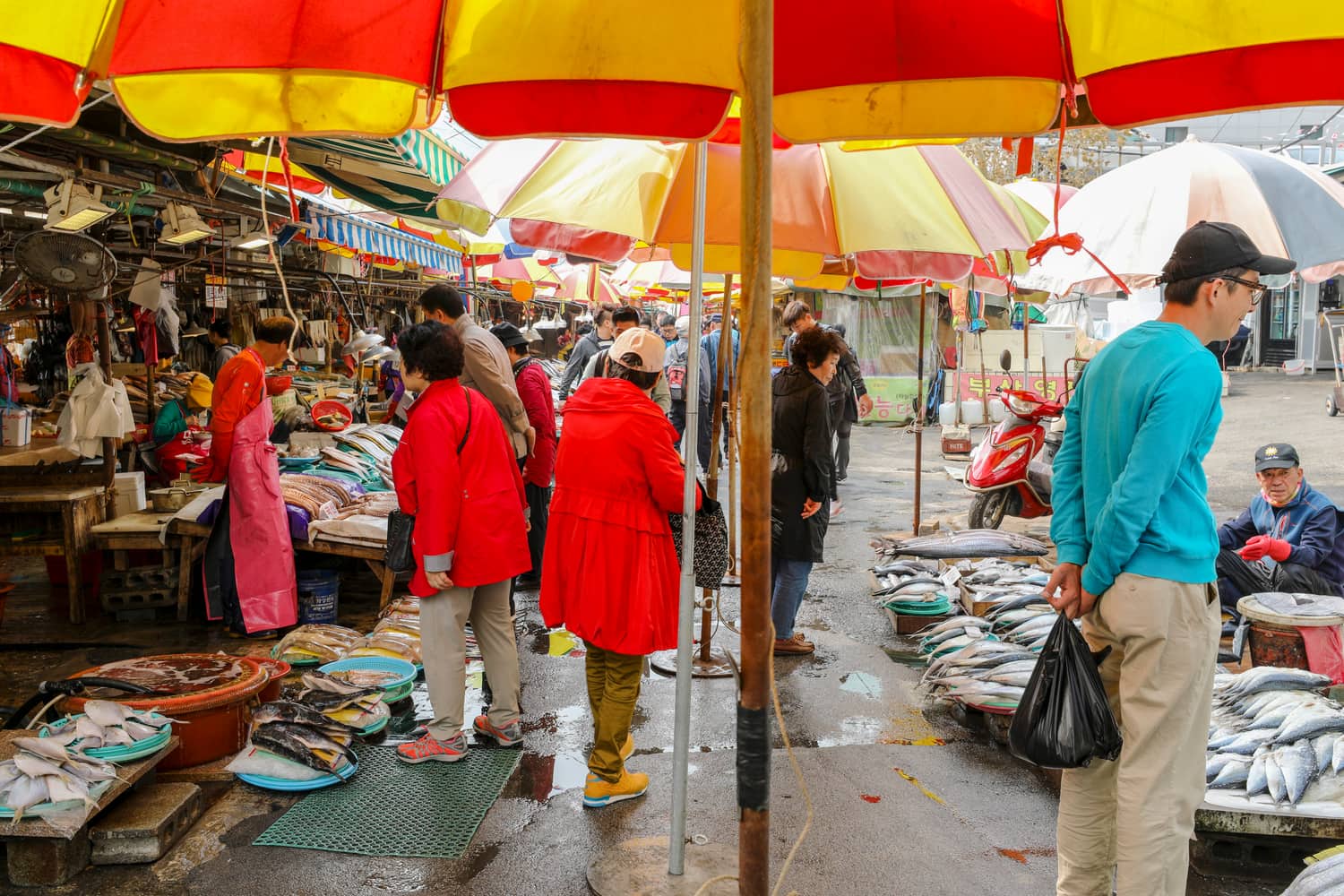
Korean Stare Meaning: Why Koreans Stare at Foreigners, and How to React
Last updated: 9 October 2026. Foreign-resident figures are from the Ministry of Justice monthly immigration statistics for end-August 2026 (published 22 September 2026) and the Ministry of the Interior's annual foreign-resident count. Sources are listed at the end.
The Korean stare — a long, open look from a stranger on a bus, in a market or across a subway car — almost always means one thing: you are unusual here. It is curiosity, not hostility. Less often it means you are breaking a quiet public rule, such as talking loudly on the subway. Rarely it is something worse. How to react: meet it with a small nod or a smile and say 안녕하세요 (annyeonghaseyo, hello). Most stares turn into a grin, a question or a free tangerine. Do not stare back hard, and do not take it personally.
Whether you get stared at at all depends mostly on where you are standing. In central Seoul nobody looks. In a provincial market, a small town or a subway car full of grandmothers, they do. This guide decodes the four kinds of Korean stare, says where each happens, and gives you the response for each.
Korea: The Impossible Country — Daniel Tudor on how Korean society got this wayAffiliate link. As an Amazon Associate, EpicKor earns from qualifying purchases at no extra cost to you.
Quick Guide: what the stare means and what to do
| Who is staring, and when | What it usually means | What to do |
|---|---|---|
| A grandmother or older man on a bus, in a market or in a small town | Curiosity. A visibly foreign face is rare outside a few districts | Nod, smile, say 안녕하세요. Expect a question or a gift |
| Small children, teenagers in groups | Curiosity plus a dare to say "hello" | Wave first. Say hello back |
| Several people, right after you spoke loudly, took a call or ate on the subway | Correction. You broke a public-quiet rule | Lower your voice or end the call. The looks stop at once |
| Older people looking at your clothes at a temple or shrine | Correction: beachwear reads as out of place there | Cover shoulders and knees at temples |
| A man your age, more than once, then a smile | Possibly interest, but usually still curiosity | Treat it as curiosity unless he speaks to you |
| A stare plus a comment, a refused door, a taxi that leaves | Discrimination. Rare, real, and not a cultural misunderstanding | Leave. Report to the Human Rights Commission on 1331 |
| Anyone in Myeongdong, Hongdae, Itaewon, Gangnam or a campus area | Nobody is staring. Foreigners are part of the scenery | Nothing |
Lonely Planet Korean Phrasebook & Dictionary — a pocket book of the phrases that turn a stare into a chat. The best answer to the Korean stare is three words of Korean: hello, where you are from, and thank you. This one has the pronunciation spelled out so you can say them on a market bus without rehearsing. As an Amazon Associate, EpicKor earns from qualifying purchases at no extra cost to you.
See the phrasebook on AmazonThe four kinds of Korean stare, and how to tell them apart
Visitors describe "the Korean stare" as one thing. It is really four.
1. The curious stare (by far the most common). It is long, open and expressionless, and it often does not stop when you notice it. Long-term residents commonly explain it this way: Korean public manners put less weight on the Western rule that you must not be caught looking at a stranger, and more on the rule that you must not bother one. So the look lasts, and it stops short of contact. That combination feels loud if you grew up with the opposite rule. It is not meant to.
2. The correcting stare. This one is brief and arrives in a group. Several heads turn at once, then turn away. It follows something you did, not something you are. Korean subways and buses are quiet. Phone calls, loud talk and eating all draw this look, and Koreans get it from each other too. If the looks started the moment you laughed or answered your phone, this is the one. Lower your voice and it ends.
3. The interested stare. It happens, mostly among people in their twenties and thirties, and it usually comes with a smile or a second glance. It rarely leads anywhere: by most visitors' accounts, approaching a stranger in public is much less common in Korea than in the US or Europe. Unless someone speaks to you, read it as curiosity.
4. The hostile stare. It is rare, but it exists. It comes with a frown, a remark, or a refusal: a bar that turns non-Koreans away at the door, a landlord, a taxi. That is not a cultural difference to absorb, and the section below says what to do about it.
One more thing that is not a stare. Younger Koreans often lower their eyes when an older person speaks to them. Holding steady eye contact with a much older stranger can read as a challenge. If you meet an older person's look, soften it with a nod rather than holding it. That small bow of the head does most of the work.
Where you will not be stared at
Central Seoul does not look at you. In Myeongdong, Hongdae, Gangnam, Seongsu, Itaewon, at the palaces and in the big stations, a foreign face is part of the furniture. Itaewon has been the foreigners' quarter since the American base arrived in the 1950s, and Hongdae on a weekend night draws one of the most international crowds in Korea. Nobody has a reason to look.
The same goes for university districts anywhere — Sinchon, Daehak-ro, the streets around any campus in Busan or Daegu — and for places that sell to tourists: Jeonju Hanok Village, Gyeongju's main sights, Haeundae.
You might like: Do Koreans Speak English? Ask Someone Under 35
Where you will be
Leave those districts and the picture changes within a few subway stops.
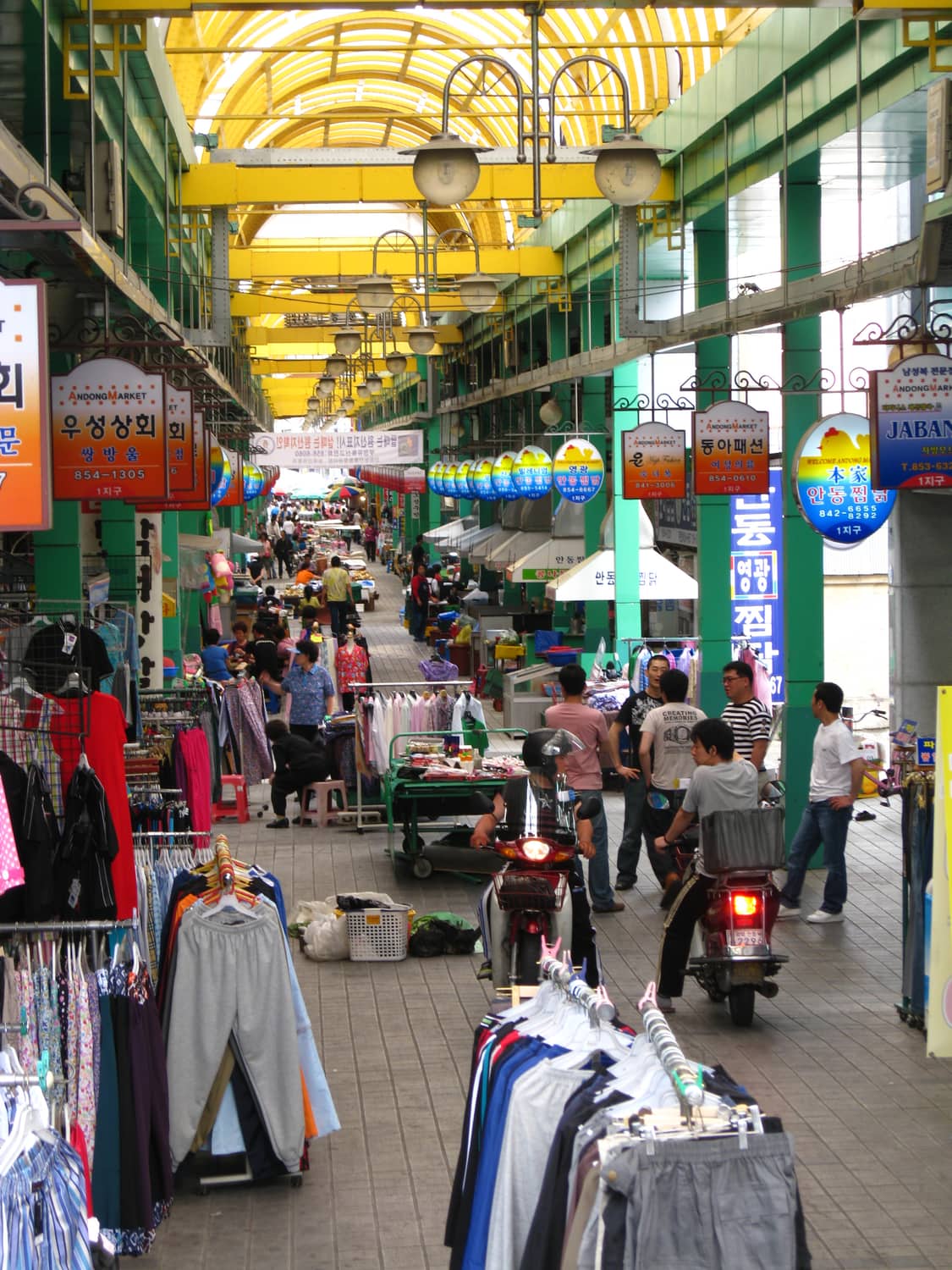
- Traditional markets. Namdaemun and Gwangjang in Seoul see tourists. The covered market in a provincial city does not. Vendors look up, follow you with their eyes and say something to the next stall. This is the friendliest version of the stare, and it often ends with an extra piece of fruit.
- Provincial cities, off the tourist line. Daejeon, Cheongju, Ulsan, Pohang, Changwon, Jeonju outside the hanok village: ordinary neighbourhoods and ordinary buses. You will be noticed.
- Small towns and the countryside. Here the stare becomes a pause. A grandmother on a bench will watch you walk the whole street. It is not unfriendly. You are an event.
- Subway cars full of older passengers. A Line 1 train toward Suwon or Uijeongbu at mid-morning carries a different population from the same line at midnight. You will be looked at on one and not the other.
- Children, anywhere. Korean small children stare, shout "hello!", then hide behind a parent. Teenagers in groups stare and then dare each other to say hello.
Why: the numbers behind the stare
The usual forum explanation is that Korea is "97% Korean". That number is out of date, and the way it is out of date explains the pattern above.
Korea now counts about 2.87 million foreign nationals living in the country. That is the Ministry of Justice figure for 체류외국인 (all foreign nationals present, long- and short-term) at the end of August 2026, about 5.6% of the population and close to an all-time high. A separate count from the Ministry of the Interior, 외국인주민 (foreign residents of more than three months, plus naturalised citizens and their children), reached 2.58 million, or 5.0%, at its last reference date of 1 November 2024. Five percent is the line Korean media and policy writers often cite, attributing it to the OECD, for calling a country multicultural; the ministry itself notes that no international body formally sets it. On paper, Korea has crossed it.
Two facts about who and where keep the street feeling the way it does.
First, foreign residents are concentrated. A third live in Gyeonggi province around Seoul, and the densest areas are industrial districts: Ansan (over 15% foreign), Siheung and the southwest Seoul districts of Geumcheon, Yeongdeungpo and Guro (all over 12%). Most other cities and counties sit far below that. The 5% is not spread across Korea. It is piled up in a few places, and tourists rarely visit them.
Second, most of them do not look foreign at a glance. In the August 2026 count, 86% of foreign nationals in Korea were from Asia. Chinese nationals, including ethnic Koreans from China (한국계 중국인), were about 996,000, and Vietnamese about 383,000. Visitors follow the same pattern. Of the record 18.94 million foreign visitors in 2025, 5.48 million were from China, 3.65 million from Japan and 1.89 million from Taiwan. Americans numbered 1.48 million.
So the honest arithmetic is this. Korea has plenty of foreigners now, but outside a handful of districts a visibly foreign face — European, African, South Asian, Middle Eastern — is still something a resident of Andong or Mokpo may see only now and then. Their eyes have not caught up with the statistics.
There is a longer history too. For most of the twentieth century Korean schools taught that the country was a 단일민족 (danil minjok), a single-blooded people. In 2007 the UN Committee on the Elimination of Racial Discrimination told Korea the idea was getting in the way of a multi-ethnic present, and textbooks began to change. The people over sixty who look at you longest were taught the old story. The students who never look were taught the new one.
You might like: Why Koreans Seem Cold to Foreigners
How to react to the Korean stare
The visitors who enjoy provincial Korea are the ones who learned to answer the look instead of absorbing it.
- Meet it with a nod. A small bow of the head and a smile. Most curious stares are waiting for permission to become something else. Given it, they turn into a grin or a thumbs-up.
- Say 안녕하세요. Annyeonghaseyo, even said badly, is the most effective tool a foreigner has in a Korean market. The person staring will laugh, answer and very often start feeding you.
- Answer the question the stare is asking. "미국에서 왔어요" (miguk-eseo wasseoyo, "I'm from America"), or just your country's name. Swap 미국 (America) for 영국 (yeongguk, the UK), 캐나다 (Canada) or 호주 (hoju, Australia).
- Wave at children first. They will scream, run away and come back with a friend. For many visitors this is the best five minutes of the trip.
- Do not stare back hard. A locked stare reads as a challenge in Korea as it does anywhere. Look away, look back, smile.
- If the looks came in a group, check yourself. Are you on a call, talking loudly, eating on the subway? Fix that and the correcting stare ends.
- Move if you are tired of it. The fix is geographic. Anywhere the average age drops under about thirty-five — a university street, a chain café, a cinema — nobody looks.
- Know the difference between a look and a door. If you are refused service because of your face, leave, and report it if it matters to you.
When the stare is not fine
A minority of foreigners in Korea meet something worse than a look. In the Ministry of Culture's 2025 values survey, 43.7% of 1,020 foreign residents said they had experienced discrimination, most often because of their country of origin (52.9%). In the National Human Rights Commission's 2020 report on racial discrimination, 68.4% said racial discrimination exists in Korea. The grounds they named most often were Korean-language ability (62.3%), being a foreigner (59.7%) and coming from a poorer country (56.8%). That last answer is why residents from Africa and South and Southeast Asia tend to describe more of it than white Westerners do, and, by their own accounts, more frequent stares as well.
The Ministry of Culture survey also shows the background distance. 83.6% of Koreans said they would not trust a stranger they had just met — a Korean stranger — and 77.2% said the same of foreign residents. The stare sits inside that distance: it is not a step toward you, and it is not a step away.
Korea still has no comprehensive anti-discrimination law. Bills have been filed in every National Assembly since 2007, including the current one, and none has passed. What exists:
- National Human Rights Commission (국가인권위원회): 1331 — takes discrimination complaints.
- Immigration Contact Center (외국인종합안내센터): 1345 — visa, residence and daily-life questions in 20 languages, weekdays 9:00–22:00 (Korean, English and Chinese only after 18:00).
- Danuri helpline (다누리콜센터): 1577-1366 — 24 hours, 13 languages, mainly for marriage migrants and multicultural families, including domestic-violence crisis support. It is not a discrimination complaints line.
Frequently Asked Questions
Q: What does the Korean stare mean?
Almost always curiosity. Outside central Seoul and a few industrial districts, a visibly foreign face is still unusual, and Korean public manners are generally more relaxed about looking at a stranger than about bothering one. A brief group stare usually means something different: you broke a public-quiet rule, such as a loud phone call on the subway.
Q: Why do Koreans stare at foreigners?
Because they rarely see them where they live. Foreign nationals are about 5.6% of the population, but they are concentrated in a few districts around Seoul, and 86% are from Asia. Older people, children and residents of markets and small towns stare most.
Q: Is staring rude in Korea?
Generally not by Korean standards, especially among older people. The look is open and stops short of contact. Staring back hard, or holding eye contact with a much older person, can come across as rude. A nod is the polite answer.
Q: How should I react when Koreans stare at me?
Nod, smile and say 안녕하세요 (annyeonghaseyo). It turns most stares into a conversation. If the looks came in a group, check whether you are being loud. If it tires you, spend time in younger neighbourhoods where nobody looks.
Q: Do Koreans stare more at Black and South Asian visitors?
By most visitors' and residents' accounts, yes. There is no official count of stares, but in the Human Rights Commission's migrant survey, coming from a poorer country was the third most cited ground for discrimination. The look is usually the same kind of look, there is more of it, and there is more of the worse things too. Most of it is still curiosity. If it becomes a refused door or a remark, the Human Rights Commission takes complaints on 1331.
Bottom Line
The Korean stare means you are unusual here. Korea is now about 5.6% foreign on paper, but most of its towns still see a visibly foreign face as an event, and the stare is the gap between those two facts. The students do not look, and the grandmothers do.
So react to the person, not the look. Nod, smile, say 안녕하세요. On the other side of that stare is usually someone about to ask where you are from, and quite often about to hand you a tangerine.
Sources
- 법무부 출입국·외국인정책본부, 출입국·외국인정책 통계월보 2026년 8월호 (2026-09-22 게시) — 체류외국인 원본 통계표, 2026-08-31 기준: total 2,874,763; Asia 2,465,161; 한국계 중국인 644,979; 중국 350,583; 베트남 383,244. immigration.go.kr. The 5.6% share is 2,874,763 divided by the registered population of 51,117,378 at end-2025, the same denominator the ministry used for its 5.44% year-end-2025 figure (moj.go.kr).
- 행정안전부, 지방자치단체 외국인주민 현황 (2025-10-30 발표, 2024-11-01 기준) — 외국인주민 2.58 million, 5.0% of the population; Gyeonggi 845,074, Seoul 450,888. District shares from the ministry's district tables: Ansan 15.2%, Siheung 13.1%, Geumcheon 12.7%, Yeongdeungpo 12.6%, Guro 12.6% (the 2024 registration-based census, counting naturalised citizens too, puts Ansan at 16.1% and Siheung at 14.1%).
- 한국관광공사, 2025년 12월 한국관광통계 (2026-01-30, 잠정) — 18,936,562 visitors; China 5.48m, Japan 3.65m, Taiwan 1.89m, US 1.48m.
- 문화체육관광부, 2025년 한국인의 의식 및 가치관 조사 — 83.6% of Koreans would not trust a stranger they had just met, 77.2% a foreign resident; 43.7% of 1,020 foreign residents reported discrimination, most often by country of origin (52.9%). Survey fieldwork 15 August–2 October 2025, published 23 December 2025.
- 국가인권위원회, 한국 사회의 인종차별 실태와 인종차별 철폐를 위한 법제화 연구 (2020-03) — 68.4% of surveyed migrants said racial discrimination exists in Korea; grounds: 한국어 능력 62.3%, 외국인이라서 59.7%, 가난한 나라 출신이라서 56.8%. Complaints line 1331.
- UN Committee on the Elimination of Racial Discrimination, Concluding Observations on the Republic of Korea (2007) — recommendation to move beyond the single-ethnicity concept in education and public life.
- 차별금지법 입법 현황 — no comprehensive anti-discrimination act has passed; bills filed in every National Assembly since the 17th (2007), including the 22nd (two bills, filed 9 January 2026 and February 2026).
- 성평등가족부(구 여성가족부) 다누리콜센터 1577-1366 — 24 hours, 13 languages, for marriage migrants and multicultural families. 법무부 외국인종합안내센터 1345 — 20 languages, weekdays 09:00–22:00.
You Might Also Like
Why Koreans Seem Cold to Foreigners: The Gap Between How Korea Sees Itself and How You See It
Foreigners abroad rate Korea 82.3% favourable. Foreigners living in Korea rank Koreans 39th of 46 countries for friendliness, and 84% of Koreans say they would not trust a stranger. Where the gap comes from, and how to get to the other side of it.
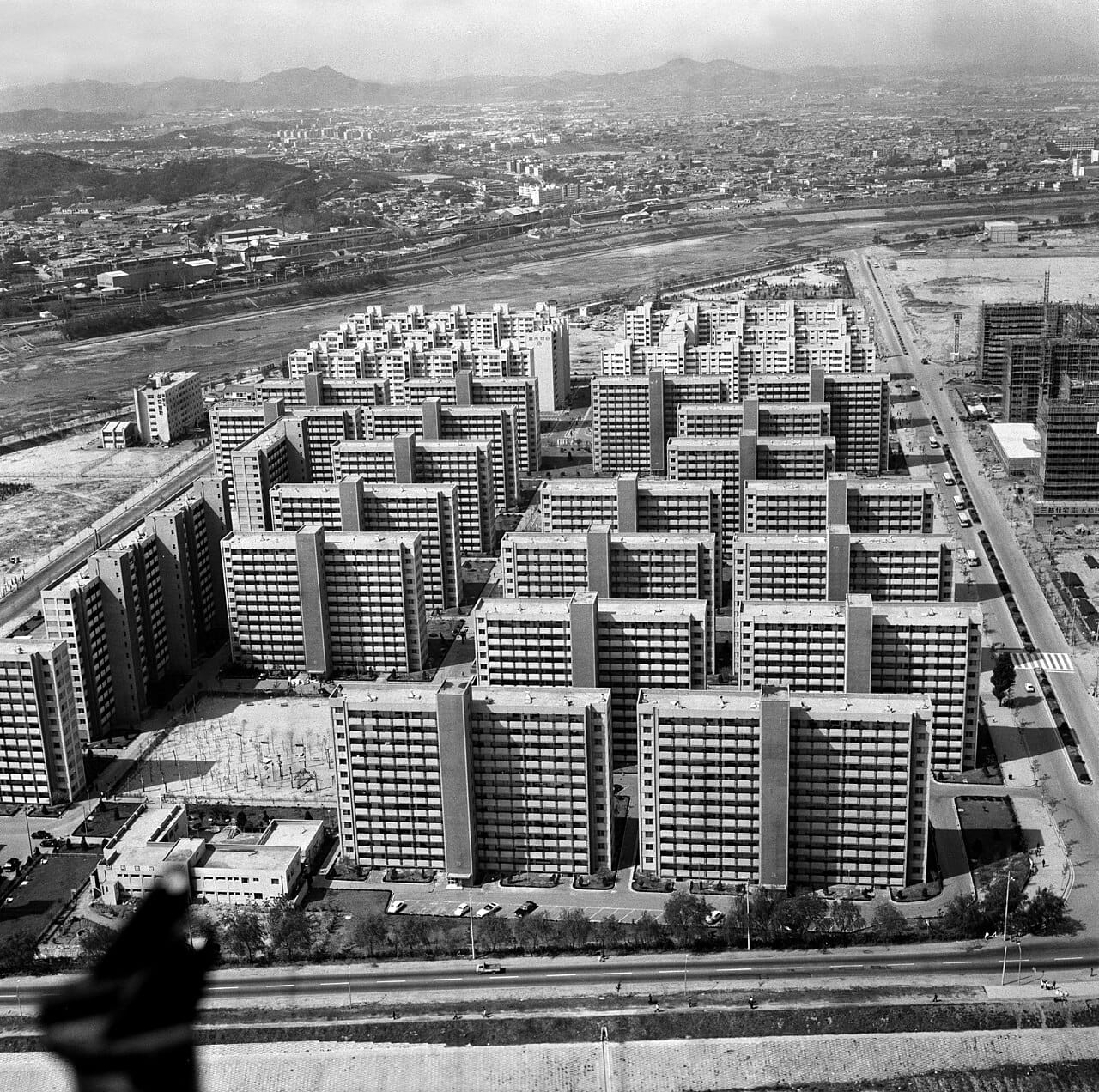
Why Koreans Live in Apartments: Korea's One-Generation Shift
In 1978 only 5.2% of Korean homes were apartments. By 2015 it was 59.9%. That change was not caused by crowding — it was built by a financing system where buyers pay for a building before it exists. Here is how Korea became an apartment country.
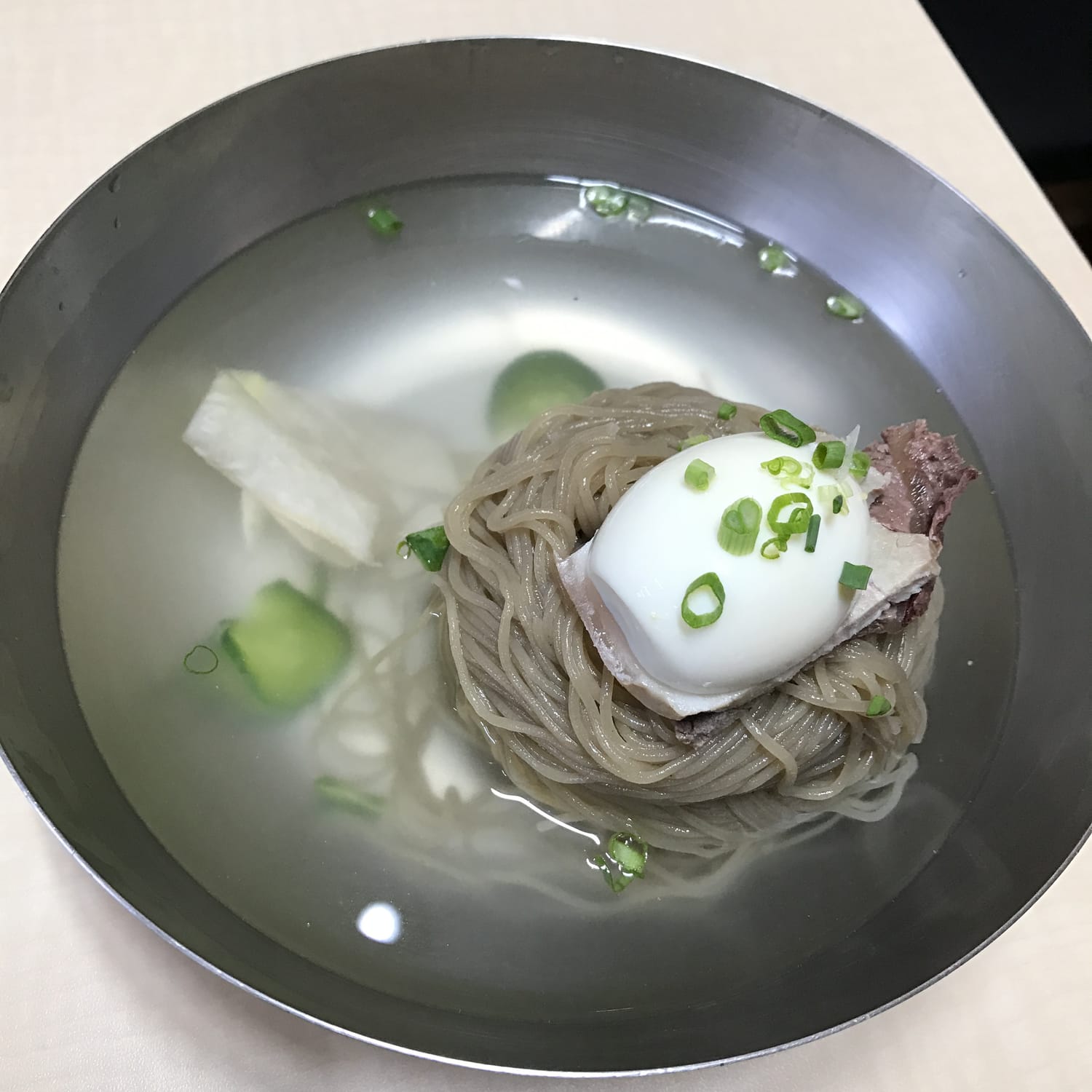
The One Korean Food Foreigners Never Learn to Love: Hamheung Naengmyeon, and Why Koreans Can't See the Problem
Foreigners who eat cheonggukjang and even hongeo still will not pay for this twice. A Korean creator who fed foreigners for years says naengmyeon was the overwhelming number one refusal, and Koreans, who rank it first every summer, cannot see why.