
Living in Seoul for a Month: Cost, Apps, Neighborhoods
Living in Seoul for a month sounds romantic because it sits between travel and real life. You are not rushing through palaces, barbecue, cafes, and shopping in three days. You are testing a rhythm: subway commutes, neighborhood grocery runs, rainy afternoons, laundry, delivery-app limits, language friction, cafe work sessions, late-night walks, and the strange comfort of learning which convenience store near your temporary room has the best triangle gimbap selection.
The reality is better than a short vacation in some ways and harder in others. Seoul is safe, dense, transit-rich, food-rich, and full of neighborhoods that reward repetition. But it is also not friction-free for short-term foreigners. Some online services require Korean phone verification. Some housing is expensive or awkward for a month. Some apps are easier if you can read Hangeul. Some visa and entry rules depend on nationality and can change.
This guide is a practical map for a one-month Seoul stay: where to base yourself, how to handle transit, what apps matter, how to think about budget, what documents to check, and how to make the month feel like a real life instead of a long checklist.

Travel card pouches — compare on AmazonAffiliate link. As an Amazon Associate, EpicKor earns from qualifying purchases at no extra cost to you.
Quick Answer: Is One Month in Seoul Worth It?
Yes, one month in Seoul is worth it if you want to understand daily Korea beyond tourist highlights. A month gives you enough time to repeat places, make transit feel natural, compare neighborhoods, learn basic Korean routines, and stop treating every meal like a special event. It is especially good for remote workers, language learners, K-culture fans, food travelers, and people considering a longer Korea stay.
It is less ideal if you expect a frictionless digital-nomad setup. Seoul is easy to move through, but short-term visitors may still hit barriers with local phone verification, Korean-only app flows, housing deposits, restaurant reservations, and delivery/payment systems. If you need every administrative task to work like your home country, you may feel annoyed. If you treat the month as a learning period, it becomes much more rewarding.
Before you book, check entry rules for your nationality through official channels. Korea's official e-Arrival Card site says the digital arrival card has no fee and can be submitted within three days before arrival. VisitKorea explains that the e-Arrival Card system was introduced in 2025, while paper arrival cards remained available through 2025. The temporary K-ETA exemption has also been extended for certain countries, including the United States, through December 31, 2026, according to Korean consular guidance. This is not legal advice: always verify your own passport, purpose of visit, stay length, and visa/K-ETA status with the official Korea e-Arrival Card site, VisitKorea entry information, and the nearest Korean embassy or consulate.
| Traveler Type | One-Month Seoul Fit | Best Base Strategy | Main Risk |
|---|---|---|---|
| First-time Korea visitor | Strong | Stay central and simple: Hongdae, Euljiro, Jongno, Myeongdong edge, or Yongsan | Trying to see everything every day. |
| Remote worker | Strong if time-zone works | Choose cafe/coworking access before nightlife | Late calls, small rooms, and unstable accommodation desks. |
| K-pop/K-drama fan | Strong | Base near transit, not only near one fandom district | Overspending on pop-ups, cafes, and merchandise. |
| Family | Possible | Prioritize apartment-style stays and easy subway lines | Laundry, stroller routes, and restaurant waits. |
| Budget traveler | Possible but needs discipline | Stay outside the trendiest blocks and cook simple meals | Cafe/lifestyle spending can creep up fast. |
Entry, Documents, and the First 72 Hours
For many short-term visitors, the administrative side starts before the flight. Korea's e-Arrival Card is the official digital arrival-card channel, and the official site warns travelers to use the official no-fee site rather than fake paid services. Submit within the allowed window and save confirmation where you can find it offline.
K-ETA rules are separate from the arrival card. Some nationalities have temporary K-ETA exemption through the end of 2026, while others may not. Even if your country is exempt, applying voluntarily may provide some convenience benefits, but it also has a fee. Do not rely on a social-media screenshot for entry rules. Check the current Korean consulate or embassy notice for your jurisdiction.
Once you land, make the first 72 hours boring on purpose. Get your SIM/eSIM working, load a transit card, save your accommodation address in Korean and English, withdraw or exchange a small amount of cash, and test the route from your room to the nearest subway station, convenience store, pharmacy, and laundry option. A month in Seoul becomes easier when the basics are solved before the fun begins. If you are only testing the city for one intense day, EpicKor's 24-hour Seoul guide gives a compact route through morning, afternoon, evening, and late-night transit.
If your month includes late walks, Hangang evenings, markets, or after-dinner cafes, use EpicKor's Seoul night guide to plan one anchor area instead of crossing the city too late.
EpicKor's Korea eSIM guide, Korea payment setup guide, and Google Maps vs Naver/Kakao guide will help you avoid the most common arrival friction.
First-week sanity kit: As an Amazon Associate, EpicKor may earn from qualifying purchases. A Seoul month means carrying cards, phone, transit pass, cash, and receipts constantly, so compare travel card pouches before departure.
Where to Stay for a Month in Seoul
The best Seoul neighborhood for a month is not always the most famous one. It is the one that gives you a repeatable daily life. You need groceries, subway access, laundry, quiet enough sleep, reasonable commute time, and places you can enjoy without spending money every time you step outside.
Hongdae/Yeonnam/Mapo works well for first-timers who want cafes, food, nightlife, airport-line access, and a younger atmosphere. It can be noisy and tempting for constant spending, but it is practical.
Jongno/Euljiro/Ikseon-dong edges are great if you want old Seoul, palaces, food alleys, and central access. This area makes sightseeing feel natural because many classic stops are nearby. Some accommodations can be older or smaller, so inspect photos carefully.
Yongsan/Itaewon/Hannam edges work for international food, central transit, and a more foreigner-friendly feel in some pockets. Prices vary sharply. Check hill locations, station distance, and whether the room is actually convenient with luggage.
Seongsu/Konkuk University/Ttukseom fits cafe culture, design shops, river access, and east-side exploration. It is stylish but can be spread out; do not choose a listing just because "Seongsu" appears in the title.
Gangnam/Sinsa/Seolleung/Samseong fit business, clinics, shopping, and a polished city mood. They are not always the best value for a casual month. If you are not doing Gangnam-specific work or medical/beauty appointments, a central-north or west-side base may feel warmer and more cost-effective.
For a deeper neighborhood comparison, see EpicKor's where to stay in Seoul guide and best time to visit Korea guide.
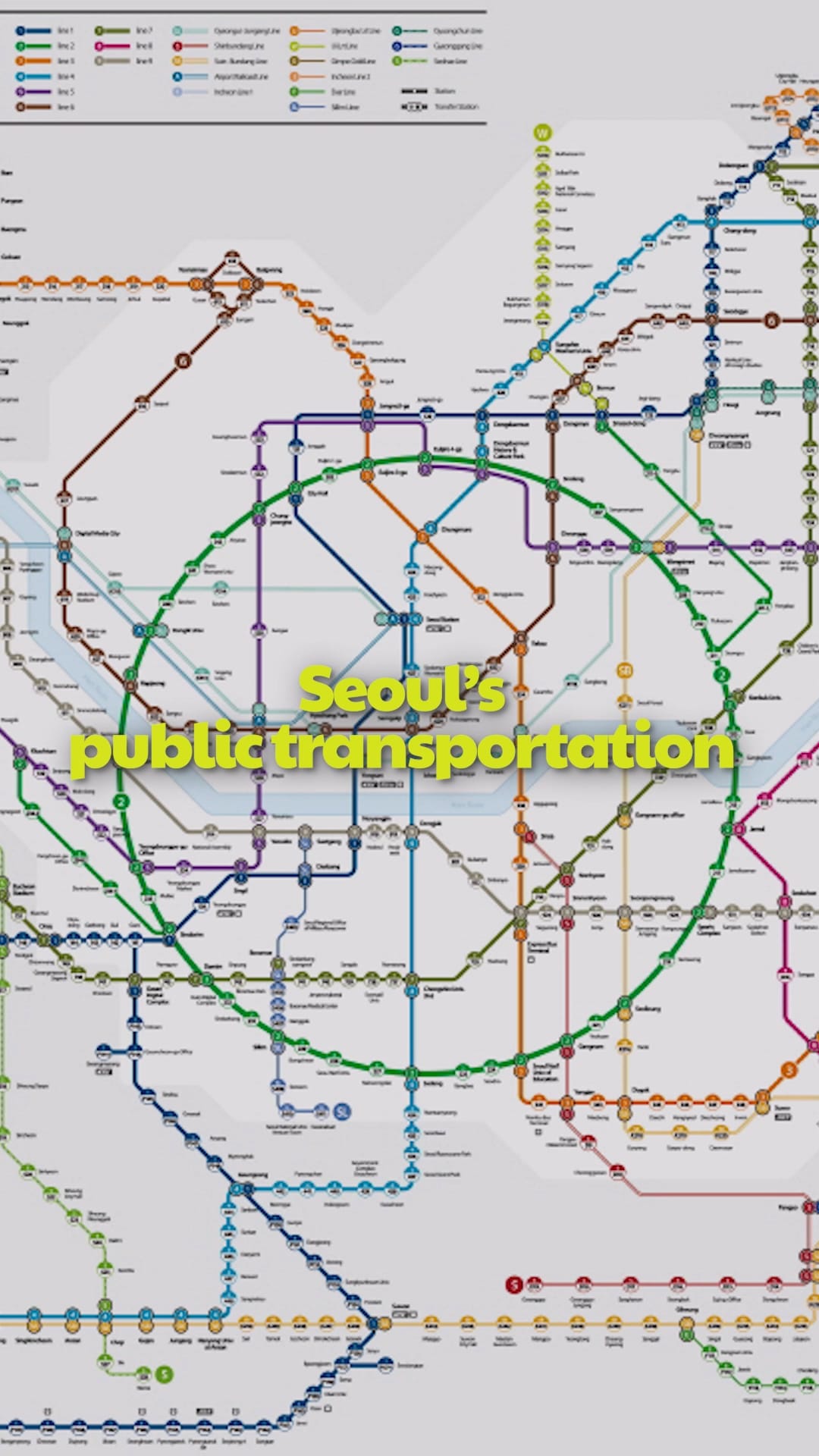
Transit: T-money, Climate Card, and How to Move Without a Car
Seoul is one of the easiest major cities to live in without a car. The subway is extensive, buses fill gaps, taxis are useful late at night, and walking is part of the lifestyle. The official Seoul public-transportation guide explains that T-money and Cashbee cards can be purchased at convenience stores and subway stations and reloaded through station devices. Single-journey tickets exist, but they are not what you want for a month.
For 2026, short-term transit planning also includes the Climate Card. Seoul announced that from March 17, 2026, international credit/debit cards and mobile payments would be accepted at new machines in many subway stations for Climate Card short-term passes and single-journey tickets. The short-term Climate Card options include one-, two-, three-, five-, and seven-day passes, while a 30-day international-card option was described as a later consideration. Check Seoul's official Climate Card and single-journey ticket update before relying on a specific machine or payment method.
For a month, the practical answer is often mixed. Use a T-money or compatible transit card as your stable daily tool. Consider short-term Climate Card passes during intense sightseeing weeks if the coverage and rules fit your routes. Keep one backup payment method and some cash because machines, cards, and foreign-payment acceptance can be less predictable than the headline suggests.
| Transit Tool | Best Use | Good For a Month? | Watch-Out |
|---|---|---|---|
| T-money/Cashbee | Everyday subway and bus rides | Yes | You need to buy and reload it; refunds have rules. |
| Short-term Climate Card | Heavy transit days in covered areas | Sometimes | Check coverage, pass length, and machine/payment support. |
| Single-journey ticket | Emergency or one-off subway use | No | Too clunky for daily living. |
| Taxi apps/taxis | Late night, luggage, rain, difficult transfers | Useful backup | App/payment setup can be harder for visitors. |
| Walking | Neighborhood life and cafe/market discovery | Essential | Summer heat, hills, and winter cold change everything. |
Apps and Digital Friction: What Visitors Should Expect
The Seoul app stack is powerful, but foreigners staying one month should expect limits. Naver Map and Kakao Map are more useful than Google Maps for many local routes, business listings, and transit details. Translation apps are essential. Messaging may involve KakaoTalk. Delivery and reservation platforms can be wonderful if they work for you, but some features may require Korean phone verification or local payment.
Do not make your whole month depend on one app working perfectly. Save addresses in Korean. Screenshot key routes. Learn how to show a taxi driver your destination. Keep the Korean name of your accommodation. If a reservation app fails, call, use a hotel desk, ask a Korean-speaking friend, or choose a walk-in alternative.
Learn Hangeul basics before arrival if possible. You do not need fluency to benefit. Reading station names, menu categories, floor signs, and neighborhood names will reduce stress immediately. If you want a low-pressure starting point, EpicKor's Korean social rules guide and Seoul subway etiquette guide pair well with basic alphabet practice.
Budget Reality: What a Month in Seoul Costs
A Seoul month can be affordable or expensive depending on housing, cafes, shopping, and how often you chase trends. Accommodation is the biggest variable. A tiny room in a less fashionable but well-connected area can make the month manageable. A stylish stay in Gangnam, Hannam, Seongsu, or peak Hongdae can make everything feel like a premium lifestyle experiment.
Food can be flexible. Convenience-store meals, gimbap shops, cafeteria-style restaurants, food courts, and simple Korean diners keep costs controlled. Trend cafes, themed desserts, barbecue, omakase-style meals, cocktails, and pop-up shopping push the budget up quickly. A realistic month mixes both: ordinary meals most days, intentional splurges sometimes.
Laundry, transport, SIM/eSIM, cafe work sessions, shipping, luggage storage, umbrellas, skincare, and small household items also add up. Seoul makes spending easy because each purchase feels small. Track the first week carefully. If your first seven days already feel expensive, adjust before the month turns into four expensive weeks.
If the stay makes you curious about why cost and work pressure feel so heavy for many locals, EpicKor's Hell Joseon and N-po guide gives the social context without flattening a whole generation.
For Seoul weather swings: A compact umbrella is one of the few items that helps in rain, sun, and surprise long walks. Compare compact travel umbrellas before packing for a month in Korea.
See compact travel umbrellas on Amazon
A Better One-Month Rhythm
Do not schedule Seoul like a 30-day checklist. Build weekly themes instead.
Week one should be orientation: transit card, phone, neighborhood, groceries, laundry, key apps, and a few easy landmarks. Week two can be deep city exploration: palaces, markets, museums, shopping districts, and food neighborhoods. Week three can be day trips or slower specialty interests: Suwon, Incheon, DMZ tours, hiking, beauty appointments, bookstores, stationery, or cooking gear. Week four should leave room for favorites, repeat meals, gift shopping, packing, and admin cleanup.
This rhythm matters because the best part of a one-month stay is repetition. The second visit to the same cafe feels different. The third subway transfer becomes automatic. The market vendor remembers you. You stop over-ordering because you know what a normal lunch feels like. That is when Seoul becomes less like content and more like a temporary life.
For practical side quests, see EpicKor's Seoul laundry guide, Korea luggage delivery guide, Seoul stationery shopping guide, and Korean cookware starter kit.
FAQs About Living in Seoul for a Month
Q: Can I live in Seoul for a month as a tourist? A: Many visitors can stay in Korea short term for tourism, but rules depend on nationality, passport, purpose, and current visa/K-ETA policy. Check official Korean government or consular sources for your exact case before booking.
Q: Do I need Korean to live in Seoul for a month? A: You can manage without Korean, especially in central areas, but learning basic Hangeul and simple phrases makes transit, menus, signs, and daily errands much easier.
Q: What is the best Seoul neighborhood for one month? A: For first-timers, Hongdae/Mapo, Jongno/Euljiro, Yongsan/Itaewon edges, and Seongsu/Ttukseom can all work. Choose based on subway access, sleep quality, laundry, groceries, and your actual daily plan.
Q: Is Seoul expensive for a month? A: Housing is the biggest variable. Food and transit can be reasonable, but cafes, shopping, beauty, nightlife, and trend districts can raise the total quickly.
Q: Should I use Google Maps in Seoul? A: Use it as a backup, but learn Naver Map or Kakao Map for better local transit, walking, and business information. Save important addresses in Korean.
Q: What should I do first after arriving in Seoul? A: Set up phone data, confirm your accommodation address, get a transit card or pass plan, locate the nearest convenience store/pharmacy/laundry option, and test your first subway route before your schedule gets busy.
Bottom Line
One month in Seoul is worth it when you stop trying to optimize every hour. The city rewards people who repeat routes, learn tiny systems, accept some friction, and let ordinary life become part of the trip.
Choose the right neighborhood, verify official entry rules, keep transit simple, expect digital friction, control cafe-and-shopping creep, and leave enough blank space for a real rhythm. That is how a Seoul month becomes more than a long vacation. It becomes a temporary version of daily life in Korea.
You Might Also Like
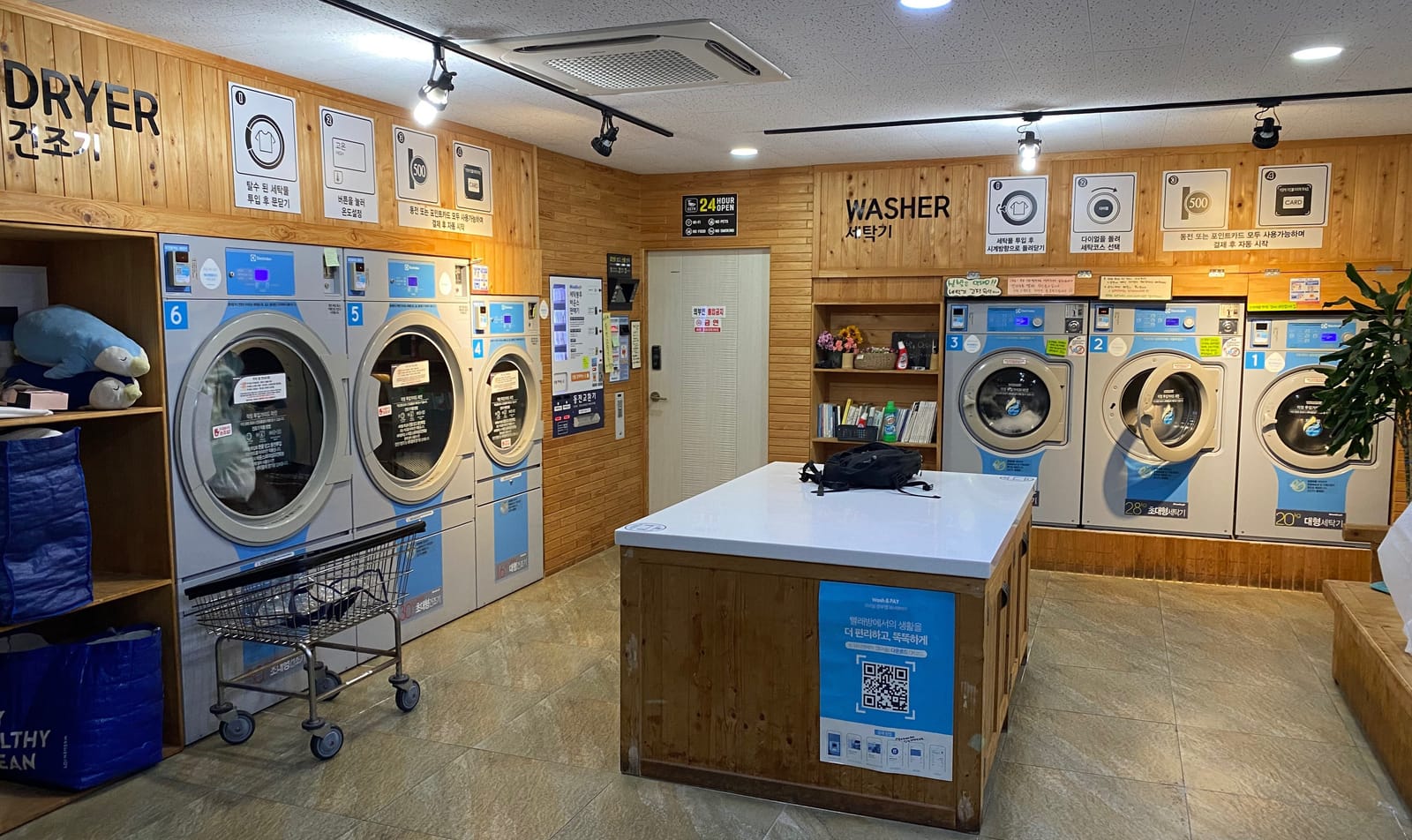
Korea Coin Laundry Guide 2026: Wash, Dry, and Pack Light
A Korea coin laundry guide for travelers who want to wash clothes, dry safely, pack lighter, and avoid laundromat mistakes.
Things to Know Before Traveling to Korea: 2026 Guide
A practical 2026 Korea travel guide covering K-ETA checks, e-Arrival cards, T-money, maps, payments, safety numbers, etiquette, and packing.
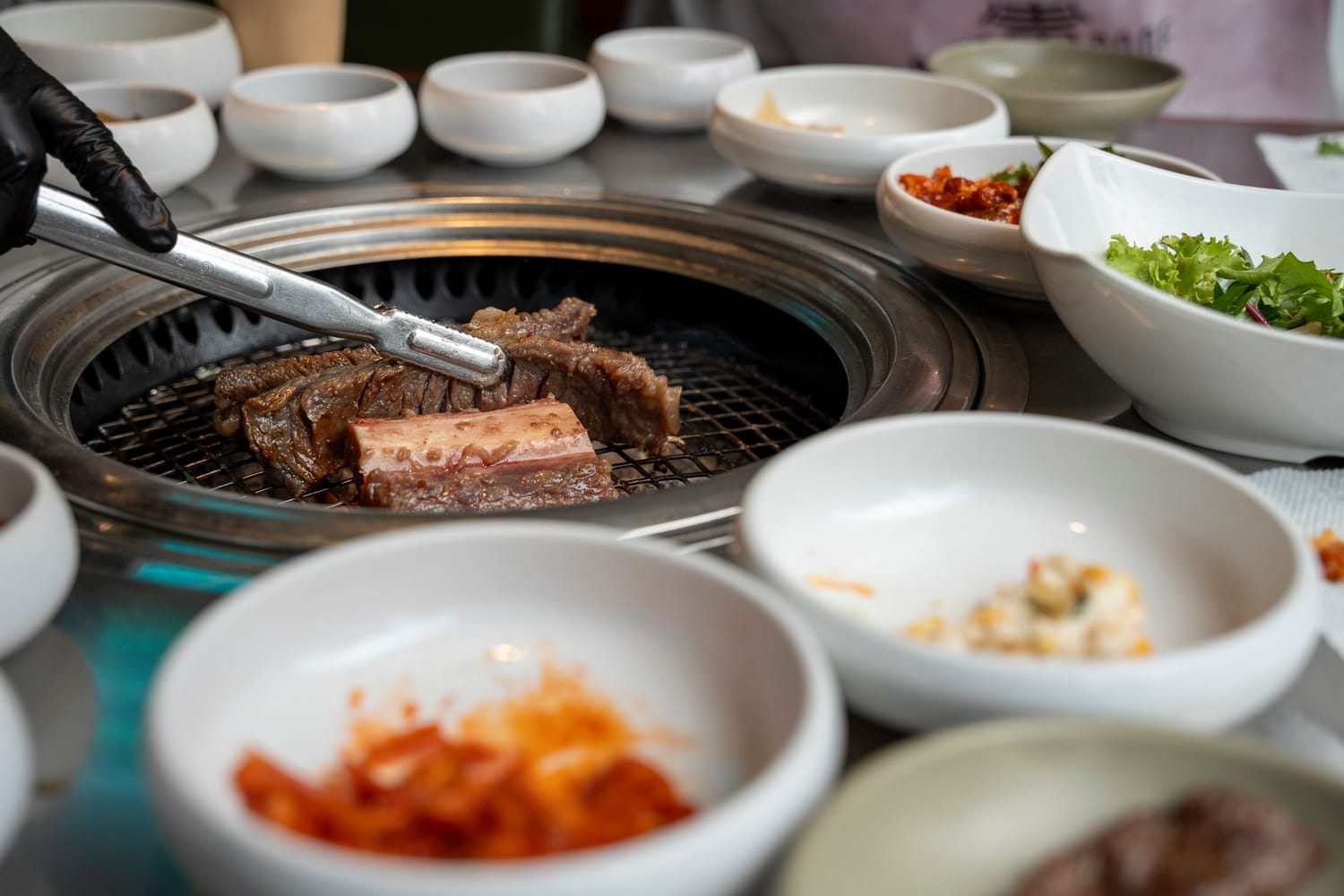
Korean Kitchen Scissors: Why Koreans Cut Meat and Noodles at the Table, and Why It Is Not an Office Scissor
Scissors on a restaurant table look wrong to most of the world and normal to every Korean. The tool is not a desk scissor: thick blades, one serrated edge, big rings, often detachable, built for galbi and cold noodles. Where it came from, and which one to buy.