Korean Drinking Culture: Hoesik, Choice and Safety
Modern Korean drinking culture is built around shared food and conversation, but drinking alcohol is not a requirement. A hoesik is a work-team meal, a cha is a round or next venue, anju is food served with drinks, and somaek mixes soju and beer. You can participate with water or a non-alcoholic drink, refuse a shot, skip later rounds and leave safely without failing a cultural test.
Older stories often describe compulsory company dinners, endless rounds and one-shot toasts as fixed Korean rules. Those practices still occur in some groups, but workplaces, generations and managers differ. A good host makes attendance and alcohol optional. A good guest communicates clearly, eats, joins conversation and does not pressure anyone else.
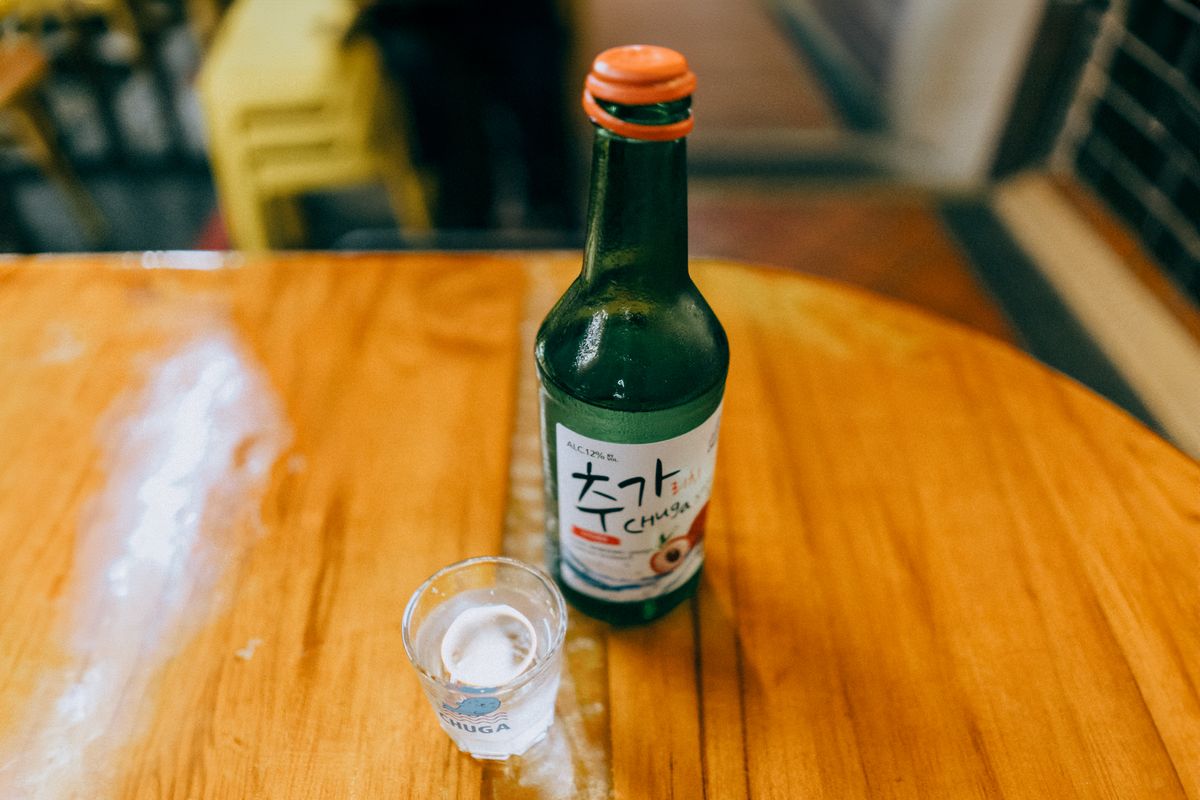
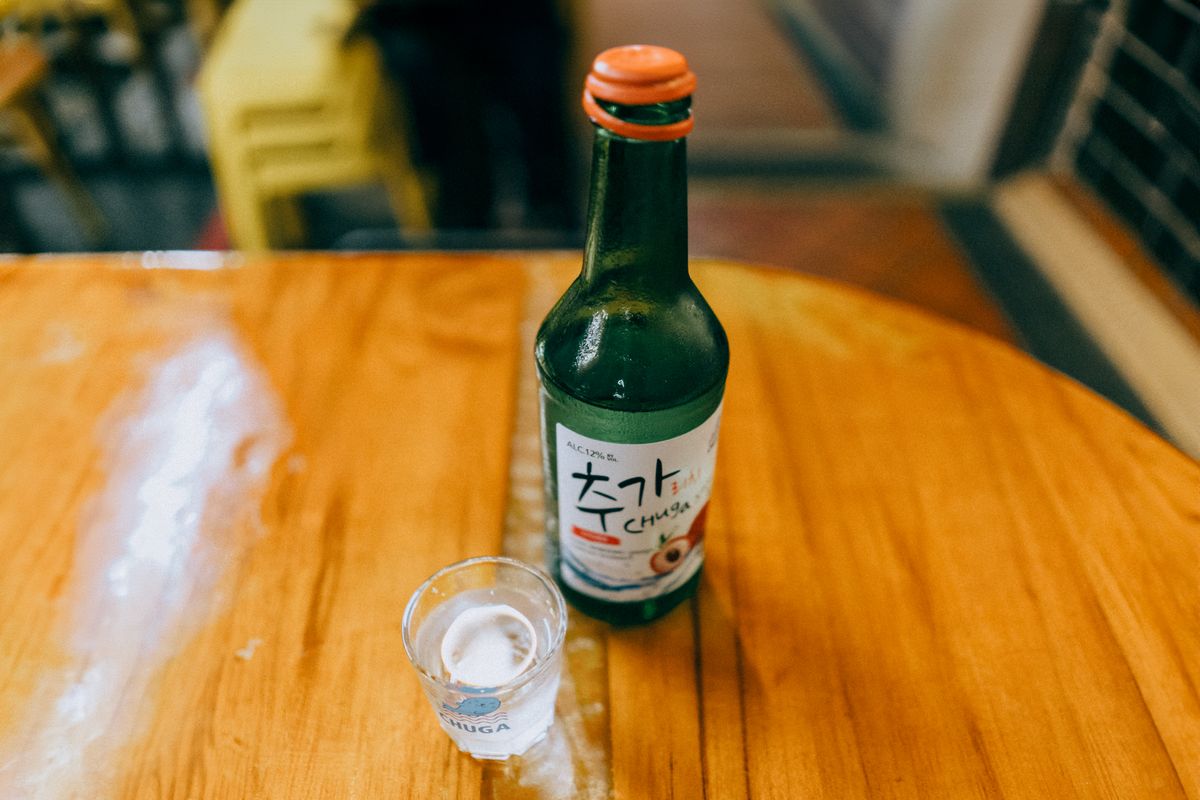
Read the front of that bottle: ALC 12%. It is a fruit soju, not the plain kind, which runs 15.7% in 2026 — the gentle end of the shelf is right there in the fridge and ordering it signals nothing. A toast expresses connection; what is in the glass, and how much of it, stays your decision. Photo by Mizzu Cho on Pexels.
What a Korean hoesik is in 2026
Hoesik literally centers on eating together. In a workplace it can be a team lunch, barbecue dinner, year-end gathering, welcome meal or project celebration. Alcohol may be present, but the useful purpose is social time outside the formal meeting room.
The old stereotype places the most senior manager at the center, with juniors attending because refusal feels risky. Today's reality is uneven. Some teams still hold hierarchical evening dinners; others use lunch, finish after one venue, ask employees what they prefer or rarely organize formal gatherings. Remote work, changing expectations and workplace-harassment awareness have made compulsory excess harder to defend.
Korea's Ministry of Employment and Labor explains that workplace harassment can involve using position or relationship to go beyond the proper scope of work and cause physical or mental suffering or worsen the work environment. Its workplace-harassment guidance does not declare every dinner invitation illegal, but it is a useful reminder: a manager's “friendly tradition” can feel very different to a subordinate who cannot safely say no.
The vocabulary: hoesik, cha, anju and geonbae
Knowing a few terms makes the evening easier without turning it into a drinking challenge. For a broader tourist-friendly menu of what to drink besides green-bottle soju, pair this with EpicKor's makgeolli, beer, somaek, and Korean drinks guide.
| Term | Meaning | What a visitor should know |
|---|---|---|
| Hoesik (회식) | Group or company meal | It may involve no alcohol and may end after dinner. |
| Il-cha (1차) | First round or first venue | Usually the main meal; leaving afterward can be normal. |
| I-cha (2차) | Second venue | Often a pub, cafe or karaoke; ask, do not assume. |
| Anju (안주) | Food eaten with drinks | It can be a full dish, not a tiny bar snack. |
| Geonbae (건배) | “Cheers” | Raise the glass; emptying it is not required. |
| Somaek (소맥) | Soju plus beer | A common mixed drink, not a mandatory Korean experience. |
Cha can also describe rounds in a private night out. A group may move from barbecue to a pub, karaoke room or late-night food. Each move should be a new decision. Agreeing to dinner does not create an obligation to attend every next venue.
How rounds work without the marathon myth
The first round usually carries the meal and main group conversation. If there is a second round, the group may choose lighter food, beer, cocktails, tea, dessert or noraebang. A third round exists in popular culture, but it should not be presented as the normal finish line.
Ask before moving: “Are we going somewhere else?” and “Is it okay if I finish here?” A simple early notice is easier than disappearing. In a work setting, tell the organizer or a teammate you are leaving, thank the person who arranged the meal and say goodbye to your immediate group.
The healthiest modern rule is one decision per round. Check your energy, transport, medication, caregiving duties and next morning. Someone who leaves after dinner has completed dinner, not failed the night.
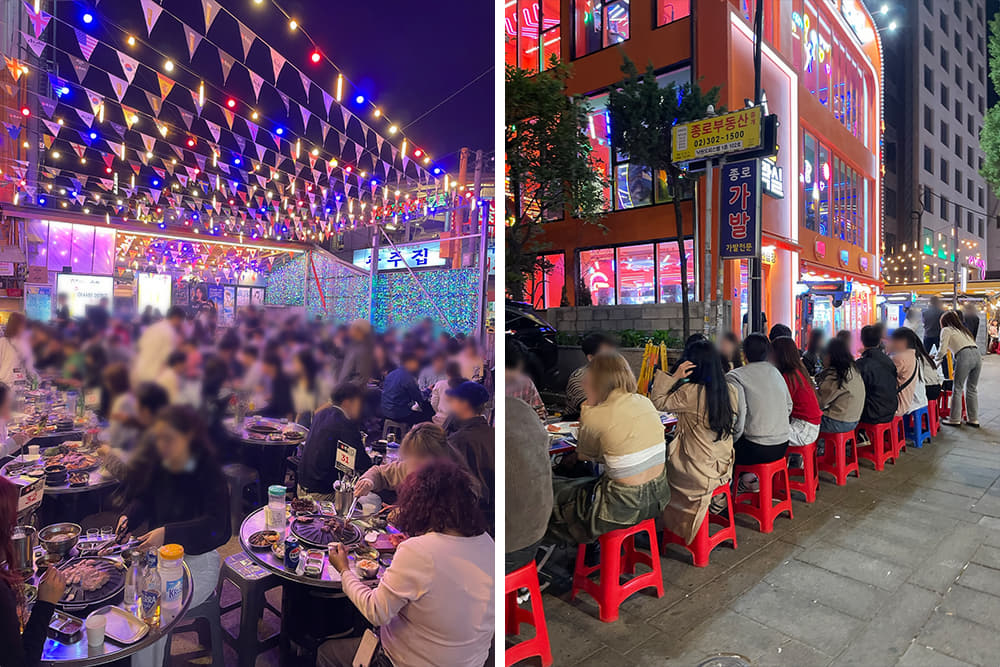
A second venue can be a pocha, but current layout, weather, prices and availability vary. Photo courtesy of the Seoul Tourism Organization.
Somaek has no medically safe “golden ratio”
Somaek combines soju and beer. Restaurants and friend groups invent names, mixing methods and preferred proportions, but there is no authoritative national recipe. A strong pour can hide behind carbonation and a small glass, making intake harder to track.
The World Health Organization's current alcohol fact sheet states that no form of alcohol consumption is risk-free. Risk varies with amount, frequency, health, age and context. That makes “the perfect 3:7 ratio” a taste claim, not health guidance.
If you choose alcohol, go slowly, know what was poured and alternate with non-alcoholic drinks. Do not mix someone's glass without asking. Never add alcohol secretly or treat a stronger glass as a prank. Pregnancy, driving, medication, recovery, religion, health and simple preference are all sufficient reasons not to drink—and nobody owes the table a reason.
Polite Korean table etiquette without forced shots
When someone older or more senior pours for you, receiving the glass with two hands or supporting one wrist with the other is a familiar respectful gesture. When pouring, watch the glass and avoid overflowing it. During a group toast, lift your drink and make comfortable eye contact.
Turning slightly away from a senior while drinking appears in traditional etiquette explanations, but context matters. It is not necessary to perform an exaggerated side turn at a casual dinner. Follow the group's tone and prioritize not spilling on anyone.
“One shot” or won-shot is a request, not a command. You can sip. Leaving alcohol in the glass is not a moral offense. The better etiquette is mutual attention: do not refill someone who has declined, and do not ask why a glass contains cola, tea or zero-alcohol beer.
| Moment | Respectful option | What to avoid |
|---|---|---|
| Receiving a drink | Use two hands and say thank you | Assuming you must consume it immediately |
| Toast | Raise any drink and take a sip if desired | Demanding everyone empty the glass |
| Refill | Ask, “Would you like more?” | Pouring into a covered or declined glass |
| Leaving | Tell the organizer and thank the group | Pressuring someone into the next round |
| Photo | Ask before posting coworkers | Uploading intoxicated images as a joke |
How to decline alcohol clearly and politely
Short answers work: “I am not drinking tonight,” “I will have water,” or in Korean, oneureun sul an masilgeyo (오늘은 술 안 마실게요). You can also say gwaenchanseumnida (괜찮습니다, “I'm okay/no thank you”) while lightly covering the glass.
Do not invent a medical condition unless you want to disclose one. A complete host accepts the first answer. If a person keeps pouring, move the glass, ask a trusted colleague for support or leave the situation. At work, document repeated coercion and use an internal reporting channel or qualified labor advice when appropriate.
International visitors sometimes overperform because they fear being rude. Calm consistency is clearer than accepting several shots and then becoming unsafe. Join the meal through food, conversation and the toast itself.
The sentences worth having on your phone
Show them rather than pronouncing them. Every one of these is normal and none of them will read as rude.
| Korean | Romanised | Meaning |
|---|---|---|
| 오늘은 술 안 마실게요. | Oneureun sul an masilgeyo. | I'm not drinking tonight. |
| 괜찮습니다. | Gwaenchanseumnida. | No thank you / I'm fine. |
| 물 주세요. | Mul juseyo. | Water, please. |
| 무알콜 있어요? | Mu-alkol isseoyo? | Do you have an alcohol-free option? |
| 저는 여기까지 할게요. | Jeoneun yeogikkaji halgeyo. | I'll stop here. |
| 2차 가세요? 저는 먼저 갈게요. | I-cha gaseyo? Jeoneun meonjeo galgeyo. | Are you going on? I'll head off. |
| 대리운전 불러 주세요. | Daeri-unjeon bulleo juseyo. | Please call a substitute driver. |
| 막차 몇 시예요? | Makcha myeot si-yeyo? | What time is the last train? |
The last two matter more than the polite ones. 대리운전 불러 주세요 is the sentence that keeps you out of the table above, and 막차 is the word that decides whether the evening ends on a train or in a taxi queue.
Make the table about food, not pressure: As an Amazon Associate, EpicKor may earn from qualifying purchases. A 50-piece Korean snack box builds an at-home tasting table where every guest can choose tea, water, zero-alcohol drinks or alcohol without a drinking challenge — 안주 is the part of hoesik nobody has to opt out of.
Anju is food, not protection from intoxication
Korean drinking venues commonly pair beverages with substantial dishes: grilled meat, fried chicken, jeon, fish cake soup, tofu with kimchi, dried seafood or spicy stew. Sharing anju slows the table and creates conversation, but food does not cancel alcohol or make it safe to drive.
Order for the group and check dietary needs before assuming a dish is suitable. Broths may contain meat or seafood, pancakes may include egg, and “vegetable” dishes may use fish sauce. At a pocha, confirm the price and portion before ordering.
EpicKor's Korean pocha guide explains tent-bar menus and pricing without promising that every street operates nightly. The Korean BBQ guide covers shared grills, ordering and table rhythm when the first round is dinner.
This page is about the workplace side — rounds, refusal, and getting home. For the drinks themselves, our companion guide to soju, makgeolli and anju covers what each one actually is, why soju dropped below 16% for the first time in 2026, and why the same bottle costs about ₩1,900 in a convenience store and ₩5,000–7,000 on a restaurant table.
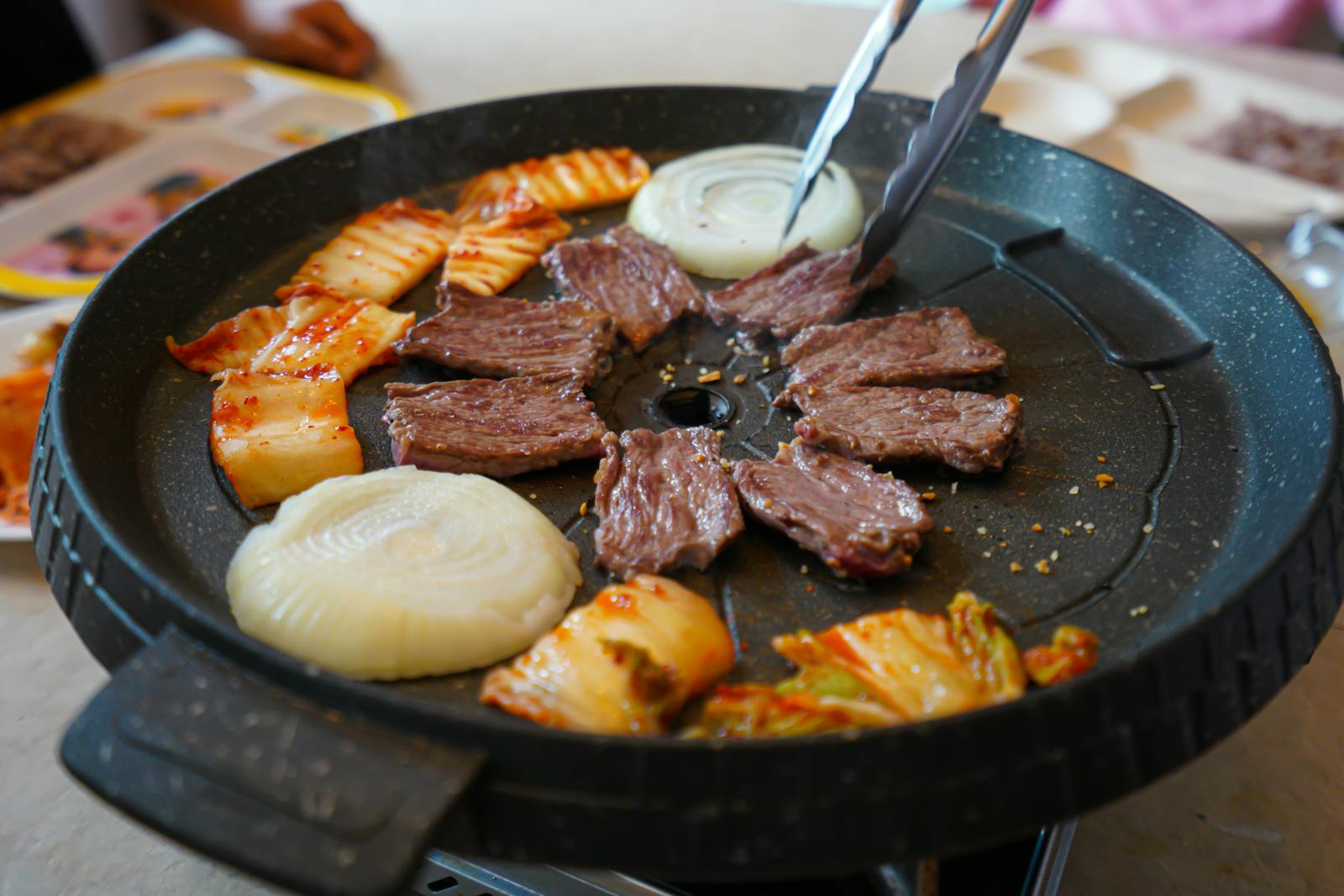
A full shared meal is often the center of hoesik. Food supports the evening, but it does not neutralize alcohol. Photo by Jason Kim on Pexels.
How workplace dinners are changing
There is no single “Korean company.” A multinational office, public agency, startup, factory, school and family business can have different expectations. Team age, manager behavior and industry matter more than a travel cliché.
Recent Korean research on Generation Z workplace gatherings identified multiple attitudes, including a group that experiences hoesik as burden and pressure. That does not mean all young workers hate group meals. It supports a more accurate conclusion: people want different forms, and voluntary attendance matters.
Better workplaces use lunch, set an end time, offer alcohol-free choices, avoid evaluating attendance and let employees leave without explanation. A restaurant meal can still build rapport when the employer removes the loyalty test.
Korea prosecutes from 0.03%, which is about one drink
If you take one number from this page, take this one, because visitors routinely apply their home country's limit and are badly wrong.
Korea's drink-driving threshold is 0.03% blood alcohol. The United States and the United Kingdom (outside Scotland) use 0.08%. Korea's limit is less than half that, and for most adults 0.03% is reachable with a single drink. The threshold was tightened in the 2019 road-traffic amendment known as the 윤창호법 (Yun Chang-ho Act), and it is enforced with roadside checkpoints that stop every car in a line rather than only suspicious ones.
| Blood alcohol | Licence | Criminal penalty |
|---|---|---|
| 0.03% – under 0.08% | Suspension, 100 days | Up to 1 year prison or up to ₩5,000,000 fine |
| 0.08% – under 0.2% | Revoked, 1 year before reapplying | 1–2 years prison, or ₩5,000,000–10,000,000 |
| 0.2% and above | Revoked | 2–5 years prison, or ₩10,000,000–20,000,000 |
A second offence can mean revocation for two years even below 0.08%. None of this is discretionary for foreign drivers, and it applies to rental cars.
The practical rule is simpler than the table: if you have had anything at all, you are not driving in Korea tonight. Not "I'll wait an hour." Not "it was one beer with dinner."
Korea's answer to that: 대리운전
Korea solved the problem in a way most countries have not, and visitors rarely hear about it. 대리운전 (daeri unjeon) is a substitute-driver service: you call, a driver arrives — often by folding scooter or on foot — and drives your own car home with you in it. Your car ends up at your house. You do not.
It is completely mainstream, it exists because the 0.03% rule is taken seriously, and it costs roughly ₩15,000–25,000 within Seoul, about ₩20,000 for a typical trip, with a late-night surcharge from 23:00. If you have driven to dinner, this is the expected move, not an exotic one.
Safe return planning should happen before the first toast
Save your accommodation address in Korean, keep the phone charged and check the final subway before drinking. Seoul's last trains generally leave their terminals somewhere between 23:30 and midnight, which means the last train through your station is earlier than most people assume — check your actual station, not the line.
After that, Seoul runs N-numbered 올빼미버스 (owl buses) from 23:00 to 06:00 at about ₩2,500 by card. The city's current public transportation guide has the routes, but departures must be checked on the day.
Use a legitimate metered taxi or a recognized ride-hailing service. The official Visit Seoul taxi guide explains regular, deluxe, large and international taxis. Share the vehicle details with a friend when useful, and sit where you feel safe.
If someone is difficult to wake, breathing abnormally, repeatedly vomiting, confused or injured, treat it as a medical emergency rather than “sleeping it off.” Call 119 for ambulance or rescue. For crime or immediate police help call 112; the official Seoul safety page lists both numbers.
Keep the phone available for the trip home: As an Amazon Associate, EpicKor may earn from qualifying purchases. An Anker 10,000mAh power bank keeps maps, translation and taxi details alive at the end of the night, which is exactly when a Korean phone battery has spent nine hours on Kakao.
A practical plan for visitors and new employees
Before the event, ask whether it is lunch or dinner, who is paying, what time it ends and whether another venue is expected. Decide your alcohol limit—or zero—before the first pour. Eat, keep your own glass visible and arrange the return route.
During the meal, use respectful gestures without copying exaggerated drama etiquette. Talk to more than one person, help with shared food when comfortable, and do not make the youngest person manage every grill or pour. If the company pays, let the organizer handle the bill unless asked.
Afterward, leave when your plan says to leave. Send a short thank-you message if that fits the team. You do not need to explain why you skipped karaoke, and you should not post another person's drinking behavior.
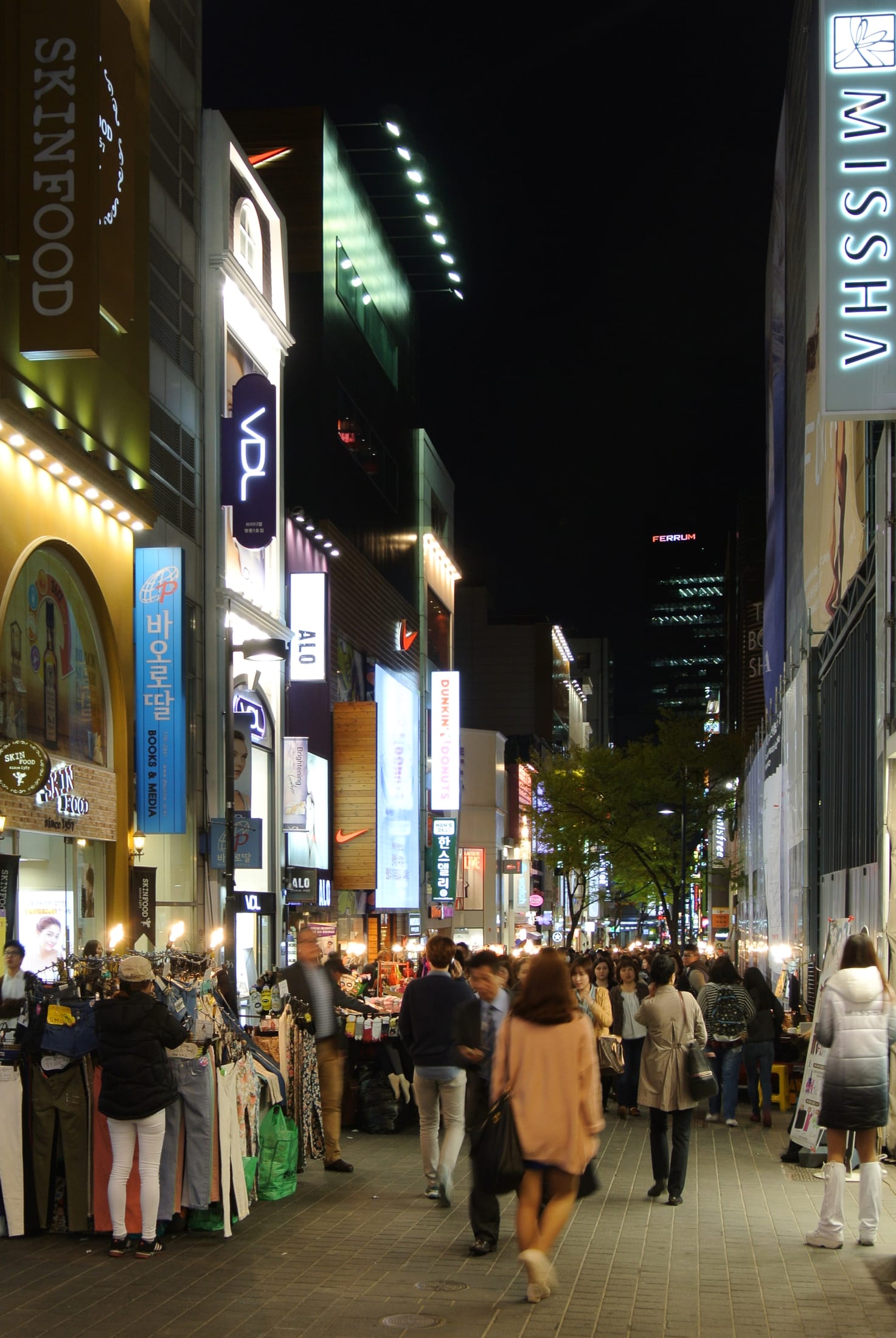
Seoul stays active late, but a bright district is not a substitute for a charged phone and a checked route home. Photo by Adbar via Wikimedia Commons, CC BY-SA 3.0.
The practical answer
Korean drinking culture includes real rituals: shared anju, rounds, two-handed pouring and group toasts. None requires intoxication. Hoesik is changing because employees and responsible managers increasingly separate team connection from forced attendance and forced alcohol.
Join what feels safe, refuse clearly, respect other people's choices and plan transport before the night stretches. The most culturally fluent person at the table is not the one who drinks fastest; it is the one who notices boundaries.
FAQ
Q: Do I have to drink alcohol at a Korean hoesik?
No. You can join with water, soda, tea or a zero-alcohol drink. A respectful workplace and host should not require alcohol or a personal explanation.
Q: Is it rude to refuse a drink from a Korean boss?
A brief, calm refusal is appropriate. Use two hands if receiving a non-alcoholic drink, join the toast and stay engaged in the meal without accepting unwanted alcohol.
Q: Must I finish a Korean drink in one shot?
No. “One shot” is sometimes said during a toast, but you may sip or not drink. Emptying the glass is not a universal etiquette rule.
Q: What is the correct somaek ratio?
There is no official ratio. Preferences vary, and stronger mixing makes intake harder to track. Somaek is optional and is not safer than drinking its ingredients separately.
Q: How many rounds does a Korean night have?
It can have one, two or more, but no fixed number is required. Treat every move to another venue as a new choice and leave after the main meal if that is your plan.
Q: How do I get home safely after drinking in Seoul?
Check the last subway, current N-bus route or legitimate taxi before the event. Last trains generally leave terminals between 23:30 and midnight, and N-numbered night buses run 23:00–06:00 at about ₩2,500. Keep the phone charged, share ride details when useful, never drive, and call 119 for a medical emergency.
Q: What is the drink-driving limit in Korea?
0.03% blood alcohol — less than half the US and UK limit of 0.08%, and reachable for most adults after a single drink. From 0.03% the penalty is up to a year in prison or a fine up to ₩5,000,000, plus a 100-day licence suspension. It applies to rental cars and foreign drivers.
Q: What is 대리운전?
A substitute-driver service. You call, a driver comes to you and drives your own car home with you as passenger, so the car does not stay parked overnight. It costs roughly ₩15,000–25,000 within Seoul with a surcharge from 23:00, and it is the normal solution Koreans use rather than an unusual one.
Sources checked
You Might Also Like
Korean Modern Art: The Painters Whose Work Now Sells for Millions
Meet the Korean modern painters whose work now sells for millions at auction, why the market is booming, and exactly where to see the real thing in Korea.
Kkondae (꼰대) Explained: Korea's Word for the Boss Who Knows Best
Kkondae (꼰대) explained: Korea's word for a condescending senior who won't listen — and why survey data shows it's about behavior, not age.
Centre Pompidou Hanwha Seoul: Yeouido Art Stop Guide
A timely guide to Centre Pompidou Hanwha Seoul in Yeouido: opening facts, why it matters, how to plan a visit, and what to pair nearby.