LG Styler Explained: Why Korea Invented a Closet That Shakes Your Clothes
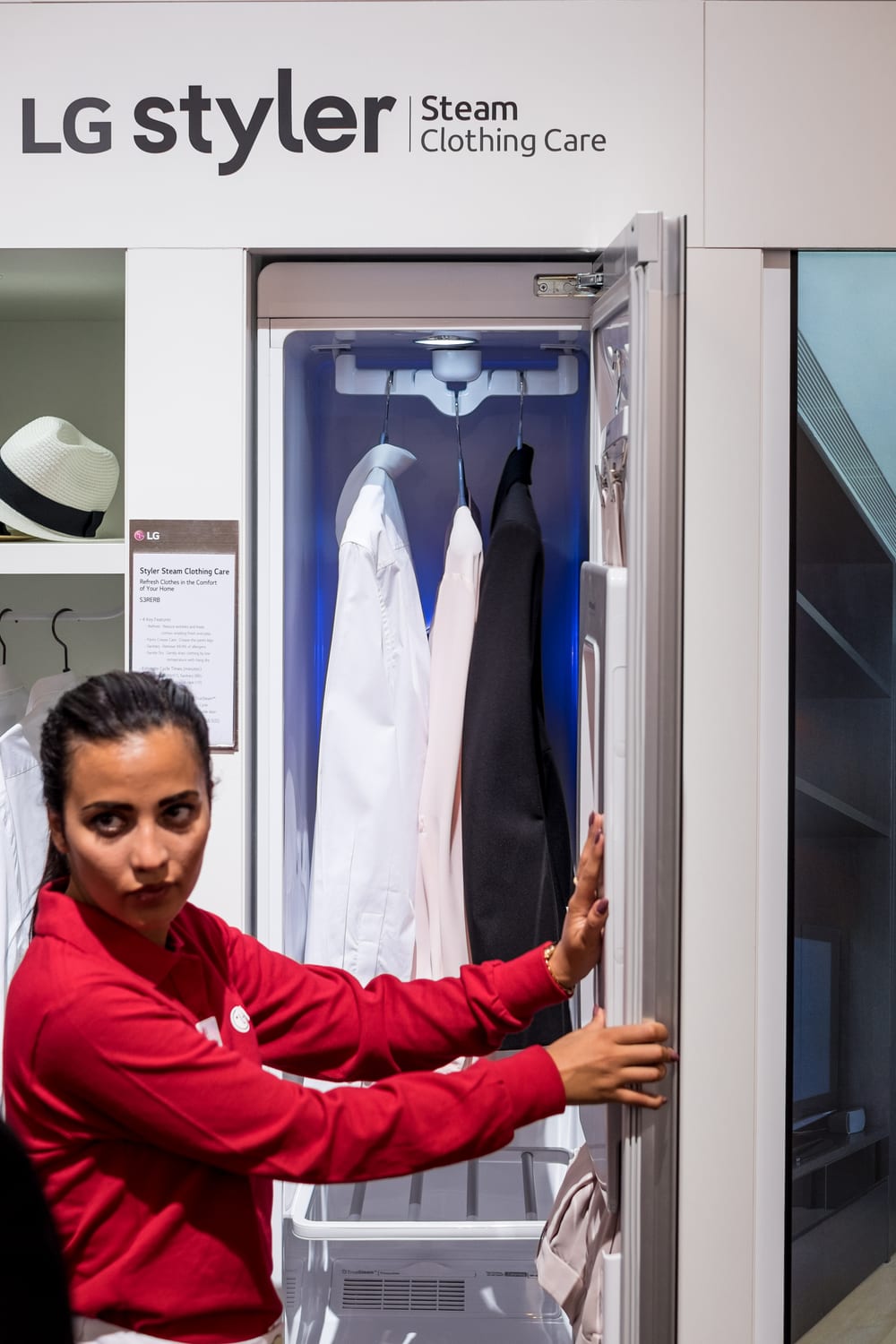
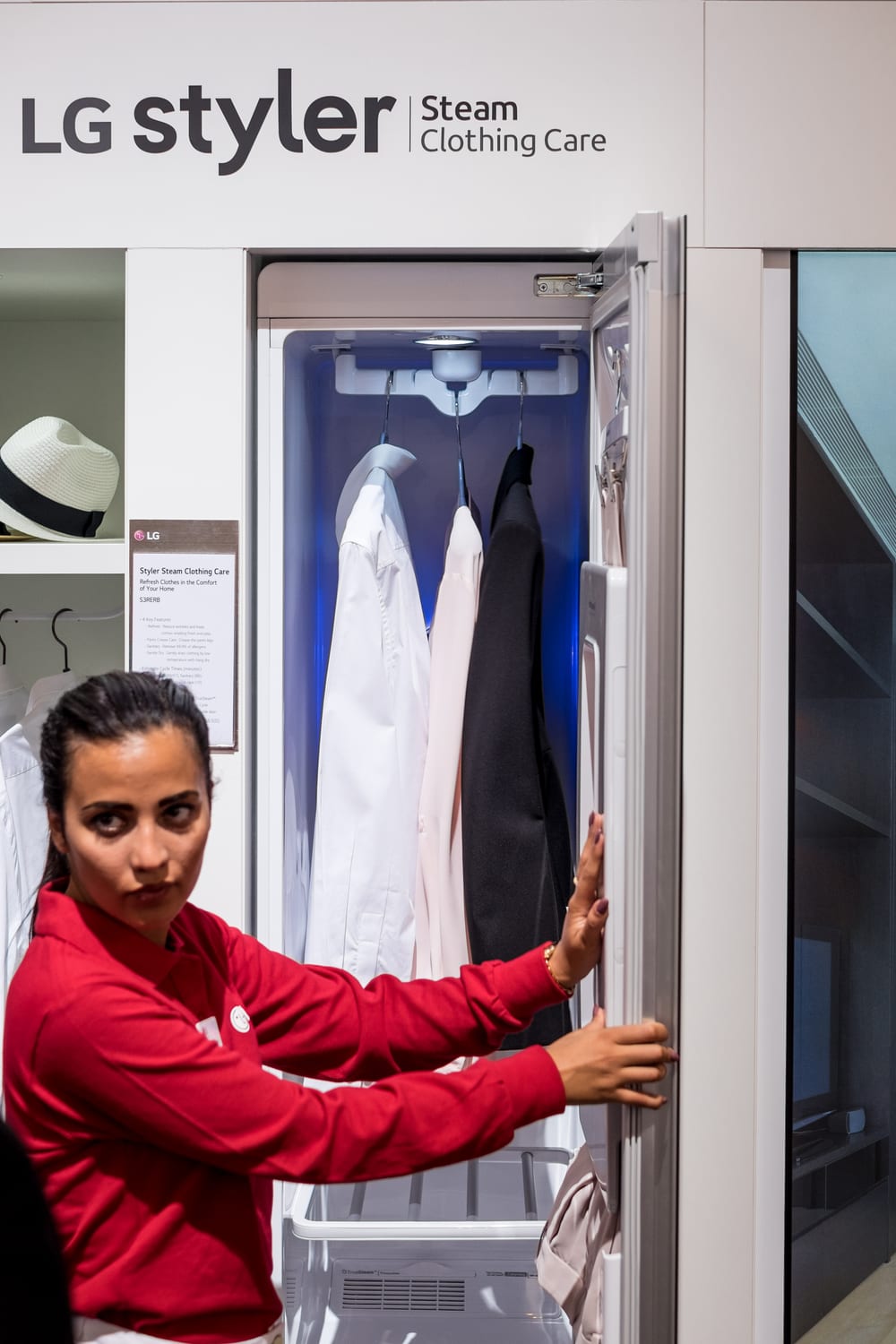
There is a piece of furniture in Korean apartments that looks like a slim wardrobe, hums at night, and costs as much as a large TV. Open it and there are three hangers, a water tank, and no washing drum anywhere.
It is a 의류관리기 (uiryu gwalligi) — a clothing care machine — and outside Korea almost nobody can explain what it does, even as LG sells it in the US as the Styler steam closet and TikTok apartment tours keep showing it. Google's own autocomplete gives the game away: people search lg styler how to use, because the machine arrived in English-speaking markets before the explanation did.
Here is the explanation: what it actually does to clothes, the specifically Korean problems it was built to solve, the nine-year development story, the LG-versus-Samsung split that divides Korean households, and — because this is a four-figure appliance — the honest cases where you should not buy one.
| Question | Short answer |
|---|---|
| What is it | A sealed cabinet that steams, shakes, dries and de-smells the clothes you hang in it — no water drum, no detergent |
| What it is not | Not a washer, not a dryer. It refreshes clothes between washes; it does not clean stains |
| Invented | LG, Korea, 2011 — after roughly nine years of development |
| The signature move | The Moving Hanger: the rack swings, shaking garments up to 200 times a minute |
| Built for | Fine-dust season, Korean BBQ smell, daily-worn suits and uniforms, and dry-cleaning bills |
| The rival | Samsung AirDresser (2018) — blows air instead of shaking, needs filter replacements |
| Korea price | Both brands cluster around ₩2,000,000 for current mid-range models, August 2026 |
| US availability | LG's own Amazon store; price varies by model |
S3MFBN with the mirrored door — on AmazonAffiliate link. As an Amazon Associate, EpicKor earns from qualifying purchases at no extra cost to you.
What It Actually Does
A cycle in a Styler looks like this. You hang up to three garments on the special hangers, pour water into the tank at the bottom, close the door, and pick a course. The machine then:
- Steams. True steam from the water tank penetrates the fabric — this is the same steam technology LG builds into its washers, and it is what relaxes wrinkles and kills most odor-causing bacteria and dust mites without any chemicals.
- Shakes. The hanger rack itself swings back and forth, agitating each garment up to 200 times a minute. This is the part no other appliance had ever done, and it is what knocks fine dust and pollen out of the weave.
- Dries gently. A low-temperature heat-pump dry — refrigerator temperature control, repurposed — sets the fabric without the damage of a hot tumble dryer.
Twenty to forty minutes later the jacket comes out warm, uncreased, and smelling of nothing.
Note what is missing: water never touches the clothes as liquid, nothing rotates in a drum, and there is no detergent anywhere. The machine does not wash. A stained shirt goes into the washing machine or to the cleaner, same as always. The Styler's territory is everything between washes — which, for the garments Koreans care most about, is most of a garment's life.
The Three Korean Problems It Was Built For
The Styler makes complete sense only when you know what a clothing day in Korea involves.
Problem one: 미세먼지 — fine dust. On a bad spring day, Korean weather apps lead with particulate readings the way others lead with rain, and a coat worn outside comes home carrying the day's air on it. Hanging that coat straight into the closet, against tomorrow's clothes, feels wrong to a Korean reader in a way it may not to an American one. The Styler exists to be the airlock: the coat goes in, gets shaken and steamed, and only then joins the closet. This is the same national anxiety that made Korean air purifiers world-class — a story we cover in our Coway vs Winix guide.
Problem two: the Korean BBQ afterlife. Anyone who has spent an evening at a samgyeopsal or galbi restaurant knows the walk home: your coat, sweater, and hair all smell like a grill. Korean office culture used to run on those dinners — 회식, the company dinner — and the next morning's suit problem is real enough that de-smelling a jacket overnight became one of the two or three things every Styler owner says first. Steam plus agitation strips the smoke smell without a trip to the cleaner.
Problem three: the daily uniform economy. Korea is a country of daily-worn suits, school uniforms, and office wear that cannot be laundered after every wear but must look pressed every morning. Dry cleaning a suit a few times a month, for years, is a real budget line. A machine that resets the suit overnight — wrinkles, smell, dust — pays itself off against the cleaner's bills, which is exactly how Korean buyers justify it.
None of these problems require Korea, which is why the machine now sells abroad. But all three are sharpest in Korea, which is why it was invented there.
Nine Years and a Remark at Home
The origin story is well documented in Korean business media and worth telling properly.
The Styler is credited to 조성진 (Jo Seong-jin) — the washing-machine engineer who eventually rose to CEO of LG Electronics. The idea, as Korean coverage tells it, began at home, with his wife's complaints about the daily reality of clothes that were not dirty enough to wash but not fresh enough to wear: the ironing, the airing-out, the dry-cleaning runs. He decided the gap between the washer and the closet was a product.
It took about nine years to become one. The machine that launched in 2011 as the LG Tromm Styler was a fusion of three technologies LG already mastered in separate appliances: steam from its washers, precise temperature control from its refrigerators, and airflow engineering from its air conditioners — plus the one thing that existed nowhere, the swinging hanger rack.
It was not an instant hit. Early units were expensive curiosities. What changed was Korea's fine-dust decade and a steady drumbeat of refinement — and by 2021, ten years in, LG had produced its one-millionth Styler, with annual sales roughly thirty times the launch year's. Along the way the brand name did in Korean what Kleenex did in English: 스타일러 became the word for the whole category, to LG's delight and its competitors' annoyance.
As an Amazon Associate, EpicKor may earn from qualifying purchases. LG sells the Styler in the US through its own Amazon storefront: the S3MFBN with the mirrored door is the model most apartment tours show, the white S3WFBN is the same machine without the mirror, and the newer SC5-series with dual steam is the current flagship. Measure your space first — these need clearance and a nearby outlet, and returns on a 200-pound appliance are not casual.
See S3MFBN with the mirrored door on AmazonLG vs Samsung: The Shake-or-Blow Divide
Samsung answered in 2018 with the AirDresser (에어드레서), and the two machines split Korean households the way their phones do. The difference is genuinely mechanical, not marketing:
- LG shakes. The Moving Hanger physically agitates the garment. No air filter is involved in the dust removal, which means no consumables: the running cost of a Styler is water and electricity.
- Samsung blows. The AirDresser fires jets of air and steam through the garment from hanger nozzles, then captures what comes off in a deodorizing filter — which is a consumable. Korean owners budget a modest annual cost for replacement filters, in exchange for a quieter cycle: no rack knocking back and forth.
Korean comparison shopping in 2026 puts both brands' comparable models in the ₩2,000,000 band, with the Samsung typically ₩100,000–200,000 cheaper at the same capacity. The practical decision tree Korean buyers use: bedroom-adjacent placement and noise sensitivity favor the AirDresser; zero-maintenance and the stronger dust-removal claim favor the Styler. In the US, LG's machine is the one with real retail presence, which mostly makes the decision for you.
Who Should Not Buy One
The honest section. A Styler is a poor purchase if:
- You wear casual, machine-washable clothes. T-shirts and jeans go in the washer. The Styler's value concentrates in garments you cannot casually wash — suits, coats, uniforms, knitwear, school blazers. No such garments, no case for the machine.
- You expect it to replace washing or dry cleaning entirely. It stretches the interval between cleanings dramatically; it does not remove stains or do the deep clean a soaked, pressed suit eventually needs.
- The math is dry-cleaning math and your bill is small. If you dry-clean a few items a year, a four-figure cabinet will never pay off. The machine's economics work for households feeding it daily.
- Space is tight. It is the size of a slim wardrobe and wants to live near the entrance or bedroom. In a small apartment that footprint is a real cost — Koreans give it space because the daily use justifies it.
And one honest alternative for the smell-and-wrinkle problem at one-twentieth the price: a good handheld garment steamer does a meaningful share of the job, minus the shaking, the drying, and the unattended overnight cycle. That is the correct first step for most households — and if you find yourself steaming daily, that is the signal the cabinet is worth it. The same buy-the-small-thing-first logic applies across Korean appliances — it is how we rank kimchi containers against the kimchi refrigerator.
The staged path: start with a Conair handheld garment steamer and see how often you actually reach for it. If the answer is daily, the cabinet earns its price — the S3 models above are the ones in stock on Amazon US (the larger S5-series listing is currently unavailable). EpicKor may earn from qualifying purchases at no extra cost to you.
See Conair handheld garment steamer on AmazonHow Koreans Actually Use It
Habits from Korean households that the manual undersells:
It lives by the door or the bedroom, not the laundry room. The whole point is intercepting clothes at the transition — off your body, before the closet. Korean apartment layouts increasingly show a Styler nook at the entryway for exactly this reason.
The overnight rhythm. Suit comes off, goes in, quick course runs while you sleep, suit is ready at seven. It is less an appliance you operate than a place you hang things.
Pants press. The door's inner face clamps trousers flat and the cycle sets the crease — the feature Korean office workers mention as the sleeper hit, because it quietly replaces the morning iron.
Not everything goes in. Leather and fur do not want steam. Delicate prints and glued-on decorations can suffer from agitation. Padded coats and wool coats, on the other hand, are the machine's best customers — a down jacket comes out re-lofted in a way a hanger never achieves.
Rainy-season double duty. In Korea's humid July, the Styler moonlights as a small dehumidified drying room for one or two items that must be dry by morning — a use the fine-dust marketing never mentions but every owner discovers.
FAQ
Q: What does an LG Styler actually do?
It refreshes hung garments with steam, physical shaking, and gentle drying: wrinkles relax, fine dust and pollen shake out, odors — cigarette, grill smoke, sweat — strip away, and most bacteria and dust mites are killed by the steam. It does not wash and will not remove stains.
Q: Is the LG Styler worth it?
It depends on your closet. If you wear suits, uniforms, coats or knitwear daily and pay for regular dry cleaning, it can genuinely pay for itself in reduced cleaning and ironing. If your wardrobe is machine-washable casualwear, it is an expensive way to de-wrinkle t-shirts — buy a handheld steamer instead.
Q: What is the difference between the LG Styler and the Samsung AirDresser?
Mechanism. The Styler physically shakes clothes on a moving hanger and needs no filters; the AirDresser blows air and steam through them and captures debris in a replaceable deodorizing filter. The Styler is the zero-consumable choice; the AirDresser is the quieter one. In Korea both sit around ₩2,000,000, with Samsung usually slightly cheaper.
Q: Can the Styler replace dry cleaning?
Partially. It dramatically extends the time between professional cleanings by handling smell, wrinkles, and surface dust — but it cannot remove stains or do a true deep clean. Korean owners treat it as cutting dry-cleaning frequency, not eliminating it.
Q: Why did Korea invent the clothing care machine?
Three pressures stacked: fine-dust seasons that make people want outside-clothes decontaminated before they touch the closet, a food culture whose grilled-meat dinners send you home smelling of smoke, and a formal daily dress code that makes suit upkeep a real recurring cost. LG's washing-machine engineer Jo Seong-jin spent about nine years building the answer, launched in 2011.
Q: How much is a Styler in the US?
Current models are four-figure appliances sold through LG's own Amazon storefront in several series and finishes, with the mirrored S3MFBN the best-known version. Check the current price there, and read the delivery terms carefully — it is a full-size appliance, not a parcel.
Sources Checked
- Korean brand-history coverage of the Styler's development: Jo Seong-jin, the spouse's-remark origin, the roughly nine-year development, the 2011 Tromm Styler launch, and the fusion of washer steam, refrigerator temperature control and air-conditioner airflow — AsiaA brand story, Insight business profile
- LG's own press releases for the 10th-anniversary figures: one million cumulative units produced by March 2021 and sales roughly 30x the launch year — LG Newsroom release
- Korean 2026 comparison coverage of Styler vs AirDresser pricing (both in the ₩2,000,000 band, Samsung typically ₩100,000–200,000 cheaper) and the consumables difference (Styler: none; AirDresser: deodorizing filter)
- Amazon US listings on LG Electronics' official storefront for current models and prices, checked August 2026
- Moving Hanger specification (up to 200 shakes per minute) from LG product materials as cited in Korean press
You Might Also Like
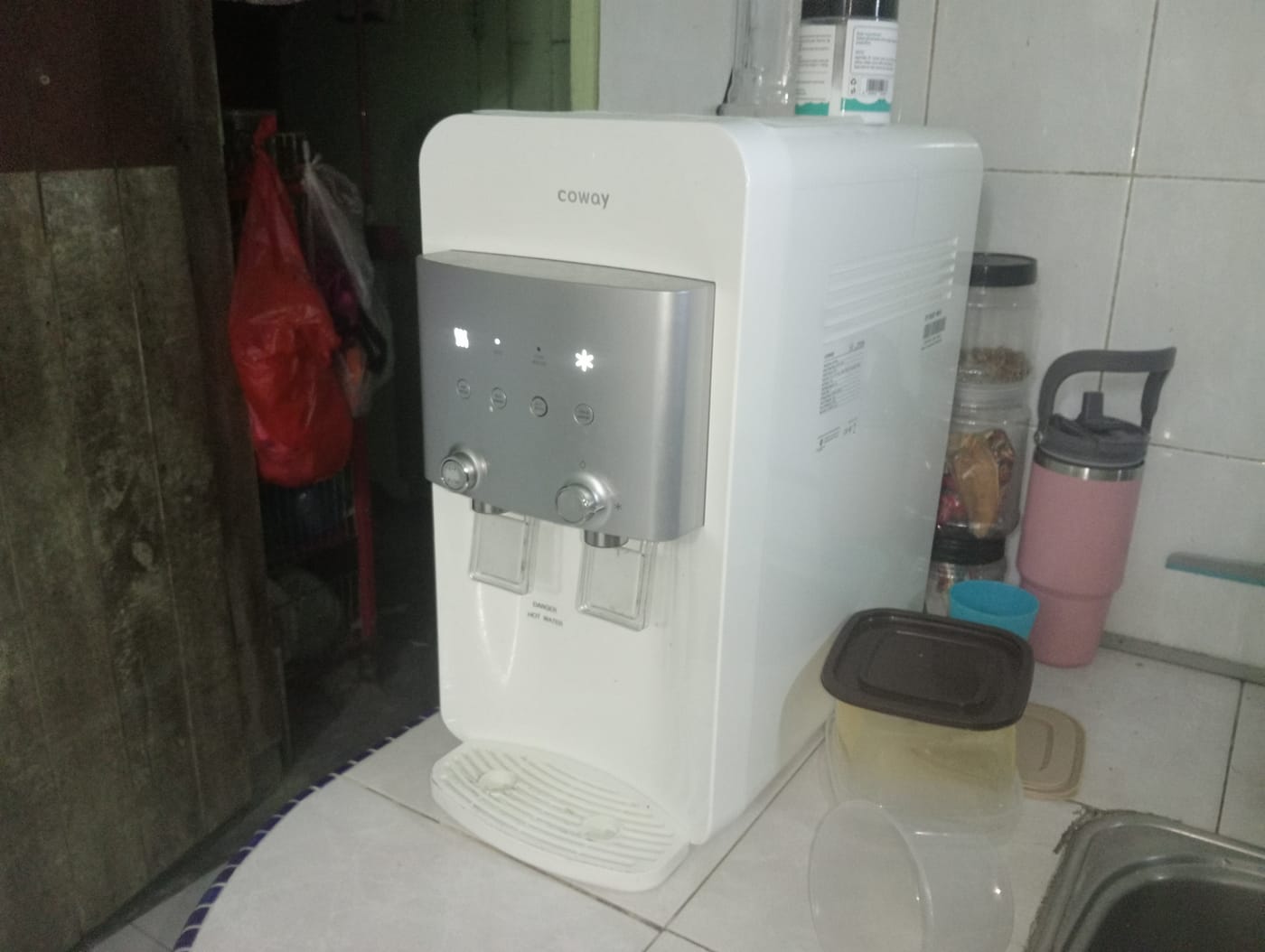
Korean Water Purifiers: The 1998 Rental Bet That Built Coway's Empire
In the worst month of Korea's IMF crisis, a water purifier company started lending machines instead of selling them. That decision built a ₩4 trillion empire, invented Korea's rental economy, and explains half the appliances on this site.
Korean Massage Chairs: How Bodyfriend Made a Recliner the Top Filial Gift
In Korea, the massage chair is a family milestone purchase — the holiday gift for parents, rented by the month like a water purifier. How Bodyfriend beat Japan at its own invention, what the chairs cost in the US, and the child-safety warning no listing shows.
Kimchi Refrigerators Explained: Why Korea Built a Fridge for One Food
Korea invented a second refrigerator that exists only to store kimchi at the temperature of winter earth. Here is why it exists, how it works, what happened to the company that invented it six weeks ago, and what to check before buying one abroad.