Coway vs Winix: Which Korean Air Purifier Fits Your Home
If you have shopped for an air purifier in the United States in the last five years, you have almost certainly compared two machines: the Coway Airmega AP-1512HH and the Winix 5500-2. They sit next to each other in every roundup, every price-tracker chart, every "best air purifier" list.
What almost none of those lists mention is that both companies are Korean, and that the version of them Americans meet is not the version Koreans live with.
In Korea, a Coway is usually not something you buy. It is something you rent on a monthly plan — Coway's Noble air purifier, for one, sits in the ₩20,000-a-month range — and a company employee called a 코디 (Cody) comes to your home on a schedule to change the filter for you. In the United States, you buy a box, and you change the filter yourself.
Same brand. Completely different product.
Coway Airmega Mighty2 — the in-stock successor to the AP-1512HH, on AmazonAffiliate link. As an Amazon Associate, EpicKor earns from qualifying purchases at no extra cost to you.
Quick Guide
| Coway AP-1512HH "Mighty" | Winix 5500-2 | |
|---|---|---|
| Maker's US price | $239.99 | 5500-2 discontinued · 5510 is $199.99 |
| Room coverage | 361 sq ft | 360 sq ft (5510: 392 sq ft) |
| Strongest at | Dust and allergens; quieter | Odour and VOCs; pellet carbon filter |
| Signature feature | Air-quality light, Eco mode | PlasmaWave (can be switched off); 5510 adds WiFi and a sensor |
| Genuine filters per year | About $50–$80 | About $35–$80 |
| Third-party filters | Available | Available, and cheap — near $15/yr in 4-packs |
| In Korea it is mainly | A rental subscription with home visits | A purchase |
Coway's price is from Coway's own US store, checked 15 August 2026. The Winix 5500-2 was discontinued in the US and Canada in May 2025 and replaced by the Winix 5510 — see the section below before you buy either. Street prices move constantly; the Coway has traded near $160 during sales, so treat list prices as the ceiling.
As an Amazon Associate, EpicKor may earn from qualifying purchases. If dust, pet dander and pollen are the problem and you want the quieter machine, compare the Coway Airmega Mighty2, which Coway sells as the next generation of the AP-1512HH (the AP-1512HH listing itself is currently unavailable on Amazon US). If cooking smells, smoke or VOCs are the problem and you want lower running costs, compare the Winix 5510, which replaced the discontinued 5500-2 in 2025, or the 5500-2 itself while clearance stock lasts. Check the filter price before you check the machine price — see the running-cost section below for why.
See the Coway Airmega Mighty2 on AmazonWhy Two Korean Companies Own an American Shelf
Korea did not produce world-class air purifiers because Korean engineers happened to be interested in filtration. It produced them because of 미세먼지 (misemeonji) — fine dust.
For roughly a decade, fine-dust forecasts have been part of ordinary Korean life the way pollen counts are elsewhere: checked before deciding whether to open a window, hang laundry outside, or let a child walk to school. Schools cancel outdoor activity. Weather apps lead with a dust index. An air purifier in a Korean apartment is not a wellness gadget; it is closer to a dehumidifier in a damp country — a normal appliance that solves a normal problem.
That created a domestic market large enough and demanding enough to support several serious manufacturers at once, and to push them past the price-tier where most appliance categories stop improving. The machines that reached America were built for a country that already argued about filtration.
The Part Americans Never See: Coway Rents
Coway was founded in 1989. Its defining move came nine years later.
In 1998, in the wake of the IMF financial crisis, Coway introduced Korea's first water-purifier rental service. The logic was straightforward and slightly brutal: the country had just gone through a national bankruptcy, households could not put down the full price of an expensive appliance, and a company with warehouses full of unsold purifiers needed a way to move them. So instead of asking for the whole price, Coway asked for a monthly fee — and threw in the thing customers actually feared, which was maintenance.
That decision turned a crisis into a business model, and the model outgrew the product. Coway today is a rental company that happens to make appliances, and it is the number-one brand in Korea's air-purifier rental market.
The human part is the piece that does not translate. A 코디 (Cody) — Coway's trained service staff, dispatched on a route — visits your home on a schedule to clean the unit and replace filters. You do not track filter life. You do not order the right part number. Someone comes.
So when an American buys an AP-1512HH on Amazon, they are buying the hardware from a subscription business, with the subscription removed. The machine is excellent. The service that made the brand famous at home simply is not in the box.
Winix Is Not Coway's Little Brother
It is easy to assume Winix is the budget alternative. In Korea the picture is different.
Winix has been openly targeting a 40% domestic share of the air-purifier market, and is competing with LG Electronics for second place. Which raises the question of who is first — and the answer surprises most people who learned about Korean air purifiers from American review sites.
Samsung leads the domestic air-purifier market. The two brands Americans think of as "the Korean air purifier companies" are not the ones winning at home. Coway leads the rental channel; Samsung and LG lead the market overall. Winix, in the US, is punching considerably above the position it holds in Seoul.
What Each Machine Is Actually Better At
Strip away the marketing and the two machines split cleanly.
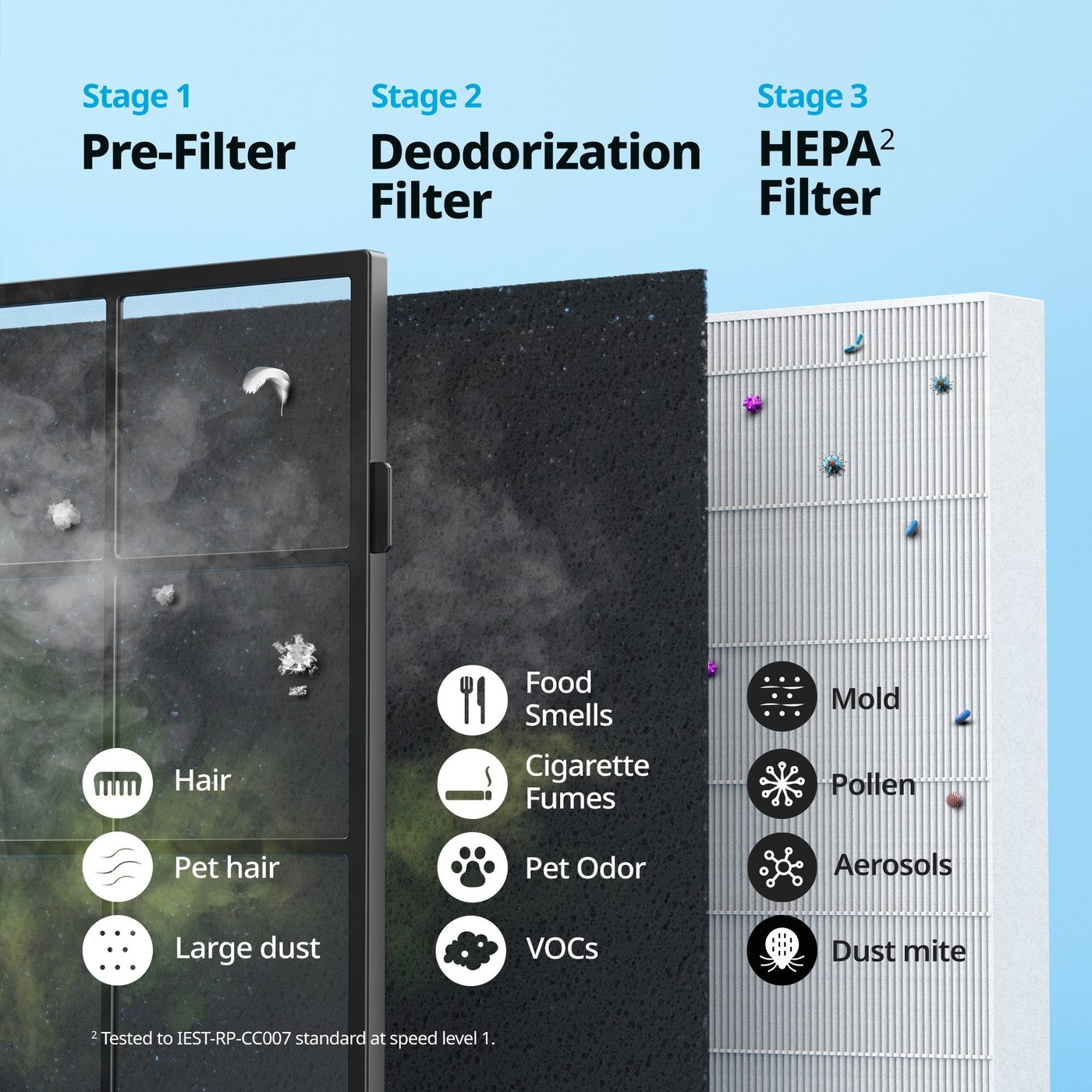
The Coway is better at particles and quieter doing it. Dust, pollen, pet dander, and general allergens are its home ground. It carries a longer warranty. Its air-quality indicator light is genuinely useful — you learn what makes your own room dirty, which is usually cooking, and occasionally the vacuum cleaner.
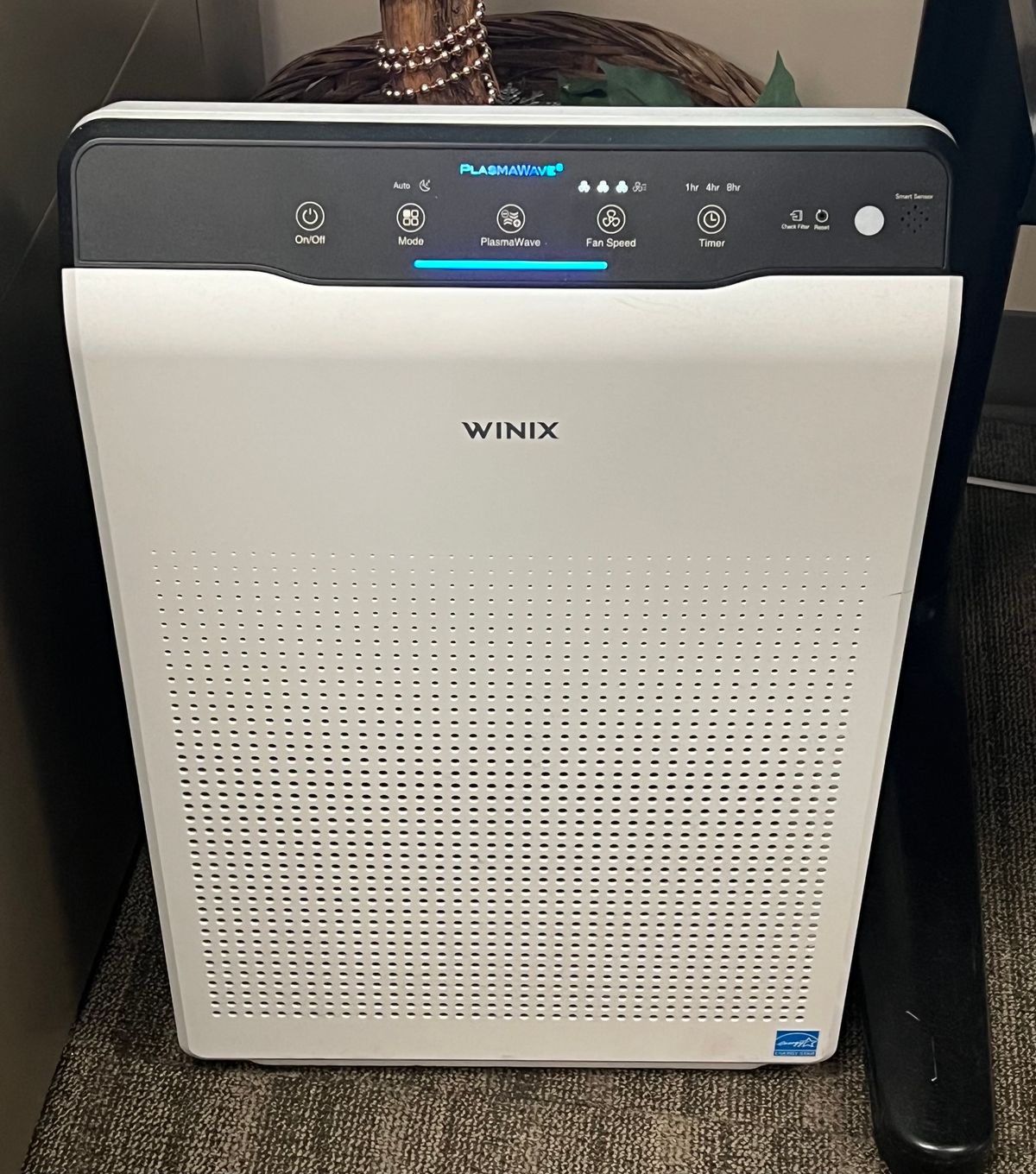
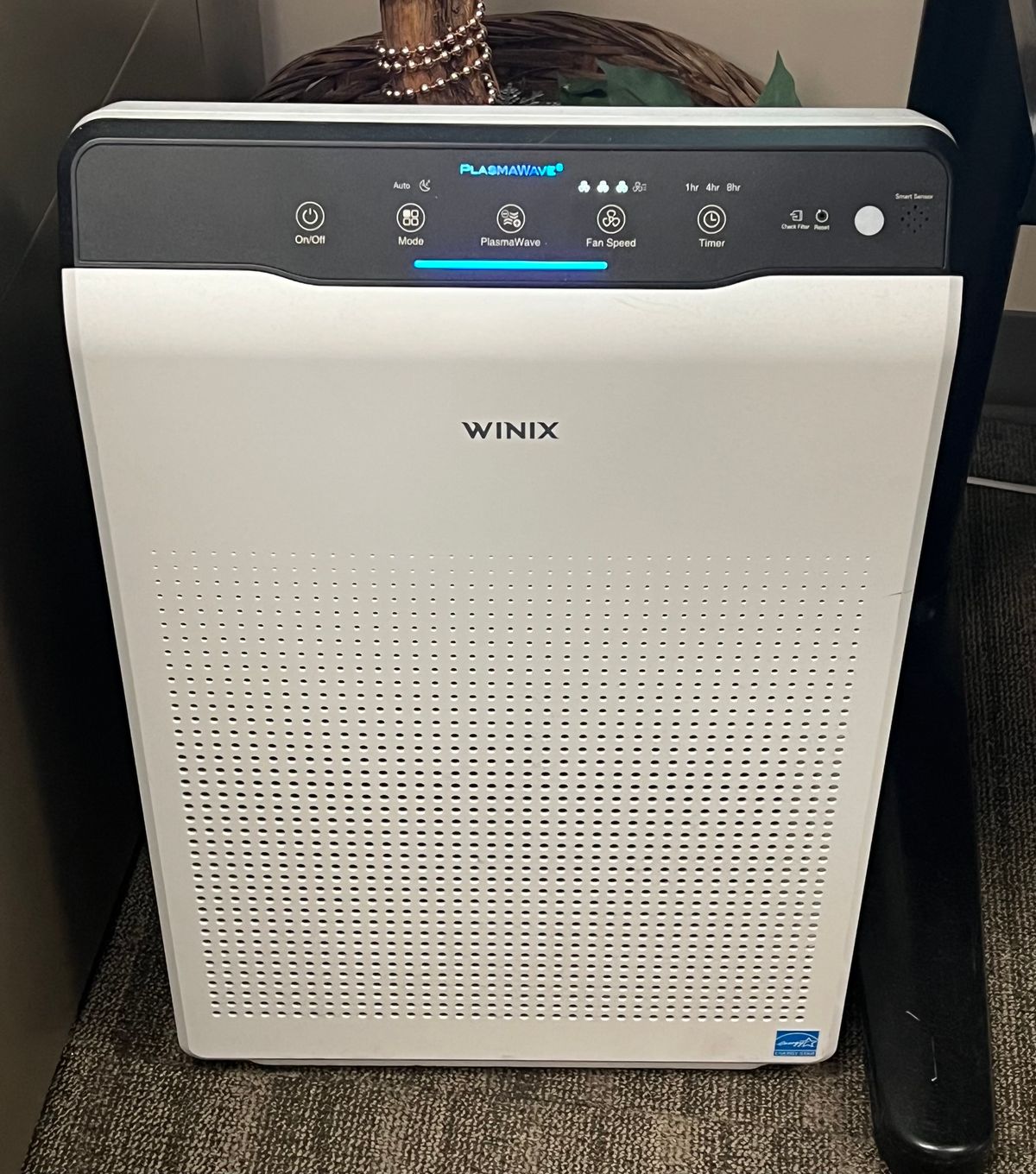
The Winix is better at smells and gases. Its carbon stage uses pellets rather than a thin coated sheet, which is why it outperforms on odour and VOCs. It also has PlasmaWave, an ioniser-style feature that some buyers dislike on principle — it can be switched off, and the machine still works as a normal HEPA purifier when it is off. If that feature is a dealbreaker for you, turning it off is a supported setting, not a hack.
Coverage is effectively identical: 361 versus 360 square feet.
The 5500-2 Is Being Retired. Read This Before You Buy One
Most comparisons still treat the Winix 5500-2 as a current product. It is not.
Winix confirmed in May 2025 that the 5500-2 is discontinued in the United States and Canada. Its successor is the Winix 5510, which lists at $199.99 on Winix's own store.
The 5510 is not a facelift. It is physically smaller, covers a larger room (392 sq ft against 360), pushes slightly higher airflow, adds an onboard air-quality sensor, and adds WiFi with app control. Independent testing has it removing 96% of particles in an hour. Its weak points are a loud maximum speed near 67 dB, a light sensor that switches the display off in a dark room whether or not you wanted that, and genuine filters at about $79.99 a year — the top of the range rather than the bottom.
That last figure matters, because cheap filters were the 5500-2's real advantage.
So the honest guidance splits three ways. If you can still find a 5500-2 at a clearance price and you care most about five-year running cost, it remains a good buy — Winix has committed to producing its filters until 2032, so you are not buying an orphan. If you want a current product with a warranty path and app control, buy the 5510 and accept the higher filter bill. If you find a 5500-2 at full price, do not buy it; that is a discontinued model priced as though it were not.
Running Cost Decides More Than Sticker Price
This is where the honest comparison lives, and where most reviews stop early.
Genuine Coway filter sets run roughly $50–$80 a year, with the pre-filter washable and the main set replaced on a schedule. Genuine Winix filters land in a similar band, roughly $35–$80 depending on where you buy.
The gap opens with third-party filters. Winix's replaceable filter is widely cloned, and generic sets sell for close to $15 a year in four-packs. Over five years, that difference is larger than the difference in purchase price — enough to invert the comparison entirely.
So the sequence is: decide which problem you have (particles or smells), then price five years of filters, then look at the machine price. A $50 saving on the box is not a saving if the filters cost $40 more every year.
There is a real counter-argument to third-party filters — fit tolerance and unverified media quality — and it is not paranoia. But it should be a decision you make deliberately, not one you discover after buying.
Do Not Buy Either One For a Room This Size
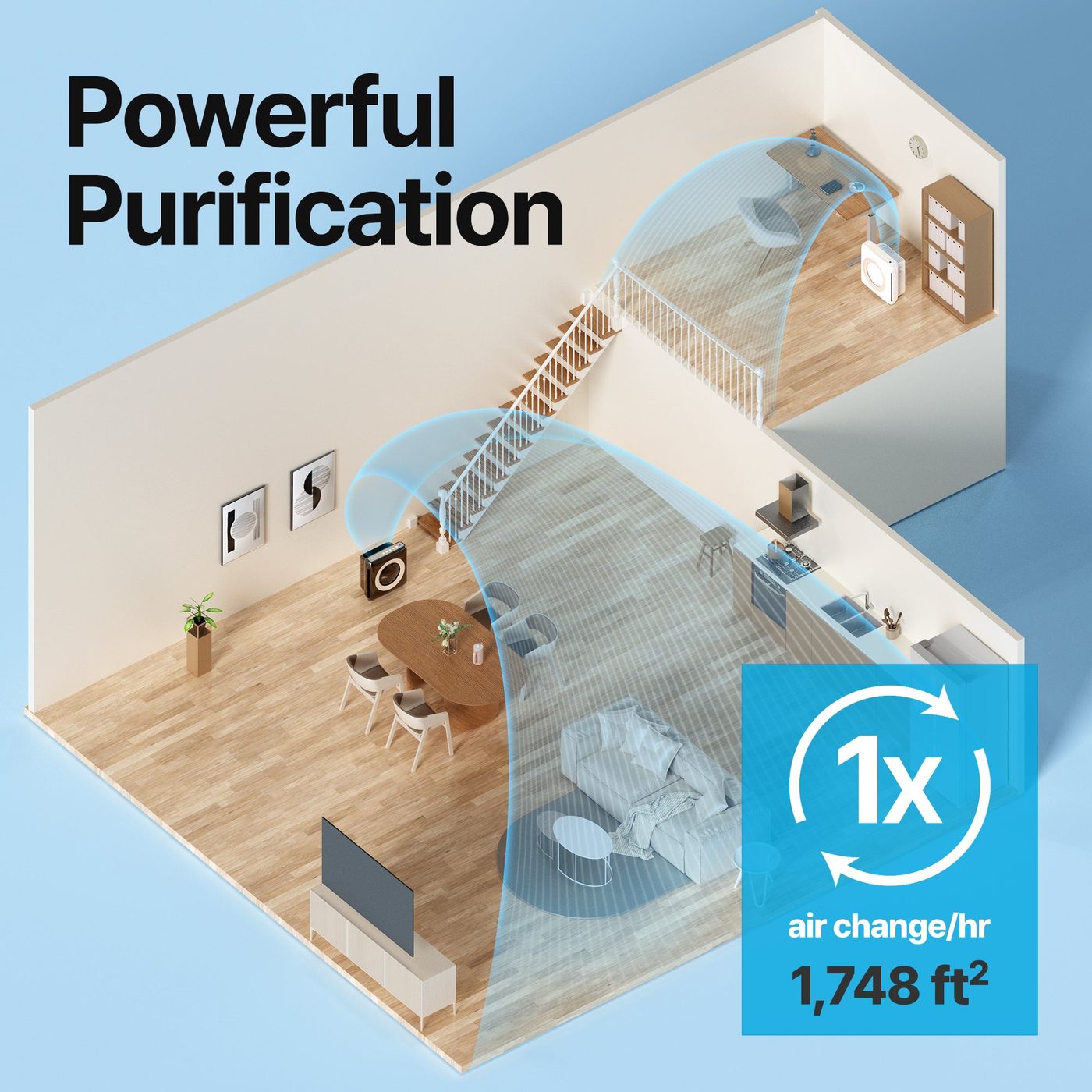
Why the same machine is sold as 361 sq ft and 1,748 sq ft
Both numbers are real, and they measure different things.
361 sq ft is the AHAM-style figure, based on cleaning the room roughly 4.8 times an hour. That is the rate at which a purifier keeps up with cooking, pets, and an opening door — the rate that actually matters day to day.
1,748 sq ft is the same machine at one air change per hour. Technically true. Practically, it means the room gets cleaned once, slowly, and any new source of particles outruns it. Coway publishes the middle rung too: 874 sq ft at two air changes per hour. Its AHAM-verified CADR figures are 246 dust, 240 pollen, 233 smoke.
So when a product page shows a purifier serving an entire open-plan house, check which air-change rate that claim assumes. Manufacturers are not lying; they are quoting the flattering number. Buy on the 4.8-ACH figure and treat the larger one as marketing.
Both of these are single-room machines rated near 360 square feet, and Korean apartments are the reason that number feels generous: they are typically sealed, compact, and heated by 온돌 underfloor systems rather than forced air, so there is no duct network quietly moving particles between rooms.
An open-plan American living room connected to a kitchen and a stairwell is a different problem. One 360-square-foot-rated unit will not solve it, and running it on maximum all day will only make it loud. Two smaller units in the two rooms you actually occupy beat one unit in a hallway.
If your target room is much larger, look at the tier above both of these rather than buying the popular one and hoping.
What Korea Is Certifying Now
One recent data point shows where the domestic race has moved. Coway's Noble dehumidifying air purifier, launched in June, received certification from KOTITI, a Korean national accredited testing institute, for removing 99.9% or more of airborne microplastics — the first such certification in the category. It is optimised for spaces around 55㎡.
Fine-dust and harmful-gas removal are now table stakes in Korea. Microplastics are the new argument. That model is not the one sitting on Amazon, but it tells you what the next generation of exported machines will be built to claim.
Buying the filters is the decision that repeats. Before committing to a machine, price a year of Coway AP-1512HH filters — the machine is also sold bundled with a spare set against a year of Winix 5500-2 replacement filters, including the generic options. EpicKor may earn from qualifying purchases at no extra cost to you.
See it on AmazonWhich One Should You Buy?
Buy the Coway if the household problem is dust, pollen, or pets; if the machine will sit in a bedroom and noise matters; or if you want the air-quality light to teach you about your own room.
Buy the Winix if the problem is cooking smells, smoke, or general staleness; if you want the lowest five-year running cost; or if you would rather spend the difference on a second unit for another room.
Buy neither if the room is much larger than 360 square feet, or if the real problem is ventilation. A purifier cleans the air in a room. It does not replace opening a window on a good day — which, in Seoul, is exactly the calculation the dust forecast exists to help you make.
If you are assembling a Korean home setup more broadly, EpicKor's Korean rice cooker guide covers the other appliance Korean households treat as non-negotiable, and the Korean floor culture guide explains the ondol heating that shapes how Korean rooms hold air in the first place. The purifier's winter partner is the humidifier, and Korean buyers pick that one on a different criterion entirely — whether the machine comes apart for washing.
Sources Checked
Manufacturer list prices and specifications from Coway and Winix US product pages; Korean-language reporting on Coway's 1998 rental launch and its origins in the IMF-crisis period; Korean-language reporting on Winix's stated 40% domestic-share target and its position relative to LG and Samsung; and Coway's KOTITI microplastic-removal certification announcement. Prices, filter part numbers, and availability change frequently — confirm the exact model and filter set for your region before ordering.
Frequently Asked Questions
Q: Are Coway and Winix both Korean companies?
Yes. Both are South Korean. Coway was founded in 1989 and is best known at home as a rental company; Winix competes for second place in Korea's domestic air-purifier market. Neither is the domestic market leader — Samsung is.
Q: Why is Coway a rental service in Korea but a purchase in the US?
Coway introduced Korea's first water-purifier rental in 1998, after the IMF financial crisis left households unable to pay the full price of an expensive appliance. The monthly fee includes scheduled home visits by a service worker called a Cody, who cleans the unit and changes filters. That service network exists in Korea; the export version is hardware only.
Q: Is PlasmaWave on the Winix safe to leave on?
It can be switched off, and the purifier continues to work as a standard True HEPA machine with the feature disabled. Buyers who prefer to avoid ioniser-style technology can simply turn it off rather than choosing a different model.
Q: Which is cheaper to own over five years?
Usually the Winix, because its filters are widely cloned and generic sets can cost close to $15 a year in multi-packs, against roughly $50–$80 a year for genuine Coway sets. Price filters before you price machines.
Q: Will one unit clean a whole apartment?
No. Both are rated for roughly 360 square feet, a figure that suits the sealed, compact Korean apartments they were designed for. For an open-plan home, two smaller units in the rooms you actually use will outperform one unit trying to cover everything.
You Might Also Like
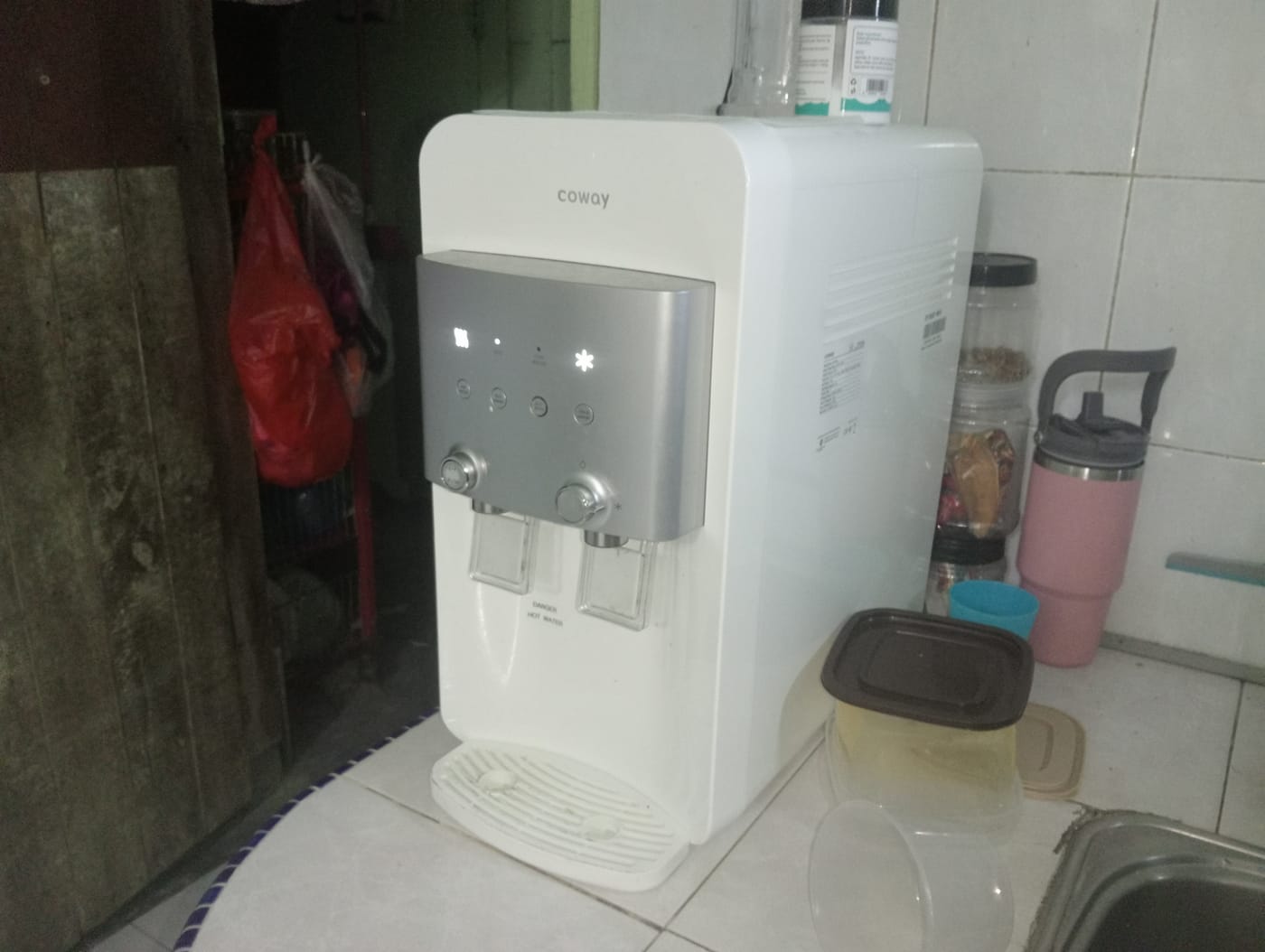
Korean Water Purifiers: The 1998 Rental Bet That Built Coway's Empire
In the worst month of Korea's IMF crisis, a water purifier company started lending machines instead of selling them. That decision built a ₩4 trillion empire, invented Korea's rental economy, and explains half the appliances on this site.
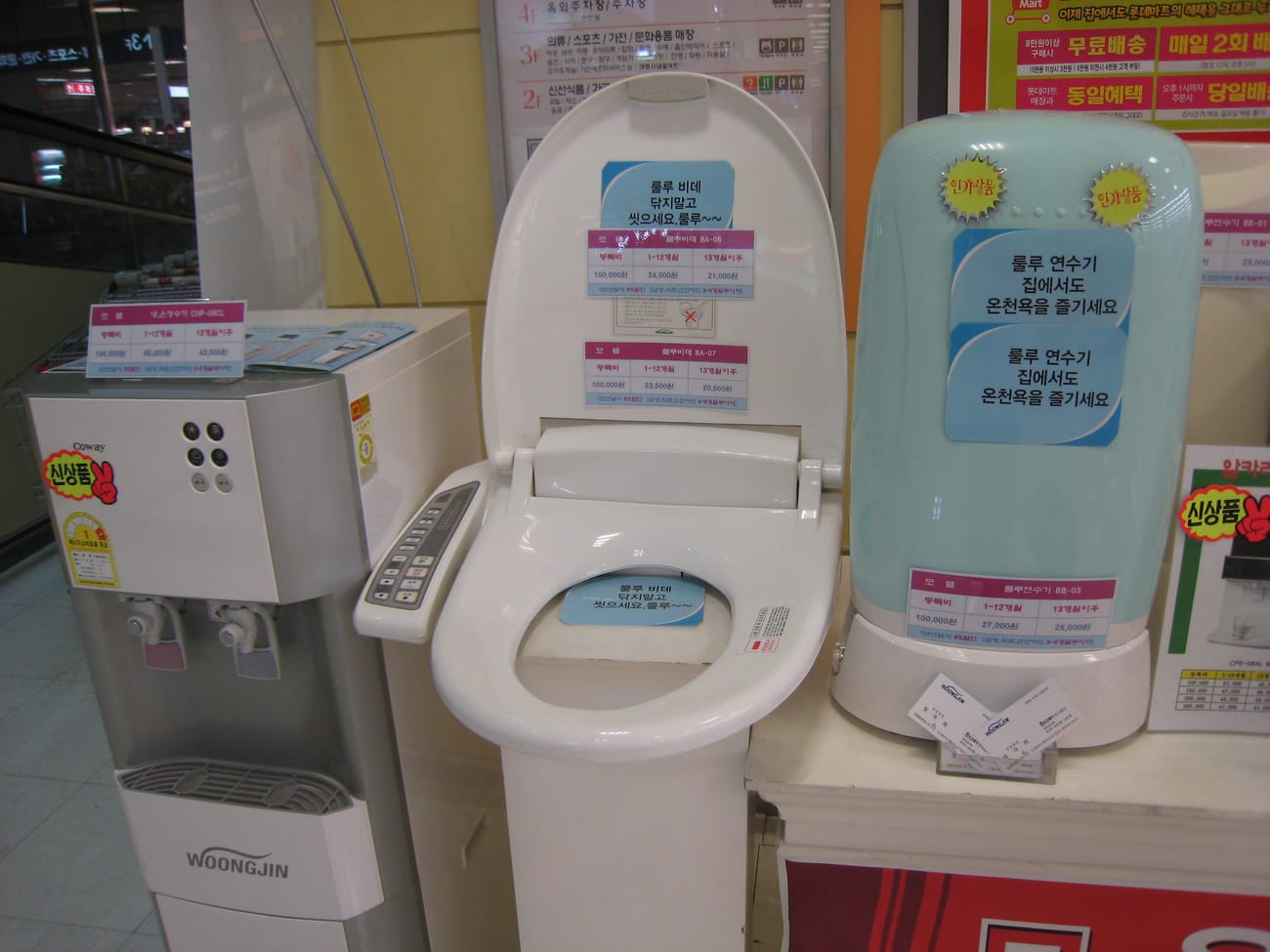
Korean Bidets Explained: The Buttons, the Brands, and Why Half of Korea Has One
More than half of Korean households have an electronic bidet seat. Here is what the buttons actually do, why Koreans rent them instead of buying, and which Korean brands you can get abroad.
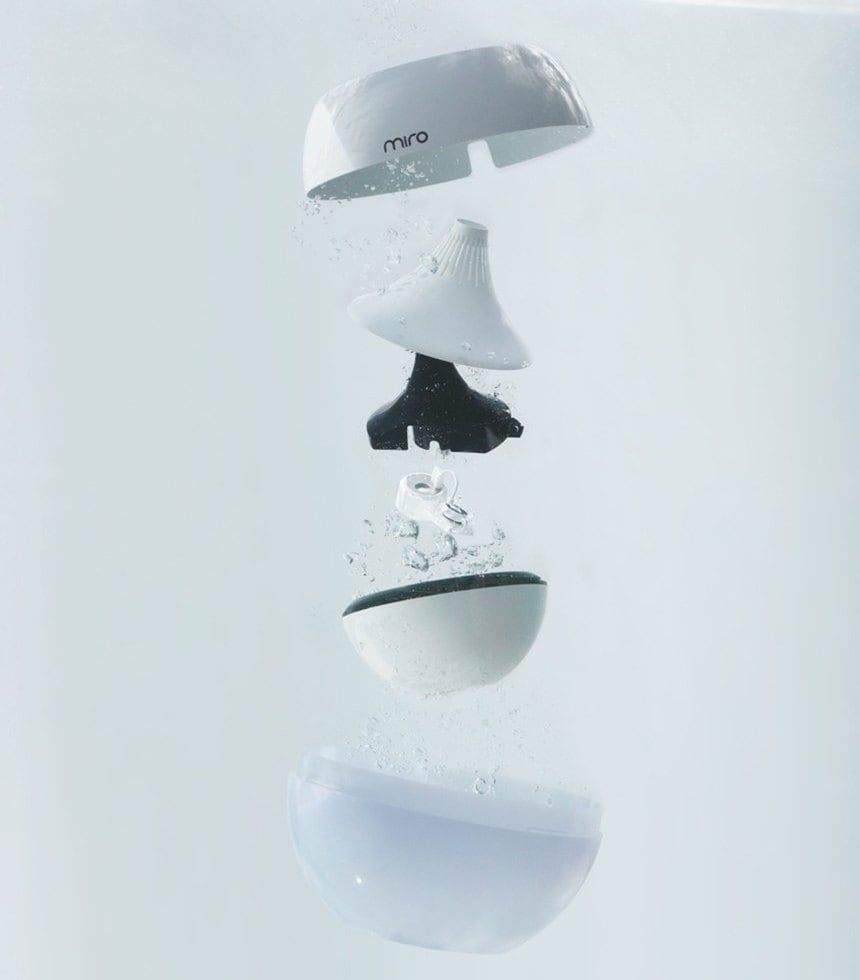
Korean Humidifiers: Buy the One That Comes Apart
Korean humidifiers pull apart into six washable pieces, the humidifying engine included. Korea's consumer agency measured why: daily water changes cut bacteria 87.3%, washing every second day 98.8%. What Amazon lists is a generation behind Korea's shelves.