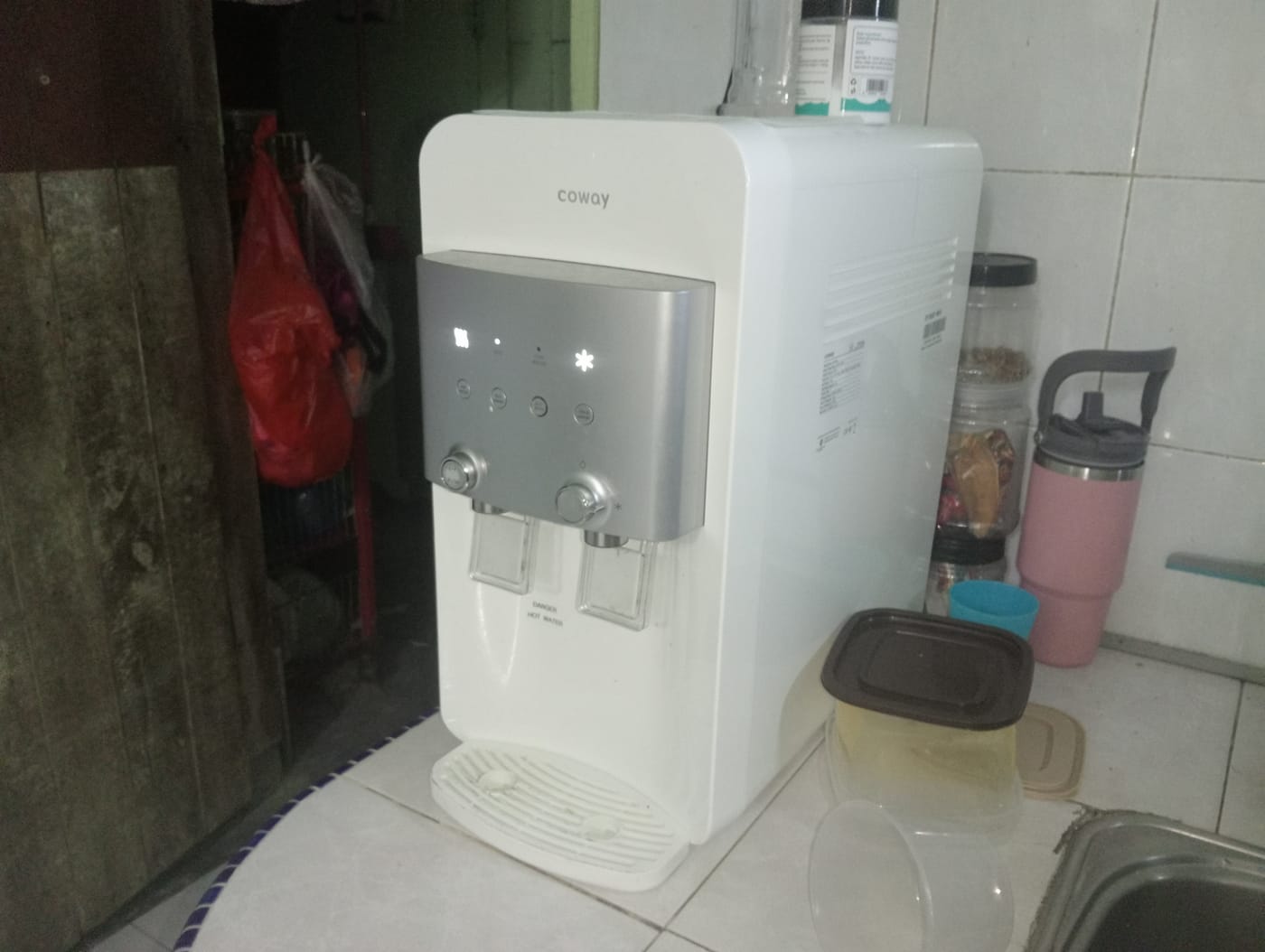
Korean Water Purifiers: The 1998 Rental Bet That Built Coway's Empire
Every guide in our Korean-appliance series keeps bumping into the same phrase: the rental model. The bidet spread through Korea on a rental counter. The massage chair industry took off when Bodyfriend copied the rental playbook. The playbook itself — the monthly fee, the visiting manager, the machine you use but never own — had to come from somewhere.
It came from water. Specifically, from one company's decision in April 1998, in the depths of Korea's IMF crisis, when nobody could afford a water purifier: stop selling the machines. Lend them.
This is the story of 코웨이 (Coway) — the company that invented Korea's rental economy, built a ₩4 trillion business on filters and house calls, conquered Malaysia so thoroughly that its Malaysian revenue is five times its American revenue, and now sells Americans a countertop purifier on Amazon with the one thing that made it Korean quietly removed.
| Question | Short answer |
|---|---|
| What is Coway | Korea's biggest water-purifier and rental-appliance company, founded 1989 |
| The turning point | April 1998, IMF crisis: first in the industry to rent machines instead of selling |
| The service layer | 코디 (Cody) visiting managers — started with ~80, now roughly 13,000 |
| The scale | ₩1T revenue by 2004; approaching ₩4T today |
| Who owns it | Netmarble — the game company — has been the controlling shareholder since 2020 |
| Biggest foreign market | Malaysia: entered 2007, market-share #1, ₩1.4T revenue in 2025 |
| What you can buy in the US | Aquamega countertop purifiers on Amazon; filter sets $39.90–$69.90 at Coway's US list |
| The catch abroad | No Cody. You are buying the machine without the service that defined it |
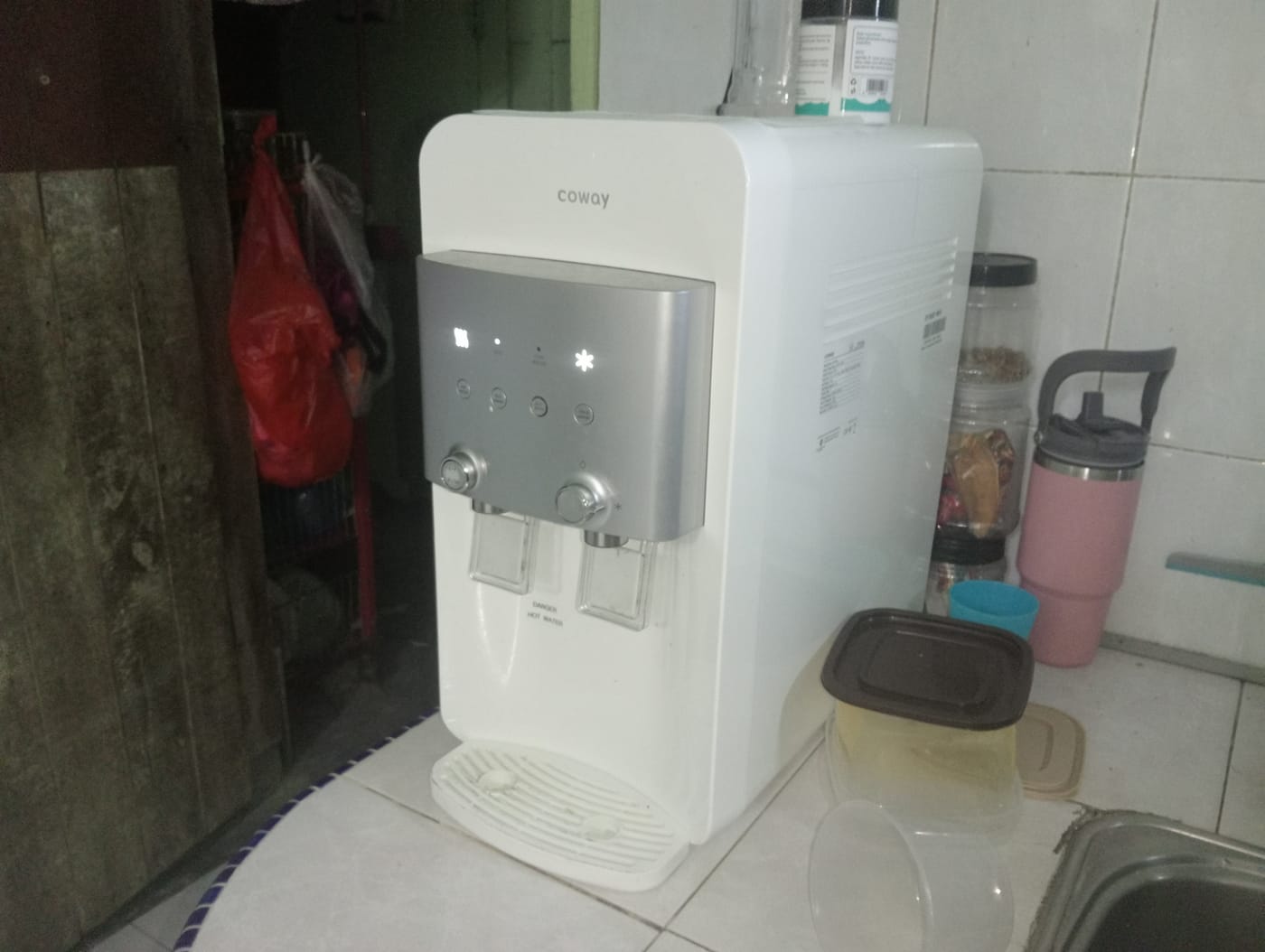
Coway Aquamega 100 replacement filter set — the running cost this article is about, on AmazonAffiliate link. As an Amazon Associate, EpicKor earns from qualifying purchases at no extra cost to you.
April 1998: The Bet
Coway was founded in 1989 as part of the Woongjin group, selling water purifiers door to door. Then the 1997 Asian financial crisis hit Korea, the IMF bailout came with austerity, and a purifier — a multi-hundred-thousand-won discretionary appliance — became exactly the purchase every household cut first.
The response, in April 1998, was the move Korean business schools still teach: the industry's first rental system. Instead of asking a shattered consumer to buy a machine, Coway asked for a small monthly fee — and bundled in something new: a person who comes to your home on schedule to change the filters, check the machine, and keep it honest.
That person is the 코디 (Cody) — "Coway Lady," later just the job title for the visiting manager. The corps started with about 80 people in 1998; today roughly 13,000 Codys make scheduled house calls across Korea. This is the detail foreigners consistently miss about Korean rental appliances: the fee is not financing. It is a subscription to maintenance. The machine is almost incidental; what you are renting is the guarantee that someone competent shows up and the filters are never your problem.
It worked at a scale that reorganized Korean home life. Revenue crossed ₩1 trillion by 2004, and the model metastasized — water purifiers first, then bidets (the 2002 LooLoo campaign we covered), air purifiers, mattresses, massage chairs. Today Coway is approaching ₩4 trillion in annual revenue, and "rental" is simply how Koreans acquire the boring, vital machines of a household. When you read our guides to the bidet, the massage chair, or the air purifier fight, you are reading footnotes to April 1998.
One more plot turn worth knowing, because it explains the ads: after a decade of ownership changes — private equity in 2013, a Woongjin re-purchase, a liquidity crisis — Netmarble, the mobile-game company, became Coway's controlling shareholder in 2020. A games publisher owning a filter-and-house-call empire sounds odd until you notice both businesses run on the same thing: monthly recurring revenue from subscribers who rarely cancel.
The Machine Is the Filter
Here is the engineering truth the rental model monetizes: a water purifier is a plastic box around a stack of filters, and the filters are the product.
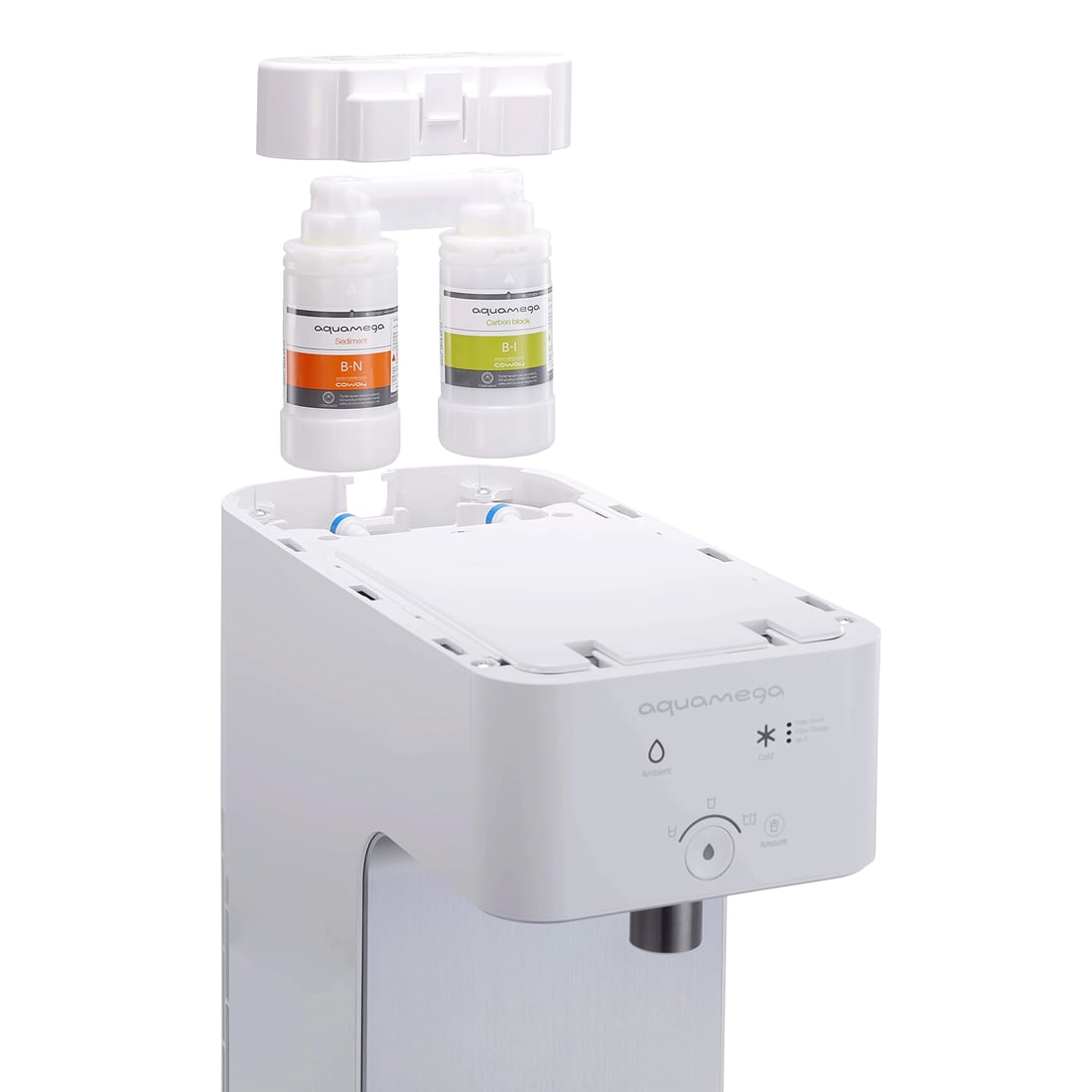
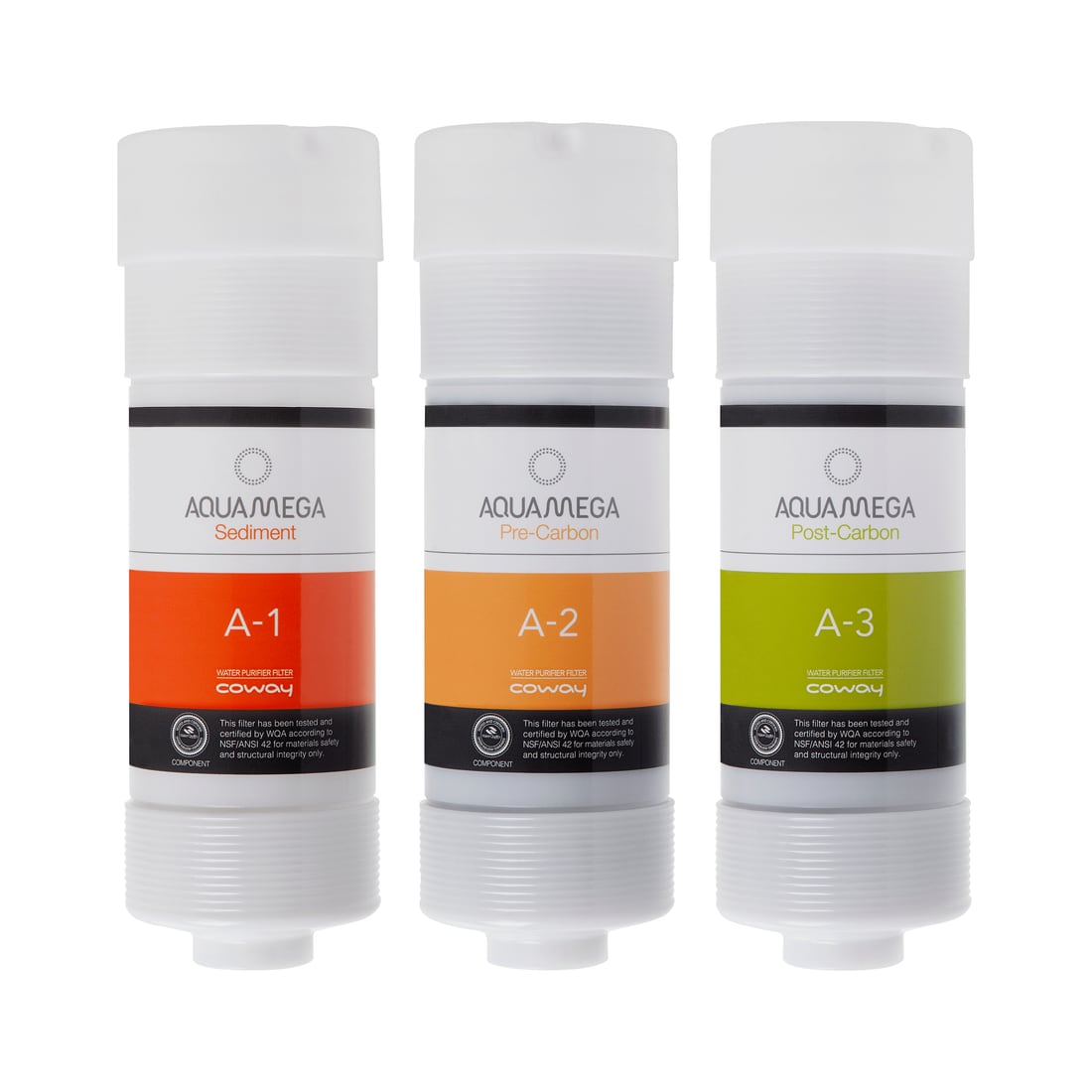
Korean purifiers typically run multi-stage cartridges — sediment, carbon block, fine filtration — and every stage is a consumable on a countdown. In Korea, the Cody handles that countdown. Abroad, the countdown is yours, and it is where the real money sits:
- The Aquamega 100's filter set lists at $69.90 on Coway's US store and is rated for roughly 500 gallons.
- The Aquamega 200C's set lists at $39.90 on Coway's US store for about 150 gallons — and the 200C connects to an app with Amazon Dash Replenishment, which orders its own filters automatically.
Read that last part again: in the US, where Coway cannot send a Cody to your kitchen, it wired the machine to order filters by itself. Dash Replenishment is the Cody, translated into American. The strategy survived the ocean crossing; only the human did not.
You might like: Happycall Double Pan: The Korean Pan That Closes, and Whether You Need One
You might like: LG Styler Explained: Why Korea Invented a Closet That Shakes Your Clothes
Malaysia: The Model's Greatest Export
The strangest fact in Coway's books: its biggest market outside Korea is not the US, not Japan — it is Malaysia, by a mile.
Coway entered in 2007 and did the un-shortcut thing: it rebuilt the whole Korean system locally — the first rental service in the market, the first Cody corps, and, reading the market correctly, the industry's first Malaysian halal certification for a water purifier. The result, fifteen-plus years on: market-share #1 in Malaysian water purifiers and ₩1.4 trillion in 2025 revenue — more than five times Coway's US business. Korean coverage jokes that in Malaysia, not knowing Coway marks you as a spy.
The lesson generalizes: the product that traveled was never really the purifier. It was the service contract — the visiting manager, the never-think-about-filters promise. Where Coway transplanted the whole system, it dominates. Where it could only ship the box (the US), it is a niche countertop brand fighting on Amazon.
As an Amazon Associate, EpicKor may earn from qualifying purchases at no extra cost to you. The US lineup is the countertop pair: the Aquamega 100 (three-stage, no electricity, fits under a cabinet) and the Aquamega 200C with cold water, app monitoring and self-ordering filters — both of which show as currently unavailable on Amazon US (checked September 2026). What is in stock is the consumable, and it is the number to price first: the 100's filter set is rated for about 500 gallons — the machine is a one-time cost, the filters are forever.
See the Aquamega 100 filter set on AmazonHonest Section: Do You Actually Need One?
The question the listings skip, answered the way we answer it for every appliance:
Probably not, if your municipal tap water is good and you just dislike the taste — a pitcher filter solves taste for a tenth of the price, and US tap standards are generally strict. And not if you rent a home with space for an under-sink reverse-osmosis system, which beats a countertop unit on raw filtration.
Genuinely yes, if you are the household the Aquamega was actually designed for: renters and small kitchens that cannot touch plumbing (it installs on the faucet in minutes and leaves no trace), households going through cases of bottled water (the math flips fast), or anyone who wants filtered, direct-flow water without a tank taking counter depth.
The Korean-context caveat: buying an Aquamega in America gets you Coway's hardware without Coway's soul. There is no Cody, no scheduled visit, no service layer — the thing that actually made the brand. The 200C's self-ordering filters are a clever partial substitute, but be honest with yourself about whether you will change filters on schedule, because the machine is only as good as its most neglected cartridge. A purifier with year-old filters is worse than the tap.
The stepped path, as ever: if taste is the only complaint, a filter pitcher answers it for a fraction of the cost and proves whether filtered water changes your habits. If the pitcher empties twice a day, graduate to a countertop unit such as the Aquamega 100 once it is back in stock — and put the filter dates in your calendar the day it arrives. EpicKor may earn from qualifying purchases at no extra cost to you.
FAQ
Q: Why do Koreans rent water purifiers instead of buying them?
Because since April 1998 the rental fee has bought the service, not just the machine: a visiting manager (Cody) changes filters and maintains the unit on schedule. Renting outsources the one task that decides whether a purifier is safe — filter discipline. The model launched during the IMF crisis, when nobody could afford the purchase price, and became the default for Korean home appliances.
Q: Is Coway a good brand?
It is Korea's dominant water-purifier company — founded 1989, roughly ₩4 trillion in revenue, 13,000 service staff at home, and the #1 purifier brand in Malaysia. In the US it sells solid countertop hardware (the Aquamega line) but without the service layer that defines it in Asia; its air purifiers, covered in our Coway vs Winix guide, carry the same reputation.
Q: Who owns Coway?
Netmarble, the Korean mobile-game company, has been the controlling shareholder since 2020, after Coway passed through private equity and a Woongjin re-acquisition. The logic is subscription economics: rental appliances and mobile games both live on monthly recurring revenue.
Q: What is a Cody?
Coway's visiting service manager — the person who comes on schedule to change filters and check the machine. The corps began with about 80 people in 1998 and stands around 13,000 today. The Cody is the real product of Korean appliance rental; the machine is the excuse.
Q: Is the Coway Aquamega worth it in the US?
For renters and no-plumbing kitchens, it is one of the best countertop options: real multi-stage filtration, direct flow, minutes to install. Budget the filters first — at Coway's US list, $69.90 per set (~500 gallons) on the 100 and $39.90 (~150 gallons) on the 200C, which can auto-order its own replacements through Amazon Dash. If a pitcher already satisfies you, keep the pitcher.
Q: Why is Coway so big in Malaysia?
It transplanted the entire Korean system starting in 2007 — the market's first rental service, a local Cody corps, and the industry's first Malaysian halal certification — instead of just exporting hardware. The result is market-share #1 and ₩1.4 trillion in 2025 revenue, more than five times Coway's US business.
Sources Checked
- Korean business histories of Coway: the 1989 founding, the April 1998 industry-first rental system launched in the IMF crisis, the Cody corps (about 80 at launch, roughly 13,000 today), ₩1 trillion revenue by 2004 and the approach to ₩4 trillion — Longblack via Daum, ETNews, The Value News CEO profile
- Ownership: private-equity and Woongjin turns before Netmarble's controlling acquisition in 2020 — Korean business press coverage
- Malaysia: 2007 entry, first-in-market rental and Cody service, first Malaysian halal certification for a water purifier, market-share #1, and unit revenue of ₩1.41 trillion in 2025 (over five times the US unit) — Datanews, Metro Seoul
- Coway's US store product feed (checked August 2026) for filter pricing ($69.90 Aquamega 100 set; $39.90 200C set) and product imagery; Amazon listings for the Aquamega 100/200C including the 200C's Dash Replenishment integration
You Might Also Like
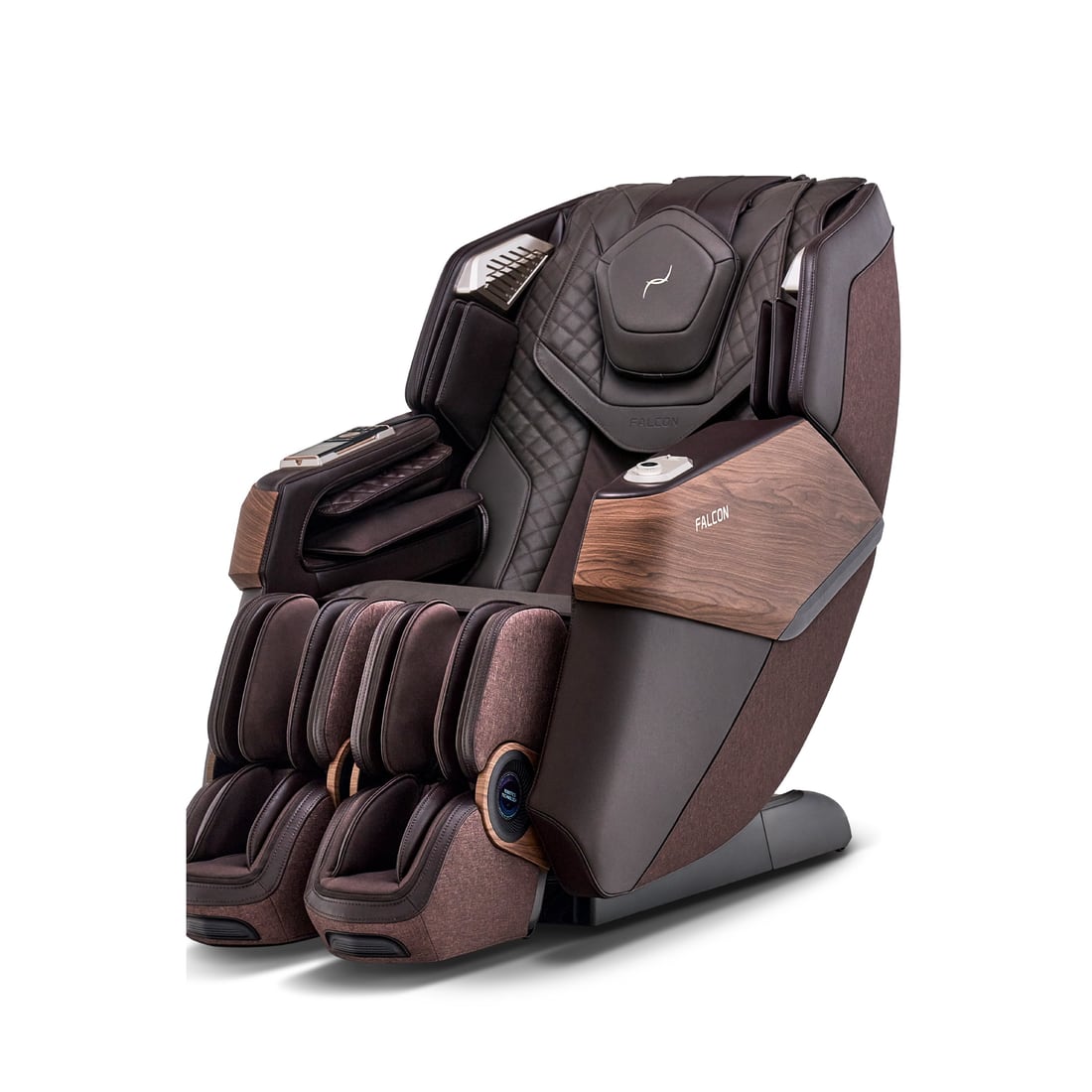
Korean Massage Chairs: How Bodyfriend Made a Recliner the Top Filial Gift
In Korea, the massage chair is a family milestone purchase — the holiday gift for parents, rented by the month like a water purifier. How Bodyfriend beat Japan at its own invention, what the chairs cost in the US, and the child-safety warning no listing shows.
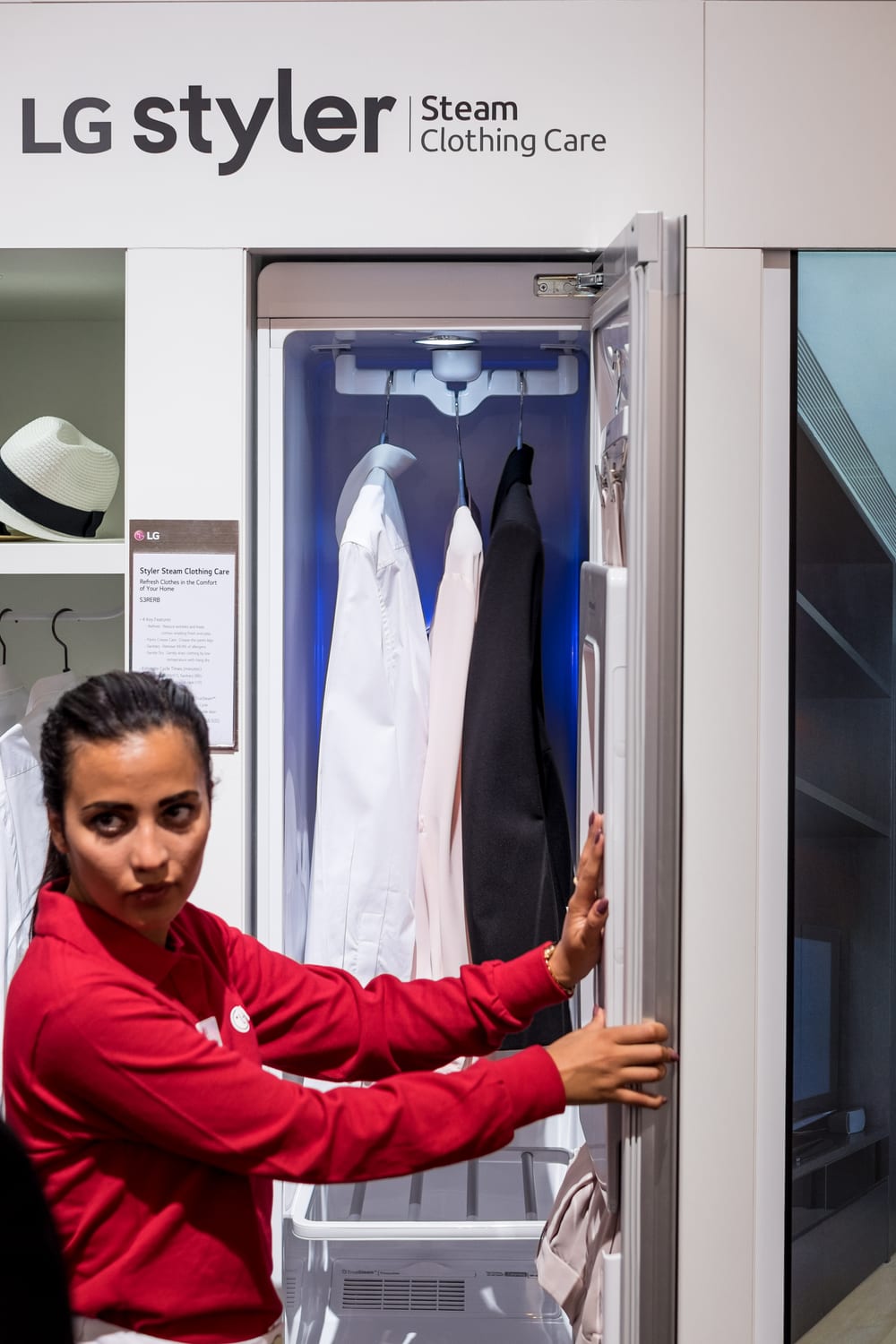
LG Styler Explained: Why Korea Invented a Closet That Shakes Your Clothes
Korea invented a closet that steams, shakes and de-smells clothes, and now every Korean apartment tour shows one. What the LG Styler actually does, the nine-year story behind it, LG vs Samsung's rival machine, and who should not buy one.
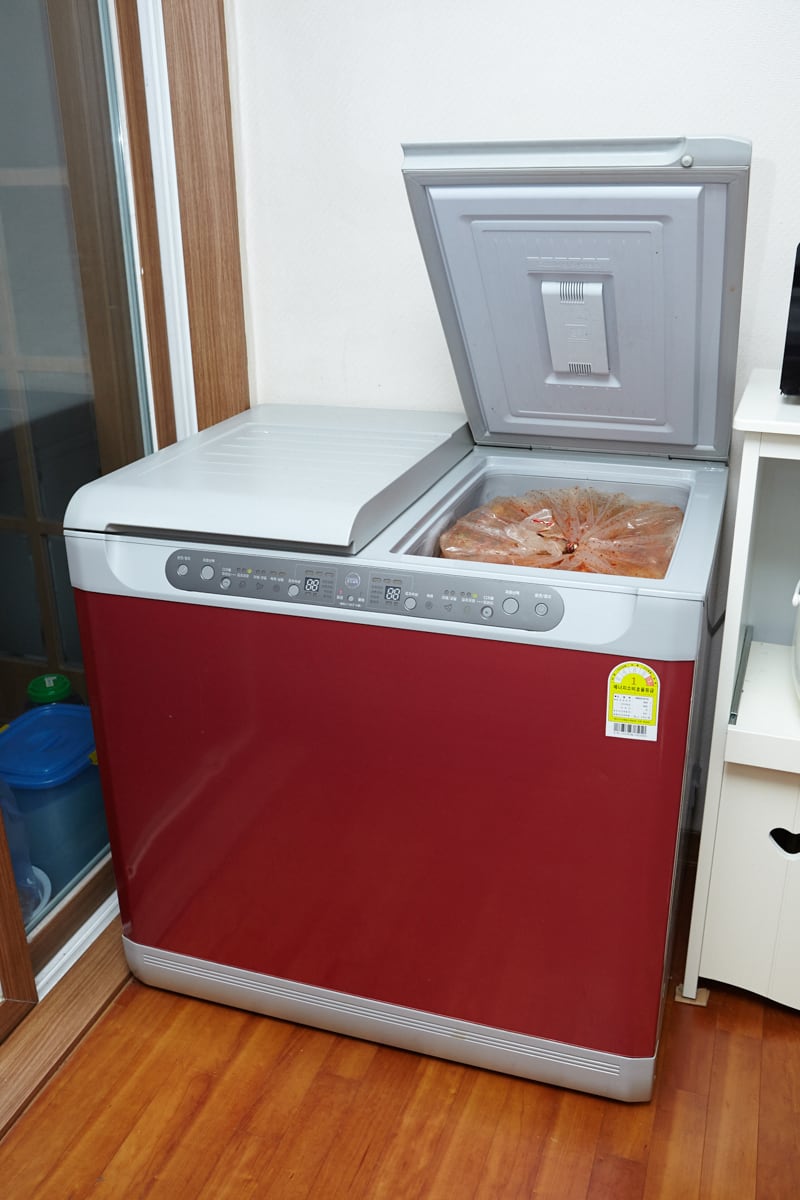
Kimchi Refrigerators Explained: Why Korea Built a Fridge for One Food
Korea invented a second refrigerator that exists only to store kimchi at the temperature of winter earth. Here is why it exists, how it works, what happened to the company that invented it six weeks ago, and what to check before buying one abroad.