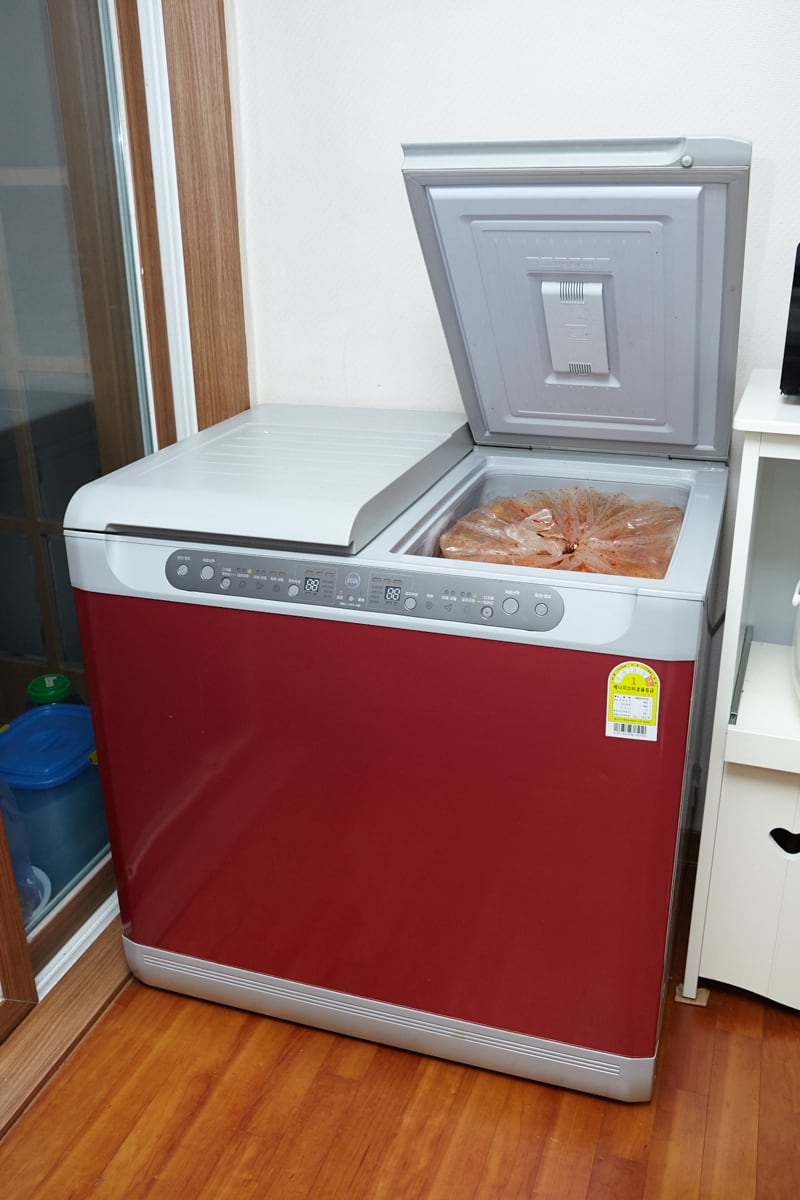
Kimchi Refrigerators Explained: Why Korea Built a Fridge for One Food
Most Korean homes have two refrigerators. One holds food. The other holds one dish.
And it decides what the kimchi is stored in: the containers are made to tile into its fixed compartments, which is why Korean kimchi tubs are all the same rectangle. Our guide to Korean kimchi containers covers that constraint and the press plate that goes inside them.
The second machine is a 김치냉장고 (kimchi naengjanggo) — a kimchi refrigerator — and it is not a marketing gimmick or a rich-household flex. It is a normal appliance in an ordinary apartment, it outsold almost everything else in Korean home electronics for two decades, and it exists because a regular refrigerator is genuinely bad at the one job Korean households care most about.
This guide explains what the machine actually does differently, the buried clay jar it replicates, and a piece of news almost nobody outside Korea has read: the company that invented it was liquidated by a court order six weeks ago, while its fridges are still sitting on Amazon. If you are thinking of buying one abroad, that last part changes what you should check.
| Question | Short answer |
|---|---|
| What is it | A second refrigerator tuned to hold kimchi at about −1°C without fluctuation |
| What it replaces | The onggi (옹기) clay jar Koreans buried in the ground each winter |
| Invented | November 20, 1995 — the Dimchae (딤채) CFR-052E, by Mando Machinery |
| Why not a normal fridge | A kitchen fridge cycles temperature every time the door opens; kimchi sours unevenly |
| Who makes them now | Samsung and LG dominate; Winia, the inventor, was court-liquidated in July 2026 |
| Form factors | Top-loading chest style (classic) and stand-type with drawers (now mainstream) |
| US availability | Dimchae and generic compact models on Amazon; price varies by capacity |
| Buy or skip | Buy for serious home fermentation; skip if you buy one jar of kimchi a month |
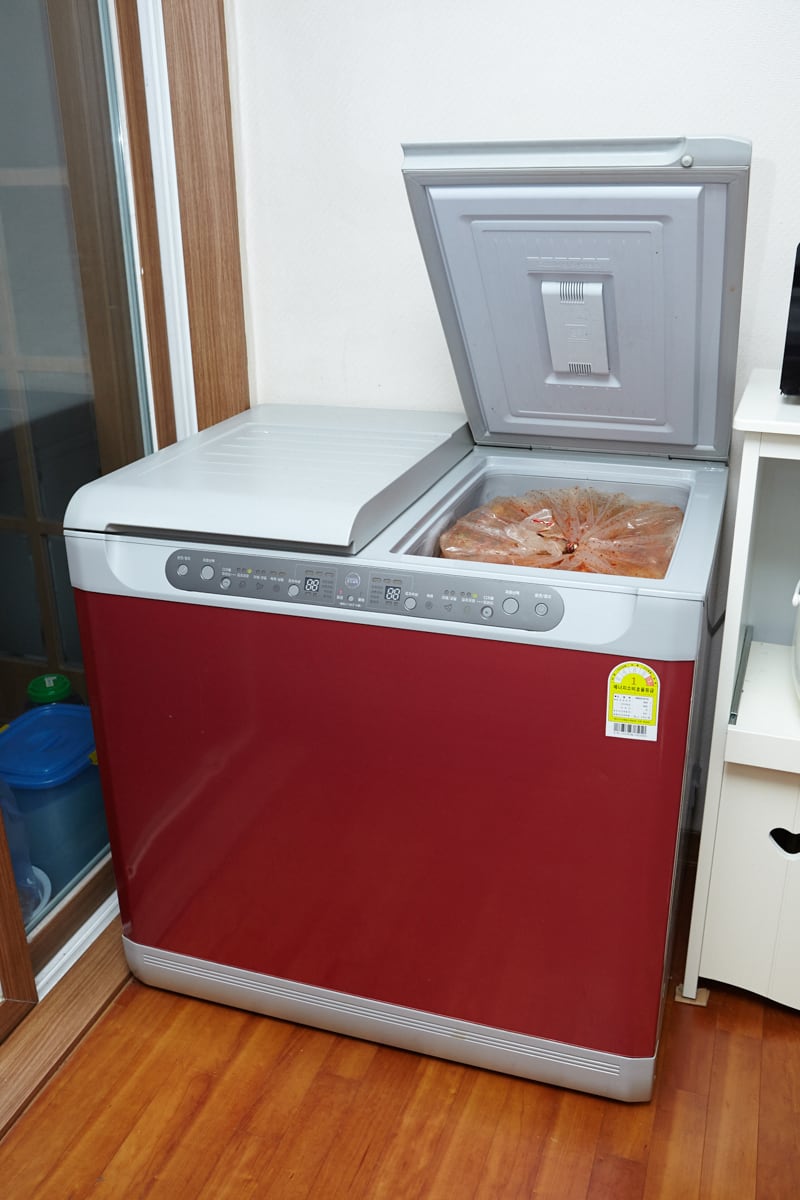
Slim kimchi refrigerator with glass door, 4.3 cu ft — on AmazonAffiliate link. As an Amazon Associate, EpicKor earns from qualifying purchases at no extra cost to you.
The Problem: Kimchi Is Alive
Kimchi is not a preserved food in the Western sense. It is a live fermentation that keeps moving every day you store it. Fresh kimchi is crunchy, bright, almost sweet; over weeks it sours, softens, and deepens into the flavor Koreans call 익은 김치 — ripened kimchi. Every household has a preferred point on that curve.
The enemy is not time. It is temperature swing. Ferment kimchi warm and it races to sour. Freeze it and the cabbage cell walls burst into mush. What kimchi wants is the narrow band just below freezing for brine — around −1°C, held absolutely steady — where fermentation slows to a crawl and the texture survives for months.
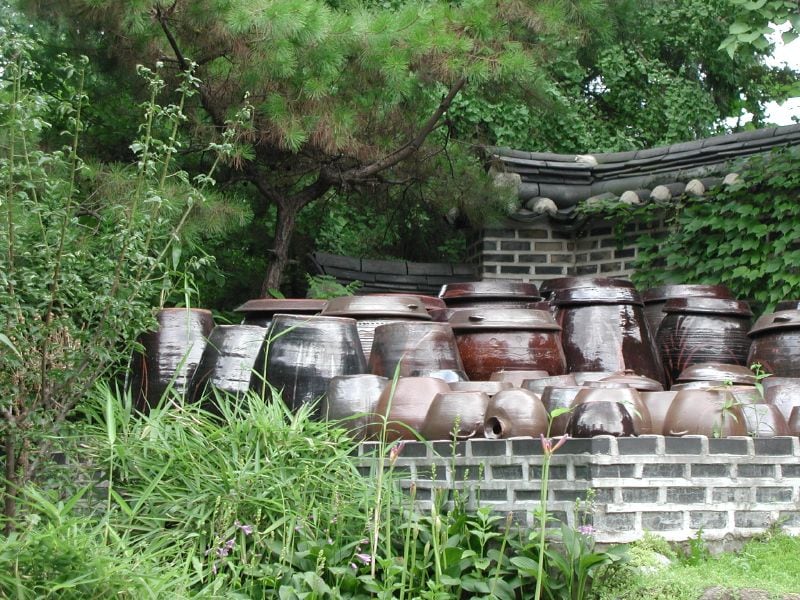
For most of Korean history, there was a machine for this, and it was the earth. Every late autumn, households made an enormous batch of kimchi — the communal event called 김장 (kimjang), inscribed by UNESCO as intangible cultural heritage — packed it into earthenware 옹기 (onggi) jars, and buried the jars up to the neck in the yard. A meter down, Korean winter soil sits near zero degrees and barely moves. The jar was the container; the ground was the refrigerator.
Then Korea moved into apartments — by the 1990s, faster than almost any society ever has — and the yard disappeared. A kitchen refrigerator could not take over the job, for a reason anyone can verify at home: a family fridge is opened dozens of times a day, and every opening dumps the cold and swings the temperature. On top of that, kimchi in a shared fridge perfumes everything else in it. Korean households were left with the national side dish and nowhere correct to keep it.
1995: A Car-Parts Company Solves It
The company that cracked this was not Samsung or LG. It was 만도기계 (Mando Machinery) — an auto-parts maker, whose Asan division went looking for a consumer product in the early 1990s and settled on the kimchi problem.
On November 20, 1995, it launched the 딤채 (Dimchae) CFR-052E, the first purpose-built kimchi refrigerator. The name is an old Korean word for kimchi itself, from the Joseon era. The design logic was to rebuild the buried jar as an appliance:
- Top-loading chest format. Cold air sinks, so a lid on top keeps the cold pooled inside when you open it — exactly what a buried jar does and a front-door fridge cannot.
- Direct cooling. The evaporator wraps the storage well itself rather than blowing chilled air around, holding the contents in a far tighter temperature band than a fan-cooled kitchen fridge.
- A target of winter-soil temperature. Storage around −1°C, plus programmed modes that first ripen the kimchi slightly and then hold it — an automated version of what the ground used to do.
The first year it sold about 4,000 units. The next year, 20,000. Through the late 1990s it topped the surveys of appliances Korean housewives most wanted to own, and "Dimchae" went the way of Kleenex — the brand name became the generic word. Samsung and LG piled in, the format broadened from the chest to a stand-type with drawers that is now the mainstream, and the kimchi refrigerator became a standard fixture of the Korean apartment alongside the rice cooker.
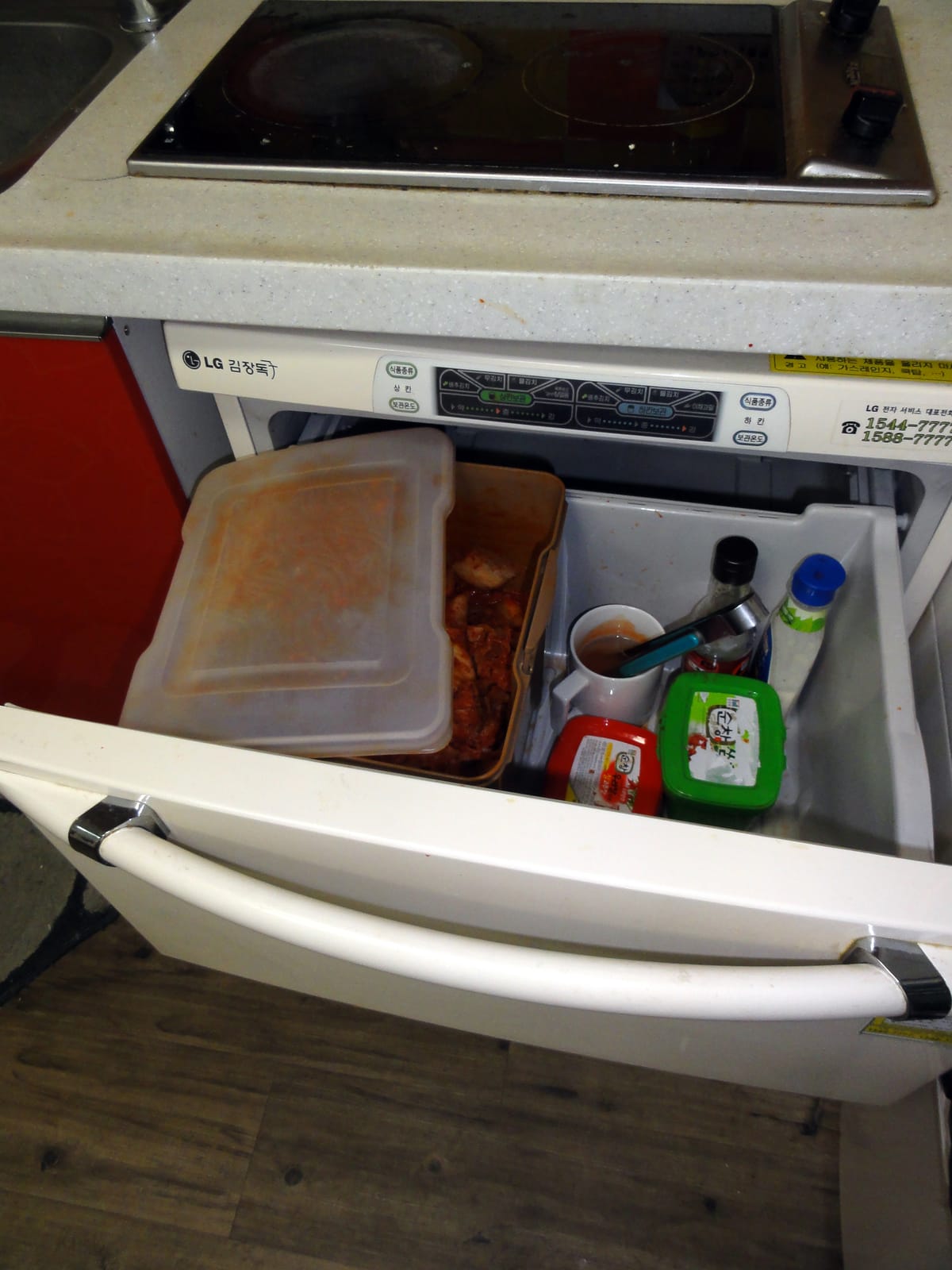
As an Amazon Associate, EpicKor may earn from qualifying purchases. The inventor's brand used to be listed in the US — the Dimchae Petite 100L and the Dimchae 180L chest — but both listings now show as currently unavailable, which fits the next section: the manufacturer was liquidated in July 2026. The in-stock option is a slim 4.3 cu ft kimchi refrigerator; check the warranty terms before you buy.
See the slim kimchi refrigerator on AmazonJuly 2026: The Inventor Dies, the Category Lives
Here is the part of this story that has not reached the English internet.
Winia (위니아) — the company Mando's appliance division became, the owner of the Dimchae brand — collapsed. It filed for court rehabilitation in October 2023 amid the wider crisis of its parent group, with unpaid employee wages reported around ₩70 billion. Attempts to sell the company failed; negotiations with two potential acquirers fell through in March 2026. With debts reported near ₩530 billion against roughly ₩55 billion in assets, no rescue was possible.
On July 2, 2026, the court approved a liquidation-type plan. Once the procedure completes, the corporate entity that invented the kimchi refrigerator — thirty years after the CFR-052E — will legally cease to exist.
The category it created is fine. Samsung and LG sell kimchi refrigerators at every Korean electronics store, and the machine remains as normal in a Korean kitchen as an oven is in an American one. But the collapse has a practical consequence for a buyer outside Korea:
Dimchae-branded refrigerators are still on sale on Amazon right now, while the company behind them is being wound up. That does not make the hardware bad — units already built do not stop working because of a court filing. It does mean that warranty service, spare parts, and support for those units are an open question, and that "the original brand" is no longer a reason to pay a premium. If after-sales support matters to you, that argument now favors Samsung or LG units where available, or at minimum a marketplace seller with its own return window.
Do You Actually Need One?
An honest sorting, because this is a real appliance purchase, not a gadget:
A kimchi refrigerator earns its space if:
- You or your household make kimchi, or buy it in the multi-kilogram quantities Korean groceries sell, and care about holding it at a chosen ripeness for months.
- You ferment other things — the same steady near-zero hold is excellent for miso-style pastes, pickles, and dongchimi brine.
- You have fought the smell war in a shared fridge and lost. A dedicated sealed box ends it permanently.
- You want the overflow cold storage anyway — Korean households routinely use one drawer for rice, grains, or drinks.
Skip it if:
- You buy one jar of kimchi a month and finish it. The jar's journey is too short for ripeness management to matter; the back of your normal fridge is fine.
- Your kitchen cannot give up the floor space of a dishwasher, permanently.
- You expect it to be a general second fridge. It can moonlight as one, but you are paying for temperature stability you will not use.
The cheap middle path exists and is honest: a purpose-made sealed kimchi container solves most of the smell problem and some of the temperature problem for under thirty dollars. That is the right first step for most non-Korean households, and if the container fills faster than you expected, that is the signal the machine is worth it.
Two ways in, honestly ranked: most households should start with a sealed fermentation container — the E-Jen containers Korean home cooks actually use cost a fraction of any appliance and prove whether you need more. If you already know you do, compare the slim 4.3 cu ft kimchi refrigerator against the Dimchae units above with the July 2026 liquidation in mind. EpicKor may earn from qualifying purchases at no extra cost to you.
See slim 4.3 cu ft kimchi refrigerator on AmazonHow to Use One Like a Korean Household
A few operating habits that do not appear on the box:
Ripen first, then hold. The classic pattern is a few days in the ripening mode (숙성) to get the fermentation moving, then months in storage mode (보관) near −1°C. Modern units automate this; the point is that the machine is managing a curve, not just staying cold.
Full containers keep better. Air is the enemy inside the container — Korean practice is to press the kimchi down under its own brine and choose container sizes that stay nearly full as you eat down the batch.
One drawer per generation. Households running a stand-type keep this year's kimjang batch, the almost-gone sour batch for stew, and non-kimchi items in separate zones. Sour kimchi is not a failure — it is the correct ingredient for kimchi-jjigae and fried rice, which is why the machine holds it rather than letting you throw it out.
It is not a freezer. If a unit or zone is set below about −2°C, texture suffers. The precision is the product; using it as a freezer wastes exactly the thing you paid for.
If you are building out a Korean kitchen more broadly, this machine is one of a family of appliances Korea redesigned around one daily food or constraint — the pressure rice cooker is the same story for rice, covered in our Korean rice cooker guide, and the same apartment logic that produced this fridge produced the pan that closes.
FAQ
Q: What temperature is a kimchi refrigerator?
Storage sits around −1°C — just below water's freezing point, above the brine's — held with minimal fluctuation. That is the temperature of Korean winter soil a meter down, which is where kimchi jars were buried before apartments. Ripening modes run warmer for a few days before the long cold hold.
Q: Why can't I just use my normal fridge for kimchi?
You can, for short periods. But a kitchen fridge is opened constantly, and each opening swings the temperature, so the ferment moves unevenly and faster than you want. It also shares air: kimchi flavors butter, and everything near it. The dedicated machine exists to remove both problems.
Q: What does dimchae mean?
It is an old Korean word for kimchi itself, used in the Joseon era, revived in 1995 as the brand name of the first kimchi refrigerator. The brand became so dominant that Koreans used "dimchae" generically for the whole category.
Q: Is Dimchae still in business?
The brand's owner, Winia, is not. It entered court rehabilitation in October 2023, sale negotiations collapsed in March 2026, and on July 2, 2026 a Korean court approved a liquidation-type plan under which the corporate entity will be wound up. Dimchae-branded units remain on sale abroad, but treat warranty and parts support as uncertain and buy accordingly.
Q: Are kimchi refrigerators sold in the US?
Yes. Amazon lists Dimchae chest and compact models and generic slim stand-type units, priced by capacity, and Korean-market Samsung and LG units appear at Korean-American appliance retailers. Check voltage, measure your floor space, and — for Dimchae specifically — read the liquidation note above.
Q: What else is a kimchi refrigerator good for?
Anything that wants cold, dark, and stable: other ferments, dongchimi, miso-style pastes, rice and grains (Korean households store rice in it against summer humidity and bugs), drinks, and produce that hates the freeze-thaw cycling of a busy kitchen fridge.
Sources Checked
- Korean brand-history and business coverage of the Dimchae launch: Mando Machinery's Asan division, the November 20, 1995 CFR-052E, first-year sales of about 4,000 units and 20,000 the following year, and the brand's late-1990s dominance — Digital Daily's D-Day retrospective, AsiaA brand story
- Korean reporting on Winia's collapse: the October 2023 rehabilitation filing, failed sale negotiations through March 2026, reported debt of about ₩530 billion against ₩55 billion in assets and roughly ₩70 billion in unpaid wages, and the July 2, 2026 court approval of a liquidation-type plan — news coverage via Daum, July 3, 2026
- UNESCO's inscription of kimjang, the communal kimchi-making tradition, on the Representative List of the Intangible Cultural Heritage of Humanity
- Amazon US listings for Dimchae and compact kimchi refrigerators, checked August 2026
You Might Also Like
Korean Water Purifiers: The 1998 Rental Bet That Built Coway's Empire
In the worst month of Korea's IMF crisis, a water purifier company started lending machines instead of selling them. That decision built a ₩4 trillion empire, invented Korea's rental economy, and explains half the appliances on this site.

Korean Massage Chairs: How Bodyfriend Made a Recliner the Top Filial Gift
In Korea, the massage chair is a family milestone purchase — the holiday gift for parents, rented by the month like a water purifier. How Bodyfriend beat Japan at its own invention, what the chairs cost in the US, and the child-safety warning no listing shows.
LG Styler Explained: Why Korea Invented a Closet That Shakes Your Clothes
Korea invented a closet that steams, shakes and de-smells clothes, and now every Korean apartment tour shows one. What the LG Styler actually does, the nine-year story behind it, LG vs Samsung's rival machine, and who should not buy one.