Korean Heated Mattress Pads: Water vs Electric, and Why Korea Has Both
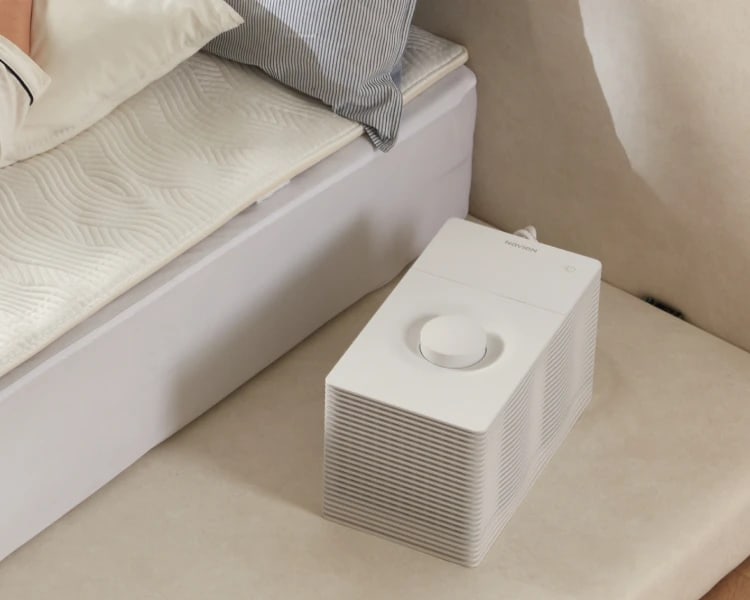
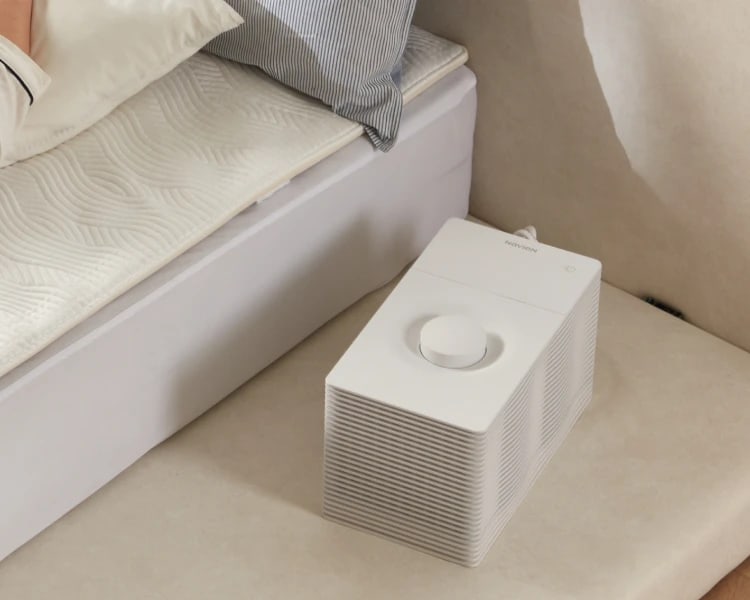
Walk into a Korean home in December and there is a good chance a small white box is humming next to the bed, with two soft hoses running into the mattress pad. It is not a humidifier. It is a boiler, and it is heating the bed.
English shoppers have noticed. Type korean heated mattress pad into Google and one of the suggestions that comes back is korean water heated mattress pad — and on Amazon there is a listing whose title literally contains the words Onsu Mat, a romanisation of 온수매트. The Korean word has crossed into English commerce. The explanation has not crossed with it.
So here it is: what the two Korean categories actually are, why the water one exists at all, what Korea's own consumer regulator says about the risk, and — the part nobody selling one will tell you — the specific bedding you must not put one of these on.
| 전기장판 · electric mat | 온수매트 · water mat | |
|---|---|---|
| How it heats | Resistance wire inside the mat | A small boiler heats water and a pump circulates it through tubing in the mat |
| What is under you | Live heating wire | Warm water in silicone tubing |
| EMF at the sleeping surface | Emitted by the mat itself | Emitted by the boiler box, not the mat |
| Warm-up | Fast, around 3 minutes | Slower — the water has to heat and circulate |
| Noise | Silent | A pump, audible in a quiet room |
| Upkeep | None | Water level needs topping up; tubing can kink |
| Korea price, Aug 2026 | About ₩89,000–₩97,000 | About ₩108,900–₩401,580 |
| Running cost | Lower | Around ₩3,000–₩5,000 a month |
AquaPad hydronic water-heated mattress pad — on AmazonAffiliate link. As an Amazon Associate, EpicKor earns from qualifying purchases at no extra cost to you.
Korea Heats the Surface, Not the Room
Every Korean heating product makes sense once you understand one thing: Korean heating has always warmed the surface you are lying on rather than the air around you.
That is 온돌 (ondol), and it is roughly two thousand years old. Traditionally, a fire in the kitchen firebox sent hot flue gas through stone channels beneath the floor of the sleeping room and out a chimney at the far end. You did not heat a room and then get into it. You lay on the warm floor.
Modern Korean apartments still do this, only with water. A gas boiler heats water and circulates it through pipes embedded in the concrete floor slab. Korean floor heating is not radiators; it is hot water under your feet. This is why Koreans sit on the floor comfortably in winter, why the warmest spot in a Korean room is the floor near the boiler line, and why the standard Korean word for "the warm part of the room" is a location rather than a temperature.
Now the heated mat makes sense. A 온수매트 is that entire system shrunk to bed size: a boiler, a pump, water, and tubing under the person. It is not a strange gadget. It is the national heating system in a box.
The economics push the same way. Running the apartment boiler all night to keep a whole flat warm costs real money; heating the 2 square metres you are actually lying on costs, by Korean estimates for a 250 W unit at eight hours a night, roughly ₩3,000 to ₩5,000 a month. Koreans do not buy these because they are novel. They buy them because turning the building's heating down and the bed's heating up is the cheaper way to sleep warm.
Why the Water Version Exists: The EMF Argument
An electric mat is simpler, cheaper and faster. So why did Korea build a whole second category with a pump in it?
Because of 전자파 (jeonjapa) — electromagnetic fields.
An electric mat heats by running current through a resistance wire, and that wire sits a few centimetres below your body for eight hours a night. A water mat moves the electrical part off the bed entirely: the boiler and the pump are in a box on the floor, and what is under you is a loop of warm water. Whatever you believe about the health question, the physical difference is real and easy to state — in one product the electrified component is under your spine, and in the other it is a metre away on the floor.
Korean consumers took this seriously enough that the government acted. From July 2017, Korea extended its human EMF exposure standard — which had previously applied to devices like phones and laptops — to products used in direct contact with the body, including electric mats and water mats. Passing it became part of the mandatory KC certification these products need to be sold.
The numbers are worth seeing, because they are more specific than anything on an English product page. The national human-protection limits are 4,166 V/m for electric field strength and 833 mG for magnetic flux density. There is also a stricter voluntary EMF certification, granted only to products measuring at or below 10 V/m and 2 mG — roughly one four-hundredth of the protection standard. That voluntary mark is what Korean brands compete on, and it is why Korean listings shout 무전자파 (no EMF) and 절전형 (power-saving) in a way Western heated-blanket listings never do.
One honest note: a water mat is not an EMF-free object. The boiler heats the water electrically and a motor pumps it, so the box emits. The claim that survives scrutiny is narrower and still useful — the emission is not underneath you.
What Korea's Own Regulator Says — Read This Part
This is the section that does not appear on Amazon listings, and it is the reason to read a Korean source before buying a Korean-style product.
Korea's Fair Trade Commission and the Korea Consumer Agency (한국소비자원) issue a joint winter safety advisory on heating appliances. The findings are specific:
- Over a recent four-year window, 3,244 injury reports involving heating appliances were logged, with 1,335 of them in December through February.
- Among 76 cases where burn severity was recorded: 8 first-degree, 51 second-degree, and 17 third-degree burns.
- The most common burn sites were buttocks, legs and feet — 37 of the cases. In other words, the parts resting on the mat.
The mechanism is 저온화상 (jeo-on hwasang), low-temperature burn. It happens at 42–43°C — a temperature that does not feel hot — sustained for an hour or more. Your skin never sends an alarm, because there is nothing to be alarmed about moment to moment. The damage accumulates.
The case that should change how you set the dial: a man in his twenties set a water mat to 40°C, slept on it, and woke with a third-degree burn. Forty degrees. That is below body-warm to the touch.
Practically: set it lower than feels right, use a timer or the sleep mode rather than leaving it on all night, put a sheet between you and the mat, and do not sleep directly on a mat at a fixed high setting if you take medication that dulls sensation or have reduced feeling in your legs or feet.
The warning that matters most outside Korea
The Korean advisory tells consumers plainly: do not use an electric mat together with latex or memory-foam bedding.
That instruction is aimed at a Korean market where the mat usually goes on a firm floor or a thin mattress. It lands very differently in the United States, where memory foam is the default mattress. Memory foam and latex insulate — they trap the heat the mat produces instead of letting it disperse, so the surface temperature climbs past what the thermostat expects, which is exactly the condition that produces a low-temperature burn. It is also hard on the foam itself.
If your bed is memory foam and you want heat, the water mat is the safer of the two categories, and either way put the mat on top of the mattress with a sheet over it, never underneath a foam topper where the heat has nowhere to go.
As an Amazon Associate, EpicKor may earn from qualifying purchases. If the appeal is the water version — no heating wire under you — the closest thing sold in the US is the AquaPad hydronic water-heated mattress pad, whose own listing borrows the Korean word `Onsu Mat`. Check the stated maximum temperature before you check anything else — the burn cases above happened at 40°C.
See AquaPad hydronic water-heated mattress pad on AmazonWhich One Should You Actually Buy?
Buy the electric mat if you want heat in three minutes, you are heating a guest room or a floor space rather than a bed you sleep on nightly, you want silence, or the budget is the deciding factor. It is the cheaper, simpler, lower-maintenance product and it is what most Korean households still own.
Buy the water mat if you sleep on it every night through the winter, if the wire-under-the-spine question bothers you at all, if you sleep on memory foam, or if you find electric mats give you a dry, prickly heat — the most common Korean complaint about them, and the one that actually drove the category.
Buy neither if your winter problem is a cold room rather than a cold bed. These heat about two square metres. They will not warm a bedroom, and using one as a substitute for heating a genuinely cold room means running it hotter than it should be run.
Three things to check on any listing, Korean or American:
- The stated maximum temperature, and whether there is a timer or auto-off. Given that 40°C caused a third-degree burn, a mat that advertises a high ceiling and no timer is advertising the wrong thing.
- Whether it is washable and how. A water mat's tubing layer usually is not machine washable; the cover may detach.
- For a water mat, the noise and the water top-up interval. The pump is audible. Korean buyers who dislike these almost always cite the sound, not the warmth.
If a wire-in-the-mat design is fine for you and you want the fast, quiet, cheaper option, compare ordinary heated mattress pads with an auto shut-off timer — the timer is the feature that matters, not the top temperature. And if your bed is memory foam, read the section above before you buy either type. EpicKor may earn from qualifying purchases at no extra cost to you.
The Brand You Already Own Without Knowing It
One last thing, because it is a genuinely strange piece of trivia.
The company that makes the mat in the photograph at the top of this article is 경동나비엔 (Kyungdong Navien), founded in Seoul in 1978. It builds boilers. In 1988 it became the first company in Asia to produce a condensing boiler, it expanded into North America in 2006, and today Navien holds the largest share of the North American tankless gas water-heater market — the North American business, Navien Inc., is its subsidiary.
So there is a reasonable chance that the brand on the small white box next to a Korean bed is the same brand on the tankless water heater in an American basement. It is not a coincidence or a licensing deal. It is one company that has spent nearly fifty years heating water, applying that to the object Koreans most want warm.
If you are outfitting a Korean-style home more broadly, the same "heat the thing, not the room" logic runs through the rest of it — see our guide to Korean rice cookers for the appliance that gets the same daily-use treatment, and why half of Korea has an electronic bidet for another Korean fixture that spread through apartments on the same rental counter. Heating a Korean bedroom all winter also dries it out, which is why the machine beside the bed is usually a humidifier chosen for how far it comes apart.
FAQ
Q: What is a 온수매트 (onsu mat)?
A water-heated mattress pad. A small boiler unit sits on the floor, heats water, and pumps it through soft tubing sewn into a mattress pad. There is no heating wire in the part you lie on. It is the Korean-specific category that English shoppers keep finding and cannot find explained.
Q: Is a Korean water mat safer than an electric blanket?
On the specific question of what is electrified under your body, yes — the electrical components sit in a box on the floor rather than in the mat. On burn risk, no. Low-temperature burns come from sustained contact heat, and a water mat delivers that just as well as an electric one; the documented third-degree burn case in Korea's consumer-agency advisory involved a water mat set to 40°C.
Q: Can I use a Korean heated mat on a memory foam mattress?
Korea's Fair Trade Commission and Consumer Agency advise against using electric mats with latex or memory-foam bedding, because the foam traps heat instead of dispersing it. Since memory foam is the default in the US and not in Korea, this warning matters more abroad than at home. Put the mat on top of the mattress with a sheet over it, never under a foam topper.
Q: How much does a Korean heated mat cost?
As of August 2026, Korean retailers list electric carpet mats around ₩89,000–₩97,000 and water mats from about ₩108,900 for an entry single up to ₩401,580 for a premium Navien model, with high-end four-season models above that. Running cost for a 250 W water mat at eight hours a night is estimated at roughly ₩3,000–₩5,000 a month.
Q: Why do Korean listings advertise "no EMF"?
Because Korea regulates it. Since July 2017 the national human EMF protection standard has applied to body-contact products including mats, as part of mandatory KC certification, and there is a stricter voluntary EMF mark for products at or below 10 V/m and 2 mG — about one four-hundredth of the legal limit. Brands compete on that mark, so the phrasing shows up on every box.
Q: Do these work on the floor, or only on a bed?
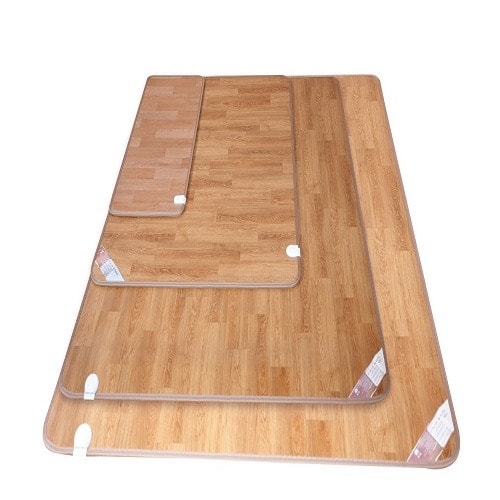
Both, and the floor version is the more Korean one. Korean makers sell carpet mats printed to look like flooring, in sizes from a single seat to a full room, meant to be sat on rather than slept under. That is closer to the original ondol idea than the bed version is.
Sources Checked
- Korean technical and consumer coverage of the electric-mat versus water-mat difference, the boiler-and-pump mechanism, and the EMF certification thresholds, including the July 2017 extension of the human-protection standard to body-contact products
- Fair Trade Commission and Korea Consumer Agency (한국소비자원) winter heating-appliance safety advisory: 3,244 injury reports over four years, the burn-severity breakdown, the 42–43°C low-temperature burn mechanism, the 40°C third-degree burn case, and the latex/memory-foam warning — as reported by Hankyung
- Danawa price comparison, checked August 2026, for current Korean retail pricing of Ilwol, Hanil and Kyungdong Navien mats
- Kyungdong Navien's official site (
kdnavien.co.kr) for the sleeping-mat product line, and public company records for the 1978 founding, the 1988 condensing boiler, the 2006 North American expansion and Navien Inc.'s market position - Amazon US listings for water-heated mattress pads currently sold in the United States
You Might Also Like
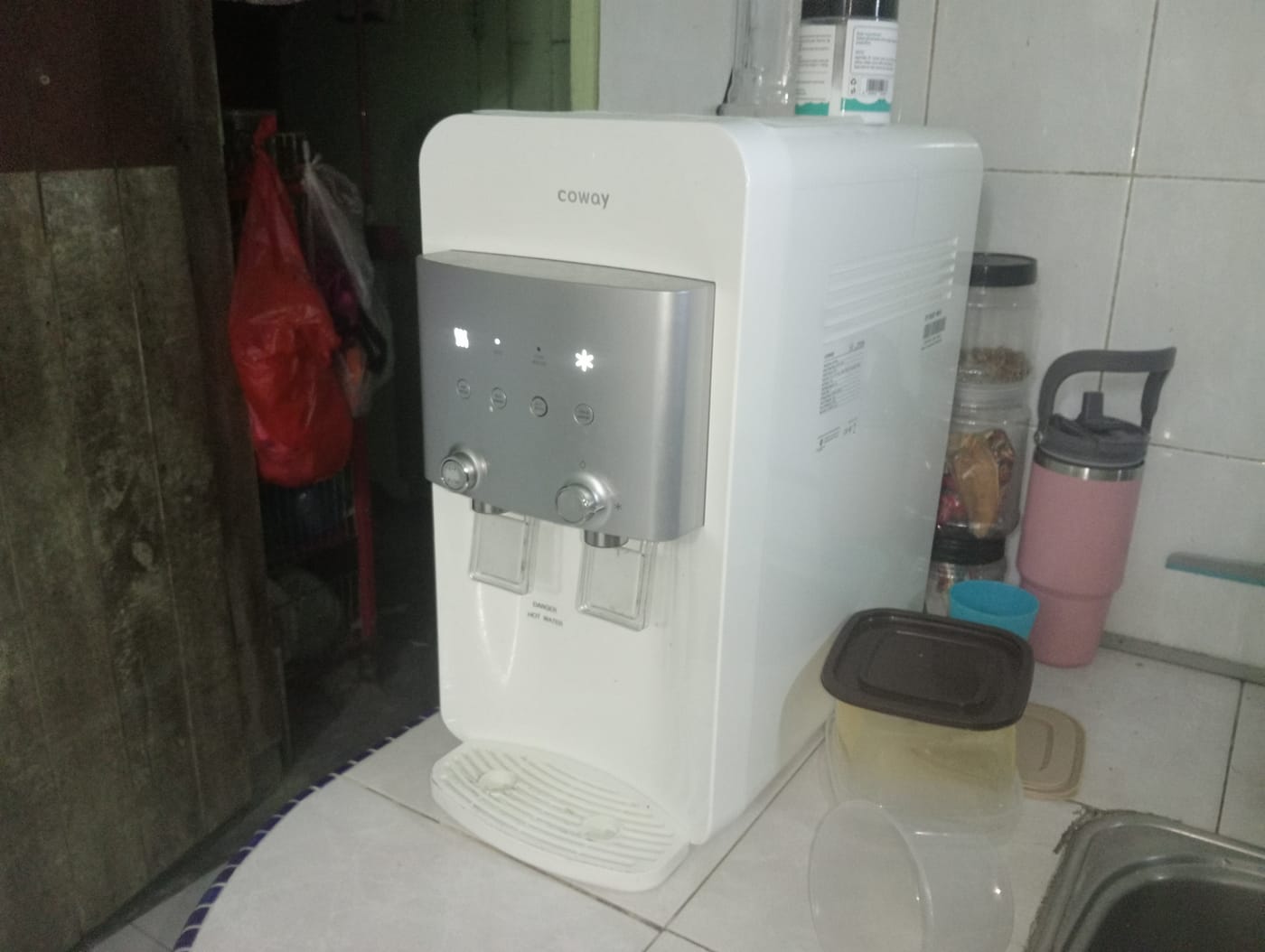
Korean Water Purifiers: The 1998 Rental Bet That Built Coway's Empire
In the worst month of Korea's IMF crisis, a water purifier company started lending machines instead of selling them. That decision built a ₩4 trillion empire, invented Korea's rental economy, and explains half the appliances on this site.
Korean Massage Chairs: How Bodyfriend Made a Recliner the Top Filial Gift
In Korea, the massage chair is a family milestone purchase — the holiday gift for parents, rented by the month like a water purifier. How Bodyfriend beat Japan at its own invention, what the chairs cost in the US, and the child-safety warning no listing shows.
LG Styler Explained: Why Korea Invented a Closet That Shakes Your Clothes
Korea invented a closet that steams, shakes and de-smells clothes, and now every Korean apartment tour shows one. What the LG Styler actually does, the nine-year story behind it, LG vs Samsung's rival machine, and who should not buy one.