Happycall Double Pan: The Korean Pan That Closes, and Whether You Need One
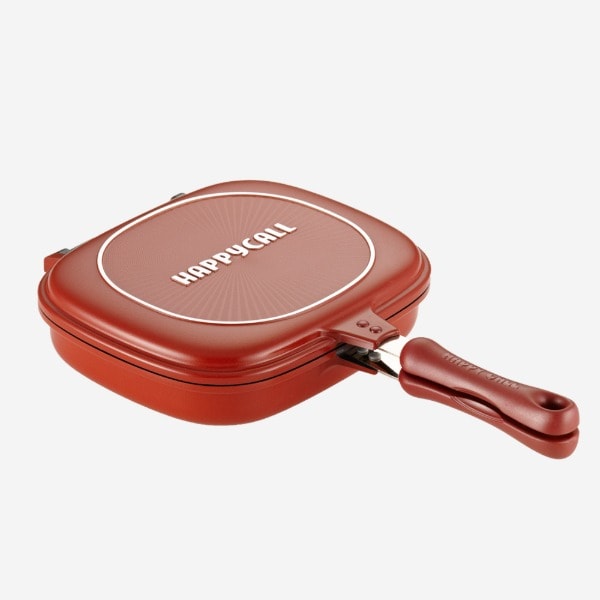
There is a pan sold in Korea that closes. Two shallow pans joined by a hinge, a silicone gasket running the rim, a latch on the handle. You put a mackerel in it, snap it shut, and flip the whole thing over halfway through.
To most people outside Korea this looks like a gimmick — the sort of thing sold at 2 a.m. on a shopping channel. It is the opposite. 해피콜 (Happycall) built a company on this pan because Korean apartments have a specific, unavoidable problem, and the pan solves it.
This guide covers what the double pan actually does, the street-food mold it was copied from, what it costs in Korea versus abroad, and — the part every product page skips — the three situations where it is the wrong pan.
| Question | Short answer |
|---|---|
| What is it | A hinged, gasket-sealed double frying pan (양면팬). Cook, latch, flip. |
| Who makes it | Happycall (해피콜), founded June 1999 in Gimhae (김해), South Gyeongsang Province |
| When | Company 1999; the sealed double pan arrived in 2001 |
| Copied from | The hinged iron mold used to make 붕어빵, the fish-shaped street pastry |
| Solves | Oil splatter and cooking smell in an apartment kitchen with weak ventilation |
| Korea price | Roughly ₩65,000–₩78,300 at major Korean retailers, August 2026 |
| US price | Sold on Amazon in several sizes and coatings; check the current price on the listing |
| Skip it if | You have a strong range hood, you want a hard sear, or you cook for more than two |
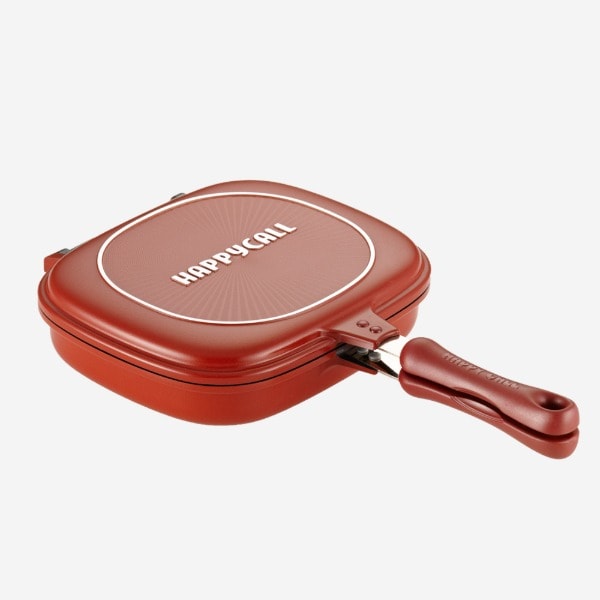
Happycall Origin IH double pan, with the silicone seal — on AmazonAffiliate link. As an Amazon Associate, EpicKor earns from qualifying purchases at no extra cost to you.
The Problem Is the Apartment, Not the Fish
Start with the thing the product does not advertise.
Most Koreans live in apartments, and Korean apartment kitchens are typically open onto the living room with a recirculating hood rather than a duct that vents outside. Grill a mackerel in that kitchen and the smell does not leave. It sits in the curtains and the sofa for two days.
Worse, it does not always stay in your unit. Korean apartment buildings commonly share exhaust ducts between households, and smells traveling backward through those shared ducts is a documented, ordinary complaint — the government's own policy briefing service has covered the problem and the ventilation fixes for it. Cooking smoke that reaches a neighbor is not a hypothetical in a Korean apartment block. It is a reason people stop cooking certain things.
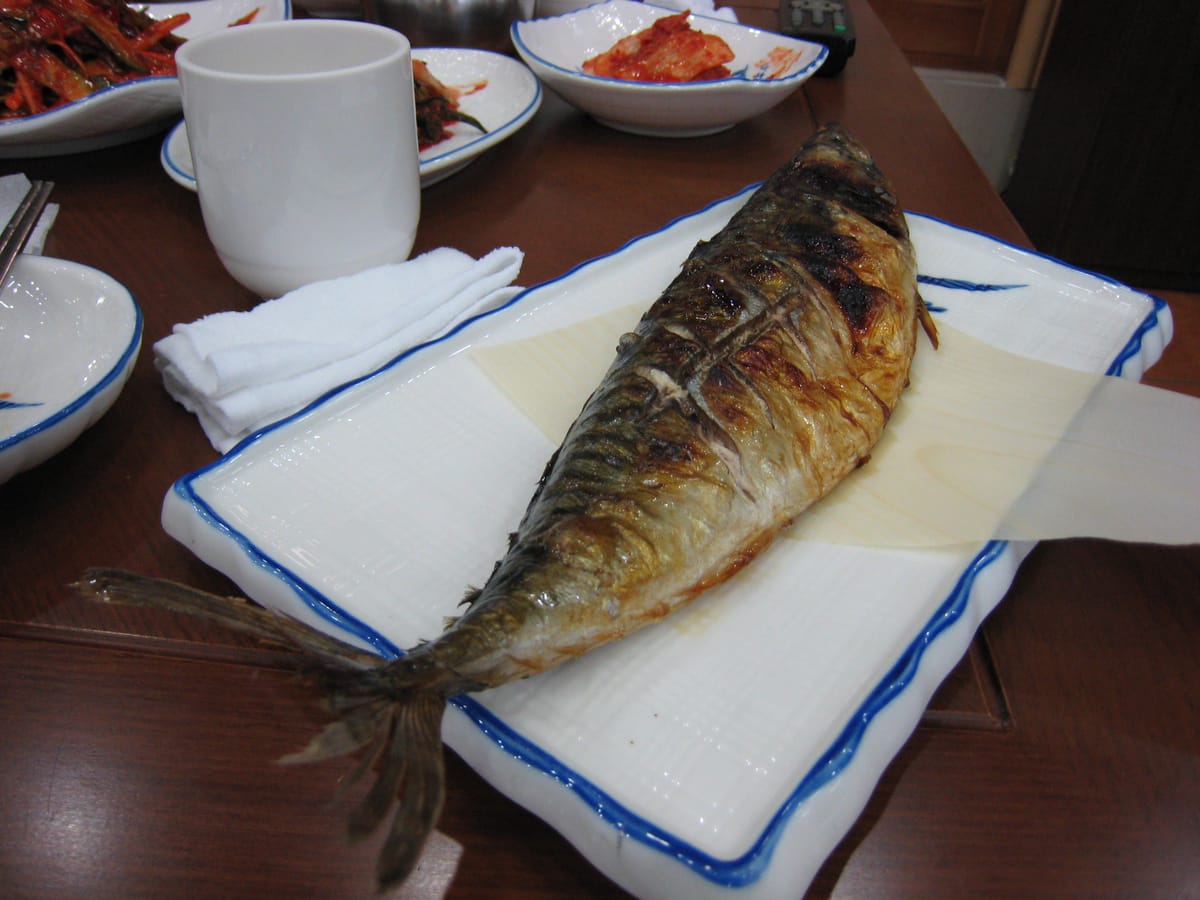
So Korean home cooks arrived at a standoff. 생선구이 (saengseon-gui), grilled fish, is a staple of the everyday Korean table — it appears at lunch counters, in home cooking, in the set meals that come with rice and soup. And it is one of the hardest things to cook in the kitchen most Koreans actually have.
That gap is the entire commercial reason the double pan exists. It is also why one of Happycall's current models is named, with no marketing subtlety at all, NEW 생선구이 양면팬 — the "new grilled-fish double pan."
The Pan Was Copied From a Street Vendor's Mold
Here is the part that is missing from every English page about this product.
이현삼 (Lee Hyun-sam) did not come from manufacturing. He came from selling. After leaving the army he went to Seoul in 1989 and learned trade at Namdaemun Market, then spent years traveling the country selling kitchenware, shoes, and blankets out of the back of a vehicle. In June 1999, at 33, he used the money from that to start Happycall in Gimhae.
The idea for the pan came from a street stall. In Korean winter, vendors make 붕어빵 (bungeoppang) — a fish-shaped pastry with sweet red bean inside — in a hinged iron mold. Batter goes into one half, the vendor closes the other half on top, and flips the whole assembly on the griddle. Both sides cook. Nothing escapes.
Lee looked at that mold and saw a frying pan. Korean business coverage of the company traces the sealed double-sided pan to 2001, and describes the bungeoppang mold as the direct source of the idea.
The insight is better than it sounds. A lid on a normal pan sits loose and does nothing about oil. A hinged pan with a gasket does three things at once: it contains the splatter, it holds heat against the top surface of the food so you are cooking from both sides, and it lets you turn a whole fish without a spatula and without the fish falling apart.
Then Home Shopping Happened
Korea's home-shopping channels were the perfect medium for this product, because the pan does something visible in thirty seconds: a host closes it, flips it, opens it, and the fish is intact and the kitchen is clean.
Korean business press reports that a single one-hour home-shopping broadcast sold 12,800 pans — and Korean coverage of the company claims the product went into the Guinness Book on the strength of that hour. The 12,800 figure is the one that gets cited consistently; treat the Guinness detail as a claim from Korean press rather than something independently confirmed here.
What followed was a full kitchenware company: a "diamond coating" frying pan line in 2008, a high-speed blender in 2015, pressure pots, woks.
Then the founder left. In 2016 Lee sold 100 percent of the company — his own 89.52 percent plus related holdings — to EastBridge Partners and Goldman Sachs for ₩180 billion. Happycall has been private-equity owned since. That matters for one practical reason: the brand you buy today is not the founder's workshop, and the product mix has drifted. Browse the official Korean mall right now and the front page pushes pressure pots and blenders — the double pan that built the company is no longer the thing being sold hardest.
As an Amazon Associate, EpicKor may earn from qualifying purchases. The titanium and 10-inch double pans this article describes are currently unavailable on Amazon US; the Happycall listing that is in stock is the Happycall Origin IH jumbo double pan, with the silicone seal and an induction base — the seal is the part doing the work, so it is worth confirming a listing has it. Check the size and the seal material on the listing before you commit.
See the Happycall Origin IH double pan on AmazonHow to Actually Use It — Including the Mistake Everyone Makes
The pan is not complicated, but there is one error that turns a good result into a bad one, and it is the error the design invites.
The sequence. Heat the bottom half only, open, on medium. Oil lightly. Lay the fish in. Cook open for the first two or three minutes so the surface sets — this is what gives you browning. Then close, latch, and cook. Flip the whole pan. Cook the second side. Unlatch away from your face; there is steam in there.
The mistake: sealing it completely for the whole cook. Korean home-cooking coverage makes this point and it is worth repeating, because it is counter-intuitive. If you close the pan tight from the start and leave it shut, the water and the fishy volatiles coming out of the fish have nowhere to go. They condense on the inside and go straight back into the food. You end up with a fish that is steamed rather than grilled, softer skin, and — the exact opposite of the point — a stronger smell when you finally open it.
So: seal to contain splatter and to cook from both sides, but let it breathe. Crack the latch for the last minute, or cook the opening stage open. The gasket is there to stop oil from flying at your shirt, not to make an airtight chamber.
Two practical notes. The pan is heavy for its size once it is closed — you are flipping two pans and the food. And most of these are nonstick, which means no metal utensils and no aggressive scrubbing, or you will destroy the coating within a year.
The Honest Case Against Buying One
An article that only lists benefits is an advertisement. Three real reasons to skip it:
You have proper ventilation. The double pan is a workaround for weak extraction. If you have a ducted range hood that actually vents outside, most of the reason for this pan evaporates. A good open skillet and a hood will give you better browning with less fuss.
You want a hard sear. Sealing food traps moisture, and trapped moisture is the enemy of a crust. A steak, a smash burger, anything where the goal is aggressive Maillard browning — use a heavy open pan. The double pan is for gentle, even, contained cooking: fish, chicken thighs, pancakes, chestnuts, dumplings, toasted sandwiches.
You cook for more than two. Capacity is limited by the fact that the food has to fit under a closing lid without being crushed. A family-size batch means multiple rounds.
There is also a cheaper honest answer for some readers: if the only thing you want is to stop oil spitting at you, a splatter screen costs under ten dollars and does that one job. The double pan is worth its price when you also want both-side cooking and easy turning. If you only want the splatter fixed, buy the screen.
What It Costs, in Korea and Abroad
In Korea, as of August 2026, the double pan sits in the ₩65,000–₩78,300 range at mainstream retailers — Korean listings put the NEW 생선구이 양면팬 (27×23 cm) around ₩65,880, the Cookmate standard double pan around ₩65,000 and the jumbo grill version around ₩75,000, with retailer sets running to about ₩78,300. It is a normal mid-market kitchen purchase in Korea, not a luxury item, and it is stocked in ordinary places including warehouse clubs.
Abroad, Happycall double pans are sold on Amazon in several sizes, coatings and models, alongside the brand's single-pan titanium line. Marketplace prices move and older models linger next to current ones, so check the model number and the current price on the listing.
One thing to watch when buying outside Korea: the lineup on Amazon includes both genuine double pans and ordinary single frying pans under the same brand. If you specifically want the pan that closes, confirm the listing says double pan, flip pan, or shows the hinge and the latch.
Decide which problem you are actually solving. For both-side cooking and turning a whole fish, compare the Happycall double pan. If what you really want is one good Korean-brand skillet and a hood does your ventilation, an induction-compatible Korean-brand frying pan is the simpler buy. And if the only problem is oil spitting at you, an ordinary splatter screen solves that alone for a fraction of the money. EpicKor may earn from qualifying purchases at no extra cost to you.
See the Happycall double pan on AmazonWhat the Pan Says About Korean Kitchens
It is worth stepping back, because this is a pattern rather than a one-off.
A Korean invention arrives, very often, as a workaround for the constraints of the Korean apartment. Limited floor area, an open-plan kitchen, shared ventilation, thin walls, and a food culture that involves a lot of grilling, frying, and fermenting. The bidet seat spread through the same apartments on a rental counter. The rice cooker became a pressure appliance because rice is cooked daily rather than occasionally. The tabletop electric grill exists because Korean BBQ at home would otherwise fill the building with smoke.
The double pan belongs to that family. It is not a clever gadget looking for a use. It is a specific answer to the question of how you eat grilled mackerel on a Tuesday when you live on the ninth floor.
If you are assembling a Korean kitchen abroad, the same logic is worth applying to the rest of it — see our Korean rice cooker guide for the appliance Koreans actually treat as essential, and the home Korean BBQ grill comparison for the smoke problem's other solution.
FAQ
Q: Is the Happycall double pan actually good, or is it home-shopping hype?
Both things are true. It genuinely solves splatter and makes turning whole fish easy, and it was also sold by one of the most effective direct-response machines in the world. Judge it on the narrow job: contained, both-side, gentle cooking. It is very good at that and mediocre at searing.
Q: Does the Happycall pan really stop the cooking smell?
It reduces it substantially while the food is cooking, which is the whole point in an apartment. It does not eliminate it, and if you keep it sealed the entire time you can make the smell worse when you finally open it. Vent it near the end.
Q: Can I use a Happycall double pan on an induction cooktop?
Depends on the model. Happycall sells induction-compatible lines and non-induction lines, and older double pans in particular are often not induction-ready. Check the specific listing rather than assuming the brand.
Q: What can I cook in a Korean double pan besides fish?
Chicken thighs, pork belly, dumplings, pancakes and 전 (jeon), toasted sandwiches, chestnuts, roasted garlic. If pork belly is the goal, the table manners half of that meal — the wrap, the scissors, the pour — is covered in our Korean BBQ etiquette guide. Anything that benefits from even heat on both faces and does not need a hard crust.
Q: Is Happycall still a Korean company?
It is a Korean company, headquartered in Gimhae, but it has not been founder-owned since 2016, when Lee Hyun-sam sold his entire stake to EastBridge Partners and Goldman Sachs for ₩180 billion. The brand and the manufacturing are Korean; the ownership is private equity.
Q: Where do Koreans buy the double pan?
Home-shopping channels, the official mall, large e-commerce platforms, department stores and warehouse clubs. It is an unremarkable, widely stocked household purchase in Korea — which is itself the strongest evidence that it is not a novelty item.
Sources Checked
- Korean business and governance press on Happycall's founding, the 2001 double-pan launch, the bungeoppang-mold origin, the 12,800-unit home-shopping hour, and the 2016 sale to EastBridge Partners and Goldman Sachs for ₩180 billion — Bizwatch governance coverage, Hankyung on the acquisition
- Happycall's official Korean mall (
hcmall.co.kr), checked August 2026 for current lineup and the company's 27th-anniversary marking, consistent with a 1999 founding - Korean retailer listings for August 2026 pricing, including GS Shop and Home & Shopping
- Korean government policy briefing coverage of cooking smells traveling through shared apartment ventilation — korea.kr
- Amazon US listings for current Happycall models and the "less smell patented silicone seal" product description
You Might Also Like
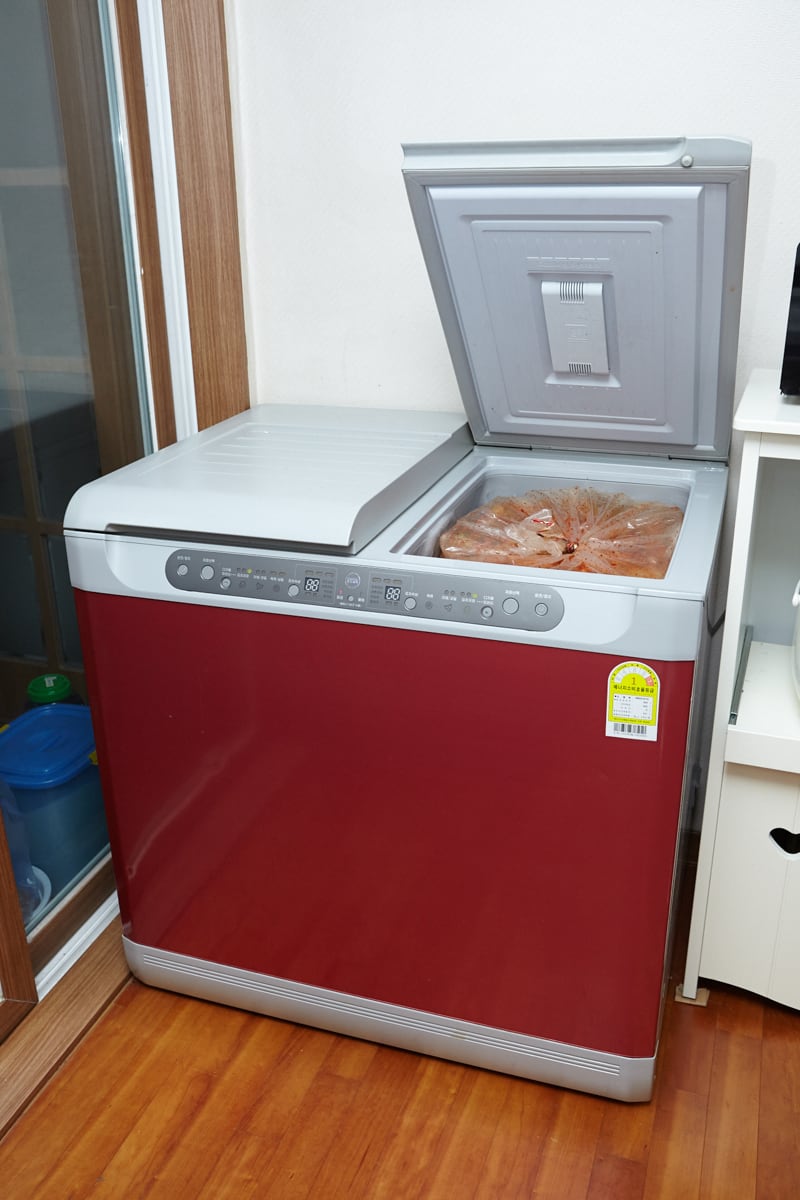
Kimchi Refrigerators Explained: Why Korea Built a Fridge for One Food
Korea invented a second refrigerator that exists only to store kimchi at the temperature of winter earth. Here is why it exists, how it works, what happened to the company that invented it six weeks ago, and what to check before buying one abroad.
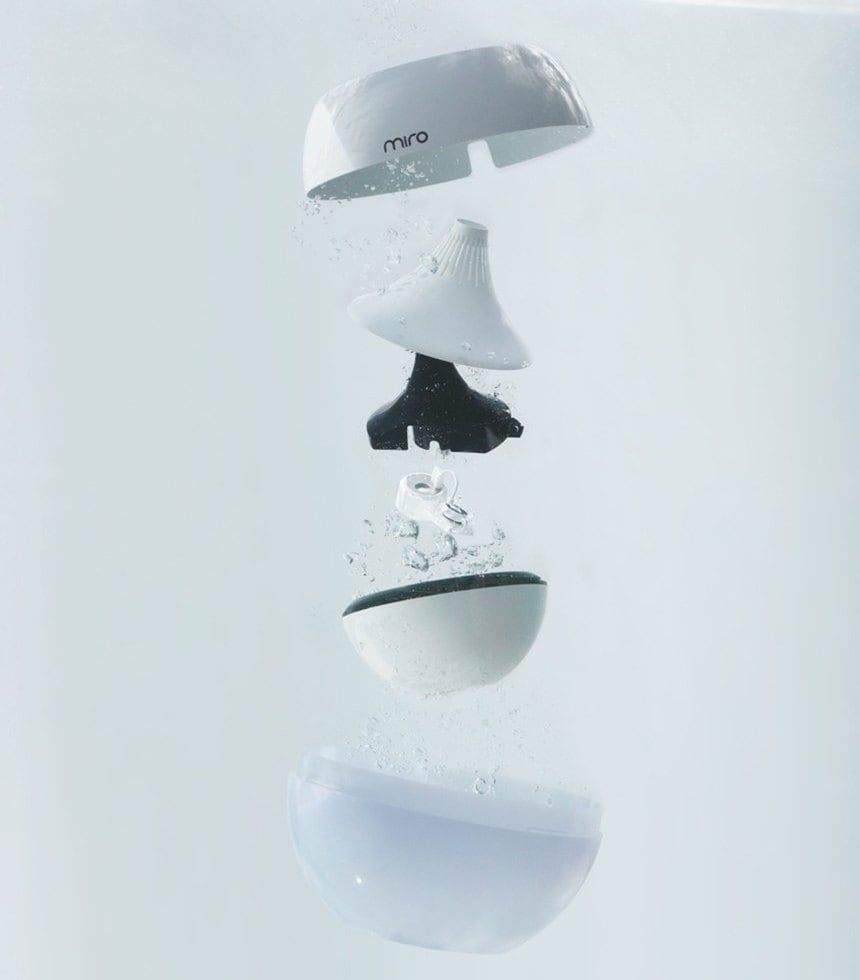
Korean Humidifiers: Buy the One That Comes Apart
Korean humidifiers pull apart into six washable pieces, the humidifying engine included. Korea's consumer agency measured why: daily water changes cut bacteria 87.3%, washing every second day 98.8%. What Amazon lists is a generation behind Korea's shelves.
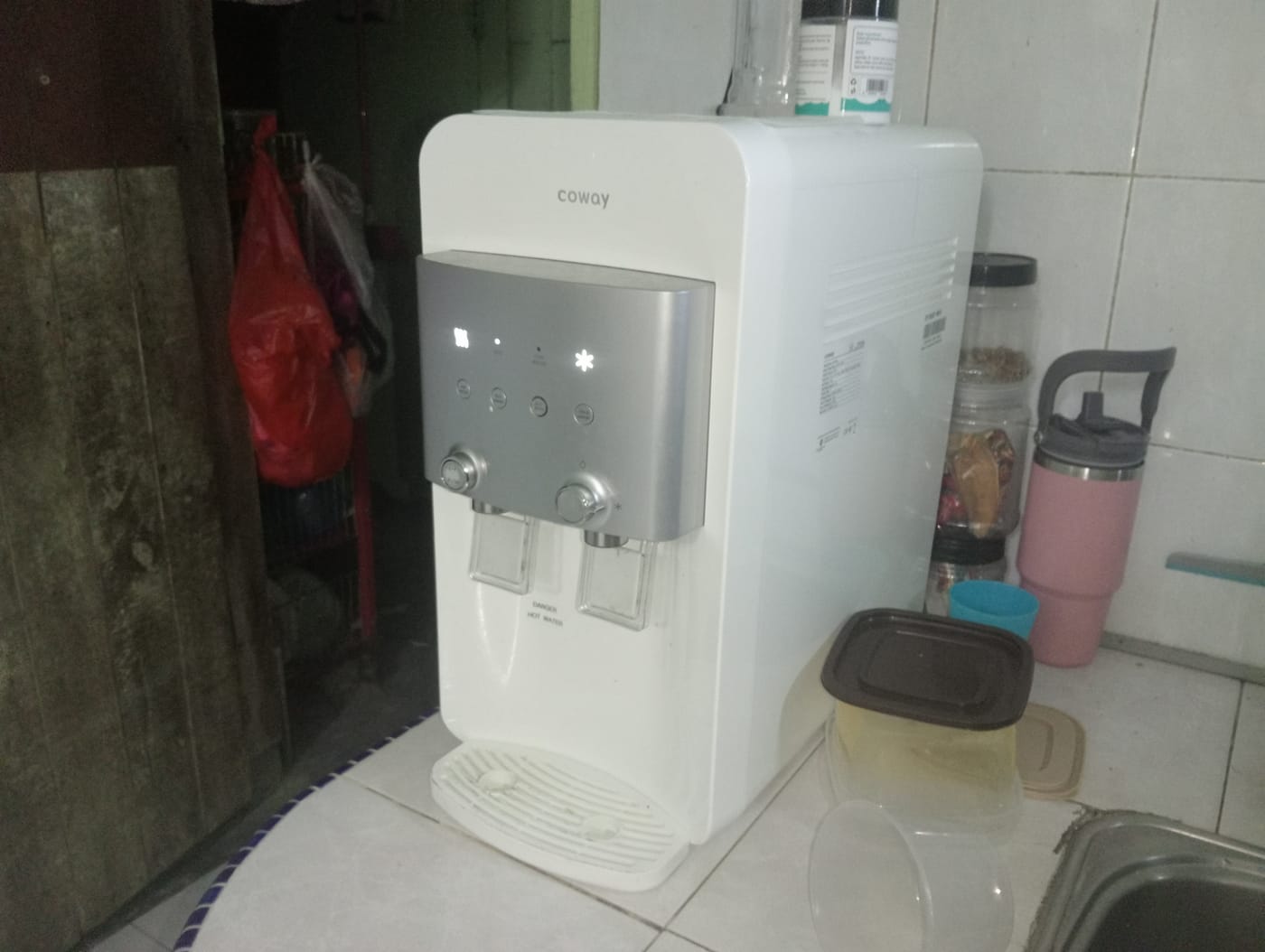
Korean Water Purifiers: The 1998 Rental Bet That Built Coway's Empire
In the worst month of Korea's IMF crisis, a water purifier company started lending machines instead of selling them. That decision built a ₩4 trillion empire, invented Korea's rental economy, and explains half the appliances on this site.