How to Eat Korean BBQ Like a Local: Unwritten Rules
Most first-timers at Korean BBQ make the same mistake: they treat it like a steak dinner with a grill in the middle.
That is not really how it works.
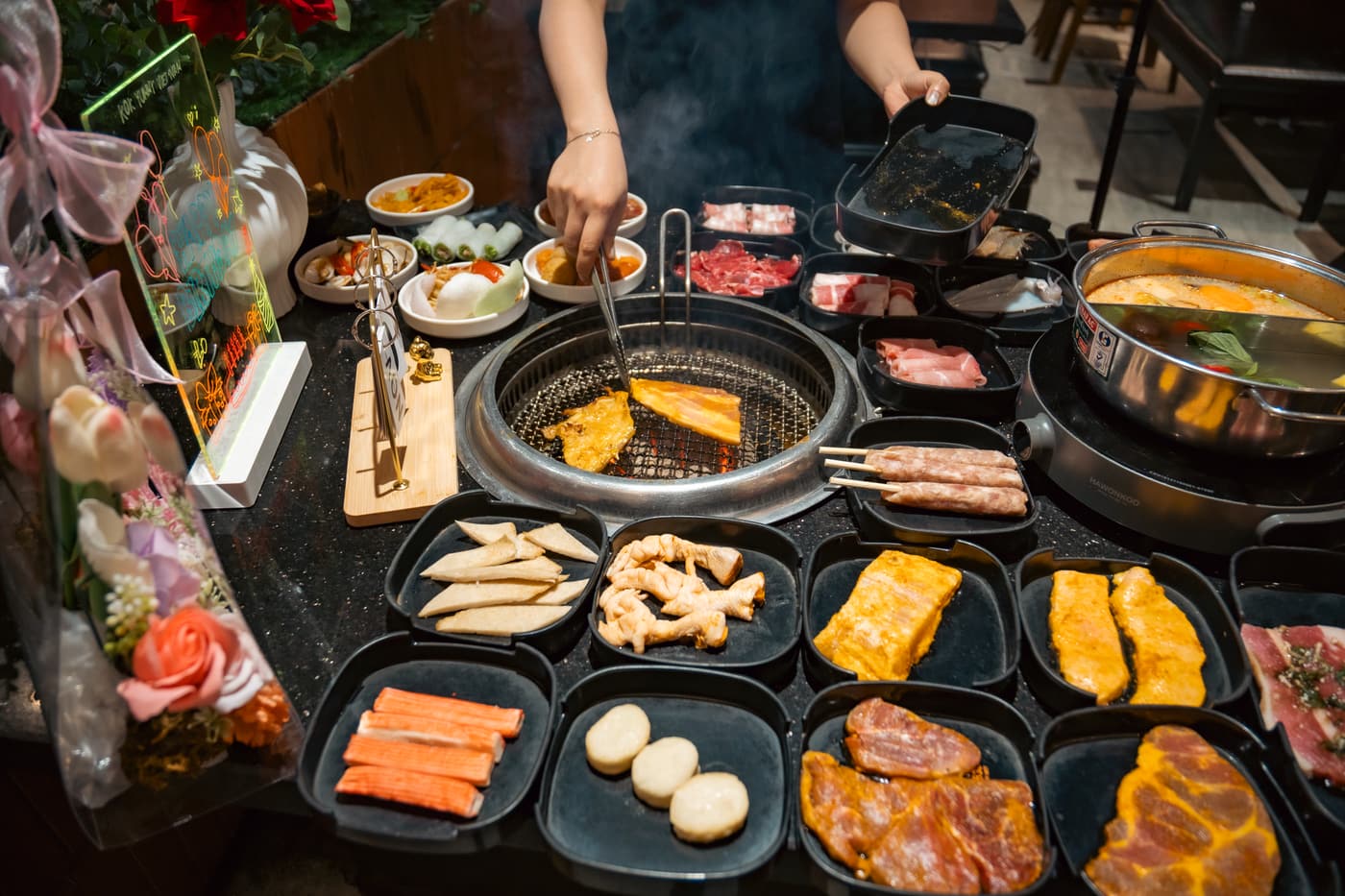
A good Korean BBQ guide is not only about which meat to order. It is about how the table moves. Who grills. When you flip. What goes inside a lettuce wrap. Why the scissors are there. Why side dishes keep appearing. Why everyone seems relaxed even though there are hot metal plates, raw meat, smoke, garlic, sauces, drinks, and five tiny bowls fighting for space.
Korean BBQ is a meal, but it is also a rhythm. Once you understand that rhythm, the whole table becomes easier.
You do not need to act perfectly Korean. Nobody expects that. But if you know a few unwritten rules, you will stop feeling like the confused person staring at raw pork belly while everyone else seems to know exactly what to do.
Here is how to eat Korean BBQ like a local, without turning dinner into a performance.
Ssamjang Korean Soybean Paste Sauce — on AmazonAffiliate link. As an Amazon Associate, EpicKor earns from qualifying purchases at no extra cost to you.
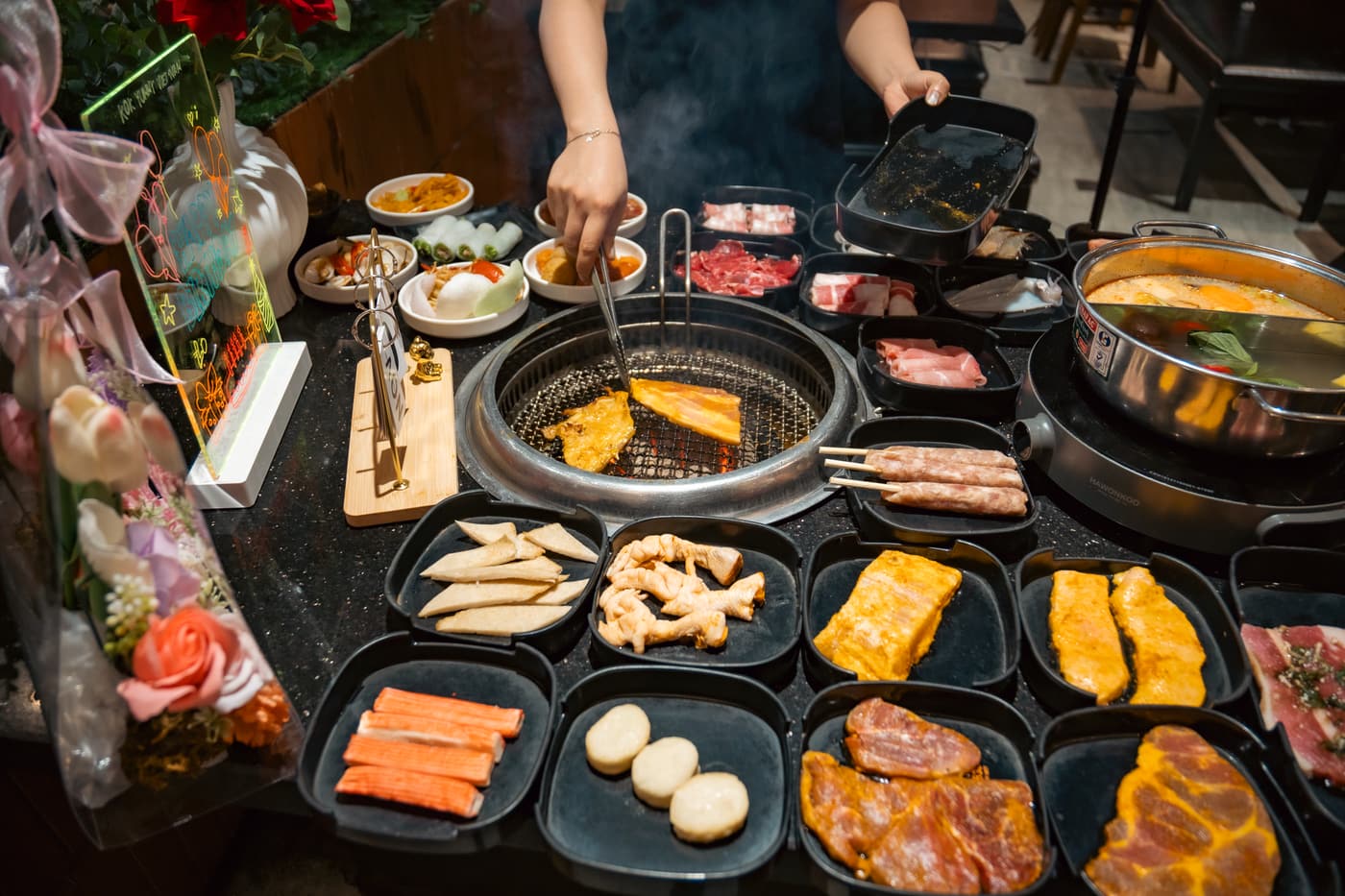
Korean BBQ is built around shared meat, side dishes, sauces, and table rhythm. Photo from Pexels.
Korean BBQ in 60 Seconds
If you read nothing else, this is the whole method, in order:
- Sit, and let the staff light the grill. They bring the meat; at most places they also start the cooking.
- Do not touch the meat too early. Let each side sear before anyone flips — one person runs the tongs, usually the youngest or whoever grabbed them first.
- Cut with the scissors, on the grill. Bite-sized pieces, after the first flip.
- Build a wrap (쌈): one lettuce or perilla leaf, one piece of meat, a dab of ssamjang, maybe garlic or grilled kimchi.
- One bite. The wrap is not a burrito — fold it closed and eat it whole.
- Order the finisher last: rice, stew (된장찌개), or cold noodles (냉면) after the meat, not with it.
- Pour drinks for others, never for yourself, and receive a senior's pour with two hands.
Everything below is the why — and the mistakes that make locals wince.
Start by Understanding What the Table Is For
At a Korean BBQ restaurant, the table is not just where food lands. The table is the cooking station, serving station, conversation space, and social map.
That is why it can feel busy at first.
You may see raw meat, lettuce or perilla leaves, garlic, green chili, ssamjang, sesame oil with salt, kimchi, scallion salad, pickled radish, soybean paste stew, rice, tongs, scissors, water cups, and maybe soju bottles all sharing one space. This is normal. Korean meals often work spatially rather than in courses. Instead of appetizer, main, dessert, many elements arrive together and are combined bite by bite.
The first local rule is simple: do not panic when many small plates appear.
Those small dishes are banchan, Korean side dishes. In many BBQ restaurants, banchan comes with the meal and can often be refilled. You do not need to order every little plate separately. You also do not need to eat them in a fixed order. They are there to balance the meat.
Fresh lettuce cools the richness. Kimchi brings acidity. Pickled radish cuts through fat. Scallion salad adds sharpness. Garlic gives heat. Ssamjang adds salty, funky depth. The meal works because you keep changing the bite.
If you want a deeper explanation of why Korean tables come with so many small dishes, EpicKor's guide to why Korean restaurants give you food you did not order fits perfectly with this meal.
The second rule: Korean BBQ is usually shared.
You are not ordering "my steak" and guarding it. You are ordering meat for the table. People cook together, eat together, and pace the meal together. That does not mean you cannot have preferences, but it does mean you should think in table portions, not individual plates.
When ordering, the easiest path is to choose one or two meats first, then add more later. If you order too much at once, the table gets crowded and the meat may sit too long. If you are new, start with familiar choices:
- Samgyeopsal: pork belly, fatty and forgiving
- Moksal: pork neck, meatier and less fatty than pork belly
- Galbi: marinated ribs, sweet-savory and beginner-friendly
- Deungsim: sirloin, common at beef BBQ places
- Chadolbaegi: thin beef brisket, fast-cooking and delicate
You do not need to order every famous cut in one sitting. Locals often build the meal gradually. Start with the main meat, see how hungry everyone is, then add stew, noodles, rice, or another meat if the table wants it.
That pace matters. Korean BBQ is not a race to fill your plate. It is a shared sequence.
Worth comparing: As an Amazon Associate, EpicKor may earn from qualifying purchases. A Korean BBQ sauce for lettuce wraps, rice, vegetables, and meat, useful for BBQ and ssam guides. Start with Ssamjang Korean Soybean Paste Sauce.
See Ssamjang Korean Soybean Paste Sauce on AmazonThe Grill Has Its Own Etiquette
The grill is where many visitors get nervous.
Should you cook the meat yourself? Should the staff do it? Should you flip now? Are those scissors for food? Is it rude to move someone else's piece?
The answer depends on the restaurant, but the logic is not too hard.
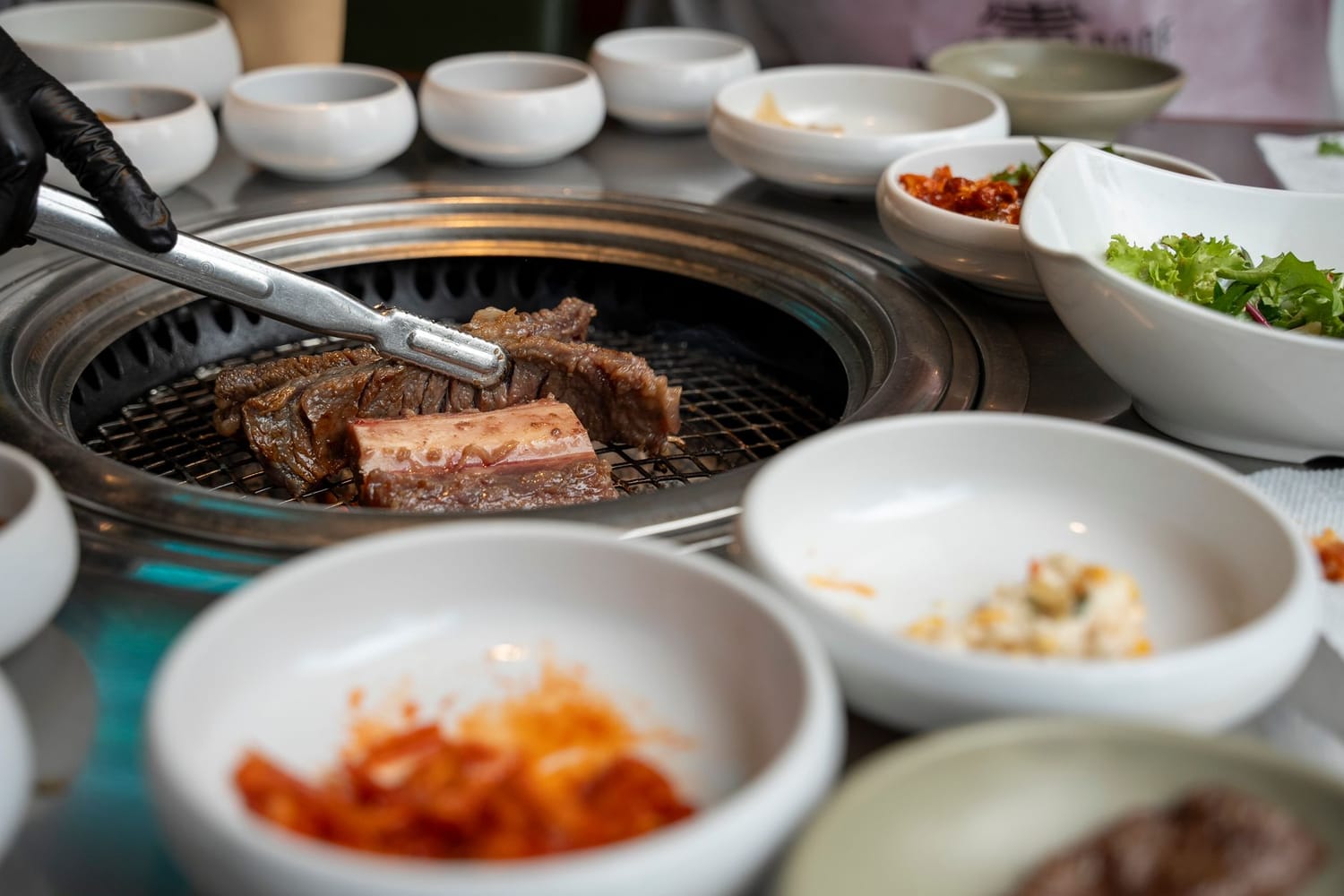
At some Korean BBQ places, staff will start the grill, place the meat, cut it, and manage the first round. At others, the table cooks for itself. Higher-end beef restaurants may have more staff involvement. Casual pork belly places often expect customers to handle more of the cooking.
The local move is to watch the first minute.
If staff confidently place the meat and begin turning it, let them lead. Do not grab the tongs from them. If they simply bring the meat and walk away, your table is probably expected to cook.
If you are eating with Koreans, one person often naturally becomes the grill manager. This may be the most confident person, the person sitting closest to the tongs, or the person who cares most about doneness. Let that person work unless they ask for help. Too many hands on the grill creates chaos.
Here is the basic grill rhythm.
| Moment | What Locals Usually Do | Beginner Tip |
|---|---|---|
| Meat goes on | Place pieces flat with space between them. | Do not pile raw meat on top of cooked meat. |
| First side cooks | Wait for color and browning before flipping. | Do not poke or flip every few seconds. |
| Cutting stage | Use scissors and tongs to cut meat into bite-size pieces. | The scissors are normal. They are not a tourist trap. |
| Final browning | Turn pieces so each side gets cooked evenly. | Move cooked pieces to the edge if the grill has a cooler zone. |
| Eating pace | Eat pieces as they finish, then cook the next batch. | Do not leave finished meat burning in the center. |
The most important safety rule is to separate raw and cooked meat. Use the tongs for raw meat and be mindful once the meat is ready. Restaurants may provide separate tongs, but not always. If you are unsure, ask for another pair or let the staff handle it.
For pork, cook it thoroughly. Samgyeopsal is forgiving because the fat keeps it juicy, but it still needs proper cooking. Beef can vary depending on cut and restaurant style, but if you are not sure, follow the staff's lead.
Another small rule: do not cover the entire grill with kimchi and garlic unless the table wants that. Grilled kimchi and garlic are delicious, but they also take grill space and can burn. Put them near the edge or cook them in moderation.
The grill is shared territory. The goal is not to prove you are the master of meat. The goal is to keep good bites coming for everyone.
If this restaurant rhythm makes you want to recreate the meal at home, EpicKor's Korean BBQ grill for home guide compares electric tabletop grills, stovetop grill pans, smoke control, grease drainage, and cleanup before you buy the equipment.
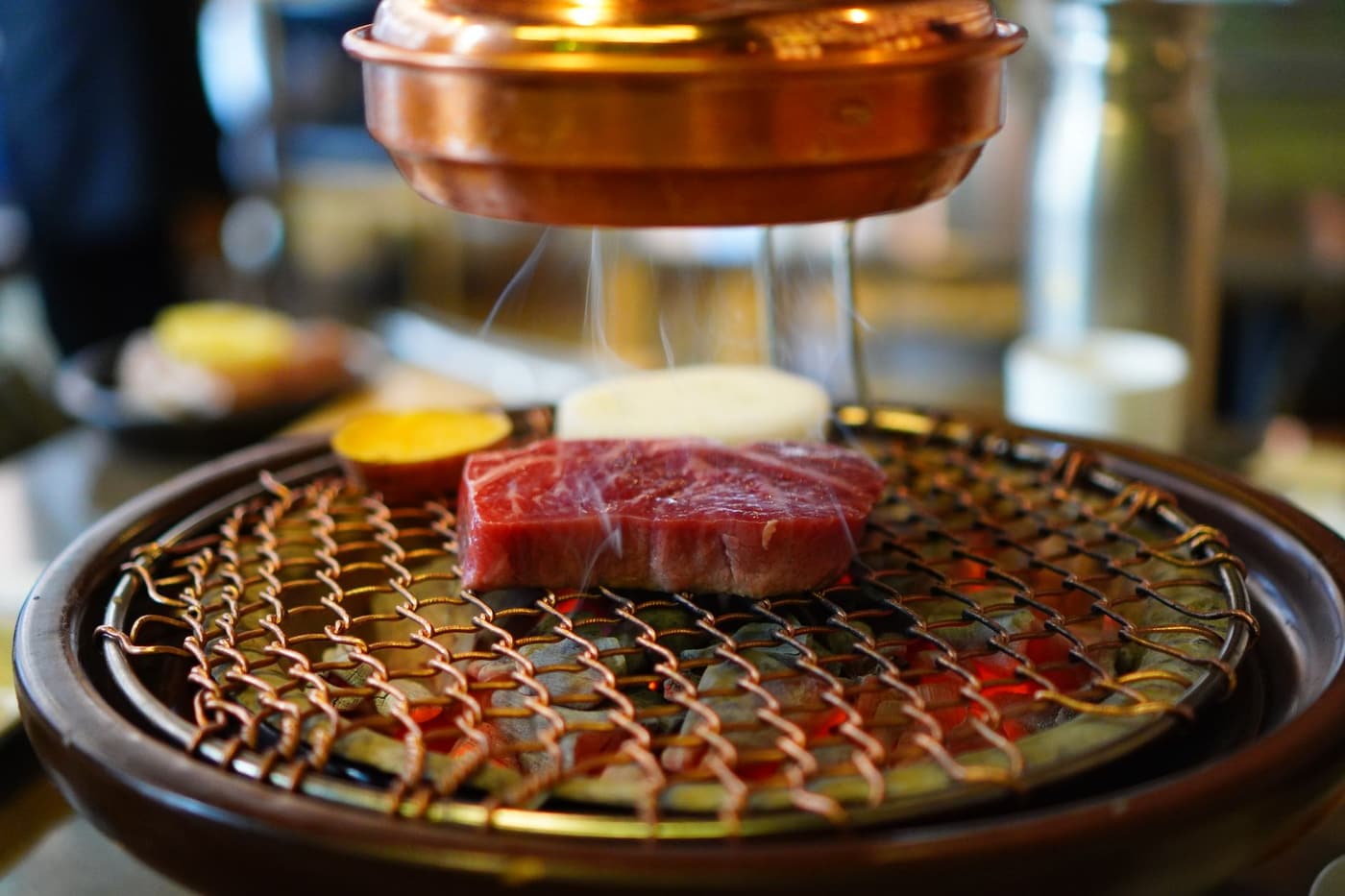
Watch how the first round is handled before taking control of the grill. Photo by Rebel Sam Photos on Pexels.
Build Your Wrap Like a Local, Not Like a Sandwich
The lettuce wrap is called ssam, which means "wrap." It is one of the most satisfying parts of Korean BBQ, and also one of the easiest places to overdo it.
A local-style ssam is usually one bite.
That is the key.
Many visitors build a giant leafy burrito with rice, two pieces of meat, kimchi, garlic, sauce, onion, salad, and whatever else fits. Then they try to bite it in half and everything falls apart. This is not the idea.
The better version is compact:
- Start with one lettuce or perilla leaf.
- Add one piece of meat.
- Add a small dab of ssamjang.
- Add garlic, chili, kimchi, or scallion salad if you want.
- Fold it into a small packet.
- Eat it in one bite.
You do not have to make a wrap every time. Locals alternate. One bite might be meat dipped in sesame oil and salt. Another might be meat with kimchi. Another might be a full ssam. Another might be rice with stew. This variation keeps the meal from becoming too heavy.
There are two main sauces to understand.
Ssamjang is the thick paste usually made from soybean paste, red chili paste, garlic, sesame oil, and other seasonings. It is salty, savory, slightly spicy, and strong. Use less than you think at first.
Sesame oil with salt is simpler. Dip grilled meat lightly into it when you want to taste the meat more directly. This is especially good with beef or nicely grilled pork.
Do not treat sauces as a challenge. Korean BBQ is not about drowning meat. It is about balance: fat, salt, acidity, heat, freshness, and smoke.
Perilla leaves deserve special attention. They are stronger than lettuce, with an herbal flavor that some visitors love immediately and others need time to understand. If you are new, try one with pork belly, ssamjang, and a small piece of garlic. That combination explains why Korean BBQ is more than grilled meat.
Rice is optional depending on the restaurant and group. Some people order rice early. Some wait until later. Some focus on meat and finish with cold noodles or stew. There is no single correct answer. If the rice side of Korean meals interests you beyond BBQ, EpicKor's Korean rice cooker guide explains why rice appliances matter so much at home.
What matters is not to turn the table into a private plate-building station. Take a little, build a bite, eat, talk, and repeat.
The Social Rules Matter as Much as the Meat
Korean BBQ is one of Korea's most social meals. That is why the unwritten rules are not only about food.
The first social rule is pace. Do not rush ahead of the table. If meat is just coming off the grill, take a piece, but do not quietly collect a private mountain of the best pieces. The table notices.
The second rule is generosity. If you are managing the grill, place cooked pieces where others can reach them. If someone else is grilling, thank them or offer to take over after a while. The person cooking can end up feeding everyone while eating last. A little awareness goes a long way.
The third rule is drink etiquette.
If your table orders soju or beer, pouring can become part of the social rhythm. In many Korean settings, people pour drinks for each other rather than only for themselves. With older people or work settings, more formal etiquette may matter: use two hands when receiving a drink, turn slightly away from seniors when drinking, and do not ignore hierarchy. With friends, the mood is usually looser.
As a visitor, the safest move is simple: be attentive, use two hands when someone pours for you, and do not pressure anyone to drink. Korean drinking culture can be warm and playful, but not everyone drinks, and modern Korea is not one single drinking stereotype.
The fourth rule is not to complain about smoke, smell, or pace as if the restaurant is doing something wrong. Korean BBQ is smoky by design, even with good ventilation. Your clothes may smell like grilled meat afterward. That is part of the deal. Wear something washable and enjoy the meal.
You should also understand the role of staff. Korean restaurants can feel fast, especially if you are used to long table service. Staff may bring food quickly, change the grill plate, refill banchan, and leave you alone. That does not mean they are ignoring you. It often means the system expects you to call when needed.
This fits the broader Korean speed culture that EpicKor explains in the guide to pali pali, Korea's fast rhythm. Restaurant service is often efficient, not ceremonial.
If you need something, use the call bell if there is one, or politely call the staff with "jeogiyo" when appropriate. Do not wave dramatically across the room unless you have to. Be clear, be polite, and the system usually works. If you are unsure whether to say imo, ajumeoni, or ajumma, read EpicKor's guide to addressing women in Korea before copying another diner's wording.
One more visitor mistake: assuming every Korean BBQ restaurant is the same.
They are not. A tourist-heavy samgyeopsal place, a neighborhood pork restaurant, a premium hanwoo beef spot, and an all-you-can-eat BBQ restaurant can have different expectations. Some are casual and loud. Some are careful and expensive. Some focus on marinated meat. Some focus on plain cuts and meat quality.
The local skill is reading the room.
Worth comparing: Authentic Korean snacks to enjoy at home. Start with Korean Snack.
What a Korean BBQ Meal Costs, and How to Read the Menu
Etiquette is only half of walking in confident. The other half is knowing what you are about to spend and what the menu is telling you.
The 2026 reality check, from the Korea Consumer Agency's price portal (참가격): Seoul's average eat-out samgyeopsal price is ₩21,321 per 200g serving — it crossed ₩20,000 for the first time in 2024 and kept climbing. Korean papers ran the arithmetic this August: two people, four servings, three bottles of soju — a ₩100,000 bill at an ordinary neighborhood place. BBQ is no longer Korea's cheap night out; it is the mid-priced social event, which is exactly why knowing the menu matters.
| Item | Korean | Price (2026) |
|---|---|---|
| Pork belly, one serving (150–200g) | 삼겹살 1인분 | Seoul average ₩21,321 per 200g (Korea Consumer Agency price portal, mid-2026) — the ₩20,000 line was first crossed in 2024 |
| Budget pork belly promotions | 저가 삼겹살 | as low as ₩7,900 for 200g at discount shops |
| Rice, stew, cold noodles as a finisher | 공깃밥 · 찌개 · 냉면 | ordered separately, adds to the bill |
| Soju | 소주 | typically ₩5,000–6,000 a bottle |
One serving is not one person's meal. Two people generally order two to three servings plus a rice or stew finisher, so a two-person pork dinner with a bottle of soju realistically lands around ₩45,000–60,000. Beef costs substantially more than pork, and Korean beef (한우) more again.
The word on the menu that decides the price
Korean restaurants are legally required to display the country of origin of their meat, and this is the single most useful thing you can learn to read on a BBQ menu.
- 국내산 — domestic Korean
- 수입산 — imported, usually with the country named
- 한우 — Korean native cattle, the premium beef designation
That label, not the restaurant's decor, is what explains a ₩7,900 serving sitting a few blocks from a ₩20,000 one. Neither is a scam. They are different products, and the menu is telling you which is which if you know the two words.
The honest counter-recommendation: if you are eating Korean BBQ once on a short trip, spend on pork rather than beef. Korean pork belly at a good neighbourhood shop is the more characteristic meal and the better value, and 한우 at Korean restaurant prices is an expensive way to learn you cannot tell the difference yet. Save the beef for a return trip.
And skip lunch BBQ if you want the real thing. Many shops run cheaper lunch sets, but Korean BBQ is an evening, social, slow-grill meal. A rushed lunch portion technically feeds you and misses the entire point.
Common Mistakes That Make Korean BBQ Harder
The fastest way to enjoy Korean BBQ is to avoid a few predictable mistakes.
The first mistake is ordering too much too early. It feels exciting to choose five meats, stew, noodles, rice, and drinks immediately, but the table can become crowded and the grill can fall behind. Start smaller. You can always order more.
The second mistake is burning the meat while taking photos. Take the photo quickly, then pay attention to the grill. Korean BBQ is photogenic, but the meat does not care about your camera roll.
The third mistake is using too much ssamjang. A small amount is enough. If every bite tastes only like paste, you lose the meat, garlic, leaf, and smoke.
The fourth mistake is ignoring banchan. Side dishes are not decorations. They are part of how the meal stays balanced. Try the scallion salad with pork belly. Try kimchi after a fatty bite. Try pickled radish when the meal feels heavy.
The fifth mistake is asking for everything to be customized like a Western restaurant. Korean BBQ is flexible in its own way, but it also has a house rhythm. Follow the menu structure. If you have dietary restrictions, be direct and careful, especially because marinades, sauces, broths, and banchan may contain ingredients that are not obvious.
Here is a simple first-timer order for two people:
- one pork belly or pork neck order
- one marinated galbi or another beginner-friendly meat
- lettuce/perilla and banchan as provided
- one stew or rice if you want a fuller meal
- cold noodles at the end if the restaurant offers them and you still have room
That is enough to understand the meal without overwhelming the table.
For three or four people, add another meat and maybe a stew earlier. If you are with Koreans, let the group order. You will learn faster by watching how they pace the table than by trying to control every choice.
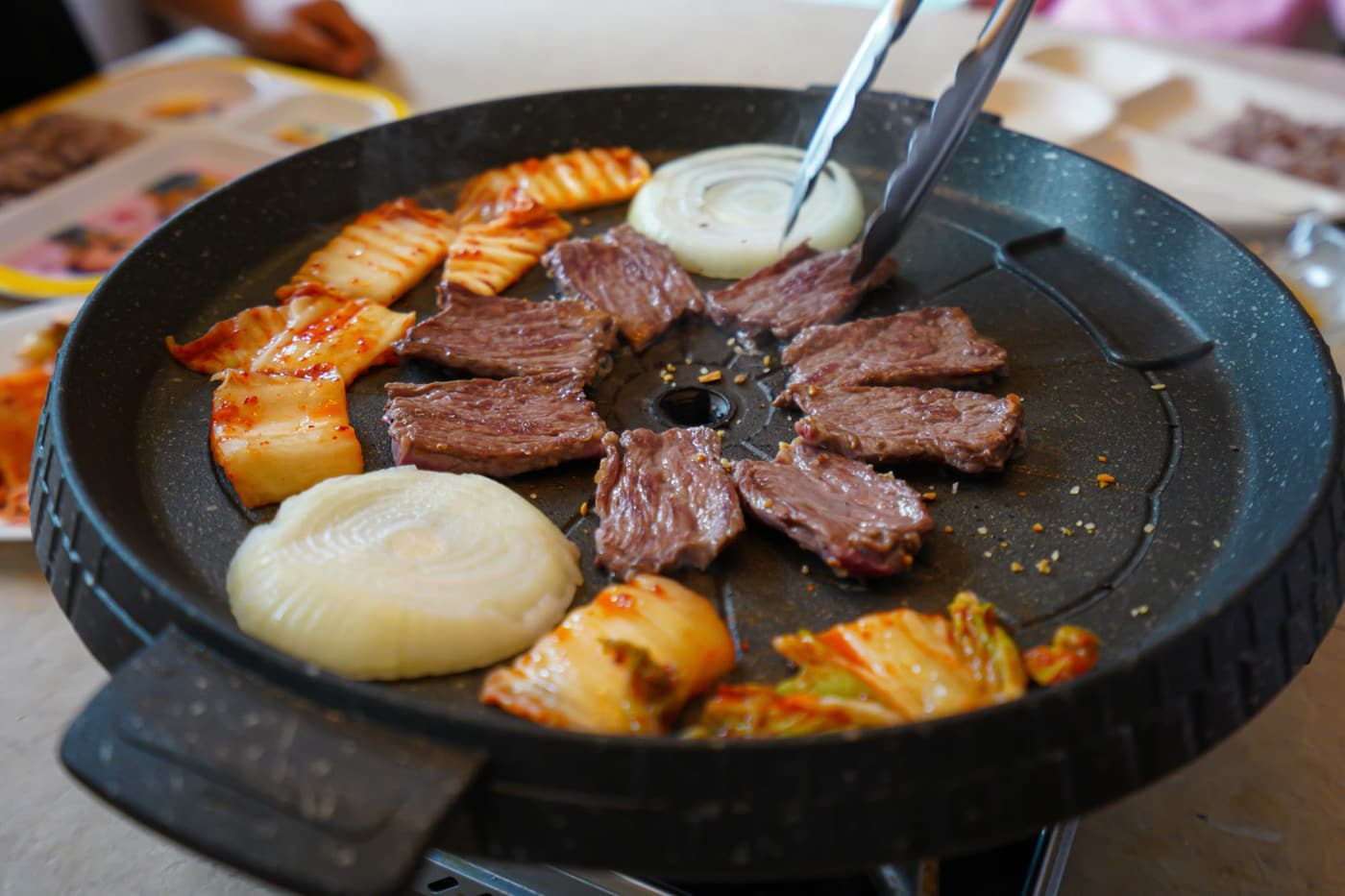
The best Korean BBQ bites are balanced: meat, freshness, sauce, acidity, and heat. Photo by Jason Kim on Pexels.
FAQ: Korean BBQ Rules for First-Timers
Q: Do I cook Korean BBQ myself or does the staff cook it?
It depends on the restaurant. If staff start placing, cutting, and turning the meat, let them lead. If they bring the meat and leave, your table is probably expected to cook. When in doubt, pause for a minute and follow the restaurant's rhythm.
Q: What is the easiest Korean BBQ meat for beginners?
Samgyeopsal, or pork belly, is one of the easiest choices because it is common, flavorful, and forgiving on the grill. Marinated galbi is also beginner-friendly because the sweet-savory flavor is familiar to many visitors.
Q: Are Korean BBQ side dishes free?
In many Korean BBQ restaurants, basic banchan comes with the meal and can often be refilled, but exact policies vary by restaurant. If you are unsure, ask before assuming every item is unlimited.
Q: How do I make a Korean BBQ lettuce wrap?
Use one leaf, one piece of meat, a small dab of ssamjang, and one or two extras like garlic, chili, kimchi, or scallion salad. Fold it small enough to eat in one bite.
Q: Is it rude not to drink alcohol at Korean BBQ?
No. Korean BBQ often pairs with soju or beer, but you do not have to drink. If others are drinking, be polite with pouring and receiving, but do not feel forced to match the table.
Final Rule: Follow the Table, Not a Script
The real secret of Korean BBQ is that there is no single perfect bite.
Some people love pork belly with grilled kimchi. Some want beef with sesame oil and salt. Some build ssam every time. Some barely touch lettuce. Some finish with rice. Some finish with cold noodles. Some care deeply about grill technique. Some just want one more round with friends.
So yes, learn the rules. Watch the grill. Respect the shared table. Make smaller wraps. Use sauces lightly. Notice who is cooking. Let the meal move at the group's pace.
But do not become stiff.
Korean BBQ is supposed to feel generous, smoky, noisy, and alive. If you leave with a full stomach, a few new favorite bites, and clothes that smell faintly like grilled pork, you probably did it right.
You Might Also Like
Korean Kitchen Scissors: Why Koreans Cut Meat and Noodles at the Table, and Why It Is Not an Office Scissor
Scissors on a restaurant table look wrong to most of the world and normal to every Korean. The tool is not a desk scissor: thick blades, one serrated edge, big rings, often detachable, built for galbi and cold noodles. Where it came from, and which one to buy.
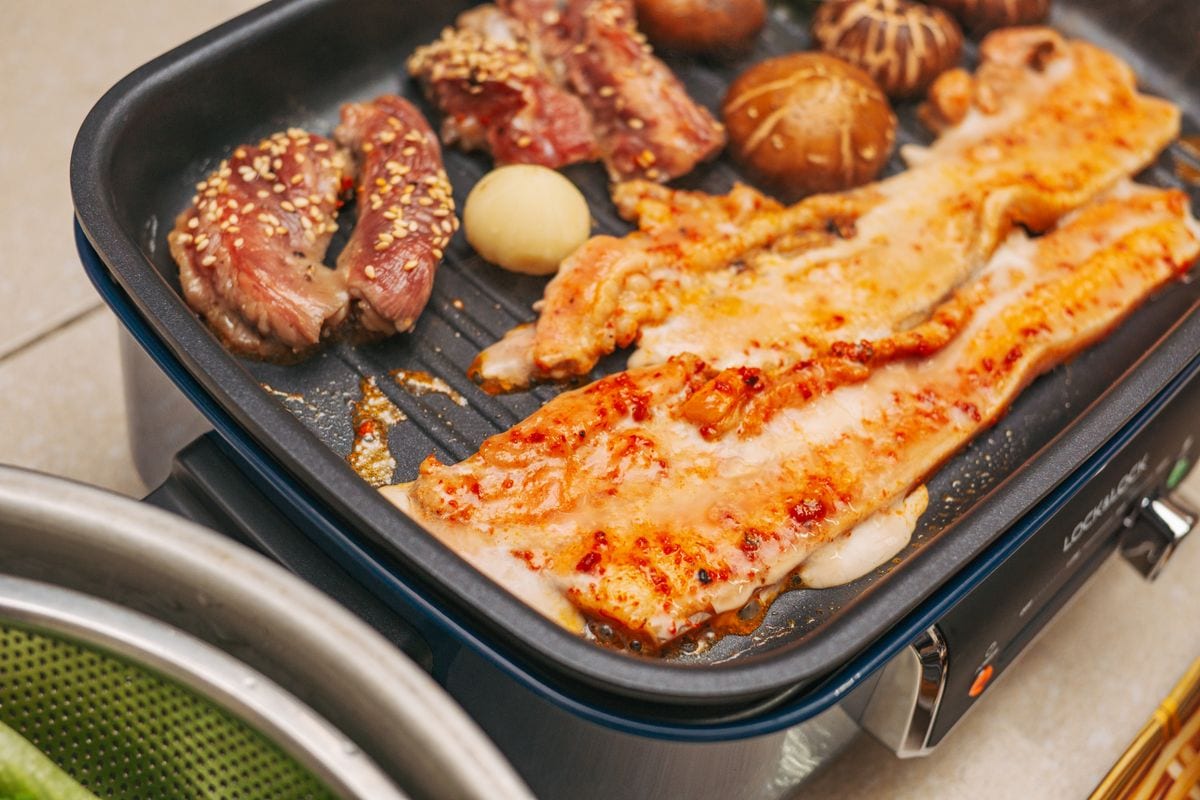
Korean BBQ Grill for Home 2026: Electric vs Grill Pan
Compare Korean BBQ grills for home, from electric tabletop models to stovetop grill pans, with practical advice on smoke, cleanup, heat, and safety.
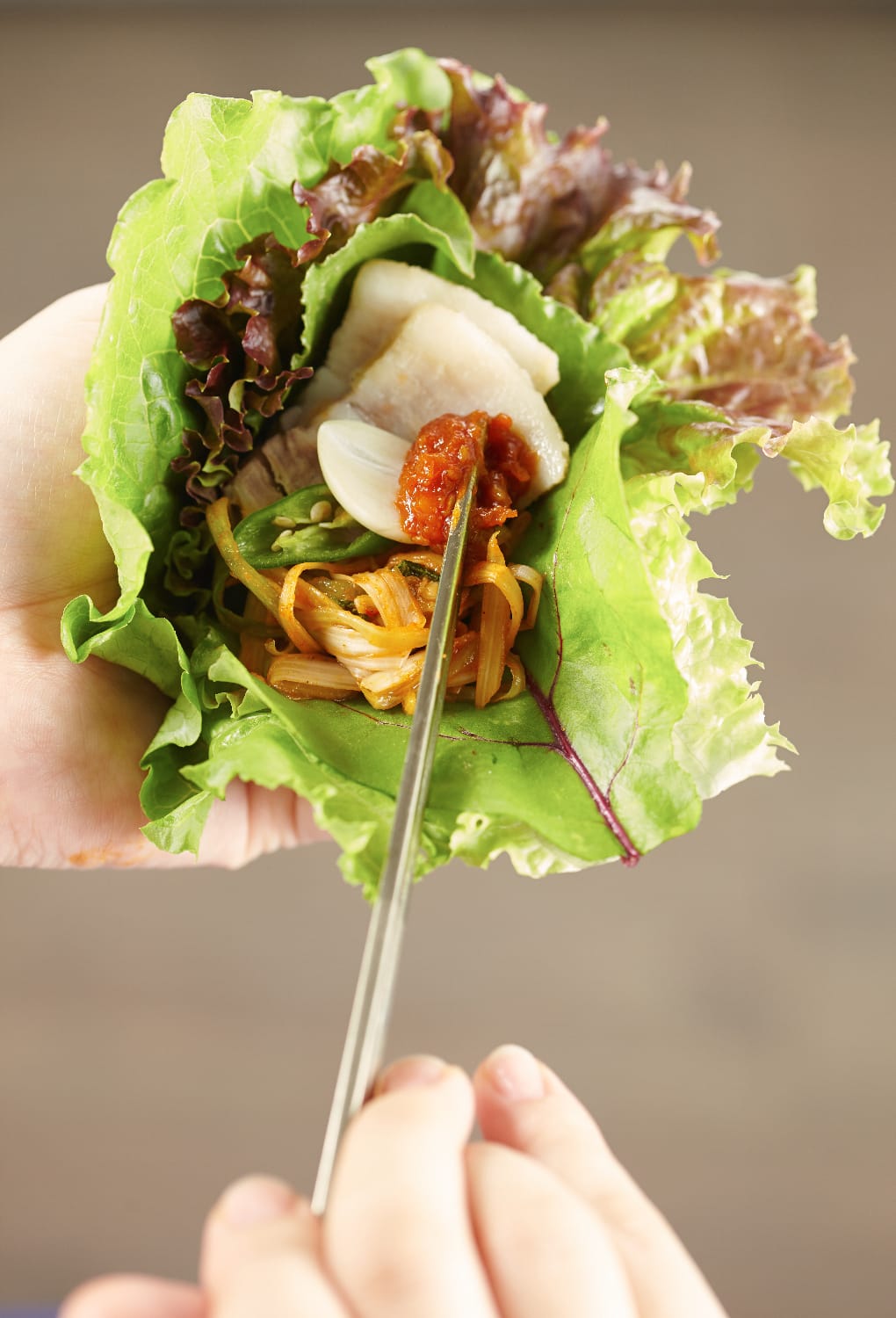
Korean BBQ Ssam Guide 2026: Lettuce, Perilla, Ssamjang, Garlic
A Korean BBQ ssam guide explaining lettuce wraps, perilla leaves, ssamjang, garlic, rice, one-bite etiquette, and what to buy.