Korean BBQ Grill for Home 2026: Electric vs Grill Pan
The first eight minutes of Korean BBQ at home can feel like a brilliant idea.
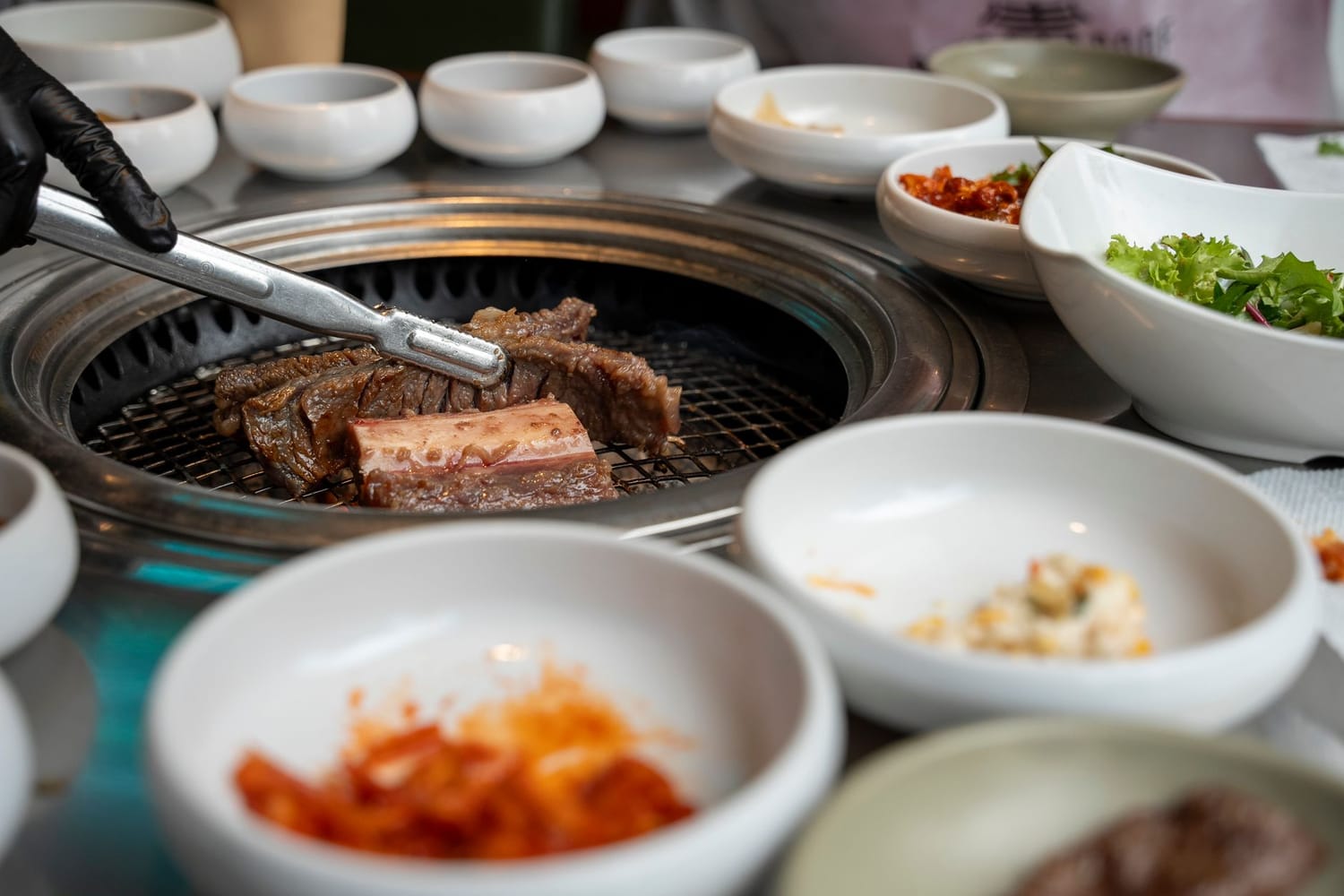
Pork belly hisses. Garlic turns gold at the edges. Somebody builds a lettuce wrap that is far too large but eats it anyway. The table is crowded, everyone is leaning toward the grill, and dinner finally feels like the Korean restaurant you have been missing.
Then the room changes.
The smoke alarm chirps. Grease begins collecting in the wrong corner. One friend opens every window while another waves a cutting board at the ceiling. By the time the last strip of samgyeopsal is cooked, the apartment smells like dinner, the hallway smells like dinner, and the grill has quietly earned a permanent home in the back of a cabinet.
That is the real problem with choosing a Korean BBQ grill for home. The wrong machine can still cook meat. It just makes you regret the whole performance.
The right grill is not necessarily the one that gets hottest, looks most restaurant-like, or has the word “smokeless” printed largest on the box. It is the grill that fits your room, your ventilation, your table, your tolerance for cleanup, and the number of people who will actually eat with you.
In other words, the best home K-BBQ grill is the one you will use a second time.
Quick Answer: Which Korean BBQ Grill Should You Buy?
For most apartment cooks and first-time buyers, a removable-plate electric tabletop Korean BBQ grill is the simplest default. It is easy to start, easy to place in the middle of a table, and does not require a fuel canister. Choose one with a real grease channel, a removable drip tray, clear temperature control, and parts you can wash without carrying the electrical base to the sink.
A Korean BBQ grill pan is the better value if you already have a compatible kitchen stove and a working range hood. It stores more easily, often handles fatty pork belly well, and can deliver stronger direct heat. The compromise is that your guests may not cook together at the table unless the pan is paired with a separate heat source that its manufacturer explicitly allows.
A portable butane burner with a grill plate can feel closest to a casual Korean restaurant, but it is not the universal indoor recommendation people online make it sound like. Product manuals differ. Ventilation, clearances, pan size, approved accessories, canister position, and local housing rules all matter. If the exact manual does not clearly permit your intended setup, use it outdoors or choose electric.
Here is the practical comparison.
How this guide was built: EpicKor did not pretend to lab-test every marketplace model. We compared grill formats using manufacturer specifications and manuals, U.S. consumer and food-safety guidance, and the practical logic of a Korean BBQ table. Product availability and instructions can change, so the current manual for the exact appliance always wins.
| Grill Type | Best For | Main Strength | Main Compromise | EpicKor Verdict |
|---|---|---|---|---|
| Electric tabletop grill | Apartments, couples, beginners | Easy table setup and temperature control | May recover heat slowly when overloaded | Best first purchase for most readers |
| Stovetop Korean grill pan | Small kitchens with a compatible stove and hood | Compact storage and useful fat drainage | Cooking may happen away from the dining table | Best value if your kitchen already fits it |
| Portable butane burner + approved pan | Outdoor tables or setups specifically allowed by the manual | Strong, responsive heat and restaurant-like rhythm | Fuel, ventilation, clearance, and compatibility rules | For careful repeat hosts, not the casual default |
| Electric grill and hot-pot combo | Groups that genuinely cook both formats | Two social meals in one appliance | Bulky storage and divided cooking performance | Good party tool, weak impulse buy |
| Charcoal grill | Outdoor use only | Live-fire flavor | Carbon monoxide and fire risk in enclosed spaces | Never an indoor home K-BBQ option |
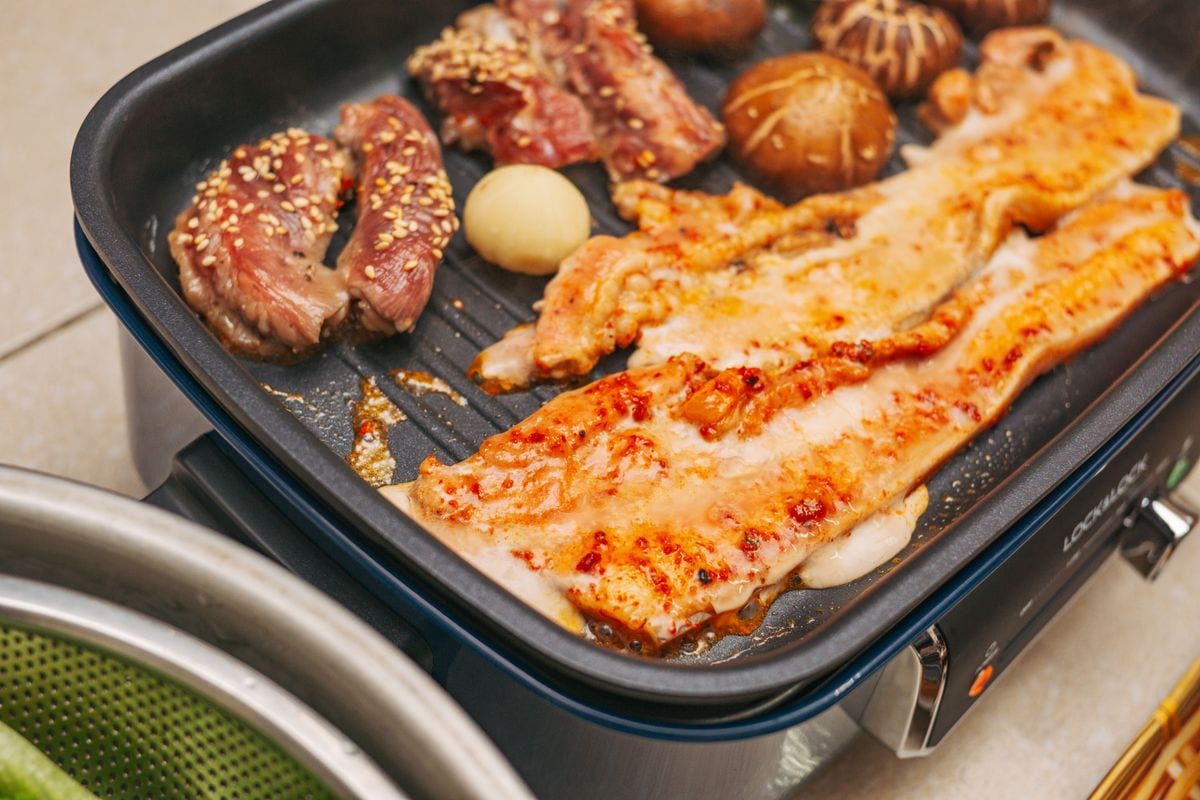
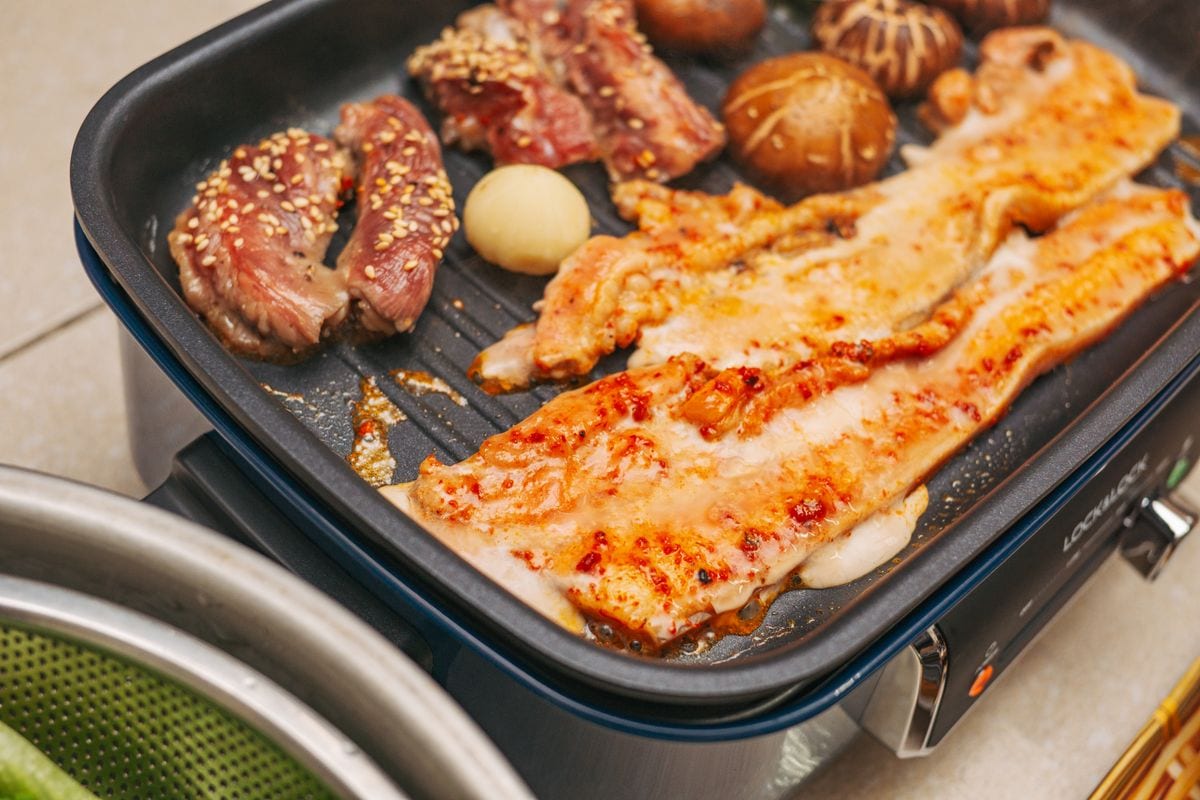
Zojirushi EB-CC15 — an electric tabletop grill with a removable plateAffiliate link. As an Amazon Associate, EpicKor earns from qualifying purchases at no extra cost to you. This points at the format the table above rates first, not at the combo it rates last.
What A Korean Restaurant Grill Is Secretly Doing For You
When people try to recreate Korean BBQ at home, they usually copy the visible part: a hot plate in the middle and thin meat on top.
The restaurant is doing far more than that.
The grill is integrated into a table that can tolerate heat. An exhaust system is pulling smoke and airborne grease away from your face. Staff replace dirty plates, manage flare-ups, cut meat, move cooked pieces, and clear raw-meat trays. The grill surface is designed around the food being served. Pork-belly restaurants care about fat drainage. Marinated-galbi restaurants care about sugar burning onto the plate. Beef restaurants may prioritize clean, fast searing.
At home, one appliance is being asked to replace that entire system.
This is why a generic flat griddle can disappoint even when it is powerful. Samgyeopsal releases a lot of fat. If the surface has nowhere for that fat to go, the meat shallow-fries instead of grilling. Garlic burns in the grease. Kimchi becomes oily. Smoke rises because rendered fat sits on the hottest area. Cleanup begins before dinner ends.
A useful home grill therefore needs four things more than it needs a dramatic maximum temperature:
- A cooking surface large enough for your real guest count.
- A path that moves grease away from the hottest zone.
- Heat recovery after cold meat touches the plate.
- Removable parts that make the next morning survivable.
If a product page talks for five paragraphs about power but never shows the drip tray, underside, cord connection, or removable plate, keep scrolling.
Electric Tabletop Grills: The Best Default For Apartments
An electric tabletop grill makes the social part easy. Put it in the center, plug it into a suitable outlet, preheat it, and let the meal move around the plate. No one disappears into the kitchen for every batch. You can grill pork belly, mushrooms, onions, garlic, and kimchi while people build ssam and argue about which piece is ready.
This is the format most first-time buyers imagine when they search for a “smokeless Korean BBQ grill.” The word needs translation.
“Smokeless” usually means the appliance is designed to reduce smoke through a water tray, fan, grease control, lower exposed temperatures, or some combination of those features. It does not mean the grill can defeat fatty pork, sugary marinade, poor ventilation, or an overloaded plate. Food can still smoke. Grease can still aerosolize. Your windows and range hood do not become decorative.
Look for these features instead of the biggest promise on the box:
- A removable grill plate, not a permanently attached cooking surface.
- A drip tray that can be removed without tilting grease across the base.
- A visible slope or channel that sends fat away from the heating zone.
- Temperature control with more information than “on” and “off.”
- A cord that will not run through a walking path.
- Enough wattage and surface area for the number of people you actually host.
- Replacement parts or at least a manual you can read before buying.
The main weakness is heat recovery. Put an entire cold tray of meat on a modest electric grill and the sizzle can collapse. The meat steams, releases water, and sits in a gray crowd. Cook in rounds. Leave space. A smaller amount of properly browned pork tastes more like Korean BBQ than a full plate of impatient meat.
Two things to compare, in the order this section argues for them: As an Amazon Associate, EpicKor may earn from qualifying purchases. For the default apartment setup, compare electric tabletop grills with a removable plate and a removable drip tray — those two features decide whether there is a second dinner, and they are worth more than any "smokeless" claim on the box. If compact storage and direct stove heat suit you better, compare a Korean-style BBQ grill pan instead. Check dimensions, voltage, and the current manufacturer manual before ordering.
See Korean-style BBQ grill pan on AmazonKorean BBQ Grill Pans: Small, Direct, And Better At Fat
A dedicated Korean BBQ grill pan often looks slightly strange until you cook pork belly on it. The surface may be domed, ridged, spiraled, or tilted toward a drain. That geometry is the point.
For example, TECHEF describes its stovetop pan as using channels and a grease-draining system intended for pork belly and other meat. That is a manufacturer claim, not an EpicKor lab test, but it illustrates why the category exists: Korean BBQ is not simply meat touching metal. It is meat cooking while its rendered fat is managed.
The advantages are practical:
- The pan can cost less than a full electric appliance.
- It may store beside normal cookware.
- It has no electrical base to protect during washing.
- Direct stove heat can recover quickly between batches.
- A shaped surface can keep samgyeopsal from swimming in grease.
The limitations are equally real. Not every pan works on every heat source. Some aluminum pans will not work on induction unless they include a compatible base. A pan that overhangs a portable burner can reflect heat toward the fuel compartment. An external grease drain needs a stable, heat-safe catch container that cannot be kicked or tipped. Nonstick coatings also require the utensils, temperatures, and cleaning methods specified by the manufacturer.
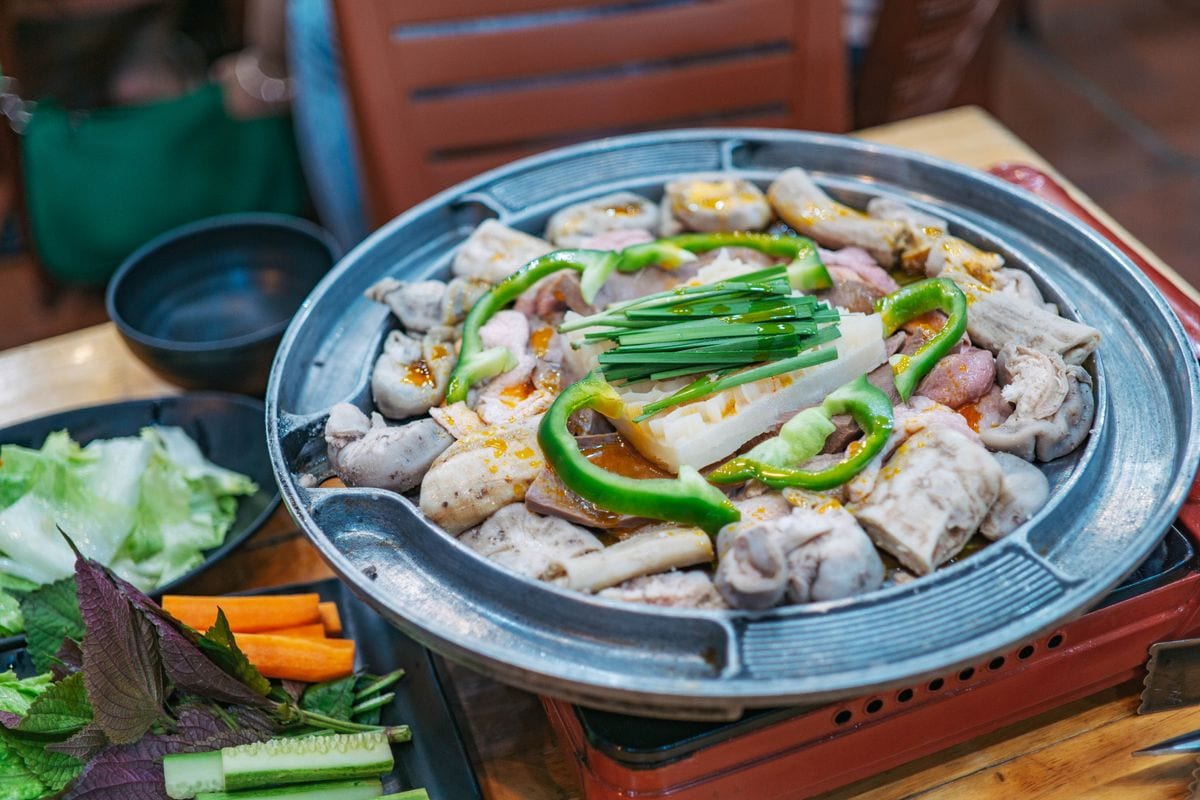
For many couples, this is the rational choice: cook under the range hood, carry finished batches to the table, and keep the appliance footprint small. You lose some of the everybody-around-the-grill theater. You gain a kitchen that returns to normal faster.
Butane Tabletop Grills: The Restaurant Feeling Has Conditions
Portable cassette stoves are familiar across Korean hot-pot and grill culture, which makes the format look universally casual. It is easy to watch a video, see a butane stove on a table, and assume any burner, pan, apartment, and ventilation setup can be combined.
That is not a safe assumption.
The Iwatani 35FW manual, for example, instructs users to ventilate during use, keep clearances from combustible materials, place the unit on a stable surface, avoid leaving it unattended, and use specified accessories for grilled meat. Its indoor language is restrictive and tied to a properly equipped restaurant ventilation hood. Other models and jurisdictions may differ.
The rule is simple: the manual for the exact stove and accessory beats a blog, a marketplace comment, and a cooking video.
Before using any portable gas setup, verify all of the following:
- The manufacturer permits the intended indoor or outdoor setting.
- The grill plate is approved or dimensionally safe for the burner.
- The plate does not trap or reflect heat toward the fuel canister.
- Required side and overhead clearances are available.
- Ventilation meets the manual, not merely your personal definition of “a cracked window.”
- The stove sits level, away from paper, vinyl, tablecloths, children, and pets.
- Spare canisters are stored away from heat.
If that sounds less spontaneous than an electric grill, it is. Gas rewards careful users with responsive heat. It does not reward improvisation.
Grill And Hot-Pot Combos: Fun, Large, And Easy To Romanticize
The grill-and-hot-pot combo is a party host's fantasy. Pork belly on one side, bubbling broth on the other, everyone reaching toward the center. It can be excellent when your household already loves both Korean BBQ and dishes such as budae-jjigae, shabu-shabu, or hot pot.
The problem is that two-in-one appliances are purchased for imaginary weekends.
Before buying, measure the cabinet where it will live, the table where it will sit, and the sink where its largest removable part must be washed. Then ask whether you want a divided appliance every time you grill. A combination unit may offer less grill area than a dedicated electric plate and less soup capacity than a normal pot.
Buy it because your group will use both sides. Do not buy it because the product photo contains twelve happy people.
If that describes your household — genuinely both sides, genuinely often — an electric hot-pot and Korean BBQ grill combo is the format to compare, and EpicKor may earn from a qualifying purchase. Measure the largest removable part against your sink before you order it. This link sits in this section deliberately: a combo is not the default recommendation of this guide, and it should not be sold as one.
Charcoal Is Not The “Authentic Indoor” Upgrade
Charcoal can produce excellent flavor outdoors. It can also produce carbon monoxide, an odorless gas that can build to deadly levels in enclosed spaces.
The U.S. Consumer Product Safety Commission states that charcoal should never be used to cook or provide heat inside homes, garages, tents, campers, vehicles, or other enclosed areas—even with ventilation. That rule is not negotiable because your balcony door is open or because a grill is small.
If charcoal flavor is essential, cook outdoors with equipment designed and permitted for outdoor use. For an indoor Korean BBQ grill, choose electric or another appliance explicitly approved for the setting and follow its manual.
The Five Questions That Prevent A Bad Purchase
1. How many people will really sit at the grill?
A couple needs usable surface, not a banquet appliance. Two to four people can usually cook in rounds on a compact electric grill or pan. Larger groups need more area, but adding surface size also adds wattage, storage, and cleanup.
Do not calculate using the product photo. Calculate using slices of pork belly. Can the plate hold six to eight pieces with space between them, plus a small garlic zone? If yes, a couple can keep eating while the next batch cooks.
2. Where will the smoke go?
Choose the location before the grill. A powerful hood over a kitchen stove changes your options. A dining table across the room from the only window narrows them. An apartment lease or smoke alarm that reacts to toast narrows them further.
Less smoke begins with trimming the problem, not buying a fan. Drain grease. Avoid pouring sugary marinade over a hot surface. Pat wet ingredients dry. Do not cover every inch of the plate. Clean burnt sauce between rounds.
3. What happens to the pork fat?
This is the question most generic grill guides miss. Korean pork belly is the stress test.
Look for a slope, channel, drain opening, or removable tray. Then inspect where the grease ends up. A beautiful drain is useless if the collection cup is tiny, unstable, difficult to remove, or directly in someone's knee space.
4. Can the cooking parts reach your sink?
Measure them. A wide plate may not fit flat in a small apartment sink. A combo appliance may have a non-removable center. A fan-assisted grill may include ducts that collect grease but cannot be submerged.
The night is not over when the meat is gone. The purchase decision includes the fifteen minutes after dinner.
5. Will you use it for anything else?
Versatility is useful only when it is real. A flat electric plate may handle mushrooms, jeon, sausages, vegetables, or breakfast. A grill pan may work for seafood and sliced meat. A combo can handle broth. But a specialized appliance that is mediocre at everything does not become valuable because the box lists twelve foods.
How To Run The First Home K-BBQ Night
Your first dinner should be smaller than your ambition.
Buy one forgiving meat, not five. Samgyeopsal works because pork belly teaches you how the grill handles fat. Moksal, or pork neck, is meatier and slightly less greasy. Thin beef brisket cooks fast but punishes distraction. Sugary marinated galbi can burn before you understand the hot spots.
Set the table before preheating:
- One tray for raw meat.
- One clean plate for cooked meat.
- Separate tongs for raw food and serving.
- Kitchen scissors for cutting long strips after the exterior has begun cooking.
- Lettuce or perilla, ssamjang, sliced garlic, kimchi, and one bright pickle.
- Paper towel and a heat-safe grease plan.
- A food thermometer for thicker cuts.
If you want the flavor side explained in detail, EpicKor's Korean BBQ ssam guide shows how lettuce, perilla, garlic, rice, and ssamjang change the bite. The Korean BBQ etiquette guide explains the shared-table rhythm you are trying to recreate.
Preheat according to the manufacturer instructions. Do not begin with a cold plate full of meat. Add a modest first batch and learn the grill. Fatty pork goes in the main zone. Garlic and mushrooms sit where the heat is gentler. Kimchi can move into rendered pork fat later, after you know where that fat collects.
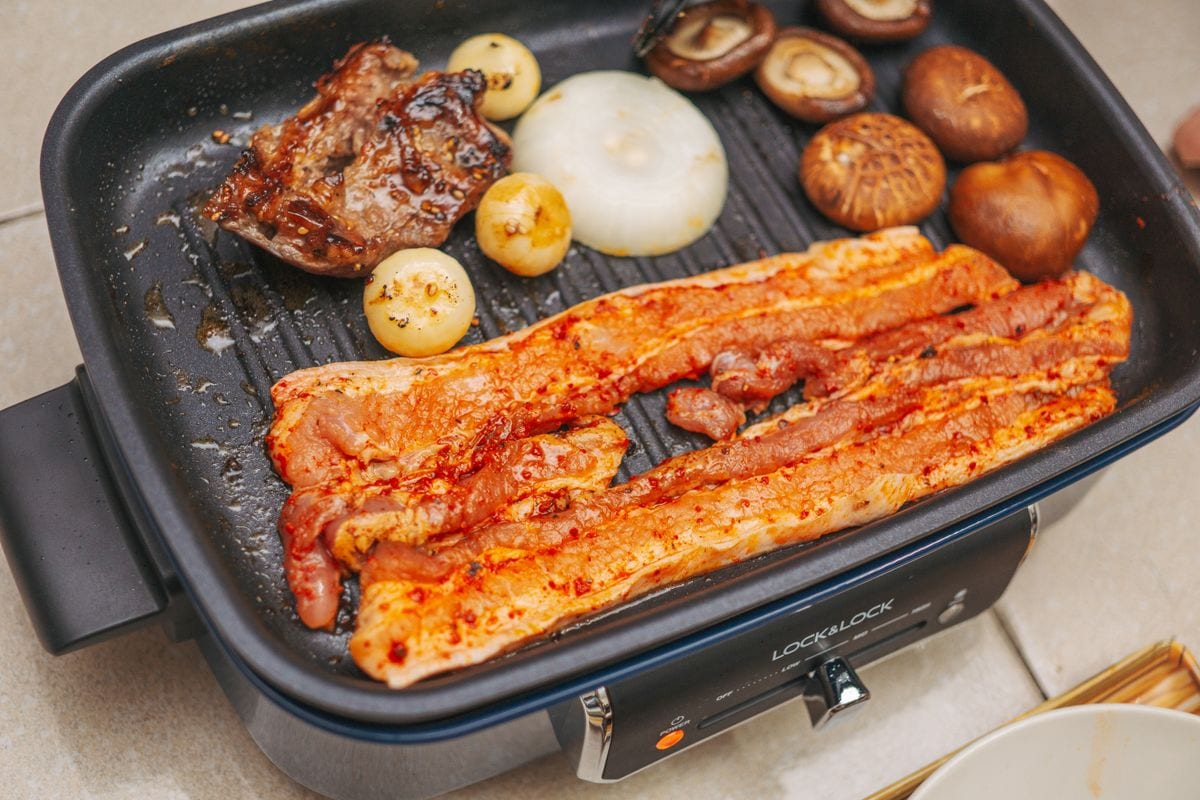
The USDA recommends a minimum internal temperature of 145°F (62.8°C) plus a three-minute rest for whole cuts of beef and pork, 160°F (71.1°C) for ground meat, and 165°F (73.9°C) for poultry. Thin slices are awkward to probe, but thicker pieces and chicken should not be judged by color alone.
Cook in rounds. Eat while the next round browns. That alternating rhythm is closer to Korean BBQ than filling a platter and letting everything cool.
The Small Tools Matter More Than A Bigger Grill
A home K-BBQ table improves quickly with three inexpensive tools: long tongs, sturdy kitchen scissors, and a thermometer. The tongs keep hands away from splatter. The scissors turn long pork-belly strips into bite-sized pieces without moving them to a cutting board. The thermometer replaces confidence theater with an actual number.
A grill cover, twelve sauce bowls, novelty aprons, and a restaurant-style exhaust pipe can wait.
Build the repeatable setup, not the fantasy restaurant: Compare a Korean BBQ scissors and tongs set, a compact Korean-style grill pan, and instant-read meat thermometers. The useful kit controls raw food, grease, doneness, and cleanup before it adds more table decoration.
See Korean BBQ scissors and tongs set on AmazonFor a smaller kitchen-first comparison, EpicKor's Korean cookware starter guide separates ttukbaegi, ramen pots, grill pans, and scissors by the job each tool actually performs.
For the rest of the meal, the Korean pantry starter kit covers sauces, seaweed, ramen, and rice. If you want a more permanent appliance for everyday Korean meals, compare this occasional grill purchase with EpicKor's Korean rice cooker guide. A rice cooker will probably work more days per week; a grill creates the louder night.
Cleanup Decides Whether There Will Be A Second Dinner
Turn the appliance off, unplug it or shut off its approved fuel source, and let it cool according to the manual. Do not carry a hot grease tray across the room because guests are helping. Helpful people become less helpful when holding liquid pork fat.
Once safe to handle:
- Remove large food scraps before they harden.
- Transfer grease into an appropriate disposable container; do not pour cooking fat down the sink.
- Wash removable plates and trays according to the product instructions.
- Use non-scratching tools on nonstick surfaces.
- Wipe the electrical base rather than immersing it.
- Check hidden edges, fan channels, and the underside for grease.
- Dry every component before reassembly and storage.
If this process sounds unreasonable before you have even bought the grill, listen to that feeling. Choose the simpler pan or smaller removable-plate unit. Convenience is not laziness here. Convenience is what turns a novelty purchase into a household ritual.
Final Verdict: Buy For The Second Night
For most readers, the answer is a well-designed electric tabletop grill with removable parts and honest grease management. It keeps the social center of Korean BBQ without asking the average apartment cook to manage portable fuel.
For small households with a suitable stove and strong kitchen ventilation, a Korean BBQ grill pan is the smarter, cheaper object. It stores easily and understands pork fat better than a generic flat skillet.
For experienced hosts considering butane, the exact manual determines the venue and accessory—not internet tradition. For party people considering a grill-hot-pot combo, storage and sink size matter as much as the menu. Charcoal remains outdoors.
The restaurant memory you are chasing is not only smoke and sear. It is the pace: cook a little, cut a little, wrap a little, talk, then start the next round. Buy the grill that makes that rhythm easy enough to repeat.
That is the one that belongs in your home.
Frequently Asked Questions
Q: What is the best Korean BBQ grill for an apartment?
For most apartments, start with an electric tabletop grill that has a removable plate, effective grease channel, removable drip tray, stable temperature control, and parts that fit your sink. “Smokeless” is not a substitute for ventilation, so use the range hood or windows as appropriate and follow the manual.
Q: Are smokeless Korean BBQ grills actually smokeless?
No home grill can guarantee zero smoke with every food and cooking style. The label usually means smoke-reducing features such as grease drainage, a water tray, lower exposed temperatures, or a fan. Fatty meat, burnt marinade, crowding, and dirty surfaces can still produce smoke.
Q: Is an electric grill or Korean BBQ grill pan better?
Choose electric when you want people cooking together at the table and prefer a self-contained appliance. Choose a grill pan when you have a compatible stove and range hood, want compact storage, and care about direct heat and fat drainage. The pan is often the better value; electric is usually the easier social setup.
Q: Can I use a portable butane stove for Korean BBQ indoors?
Only if the exact stove manual, approved accessory instructions, local rules, and your ventilation setup permit that use. Some manuals are much more restrictive than casual cooking videos suggest. Never improvise with an oversized or incompatible pan, and do not use the unit in a confined or poorly ventilated space.
Q: Can I use charcoal for Korean BBQ indoors if a window is open?
No. The U.S. Consumer Product Safety Commission warns never to use charcoal grills in enclosed areas, even with ventilation, because charcoal produces carbon monoxide. Use charcoal only outdoors with equipment and locations intended for outdoor grilling.
Q: What should I cook first on a new Korean BBQ grill?
Start with a small amount of plain pork belly or pork neck, mushrooms, garlic, kimchi, lettuce, and ssamjang. Avoid a large sugary marinade for the first test because it burns easily and hides the grill's hot spots. Learn the heat and grease path before hosting a large group.
Q: Do I need a Korean grill to make kimchi jjigae too?
No. A grill-hot-pot combo can be fun, but a normal pot or Korean rice cooker setup may be more practical. EpicKor's kimchi jjigae at home guide explains the stew ingredients and shortcuts without requiring a combination appliance.
Sources And Further Reading
You Might Also Like
Korean Kitchen Scissors: Why Koreans Cut Meat and Noodles at the Table, and Why It Is Not an Office Scissor
Scissors on a restaurant table look wrong to most of the world and normal to every Korean. The tool is not a desk scissor: thick blades, one serrated edge, big rings, often detachable, built for galbi and cold noodles. Where it came from, and which one to buy.
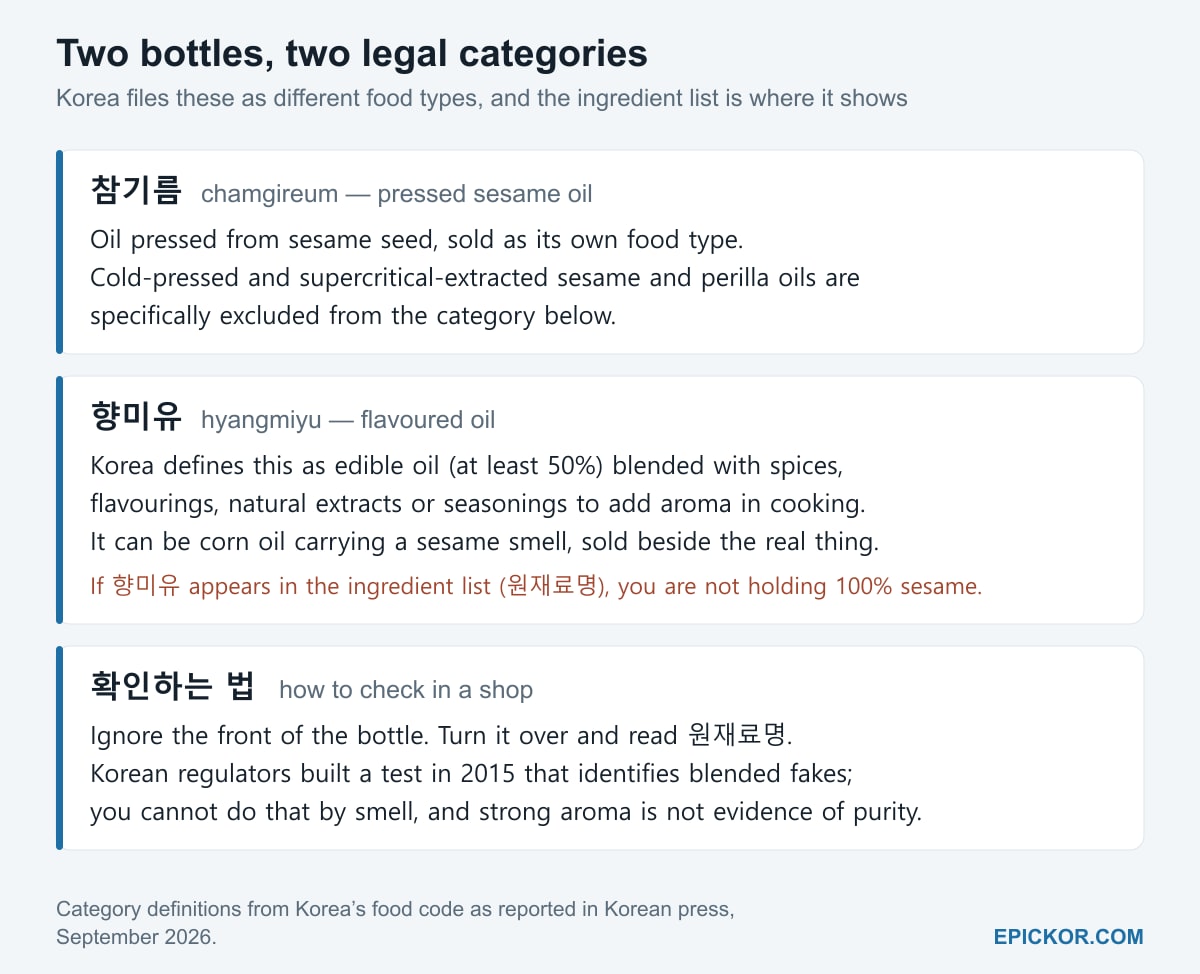
Korean Sesame Oil: The Label Word That Means It Isn't Sesame Oil
A bottle can look like Korean sesame oil and legally be corn oil carrying a sesame smell — Korea files that as 향미유, a separate food type. Imported oil runs ₩700–1,100 per 100ml; Korean-grown runs ₩5,500–6,700, because Korea grows 8–12% of its own sesame.

Korean Kimchi Containers: The Press Plate Matters More Than the Lid
English buying guides rank kimchi containers by lid. In Korea the fridge picks the size — 7L and 3.2L share a 26 × 17cm footprint so they tile — and the part that decides whether the kimchi survives is the 누름판, the plate that holds it under its own brine.