Korean BBQ Ssam Guide 2026: Lettuce, Perilla, Ssamjang, Garlic
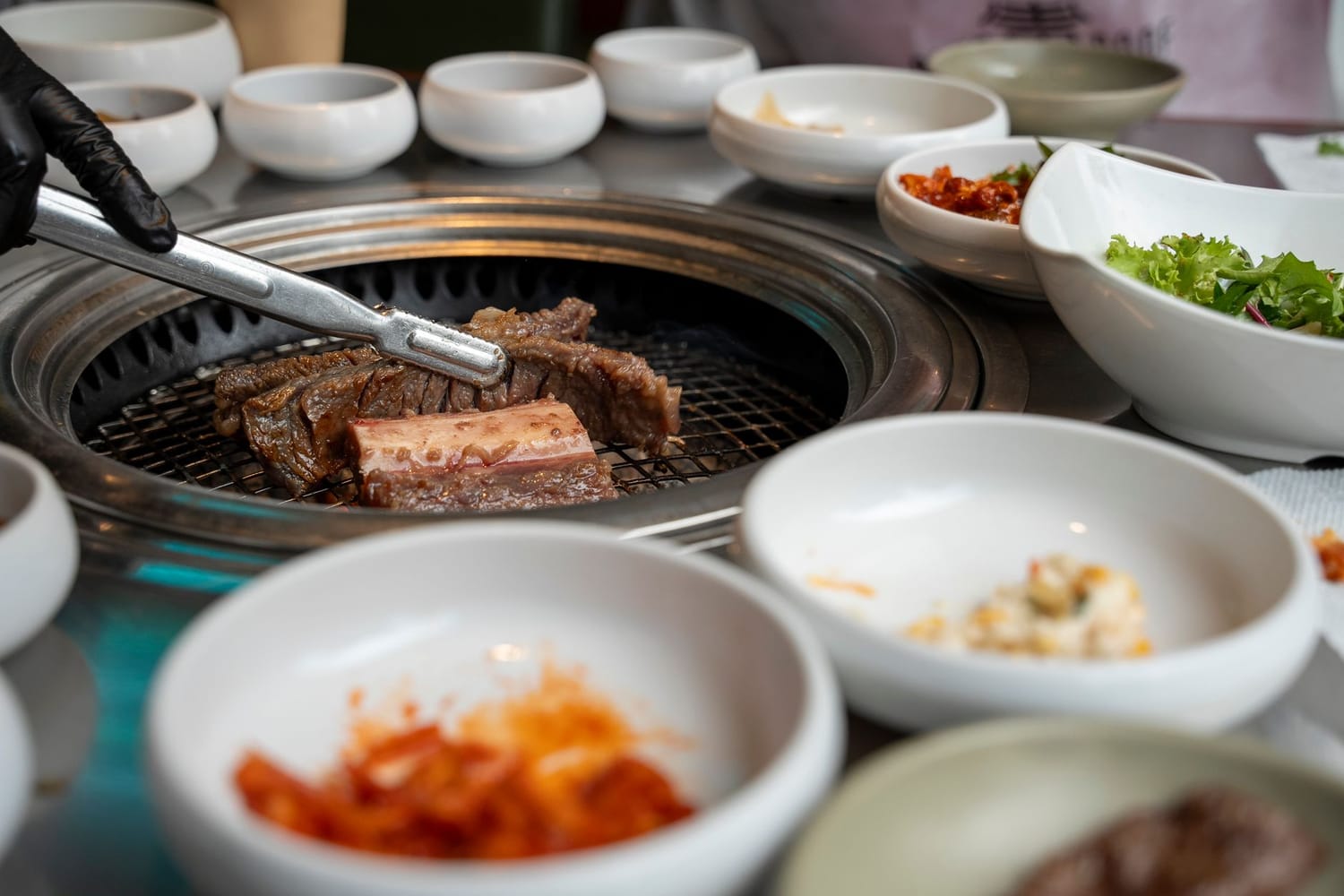
Korean BBQ ssam looks simple from the outside: take a lettuce leaf, add meat, add sauce, fold it, and eat. Then you sit down at an actual Korean barbecue table and realize the wrap is doing more work than it gets credit for. The leaf cools down hot grilled meat. The ssamjang adds salt, spice, and fermented depth. Garlic changes the whole bite. Perilla turns the aroma up. Rice controls the heaviness. Kimchi, scallion salad, and green chili decide whether the next bite feels bright or too much.
That is why ssam is not just a cute way to eat barbecue. It is a small editing system for the table. Every diner gets to build a bite that fits the meat, the mood, and the people sitting nearby. The trick is knowing what each ingredient does, and why the famous one-bite rule is less about showing off and more about making the wrap behave.
Quick Answer: What Is Ssam?
Ssam means a Korean-style wrap, usually built by placing meat, rice, sauce, garlic, chili, kimchi, or banchan inside a leafy vegetable. The most familiar barbecue version uses lettuce or perilla leaves with grilled pork belly, beef, or galbi, plus ssamjang. But ssam is broader than barbecue. Korean sources and food references describe ssam as food wrapped in another food, with versions using lettuce, cabbage, perilla, seaweed, kimchi, pumpkin leaves, and more.
At Korean BBQ, ssam solves the richness problem. Grilled meat is hot, fatty, salty, smoky, and often eaten in repeated rounds. A leaf wrap gives it crunch and freshness. Ssamjang gives it a deeper savory center. Garlic or chili adds a sharp edge. Rice keeps the whole bite from becoming only meat and sauce.
If you are new to this table, do not try to copy the biggest wrap you see online. Start smaller. One leaf, one piece of meat, a very small amount of sauce, maybe rice, maybe garlic, then fold it into a clean bite. Once that works, start playing.
For the wider table context, pair this guide with EpicKor's Korean BBQ guide, Korean banchan guide, Korean garlic culture guide, Korean rice cooker guide, Korean pantry starter kit, and Korean drinking culture guide.
Ssamjang Korean soybean paste sauce — compare on AmazonAffiliate link. As an Amazon Associate, EpicKor earns from qualifying purchases at no extra cost to you.
Lettuce, Perilla, And Why The Leaf Matters
The leaf is not just a holder. Lettuce and perilla behave differently, and Korean barbecue feels different depending on which one you choose.
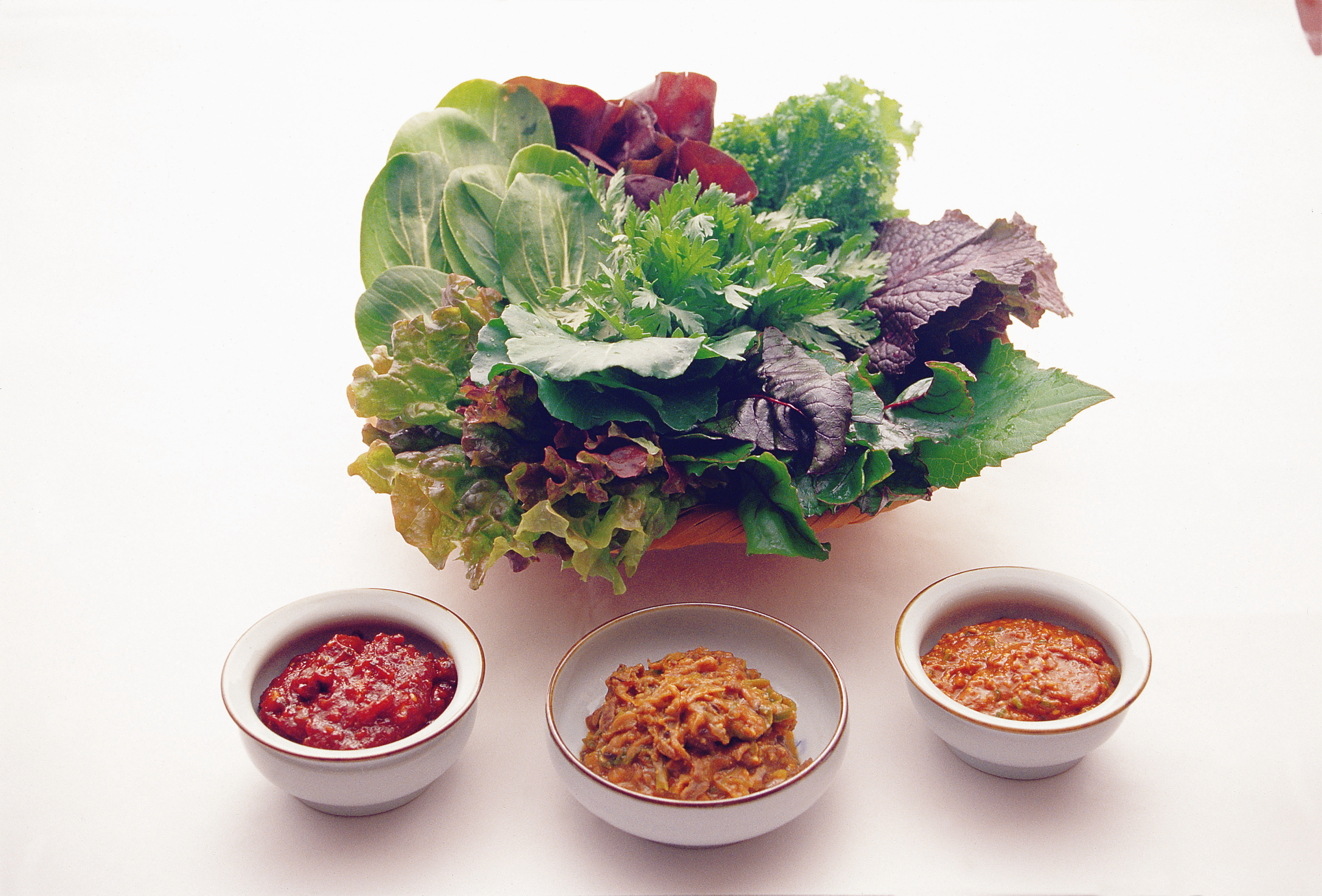
Lettuce, often called sangchu in Korean food contexts, is the beginner-friendly wrap. It is mild, watery, crisp, and forgiving. It lets the meat and ssamjang stay in front. If the pork belly is fatty or the beef is smoky, lettuce keeps the bite lighter. Red leaf lettuce is common because it folds easily and has enough structure to hold meat without feeling tough.
Perilla leaf, often romanized as kkaennip, is stronger. It is sometimes mislabeled in English as "sesame leaf," but it is not the same plant as sesame. Perilla has a herbal, minty, slightly anise-like aroma that can surprise first-timers. It makes pork belly taste sharper and cleaner. It can also dominate a mild piece of beef if you use too much.
The best move is often to stack them: lettuce outside, perilla inside. Lettuce gives size and softness. Perilla gives perfume. This is why a ssam plate can look like a pile of ordinary greens but act like a flavor control panel.
What Ssamjang Actually Does
Ssamjang is the classic Korean wrap sauce. It is usually built around doenjang, the fermented soybean paste, and gochujang, the red chili paste, then rounded out with ingredients such as sesame oil, garlic, green onion, onion, sesame seeds, and sometimes a little sweetness. Store-bought versions vary, but the basic job is the same: make plain grilled meat taste complete inside a leaf.
The mistake is using it like ketchup. Ssamjang is concentrated. A big spoonful can turn the whole wrap salty and muddy. A small smear is usually enough, especially if the meat was already marinated or dipped in sesame oil salt.
Think of ssamjang as the bass note. It should be present, not loud enough to cover everything. If you are eating samgyeopsal, the sauce gives pork belly the fermented punch it needs. If you are eating galbi, which may already be sweet and seasoned, use less. If you are eating brisket, you may prefer sesame oil salt for one bite and ssamjang for the next.
Garlic, Chili, Rice, And Kimchi: The Tiny Decisions
Garlic is one of the ingredients that makes Korean BBQ feel direct. A thin raw garlic slice can make the wrap hotter, sharper, and more adult. It can also be too aggressive if you are not used to it. If raw garlic feels harsh, grill it first. The same clove becomes sweeter and softer after it touches the pan.
Green chili is optional but useful. It gives a quick snap of heat and bitterness. Use one thin slice, not half the chili, unless you already know your tolerance.
Rice is also optional, but it changes the bite more than people expect. Without rice, a ssam can feel like grilled meat in a leaf. With rice, it becomes a tiny meal. The rice absorbs sauce, catches meat juice, and makes the wrap more stable. If the meat is fatty, rice is your friend. If the meat is lean and delicate, skip rice sometimes so the meat is not buried.
Kimchi is the reset button. Fresh kimchi adds acid and crunch. Grilled kimchi adds sour, smoky richness. Scallion salad, pickled radish, and onion pickles do similar work from different angles. The point is not to stuff every side dish into one wrap. The point is to choose one bright thing so the bite has contrast.
The One-Bite Rule, Explained Without Drama
You may hear that ssam should be eaten in one bite. This is real enough to respect, but it is not a magic law. It is practical etiquette. Ssam is usually made bite-sized so the fillings do not spill, sauce does not drip, and the person across from you does not have to watch a wrap fall apart halfway through.
Older Korean references around ssam also connect bite size with manners. The simple modern version is this: do not build a wrap so large that you have to bite it in half, chew with puffed cheeks, or fight with it. If you cannot close the leaf neatly, remove something.
The one-bite rule also helps the flavor. A ssam is designed as one complete moment: leaf, meat, sauce, garlic, rice, and side dish arriving together. If you bite half of it, the first half may be all lettuce and the second half may be sauce and garlic. A smaller wrap tastes better because it stays balanced.
Here is the beginner ratio:
| Ingredient | Beginner Amount | Why It Works |
|---|---|---|
| Lettuce | 1 medium leaf | Soft structure, mild flavor, easy folding |
| Perilla | Half to 1 leaf | Herbal aroma without overwhelming the wrap |
| Meat | 1 bite-sized piece | Keeps the wrap chewable and balanced |
| Ssamjang | A small smear | Adds fermented salt, spice, and depth |
| Garlic or chili | 1 thin slice | Gives a sharp lift without taking over |
| Rice or kimchi | Small pinch | Rice softens richness, kimchi adds contrast |
How To Build A Better Ssam At Korean BBQ
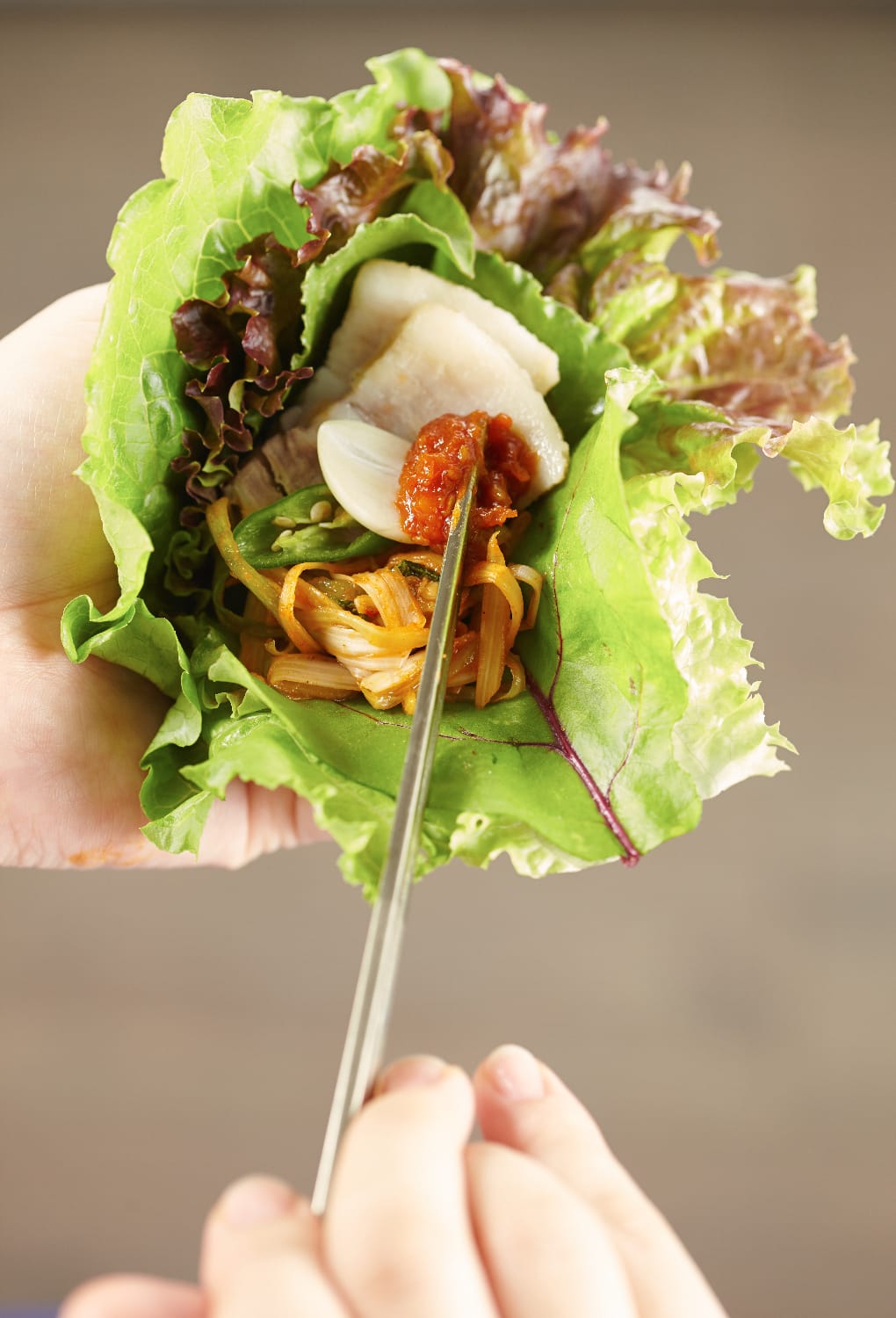
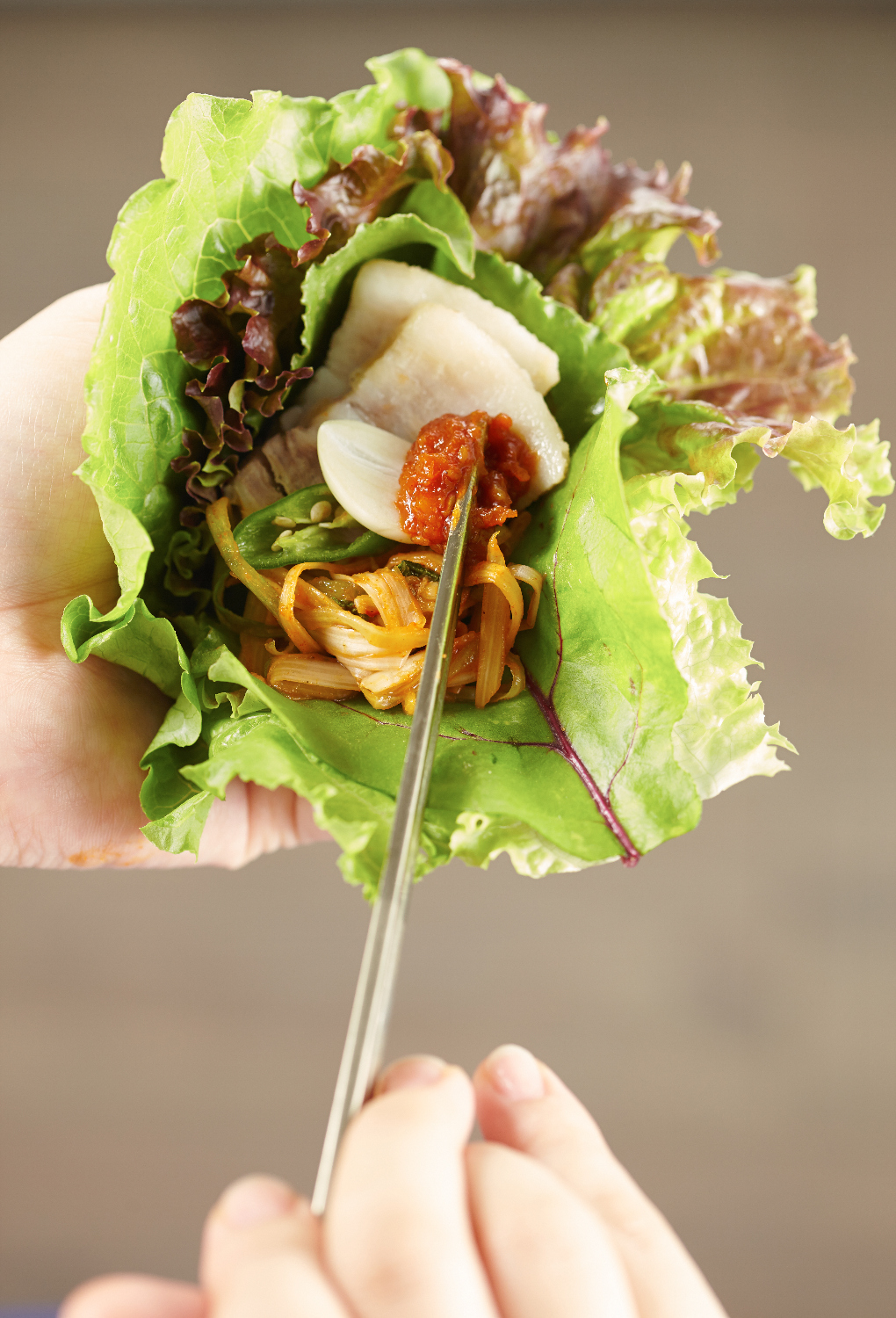
Start with your leaf in your palm. If the lettuce rib is stiff, fold it slightly or tear off the hardest part. Add perilla only if you want that herbal aroma. Put the meat in the center, not at the edge. Add sauce next to the meat rather than spreading it across the whole leaf. Add garlic, chili, or kimchi only if it fits the meat you are eating.
Then fold from the bottom, tuck the sides, and bring it to your mouth in one clean move. If you are worried it is too big, it is too big. Remove rice, reduce sauce, or choose a smaller meat piece.
The social detail matters too. Korean BBQ is shared. If someone grills, cuts, or moves meat for the table, do not ignore the rhythm. Build your wrap after the meat is ready. Do not reach across the grill with sauce-covered chopsticks. Use serving tongs or scissors when they are provided. If you are eating with Koreans, watch how the table handles cooked and raw meat tools. Restaurants often separate them for a reason.
Restaurant Ssam Vs Home Ssam
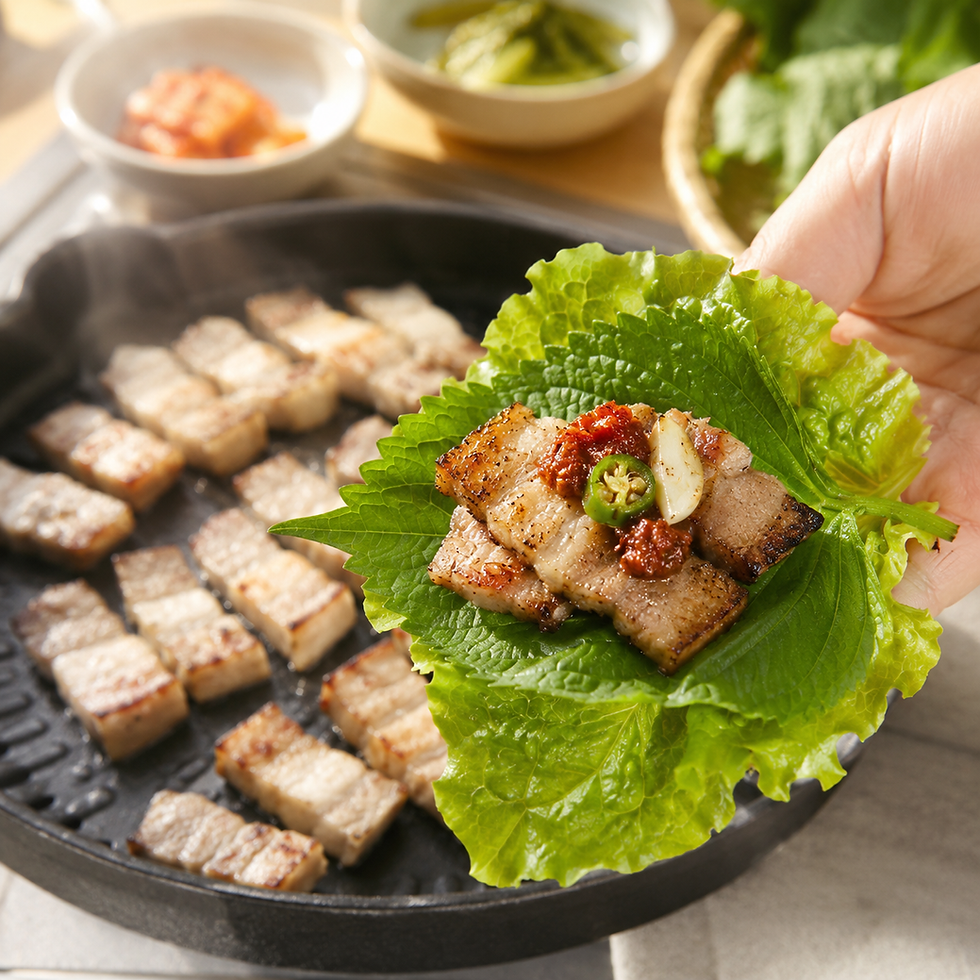
At a restaurant, you are working with whatever the table gives you. Some places offer lettuce only. Some include perilla, sliced garlic, green chili, onion salad, scallion salad, kimchi, soybean paste stew, and several dipping sauces. The best strategy is to eat the first meat piece plainly so you understand the grill, then build wraps.
At home, do not overcomplicate the setup. You do not need twenty banchan dishes. A strong beginner table can be:
- Lettuce
- Perilla leaves if available
- Ssamjang
- Sesame oil salt
- Sliced garlic
- Kimchi
- Rice
- One main meat, such as pork belly, galbi, brisket, or mushrooms
If you are cooking outside Korea, the hardest item may be perilla. Korean or Asian markets often carry it. If not, use lettuce and focus on sauce and side dishes. Do not replace perilla with basil and pretend it is the same. Basil can be delicious, but it changes the cuisine.
If you are starting from zero, do not buy every BBQ sauce and tool at once. Use the Korean pantry starter kit to build the sauce/rice/table base first, then add BBQ tools only after ssam becomes a repeat meal.
For the equipment decision itself, read EpicKor's Korean BBQ grill for home comparison before choosing an electric tabletop grill, stovetop pan, portable burner setup, or grill-and-hot-pot combo.
Common Ssam Mistakes
The first mistake is making the wrap too large. A huge wrap looks dramatic, but it usually eats badly. Ssam should feel generous, not like a dare.
The second mistake is using too much ssamjang. If every bite tastes only like salty paste, reduce the sauce and let the meat come back.
The third mistake is treating perilla like lettuce. Perilla is aromatic. Use it intentionally. If you are serving people who have never had it, let them smell a leaf first.
The fourth mistake is forgetting temperature. Hot meat, cool leaves, and room-temperature sauce create contrast. Cold meat in a wet leaf feels flat. If you are hosting at home, cook in small rounds instead of piling all the meat on a plate at once.
The fifth mistake is thinking there is one correct wrap. Korean BBQ tables are flexible. Some people love rice inside. Some keep rice separate. Some grill garlic. Some eat it raw. Some use ssamjang every time. Some alternate with sesame oil salt. The point is to understand the logic, then build your own rhythm.
Sources And Further Reading
- Ssam overview, including wrap types and bite-sized eating
- Ssamjang overview and common ingredients
- Bon Appetit on ssamjang as a Korean BBQ condiment
- Bon Appetit on perilla leaves in Korean cooking
- EpicKor: Korean BBQ rules and etiquette
- EpicKor: Why garlic matters so much in Korean food
FAQ
Q: What does ssam mean in Korean food?
Ssam means a wrap. In Korean BBQ, it usually means meat, sauce, garlic, rice, or side dishes wrapped in lettuce, perilla, cabbage, kimchi, or another edible wrapper.
Q: Do you have to eat ssam in one bite?
You should build it small enough to eat in one bite. This is practical table etiquette because it prevents spills and keeps the flavors balanced. It is not a competition to make the biggest wrap.
Q: Is perilla the same as sesame leaf?
No. Perilla is often casually translated as sesame leaf in English, but it is a different plant with a strong herbal aroma. It is common in Korean wraps and banchan.
Q: What is the best sauce for ssam?
Ssamjang is the classic sauce for Korean BBQ wraps. Sesame oil with salt is another common dip, especially when you want the meat flavor to stay cleaner.
Q: Should rice go inside Korean BBQ ssam?
It can, but it does not have to. Rice makes the wrap feel like a small meal and helps balance fatty meat. If the meat is delicate or the wrap is getting too big, keep rice on the side.
You Might Also Like

Ssamjang Guide: Korea's BBQ Wrap Sauce Explained
A practical guide to ssamjang, Korea's barbecue wrap sauce, including ingredients, flavor, ssam etiquette, how to buy it, and how to use it at home.
Korean Kitchen Scissors: Why Koreans Cut Meat and Noodles at the Table, and Why It Is Not an Office Scissor
Scissors on a restaurant table look wrong to most of the world and normal to every Korean. The tool is not a desk scissor: thick blades, one serrated edge, big rings, often detachable, built for galbi and cold noodles. Where it came from, and which one to buy.
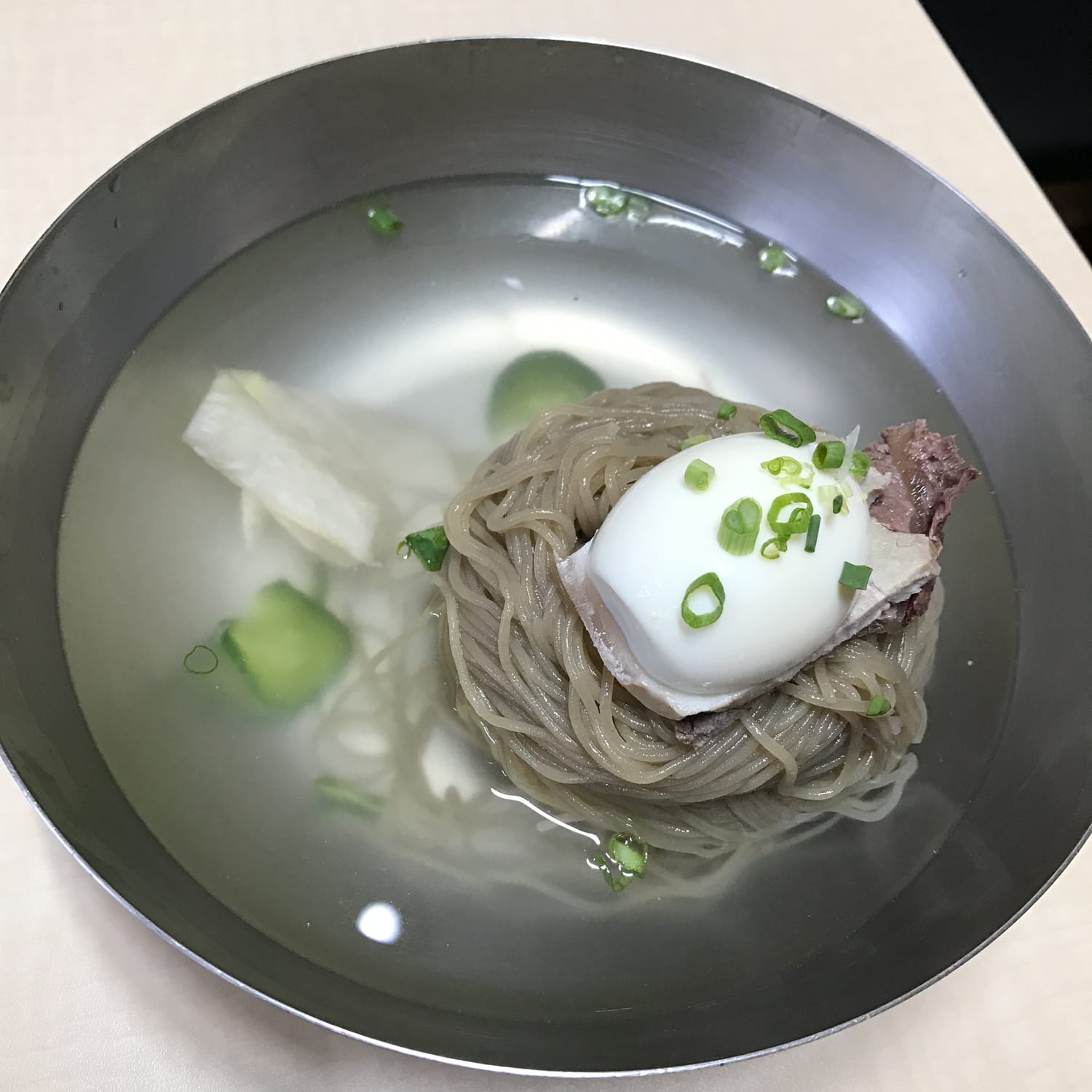
The One Korean Food Foreigners Never Learn to Love: Hamheung Naengmyeon, and Why Koreans Can't See the Problem
Foreigners who eat cheonggukjang and even hongeo still will not pay for this twice. A Korean creator who fed foreigners for years says naengmyeon was the overwhelming number one refusal, and Koreans, who rank it first every summer, cannot see why.