
Ssamjang Guide: Korea's BBQ Wrap Sauce Explained
Ssamjang is the thick, savory, slightly spicy paste that makes Korean barbecue feel complete. It is not just a random dipping sauce on the side of the grill. It is the bridge between smoky meat, cool lettuce, raw garlic, rice, perilla leaves, green chili, and the one-bite wrap Koreans call ssam.
If you have ever sat at a Korean barbecue table and wondered what the reddish-brown paste was, the simple answer is this: ssamjang is a seasoned wrap sauce usually built from doenjang fermented soybean paste and gochujang red pepper paste, then rounded with ingredients such as garlic, sesame oil, sesame seeds, scallions, onion, sugar, syrup, or honey. It tastes salty, nutty, earthy, spicy, and a little sweet at once.
This guide explains what ssamjang is, how it differs from gochujang and doenjang, how to use it at Korean barbecue, how to buy it, what to check on labels, and how to recreate a cleaner wrap-table experience at home.

Quick Answer: What Is Ssamjang?
Ssamjang literally means a sauce or paste for wraps. In Korean food, ssam means wrapping food in leafy vegetables, and jang refers to fermented sauce or paste. The Ministry of Culture, Sports and Tourism's Korea Here & Now article on Korea's food-wrapping tradition, ssam describes ssam as wrapping bite-sized food in lettuce, cabbage, perilla, kale, or other greens, often flavored with ssamjang made from fermented doenjang, gochujang, and ingredients such as sesame oil, garlic, onion, honey, or sugar.
That description matters because ssamjang is not supposed to act alone. It is designed for balance. Doenjang brings deep fermented soybean saltiness. Gochujang adds chili warmth, sweetness, and red color. Garlic and sesame add aroma. The wrap leaf cools the bite. Meat adds fat. Rice softens the intensity. The best ssamjang moment is not a spoonful of sauce. It is the whole bite.
If you are building a Korean food foundation, pair this with EpicKor's Korean banchan guide, free side-dish etiquette guide, and Museum Kimchikan guide. Together, they explain why Korean meals depend on small things that balance the main dish.
| Paste | Main Flavor | Used For | Do Not Confuse It With |
|---|---|---|---|
| Ssamjang | Savory, nutty, spicy-sweet, chunky | BBQ wraps, vegetable dip, grilled meat | Plain gochujang or plain doenjang |
| Gochujang | Chili heat, sweetness, fermented depth | Bibimbap, marinades, sauces, stews | Ready-made wrap sauce |
| Doenjang | Earthy soybean umami and saltiness | Stews, soups, ssam condiment, namul | Japanese miso or sweet chili paste |
| Samjang-style homemade mix | Adjustable balance | Home BBQ, vegetable dipping, rice bowls | Restaurant flavor unless seasoned enough |
Why Ssamjang Works So Well With Korean BBQ
Korean barbecue is a table system. The meat matters, but the meal is not built around meat alone. The table gives you lettuce or perilla leaves, rice, garlic, green chili, kimchi, scallion salad, banchan, and sauce. Ssamjang is the piece that ties them together.
Fatty pork belly needs salt and funk. Beef needs a little depth without hiding the meat. Garlic needs something rounded. Lettuce needs a center. Perilla needs a sauce strong enough to match its herbal smell. Ssamjang does all of that because it is not a thin sauce. It clings to the wrap and delivers concentrated flavor in a small amount.
The official VisitKorea page on Korean seasonings describes doenjang as fermented soybean paste used for stews, soups, namul, and as a condiment for ssam, while gochujang is used in stews, soups, grilled foods, salads, noodles, and other dishes. Ssamjang sits between those worlds: it borrows the body of soybean fermentation and the friendly heat of chili paste. See VisitKorea's older but still useful Korean seasonings overview.
At the table, use less than you think. Newcomers often overload the wrap with ssamjang and then complain that the bite is too salty. A pea-sized or thumbnail-sized amount is usually enough for a leaf wrap with meat, rice, and garlic. If the meat is heavily seasoned, use less. If the wrap has mostly vegetables, use a little more.
Try the sauce itself: As an Amazon Associate, EpicKor may earn from qualifying purchases. If ssamjang is the flavor you are trying to understand, compare Korean ssamjang sauce before your next BBQ or lettuce-wrap night.
How to Make a Good Ssam Bite
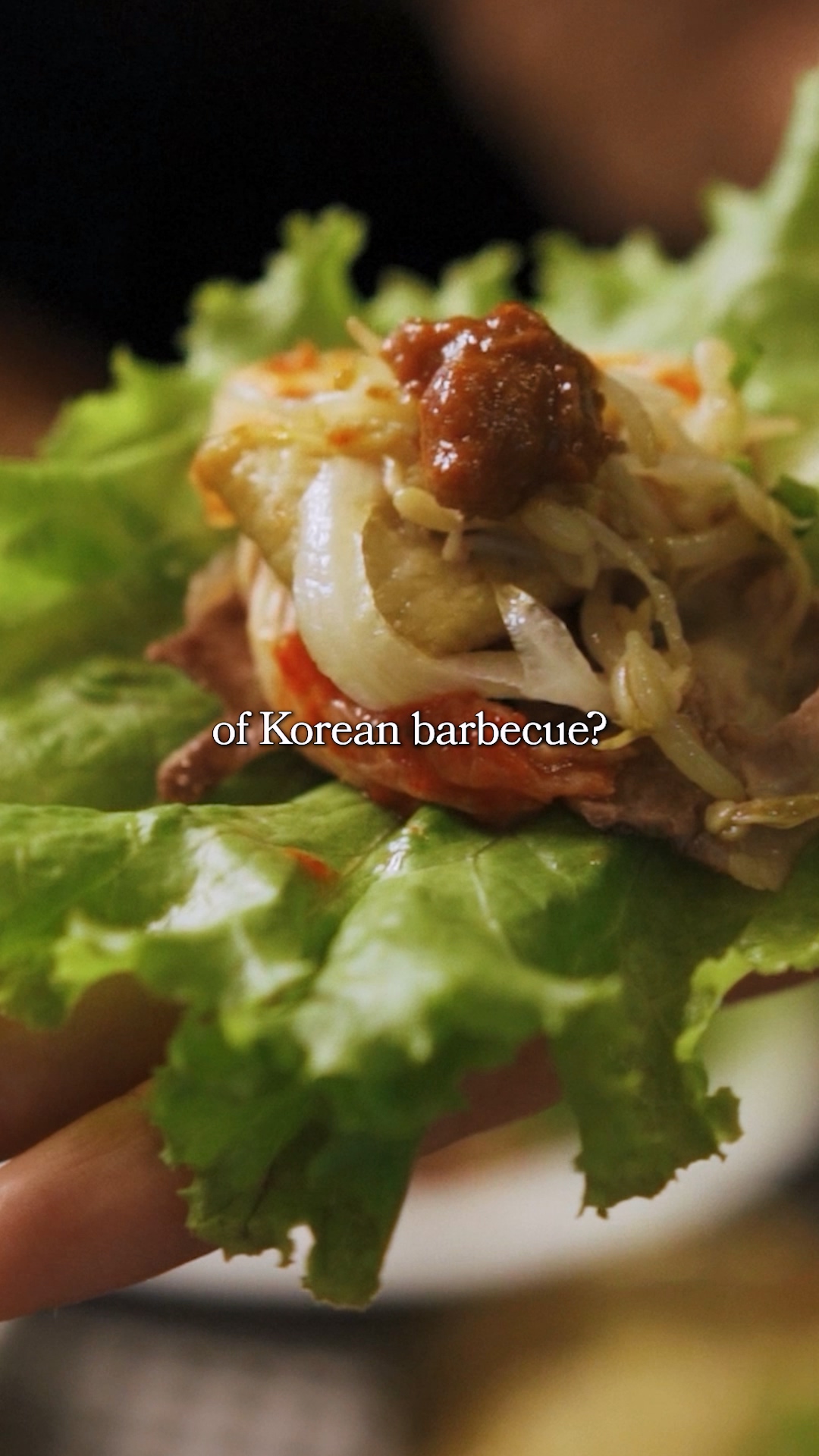
Start with one leaf, not three. Lettuce is easier for beginners; perilla is stronger and more aromatic. Put the leaf in your palm, add a small piece of grilled meat, a little rice if you want, one small garlic slice or grilled garlic, a tiny piece of chili if you like heat, then ssamjang. Fold it into a bite-sized bundle and eat it in one go if possible.
Korean table etiquette usually treats ssam as one bite because the wrap is messy once bitten in half. But do not panic. If the wrap is too big, make it smaller next time. The goal is balance, not performance.
There is also a social layer. Making a wrap for someone else can be affectionate, playful, or friendly depending on the relationship. But it can also feel too intimate if done with someone you do not know well. When in doubt, make your own wrap first. If someone offers you one, accept it warmly unless you have dietary restrictions.
For broader table behavior, read EpicKor's Korean restaurant etiquette guide and what Koreans eat for breakfast guide, which help explain why Korean meals often feel modular rather than plate-centered.
The Ratio: What Ssamjang Actually Is
Most English explanations stop at "a mix of soybean paste and chili paste," which is true and useless. Here is the working ratio Koreans actually use.
| Component | Korean | Proportion |
|---|---|---|
| Soybean paste | 된장 | 2 parts |
| Chili paste | 고추장 | 1 part |
| Minced garlic | 다진 마늘 | to taste |
| Sesame oil | 참기름 | to taste |
| Chopped spring onion | 파 | to taste |
| Sweetener — honey, corn syrup, or sugar | 꿀 / 물엿 / 설탕 | small amount |
Two parts doenjang to one part gochujang. That is the whole structure, and it explains why ssamjang tastes the way it does: it is fundamentally a savoury sauce with heat added, not a chili sauce softened. If yours tastes like gochujang with something mixed in, the ratio is wrong.
The additions are not optional garnish either. Sesame oil is what makes it cling to a lettuce leaf instead of sliding off. Garlic is what makes it taste like a barbecue sauce rather than plain fermented paste. The sweetener rounds the salt down so a spoonful next to fatty pork does not read as harsh.
You can make usable ssamjang in about two minutes if you already own doenjang and gochujang, and many Korean households do exactly that rather than buying a tub. If you have both pastes in your fridge and have been buying ssamjang separately, stop.
What a Tub Costs in Korea
| Product | Korean | Price (July 2026) |
|---|---|---|
| Haechandle four-season ssamjang, 170g | 해찬들 사계절 쌈장 | about ₩1,500 |
| Chung Jung One Sunchang seasoned ssamjang, 200g | 청정원 순창 양념듬뿍 쌈장 | about ₩2,500 |
| Chung Jung One sesame-garlic ssamjang, 500g | 청정원 순창 참깨마늘 양념쌈장 | about ₩8,600 |
The three big domestic paste brands are 청정원 (Chung Jung One), 샘표 (Sempio), and 해찬들 (Haechandle). Any of them is a safe purchase — this is not a category where brand choice will make or break your meal.
Note the price jump between the 200g and 500g tubs above. Bigger is not automatically better value here, because the larger tub is a premium sesame-garlic variant rather than more of the same product. Compare price per gram on the shelf rather than assuming the big one wins.
When to skip buying it
- Skip the tub entirely if you already own doenjang and gochujang. Mix 2:1 with garlic and sesame oil. It takes two minutes and tastes fresher.
- Skip the small 170g tub if you are cooking for a household. Ssamjang keeps well refrigerated and gets used faster than people expect once it is in the fridge.
- Skip it as a gift or souvenir. It is a fermented paste in a plastic tub — it travels poorly, may raise customs questions on some routes, and is available in Korean groceries in most major cities anyway. Buy gochujang or a sesame oil bottle instead if you want something to carry home.
- If you are vegetarian, vegan, or allergic, do not assume. Some commercial tubs contain anchovy or other animal-derived ingredients, and wheat appears in many. Read the panel every time; formulations differ by brand and by variant within a brand.
Buying Ssamjang: What to Check
At Korean supermarkets, ssamjang is usually sold in plastic tubs near gochujang and doenjang. The package may be green, brown, orange, or red depending on brand. Look for the word 쌈장 if you can read Hangeul. If you cannot, check the English label for "ssamjang," "seasoned soybean paste," or "Korean BBQ dipping sauce."
The biggest label issues are heat, sweetness, allergens, and serving size. Commercial ssamjang often contains soybean, wheat, sesame, garlic, onion, sweetener, and sometimes anchovy or other ingredients depending on the product. If you are vegetarian, vegan, gluten-sensitive, or allergic to soy or sesame, read carefully. Do not assume every tub is the same.
For travel shoppers in Korea, ssamjang is easy to buy but not always practical to carry. A tub can leak if packed badly, and fermented pastes may create smell issues if opened. For home cooking, buying before departure through a local Asian market or online store may be easier than carrying sauce in luggage.
| Buying Question | Why It Matters | Practical Choice |
|---|---|---|
| How spicy is it? | Some brands lean mild and sweet; others taste saltier or hotter. | Start with a small tub if you are new. |
| Does it contain sesame? | Sesame oil and seeds are common. | Check labels if allergies matter. |
| Is it vegan? | Some recipes may include seafood-related ingredients. | Look for vegan labeling, not just "Korean sauce." |
| How will you use it? | BBQ wraps need thicker paste; marinades may need thinning. | Buy ssamjang for wraps, gochujang for sauces. |
| Can you store it? | Opened tubs usually need refrigeration. | Do not buy a giant tub for one meal. |
How to Use Ssamjang at Home
The easiest home use is grilled pork belly, lettuce, rice, garlic, and ssamjang. You do not need a restaurant grill. A pan, air fryer, or outdoor grill can work. Add kimchi and a simple cucumber or scallion side, and the meal immediately feels more Korean.
Ssamjang also works as a dip for cucumbers, carrots, peppers, and cabbage. It can be thinned with sesame oil or a little water for rice bowls. It can be mixed into tuna rice, spooned beside grilled mushrooms, or used as a strong condiment for lettuce wraps with tofu or chicken. The trick is to remember that it is salty and concentrated.
If you want to build a more complete home setup, EpicKor's Korean cookware starter kit and Korean convenience-store food guide are useful next reads. One explains tools; the other explains how Koreans often combine simple ready-to-eat items with sauces and sides.
Make the wrap table easier: Korean BBQ feels smoother when you can cut meat cleanly at the table, so compare Korean BBQ scissors and tongs before hosting a wrap night.
See Korean BBQ scissors and tongs on Amazon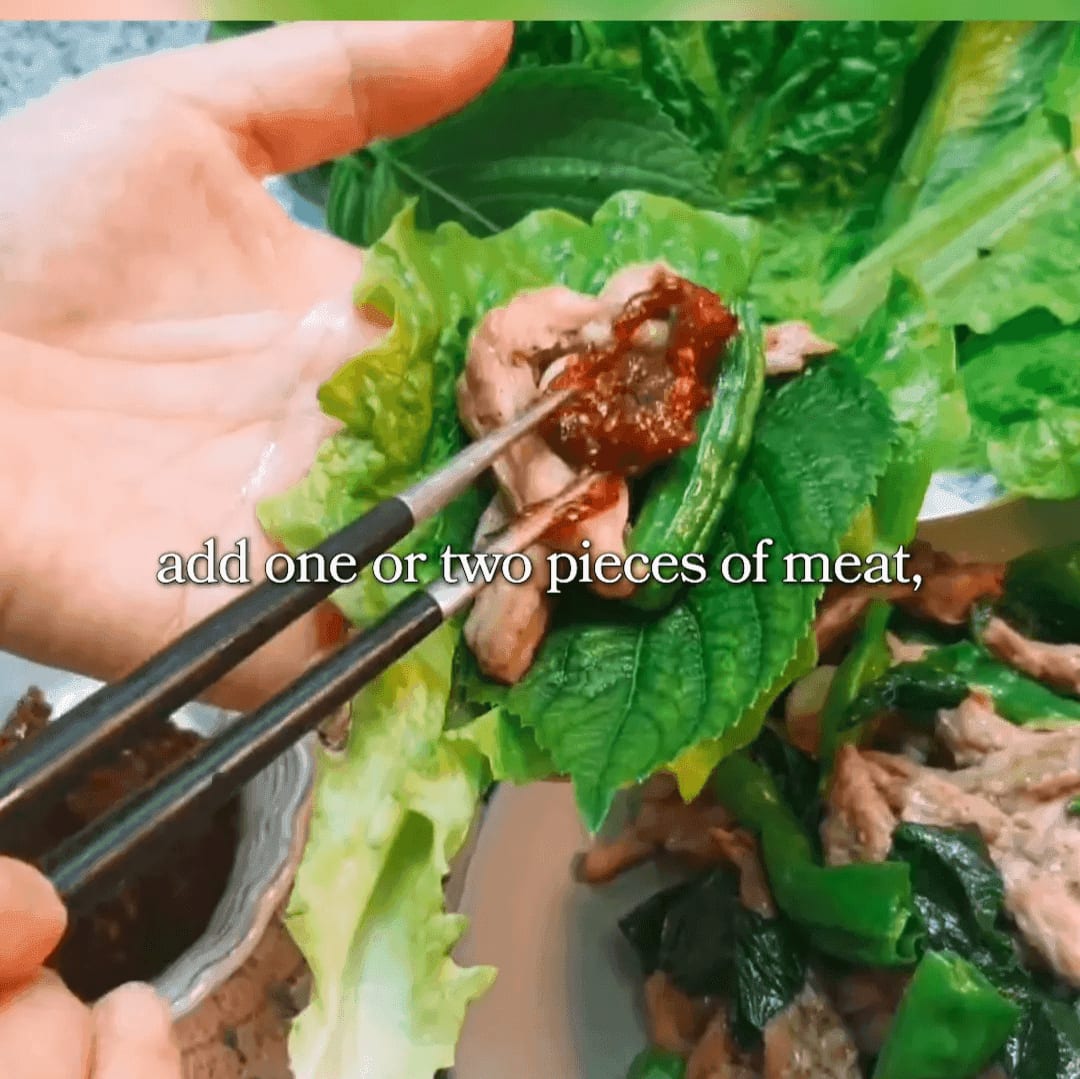
Common Mistakes
The first mistake is using ssamjang like ketchup. It is not a squeeze-everywhere sauce. Use it in small amounts because the salt and fermented flavor are concentrated.
The second mistake is confusing ssamjang with gochujang. Gochujang is a foundational chili paste, but it is not automatically ready as a BBQ wrap sauce. Ssamjang is already seasoned for the wrap table.
The third mistake is ignoring perilla leaves. Lettuce is easier, but perilla changes the entire flavor with a minty, herbal, sesame-adjacent aroma. If you see perilla at a Korean BBQ restaurant, try one wrap with it.
The fourth mistake is overbuilding the wrap. Newcomers sometimes add meat, rice, garlic, chili, kimchi, scallion salad, onion, and a huge spoon of sauce. That becomes chaos. Start with meat, leaf, garlic, and ssamjang. Add extras only after you understand the balance.
FAQs About Ssamjang
Q: Is ssamjang spicy? A: It is usually mildly to moderately spicy, but the heat depends on the brand or recipe. It is often less fiery than plain gochujang because doenjang, sesame oil, garlic, and sweetener round it out.
Q: Is ssamjang the same as gochujang? A: No. Gochujang is red chili paste. Ssamjang is a seasoned wrap sauce that commonly includes gochujang, doenjang, garlic, sesame oil, and other ingredients.
Q: What do you eat ssamjang with? A: It is most famous with Korean BBQ lettuce wraps, but it also works with cucumbers, peppers, grilled mushrooms, rice bowls, tofu, pork belly, beef, chicken, and simple vegetable sticks.
Q: Can vegetarians eat ssamjang? A: Sometimes, but not always. Check the label because ingredients vary. Soy, wheat, sesame, and possible seafood-related ingredients may appear depending on brand.
Q: How much ssamjang should I put in a wrap? A: Start with a small dab, about pea-sized to thumbnail-sized. Add more only if the wrap tastes flat.
Q: Can I make ssamjang at home? A: Yes. A basic version mixes doenjang, gochujang, minced garlic, sesame oil, sesame seeds, chopped scallion or onion, and a little sweetener. Adjust to taste.
Bottom Line
Ssamjang is small, but it explains a lot about Korean food. It shows how fermentation, texture, vegetables, meat, rice, and social eating come together in one bite. If you understand ssamjang, Korean barbecue stops being just grilled meat and becomes a wrap system.
Use less sauce, build smaller wraps, read labels, and let the leaf, meat, garlic, rice, and fermented paste do their work together.
And if you have wondered what the other dish on the table is — the small one holding oil and salt — it has a name and a job of its own. Our guide to Korean sesame oil and 기름장 covers why a Korean table carries two sauces that do opposite things.
You Might Also Like
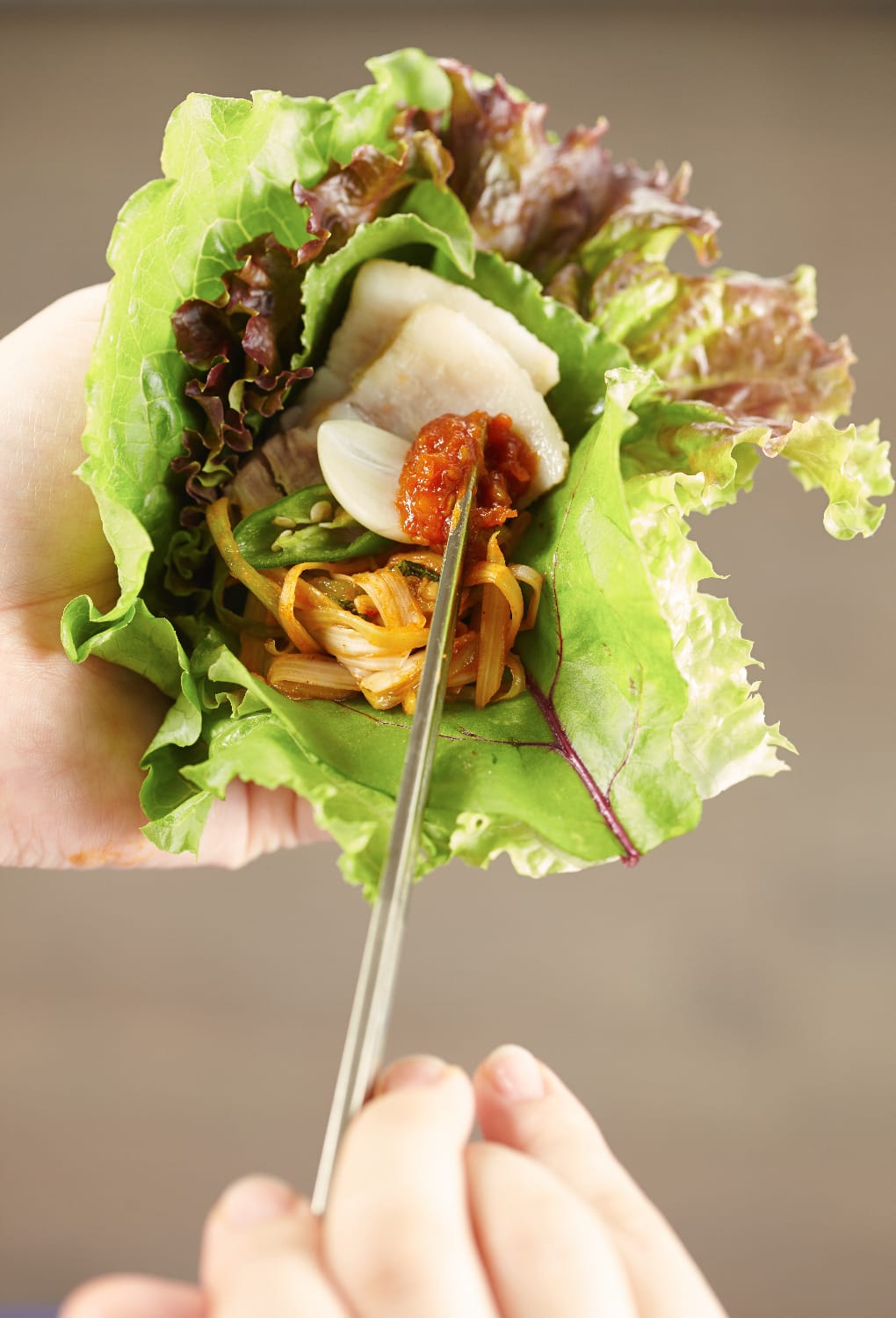
Korean BBQ Ssam Guide 2026: Lettuce, Perilla, Ssamjang, Garlic
A Korean BBQ ssam guide explaining lettuce wraps, perilla leaves, ssamjang, garlic, rice, one-bite etiquette, and what to buy.
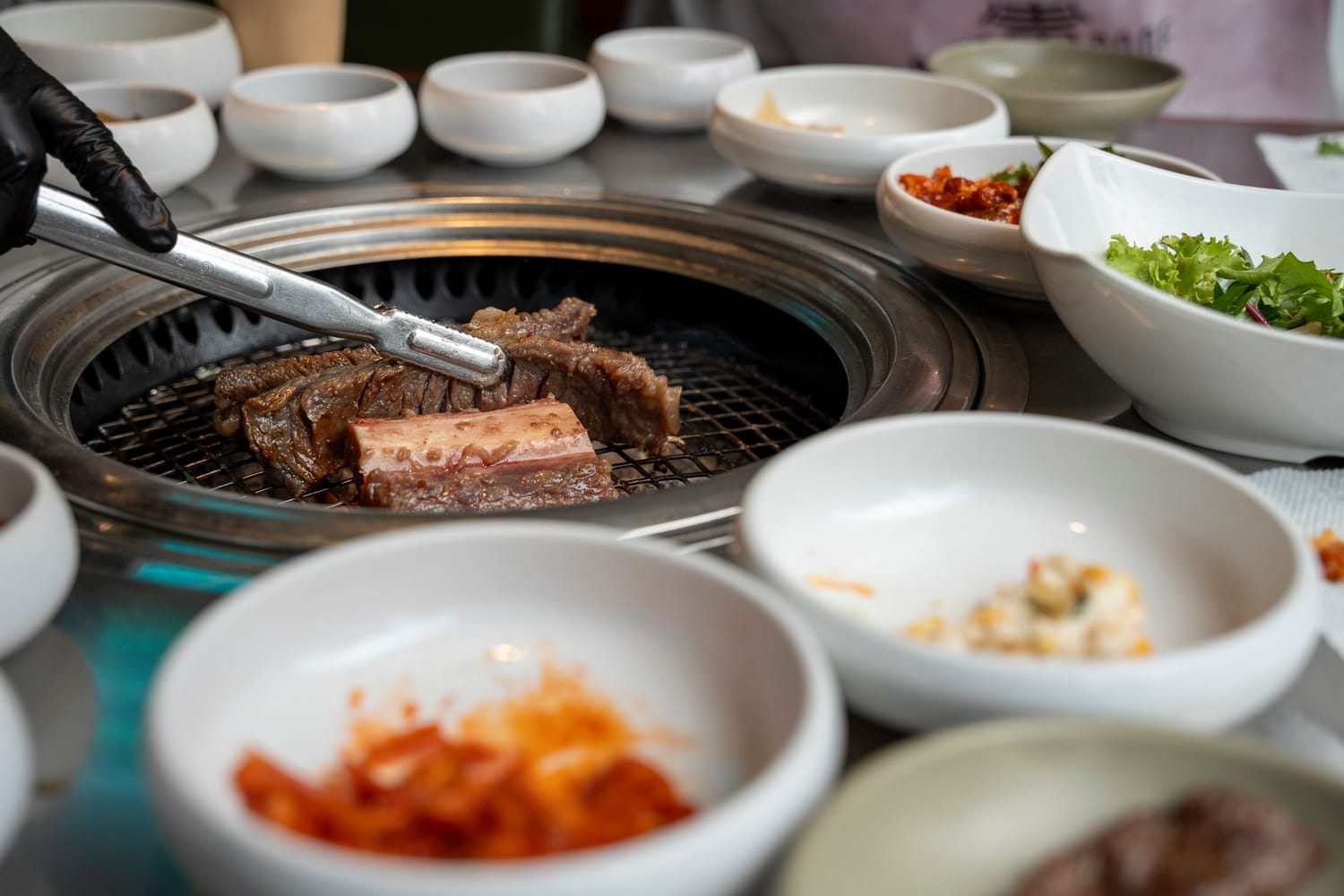
Korean Kitchen Scissors: Why Koreans Cut Meat and Noodles at the Table, and Why It Is Not an Office Scissor
Scissors on a restaurant table look wrong to most of the world and normal to every Korean. The tool is not a desk scissor: thick blades, one serrated edge, big rings, often detachable, built for galbi and cold noodles. Where it came from, and which one to buy.
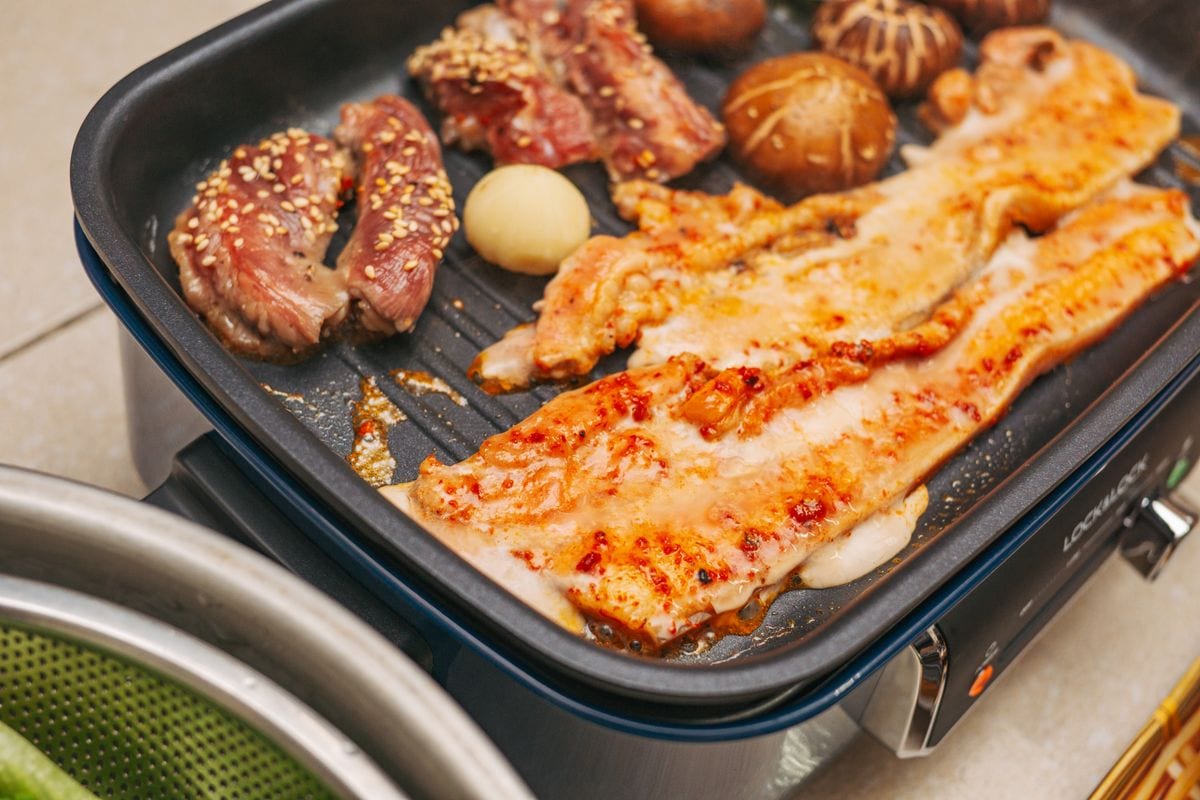
Korean BBQ Grill for Home 2026: Electric vs Grill Pan
Compare Korean BBQ grills for home, from electric tabletop models to stovetop grill pans, with practical advice on smoke, cleanup, heat, and safety.