Ppushu Ppushu: Korea's Smash-It-Yourself Noodle Snack, and Which Flavour to Get
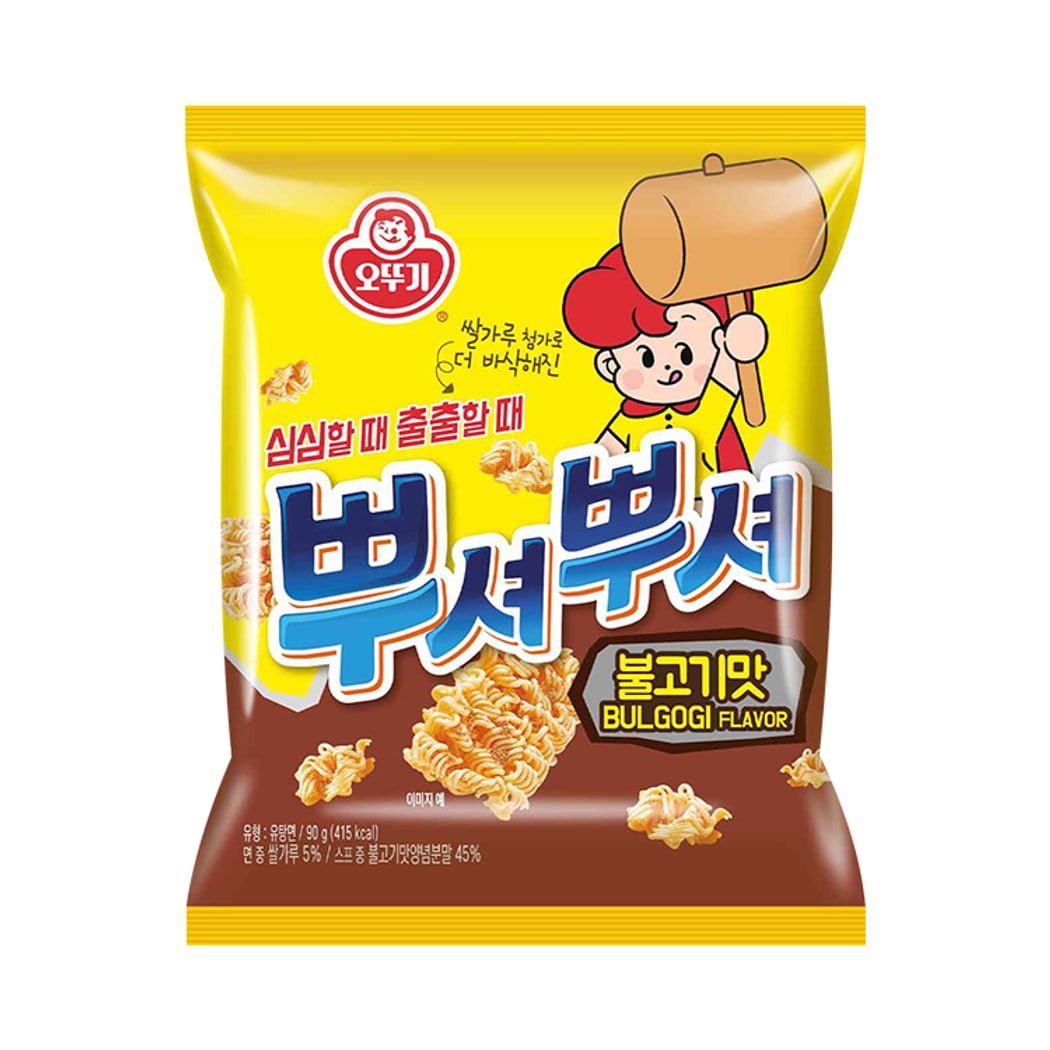
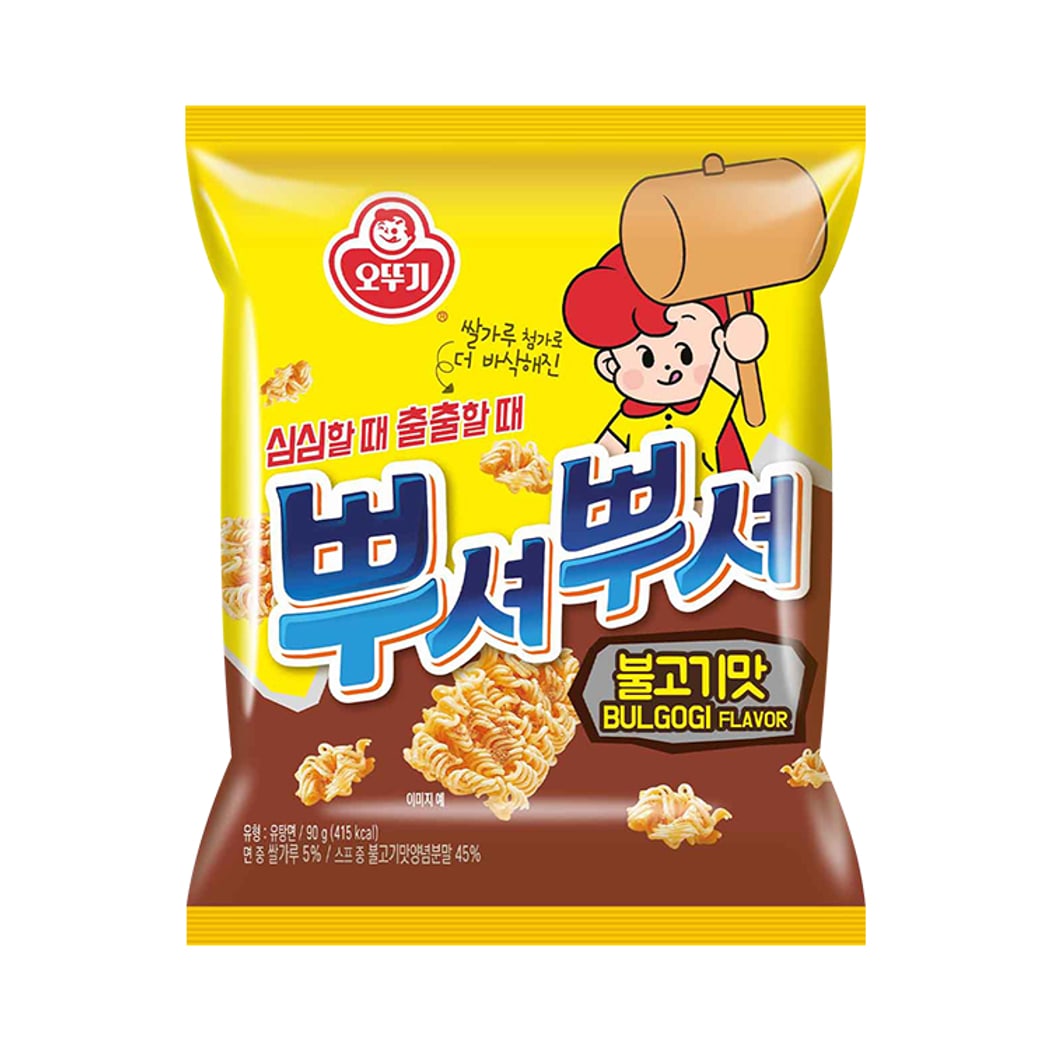
뿌셔뿌셔 불고기맛. The character on the bag is holding a mallet, which is the entire instruction. Official product image, Ottogi.
Every English listing for this tells you the same thing: crush it, add the powder, shake, eat. That is on the Amazon title.
What none of them tell you is that the Korean shelf carries eight flavours and the export range carries three, that the bag explicitly warns you not to cook it, or that Ottogi launched it in 1999 with strawberry, melon and chocolate versions that failed so completely they are now a joke in Korea.
Also worth knowing before you buy: this snack exists because Ottogi noticed people were already doing it themselves.
The Short Answer
| Detail | |
|---|---|
| Korean name | 뿌셔뿌셔 — from 부수다, "to smash" |
| Maker | 오뚜기 (Ottogi) |
| Launched | July 1999, at ₩350 |
| First-year sales | 100 million bags |
| Standard bag | 90 g, with a small seasoning sachet inside |
| Price, August 2026 | Above ₩900 a bag online; over ₩1,000 at convenience stores |
| Korean flavours | Eight current |
| Can you boil it? | The packaging says no. People try anyway; it does not work well |
| Skip it if | You want even seasoning, or you are watching sodium |
It Was Reverse-Engineered From What People Already Did
This is the origin fact, and it is the reason the product feels obvious.
Long before 1999, Koreans ate uncooked instant ramyun — crack the dry block, sprinkle in some of the soup powder, eat it out of the bag. It was a children's habit and a soldier's habit and a broke-student habit, and everybody knew it.
Ottogi's planning concept was to take that and sell it properly: a noodle block designed to be eaten raw, with a seasoning sachet sized for dry noodles rather than for a litre of broth. That is the whole invention. It is not instant ramyun repurposed as a snack; it is a snack built to the shape of a habit.
It worked immediately. 100 million bags inside the first year, at ₩350 each.
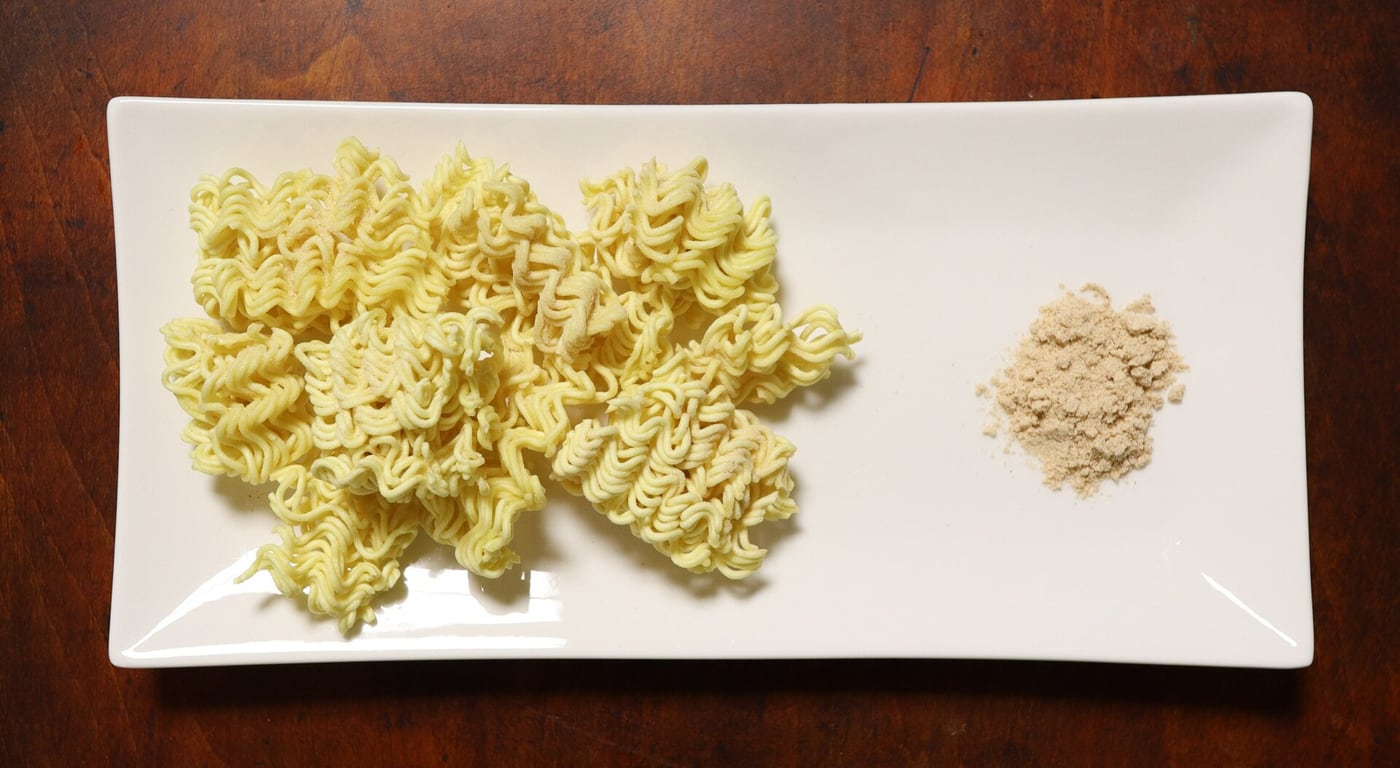
What is actually in the bag: a noodle block and a small sachet. The powder pile is the whole sachet — far less than a ramyun soup packet. Photo: Mobius6, Wikimedia Commons, CC BY-SA 4.0.
The Bag Says Do Not Boil It
The most common English-language question about this product is whether you can cook it like ramyun. Ottogi's packaging warns against boiling it, and the reasons are structural rather than legal.
The noodles are thinner than ramyun noodles. At around forty seconds they are still firm; leave them for a full ramyun cook time and they go past done and start disintegrating. There is no window that works well.
The seasoning is the bigger problem. It is a dry-coating powder, formulated to cling to a cold surface, not to dissolve into water. Put it in broth and it disperses poorly and the result is thin and bland. You end up with weak soup and mediocre noodles.
Koreans do it anyway, out of curiosity, and the consensus in Korea matches the packaging: it is not worth it. If you want the noodle-block-in-soup experience, buy actual ramyun — Jin Ramen costs about the same.
You might like: Korean Ramyun Guide: Shin, Buldak, Chapaghetti, and More
The Eight Korean Flavours
Four have been there since launch. Four arrived in the last two years, which is why an export variety pack feels dated.
| Flavour | Korean | Launched |
|---|---|---|
| Bulgogi — the original | 불고기맛 | 1999 |
| Seasoned fried chicken | 양념치킨맛 | 1999 |
| Barbecue | 바베큐맛 | 1999 |
| Tteokbokki | 떡볶이맛 | 1999 |
| Butter-grilled squid | 버터구이오징어맛 | November 2024 |
| Super spicy — "Yeol" | 화끈한 매운맛 (열뿌셔뿌셔) | November 2024 |
| Mayo | 마요땅맛 | March 2025 |
| Jeju garlic butter | 제주마농버터맛 | April 2025 |
Start with 불고기맛. It is the original, it is what Koreans mean when they say the name without qualifying it, and the sweet-savoury soy profile is the one the format was designed around.
제주마농버터맛 is worth explaining because the name is not standard Korean. 마농 is the Jeju dialect word for garlic. Jeju garlic is a regional specialty, and a garlic-butter noodle snack named in dialect is about as Korean-shelf-specific as this category gets. It has never been exported.
열뿌셔뿌셔 is the spicy one — 열 meaning heat. Genuinely spicy by snack standards, still nowhere near Buldak territory.
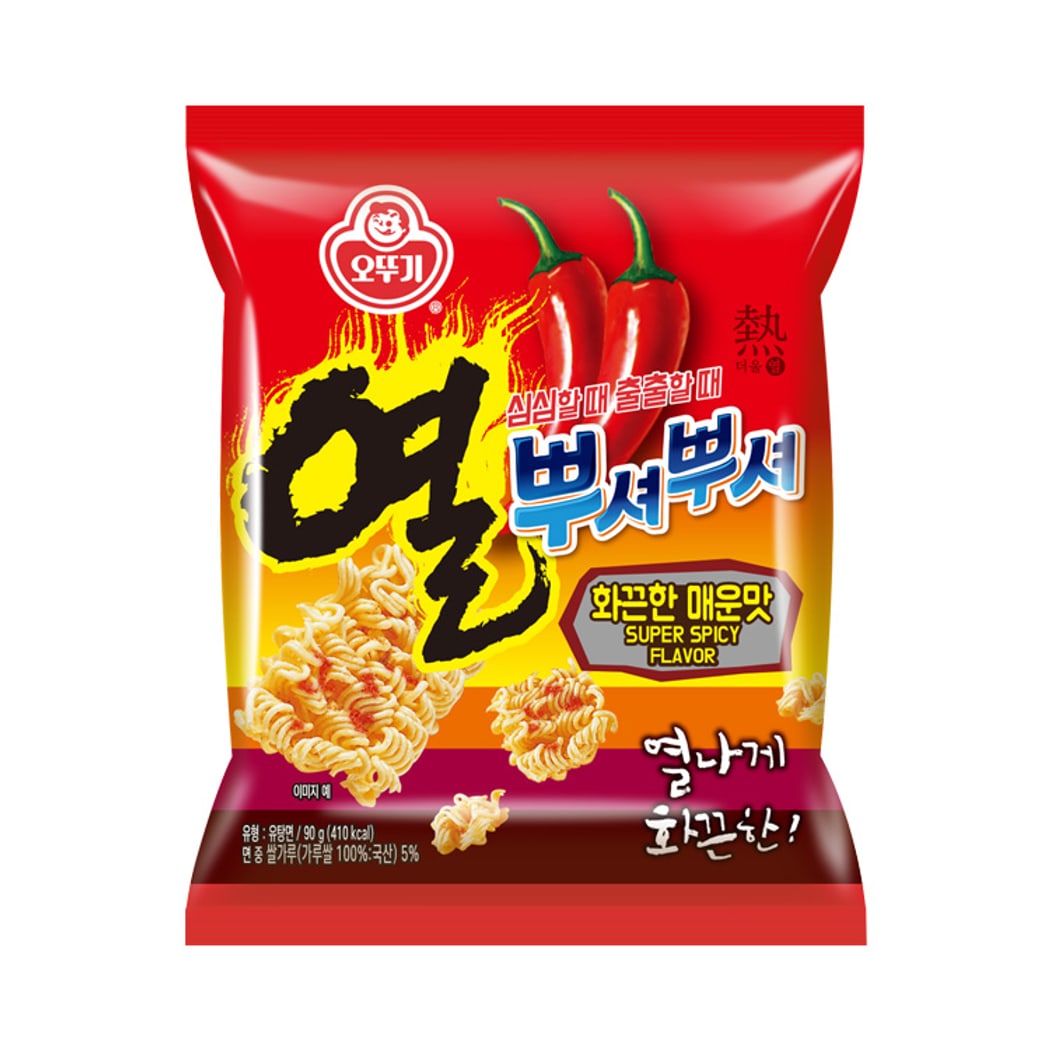
열뿌셔뿌셔 화끈한 매운맛, launched November 2024. Official product image, Ottogi.
Ordering a variety pack from abroad? Export assortments run on the 1999 flavours — bulgogi, barbecue, chicken — so the four launched since November 2024 are unlikely to be in the box. Worth reading the flavour list on the listing rather than assuming a "variety" pack covers the range. As an Amazon Associate, EpicKor earns from qualifying purchases.
1999's Strawberry Disaster
At launch Ottogi did not just make savoury versions. It made strawberry, melon and chocolate — sweet flavours on a fried wheat noodle block.
They failed, and Korean writing about them is blunt about why: a fried noodle carries salt and fat, and a sweet fruit powder on top of that produces a clash rather than a dessert. All three are long discontinued and they survive mostly as a running joke about 1999 product development.
Several later experiments also died: pizza, jjajang, sweet corn, curry, honey butter and chilli cheese. The pattern is clear enough — this format holds savoury seasoning and rejects almost everything else. The four originals that survived from 1999 are all salt-and-umami, and the four newest ones are too.
How to Actually Eat It
Real instructions, not the Amazon-title version.
Do not open the bag first. Keep it sealed, put it on a flat surface, and press down with your palm — or use the mallet the character on the bag is holding, which is the joke and also genuinely how children do it.
Do not pulverise it. The single most common mistake. You want pieces roughly fingertip-sized, not powder. Crushed too fine, it becomes dust that will not hold seasoning and is unpleasant to eat.
Then open it, pour in the sachet, close it, and shake. Ten seconds is not enough. The most-cited complaint about this product in Korea is uneven seasoning — pockets of concentrated powder next to bare noodle — and the fix is entirely in how long you shake.
Eat it out of the bag. There is no plating step. Tipping it into a bowl loses the powder that has settled into the corners.
You might like: Jin Ramen Mild vs Spicy: The Korean Ramyun Locals Buy Most Often
What the Export Version Actually Is
If you are buying this outside Korea, two things make the listings confusing.
The maker's name is romanised two ways. You will see OTTOGI and OTOKI on different listings for the same product, because Ottogi uses the second spelling on some export packaging. Both are 오뚜기. Neither is a different company.
The flavours available abroad are the 1999 set, plus tteokbokki. Export listings run on bulgogi, barbecue and grilled chicken — that last one being 양념치킨맛, the seasoned fried chicken flavour, translated loosely. Variety packs sold as covering the range typically hold three or four of those four.
So the practical position is this: the export product is the launch product. Everything Ottogi has added since November 2024 — butter-grilled squid, super spicy, mayo, Jeju garlic butter — is domestic. If you have eaten Ppushu Ppushu abroad and found it fine but unremarkable, you have eaten a twenty-seven-year-old recipe, and the reason to try it again in Korea is that half the shelf is now newer than your last bag.
Who Actually Eats It in Korea
The demographic is wider than the cartoon mallet on the bag suggests, and it is worth knowing if you are buying this as a gift.
Children, obviously — the crushing is the appeal, and it is one of the few snacks a small child gets to physically operate before eating.
Students, because it is the cheapest thing in the shop that behaves like a meal-adjacent food without being one. A bag in a school bag survives being sat on, which no chip does.
Soldiers, which is where the raw-ramyun habit the product was built on has always been strongest. Conscripts have eaten dry noodle blocks with soup powder for generations, and Ppushu Ppushu is the commercial version of that.
Drinkers, more recently. The spicy and butter-squid flavours in particular have found a second life as an 안주 — bar food — where the salt and the crunch work against beer.
What it is not is a nostalgia product in the way Banana Kick is. Ppushu Ppushu is only twenty-seven years old, which in Korean snack terms is recent. The people who grew up with it are in their thirties, not their fifties, and Ottogi keeps launching new flavours rather than trading on memory. That is the difference between a snack that survives and a snack that has to be brought back.
What It Costs
It launched at ₩350. It crossed ₩1,000 by 2024, and as of August 2026 online multipacks put it a little above ₩900 a bag, with convenience stores higher.
Two things to note if you are price-comparing. The bag is 90 g, which is large for a snack but the contents are light. And Korean commentary has consistently flagged that the quantity has shrunk over the years while the price has climbed — a common complaint about the whole Korean snack aisle, but a specific and repeated one here.
Want the real thing rather than the snack version? If what appeals here is the noodle rather than the crushing, a proper Korean ramyun costs about the same per serving and does the job the snack deliberately does not — worth having both in the cupboard for the price of one lunch.
Who Should Skip It
Skip it if uneven seasoning will annoy you. It is the number one complaint in Korea and it is inherent to the format. Shaking helps; it does not eliminate the problem.
Skip it if you are watching sodium. This is a seasoned fried noodle with a salt-forward powder on it, and high sodium is the other standing criticism.
Skip it if you were planning to cook it. The packaging tells you not to, and it is right.
Skip the export variety pack if you want the interesting flavours. The ones worth crossing an ocean for — Jeju garlic butter, mayo, butter-grilled squid — are the ones that have not left Korea.
Do not skip it if you have ever eaten dry instant noodles out of the packet and felt slightly guilty about it. This is the same act, sold legitimately, for under a dollar.
Frequently Asked Questions
Q: Can you cook Ppushu Ppushu like ramyun? A: The packaging warns against it. The noodles are thinner than ramyun noodles and there is no cooking window that works — firm at forty seconds, falling apart at full ramyun time. The seasoning is a dry coating that does not dissolve well, so the broth comes out thin.
Q: How do you eat Ppushu Ppushu properly? A: Crush the block while the bag is still sealed, to roughly fingertip-sized pieces rather than powder. Then open it, tip in the seasoning sachet, close it and shake for longer than feels necessary. Eat it straight from the bag.
Q: How many Ppushu Ppushu flavours are there? A: Eight on the Korean shelf. Four have been there since 1999 — bulgogi, seasoned chicken, barbecue and tteokbokki — and four are recent: butter-grilled squid and super spicy (November 2024), mayo (March 2025) and Jeju garlic butter (April 2025).
Q: What flavour should I buy first? A: 불고기맛 (bulgogi). It is the original from 1999 and the default reference. If you want something you cannot get outside Korea, 제주마농버터맛 — Jeju garlic butter, named with the Jeju dialect word for garlic.
Q: Were there really strawberry and chocolate versions? A: Yes, at launch in 1999, along with melon. All three were discontinued and are remembered in Korea as failures — sweet powder on a fried savoury noodle did not work.
Q: How much does Ppushu Ppushu cost in Korea? A: It launched at ₩350 in 1999, passed ₩1,000 by 2024, and sits a little above ₩900 a bag in online multipacks as of August 2026. Convenience stores charge more.
Sources
The July 1999 launch, the ₩350 launch price, the 100-million-bag first year, the name's derivation from 부수다, the reverse-engineered-from-raw-ramyun product concept, the full flavour lineup with launch dates, the discontinued 1999 sweet flavours and later failed variants, the packaging's warning against boiling, and the standing complaints about uneven seasoning, sodium and shrinking quantity from Korean-language reference sources. Pack imagery and current SKUs from Ottogi's official store. Retail pricing checked August 2026 across Korean online grocers.
Export flavour ranges are narrower than the Korean range, and prices change constantly. Check the bag in front of you.
You Might Also Like
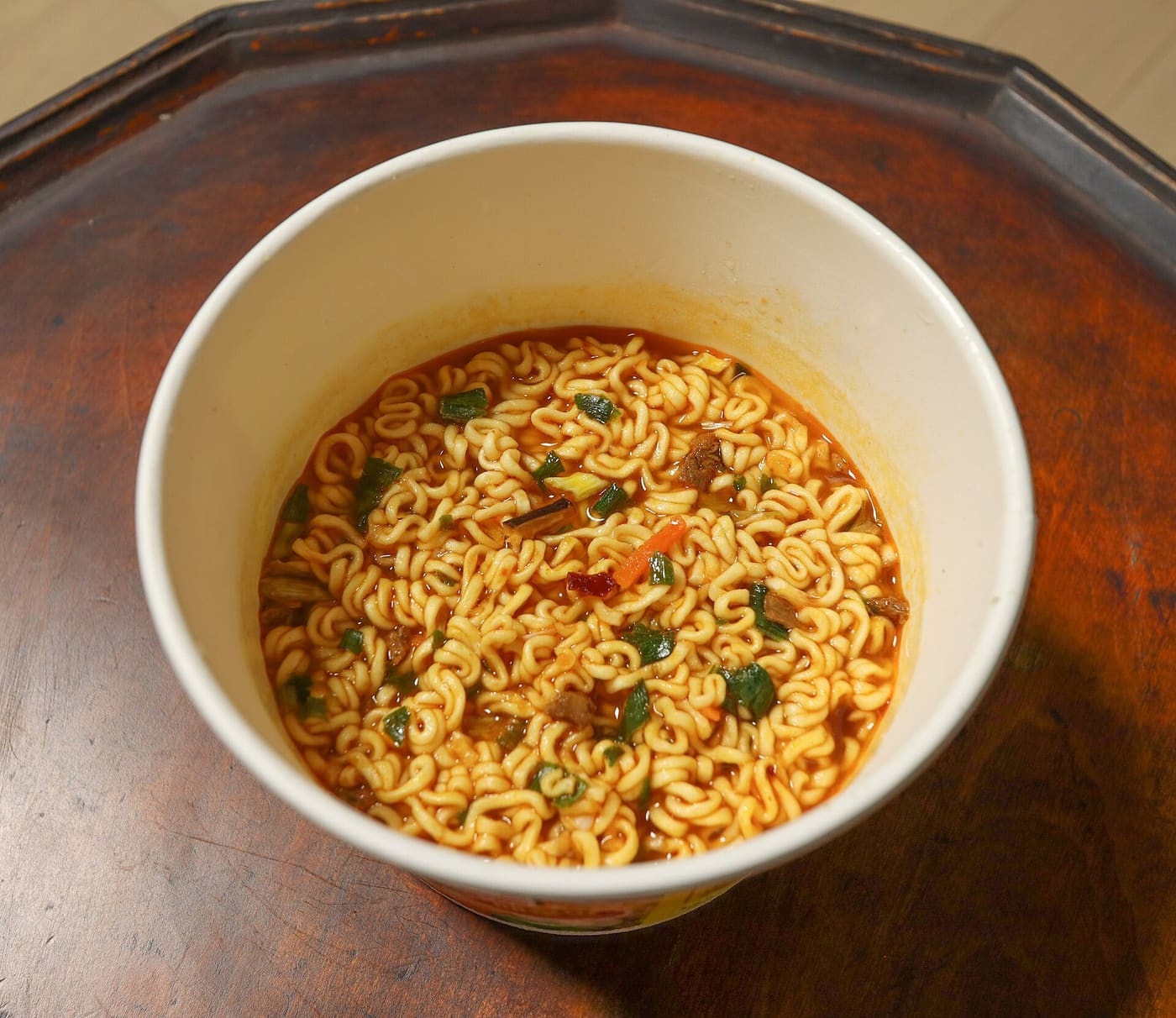
Jin Ramen Mild vs Spicy: The Korean Ramyun Locals Buy Most Often
Shin Ramyun is famous, but the bag Koreans buy most often is Jin Ramen — 26.4% in a national survey. The real mild-versus-spicy difference, the third heat grade Korea keeps to itself, and why free restaurant ramyun is always this brand.
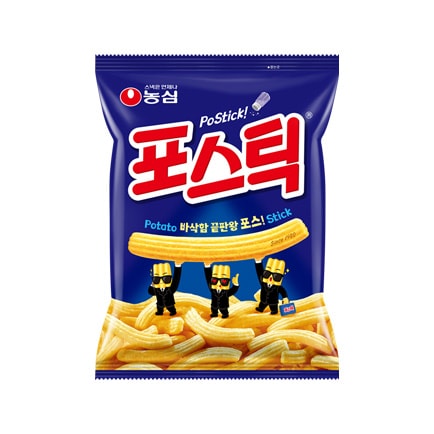
Postick: The Korean Snack That Used to Come With a Ketchup Packet
Postick (포스틱) has been on Korean shelves since 1980, it is only 23% potato, and it shipped with a ketchup sachet until the sachet got too expensive. What it costs now, and the ramyun-powder trick Koreans use on it.
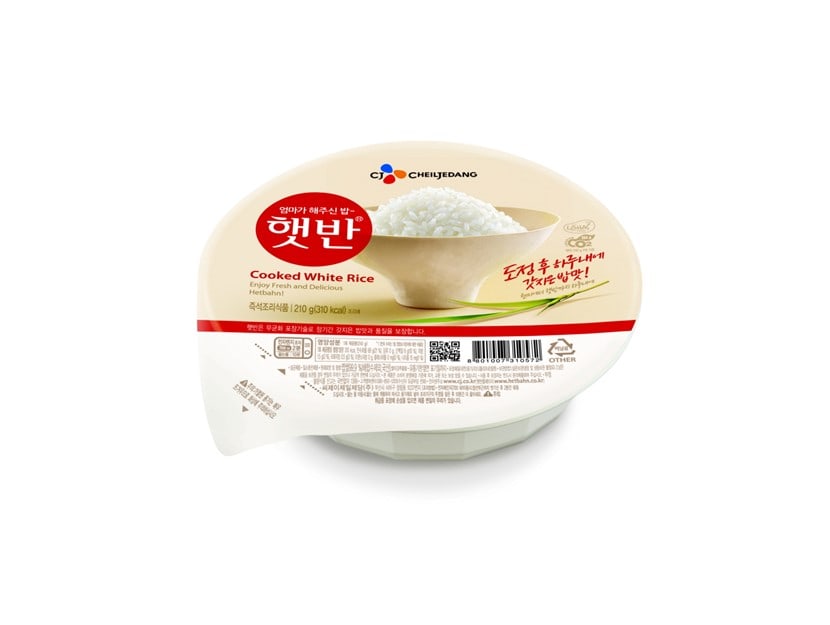
Hetbahn: What Korea's Instant Rice Is Made Of, and How to Heat It Without a Microwave
햇반 is 99.9% Korean rice and water plus 0.1% rice bran extract, sealed in a room cleaner than a hospital ward. The lid prints three cooking times and one of them needs no microwave at all. Prices, varieties, and the mistake almost everyone makes with the film.