Monami Deep Dive: Korea's ₩300 National Pen Crashes Servers — and Still Loses Money
The Monami 153 has been Korea's default pen since 1963 — named for its ₩15 launch price, and it still costs ₩300. Limited editions sell out in hours and resell at multiples. The company behind it has lost money three years running. Both halves, explained.
Quick Answer
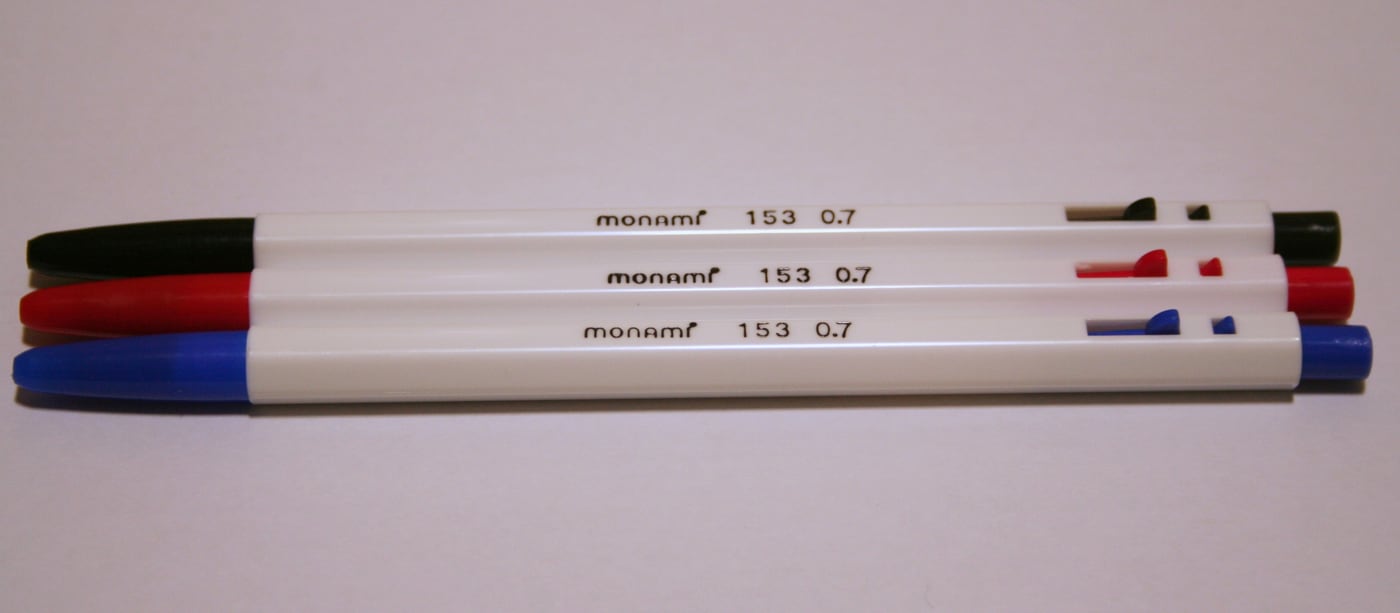
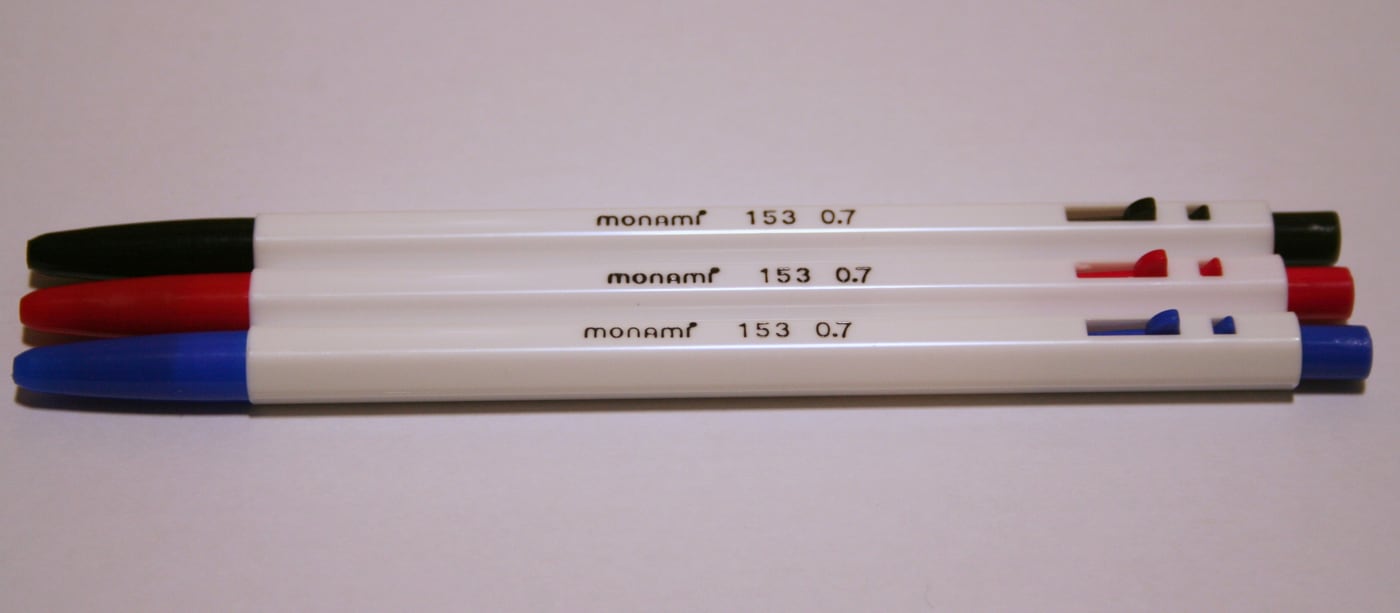
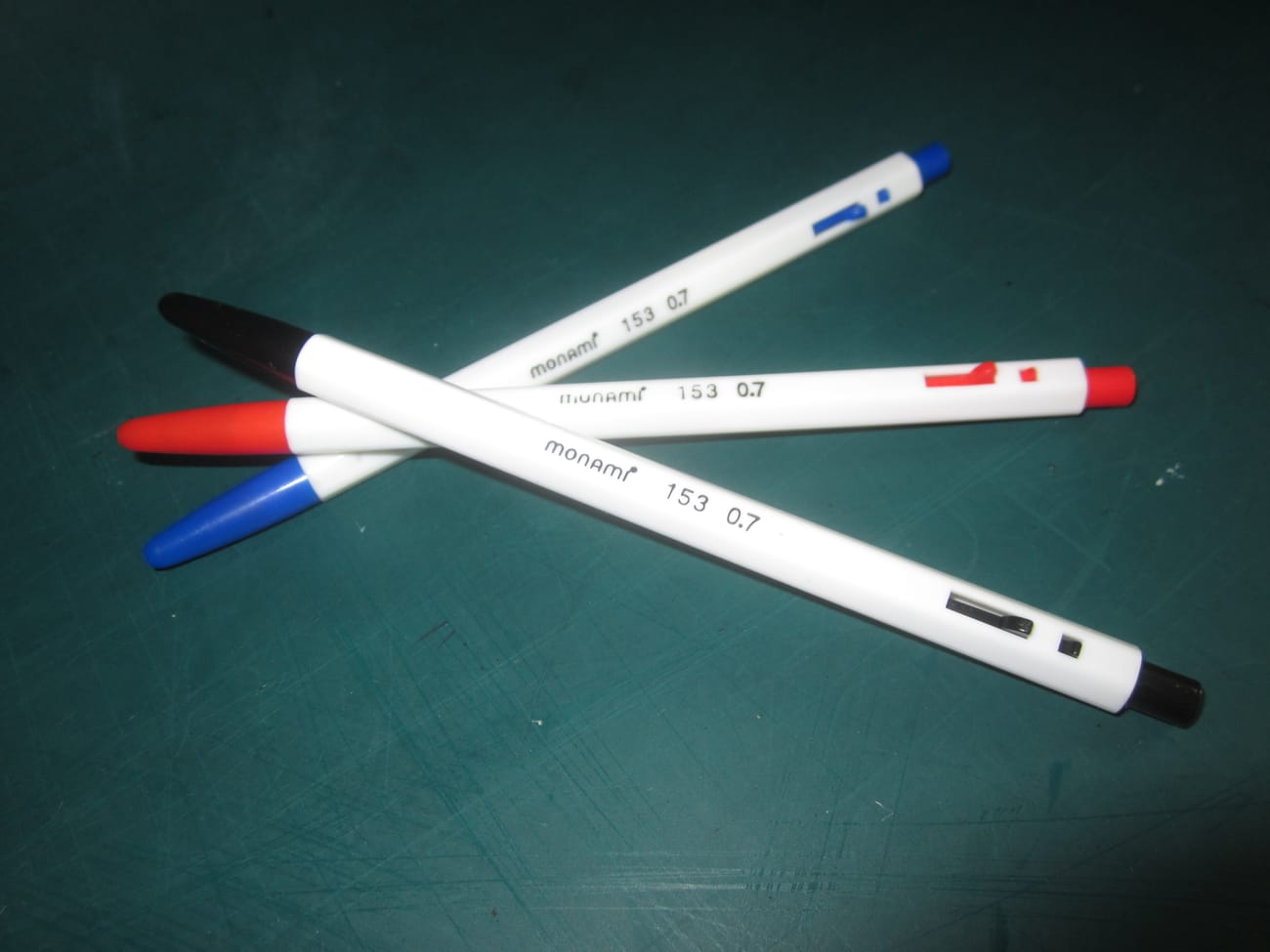
Every country has a default pen. America's is the Bic Cristal; Korea's is the Monami 153 — white hexagonal barrel, coloured cap-button, sold since 1 May 1963, and priced today at ₩300, about 22 US cents.
Two facts about it seem impossible to hold at once.
Fact one: the brand has genuine cultural power. When Monami released a brass-bodied limited edition of the same pen at ₩20,000 — 66 times the standard price — it sold out in two hours and the official mall's servers went down. The 50th-anniversary metal edition in 2014 (10,000 units) sold out immediately and resold at multiples on the secondhand market. Koreans queue for a luxury version of a ₩300 pen the way other countries queue for sneakers.
Fact two: the company loses money. Monami is listed on the KOSPI (005360), so unlike our previous three subjects the accounts are public: 2025 revenue of ₩131 billion, an operating loss of ₩5.9 billion, a net loss of ₩10.7 billion — the third consecutive year of deepening losses. The cosmetics diversification is bleeding (₩3.8 billion of revenue against a ₩4.7 billion net loss), and Korean financial media has criticised the founding family for collecting dividends through the red ink.
That contradiction — a brand people love attached to a business model that no longer works — is the honest subject of this deep dive, the fourth in our series on Korean manufacturers behind everyday products, after JMW, Dorco and Hurom.
The Name Is a Time Capsule
Monami's founder Song Sam-seok (송삼석) launched Korea's first domestically made ballpoint pen in May 1963, and the name records the moment with unusual precision.
- 모나미 is French — mon ami, "my friend" — chosen in an era when a French name signalled aspiration in a country still rebuilding.
- 15 was the price: ₩15, deliberately matched to what a Seoul city bus ride or a newspaper cost in 1963. The pen was positioned as an everyday purchase from day one.
- 3: it was Monami's third product.
There is a third layer most tellings miss. Song was a devout Christian, and 153 is also the catch of fish in John 21 — the net that did not tear. He wanted the number to carry abundance and reliability. A national pen named after a bus fare and a Bible verse, in French: it is hard to build a more Korean-modernisation artifact in eleven characters.
The price discipline held for six decades. ₩15 then, ₩300 now — over 60 years the pen has risen twentyfold while Seoul bus fare rose a hundredfold. In real terms the 153 is cheaper today than the day it launched, which is exactly why it is everywhere: bank counters, exam halls, restaurant counters, junk drawers. It belongs to the same family of stubborn everyday price anchors as the ₩300 Maxim coffee-mix stick — objects whose refusal to inflate made them national furniture.
The Limited-Edition Machine
The modern chapter began in 2014, and it reads like a controlled experiment in what a brand is worth.
For the pen's 50th anniversary, Monami produced 10,000 units of the 153 Limited 1.0 Black — the same silhouette in a weighted metal body — at ₩20,000. It sold out at once, and units resold at several times the price. The company had discovered something: Koreans did not want a better pen. They wanted the same pen, elevated — the object from their school desk, in metal.
Monami industrialised the insight:
- Anniversary and zodiac editions (a black-rabbit-year 153 set for 2023, among others) on a steady cadence.
- The 2023 brass edition at ₩20,000 that crashed the official mall's servers and sold out in two hours.
- Concept retail — flagship Monami Stores where the draw is an ink lab: customers blend custom fountain-pen ink by hand, in a shop whose core product costs ₩300.
- Collaborations across drinks brands, games and fashion, all riffing on the one silhouette.
As brand strategy, it is genuinely excellent — a masterclass in converting nostalgia into a premium line without abandoning the ₩300 base. Korean marketing textbooks now treat the 153 revival as a standard case study.
And yet.
The Business Underneath
Monami is KOSPI-listed, so the numbers are audited and public — a first for this series.
| Metric | Figure | Reading |
|---|---|---|
| 2025 revenue | ₩131.0 billion (−1.5%) | Flat-to-shrinking top line |
| 2025 operating result | −₩5.9 billion | Third straight year of losses, and widening (9M operating loss +41.2% YoY) |
| 2025 net result | −₩10.7 billion | |
| Monami Cosmetics | ₩3.8bn revenue, −₩4.7bn net | The diversification loses more than it sells |
| Governance | Family dividends through the loss years | Criticised by Korean financial press; chairman Song Ha-kyung (송하경), eldest son of the late founder |
The structural problem is not mysterious. Korea digitised, classrooms went tablet-first, offices went paperless, and the writing-instrument market shrank underneath the country's most beloved writing instrument. A viral ₩20,000 edition of 10,000 units grosses ₩200 million — a rounding error against a ₩131 billion revenue base. The limited editions are magnificent marketing attached to a category in secular decline, and the company's attempted second acts (cosmetics most prominently) have so far subtracted rather than added.
This is the mirror image of Dorco: Dorco has no consumer fame and prints money; Monami has enormous consumer love and cannot. Affection, it turns out, is not a business model — distribution economics are.
What This Means If You Watch Korean Brands
1. Server-crashing demand can coexist with structural decline. A sellout drop measures intensity, not size. Before reading a Korean brand's viral moment as traction, check what the hero SKU's revenue could possibly sum to against the P&L. Monami's own filings make the arithmetic public.
2. Nostalgia monetises the past; it does not fund a future. The 153 playbook — limited editions, concept stores, ink labs — is the best-executed heritage strategy in Korean consumer goods, and it has not produced a profitable year since the core market turned. Heritage buys time and margin at the edges. The middle still has to work.
3. Listed Korean mid-caps show you everything. Unlike the family-held companies earlier in this series, Monami's stumbles are fully disclosed — segment losses, dividend decisions, the works. For anyone studying Korean consumer companies, the KOSPI small/mid-cap tier is an underused open book; the Korean financial press reads it closely even when the English-language press never looks.
4. The product itself remains a miracle of price engineering. Sixty-plus years of a functional pen at a real-terms declining price is a manufacturing achievement — the losses live elsewhere in the company. As with Hurom, product excellence and corporate health are separate curves.
As an Amazon Associate, EpicKor may earn from qualifying purchases at no extra cost to you. The standard pen is on Amazon US — a 153 dozen box in the classic black/blue/red mix, or the 0.7mm fine-point twelve-count — the exact object three generations of Koreans learned to write with, at roughly its Korean street price.
The Honest Caveats
- The delisting chatter is tabloid-grade. Some Korean outlets have speculated about worst cases given the market cap slide; nothing procedural supports it, and we do not repeat it as a prediction.
- The 2014 sellout details vary by telling — "two days" and "one hour" both appear in Korean coverage for the 50th-anniversary edition; we state the range rather than pick the dramatic number. The 2023 two-hour brass sellout and server crash are consistently reported.
- Losses are group-level. The stationery core and the subsidiaries perform differently, and segment disclosure shows cosmetics as the sharpest drag — "the pen business is dying" would be less accurate than "the pen business no longer carries the rest."
- We could not parse Monami's own mall for current SKUs (it renders client-side), so current-edition availability claims are deliberately absent.
Sources Checked
- Seoul Shinmun (July 2026) on the 153's history and Korea Economic Daily on the name's meanings for the 1 May 1963 launch, Korea's first domestic ballpoint, the ₩15 price matched to bus fare, the third-product numbering, and the John 21 layer.
- ETNews' oldest-brands series for the first-oil-ballpoint record, and Asia Economy's hidden-industry story for the pen's cultural position.
- Hankook Ilbo on the 2023 limited edition for the ₩20,000 brass edition, the two-hour sellout, and the server crash; Daum/강소기업 coverage for the 2014 50th-anniversary edition, the 10,000-unit run, and resale multiples.
- FnGuide company snapshot (KOSPI 005360) and Newsspace's financial analysis for 2025 revenue (₩131.0bn, −1.5%), the −₩5.9bn operating and −₩10.7bn net results, three consecutive loss years, the cosmetics segment (₩3.8bn revenue / −₩4.7bn net), family dividends through losses, and chairman Song Ha-kyung.
FAQ
Q: Why is the Monami pen called 153?
A: Three layers: it launched at ₩15 — deliberately the price of a 1963 Seoul bus ride — it was Monami's third product, and founder Song Sam-seok, a devout Christian, chose a number that is also the catch of fish in John 21. 모나미 itself is French: mon ami, "my friend."
Q: How much does a Monami 153 cost?
A: ₩300 in Korea — about 22 US cents — versus ₩15 at launch in 1963. In real terms it is cheaper than the day it debuted; Seoul bus fare rose roughly a hundredfold over the same decades.
Q: Did a ₩300 pen really crash servers?
A: The limited editions did. The 2023 brass-bodied 153 at ₩20,000 sold out in about two hours and took down the official mall's servers; the 2014 50th-anniversary metal edition (10,000 units, ₩20,000) sold out immediately and resold at multiples.
Q: Is Monami profitable?
A: No. As a KOSPI-listed company (005360) its accounts are public: 2025 brought ₩131 billion in revenue, a ₩5.9 billion operating loss and a ₩10.7 billion net loss — the third consecutive loss year, with the cosmetics subsidiary the sharpest drag.
Q: Was the 153 Korea's first ballpoint pen?
A: It was Korea's first domestically produced oil-based ballpoint, launched 1 May 1963. Imported pens existed; the 153 made the ballpoint an everyday Korean object.
Q: Can I buy the 153 outside Korea?
A: Yes — Monami sells on Amazon US, including the classic dozen boxes and the 0.7mm retractable line, at close to Korean pricing. The limited editions are Korea-drop items and reach the rest of the world through resale.
More Business Guides
Kovea Deep Dive: The Korean Burner Maker That Took Apart a Swedish Stove — and Now Builds for MSR
Look at the box your Snow Peak LiteMax came in and it says Made in Korea. Kovea started in 1982 when its late founder took apart a Swedish SVEA burner, now supplies MSR and Decathlon, and still earned a 21% operating margin after Korea's camping market halved.

Mooto Deep Dive: Korea Still Dresses Taekwondo — Spain Makes the Part That Scores the Points
World Taekwondo recognises Mooto in six equipment categories. The two it is absent from are the electronic ones — and the scoring system at Tokyo 2020 and Paris 2024 came from Barcelona. A look at the Korean company that dresses the sport Korea exported.
Aurora World Deep Dive: The Korean Company Behind the Plush Toy on Your Shelf
Aurora's plush sits in zoo shops, bookstores and Target aisles worldwide, and its own American website never mentions Korea. A public-information deep dive on the Seoul company that owns its factories, built Palm Pals, and bought a 90-year-old Vermont brand.