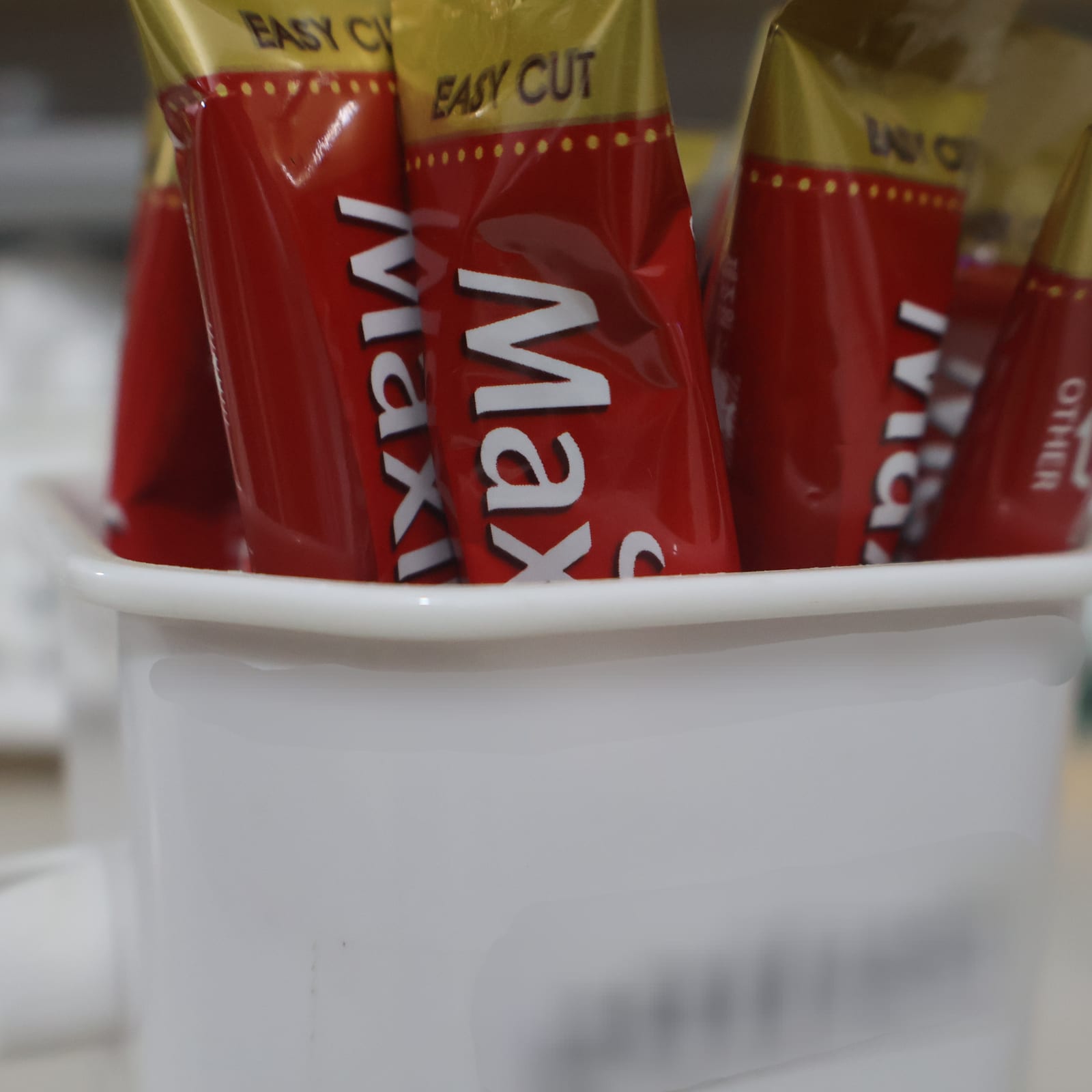
Maxim Coffee Mix: Korea Invented the Coffee Stick, and Still Drinks 8 Billion a Year
Korean coffee mix (커피믹스) looks like the least interesting thing in a Korean supermarket. It is a paper stick of instant coffee, powdered creamer, and sugar. You tear it, add hot water, stir, drink.
Here is the part almost no English guide mentions: Korea invented it. Not adapted it, not popularized it — invented it. In December 1976, Dongsuh Foods (동서식품) shipped the world's first single-serve packet that combined coffee, creamer, and sugar in one sealed stick. Before that, everyone everywhere spooned three things into a cup separately. Korea was the country that stopped doing that.
The man who led it, Cho Pil-je (조필제), died on April 20, 2026, at the age of 101 — four months into the 50th anniversary year of the thing he made. His stated starting point was almost aggressively simple: "물만 타면 간편하게 커피를 마실 수 있는 방법이 없을지" — couldn't there be a way to drink coffee by just adding water?
Koreans have not been quiet about this. In the Korean Intellectual Property Office's recurring "inventions that made Korea proud" survey, coffee mix shows up on the same list as Hunminjeongeum (훈민정음), the Korean alphabet, and the cheugugi (측우기) rain gauge. A coffee packet, ranked next to the writing system.
This guide covers what Maxim (맥심) actually costs in Korea this month, exactly how sweet it is by the gram, which stick to buy for which purpose, and when to skip the category entirely.
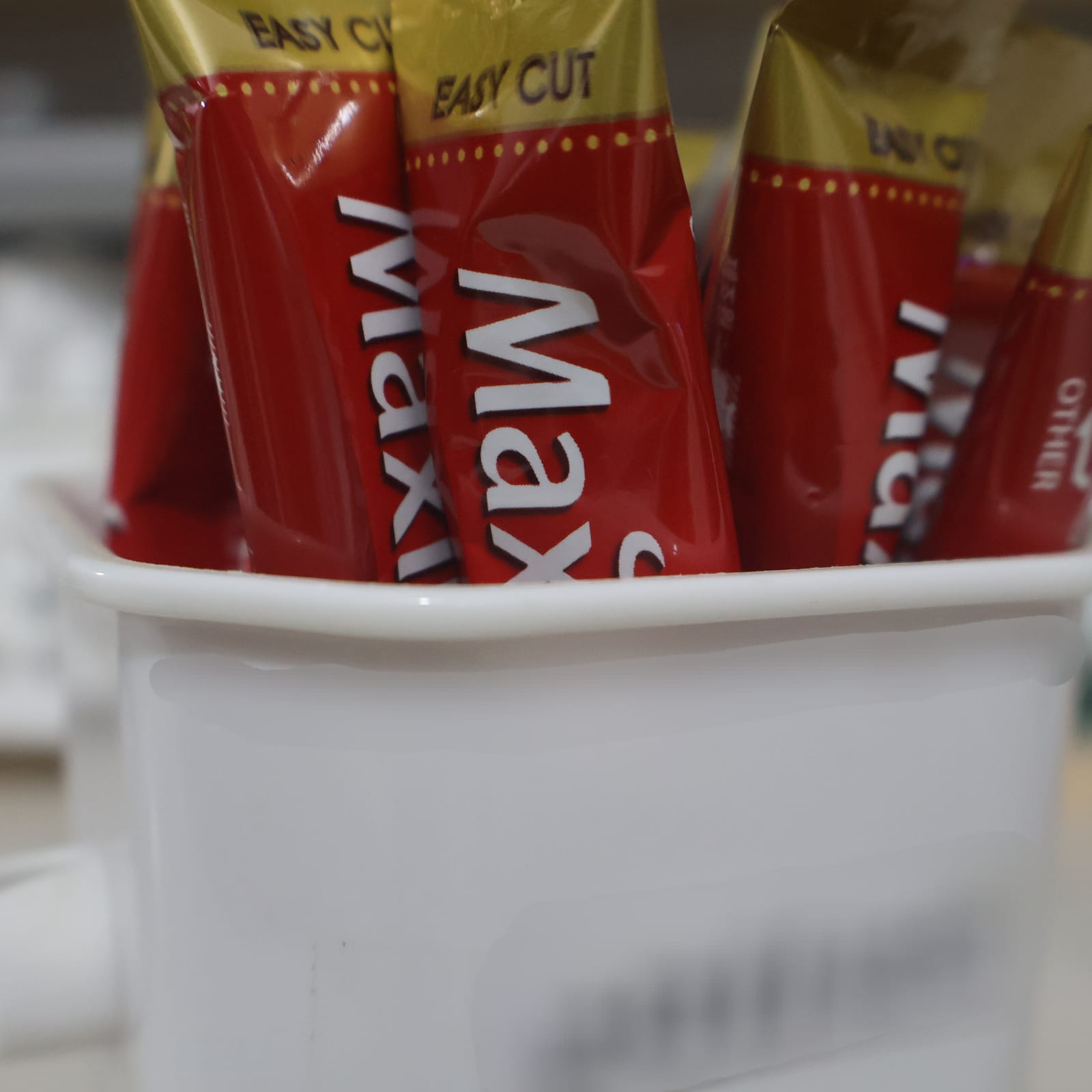
Maxim Mocha Gold Mild coffee mix — compare on AmazonAffiliate link. As an Amazon Associate, EpicKor earns from qualifying purchases at no extra cost to you.
Watch the 7-minute episode: Why Korea Has 93,600 Cafés — and Most Are Losing Money — the café side of the same coffee habit: 405 cups per person a year, a record bean-import bill in 2025, and why a $1.50 Americano and a $3.50 one share a street.
Quick Guide: What to Buy and What It Costs
Prices below are Korean retail, checked August 7, 2026. Korean grocery prices move, so treat these as the current shape of the market rather than a permanent number.
| Product | Korean name | Korea price (Aug 2026) | Per stick | Buy it if |
|---|---|---|---|---|
| Maxim Mocha Gold Mild | 맥심 모카골드 마일드 | ₩21,000–26,500 / 100 sticks | ~₩210–265 | You want the actual Korean office flavor. This is the default. |
| Maxim White Gold | 맥심 화이트골드 | Similar 100-stick pricing | ~₩210–265 | You find Mocha Gold too sharp. Made with skim milk, softer. |
| Maxim Mocha Gold Zero Sugar | 맥심 모카골드 제로슈거 | ₩5,250 / 20 · ₩12,900 / 50 | ~₩258–263 | You want the taste without 6g of sugar per cup. |
| Maxim KANU Mini Americano | 맥심 카누 미니 아메리카노 | ~₩20,260 / 130 sticks | ~₩156 | You drink black. No sugar, no creamer, just instant espresso-style. |
| Maxim Supreme Gold | 맥심 슈프림골드 | 100-stick boxes, upper range | ~₩250+ | You want the newer premium tier (launched 2021). |
If you are buying one thing: Maxim Mocha Gold Mild. It is the reference flavor, and every other stick in Korea is described by how it differs from this one.
For a fuller Korea-at-home shelf, pair this with EpicKor's Korean pantry starter kit, Korean grocery store tourism guide, Korean convenience store breakfast guide, and Korean cafe culture guide.
You might like: Korean Drinks Guide: what to buy in a Korean convenience store, with the price, sugar and caffeine of every bottle
The Number That Explains Everything: ₩250 vs ₩1,700
Korea has world-class cafes. It also has the cheapest chain Americano economy in the developed world. And coffee mix is still cheaper than all of it by a factor of about seven.
Mega MGC Coffee (메가MGC커피), one of Korea's largest low-price chains, raised its hot Americano from ₩1,500 to ₩1,700 on April 21, 2025 — its first price increase in ten years, blamed on green-bean costs nearly doubling. That ₩1,700 is roughly the floor of the Korean cafe market.
A Maxim stick costs about ₩210–265.
That gap is the entire business case for coffee mix, and it is why the category refuses to die even as Korea's cafe culture exploded. An office that goes through 300 cups a week spends about ₩70,000 on coffee mix or about ₩510,000 sending everyone to Mega. The math is not close.
Volume follows the math. Dongsuh Foods reports roughly 8 billion sticks sold in 2025 alone — in a country of about 52 million people. That is over 150 sticks per person per year, infants included.
Why It Is Called 프림, and Why That Word Only Exists Here
Order coffee at an old Korean 다방 (a mid-century tearoom) and you would specify three things: coffee, sugar, and 프림 (prim).
프림 is not English. It is Konglish, back-formed from 프리마 (Prima) — Dongsuh's own non-dairy creamer brand, whose mass production Cho Pil-je built in 1974, two years before coffee mix itself. The brand name became the generic Korean word for powdered creamer, the way "Kleenex" became tissue.
So the sequence matters: Korea industrialized powdered creamer first, and then someone realized you could seal it in a packet with the coffee and the sugar. Coffee mix is a downstream invention of 프리마.
This is also why Korean coffee mix tastes the way it does. Powdered creamer is made from vegetable fat, not milk — which is exactly why it survives a desk drawer, a hiking backpack, and a motel room shelf for a year without refrigeration. The flavor and the portability come from the same decision.
Classic Sweet Mix: The Best First Buy
The stick format matters more than the flavor. It controls the portion. No measuring, no milk carton, no grinder — hot water and a cup.
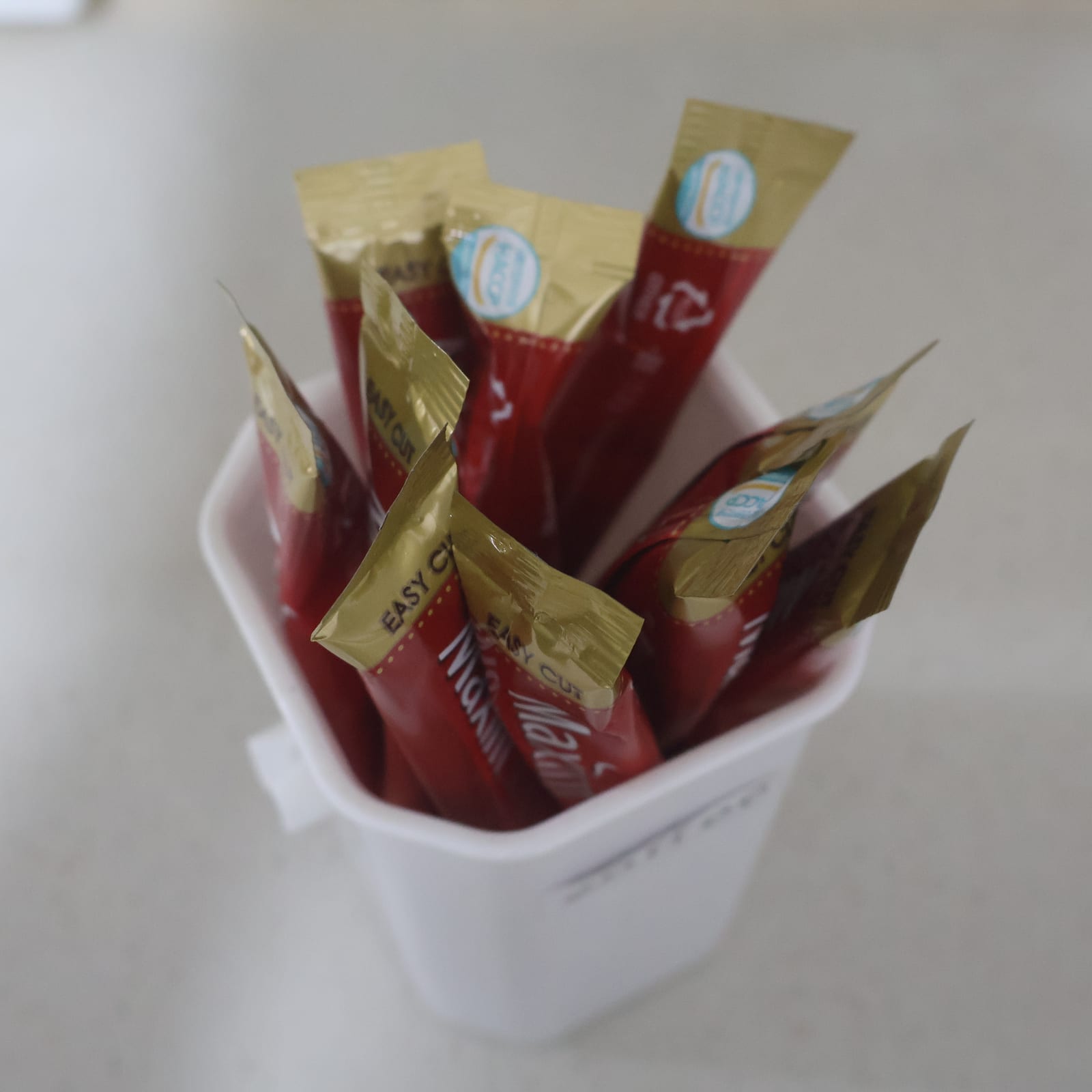
The lineup arrived in a clear order, and knowing it makes the shelf legible:
- 1976 — Maxwell House Coffee Mix (맥스웰하우스 커피믹스), the world's first.
- 1987 — Maxim Coffee Mix (맥심 커피믹스), freeze-dried, in a stick.
- 1989 — Maxim Mocha Gold (맥심 모카골드), which became the default Korean cup and still is.
- 2007 — Easy Cut tear notch.
- 2012 — Maxim White Gold (맥심 화이트골드), made with skim milk, aimed at people who found Mocha Gold too sharp.
- 2021 — Maxim Supreme Gold (맥심 슈프림골드).
- 2025 — Maxim Mocha Gold Zero Sugar (맥심 모카골드 제로슈거).
Do not overbuy at first. Sticks store well, but a 100-count box is a long commitment to a flavor you have not tried.
Honest Warning: Half the Stick Is Sugar
Most guides say coffee mix is "sweet." Here is the actual label.
One Maxim Mocha Gold Mild stick weighs 12g and contains 6g of sugar and 50 kcal. Half the weight of what you are tearing open is sugar. Two cups a day is 12g of added sugar before you have eaten anything.
That is not a scandal — it is a design choice from an era when sweetness was the point. But it is the single most useful fact for deciding whether this belongs in your routine, and it is the number the packaging does not put on the front.
Dongsuh clearly heard it. Maxim Mocha Gold Zero Sugar (맥심 모카골드 제로슈거) launched on February 3, 2025, replacing sugar and starch syrup with erythritol and polyglycitol to land under the 0.5g-per-100g "zero sugar" threshold while using the same coffee base. Mart pricing at launch was ₩5,250 for 20 sticks and ₩12,900 for 50.
If sweetness is your only objection to coffee mix, that product exists now, and you should start there instead of the classic.
KANU: The Stick That Admitted Koreans Wanted Americano
By the late 2000s Korea's drinking habits had moved. Iced Americano was becoming the national default, and a sweet creamer stick was not going to follow it there.
Dongsuh's answer launched October 20, 2011: KANU (카누), marketed as "세상에서 가장 작은 카페" — the world's smallest cafe. The name is a portmanteau of "cafe" and "new." No sugar, no creamer, just instant coffee in the same stick format.
It worked better than anything else in the category. KANU has passed 14.5 billion sticks sold cumulatively, and it is the reason Korea's instant-coffee aisle now has two distinct halves rather than one.
Practically: if you drink black coffee, do not buy classic coffee mix and then complain it tastes like dessert. Buy KANU. The mini format runs about ₩156 per stick, cheaper than the sweet sticks, and it is what most Korean offices now stock alongside the Mocha Gold box rather than instead of it.
Latte and cappuccino sticks exist too, but treat them as dessert coffee. They work beside yakgwa or a cookie; they are heavy as a daily cup.
How To Make It Taste Right: 90–100 mL
Most disappointing coffee-mix cups fail on water volume, and Dongsuh publishes the answer on the box.
One 12g stick, 90–100 mL of hot water. That is a small cup — noticeably smaller than a Western mug, roughly a Korean paper cup. Pour 250 mL and you get thin, flat, sad coffee and conclude the category is bad. It is not; the ratio was wrong.
The method:
- Empty one stick into a small cup, paper-cup size.
- Add about 90–100 mL of hot water.
- Stir until fully dissolved — Koreans typically stir with the empty stick itself, which is why the packaging is stiff.
- Taste before adding more water.
- For iced: dissolve in a little hot water first, then add ice and cold water or milk. Powder dumped into cold liquid will not dissolve.
The office trick: many Koreans pinch the stick partway down while pouring so part of the sugar stays inside, then throw the rest away. It is imprecise and everyone does it. Sugar-adjustable coffee mix has been proposed in Korean patent filings more than once; in practice, people just pinch.
What To Pair With Korean Coffee Mix
Coffee mix likes simple company. It is not competing with a dessert cafe.
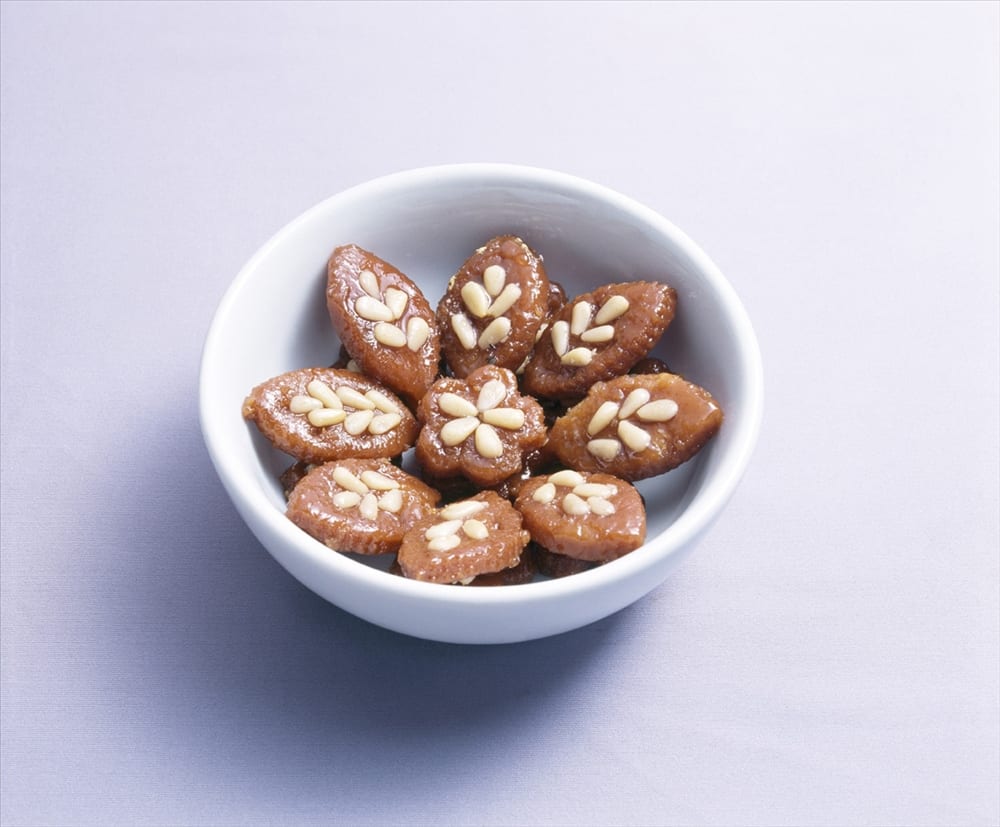
Good pairings:
- Yakgwa (약과) for the traditional honey-cookie route.
- Gim (김) seaweed snacks if you want salty contrast.
- Korean snack boxes for drama nights.
- Deli Manjoo (델리만주)-style custard sweets if you miss subway platform snacks.
- Plain toast or crackers, which is what most Korean desks actually have.
If you already find the classic stick sweet, pick the salty pairing. Sweet-on-sweet is where people decide they hate coffee mix.
Coffee Mix As A Gift
Coffee mix is a good gift only if you explain it. Hand someone a box and say "coffee" and they will compare it to their beans and lose.
Say this instead: "Korea invented this format in 1976, and Koreans still drink about eight billion of them a year."
That converts the gift from convenient to cultural, and it is true.
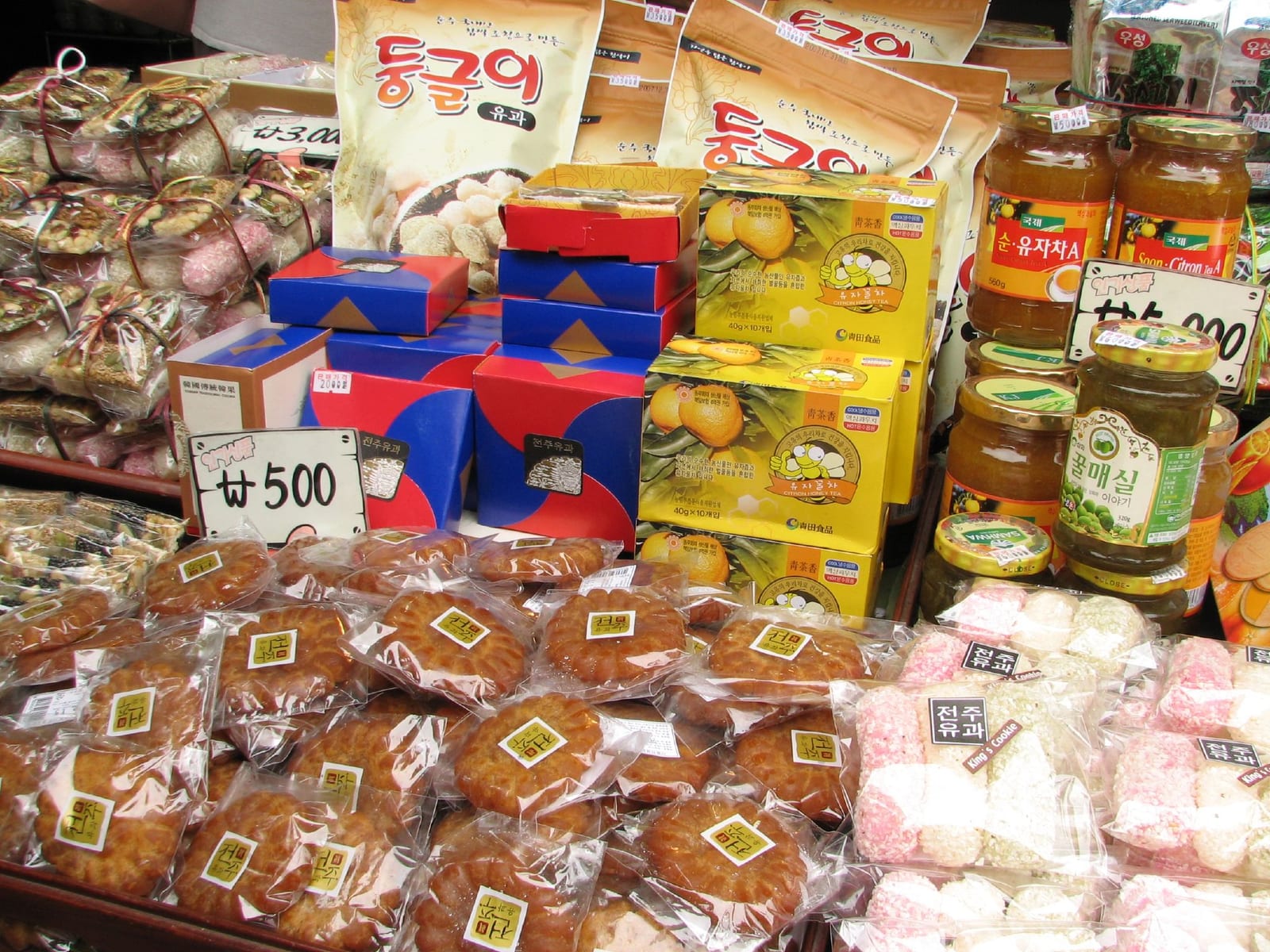
For a small set, pair coffee mix with yakgwa, seaweed snacks, or a plain mug. Choose the 20-stick Zero Sugar pack over a 100-stick classic box if you do not know the recipient's sugar tolerance — it is a smaller bet in both directions.
What Tourists Should Buy In Korea
Coffee mix is one of the easier food souvenirs: light, sealed, shelf-stable, and available in every supermarket, mart, and convenience store.
Buying strategy that actually works:
- Buy a 20-stick pack early, during the trip, and drink it in the hotel. That is the real test.
- Buy the 100-stick box near the end, only if you liked it.
- A 100-stick box is roughly 1.2 kg. Weigh that against your luggage before day one.
- Convenience stores carry 20-stick packs and rotate 2+1 promotions; marts and Costco carry the large boxes at the lowest per-stick price.
- Check your home country's food import rules if you are carrying a large quantity.
For broader food shopping, use the Korean grocery store tourism guide. For a broader at-home setup, use the Korean pantry starter kit. If coffee mix is too sweet for your daily routine, the Korean tea and grain drinks guide covers boricha, oksusu-cha, yuja-cha, and yulmu-cha.
The Honest Part: It Is Declining in Korea
A guide that only sells the nostalgia is lying by omission.
Korea's coffee mix market peaked around ₩1.35 trillion in 2012 and has fallen since, to roughly ₩956 billion by 2023 by retail measure. Estimates vary by measurement basis, but every source agrees on the direction: down, for over a decade, while Korean coffee consumption overall kept rising.
The reason is not that coffee mix got worse. It is that iced Americano won, low-price chains put a real cup at ₩1,700, and younger Korean office workers increasingly reach for KANU or a cafe app instead of the sweet stick.
Dongsuh still owns the category almost completely — roughly 88–90% of the Korean coffee mix market by value, with Namyang Dairy (남양유업) and Lotte Nestlé splitting most of the rest. But it is a dominant share of a shrinking category, which is exactly why the company keeps launching Zero Sugar, decaf, and capsule variants.
So: buy coffee mix because you liked it in a Korean office or a motel room or on a mountain, or because you want the cheapest passable cup on your desk. Do not buy it because you think it is what young Koreans drink right now. Increasingly, it is not.
What To Skip
- Giant bulk boxes before tasting. 100 sticks is a commitment.
- Latte sticks if the classic already reads as too sweet.
- Gift boxes for anyone avoiding sugar or dairy — powdered creamer is vegetable fat, but the sugar load is real.
- Trend flavors bought for packaging. Winter blends and limited editions are fine, but they are not the reference cup.
- Classic mix if you drink black coffee. Buy KANU. This is not a compromise; it is a different product for a different person.
Sources Checked
- Newspim, Dongsuh Foods coffee mix 50th anniversary (2026-06-18) for the 1976 invention date, the product timeline, and the 2025 volume of roughly 8 billion sticks.
- Seoul Shinmun obituary of Cho Pil-je (2026-04-21) for his role, the 1974 Prima production system, and his death on April 20, 2026 at age 101.
- Kookmin Ilbo, short history of Korean coffee mix for the 1976 launch and the 1987 stick format.
- Money Today, Maxim Mocha Gold Zero Sugar launch (2025-02-03) for the sweetener composition and launch pricing.
- Industry News, Mega MGC Coffee price increase for the ₩1,500 to ₩1,700 hot Americano change on 2025-04-21.
- Danawa price comparison, Maxim Mocha Gold Mild 100T and Costco Korea listing for August 2026 Korean retail pricing.
- Dealsite, Dongsuh Foods category coverage and Maeil Ilbo market share reporting for market size decline and the 88–90% share range.
- Coffee in South Korea background for broad coffee-culture context.
FAQ
Q: Who invented coffee mix?
A: Dongsuh Foods (동서식품) of South Korea, in December 1976, under Cho Pil-je (조필제). It was the world's first single-serve packet combining coffee, creamer, and sugar. Cho died on April 20, 2026, at 101.
Q: How much does Maxim coffee mix cost in Korea?
A: As of August 2026, a 100-stick box of Maxim Mocha Gold Mild runs about ₩21,000–26,500 online, roughly ₩210–265 per stick. Maxim Mocha Gold Zero Sugar is about ₩5,250 for 20 sticks at marts. KANU mini works out cheaper per stick, around ₩156.
Q: How sweet is Korean coffee mix, exactly?
A: One Maxim Mocha Gold Mild stick is 12g and contains 6g of sugar and 50 kcal — half the stick by weight. If that is your objection, buy Maxim Mocha Gold Zero Sugar (launched February 2025) or KANU, which has no sugar or creamer at all.
Q: What is 프림 in Korean coffee?
A: 프림 is the Korean word for powdered non-dairy creamer. It comes from Prima (프리마), Dongsuh's creamer brand launched in 1974 — a brand name that became the generic term, like Kleenex for tissue.
Q: How much water should I use for Korean coffee mix?
A: Dongsuh recommends 90–100 mL of hot water per 12g stick — about one Korean paper cup. Most bad first impressions come from using a full Western mug of water, which makes the cup thin and flat.
Q: What is the difference between Maxim and KANU?
A: Maxim coffee mix is sweet: coffee, creamer, and sugar. KANU (카누), launched October 2011, is instant Americano-style coffee with no sugar and no creamer. Buy Maxim for the nostalgic Korean office cup, KANU if you drink black coffee.
Q: Is coffee mix still popular in Korea?
A: Yes, but declining. Korea still drinks about 8 billion sticks a year, and Dongsuh holds roughly 88–90% of the market. But the category peaked around ₩1.35 trillion in 2012 and has fallen to under ₩1 trillion as iced Americano and ₩1,700 chain cafes took over.
You Might Also Like
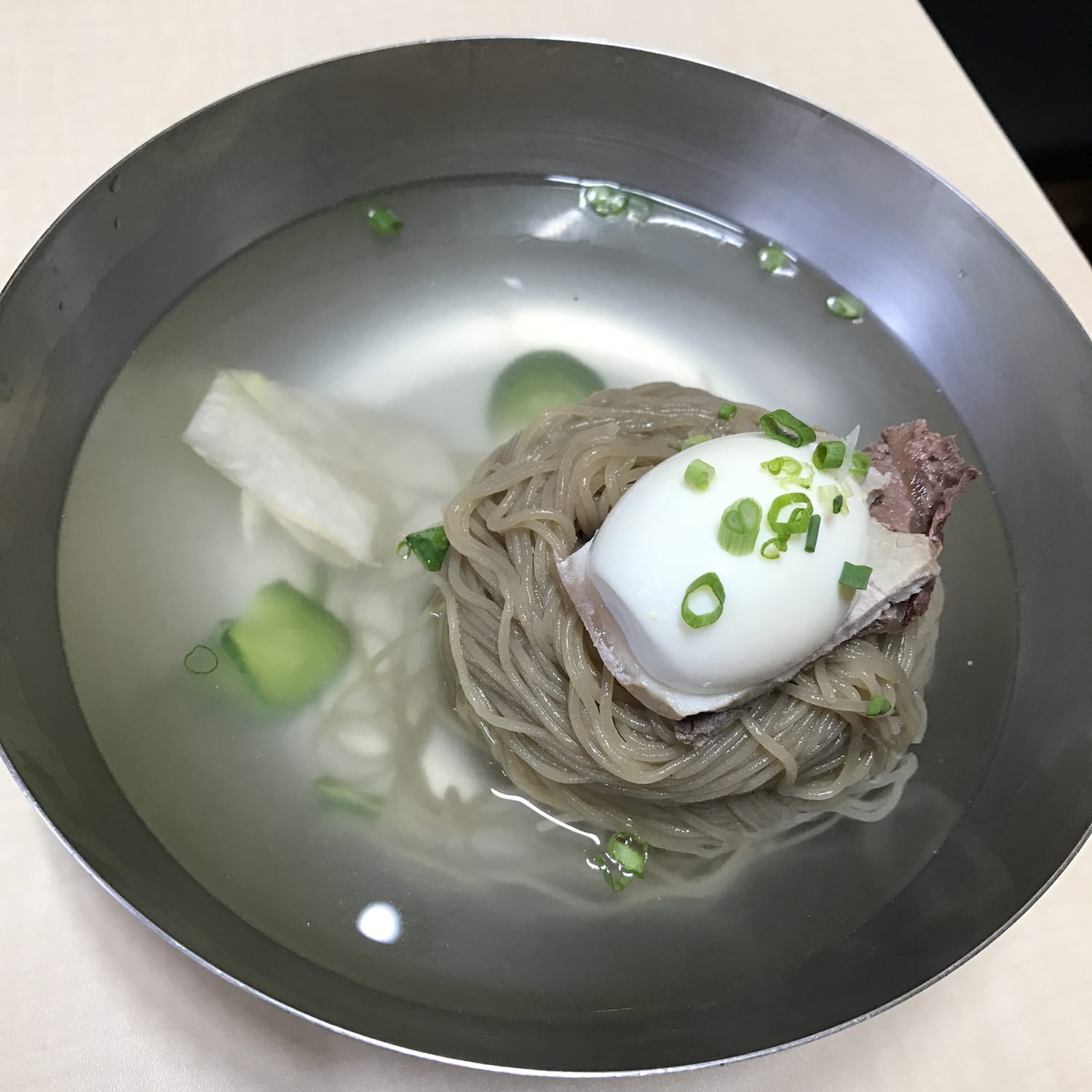
The One Korean Food Foreigners Never Learn to Love: Hamheung Naengmyeon, and Why Koreans Can't See the Problem
Foreigners who eat cheonggukjang and even hongeo still will not pay for this twice. A Korean creator who fed foreigners for years says naengmyeon was the overwhelming number one refusal, and Koreans, who rank it first every summer, cannot see why.
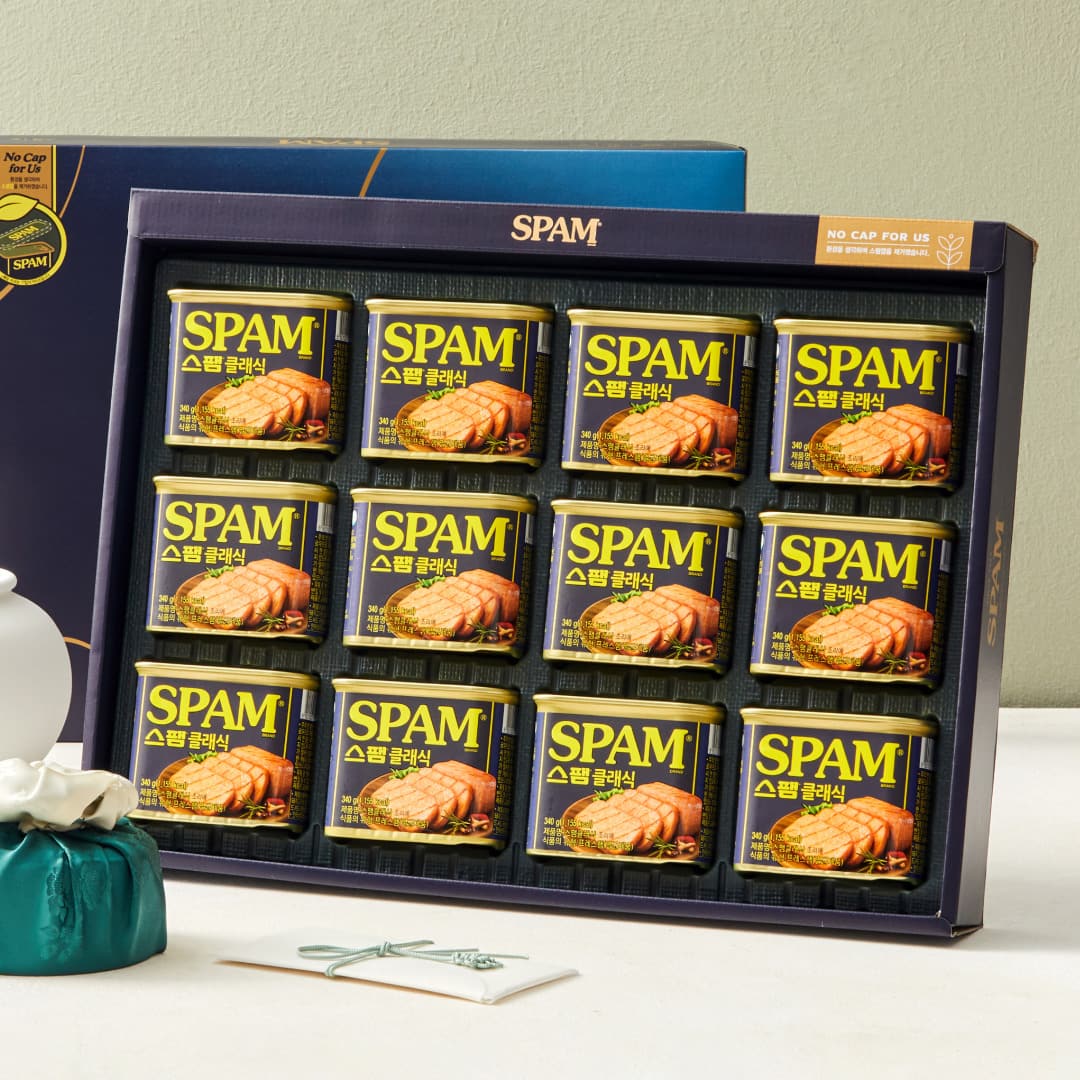
Korea's Spam Gift Sets Explained: What the Numbers Mean and Which One to Buy
Spam is a serious Chuseok gift in Korea, and the sets are sold by number. Lower number means bigger box — 1호 is twelve 340g cans, 12호 is eight 200g. The price printed on the box is fiction: every set is selling 40-45% below it right now.
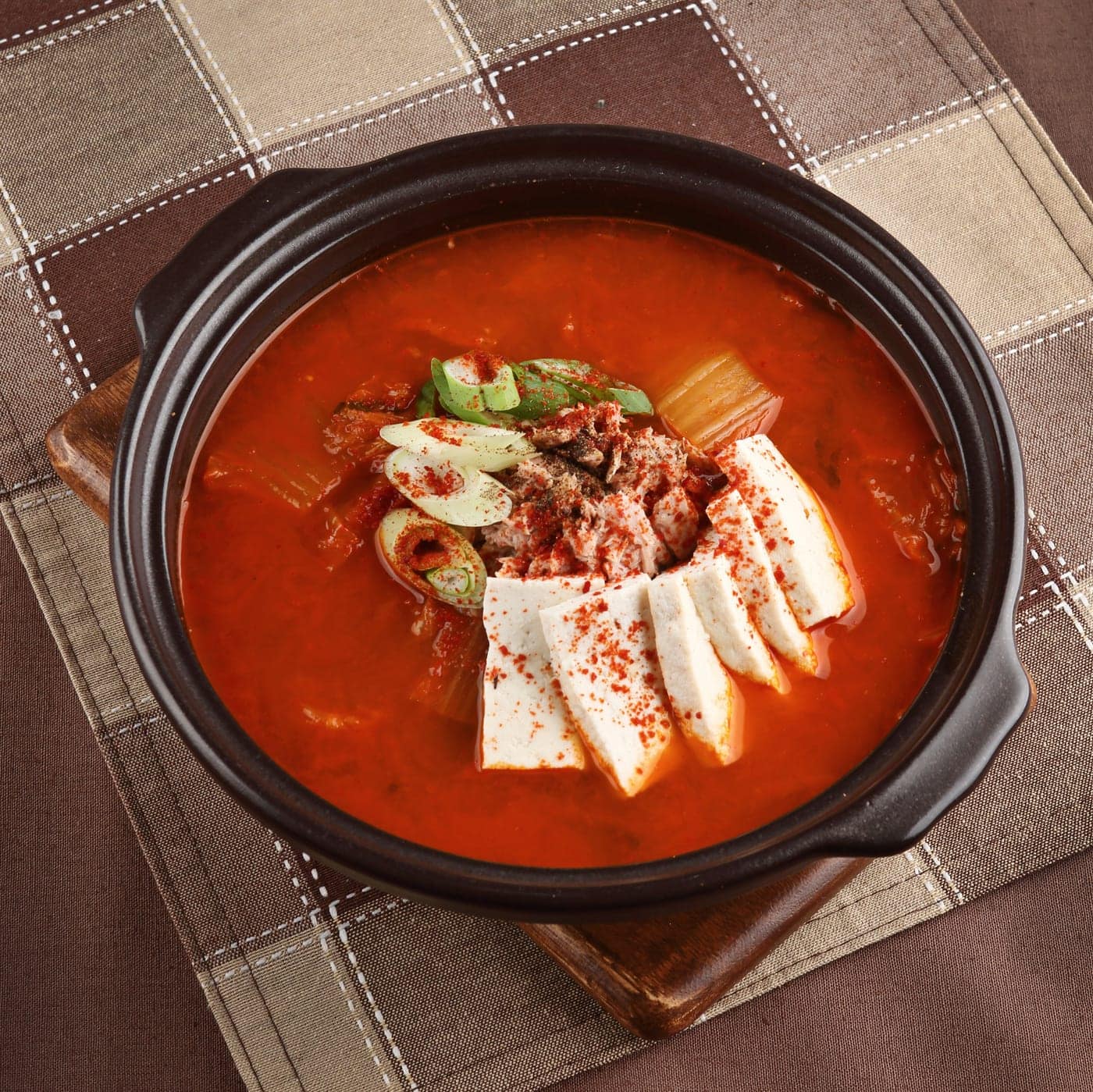
Korean Kimchi Jjigae at Home: You Want 묵은지, Not Just Old Kimchi
English recipes say to use sour kimchi. Korean has two different words for that, and only one of them is what jjigae wants: 묵은지, aged 6 months to 3 years on purpose. What to buy, what it costs, and when the instant pouch is the right answer.