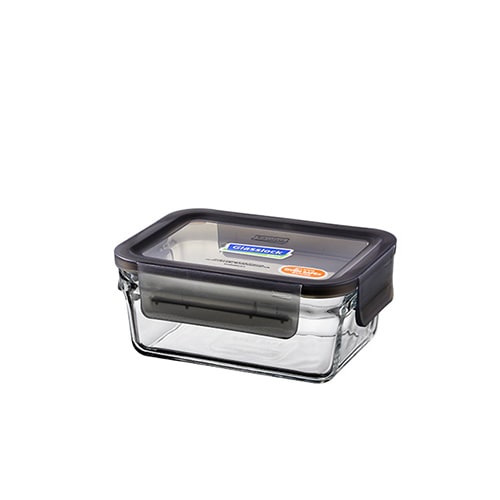
Glasslock Deep Dive: The Korean Company Behind the Glass Container in Your Costco Cart
Lock&Lock is the Korean container brand English speakers know, and a Hong Kong private equity firm owns all of it. Glasslock, still Korean-owned and made in Korea, has no English story at all. A public-information deep dive on SGC Solution.
Quick Answer
If you own Korean-made glass food containers, there is a good chance the lid clips down on four sides and the brand on the base reads either Lock&Lock or Glasslock. Most English-speaking buyers know the first name and have never registered the second.
That is worth correcting, because the ownership runs the opposite way to the recognition.
Lock&Lock, the brand foreigners actually type into search boxes, was bought by the Hong Kong private equity firm Affinity Equity Partners in 2017 and delisted from the Korean market on 9 December 2024, after Affinity swept up the remaining minority shares through a comprehensive share exchange over shareholder objections. It is now wholly owned by an Affinity vehicle. It has an English Wikipedia article.
Glasslock is made by SGC Solution (에스지씨솔루션), a Korean company founded in 1967 as Samkwang Glass. It is still Korean-controlled. Its containers are manufactured entirely in Korea, at a plant in Nonsan that the company describes as the largest of its kind in Asia. It sells into about 90 countries, holds the number one position in Korea's glass food-container market, and in 2024 its North American sales rose about 180 percent. It has no English Wikipedia article, and no feature article in English exists about it at all.
So the brand that is foreign-owned is the one with the English-language presence, and the brand that is Korean-owned and Korean-made is invisible. This article is the missing half.
The Company at a Glance
| Detail | |
|---|---|
| Official name | SGC Solution Co., Ltd. (에스지씨솔루션 주식회사) |
| Founded | 1967, as Samkwang Glass (삼광글라스) |
| Restructured | 2020 — glass business spun into SGC Solution; the investment arm became SGC Energy |
| Listing status | Unlisted. A subsidiary of SGC Energy (SGC에너지, KOSPI 005090) |
| Group | SGC Group, chaired by Lee Bok-young (이복영) — part of the wider OCI founding family |
| Flagship brand | Glasslock (글라스락), launched 2005 |
| Manufacturing | Nonsan, South Chungcheong — 100% domestic production for Glasslock |
| Export reach | About 90 countries |
| Korean market | No. 1 in glass airtight food containers |
| Other business | B2B bottle glass, and washing-machine door glass supplied to Samsung Electronics and LG Electronics |
| Recognition | World Class Product certification for 15 consecutive years, first awarded 2011 |
| Recent scale | Consolidated revenue of about ₩212.3 billion for the first three quarters of 2025 |
The Product Is a Piece of Engineering, Not a Box
Glasslock launched in 2005, after roughly four years of development. Two decisions define it, and both are still the reason it sells.
The first is the material. The body is tempered glass — ordinary soda-lime glass put through a controlled heat treatment that leaves the surface in compression, which is what makes it resist thermal shock and impact rather than simply being thicker. Because it is glass, it does not absorb odour or stain from kimchi, curry or tomato sauce, and it goes from freezer to microwave to dishwasher without the softening and warping that eventually ruins plastic.
The second is the lid. Glasslock was the first glass container brand in Korea to use a four-side locking lid — the four hinged clamps that snap over the rim onto a silicone gasket. That mechanism is now so standard that buyers assume it always existed. It did not; it is the thing being sold.
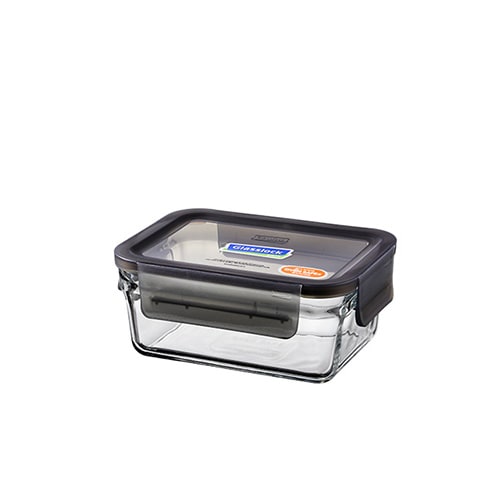
For a sourcing buyer, the interesting part is where it is made. Glasslock is produced entirely in Korea, at the Nonsan plant. That is unusual and increasingly so: the obvious cost move in this category is to shift glass production to China, and most of the price-competitive product on Western shelves has done exactly that. SGC Solution runs a domestic plant it describes as Asia's largest for this product and exports from it.
What the Company Also Makes, Which Explains the Company
Glasslock is the consumer-facing name, but SGC Solution is a glass manufacturer first. Alongside the containers it runs a B2B bottle-glass business, and it makes the glass doors on washing machines for Samsung Electronics and LG Electronics.
That last line explains more about the company than any brochure would. This is a firm whose core competence is forming and tempering flat and hollow glass to tolerances that a Samsung appliance line will accept. The food container is one application of that capability, aimed at consumers. The washing-machine door is another, aimed at two of the most demanding customers in Korean manufacturing.
It also explains why the containers feel the way they do, and why a company with a modest consumer profile can hold a domestic number-one position: it is not a housewares brand that ordered some glass. It is a glass plant that built a housewares brand.
The Export Story Is Recent and Retail-Driven
The interesting commercial development is not the Korean market, where Glasslock has been the leader for years. It is North America, and it happened through warehouse clubs.
- Costco: Glasslock has completed entry into all eleven of Costco's overseas regions — Canada, the UK, Spain, France, Iceland, Sweden, Australia, New Zealand, Taiwan, Japan and China.
- Sam's Club (Walmart): Korean reporting in November 2024 put the year's Sam's Club sales growth at about 180 percent; a follow-up in March 2025 reported roughly 170 percent growth for the subsequent period.
- North America overall: up about 180 percent in 2024, per the company's own March 2025 announcement.
Those are growth rates off a small base, not absolute scale, and they should be read that way. But the channel choice is the signal. Warehouse clubs buy in enormous single orders, audit suppliers hard, and do not carry brands they expect to have quality problems with. Getting into eleven Costco regions is a procurement outcome, not a marketing one.
The stated reason for the export push is bluntly domestic: the Korean housewares market is soft, so the company went abroad. Korean coverage of the 2024 results led with exactly that framing — "the market slumped, so overseas" — which is more honest than most corporate expansion narratives.
The Product Line Tells You Where the Company Actually Lives
One detail an overseas buyer will not see on a Costco shelf: the Korean catalogue contains containers that exist because of Korean food.
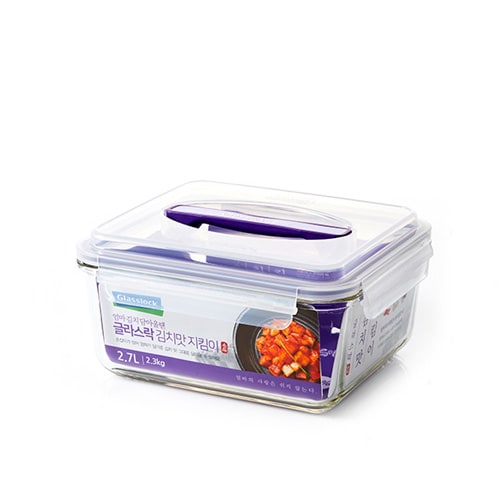
A kimchi container is not a marketing variant. Kimchi is acidic, strongly aromatic, and kept for long periods while still fermenting, which is a genuinely awkward brief: the seal has to contain odour, the material must not stain or absorb, and the vessel has to tolerate pressure changes. Glass solves most of that, and the domestic line is specified around it.
For a buyer evaluating suppliers, this is a useful tell. A manufacturer whose home market demands the hardest version of the use case tends to have engineered for it before the export version was drawn.
If you want to compare the actual product: As an Amazon Associate, EpicKor may earn from qualifying purchases at no extra cost to you. Glasslock glass food containers are easiest to browse as a search rather than a single link, because the range sells as sets of varying counts and no one item is canonical. The honest note: for a straight comparison, hold a set next to Lock&Lock's containers — the two brands invented the same category from opposite ends, and the difference you will feel is glass against plastic, not Korean against foreign.
The Honest Risks
A profile of a company that only lists achievements is a press release. There are three things a buyer or partner should weigh, and they are not small.
The consumer business is not comfortably profitable. SGC Solution reported consolidated revenue of about ₩212.3 billion for the first three quarters of 2025, and Korean business press covering the group has repeatedly described the glass unit's profitability as weak. The domestic housewares slump that pushed the export drive is the same slump showing up in the margin. Growth of 180 percent in North America is real, but it is growth used to offset a soft home market rather than growth on top of a strong one.
This is not a standalone family SME, whatever the brand suggests. SGC Solution is an unlisted subsidiary inside SGC Group, whose listed parent SGC Energy is fundamentally an energy company. The group is chaired by Lee Bok-young, part of the founding family of OCI, one of Korea's established chemical groups, and succession to the third generation is already well advanced — Lee Woo-sung holds 19.23 percent of SGC Energy. If your mental model of Glasslock is a small independent glassmaker, correct it: the container brand sits inside a mid-sized Korean industrial group with a chaebol-adjacent family structure.
The group has a fair-trade record on this point. In 2023 the Korea Fair Trade Commission imposed penalties of about ₩11 billion on companies controlled by Chairman Lee Bok-young for improper intra-group business support — the related-party dealing that Korean competition law specifically targets in family-controlled groups. It concerns the group's governance, not Glasslock's manufacturing, but any diligence process that flags Lock&Lock's private-equity ownership should apply the same scrutiny here rather than treating "Korean-owned" as automatically the cleaner answer.
Why the Lock&Lock Comparison Matters, and Where It Stops
It is tempting to turn this into a simple story: the foreign-owned brand versus the Korean-owned one. The facts do not support that reading, and pretending otherwise would be the same distortion in the opposite direction.
What is true is narrow and specific. Lock&Lock has been controlled by Affinity Equity Partners since 2017 and was taken off the Korean exchange on 9 December 2024, with the last minority holders bought out through a comprehensive share exchange after they refused the offered price. Korean coverage of the period has been critical — one outlet framed the private-equity era as the company's "lost eight years." None of that makes Lock&Lock's products worse. Foreign ownership is legal, common, and often accompanied by investment.
What it does mean is that a reader who buys Lock&Lock believing they are supporting a Korean company has a factually wrong belief, and that belief is easy to hold because the English-language record supports it and never updated. Glasslock is the Korean-owned, Korean-manufactured alternative in the same category, and nothing in English says so.
That gap — not a moral verdict about either company — is what this article exists to close.
What Overseas Operators Can Take From This
Check who owns a Korean brand before you build a story on its Korean-ness. Two of the best-known Korean housewares names have changed hands, and the English record generally does not follow ownership changes. Ownership is disclosed in Korean filings and Korean press within days. It reaches English-language sources sometimes never.
Domestic manufacturing is a real, checkable differentiator in this category. Most price-competitive glass storage on Western shelves is made in China, including product sold by Korean-founded brands. "Made in Korea at our own plant" is a claim you can verify against a named facility, and here that facility is Nonsan.
Warehouse-club entry is better evidence than a certification. Glasslock's World Class Product certification for fifteen consecutive years is a Korean government designation and it is genuine, but the more useful fact for a buyer is that Costco's procurement organisations in eleven countries independently decided to carry the product.
Read the reason for the export push. A company expanding because its home market is booming and a company expanding because its home market has stalled are different investments, and Korean press usually states which one it is. Here it plainly says the latter.
If you are actually going to source from Korea: As an Amazon Associate, EpicKor may earn from qualifying purchases. The ownership question in this article is the cheap version of a problem that gets expensive at contract stage, and it is worth reading around before your first supplier meeting — Euny Hong's The Birth of Korean Cool for how these brands came to export at all, and a Korean phrasebook for the factory visit, where the plant manager who knows the tempering line usually does not work in English.
What to Watch Next
Whether North American growth survives its second act. Warehouse-club growth of 170 to 180 percent is a launch curve. The question is what the third year looks like once initial club orders normalise, and that number will appear in SGC Energy's consolidated disclosure.
Whether the glass unit's margin turns. Revenue is the easy number here; profitability is the one the Korean press keeps flagging. Watch the gap between the segment's revenue and its operating result.
Whether Lock&Lock returns to public markets. Private equity exits eventually. If Affinity re-lists or sells, the Korean container category will have another ownership change that the English-language record will probably miss again.
FAQ About Glasslock and SGC Solution
Q: Is Glasslock a Korean brand?
A: Yes. Glasslock is made by SGC Solution, formerly Samkwang Glass, a Korean company founded in 1967. It remains Korean-controlled as part of SGC Group, and Glasslock containers are manufactured in Korea at the company's Nonsan plant rather than being outsourced abroad.
Q: Is Lock&Lock still a Korean company?
A: Lock&Lock was founded in Korea and its operations remain there, but ownership is not Korean. Hong Kong-based Affinity Equity Partners acquired control in 2017 and completed a delisting from the Korean exchange on 9 December 2024, buying out remaining minority shareholders through a comprehensive share exchange. It is now wholly owned by an Affinity vehicle.
Q: Where are Glasslock containers made?
A: In Korea, at SGC Solution's plant in Nonsan, South Chungcheong Province, which the company describes as the largest facility of its kind in Asia. Glasslock production is stated as entirely domestic, which is a deliberate difference from most competing glass storage on Western shelves.
Q: What else does SGC Solution manufacture?
A: Industrial and B2B glass. Alongside Glasslock it runs a bottle-glass business and supplies the glass doors used on washing machines by Samsung Electronics and LG Electronics. The consumer brand sits on top of an industrial glass operation, not the other way round.
Q: How big is the company?
A: SGC Solution is unlisted and reported consolidated revenue of roughly ₩212.3 billion across the first three quarters of 2025. It is a subsidiary of SGC Energy, which is listed on the KOSPI under code 005090 and whose main business is energy. Glasslock reaches about 90 countries and leads the Korean glass food-container market.
Q: Is Glasslock a good supplier to source from?
A: The manufacturing case is strong — a named domestic plant, tempered glass expertise validated by Samsung and LG appliance contracts, and procurement approval from Costco in eleven overseas regions. The cautions are that the glass unit's profitability has been described as weak in Korean coverage, and that the parent group's chairman's companies were penalised about ₩11 billion by the Korea Fair Trade Commission in 2023 over intra-group dealing. Both belong in a diligence file.
Related Reading
- Winix Deep Dive: America's Favorite Budget Air Purifier Is a 50-Year-Old Korean Company — the same pattern in appliances: known product, unknown maker.
- Aurora World Deep Dive: The Korean Company Behind the Plush Toy on Your Shelf — a Korean manufacturer whose own American website never mentions Korea.
- Navien: The Korean Company Behind America's Tankless Water Heaters — a brand US tradespeople know without knowing where it comes from.
- How to Find Suppliers in Korea — the practical starting point for sourcing from Korean manufacturers.
- Korean Grocery Store Tourism Guide — where these containers are actually used, from the shopper's side.
Last Updated: 24 August 2026. Financial and ownership details are drawn from Korean corporate disclosure and Korean business press, dated where cited; quarterly figures and retail relationships change. Verify current numbers against SGC Energy's latest Korean disclosure before relying on them for a commercial decision. EpicKor has no commercial relationship with SGC Solution, Lock&Lock, or Affinity Equity Partners.
More Business Guides
Kovea Deep Dive: The Korean Burner Maker That Took Apart a Swedish Stove — and Now Builds for MSR
Look at the box your Snow Peak LiteMax came in and it says Made in Korea. Kovea started in 1982 when its late founder took apart a Swedish SVEA burner, now supplies MSR and Decathlon, and still earned a 21% operating margin after Korea's camping market halved.
Mooto Deep Dive: Korea Still Dresses Taekwondo — Spain Makes the Part That Scores the Points
World Taekwondo recognises Mooto in six equipment categories. The two it is absent from are the electronic ones — and the scoring system at Tokyo 2020 and Paris 2024 came from Barcelona. A look at the Korean company that dresses the sport Korea exported.
Aurora World Deep Dive: The Korean Company Behind the Plush Toy on Your Shelf
Aurora's plush sits in zoo shops, bookstores and Target aisles worldwide, and its own American website never mentions Korea. A public-information deep dive on the Seoul company that owns its factories, built Palm Pals, and bought a 90-year-old Vermont brand.