Korea Fine Dust Season, Winter to Spring: How to Read Seoul's Air Quality Colours, When to Change Plans and What a KF94 Mask Costs
Last updated: 27 November 2026. Grade thresholds are from AirKorea (에어코리아), the national air-quality service run by Korea Environment Corporation (한국환경공단), read 27 November 2026. Seoul's monthly averages are the City of Seoul's own figures from its Clean Air Seoul statistics (서울특별시 대기환경정보, 월별 평균), pulled on 27 November 2026; 2026 runs to October because November is still in progress. The eighth seasonal fine-dust programme was approved on 24 November 2026 by the Ministry of Climate, Energy and Environment (기후에너지환경부) and the fine-dust special committee. Mask prices are Daiso's online shop listings, read 27 November 2026. Dollar figures use ₩1,335 = US$1 and are approximate. Sources are at the end.
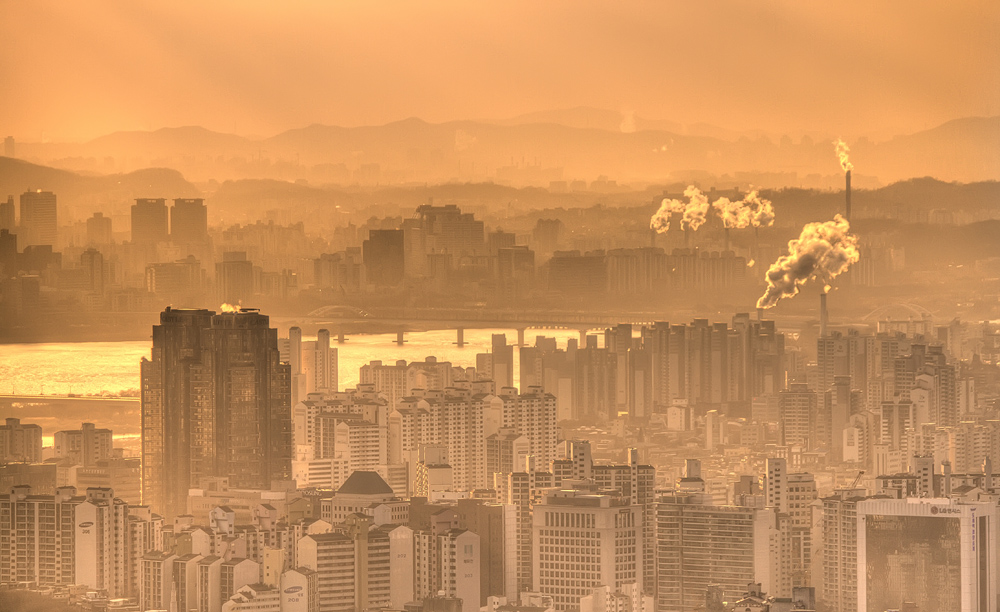
When is fine dust season in Korea? December to March is the official season: the government runs its seasonal fine-dust programme (미세먼지 계절관리제) every year from 1 December to 31 March, and this winter's eighth round runs 1 December 2026 to 31 March 2027. Spring adds yellow dust (황사) from the Gobi and Inner Mongolia, mostly in March to May. On the colour scale used by AirKorea and every Korean weather app, PM2.5 (초미세먼지) is good (좋음, blue) at 0–15 µg/m³, moderate (보통, green) at 16–35, bad (나쁨, yellow/orange) at 36–75 and very bad (매우나쁨, red) from 76. In Seoul, the worst months of 2025 were March (30 µg/m³ average) and January (28); the cleanest were September and October (9). A KF94 mask costs ₩500 (about US$0.37) for a single at Daiso, or about ₩333 each in a 15-pack.
Landing on a hazy morning? KN FLAX KF94 masks are made in Korea, carry the same KF94 grade you will see on Daiso and pharmacy shelves in Seoul, and come individually wrapped for a carry-on. See them on AmazonAffiliate link. As an Amazon Associate, EpicKor earns from qualifying purchases at no extra cost to you.
Most English pages on Korea's air quote a single scary number or a single reassuring one. Neither helps when you are deciding tonight whether tomorrow is a Bukhansan hike or a museum day. This guide works from the Korean sources themselves: the grade table AirKorea uses, the hour-by-hour rules that trigger an advisory (주의보) or an emergency reduction day (비상저감조치), Seoul's own month-by-month record for 2024 to 2026, and what this winter's programme changes. It ends with the apps to check, what the KF number on a mask means, and the outdoor plans worth swapping on a red day.
Quick Guide: Korea's air quality colours, as of November 2026
AirKorea grades PM10 and PM2.5 on a 24-hour moving average, so the colour you see at 9 a.m. reflects the last day, not just the last hour. Naver Weather, Kakao Weather and the AirKorea app all use these same four bands.
| Grade (Korean) | Usual colour in apps | PM2.5, fine dust (초미세먼지), µg/m³ | PM10, dust (미세먼지), µg/m³ | What it means for a visitor |
|---|---|---|---|---|
| Good 좋음 | Blue | 0–15 | 0–30 | Any plan works. In Seoul this was 182 days of 2025. |
| Moderate 보통 | Green | 16–35 | 31–80 | Most winter days. Fine for walking tours and palaces; sensitive people may notice it on long hikes. |
| Bad 나쁨 | Yellow or orange | 36–75 | 81–150 | Seoul's advice: cut outdoor time, avoid hard exercise, wear a KF mask. Seoul had 32 such PM2.5 days in 2025. |
| Very bad 매우나쁨 | Red | 76 and above | 151 and above | Move the day indoors. Very bad forecasts are one of the triggers for an emergency reduction day. |
Thresholds: AirKorea, 대기환경기준 및 등급 (read 27 November 2026). Day counts: City of Seoul, May 2026. App colours vary slightly by app; the band numbers do not.
Which number to watch: PM2.5. It is the finer particle, it drives the emergency rules, and it is the one that sits in the "bad" band on winter smog days. PM10 matters most on spring yellow-dust days, when coarse dust pushes PM10 into the red while PM2.5 can stay merely yellow.
Some apps also show a single CAI (통합대기환경지수, Comprehensive Air-quality Index) score: good 0–50, moderate 51–100, bad 101–250, very bad 251–500. It blends several pollutants, including ozone, which is a summer problem rather than a winter one. In fine-dust season, read the PM2.5 line instead of the CAI headline.
KN FLAX KF94 masks, made in Korea, 10 individually wrapped Seoul's own advice for a "bad" day is a certified KF mask that seals to the face. If you want a few in your bag before you land, these carry the Korean KF94 grade. If you are already in Korea, Daiso's ₩500 singles do the same job for less (prices below). As an Amazon Associate, EpicKor earns from qualifying purchases at no extra cost to you.
See the KF94 masks on AmazonKorea air quality by month: Seoul's own record, 2024 to 2026
These are the City of Seoul's monthly averages for the whole city (서울시 평균). A monthly average hides the bad days inside it, so read the table as "how often the air turns", not "what every day looks like". Even Seoul's worst month of the last three years averaged in the moderate band.
| Month | PM2.5 2024 | PM2.5 2025 | PM2.5 2026 | PM10 2024 | PM10 2025 | PM10 2026 | What to expect |
|---|---|---|---|---|---|---|---|
| January | 24 | 28 | 21 | 36 | 41 | 37 | Peak smog month in some years; still, cold days are often clean |
| February | 23 | 21 | 28 | 33 | 36 | 50 | Variable; 2026's first yellow dust arrived on 21 February |
| March | 21 | 30 | 31 | 49 | 54 | 46 | Worst month in 2025 and 2026: winter smog and spring dust overlap |
| April | 22 | 22 | 21 | 50 | 41 | 45 | PM10 stays high (yellow dust); season programme has ended |
| May | 15 | 20 | 16 | 30 | 34 | 28 | Clearing; occasional late dust |
| June | 18 | 18 | 16 | 31 | 29 | 26 | Fine dust low; ozone becomes the summer issue |
| July | 12 | 13 | 13 | 20 | 22 | 22 | Monsoon rain washes the air |
| August | 16 | 12 | 12 | 24 | 20 | 19 | Clean |
| September | 9 | 9 | 11 | 16 | 17 | 20 | Cleanest air of the year |
| October | 13 | 9 | 13 | 23 | 17 | 28 | Clean, crisp autumn |
| November | 17 | 21 | — | 29 | 39 | — | The turn: heating season starts, first bad days |
| December | 19 | 19 | — | 35 | 32 | — | Season programme starts 1 December |
| Year | 18 | 18 | — | 31 | 32 | — |
All figures µg/m³, City of Seoul monthly averages (Clean Air Seoul, pulled 27 November 2026). 2026 shown January–October; November 2026 is incomplete.
Three patterns stand out. Winter and early spring carry the load: in 2025, January to April averaged 25 µg/m³ for PM2.5, against 10 for August to October. March is the month to plan around, because it is the last month of the winter programme and the first of yellow-dust season; Seoul's March PM2.5 average was 30 in 2025 and 31 in 2026. And PM10 behaves differently in spring: in April 2024 PM10 averaged 50 while PM2.5 was 22, the signature of coarse desert dust rather than city smog.
The long trend is better than its reputation. Seoul says its annual PM2.5 average fell from 30 µg/m³ in 2006 to 18 in 2025, and "bad" PM2.5 days fell from 108 to 32 over the same period. That is still well above the World Health Organization's 2021 guideline for the annual average, so the season is real. It is just shorter and rarer than the photos from the late 2010s suggest.
You might like: Korea in December: Weather in Seoul, Busan, Jeju and Gangwon, Christmas, What's On, Prices and What to Pack, with the cold and short days that come with this season.
Advisory, warning and emergency day: what each one triggers
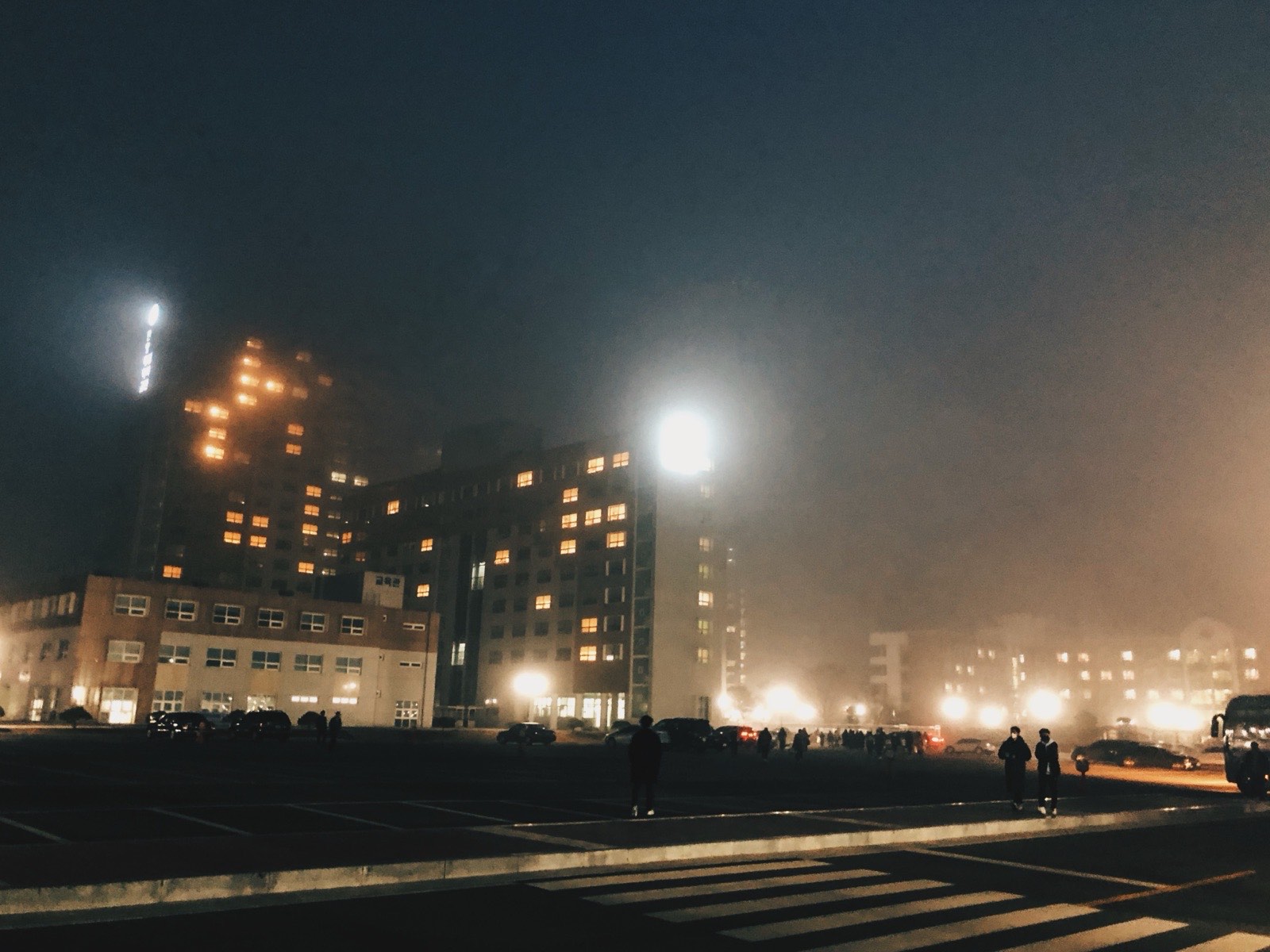
Korea has three escalating alerts. They are issued by each city or province, not nationally, so Seoul can be under an advisory while Busan is not.
| Alert | Issued when (hourly average) | Lifted when | What changes for you |
|---|---|---|---|
| PM2.5 advisory 초미세먼지 주의보 | 75 µg/m³ or more for 2 hours | Below 35 | Emergency text alert on Korean phones (Korean-language); schools cut outdoor activity |
| PM2.5 warning 초미세먼지 경보 | 150 µg/m³ or more for 2 hours | Below 75 | As above, plus school closures or shortened days may be recommended |
| PM10 advisory 미세먼지 주의보 | 150 µg/m³ or more for 2 hours | Below 100 | Typical on yellow-dust days |
| PM10 warning 미세먼지 경보 | 300 µg/m³ or more for 2 hours | Below 150 | Severe dust storm conditions |
Criteria in force since 1 July 2018 (Daejeon Metropolitan City's published table of the national criteria). An alert can also be lifted early if levels are falling steadily.
The emergency reduction day (고농도 미세먼지 비상저감조치) is the one that changes how the city runs. It is issued by the mayor or provincial governor at 17:00 for the next day; on Seoul's list it now appears as the "attention" (관심) tier of the fine-dust crisis alert, and a milder preliminary step (예비저감조치) also exists. Seoul's published rules (2019) say it can be issued if any one of these is true:
- PM2.5 has averaged over 50 µg/m³ from midnight to 16:00 today and is forecast to exceed 50 tomorrow;
- a PM2.5 advisory or warning was issued today and tomorrow is forecast above 50; or
- tomorrow is forecast above 75 µg/m³, "very bad".
On the day, from 06:00 to 21:00, Seoul bans Grade 5 vehicles (배출가스 5등급, the oldest and most-polluting cars) without a low-emission retrofit across the whole city, with a ₩100,000 (US$75) fine; retrofitted, emergency and disabled drivers' vehicles are among the exemptions. Construction sites cut their hours. When the rules were introduced in 2019, Seoul also closed public-sector car parks on these days; check the day's announcement for the current list of measures. The measures lift automatically at 21:00.
How often does it happen? Clean Air Seoul lists every one. Seoul issued two emergency days in 2026 (13 February and 17 March) and three in 2025 (21 and 22 January, 11 March), plus two preliminary reduction days in 2025 (9 and 24 March). The list shows none for 2024. So a one-week trip has a small chance of meeting one, and all five emergency days of the last two years fell between January and March.
This winter's programme: 1 December 2026 to 31 March 2027
According to Kyunghyang Shinmun and ZDNet Korea reports of 24 November 2026, the government approved the eighth seasonal fine-dust management programme (제8차 미세먼지 계절관리제) that day; the City of Seoul confirms the 1 December to 31 March dates. The headline numbers, as reported:
- Target: a season-average PM2.5 of 19 µg/m³, down from 21.5 in the seventh round (December 2025 to March 2026).
- Coal power: up to 18 public coal-fired units stopped and up to 46 capped at 80% output, depending on power demand.
- Grade 5 vehicles without a low-emission retrofit: restricted in Seoul, Gyeonggi and Incheon and in Busan, Daegu, Gwangju, Daejeon, Ulsan and Sejong, with a ₩100,000 fine per day. In Seoul and most covered regions the hours are weekdays 06:00–21:00 (Ulsan used 06:00–18:00 in the last round); weekends and public holidays are exempt, as are retrofitted, emergency and disabled drivers' vehicles.
- Streets and indoor air (per Kyunghyang): 751 busy road sections washed at least three times a day, and special indoor-air checks at 5,500 public buildings including underground stations and hospitals.
- Alerts: the AirKorea app is to push high-concentration forecasts and advisories automatically.
The forecast is not reassuring. Kyunghyang Shinmun, reporting the committee's outlook, put the chance that this winter's PM2.5 average beats last winter's at 50%, and the chance of more "bad" days also at 50%, with a strong El Niño expected to bring still, stagnant air.
Does any of this affect a visitor? Mostly no. Rental fleets run recent models, so the Grade 5 ban almost never touches a tourist's rental car (our reading; check the car's emissions grade with the rental desk if you are hiring an older vehicle privately). What you will notice is cleaner-looking roads and the odd Korean emergency text. Seoul also set up a separate Grade 5 restriction inside the old city walls (녹색교통지역, the Hanyangdoseong green transport zone) in 2019, with a ₩250,000 fine under the rules published then; check the city's current rules if you plan to drive an older car there.
You might like: Korea in January 2027: Weather, Festivals and Prices, and Why Seollal Is in February, the month when cold snaps and smog days take turns.
Yellow dust season: when 황사 arrives and how it differs
Yellow dust (황사, hwangsa) is desert dust blown from the Gobi and the Inner Mongolian plateau. It is a different problem from winter smog: coarser, mostly PM10, and arriving in waves of a day or two rather than building up over a still week.
The Korea Meteorological Administration's (기상청) figures, published on the national statistics portal: Korea averaged 7.2 yellow-dust days a year over 1992–2021, with 4.3 of them in spring (March to May). The most recent ten-year average in that series was lower, 4.1 days a year (2012–2021). Most events land in spring, with occasional ones in autumn and winter. In 2026, Seoul's first yellow dust of the year was observed on 21 February; the next morning, YTN reported Seoul's hourly fine-dust reading at 143 µg/m³ (Baengnyeong Island: 226).
What that means in practice: a spring trip may meet one or two hazy, yellow-tinged days with PM10 in the red, and the next day can be blue. Weather apps flag 황사 separately from 미세먼지, usually with a sand or dust icon. On those days the advice is the same as for "very bad" fine dust.
You might like: Does It Snow in Korea? Snow Days by City and Seoul's 2026 First Snow. Snowy and rainy days tend to be the clean ones.
How to check Korea air quality today: the apps
| Tool | Language | What it does well | Catch |
|---|---|---|---|
| AirKorea app 에어코리아 - 우리동네대기정보 | Korean only | Official readings from the nearest station; forecast for today, tomorrow and the day after; free, by Korea Environment Corporation | No English; use the colours and the numbers |
| AirKorea English website airkorea.or.kr/eng | English | Current readings by station, monthly trends, alert history, CAI explanation | Live data is provisional, and the English site does not show the forecast |
| Naver Weather / Naver Map | Korean (partial English in Naver Map) | Fine dust and ultra-fine dust grades beside the weather, by neighbourhood | Search "미세먼지" in the Naver app for the full panel |
| Kakao Weather (in Kakao Map / Daum) | Korean | Same four grades, hourly outlook | Korean interface |
| Your phone's built-in weather app | Your language | Shows an air-quality index for Seoul | Often uses the US AQI scale, whose index number looks higher than the Korean µg/m³ reading (see FAQ) |
Forecast timing. Korea's official fine-dust forecast is issued four times a day, at 05:00, 11:00, 17:00 and 23:00, for today and the next days, in the same four grades. The 17:00 update is the useful one for tomorrow's plans: it is the same moment the emergency-day decision is made.
How far to trust it. The forecast is a daily average for a whole region, so a "moderate" forecast can still contain two bad hours near a busy road, and a "bad" morning can clear by afternoon when the wind turns. Check the forecast the night before to choose the day's anchor activity, then the live reading in the morning before you commit to anything long outdoors.
You might like: Getting Around Korea in 2026: Subway ₩1,550, Last Trains Before 1 a.m., KTX Seats Two Months Ahead and Buses 9% Dearer. The subway is the fine-dust day's best friend.
KF94 vs KF80: what the number means and what a mask costs in Korea
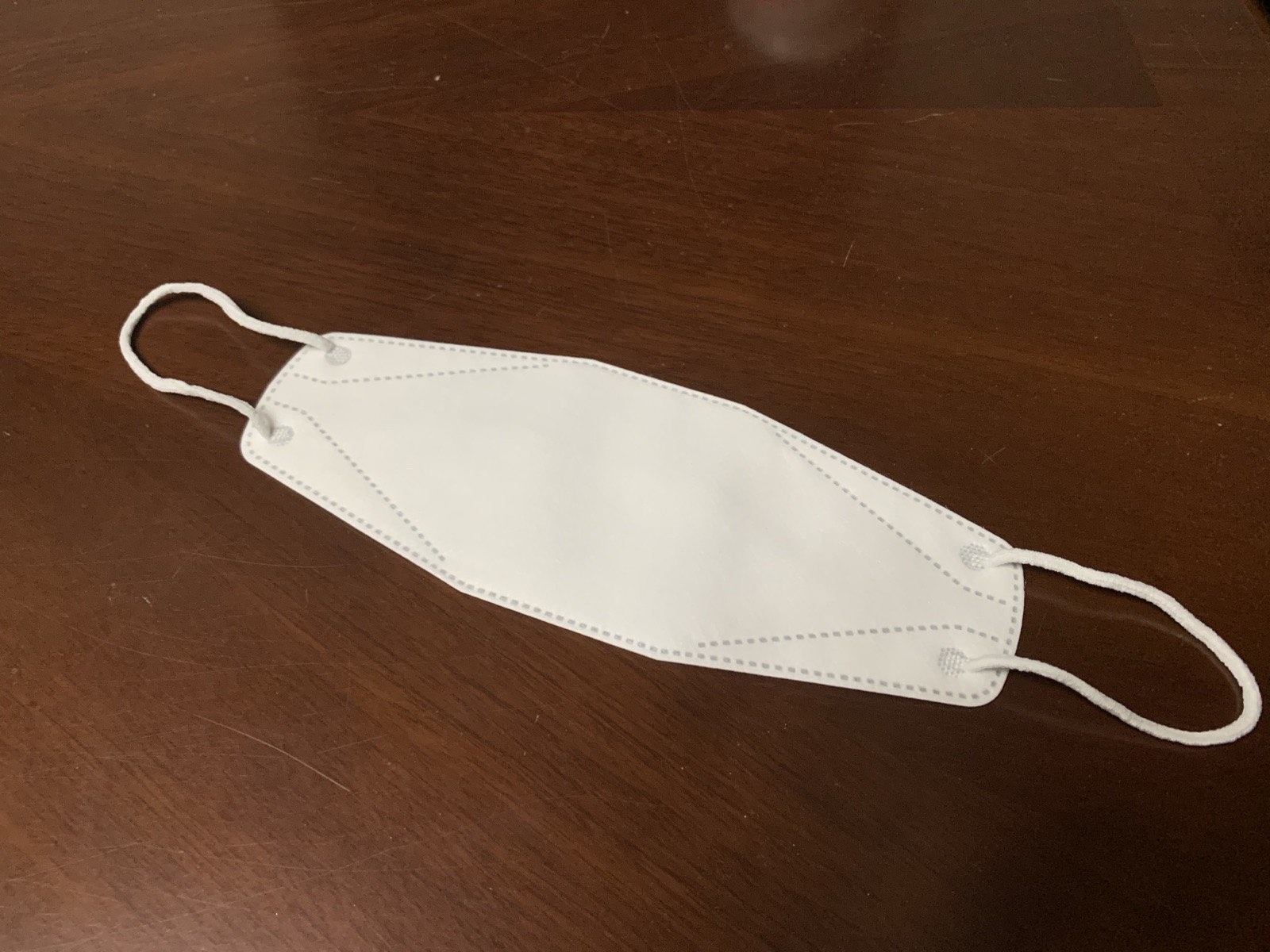
The KF (Korea Filter) grade is set by the Ministry of Food and Drug Safety (식품의약품안전처). The number is the minimum share of fine particles the filter must catch:
- KF80 catches at least 80% of particles averaging 0.6 µm.
- KF94 catches at least 94% of particles averaging 0.4 µm.
- KF99 catches at least 99% of particles averaging 0.4 µm.
Higher is not automatically better: the ministry notes that a higher grade makes breathing harder, so choose by the day's air and your own lungs. A genuine mask says 의약외품 (quasi-drug) and KF on the package. The ministry's other rules: cover nose and mouth with no gaps, never stuff a tissue inside (it breaks the seal), do not wash or reuse it, and check the expiry date, because filtration is only guaranteed within it.
Prices at Daiso (다이소), from its online shop on 27 November 2026:
| Daiso product (Korean name) | Pack | Price | Per mask |
|---|---|---|---|
| Chamjoeun KF94 dust mask, black, large (참조은 황사 방역 마스크 KF94 블랙 대형) | Single | ₩500 (US$0.37) | ₩500 |
| Bluna KF94 2D mask, black, large (블루나 KF94 2D 마스크 블랙 대형 3매입) | 3 | ₩1,000 (US$0.75) | about ₩333 |
| Chamjoeun KF94 beak-type mask, white, large (참조은 새부리형 마스크 KF94 화이트 대형 5매입) | 5 | ₩2,000 (US$1.50) | ₩400 |
| New Air KF94 dust mask, white, large (뉴에어 황사 방역 마스크 KF94 대형 흰색 8매) | 8 | ₩3,000 (US$2.25) | ₩375 |
| Lifeshield KF94 dust mask, white (라이프쉴드 황사 방역 마스크 KF94 화이트 15매입) | 15 | ₩5,000 (US$3.75) | about ₩333 |
Daiso online listings, read 27 November 2026. In-store stock varies by branch; the shop's stock-check link shows which stores have it.
Convenience stores (CU, GS25, 7-Eleven), pharmacies and Olive Young also sell KF94 masks, usually in singles or small packs, and usually for more per mask than Daiso. We could not verify a current listed price for those chains, so we do not quote one. If you are already in Seoul, Daiso is the cheapest place to buy, and a 15-pack covers a two-week trip for ₩5,000. Buying before you fly only makes sense if you land straight into a bad day or travel with someone sensitive.
See also: Coway vs Winix: Which Korean Air Purifier Fits Your Home, if you are staying long enough to want clean air indoors too.
Which outdoor plans to change on a bad day, and where to go instead
Seoul's citizen guidance for high fine-dust days boils down to: limit time outdoors, avoid busy roadsides and construction sites, cut hard exercise that makes you breathe heavily, wear a fitted KF mask, and wash hands, face and nose when you come in. It singles out pregnant people, children, older adults and anyone with heart or lung disease as needing most care, and tells them to take the mask off if breathing becomes uncomfortable.
| Plan | On a "bad" (yellow/orange) day | On a "very bad" (red) or yellow-dust day |
|---|---|---|
| Mountain hike (Bukhansan, Inwangsan) | Swap or shorten: this is the hardest breathing you will do | Move to another day |
| Han River cycling or running | Swap for a walk or go indoors | Indoors |
| Palaces, Bukchon, city walking | Fine with a KF94; keep it short and off main roads | Shorten; pair with an indoor stop |
| DMZ tour, Nami Island, day trips | Usually fine; most time is on the bus | Consider rebooking if it is flexible |
| Street-food markets | Covered markets (Gwangjang) beat open roadside stalls | Covered markets only |
Indoor swaps that work: the National Museum of Korea, the War Memorial, COEX and its Starfield Library, Lotte World, department-store food halls, a jjimjilbang (Korean bathhouse), or a long café-and-gallery afternoon. The subway links them all, and its stations are among the 5,500 public buildings on this winter's indoor-air inspection list.
Indoor air. Seoul's guidance is to keep windows shut when the outdoor reading is bad or worse, and to run an air purifier with a clean filter. Most mid-range Seoul hotels have sealed windows and central ventilation; if yours is an Airbnb or guesthouse, check whether it has a purifier before a bad week.
Coway Airmega Mighty2, the Korean air purifier most Seoul flats know If you are moving to Korea or staying a winter, this is the current version of Coway's long-running compact model. Our comparison of Korean purifiers explains how it measures up. As an Amazon Associate, EpicKor earns from qualifying purchases at no extra cost to you.
See the Coway purifier on AmazonYou might like: Coway vs Winix: Which Korean Air Purifier Fits Your Home.
Should fine dust stop you visiting in winter or spring? No. Seoul had 182 "good" PM2.5 days in 2025 and 32 "bad" ones, and the bad ones cluster into a handful of still spells between December and April. Build one flexible indoor day into a winter or March itinerary, check the 17:00 forecast, and pack or buy a few KF94s. If air quality is the deciding factor for you, September and October are the cleanest months by a wide margin.
FAQ
When is fine dust season in Korea? The official season is 1 December to 31 March, when the government's seasonal management programme runs; this winter it is 1 December 2026 to 31 March 2027. Yellow dust adds to it in March to May. In Seoul's own data, January to April has the highest averages and July to October the lowest.
What is a bad fine dust level in Korea? PM2.5 of 36 µg/m³ or more on the 24-hour average is "bad" (나쁨), and 76 or more is "very bad" (매우나쁨). For PM10 the bands are 81 and 151. An advisory is issued when PM2.5 holds at 75 or more for two hours.
Why does my phone's air quality app say "unhealthy" when Korean apps say "moderate"? Many phone weather apps show the US Air Quality Index (AQI), a 0–500 index rather than a concentration. Since 2024 the US scale calls PM2.5 "good" only up to 9 µg/m³, against 15 in Korea, so a day of 12 µg/m³ is good (좋음) in AirKorea and moderate on a US-scale app. The index number also looks alarming: 30 µg/m³, moderate on both scales, shows as roughly 90 on the US AQI. Neither app is wrong. Find the raw µg/m³ figure and compare it with the table above.
Is there an English air quality app for Korea? The official AirKorea app is Korean only, but its colours and numbers are easy to read. AirKorea's English website (airkorea.or.kr/eng) shows current readings by station and alert history, though not the forecast. Your phone's own weather app also shows Seoul's air quality, usually on the US scale.
When is yellow dust season in Korea? Mostly March to May. KMA figures put the 1992–2021 average at 7.2 yellow-dust days a year nationwide, 4.3 of them in spring, and the 2012–2021 average lower at 4.1 days. In 2026 Seoul's first yellow dust was observed on 21 February.
Do I need a mask in Korea in winter? Not every day. On "bad" or "very bad" days, or yellow-dust days, Seoul advises a fitted KF mask outdoors. KF94 masks cost ₩500 for a single at Daiso, or about ₩333 each in packs.
What is the difference between KF94 and KF80? KF94 filters at least 94% of particles averaging 0.4 µm; KF80 filters at least 80% of particles averaging 0.6 µm. KF94 protects more but is harder to breathe through. Both should say 의약외품 and KF on the box.
Does the Grade 5 vehicle ban affect rental cars? In our reading, rarely: the ban targets the oldest, most-polluting vehicles that have no low-emission retrofit, and rental companies generally run recent models. If you hire an older car, ask the rental desk for its emissions grade. During December to March the restriction applies in the capital area and six other big cities, in Seoul on weekdays 06:00–21:00, and city-wide in Seoul on emergency reduction days, with a ₩100,000 daily fine.
Sources
- AirKorea (Korea Environment Corporation), air-quality standards and grades (대기환경기준 및 등급), read 27 November 2026: PM10 and PM2.5 grade bands on the 24-hour moving average, CAI bands.
- AirKorea, English website, read 27 November 2026: real-time readings, data menus, CAI introduction; no forecast page.
- Apple App Store, 에어코리아 - 우리동네대기정보, read 27 November 2026: developer, Korean-only interface, three-day forecast, free.
- City of Seoul, Clean Air Seoul: monthly averages (기간별 통계, 월별 평균), city-average PM2.5 and PM10 for 2023–2026, pulled 27 November 2026 from the site's own monthly-average query (the same data its Excel download gives); emergency reduction measure list (비상저감조치 발령 내역), read 27 November 2026: emergency days (관심 tier) and preliminary reduction days (예비저감조치); fine-dust citizen guidance (미세먼지 시민행동요령), read 27 November 2026.
- City of Seoul, Seoul PM2.5 annual average down about 40% in 20 years, 13 May 2026: 30 → 18 µg/m³ (2006–2025), bad days 108 → 32, good days 73 → 182.
- City of Seoul, 8th seasonal fine-dust management from December, updated 26 November 2026: 1 December 2026 – 31 March 2027, Seoul's measures.
- Seoul Media Hub, emergency reduction measures explained, March 2019: the three issue conditions, 06:00–21:00 measures, public car-park closures, automatic lifting at 21:00. Grade 5 restriction during the seasonal programme, December 2022: city-wide, weekdays 06:00–21:00, ₩100,000 a day, exemptions.
- Seoul Media Hub, Hanyangdoseong green transport zone Grade 5 restriction (2019 rules, ₩250,000 fine).
- US EPA, AQI breakpoints table, read 27 November 2026: 24-hour PM2.5 good 0.0–9.0, moderate 9.1–35.4, unhealthy for sensitive groups 35.5–55.4 µg/m³ (the 2024 revision).
- World Health Organization, WHO global air quality guidelines (2021): annual PM2.5 guideline level.
- Daejeon Metropolitan City, fine-dust advisory and warning criteria (미세먼지 경보제), national criteria in force since 1 July 2018, read 27 November 2026.
- Korea.kr (Ministry of Climate, Energy and Environment), 7th seasonal fine-dust management, 2 December 2025.
- Kyunghyang Shinmun, this winter's PM2.5 likely worse; 18 coal units to stop, 24 November 2026: 21.5 → 19 µg/m³ target, 50% outlook, coal, roads, indoor-air checks.
- ZDNet Korea, 8th seasonal fine-dust management from next month, 24 November 2026: ministry, target, coal output caps, AirKorea app alerts.
- Dailian, Osan city on the 8th round, 25 November 2026: Grade 5 restriction hours, days, fine and the nine cities and provinces.
- Statistics Korea index portal, yellow dust observation days (KMA data), updated 30 March 2026: 7.2-day normal (1992–2021), 4.3 in spring, 4.1-day ten-year average.
- YTN, Seoul's first yellow dust of 2026, 22 February 2026.
- Ministry of Food and Drug Safety via Korea Policy Briefing, reported on Daum News, 28 February 2025: KF80/KF94/KF99 definitions, 의약외품 label, wearing, no washing or reuse, expiry.
- Daiso online shop, KF94 listings read 27 November 2026: single ₩500, 3-pack ₩1,000, 5-pack ₩2,000, 8-pack ₩3,000, 15-pack ₩5,000.
- Related EpicKor guides: Korea in December, Korea in January 2027, Does it snow in Korea?, Getting around Korea in 2026, Coway vs Winix.
You Might Also Like
Korea Cherry Blossom 2027: When Seoul, Jinhae, Busan and Jeju Usually Bloom, and When to Book
No one has published a 2027 cherry blossom forecast yet; the first comes in late February. In 2026 Seoul bloomed on 29 March, 10 days early. Here are the normal dates for each city, the trend and the 2026 festivals, plus why KTX seats open before the forecast is out.
Ice Skating in Seoul, Korea: Lotte World vs Mokdong vs Taereung vs Seoul Plaza Rinks
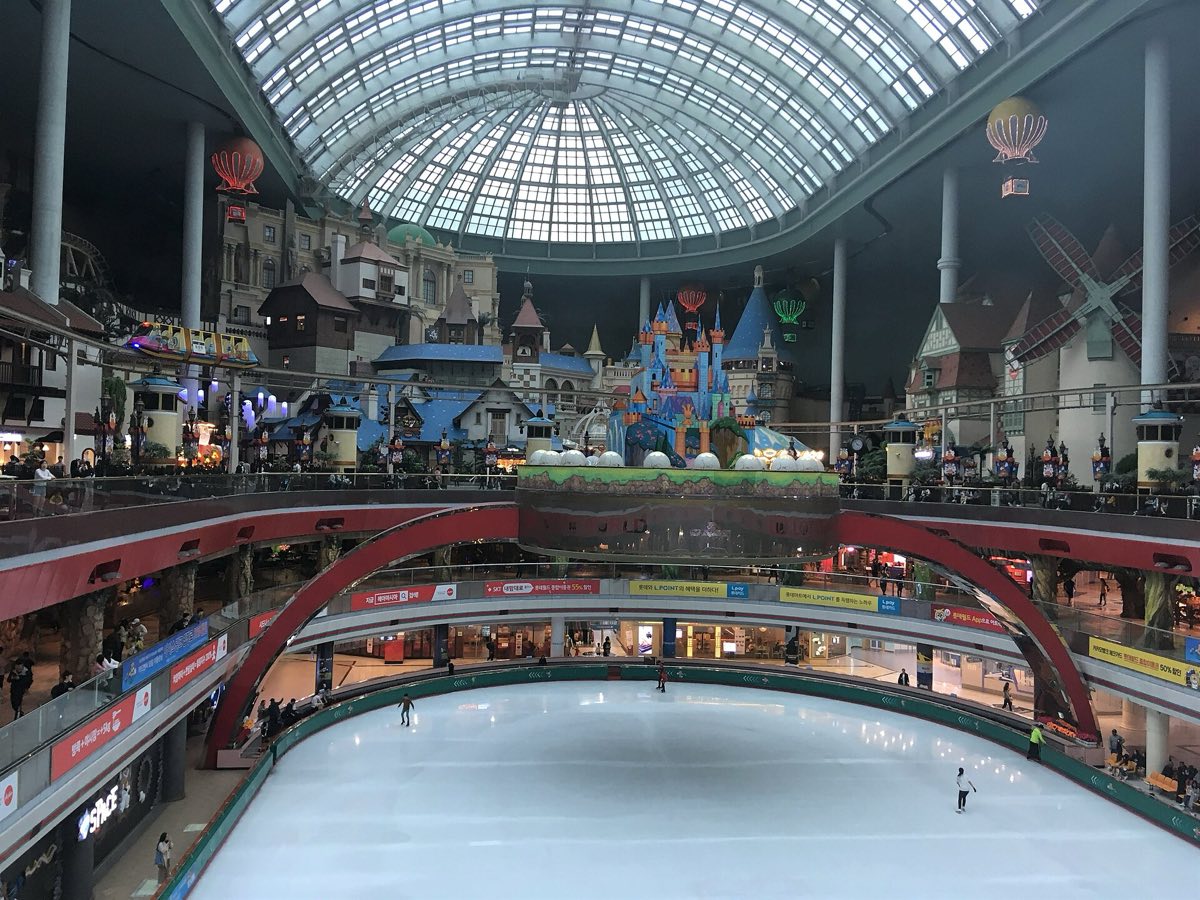
Lotte World Ice Rink costs ₩21,000 (US$15.44) with skates on a weekday; Seoul's public rinks at Mokdong and Taereung charge about ₩8,000 and open all year. The winter rink on Seoul Plaza, ₩1,000 last season, reopens 18 December 2026.
Korea's Neighbourhood Bathhouses Are Disappearing, and the Bath Is Not: Where the Hot Water Went
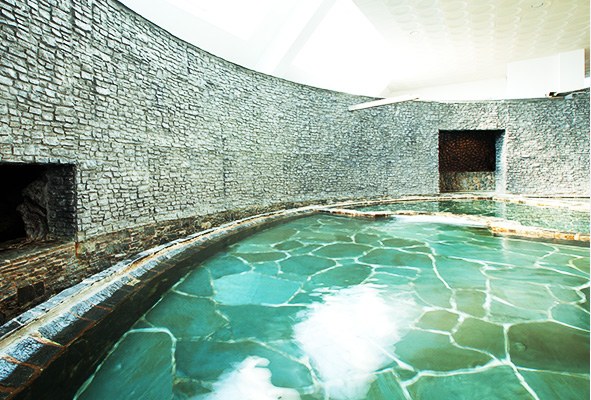
Seoul had 1,764 public bathhouses in 1995 and has 510 now. Koreans have not stopped soaking; they moved to private-bath hotels, ₩60,000 scrub studios and the apartment-basement sauna. Why the old tang died, what Japan did differently, where to bathe in 2026.