Korea's Neighbourhood Bathhouses Are Disappearing, and the Bath Is Not: Where the Hot Water Went
Last updated: September 2026
Every Korean neighbourhood used to have one: a tall brick chimney, a sign ending in 탕 (tang, "bath"), a blue-and-red symbol of steam rising from a bowl, and inside, a hot pool, a cold pool, a row of low plastic stools and a man or woman in black underwear who would scrub the skin off your back for ₩20,000. In 1995 Seoul had 1,764 of them. In 2025 it had 510. Nationally the count peaked at 9,919 in 2003, one bathhouse for every 4,800 Koreans, and stood at 5,656 at the end of 2025. Seven hundred and thirty closed in the three pandemic years alone. In March 2026 a Seoul newspaper found a sauna in Jung-gu that had been open since 1998, was ₩400 million in accumulated losses, and would close this year; its regular in the story was 72.
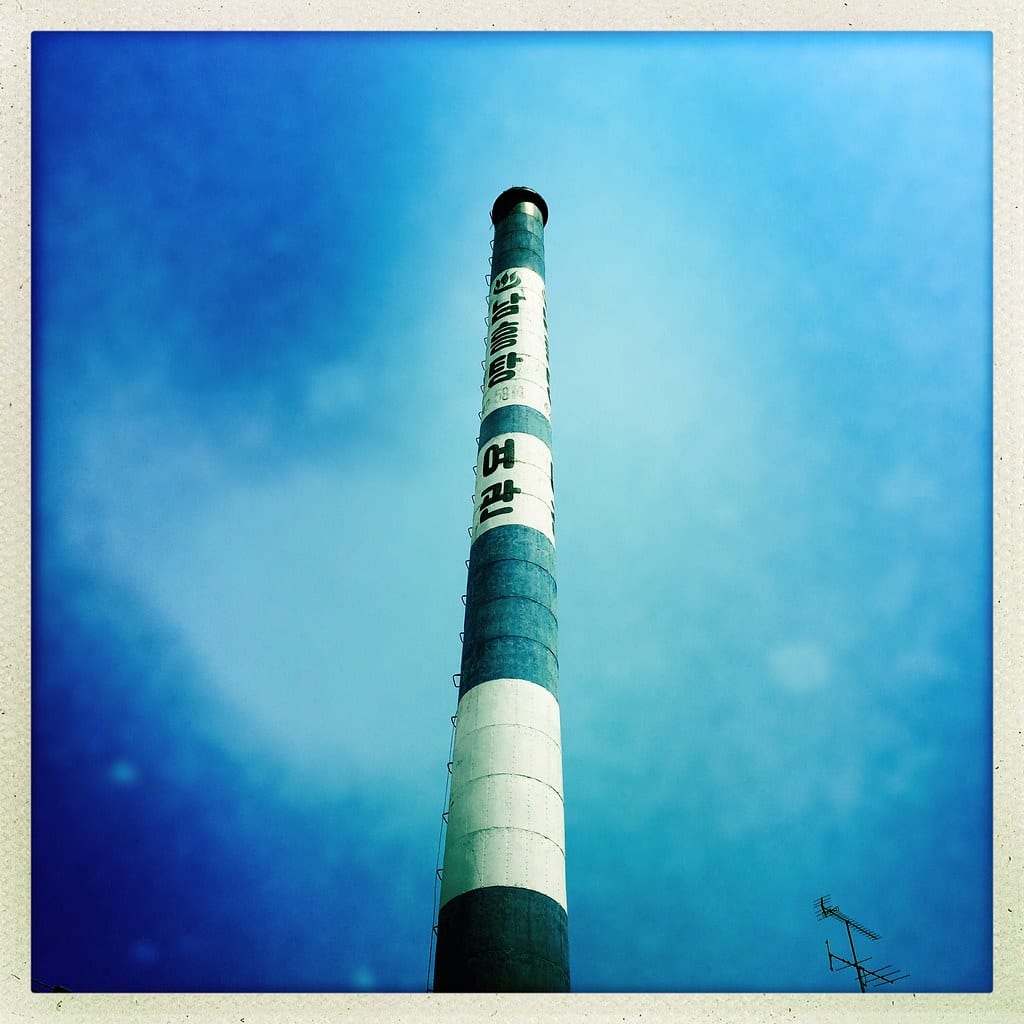
The easy conclusion, which the Korean press draws every winter, is that a piece of Korea is dying. This post argues something different, and it is a better guide to where to actually go. The neighbourhood bathhouse is dying. The bath is not. Koreans in their twenties and thirties will queue for a hotel room with a private cypress tub, pay ₩60,000 for a scrub in a booking-only studio, fly to Japan for a ryokan, and use the sauna in the basement of their apartment block. What they will not do is sit on a plastic stool in a tiled room that was last renovated in 1994. The hot water did not go away. It moved, and it got cleaner and more private and more expensive, and the story of where it went is the story of what young Koreans now expect from anything they pay for.
This is a companion to our jjimjilbang guide, which explains how to use one. This is the post about why there are fewer of them, what replaced them, and what Japan's bathhouses did that Korea's did not.
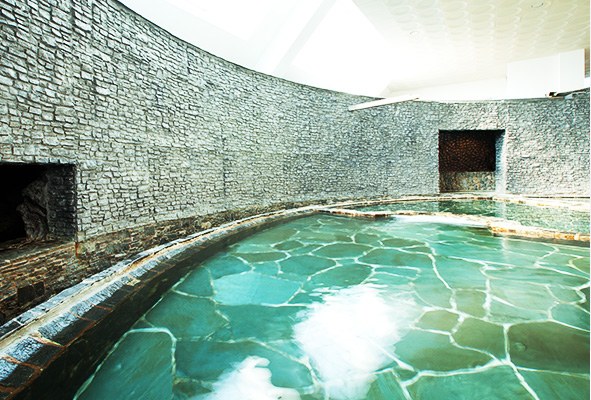
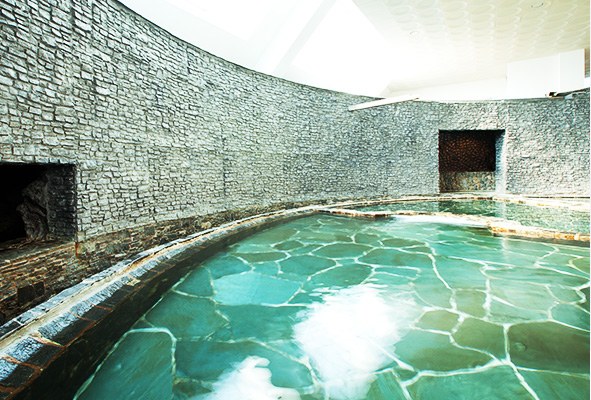
The room this post is about: a Korean bath hall, empty. This one is a hot-spring pool at a bathhouse in Dongnae, Busan. Image: Hotel Nongshim, shown for identification.
The one thing every Korean bath has in common: the Italy towel, the coarse scrub mitt that does the "ttae" scrub, is the same in a ₩8,000 tang and a ₩60,000 studio, and it is the part you can take home. As an Amazon Associate, EpicKor earns from qualifying purchases.
Quick Guide: the Korean bath in 2026, by format
| Format | What it is | Price | Who goes | Direction |
|---|---|---|---|---|
| Neighbourhood bathhouse (동네 목욕탕) | Hot and cold pools, a sauna, stools, a scrub person | ₩8,000 to ₩10,000; Seoul average passed ₩10,000 in 2023 | Over-60s, regulars | Closing: 5,656 nationally, down from 9,919 |
| Jjimjilbang (찜질방) | Bathhouse plus dry sauna rooms, sleeping hall, food, 24 hours | ₩12,000 to ₩25,000 | Families, tourists, the stranded | Consolidating: the big ones survive, small ones close |
| Hotel sauna | A members' bathhouse inside a hotel | ₩20,000 to ₩40,000, memberships | Older businessmen | Ageing; the famous ones are being redeveloped |
| Private scrub studio (1인 세신숍) | One room, one tub, one scrub person, by appointment | ₩50,000 to ₩80,000 for 50 to 60 minutes | Women in their 30s and 40s | Growing since 2022 |
| Private-bath hotel or pension | A room with its own cypress or stone tub, often hot-spring water | ₩150,000 to ₩400,000 a night | Couples, MZ travellers | Booked out in winter; two to three weeks ahead |
| Apartment community sauna | Sauna, pool and gym in the basement of a new complex | Included in a ₩45,000-a-month fee, or ₩10,000 to ₩20,000 per facility | Residents | Standard in every new build since about 2020 |
| Ryokan in Japan | The same bath, in Japan, with dinner | ¥20,000 to ¥60,000 a night | Korean tourists, Japan's largest visitor group | Booming |
What a bath costs, and why the price is the problem
The neighbourhood bathhouse's price is its trap. In 2023 the average adult admission in Seoul passed ₩10,000 for the first time (₩10,077 by year end); Gangwon Province was at ₩9,444 in late 2025. That sounds cheap for a hot bath and a sauna, and it is, which is the point: it is not enough. A bathhouse heats several tonnes of water a day with gas, runs a boiler, pays for water, electricity and a scrub person, and one Gyeonggi operator told the Korea Economic Daily in April 2026 that the monthly running cost was around ₩30 million. Raise the price and the regulars, who are pensioners, stop coming. Hold it and the losses compound, which is how a 28-year-old sauna arrives at a ₩400 million deficit. Nearly a fifth of Seoul's remaining licensed bathhouses, 132 of 663, are more than thirty years old, and the people who own them are the age of their customers: the Korea Economic Daily's example was a 73-year-old running a 100-square-metre tang in Gimcheon for 25 years. There is no succession. When the owner retires, the chimney comes down. And the trouble is not only the small ones: Dragon Hill Spa in Yongsan, the seven-storey jjimjilbang that foreign guidebooks have recommended for twenty years, closed "temporarily" for the pandemic in 2021, never reopened, and had its map listings deleted in 2025; the building is still there, with a restaurant on the ground floor.
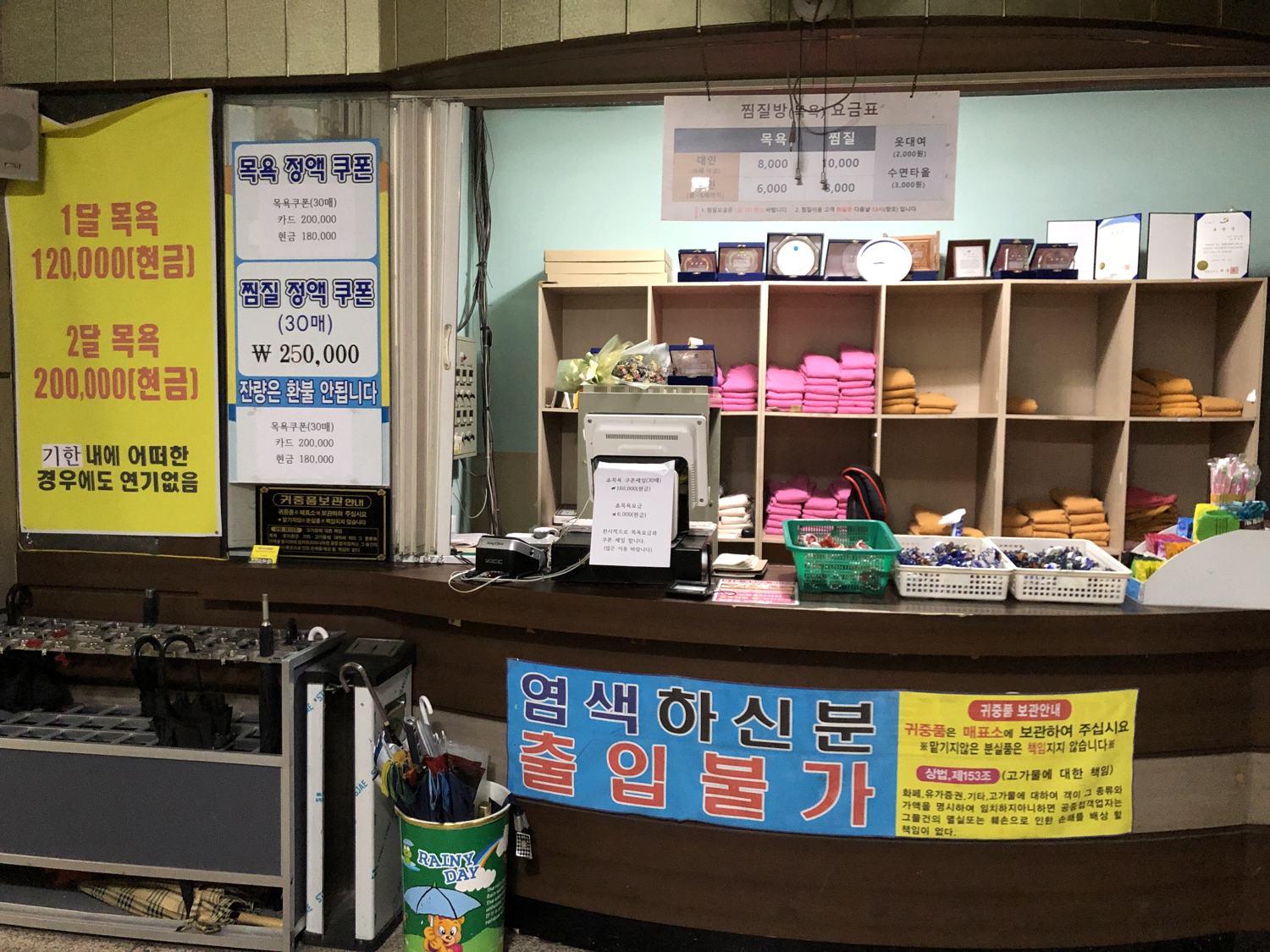
The counter of a neighbourhood bathhouse in 2020: towels, sauna clothes, scrub mitts, and a yellow sign selling a month of baths for ₩120,000 in cash, two months for ₩200,000. The regulars buy the month. Photo: CC0, via Wikimedia Commons.
Korean Exfoliating Mitts (Italy towel) — the scrub, at home The green or red viscose mitt that every Korean scrub person uses and every Korean bathroom owns. Soak in a hot bath for fifteen minutes, then scrub; what comes off is the point. It is the one part of the Korean bath that fits in a suitcase, and the reason the private-tub hotel room works at all. As an Amazon Associate, EpicKor earns from qualifying purchases.
See Italy towels on AmazonWhy the young stopped coming: it is not the water
Here is the part that the "dying tradition" stories miss, and it is the whole argument of this post. Young Koreans have not gone off hot water. Ask any Korean in their twenties whether they would like to sit in a hot bath, then a cold one, then a hot room, and they will say yes and then tell you about a hotel. What they have gone off is the room.
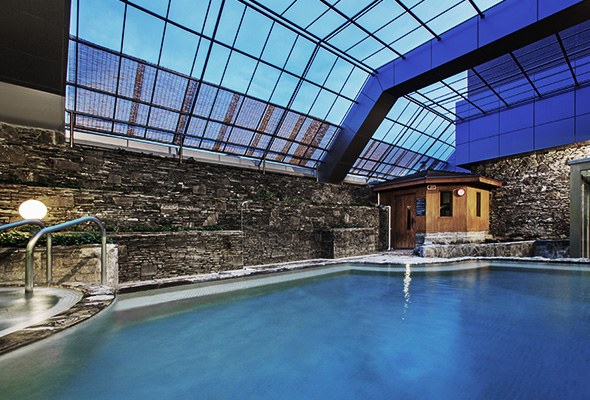
The bath young Koreans will still pay for: hot-spring water under a glass roof, stone, wood, and nobody else in it. Image: Hotel Nongshim, shown for identification.
The neighbourhood tang was built in the 1980s and 1990s for a country where most homes had no bathtub and many had no reliable hot water. Its job was hygiene, and its design was communal: a tiled hall, shared stools, shared basins, a locker room with wooden lockers and a floor that has been wet since 1992. For a generation raised in apartments with their own bathrooms, that room reads not as tradition but as unhygienic. The stools, the shared scrub brushes, the towel bins, the humidity, the sleeping hall of a 24-hour jjimjilbang with its rotating population of strangers: each of these is a reason a thirty-year-old woman gives for not going, and each is about cleanliness and privacy, not about the bath. A 2023 report on the scrub trade put it in one sentence: the customers of the new private scrub studios are women in their thirties and forties, often pregnant, who want the Korean scrub "without exposure to strangers" and with a guarantee the tub was cleaned before them.
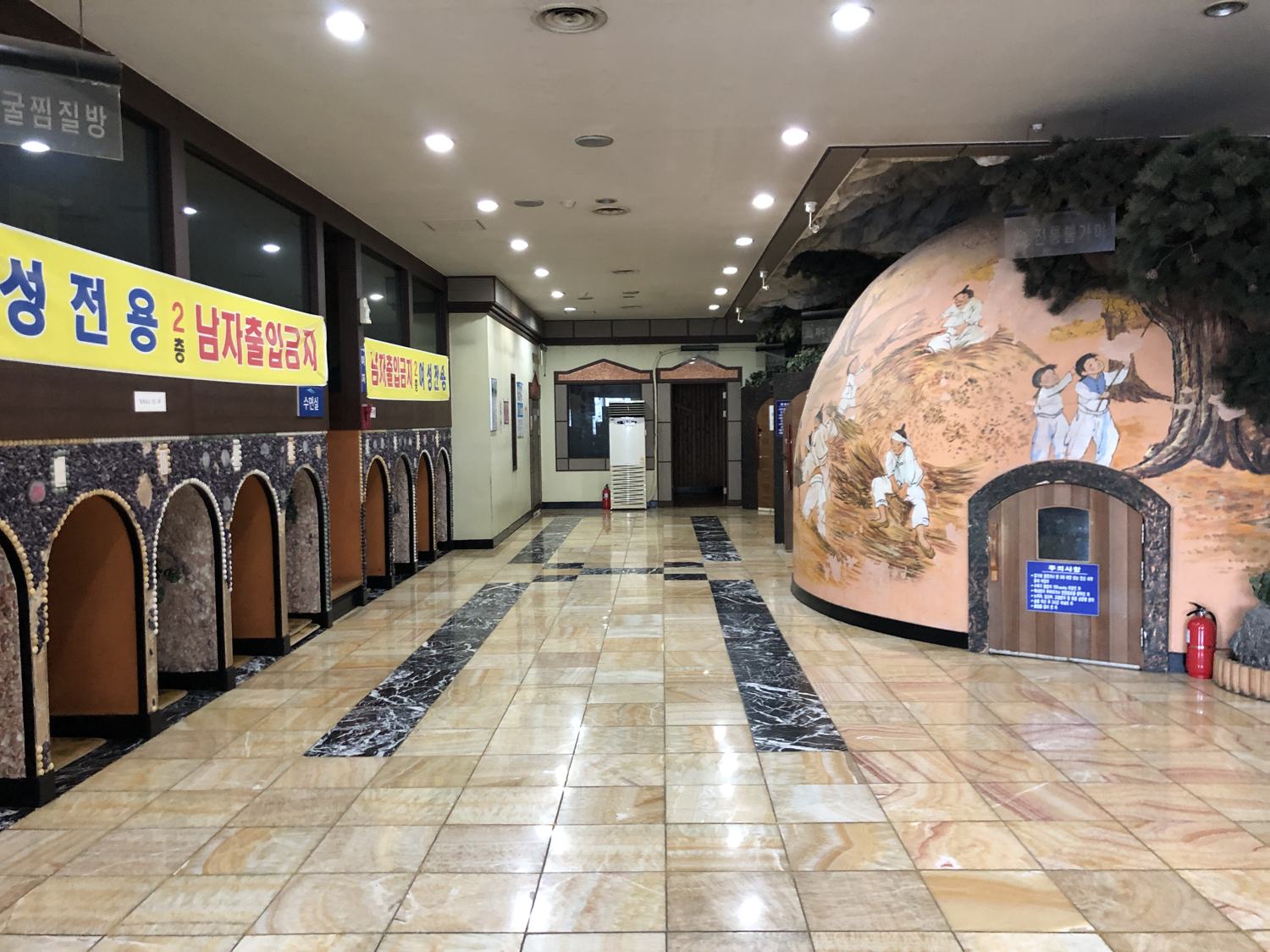
The common hall of a 24-hour jjimjilbang in Wonju, 2020: kiln rooms behind a painted mural, a polished floor, and a banner marking the men-only floor. Nothing about it is dirty; everything about it is shared, and that is the thing a generation raised in private bathrooms will no longer pay for. Photo: CC0, via Wikimedia Commons.
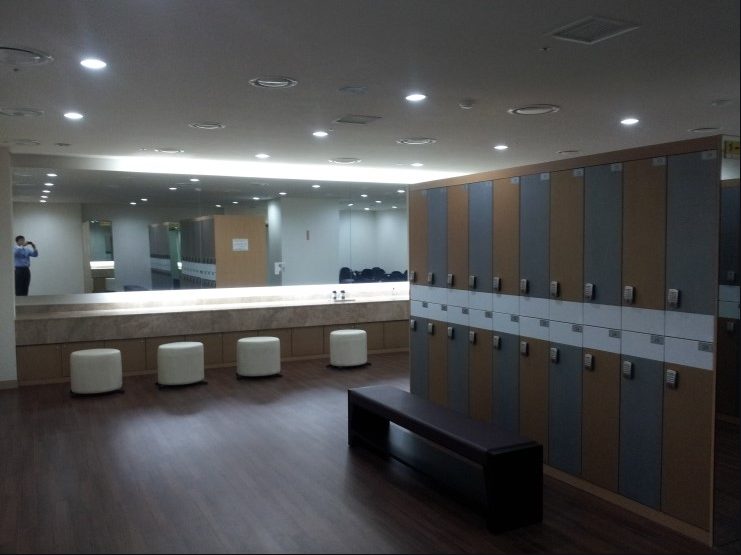
A sauna locker room in a Sangam-dong residence tower, 2015: what the same room looks like when it is new and private. Photo: CC BY-SA 4.0, via Wikimedia Commons.
The same failure runs up the price ladder. Korea's hotel saunas were, for thirty years, the country's luxury bathhouses. The Riverside Hotel in Jamwon-dong, opened in 1981 as Gangnam's first five-star hotel, had the most famous men's sauna in Seoul; in the 1980s admission was ₩10,000, a serious sum, and the sauna was where deals were done. It is still open, still marketed, and still, by most accounts, a solid bath; but the building is 45 years old, the fittings show it, and the sauna that was the top of the market now reads as a mid-range hotel's mid-range sauna. The hotel is to be demolished and rebuilt as a 47-storey tower, with construction from 2026 and reopening around 2030. Most of the other famous hotel saunas of that era are in the same position: the bath is fine, the room is old, and old, in the Korean market of 2026, means finished.
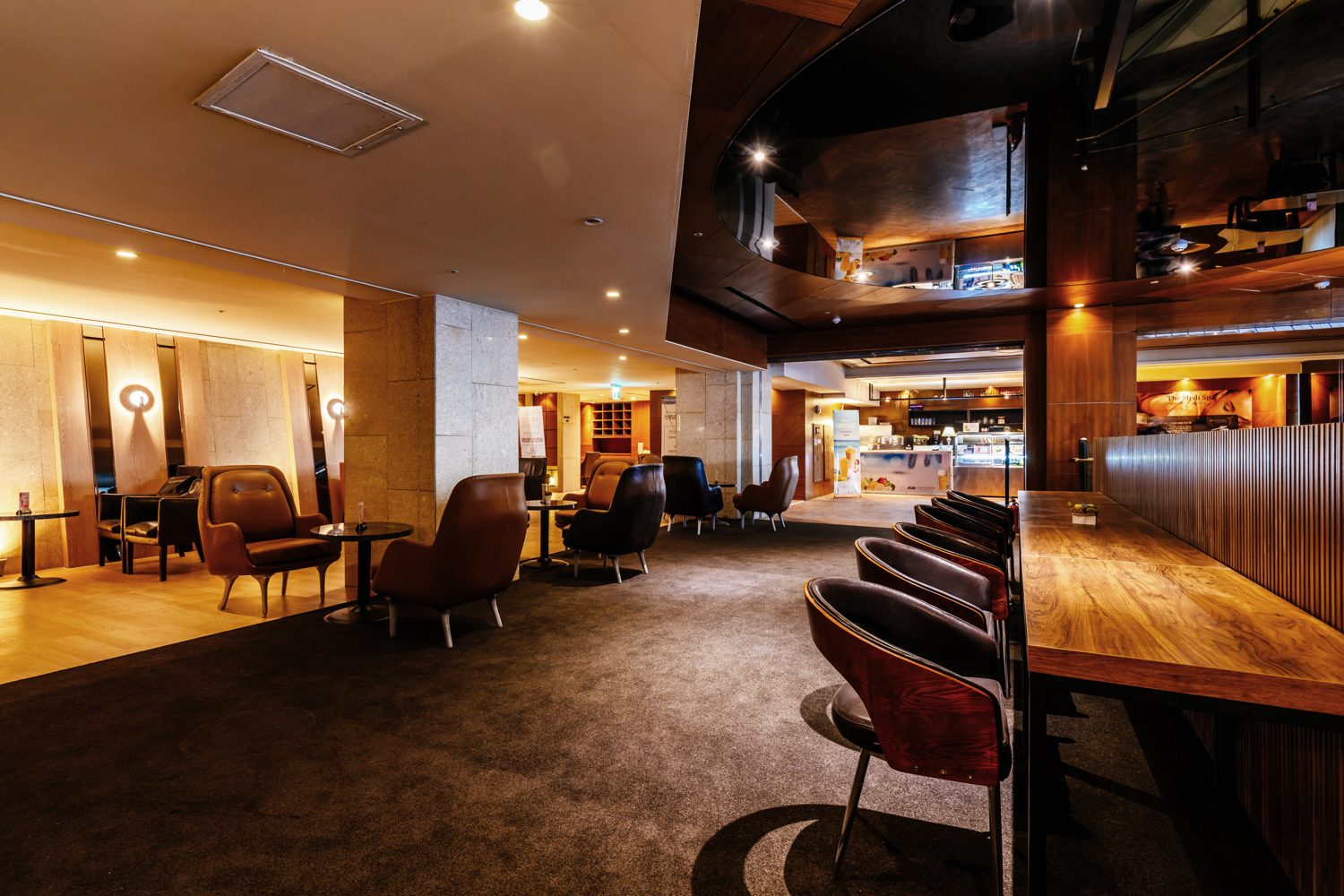
The Riverside Hotel's sauna lounge as the hotel presents it in 2026: renovated, and still the format of 1981, a men's club with a bath attached. Image: The Riverside Hotel, shown for identification.
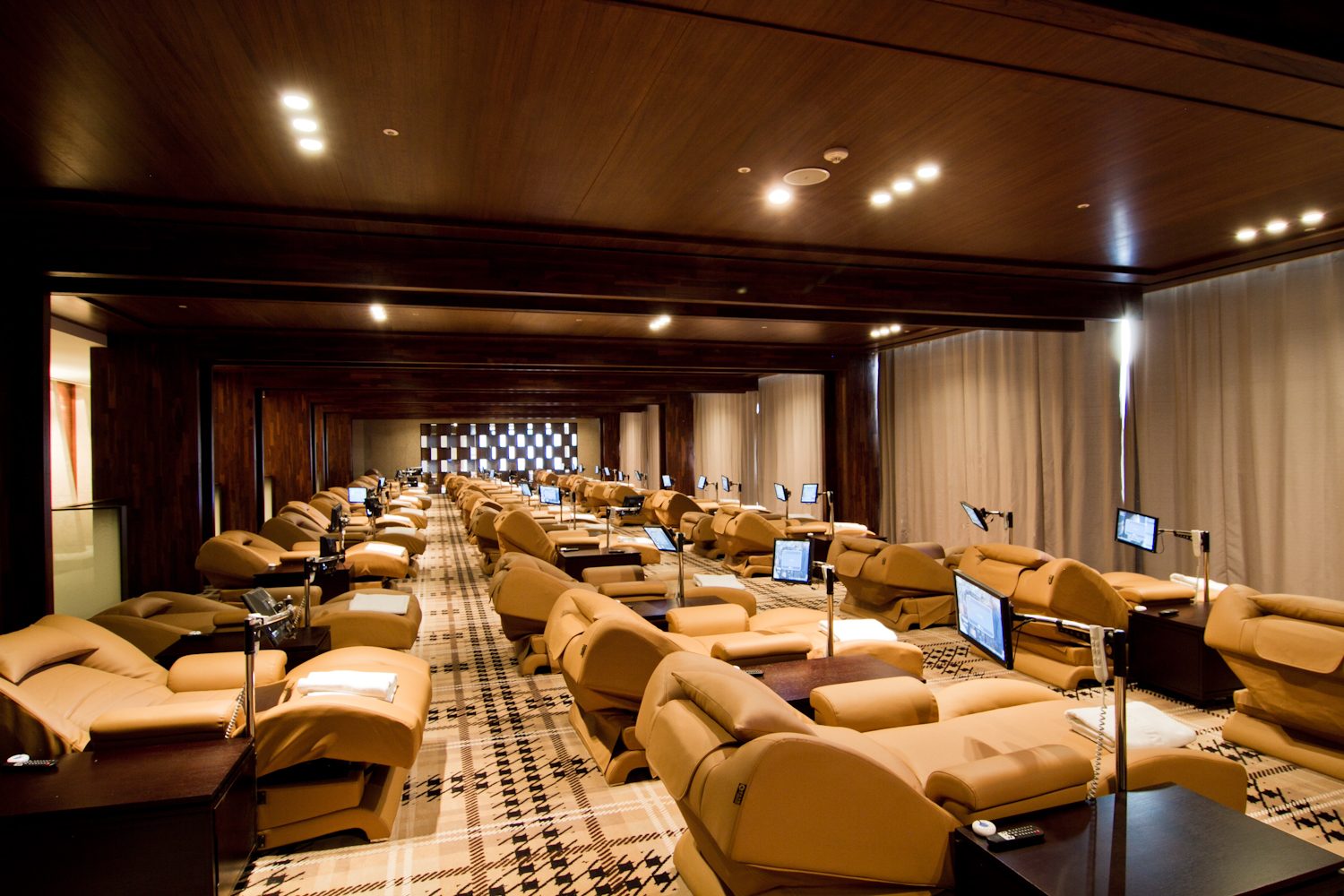
The relaxation room: recliners with screens, the hotel-sauna answer to the jjimjilbang sleeping hall. The building it sits in comes down in 2026. Image: The Riverside Hotel, shown for identification.
Where the hot water went
If the bath is not dead, it has to be somewhere. It is in four places, and each of them is doing well.
The private-bath hotel. The fastest-growing category in Korean domestic travel is the room with its own tub: a cypress (hinoki) bath on a balcony in Yangpyeong, a hot-spring tub piped into every room at a hotel in Gyeongju, a "private spa room" at a pension in Gangwon. Booking.com's 2023 survey of Korean MZ travellers found 54 percent named a massage or hot spring as the experience most worth paying for, above any other category, and the travel sites' standing advice for winter and weekends is to book two to three weeks ahead because the private-bath rooms go first. These rooms cost ₩150,000 to ₩400,000 a night. The customer is the same person who will not pay ₩10,000 for the tang, and the difference is that nobody else has been in the water.
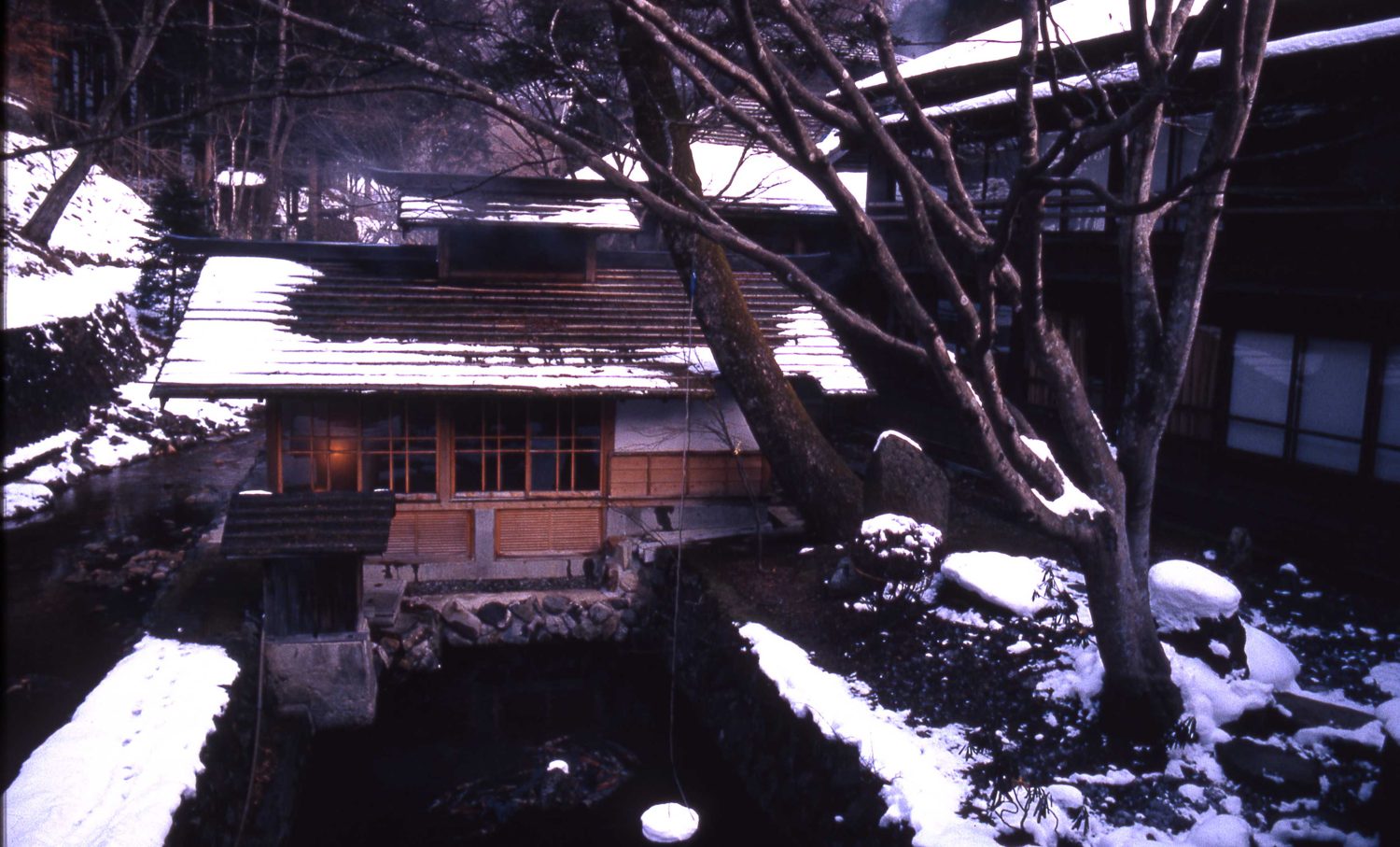
Hōshi Onsen in Gunma, a ryokan bath. Koreans are Japan's largest group of foreign visitors, and a large share of them are there for exactly this. Photo: public domain, via Wikimedia Commons.
The ryokan. Koreans are the largest group of foreign visitors to Japan, and a striking proportion of the trips are built around a bath: a ryokan with a private rotenburo, a Beppu or Yufuin hot spring, a Kyushu onsen town two hours from Busan by ferry. The bath is not so different from the one at home. The management is. A ryokan bath is cleaned between guests, the water is the selling point, the towels are new, and the room has a tatami floor rather than a wet tiled one. Koreans will pay ¥40,000 a night for that and call it a bargain.
The private scrub studio. The Korean scrub, ttae-mil-i, was the one thing the bathhouse offered that a home could not, and it has now been extracted from the bathhouse. Since about 2022 the 1인 세신숍, "one-person scrub shop," has spread through Seoul: one room, one tub, one scrub person, reservation only, ₩50,000 to ₩80,000 for fifty to sixty minutes, ₩100,000 and up with a massage, against ₩20,000 to ₩30,000 in a bathhouse. The scrub trade's own training academies, which had closed as the bathhouses did, reopened to staff them. The customers are young women; the staff are younger than the bathhouse veterans because the customers prefer it; and the pitch, in every listing, is hygiene and privacy.
The apartment basement. This is the quietest of the four and probably the biggest. Every large new apartment complex in Seoul now comes with a "community": a gym, a pool, a sauna, a golf range, a reading room, sometimes a breakfast hall. A 2025 real-estate survey found "a complex with varied community facilities" the single most wanted feature of a new home, named by 34 percent of buyers, and the trade word for the phenomenon, eoljuksin (얼죽신, "I'd freeze to death before I lived in an old building"), is about exactly this. Raemian One Bailey in Banpo has a pool, a fitness centre, a sauna, a guest house and a sky bridge, and charges residents about ₩45,000 a month whether they use them or not; Helio City in Songpa, with 9,510 households, charges ₩10,000 to ₩20,000 a month per facility. A resident of either has a sauna, a pool and a shower downstairs, cleaned daily, used only by neighbours. There is no reason on earth for that person to walk to the tang.
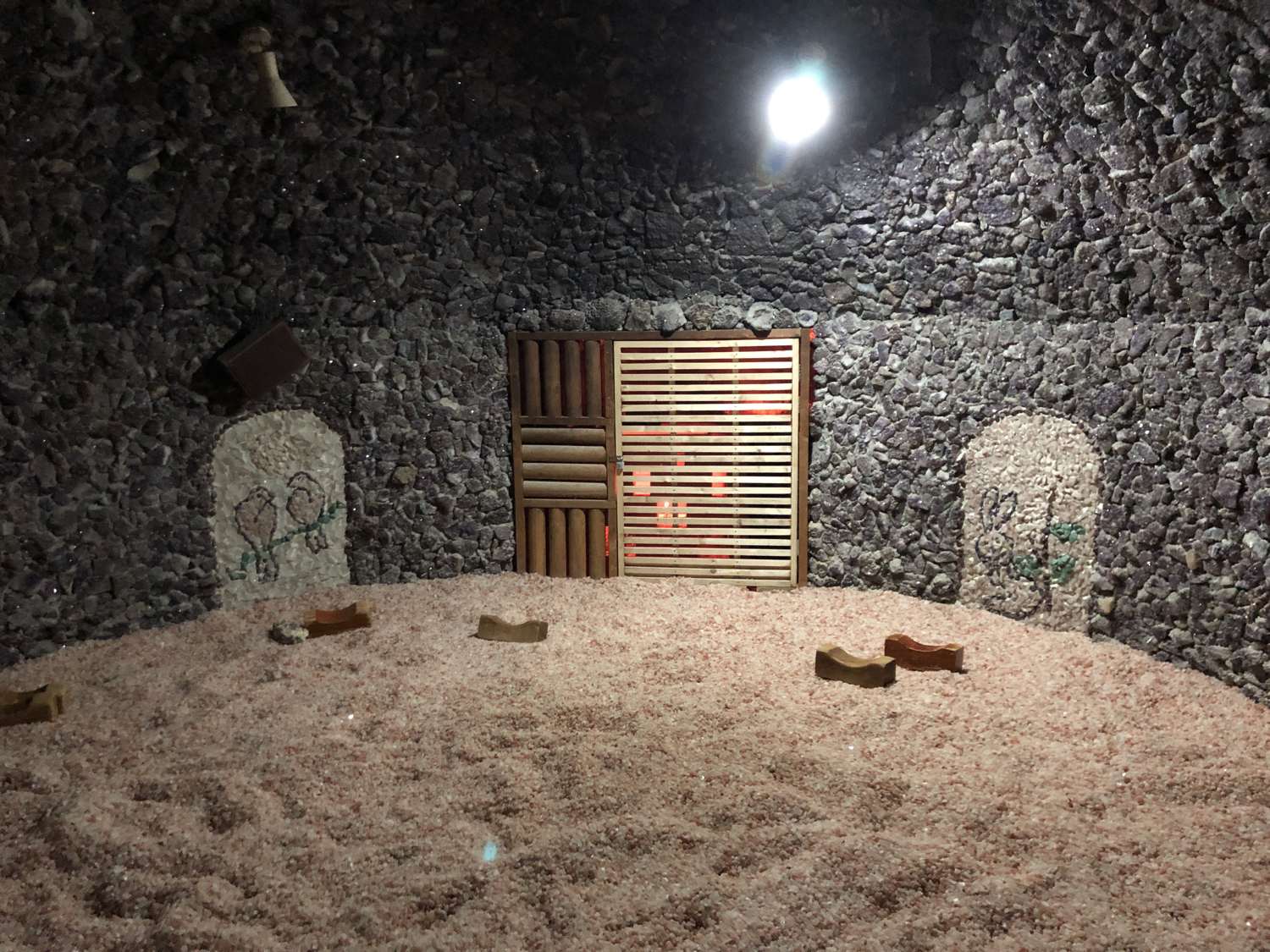
The bulgama, the kiln room, at a 24-hour sauna in Wonju. The jjimjilbang added this to the bath in the 2000s and took the bathhouse's customers; now the apartment basement is taking the jjimjilbang's. Photo: CC0, via Wikimedia Commons.
What Japan did differently
Koreans point at Japan when this subject comes up, usually to say that the Japanese kept their bathhouses. That is half true, and the half that is true is instructive.
The numbers first. Japan's sento, the neighbourhood public bath, has collapsed harder than Korea's: 17,999 at the 1968 peak, about 1,560 in 2025, and 1,493 in 2026, a fall of more than 90 percent. Tokyo's count is in the low 400s. The reasons are Korea's reasons: home baths, ageing owners (average age 69.6, with no successor), regulated prices (a Tokyo sento is capped at ¥550 and the operators say they need ¥650 to break even), and, in 2026, a fuel-price spike that has closed decades-old houses in a matter of months.
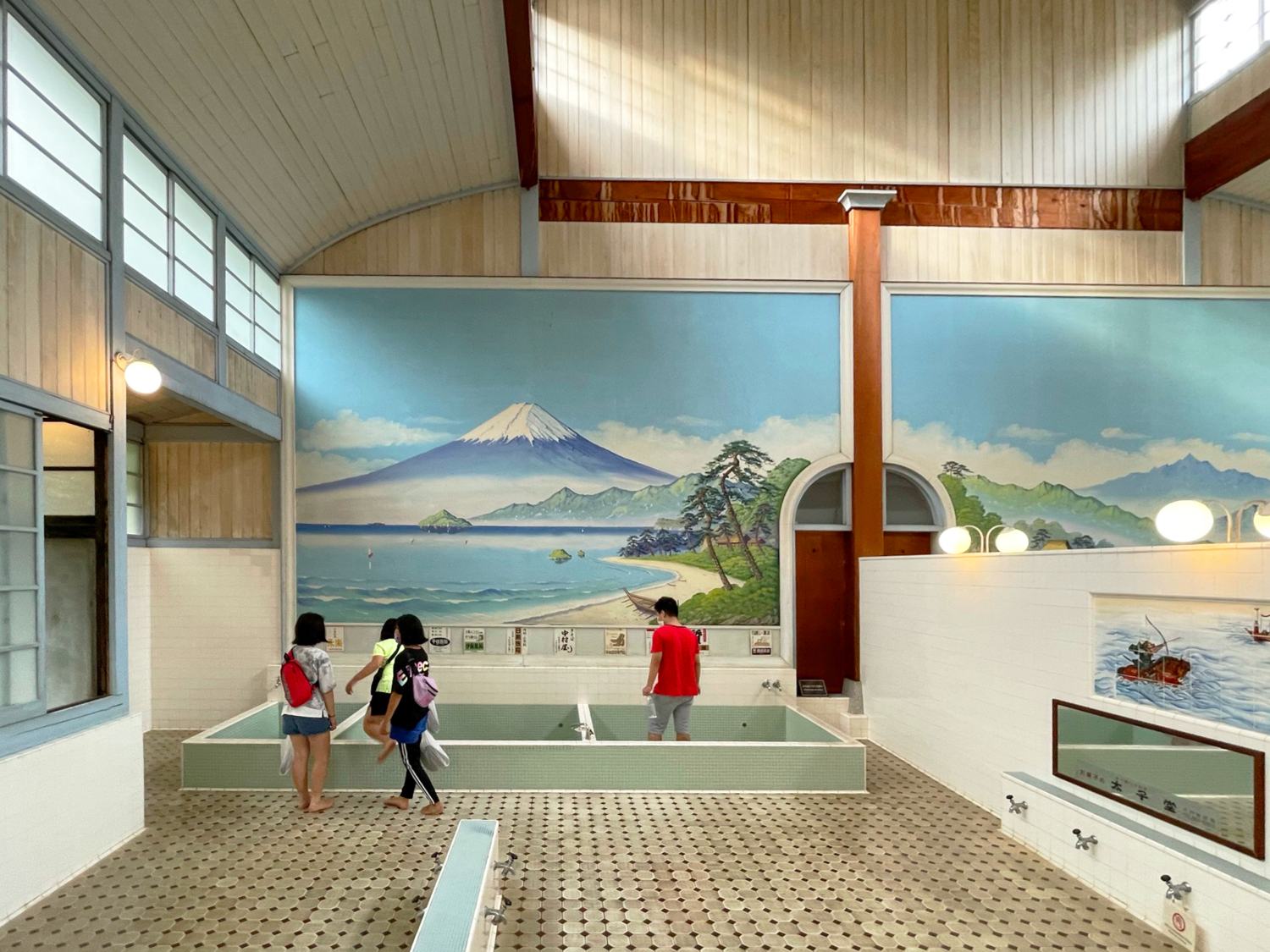
A sento bath under the obligatory Mount Fuji. Japan has lost more than ninety percent of these since 1968, a steeper fall than Korea's. Photo: public domain, via Wikimedia Commons.
But the sento that survived did something Korea's tang mostly did not: they became a youth product. Japan's "third sauna boom," usually dated to the 2019 television adaptation of the manga Sadō ("The Way of the Sauna"), turned the sauna-cold plunge-rest cycle, totonou, into a lifestyle for people in their twenties and thirties, and the old bathhouses that installed a proper sauna, a cold bath and a good design found a queue outside. Teikoku Databank projects the sento market at about ¥120 billion for fiscal 2025, up 5 percent and the highest since the pandemic, with the customer base "expanded from local elderly residents to younger generations and families." Kosugiyu in Koenji, a 1933 bathhouse, is a Tokyo institution for the under-40s; Koganeyu in Sumida, rebuilt in 2020 with a craft-beer counter and a DJ booth, opened a second branch in Shinjuku in early 2026; a company called Yutonami, founded by a man in his twenties to "keep sento from disappearing," now runs ten of them with revenue of ¥470 million. In late 2025 Tokyo began handing tourists ¥300 sento coupons.
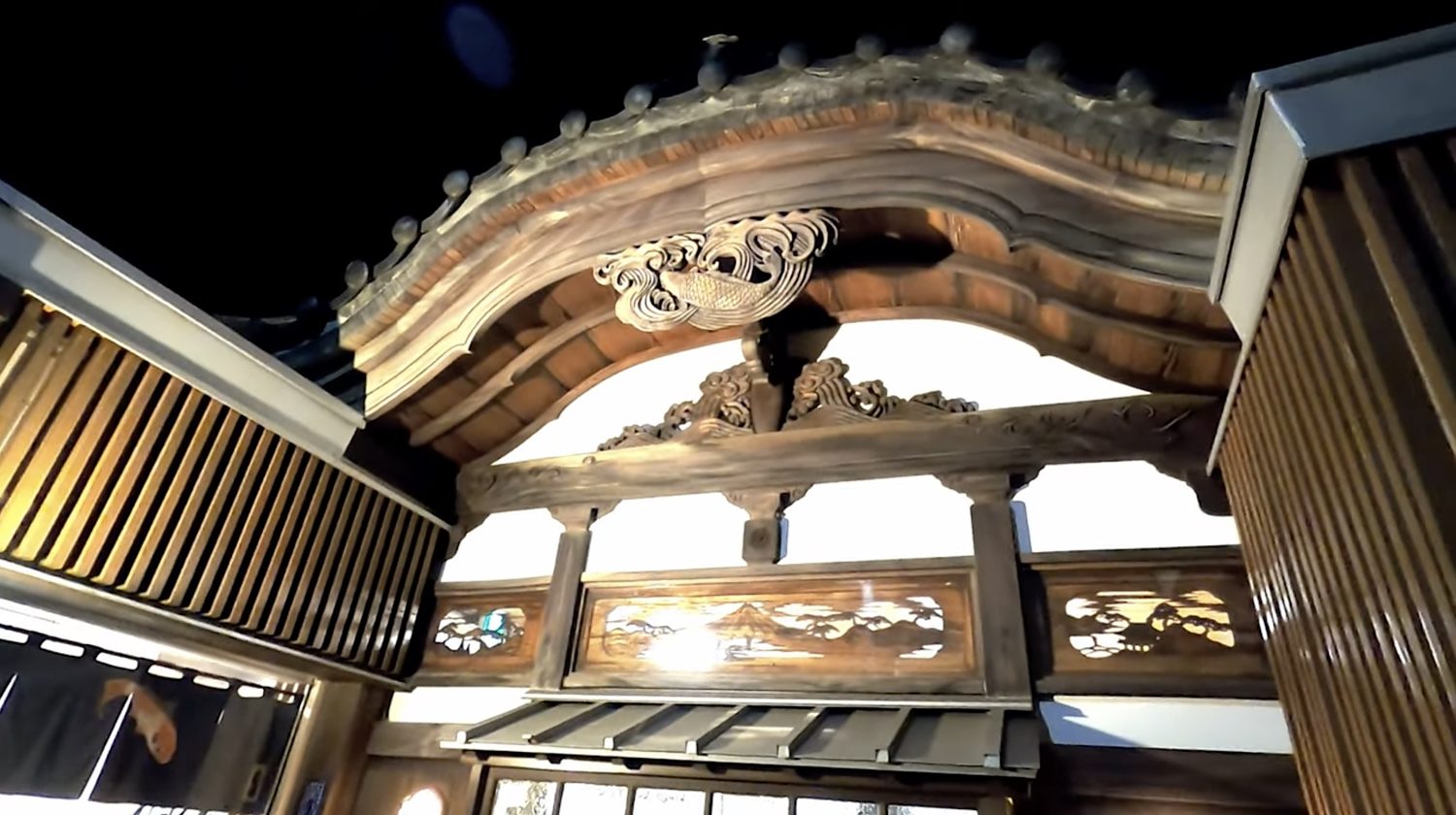
Kosugiyu in Koenji, Tokyo: a 1933 bathhouse that is now one of the city's fashionable places for people under forty. Photo: CC BY 3.0, via Wikimedia Commons.
So Japan did not keep its bathhouses; it lost more of them than Korea did. What it kept was a small number that were clean, well designed and marketed to the young, and it built a national trend around them. Korea's equivalent exists in embryo, in a handful of renovated tang in Seoul's older neighbourhoods and the design-led saunas of Seongsu-dong, but the country's answer to the same demand was mostly to move the bath into the hotel and the apartment rather than to fix the bathhouse. Whether that is a loss depends on whether you think the point was the bath or the building.
You might like: Korean Jjimjilbang Guide: Sauna Etiquette and Tips
Where to bathe in Korea in 2026
| You want | Go to | Cost | Note |
|---|---|---|---|
| The classic Korean spa day, done well | A large spa: Siloam (Seoul Station), Spa Land (Busan, Shinsegae Centum City), or any 24-hour sauna with 찜질방 on the sign | ₩15,000 to ₩25,000 | Clean, big, used to foreigners; the format that survived. Dragon Hill Spa in Yongsan, which every older guidebook lists, closed for the pandemic in 2021 and never reopened |
| The neighbourhood tang before it is gone | Any 탕 with a chimney; ask 목욕탕 어디예요? | ₩8,000 to ₩10,000 | Go on a weekday morning; it will be you and the regulars |
| The scrub, privately | A 1인 세신숍, searched as 세신샵 on Naver Map; book | ₩50,000 to ₩80,000 | Reservation only; the tub is cleaned in front of you |
| A bath nobody else has been in | A private-spa hotel or pension in Yangpyeong, Gapyeong, Gyeongju or Jeju | ₩150,000 to ₩400,000 a night | Book two to three weeks ahead in winter |
| The hotel sauna, for the history | The Riverside Hotel, Jamwon-dong, before 2026 demolition | Day rate on request; ₩20,000 annual membership promotions | Men's sauna is the famous one |
| Hot-spring water, cheaply | Public onsen baths in Asan, Onyang, Suanbo, Bugok, Dongnae (Busan); see our hot springs near Seoul guide | ₩8,000 to ₩15,000 | Real mineral water, bathhouse prices, ageing buildings |
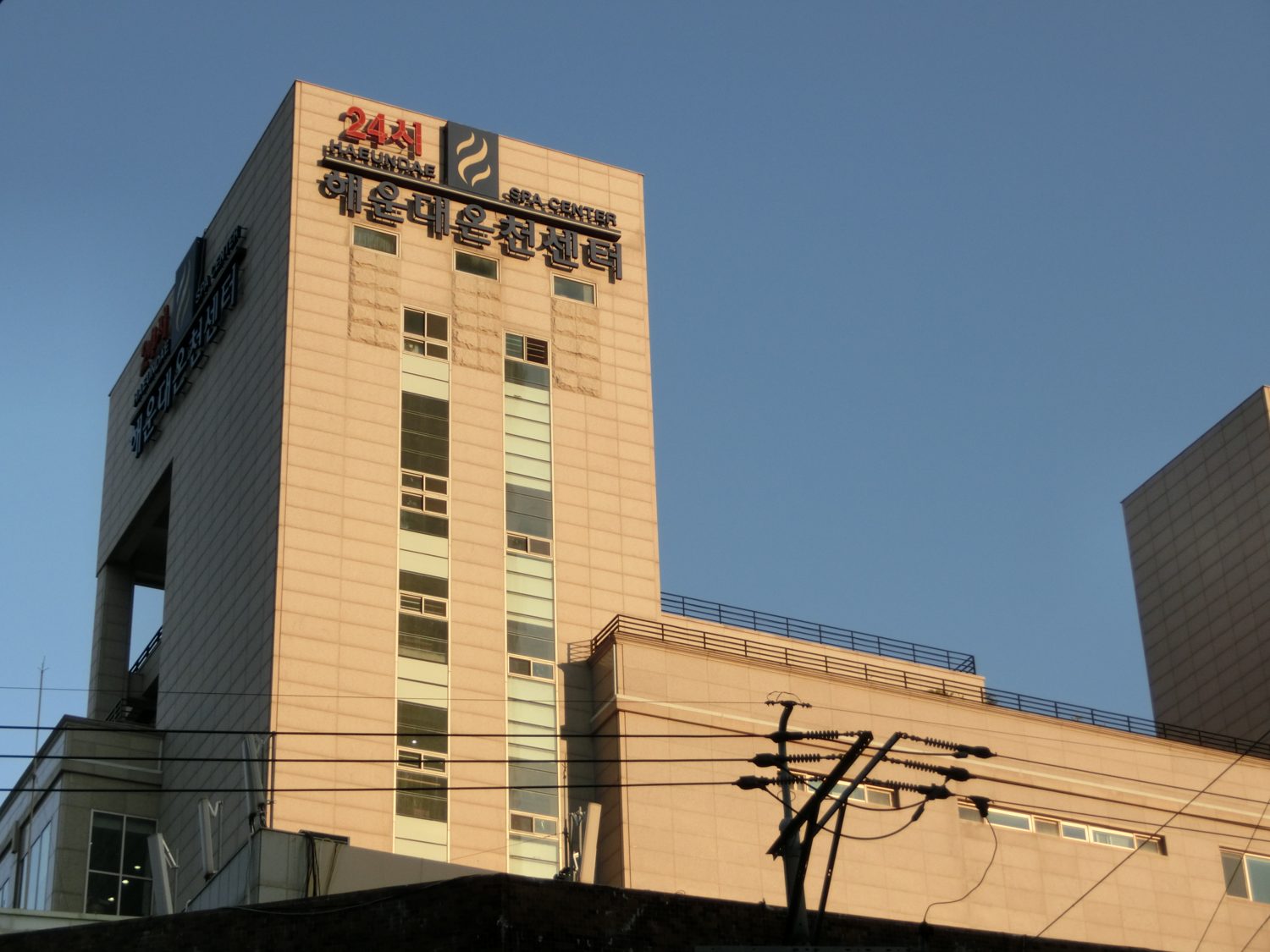
What to look for from the street: a plain block, a red 24시 sign, the name in Korean on the roof. Haeundae Spa Center, Busan. Photo: public domain, via Wikimedia Commons.
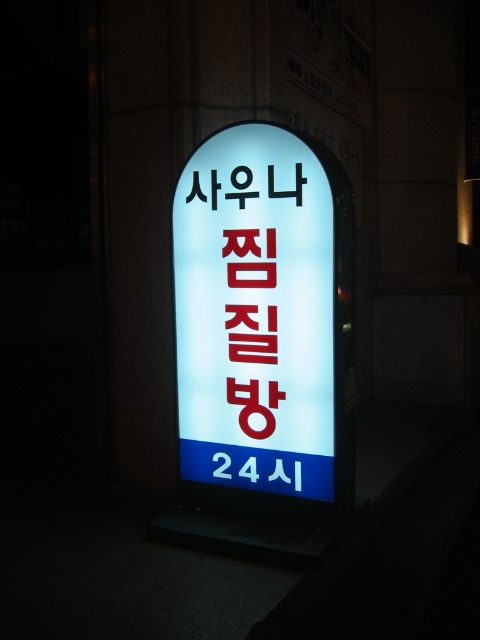
And the smaller version: 사우나 · 찜질방 · 24시. Photo: CC BY-SA 3.0, via Wikimedia Commons.
A practical note on hygiene, since it is the subject. The big jjimjilbang are cleaned constantly and are fine. The neighbourhood tang is mostly fine too; the fear is aesthetic more than bacterial, but if a floor, a stool or a basin looks neglected, it is, and you may leave. The scrub itself, wherever you have it, is done with a fresh mitt, and you can bring your own.
Korean spa sheep-head towel, pre-folded — the jjimjilbang hat from the dramas The 양머리 towel is a hand towel rolled at both ends into two "ears," worn in the hot rooms to keep sweat out of your eyes. Every jjimjilbang gives you the towel; this one comes already rolled, which is the part visitors cannot do. As an Amazon Associate, EpicKor earns from qualifying purchases.
See the sheep-head towel on AmazonFAQ
Q: Are Korean bathhouses disappearing? The neighbourhood ones, yes: 9,919 nationally in 2003 to 5,656 in 2025, and Seoul from 1,764 in 1995 to 510. Large jjimjilbang, hotel saunas and private-bath hotels are not; the bath moved to formats that are cleaner, more private and more expensive.
Q: Why are young Koreans not going to bathhouses? Not because they dislike hot water. They dislike shared stools, shared basins, wet locker rooms and 24-hour sleeping halls in buildings from the 1990s. The same people book private-tub hotels and ₩60,000 scrub studios. The problem is the room, not the bath.
Q: How much does a Korean bathhouse cost in 2026? About ₩8,000 to ₩10,000 for a neighbourhood bathhouse (Seoul's average passed ₩10,000 in 2023), ₩15,000 to ₩25,000 for a large jjimjilbang, ₩20,000 to ₩30,000 for a scrub in a bathhouse, and ₩50,000 to ₩80,000 for one in a private studio.
Q: Are bathhouses more popular in Japan? With young people, yes; in number, no. Japan has lost more than 90 percent of its sento since 1968 (about 1,500 left), but a sauna boom since 2019 turned the survivors into a youth trend, and the sento market grew 5 percent in 2025. Korea moved the bath into hotels and apartments instead of renovating the bathhouse.
Q: Where should a visitor go for the Korean bath experience? A large spa such as Siloam in Seoul or Spa Land in Busan for the full format (Dragon Hill in Yongsan, still in most guidebooks, has been shut since 2021); a neighbourhood tang on a weekday morning if you want the original before it closes; a private scrub studio if you want the ttae scrub without the crowd.
Bottom Line
The chimneys are coming down, and Koreans are bathing more elaborately than ever. The tang lost not because the country gave up on hot water but because it raised its standards for what it will sit in, and a tiled hall from 1992 with shared stools could not meet them at ₩10,000 a visit. The bath went upmarket, private and indoors: to the hotel room with its own tub, the booking-only scrub studio, the apartment basement, and the ryokan across the water. Japan faced the same collapse and rescued a few hundred bathhouses by making them clean, designed and young; Korea rescued the bath and let the building go. If you want to see the original, go on a weekday morning this winter. If you want the bath, you have never had more choice.
You might like: Korean Exfoliating Towels: What the Colours Mean, and How Often to Use One and Why Korea Has 100,000 Cafés.
Sources
- Hankook Ilbo, "The bathhouse's heyday was 2003: the rise and fall of the public bath in statistics" (January 2023); Korea Economic Daily, "Too expensive to boil the water: the neighbourhood bathhouse disappears" (15 April 2026); Sisa Journal, "₩400 million in accumulated losses" (30 March 2026); Daum/Yonhap on Seoul and Gangwon bathing fees (2023 to 2025).
- Biz Hankook, "The return of the scrub: one-person scrub shops" (23 March 2023); Booking.com Korea MZ travel survey (August 2023); Triple and Trip.com on private-bath accommodation booking lead times.
- Financial News, Herald Economy and Seoul Metropolitan Government on The Riverside Hotel's history and redevelopment (2024); the hotel's spa pages.
- Smart Today, Bridge Economy and Newsis on apartment community facilities (September 2025); KB Land and Namu Wiki on Raemian One Bailey and Helio City fees.
- Teikoku Databank, "Sento industry outlook FY2025" (April 2026); Tokyo Shoko Research on sento numbers; President Online on Yutonami; Time Out Tokyo on Koganeyu's Shinjuku branch (January 2026); Herald Economy, Seoul Economic Daily and Kyunghyang on Japanese sento fuel-cost closures (March to April 2026).
You Might Also Like
Korean Lottery for Foreigners: Lotto Price, Toto Prizes, Tax, and the Casino Rule That Flips for Tourists
Yes, a foreigner can buy and win Korea's Lotto: at least 25 have taken first prize. ₩1,000 a game, a 22 to 33 percent tax, first prize paid only at NH Bank in Seoul, how Sports Toto prizes are split, and why casinos admit you but not Koreans.
Why Korea Has 100,000 Cafés: The ₩2,000 Americano, the ₩222 Bean, and Why Half of Them Will Close
Korea has one café for every 536 people, twice as many as convenience stores, and drinks 405 cups a head a year. How a ₩2,000 americano and a ₩4,700 one share a street, what the beans cost, who owns the chains, and why cafés now close faster than they open.
Korean Bathhouse Prices: What a Mogyoktang Costs in Every Region
A Korean neighbourhood bathhouse (mogyoktang) now costs ₩11,000 in Seoul, the highest in Korea, and ₩8,100 in Gwangju. Government prices for September 2026 by region, what the ticket covers, scrub prices, the age-4 rule and how to use one.