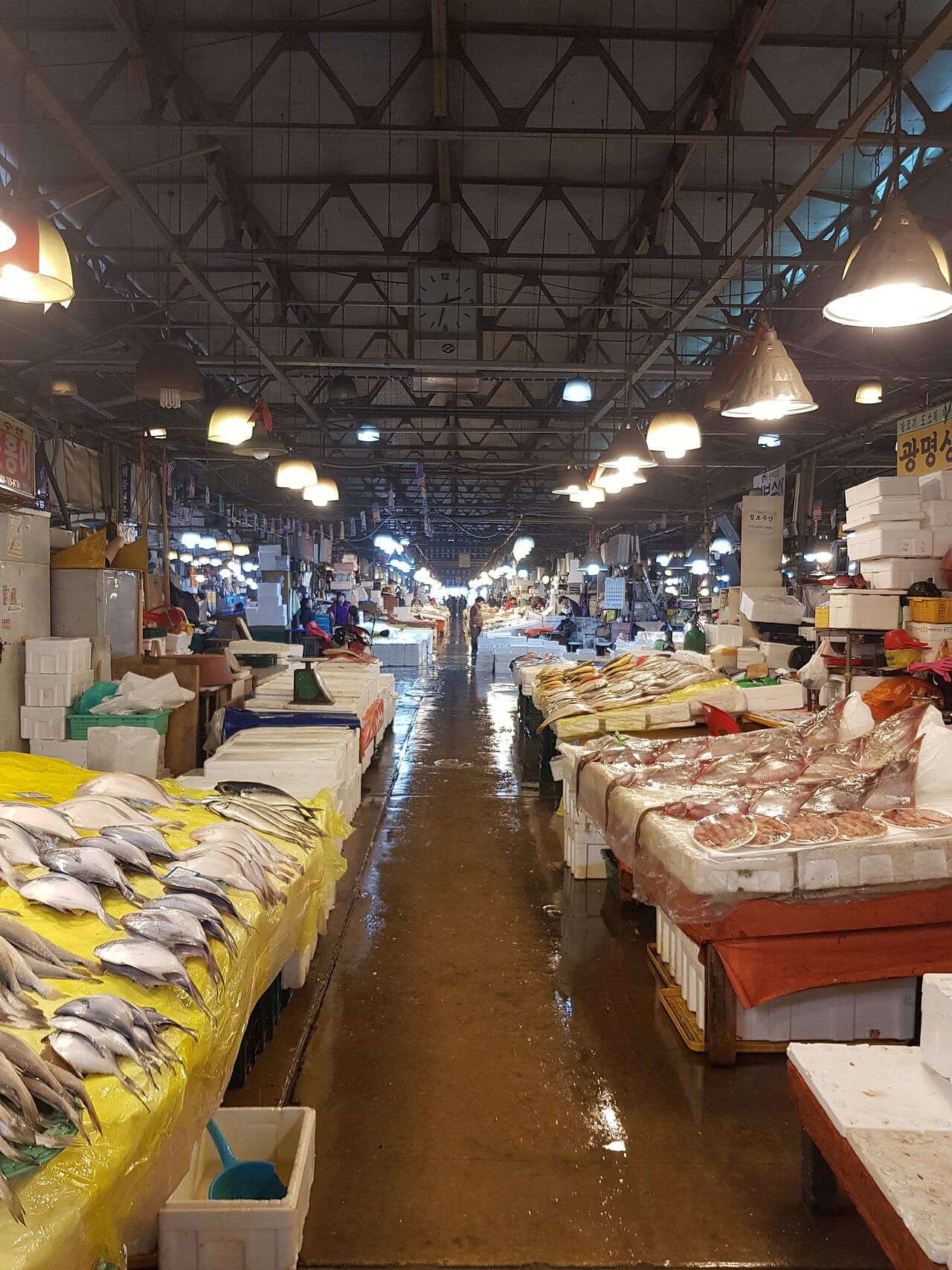
Noryangjin Fish Market Guide 2026: Buy Seafood In Seoul
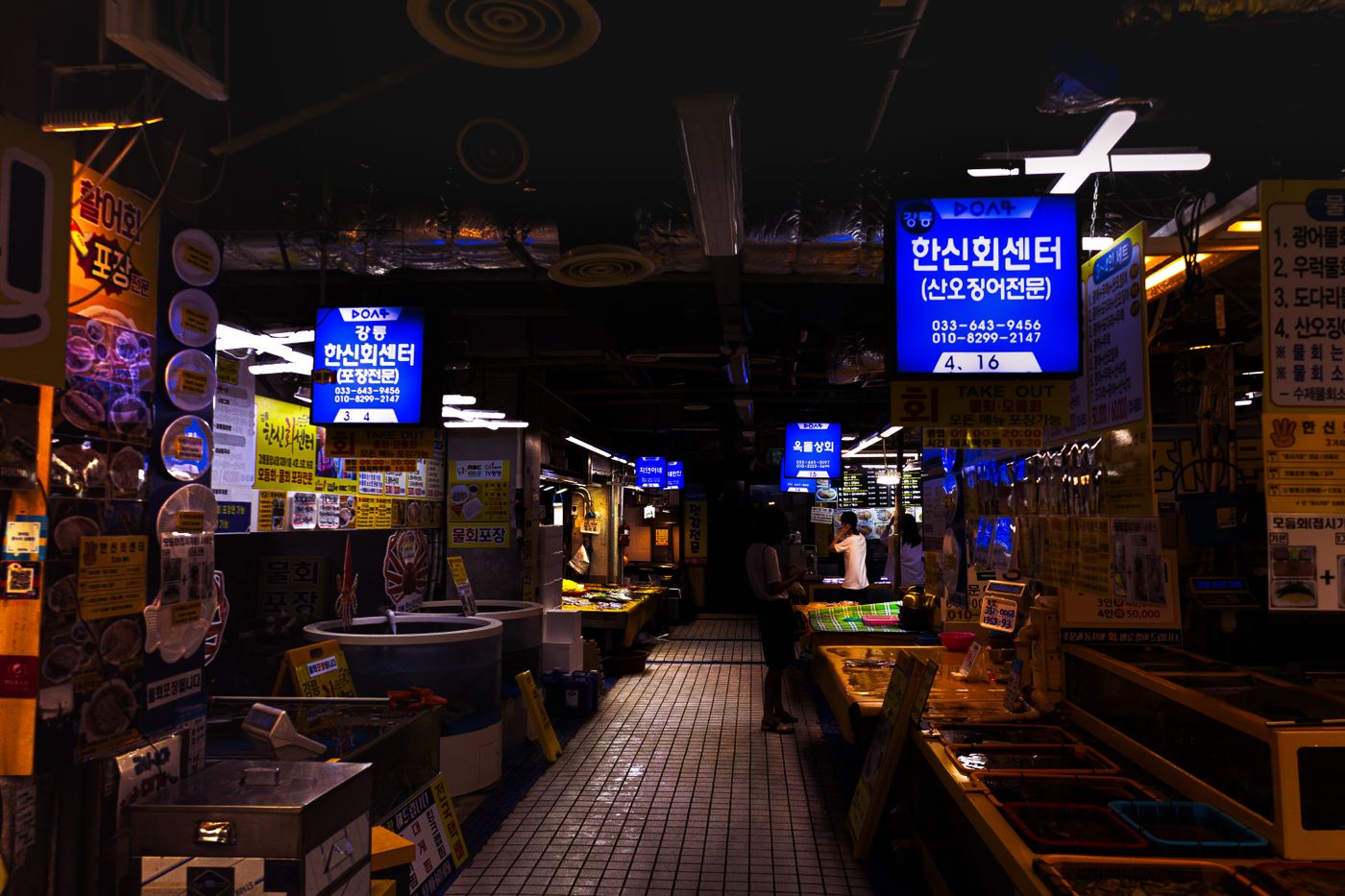
Noryangjin Fish Market is one of Seoul's most memorable food stops because it does not behave like a normal restaurant. You do not simply walk in, sit down, and order from a fixed menu. You move through seafood stalls, compare tanks and displays, choose what you want, agree on a price, then usually take the seafood to an upstairs restaurant area where it can be sliced, grilled, steamed, boiled, or turned into soup for an added preparation fee.
That is exactly why first-time visitors either love Noryangjin or feel overwhelmed by it. The market can be loud, wet, fast, and negotiation-heavy. It is also one of the easiest places in Seoul to turn a meal into a travel memory. The trick is not to "wing it" with no plan. Go in knowing the buying flow, the fees, the best timing, and the mistakes that make tourists overspend.
pocket tissues — on AmazonAffiliate link. As an Amazon Associate, EpicKor earns from qualifying purchases at no extra cost to you.
Quick Answer: Is Noryangjin Fish Market Worth Visiting?
Yes, Noryangjin Fish Market is worth visiting if you want a hands-on Korean seafood experience and you are comfortable with a market environment. It is best for travelers who like crab, sashimi, shellfish, live octopus, grilled fish, seafood soup, or the experience of choosing ingredients before eating. It is less ideal for travelers who dislike seafood smells, wet floors, price conversations, or uncertainty.
The most practical first-timer plan is simple: arrive outside the most chaotic meal rush, walk one full lap before buying, choose one or two seafood items, confirm the price and preparation plan, then follow the vendor's direction to a restaurant area. Keep the meal focused. A few strong items beat a table covered with expensive impulse choices.
If this is your first Korea food trip, pair Noryangjin with EpicKor's Korean department store food hall guide, Korean BBQ guide, and Seoul market food planning guide. Noryangjin is not the easiest food stop in Seoul, but it is one of the clearest examples of how Korea turns shopping, freshness, and eating into one continuous ritual.
How The Market Meal Works
Noryangjin is easiest when you understand that there are two separate decisions. The first decision is what seafood to buy. The second decision is how and where it will be prepared. Tourists often focus only on the seafood price and forget the restaurant charge, preparation fee, seating fee, soup fee, or side-dish expectations that can come later.
Start by walking through the stalls without buying immediately. Look at crab, shrimp, fish, shellfish, abalone, octopus, and seasonal items. Notice which stalls feel calm, which prices are visible, and which vendors can communicate clearly enough for your group. You do not need perfect Korean, but you do need a clear agreement.
When you are ready, point to the item, ask for the total price, and clarify whether that is for the seafood only or includes preparation. If the vendor says the upstairs restaurant will handle the cooking, ask what style is recommended. For fish, that may mean hoe, Korean-style sliced raw fish. For crab or shrimp, it may mean steaming. For shellfish, it may mean grilling or soup. For leftover fish bones, maeuntang, a spicy fish stew, may be offered as a follow-up.
Do not be embarrassed to type prices into your phone calculator. It is normal and useful. The goal is not to bargain aggressively over every won. The goal is to avoid misunderstanding the unit, weight, service charge, or final table plan.
Best Foods To Try At Noryangjin
For a first visit, choose seafood that gives you a clear memory without making the meal too complicated. Korean-style sliced raw fish is the classic choice. It is usually eaten with soy sauce, wasabi, ssamjang, garlic, chili, perilla leaves, and lettuce. The texture is often firmer than many Western sashimi expectations because Korea values chew and freshness, not only softness.
Steamed crab is another strong choice, especially for groups. It feels celebratory, photographs well, and can be easier to understand than a long list of unknown fish. The downside is price. Crab can become expensive quickly, so confirm the total before committing.
Shrimp, scallops, clams, and abalone are easier to share and can work well when one person in the group is nervous about raw fish. Grilled shellfish has a more relaxed flavor profile and pairs well with beer or soju if your restaurant area serves alcohol.
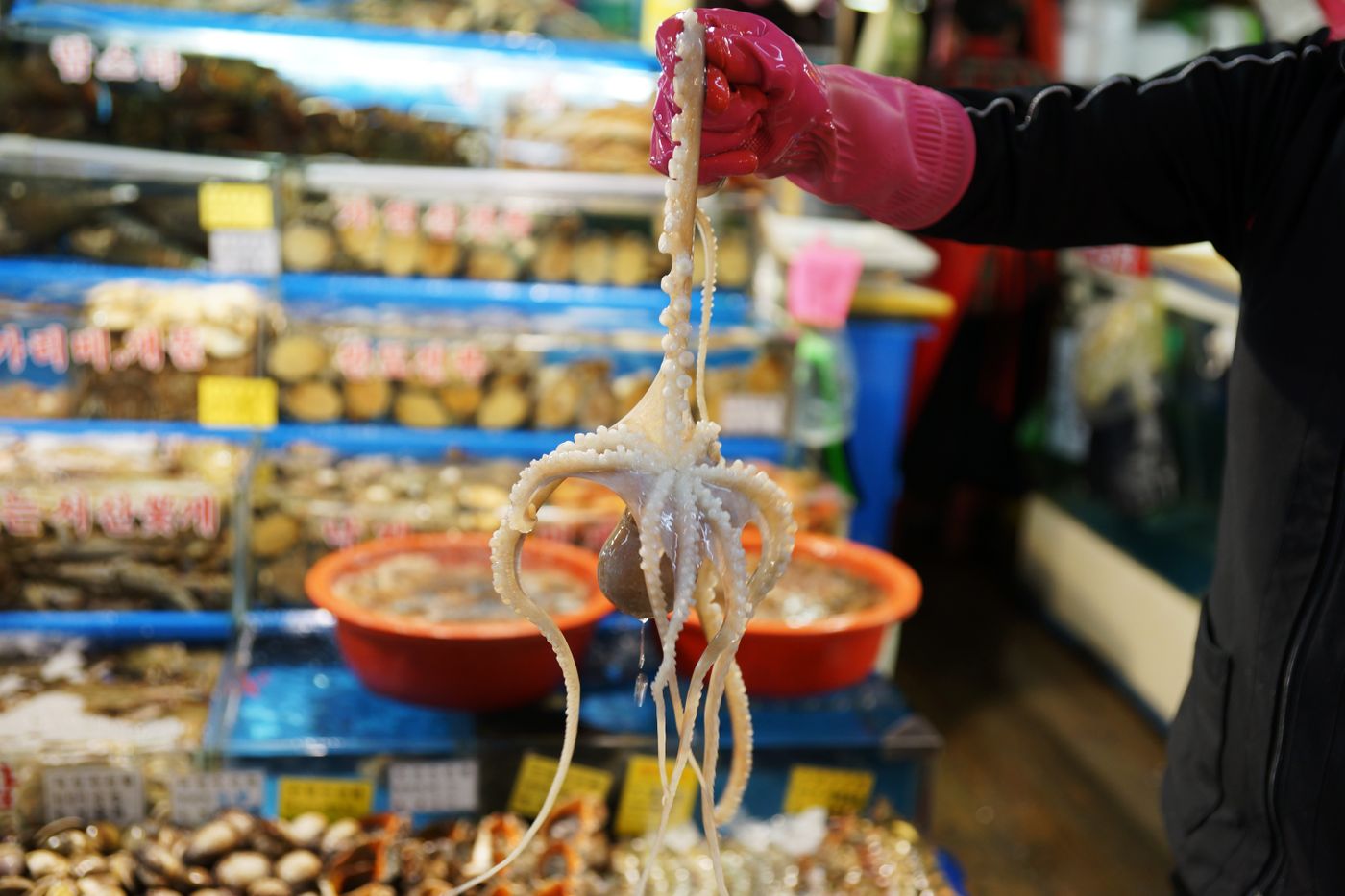
Live octopus, or sannakji, is famous with tourists, but it should not be treated like a dare. The pieces can still move, and the texture is chewy and sticky. Chew carefully, do not rush, and skip it if anyone in your group is uncomfortable.
First-Time Ordering Strategy
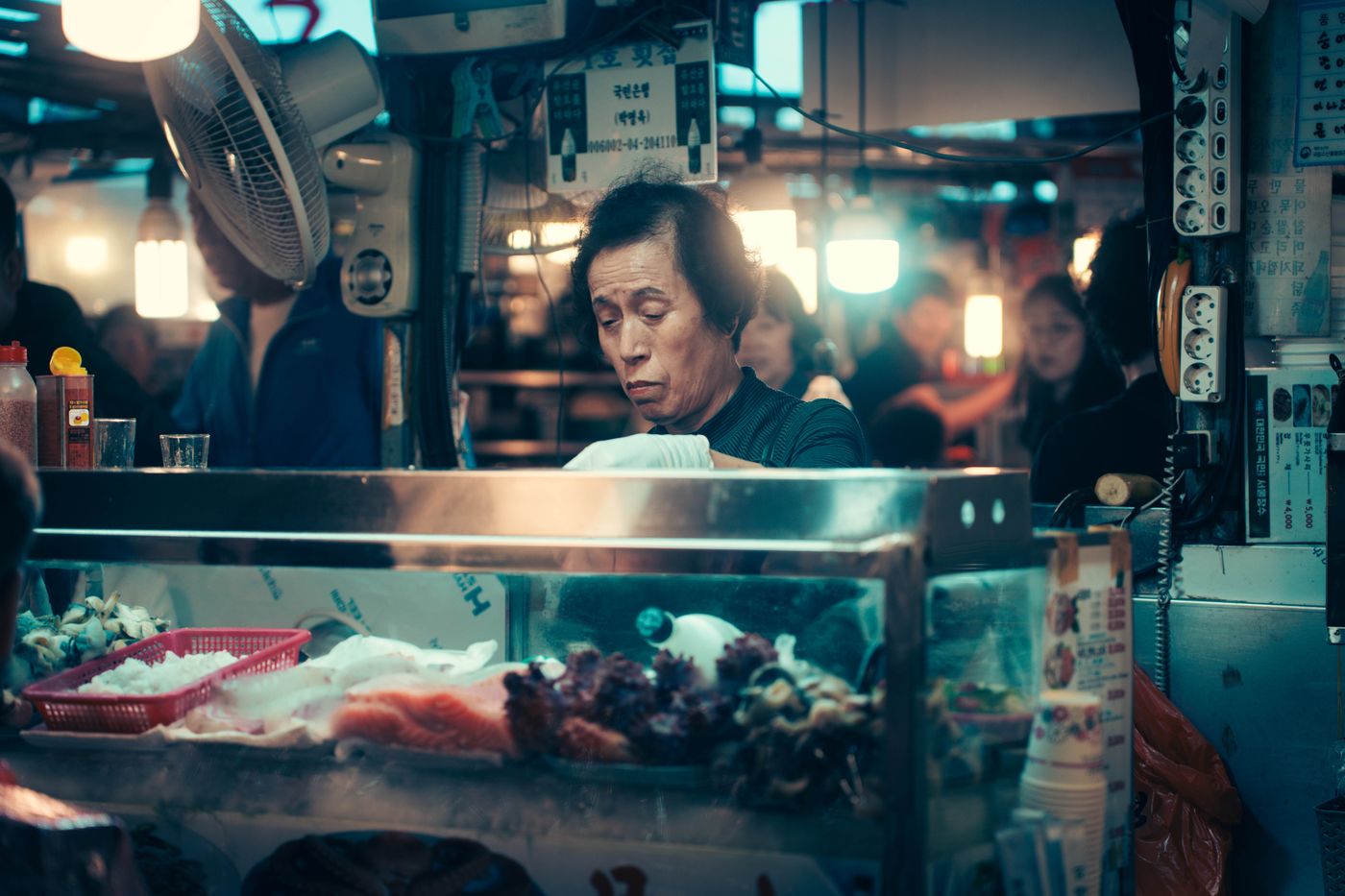
The safest first-time order is one main seafood item plus one supporting item. For example, choose sliced raw fish plus spicy fish stew, steamed crab plus rice, or grilled shellfish plus shrimp. This keeps the table exciting without turning the bill into a confusing stack of charges.
If you are two people, avoid ordering as if you are a Korean family gathering. Vendors may show you impressive seafood because it looks good, but two travelers cannot comfortably finish every crab, fish, shellfish set, soup, and side dish at once. If you are four or more people, you have more room to build a larger table.
One useful phrase is to ask for a recommendation "for two people" or "for four people." Even if the answer is not perfect, it signals that you are thinking by group size. Use your phone calculator for the final number. If the price feels high, smile, say thank you, and keep walking. You are not trapped because someone started a conversation.
Do not let a vendor rush you into a decision before you understand the cooking flow. The market is busy, and many vendors are used to moving quickly. That does not mean you need to move faster than your comprehension.
| Traveler Type | Best Order | What To Avoid |
|---|---|---|
| Solo traveler | Small sashimi portion, soup, or simple grilled seafood | Large crab or multi-item sets unless price is very clear |
| Couple | One fish plus maeuntang, or one crab plus rice | Adding shellfish, shrimp, and octopus before checking total cost |
| Family | Steamed crab, grilled shellfish, fish stew, cooked shrimp | Only raw seafood if children or cautious eaters are present |
| Food-focused group | Sliced fish, shellfish, abalone, crab, and stew in a planned sequence | Letting every person impulse-buy at a different stall |
Price And Fee Mistakes To Avoid
The most common mistake at Noryangjin is thinking the seafood price is the full meal price. In many cases, you pay for the seafood at the stall and then pay a separate restaurant or preparation charge upstairs. This can include table setting, cooking, steaming, grilling, stew preparation, rice, drinks, or side items. None of that is automatically wrong. It just needs to be expected.
Here are the actual numbers, which almost no English guide prints. The upstairs restaurants are called 초장집 (chojangjip) — literally "chili-sauce houses" — and their business is not selling you fish. It is charging you to sit, slice, season and cook the fish you already bought downstairs.
| Charge | Korean | Typical amount |
|---|---|---|
| Table setting per person — sauce, lettuce, sides | 상차림비 | ₩4,000 per person at Noryangjin |
| Same, if you decline the fish-bone stew | 상차림비 | Can rise to ₩6,000 per person |
| Spicy fish-bone stew | 매운탕 | ₩4,000–5,000 per person |
| Typical rate at chojangjip outside Noryangjin | — | ₩2,000–4,000 per person |
Fees checked August 2026. They are set shop by shop, not by the market, so the board at the door is the only binding number.
Read that table once and the market's economics become clear. A group of four adds roughly ₩16,000 to ₩24,000 before a single piece of fish is cut, and skipping the stew can cost more than ordering it. That is not a scam — it is the standing arrangement — but it is exactly the line item visitors do not budget for.
Noryangjin also has a genuine reputation problem worth stating plainly. Korean consumers themselves describe the market as prone to overcharging first-timers: thumbs on scales, weight quoted vaguely, and pressure to follow a particular vendor to a particular chojangjip. Buy where the price per weight is posted, watch the scale, and choose your own upstairs restaurant rather than being walked to one.
The second mistake is misunderstanding weight. Seafood prices may depend on size, season, weight, or vendor. A crab that looks like one item may be priced by weight. Fish may be recommended by size for your group. Shellfish may be sold by basket, count, or portion. If a number is unclear, ask whether it is total price.
The third mistake is entering the market too hungry. If you arrive starving, you are more likely to accept the first strong pitch. Eat a small snack beforehand if you know you become impatient when hungry.
The fourth mistake is treating every market interaction as a scam risk. Seoul markets can be assertive, but many vendors are simply working quickly. Be polite, clear, and willing to walk away. That combination works better than suspicion or confrontation.
When To Go
Noryangjin is most interesting when the market is active, but first-timers do not need to chase the most intense wholesale hours. For visitors, late morning through afternoon can be easier than the deepest business rush. Evening can work well if your goal is dinner, but the mood may feel busier and more social.
If you want photos, give yourself time to walk, watch, and compare before committing to a meal. Do not block workers, do not photograph people closely without care, and keep your bag close to your body because aisles can be wet and narrow.
The market can be visited year-round, but seafood choices and prices change with season. Crab, shellfish, and fish availability can shift. That is another reason to go with a category preference rather than a single must-have item. If one item is expensive that day, choose something else.
Weather matters less than it does for outdoor markets because much of the experience is indoors, but rain can still affect your comfort getting there and leaving. Shoes matter more than weather. Wear something with grip that you do not mind exposing to wet floors.
How To Fit Noryangjin Into A Seoul Day
Noryangjin works best as the main food event of a half day. Do not schedule it between two tight reservations. Give yourself time to arrive, walk, choose, eat, settle the bill, and recover from a heavy seafood meal.
A practical route is to pair Noryangjin with Yeouido, the Han River, or a slower afternoon cafe. It is not the ideal stop right before a palace tour in formal clothes or right before carrying multiple shopping bags through narrow aisles.
If you are building a Korea food itinerary, use Noryangjin as your "market seafood" day, then balance it with easier food days. Department store food halls are clean and convenient. BBQ restaurants are social and structured. Convenience stores are casual. Traditional markets are snack-heavy. Noryangjin sits in its own category: fresh seafood plus market negotiation plus restaurant preparation.
That difference is why it belongs in a Seoul food plan, not because every traveler must love it. Some people will prefer Gwangjang Market, Mangwon Market, or a polished seafood restaurant. Noryangjin is for travelers who want the working-market version of dinner.
Etiquette And Comfort Tips
Keep your group compact in the aisles. Workers are moving seafood, water, boxes, and equipment. If you stop to discuss a price, move to the side when possible.
Do not touch seafood unless invited. Pointing is enough. If you need to show size or quantity, use gestures and your phone. Market vendors are used to tourists, but respectful distance still matters.
Bring a small bag only. Rolling suitcases, luxury shopping bags, and long coats make the market harder. If you are coming from the airport or a hotel transfer, store luggage first.
If you drink alcohol with the meal, pace yourself. Seafood meals can turn into long social tables, but you still need to navigate transit afterward. Read EpicKor's Korean drinking etiquette guide if the meal includes soju, beer, or group toasts.
A Simple 2-Hour Noryangjin Plan
Use the first 15 minutes to walk the main seafood area without buying. This is your orientation lap. Look for seafood types, visible prices, calmer vendors, and the general mood of the market.
Use the next 15 minutes to choose your stall and confirm the plan. Decide your main item, ask the total price, ask how it will be prepared, and clarify where you will eat it. If the answer feels unclear, pause and ask again.
Use the next 60 minutes to eat. Do not rush the meal. Part of the fun is watching the table become a Korean seafood spread: sauces, vegetables, rice, soup, cooked seafood, raw fish, and shared plates.
Use the final 30 minutes to settle the bill, clean up, walk back through the market if you want photos, and move slowly toward transit. A seafood meal can be heavier than expected, especially with soup and alcohol.
Who Should Skip Noryangjin?
Skip Noryangjin if you want a quiet, fragrance-controlled restaurant with fixed prices and a predictable menu. Also skip it if your group has seafood allergies, strong smell sensitivity, mobility concerns on wet floors, or no patience for a market meal.
If you still want seafood in Seoul, choose a regular restaurant where the menu and seating are clearer. There is no shame in that. Korea has many ways to eat seafood, and Noryangjin is only one version.
But if you like food markets, flexible plans, and meals that feel local without being polished for tourists, Noryangjin is worth the effort. The market gives you a story before the first bite. Just make sure the story is about what you ate, not confusion over what you paid.
Sources Checked
This guide was written from EpicKor Seoul food itinerary experience, image verification, and source checks including the official Noryangjin Fisheries Wholesale Market website, the Korea Tourism Organization listing for Noryangjin Fisheries Wholesale Market referenced in public tourism data, and recent traveler-facing market guidance. Market hours, stall availability, preparation charges, and seasonal seafood prices can change, so verify a specific visit plan before crossing Seoul for one item.
FAQ
Q: How much are the cooking fees at Noryangjin?
The upstairs chojangjip (초장집) charge a table-setting fee of about ₩4,000 per person, which can rise to ₩6,000 if you do not also order the spicy fish-bone stew. The stew itself runs ₩4,000–5,000 per person. Those charges are separate from the seafood you buy downstairs and are set by each shop, so read the board before you sit.
Q: Do I need to speak Korean at Noryangjin Fish Market?
No, but you need patience and clear confirmation. Many vendors are used to tourists, and phones make price confirmation easier. Use a calculator, point to items, confirm the total price, and ask where the seafood will be prepared before paying.
Q: Is Noryangjin Fish Market expensive?
It can be affordable or expensive depending on what you buy. Simple fish, shrimp, or shellfish can be manageable, while crab, premium fish, abalone, and large group spreads can become expensive quickly. Remember to include preparation and restaurant fees, not only the seafood price.
Q: Can I go to Noryangjin alone?
Yes, but solo travelers should keep the order small. A simple sashimi portion, soup, grilled seafood, or cooked item is easier than a large crab or multi-dish spread. If you want the full table experience, Noryangjin is better with two to four people.
Q: Is live octopus safe to eat?
Many people eat sannakji in Korea, but it requires careful chewing and is not for everyone. If you are nervous, skip it. Noryangjin has plenty of cooked seafood, sliced fish, crab, shrimp, shellfish, and soup options that are easier for first-time visitors.
You Might Also Like
Korean Department Store Food Halls 2026: What To Eat In Seoul
Seoul's department store food halls close at 20:00 on weekdays, earlier than most visitors expect. Real hours for The Hyundai Seoul, Shinsegae Gangnam and Lotte, which basement floor to enter, and how to time a visit so you are not locked out.
The One Korean Food Foreigners Never Learn to Love: Hamheung Naengmyeon, and Why Koreans Can't See the Problem
Foreigners who eat cheonggukjang and even hongeo still will not pay for this twice. A Korean creator who fed foreigners for years says naengmyeon was the overwhelming number one refusal, and Koreans, who rank it first every summer, cannot see why.
Jokbal vs Bossam: Which Korean Pork Dish Should You Order?
Jokbal and bossam share a menu, a price, and the same side dishes — but one is soy-braised trotter and the other is plain-boiled belly. Which to order, what a portion costs in August 2026, and why they are always sold together.