
Cass vs Terra vs Kelly: Korean Beer Compared — Corn Starch, ₩2,500 Cans, Which to Order, and Is Korean Beer Really Bad?
Last updated: 17 October 2026
Every country has one sentence it cannot live down. Korea's, in beer, was written in November 2012 by a British correspondent in Seoul and published in The Economist under the headline "Fiery food, boring beer." The sentence was this: "Brewing remains just about the only useful activity at which North Korea beats the South." The writer, Daniel Tudor, had drunk Pyongyang's Taedonggang lager and found it "surprisingly good," and he had drunk Cass and Hite, and he wanted to know why a country that tolerates no blandness in its kimchi tolerated it in its beer.
Koreans were furious, then quietly agreed, then spent the next decade doing something about it. That is the story of this post. If you are arriving in Korea and wondering whether the beer is worth drinking, the honest answer in 2026 is: the big lagers are better than they were, one of them is genuinely good, the craft boom that followed has mostly collapsed, and the survivors are sitting in a convenience-store fridge near you for about ₩4,500 a can. Here is how to tell which is which.
Cass vs Terra, the short answer: they are closer than the marketing suggests. Both are pale lagers brewed with corn starch alongside the malt; Terra (테라) is 4.6 percent, fizzier and a little sharper, Cass (카스) is 4.5 percent, softer and the default in every chicken shop. A 355 ml can of either is ₩2,500 in a Korean convenience store as of October 2026. If you want the one that actually tastes of malt, skip both and order Kelly (켈리).

The Daegu Chimaek Festival in 2016, where the argument about Korean beer goes to be ignored: fried chicken, a cold lager, and a crowd that never asked about malt content. Photo: Daegu Metropolitan City, KOGL Type 1.
The snack Korea drinks its beer with: Orion Squid Peanut is the bar snack under every Cass in the country, and it ships to the US. As an Amazon Associate, EpicKor earns from qualifying purchases.
Watch the 7-minute episode: Soju Alcohol Percentage: Why It Fell From 35% to 15.7% — beer's partner in somaek has its own century-long story: Korea made soju weaker on purpose, from 35 percent in 1924 to 15.7 today.
Quick Guide: what is in the fridge, and what to expect
| Beer | Maker, launched | What it is | 2026 verdict | Convenience-store price (Oct 2026) |
|---|---|---|---|---|
| Cass Fresh (카스) | OB (AB InBev), 1994 | 4.5% adjunct lager: malt plus corn starch | Roughly one beer in two sold in Korea. Built for fried chicken and somaek, not for sipping | ₩2,500 (355 ml can or 500 ml bottle); 500 ml can price held since 2025, check the shelf |
| Terra (테라) | Hite Jinro, March 2019 | 4.6% lager: 100% Australian malt plus corn starch, hard carbonation | The one that broke Cass's grip for a year, then stalled at about 10% of the home market | ₩2,500 (355 ml can or 500 ml bottle) |
| Kelly (켈리) | Hite Jinro, April 2023 | 4.5% all-malt lager, 100% Danish malt, double-matured | The best of the big three by a distance. Took share mostly from Terra after its 2023 launch | ₩2,500 (355 ml can or 500 ml bottle) |
| Hite (하이트) | Hite Jinro, 1993 | The old number one | Down about 10% in volume in 2024 (IWSR); the beer your Korean uncle still orders | ₩2,500 (355 ml can or 500 ml bottle) |
| Filite (필라이트) | Hite Jinro, 2017 | Not legally beer: under 10% malt, taxed as "other liquor" | Launched at 12 cans for ₩10,000. Tastes like it | The cheapest can in the fridge; check the shelf |
| Convenience-store craft | Seoul Brewery, Gorilla (Busan), OBC, Budnamu (Gangneung), Mikkeller collabs | Ales, wheat beers, a helles, a rice beer | Hit and miss, but the survivors of the crash are the good ones | ₩4,500 to ₩6,300; 4 cans ₩13,000 to ₩17,200 |
Prices are the posted convenience-store list prices as of October 2026. The last rises were OB's on 1 April 2025 (Cass 355 ml can ₩2,250 to ₩2,500, 500 ml bottle ₩2,400 to ₩2,500) and Hite Jinro's in June 2025, after a factory-price rise on 28 May (the same two steps for Terra, Kelly and Hite). Both brewers left the 500 ml can out of those rises, so the big can usually works out cheaper per millilitre. 1+1 and 4-can promotions move the shelf price week to week. For the rules on where and how you can buy alcohol in Korea, from convenience stores to app pickup, we wrote them up separately.
You might like: Korean Drinks Guide: what to buy in a Korean convenience store, with the price, sugar and caffeine of every bottle
Cass vs Terra vs Kelly, head to head
The three beers you will be offered in any Korean restaurant, side by side. Specifications are the brewers' own; market figures are IWSR's and Nielsen Korea's as reported in Korean business papers.
| Cass Fresh (카스 후레쉬) | Terra (테라) | Kelly (켈리) | |
|---|---|---|---|
| Maker | OB Beer (AB InBev) | Hite Jinro | Hite Jinro |
| Strength | 4.5% | 4.6% | 4.5% |
| Grain | Malt plus corn starch | 100% Australian malt plus corn starch | All malt, 100% Danish barley |
| How it drinks | Soft, very cold, almost no aroma | Sharper and fizzier; Hite Jinro says the gas comes from fermentation, not injection | Fuller, a clean bitter finish, real malt flavour |
| Share | About one beer in two sold in Korea (IWSR, 2024) | About 10% of the home market in 2024 and early 2025 | About 5% of the home market; took share mostly from Terra |
| 355 ml can, convenience store | ₩2,500 | ₩2,500 | ₩2,500 |
| Order it when | Fried chicken, somaek, a big table | Somaek with Chamisul (the "Tesla") | You want to taste the beer |
Is Cass beer good? For what it is for, yes. It is a clean, cold adjunct lager, the Korean equivalent of Budweiser, and it does not get in the way of spicy, salty food. On its own it tastes of very little, which is the complaint every foreign beer writer makes.
Is Terra beer good? It is Cass with sharper edges. The "100% Australian malt" on the label describes the malt, not the whole grain bill: Terra contains corn starch too, which is the ingredient Hite Jinro names in its NON-GMO certification, renewed for a fifth straight year in September 2026. If you liked Cass and want more fizz, Terra is your beer. If you wanted an all-malt beer, it is not.
The pairing is the real reason Terra exists. In Korean bars Terra mixed with Hite Jinro's own Chamisul soju is called 테슬라 (teseulla, "Tesla": Te(rra) + (Chami)seul), and the brand has leaned into it; in 2020 Hite Jinro even sold a "somaek set" in CU and Emart24 of three 500 ml Terra cans and a 360 ml bottle of Chamisul for ₩9,000, ten percent under the list price at the time. And if you are not drinking, Terra Zero (테라 제로), a 0.00 percent non-alcoholic beer-flavoured drink from Hite Jinro Beverage (하이트진로음료), sold 4 million cans in its first hundred days, by the company's count in July 2026.
One honest note on the head-to-head. In a blind tasting most people, Koreans included, cannot reliably tell Cass from Terra once both are ice-cold and next to fried chicken. The difference you will notice is Kelly.
Jinro soju glasses + toad bottle opener — the somaek kit Korean somaek is measured in soju glasses: one 50 ml glass of soju into a beer glass of Cass or Terra. This three-piece set is the Jinro glass and the toad-shaped opener you will see on bar tables across Korea. As an Amazon Associate, EpicKor earns from qualifying purchases.
See the soju glass set on AmazonThe insult, and why it landed
Tudor's column was short and it was not really about taste. It was about a market. Two companies, Oriental Brewery (OB) and Hite, had between them made almost every beer sold in South Korea since the 1930s, when both were founded under Japanese ownership as the Showa Kirin and Chosun breweries. By 2012 they were a duopoly with no reason to compete on flavour, protected by a tax structure that charged beer at 72 percent of its factory price, and had charged 150 percent through the 1990s, more than whisky. Small breweries existed but were legally barred from selling their beer anywhere except their own premises. The result was two nearly identical pale lagers made with a generous share of rice or corn starch in place of malt, brewed strong and diluted down, and cold enough that nobody noticed.
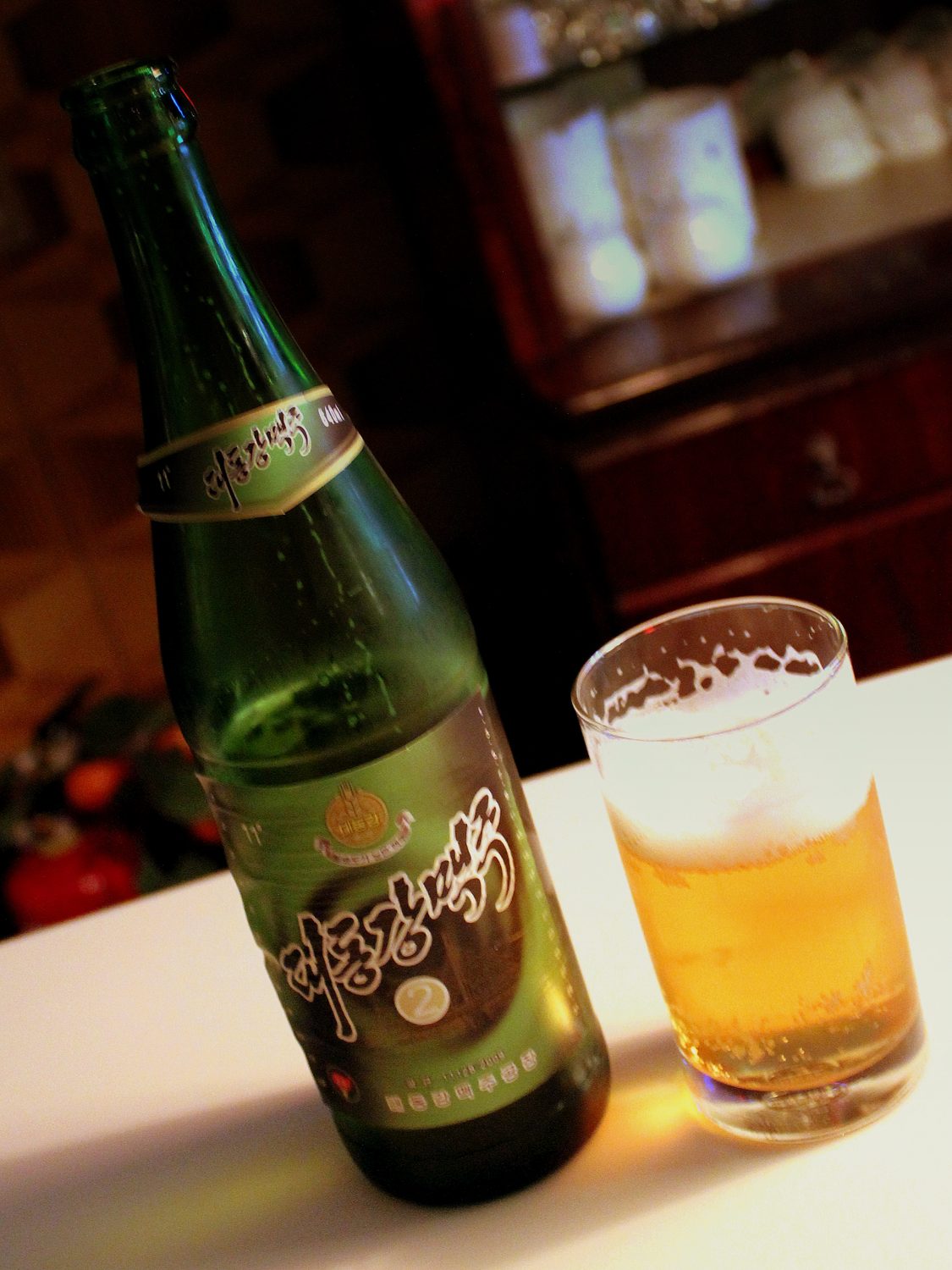
Taedonggang, photographed in North Korea in October 2012, the month before The Economist compared it favourably to everything brewed in Seoul. Photo: calflier001, CC BY-SA 2.0, via Wikimedia Commons.
The North Korean beer he preferred has its own strange history. In 2000 Kim Jong Il decided the country needed a showcase brewery and bought the entire plant of Ushers of Trowbridge, a defunct English brewery in Wiltshire, for about £1.5 million. It was dismantled, shipped and running in Pyongyang by 2002. Taedonggang is a 5 to 5.5 percent lager that comes in seven numbered versions by malt-to-rice ratio, and the New York Times once described it as "full-bodied, a little on the sweet side, with a slightly bitter aftertaste." It was briefly exported to the South from 2005 until the brewery raised its price by 70 percent in 2007 and the importer gave up. Koreans who have tried it tend to say the same thing: it is a decent European-style lager, which was exactly Tudor's point. The North had bought a British brewery. The South had bought corn.
Korea took the column badly and then, characteristically, treated it as a to-do list.
Why Cass tastes the way it does
Start with the label, because the label is honest. Cass Fresh lists purified water, malt, corn starch, hop extract and a handful of processing aids. That makes it an American-style adjunct lager, the same family as Budweiser, and the same family that dominates Japan, Brazil and most of Southeast Asia. Korean law defines beer as anything with at least 10 percent malt; the big lagers are generally reckoned in the trade to run around 70 percent, with starch making up the rest. The technique is called high-gravity brewing: brew a strong, concentrated beer, then dilute it with water and carbon dioxide to 4.5 percent. It is cheap, consistent and very scalable, and it produces a beer with almost no aroma, which is the thing beer drinkers from Europe notice first.
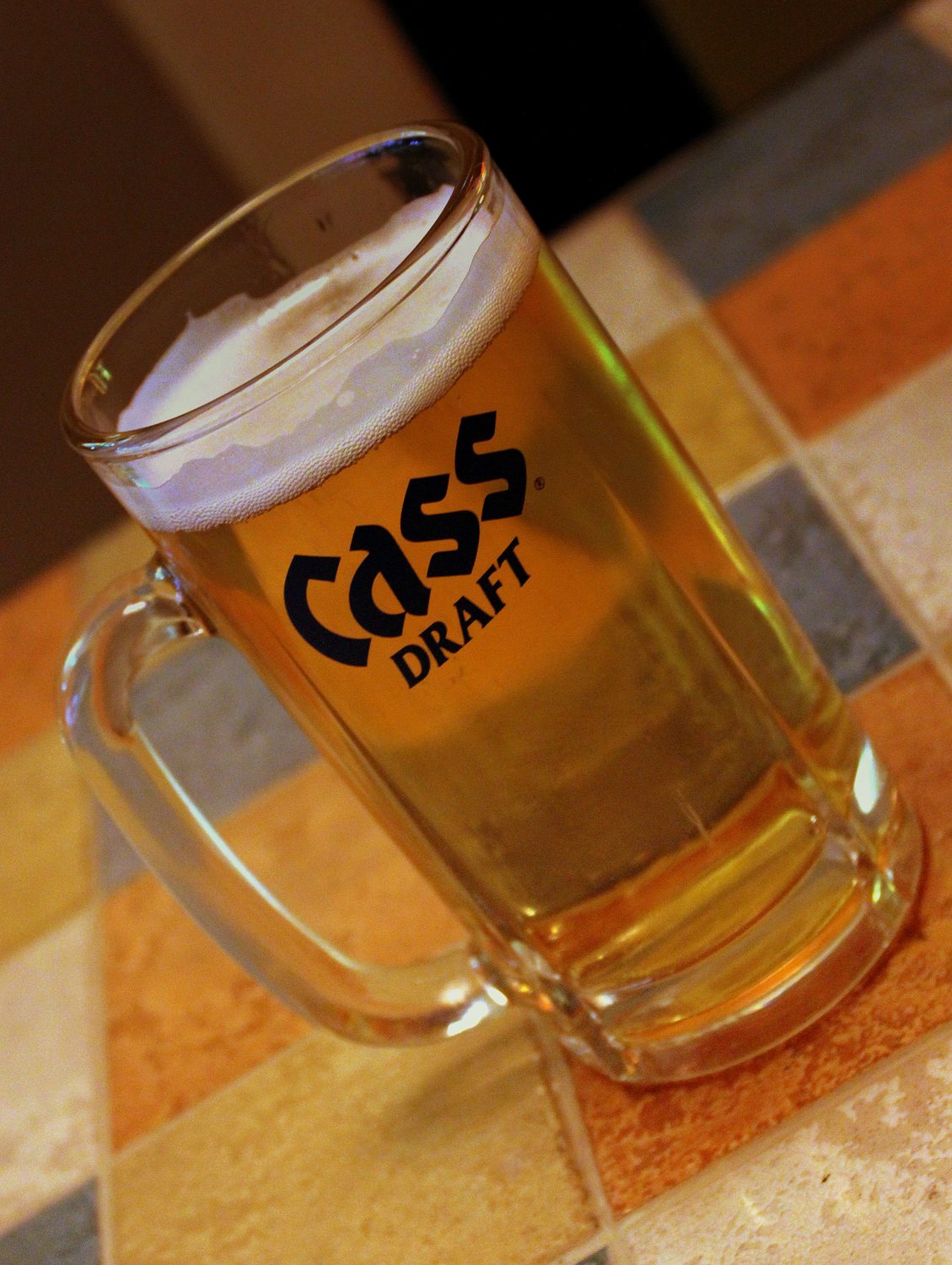
Cass on draft in Seoul, 2012. Cold, fizzy, nothing in the nose, and that is the design. Photo: calflier001, CC BY-SA 2.0, via Wikimedia Commons.
None of this is an accident, and this is the part foreign critics tend to miss. Korean beer is not drunk the way Belgian or English beer is drunk. It is drunk with food that is spicy, salty and fried, in quantity, cold, and about a third of the time it is drunk mixed with soju as somaek. Nobody wants a hoppy IPA in a somaek. Nobody wants a rich Munich dunkel with a plate of fried chicken and pickled radish. What the market wanted, and what the duopoly happily supplied, was a beer that stays out of the way. When Gordon Ramsay fronted a Cass advertising campaign in 2017 and called it a beer that suited Korean food, Korean columnists pointed out that he and Tudor were both right: it is a competent beer for the job it was designed for, and the job is a narrow one.
The tax made the blandness worse. Until 2020, Korean beer was taxed on price, so any extra cost in the brewery, better malt, longer maturation, was multiplied by the tax before it reached the shelf. Importers, by contrast, were taxed on a declared import price they could keep low, which is how a foreign can could sell four for ₩10,000 while a domestic can could not. In 2020 the government switched beer to a volume tax, a fixed amount per litre. That single change is why Korean craft beer briefly took over the convenience-store fridge, and why it costs more today; we come to both below.
The incumbents: two companies, ninety years
The word Koreans use for the big brewers is 고인물, "stagnant water," the term for a player who has been in a game so long that nobody new can get in. OB's flagship is Cass, launched in 1994 by a Jinro-Coors joint venture and bought by OB in 1999. Hite Jinro's was Hite from 1993, the beer that famously advertised its "150-metre-deep rock water" and took the number one spot from OB in 1996, 43 percent to 41.6, riding a boycott that began when OB's parent company, Doosan, was caught leaking phenol into a tributary of the Nakdong River in 1991. Lotte entered in 2014 with Kloud, an all-malt lager, and has never taken more than a few percent. That is the whole field.
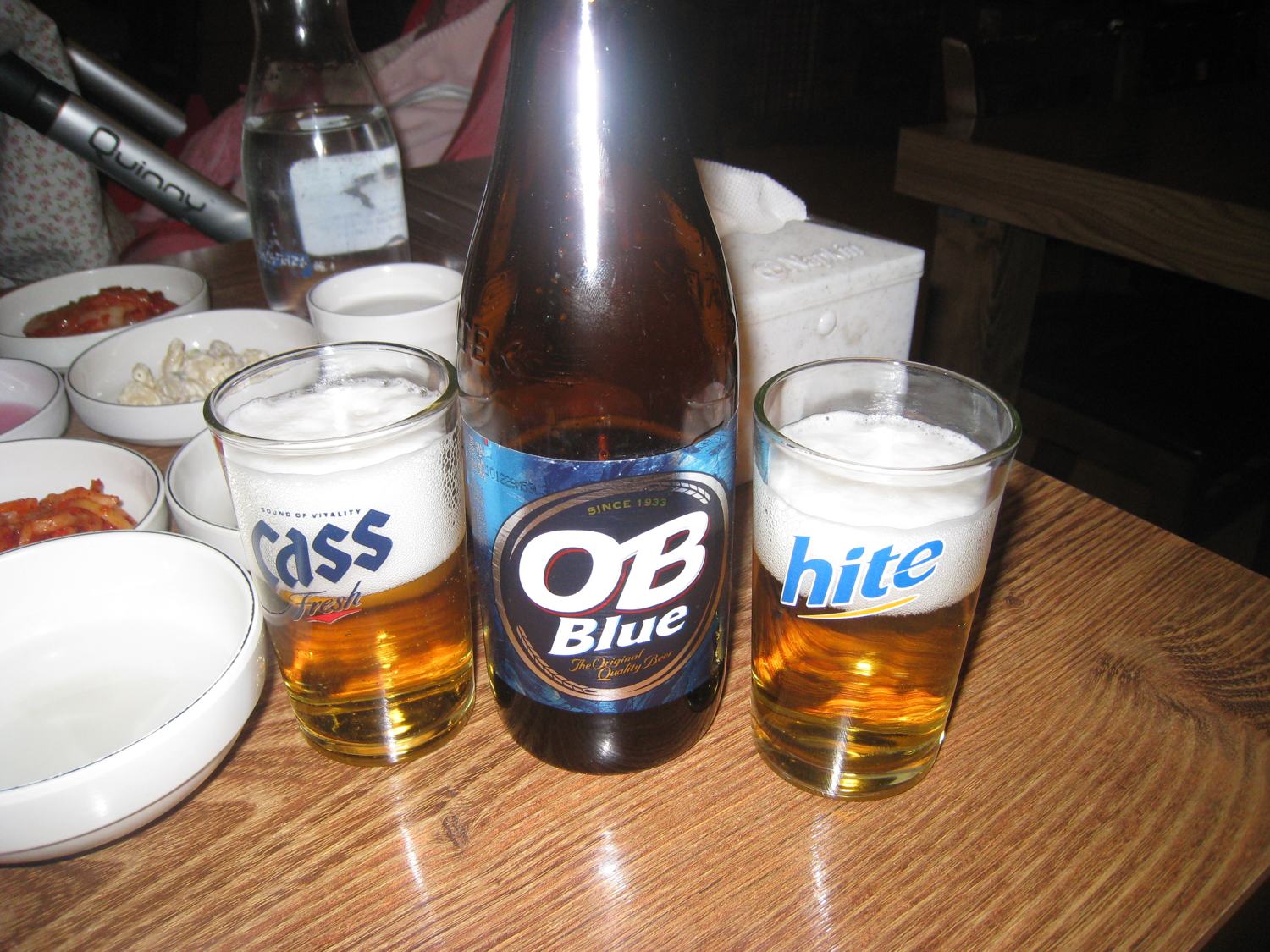
The entire Korean beer market in one photograph, 2011: OB, Cass and Hite, and side dishes. Photo: Bertrouf, CC BY-SA 3.0, via Wikimedia Commons.
The numbers for last year, from the drinks-market analyst IWSR as reported by the Asia Economic Daily on 29 July 2025, show how little has moved. Korea drank 233.5 million nine-litre cases of beer, almost exactly the same as the year before and the same as five years ago. Cass alone accounted for 106 million of them, which the paper summarised as "one glass in every two is Cass." AB InBev, OB's owner, took 52.1 percent of the market and Hite Jinro 33.5 percent, down from 41.6. Lotte Chilsung and Lotte Asahi had about 3 percent each. About 74 percent (73.6) of all beer is now drunk at home rather than in bars, a shift the pandemic started and the convenience store finished.
The one number that is not static is the direction of travel inside Hite Jinro, and that is where Terra and Kelly come in.
Terra and Kelly: the fightback
Hite Jinro launched Terra on 21 March 2019 as an explicit answer to the "boring beer" charge: malt that is 100 percent Australian (the recipe still includes corn starch) from a named growing region (the "Golden Triangle," as the 2019 launch copy put it), carbonation from fermentation rather than injection, and a green bottle that looked nothing like Hite. It worked for a while. Terra reached 12.9 percent of the home market by 2023 and was, for the first time in a generation, a Korean beer people asked for by name in a bar. Then it stopped. By 2024 it was back to 10 percent and stayed there through the first half of 2025, while Cass Fresh held 48.8 percent of home-market volume in the second quarter of 2025. The trade press explanation is structural: OB's cost of sales runs in the low 40s as a percentage of revenue against Hite Jinro's mid-to-high 50s, OB buys malt through AB InBev's global network, and OB owns the supermarket shelf while Hite Jinro lives in bars and restaurants, where margins are thinner.
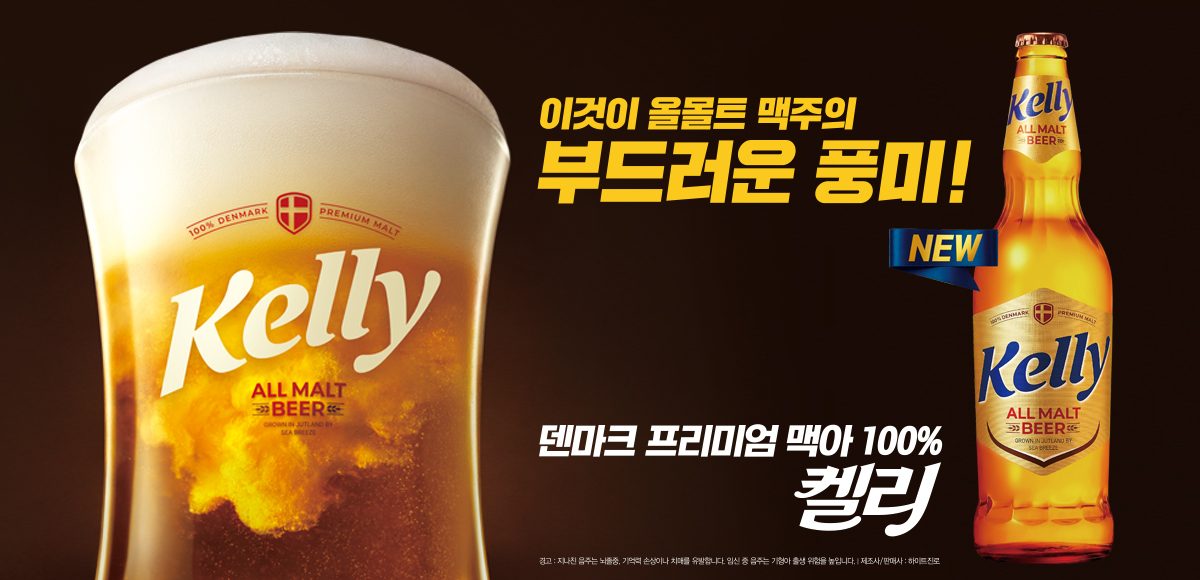
Kelly, as Hite Jinro presents it: all-malt, Danish barley, and the first mainstream Korean lager in an amber bottle. Product image: Hite Jinro, shown for identification.
So in April 2023 Hite Jinro tried again with Kelly, and Kelly is a different kind of beer. It is all-malt, 100 percent Danish barley by the company's account, with the malt germinated 24 hours longer than standard and the beer matured twice, first at 7 degrees and then at minus 1.5. It comes in an amber bottle, which no mainstream Korean lager had used. It sold 360 million bottles in its first year, and IWSR counted 9.29 million cases in 2024, but its share of the home market stalled at about 5 percent (4.9 in 2024, by Nielsen Korea). The problem, which every Korean business paper has pointed out, is that Kelly took its share mostly from Terra after its 2023 launch. Hite Jinro's total share barely moved. The company built a better beer and sold it to its own customers.
For you, the drinker, that corporate problem is irrelevant. Kelly is the best of the big three, cleanly bitter, with actual malt flavour, and it costs the same as Cass. If you are going to drink a mainstream Korean lager, drink that one. Terra is fine if you like a sharp, fizzy beer with food. Cass is what arrives when you do not specify, and it is not bad; it is just not trying.
The craft boom, and the crash
The other half of Korea's answer to Tudor was a craft-beer scene, and its rise and fall happened fast enough to fit in one section.
The legal wall came down in 2014, when small breweries were allowed to sell outside their own premises. The Booth, co-founded by Tudor himself in 2013, brewed a pale ale with the Danish brewer Mikkeller and called it Daedonggang, after the Pyongyang river, which tells you how much the column still stung. Jeju Beer launched Jeju Wit Ale in 2017 and, after the 2020 tax change made domestic cans price-competitive, became the first Korean craft brewer to sell four cans for ₩10,000 in convenience stores. Then in May 2020 CU put out a wheat beer in a flour-company's packaging: Gompyo Wheat Beer (곰표 밀맥주), a collaboration between the brewer Seven Brau and the milling company Daehan Flour, whose bear logo, a flour brand since 1952, suddenly became the most photographed can in Korea. It sold somewhere between fifty and sixty million cans.
That was the peak. By 2023 Daehan Flour had moved the Gompyo licence from Seven Brau to Jeju Beer in a public dispute; Seven Brau went into receivership and was on its way to delisting by August 2025. Jeju Beer, the first craft brewer to list on the KOSDAQ, sold its controlling stake in March 2024 for about ₩10 billion, has changed hands twice since, and was renamed Hanul & Jeju in April 2025 after a semiconductor company became its largest shareholder. Amazing Brewing Company, one of the first-generation Seoul breweries, was declared bankrupt on 21 April 2026 after a second brewery built on venture money in 2022 never paid for itself. Craft beer's share of the Korean market went from 1.4 percent in 2018 to 4.9 percent in 2022 and is back under 2 percent: about ₩57 billion of a ₩3.1 trillion market in 2025. Of roughly 170 licensed small breweries in the country, only five or six are still in convenience-store distribution.
The causes, as the industry itself lists them: drinkers moved on to whisky and highballs, which is a story we told in the highball post; the four-for-₩10,000 price war forced brewers to cut quality on a product whose whole point was quality; and the collaboration cans, most of which were made by a handful of contract brewers, gave the entire category a reputation for novelty over flavour. A Korean craft brewer will tell you, with some bitterness, that the convenience store made craft beer famous and then killed it.
What survived is worth drinking
Here is the part that matters if you are standing at a CU fridge. The crash cleared out the gimmicks. What is left in the craft section in 2026 is fewer, more expensive and better.
Prices moved first. Chosun Biz reported in June 2026 that the convenience-store craft can now runs ₩4,500 for the Mikkeller and Hitachino Nest collaborations, ₩4,900 for Original Beer Company's cans and ₩6,300 for Seoul Brewery's, with four-can bundles between ₩13,000 and ₩17,200. That is the price of a decent imported can, which is about right for what these are.
The regional angle is new and the most interesting thing happening. On 8 April 2026 GS25 launched a programme it calls the "Nationwide Craft Beer Journey," selling one regional brewery's beer nationally through its Wine25Plus app: you order on the phone and collect at any GS25. The first partner was Budnamu Brewery (버드나무 브루어리) in Gangneung, on the east coast, which brews on the site of a rice-wine brewery founded in 1926 and makes what it calls Korea's first rice beer. The launch product was a six-can mixed pack for ₩35,000: Minori Session, the rice beer; Zumble Blanc, a wheat beer; Haslla IPA; Baekilhong Red Ale; and a coffee porter. Gorilla Brewing in Busan and Seoul Brewery in Seongsu-dong are the other two you will see on shelves, and Original Beer Company put a helles and a Vienna lager into GS25 in June 2026, which are the first honest attempts at a German-style lager in a Korean convenience store.
Are they good? Budnamu's rice beer is genuinely distinctive, light and faintly sweet in a way that makes sense with Korean food; the IPA is a competent American-style IPA and no more. Seoul Brewery is the most consistent of the Seoul brewers and the most expensive. Gorilla's beers are better on tap in Busan than in the can. The Mikkeller and Hitachino collaborations are exactly what they say. None of them will change your life. All of them are better than the beer Tudor drank in 2012, and they are sitting next to it in the same fridge, which is the thing he was asking for.
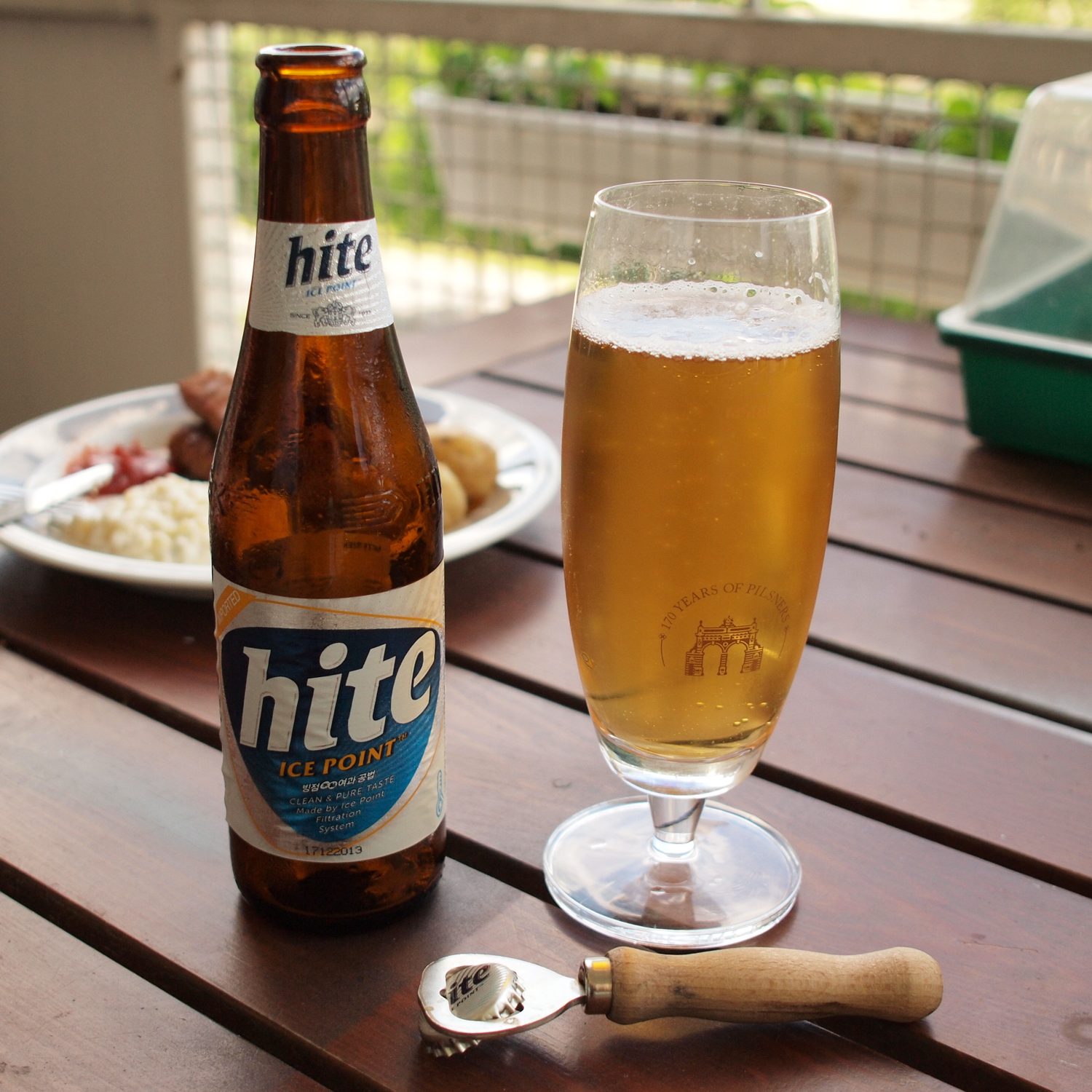
Hite, 2013: a Korean beer that had led the market for years before the column came out, and lost about a tenth of its volume in 2024 alone. Photo: Tommi Nummelin, CC BY-SA 3.0, via Wikimedia Commons.
The North still brews, and it is not the point
For completeness: Taedonggang is still made, still served in Pyongyang hotels for about half a euro a bottle, and has sold in small quantities in China since 2016. Pyongyang also has a bar, Taedonggang Microbrewery No. 3, that pours seven styles including a dark lager. If you ever get there, drink it. It is a good beer. It has also had exactly one competitor for twenty-four years, which is the reason it never had to get better, and the reason the South, which now has two hundred, has.
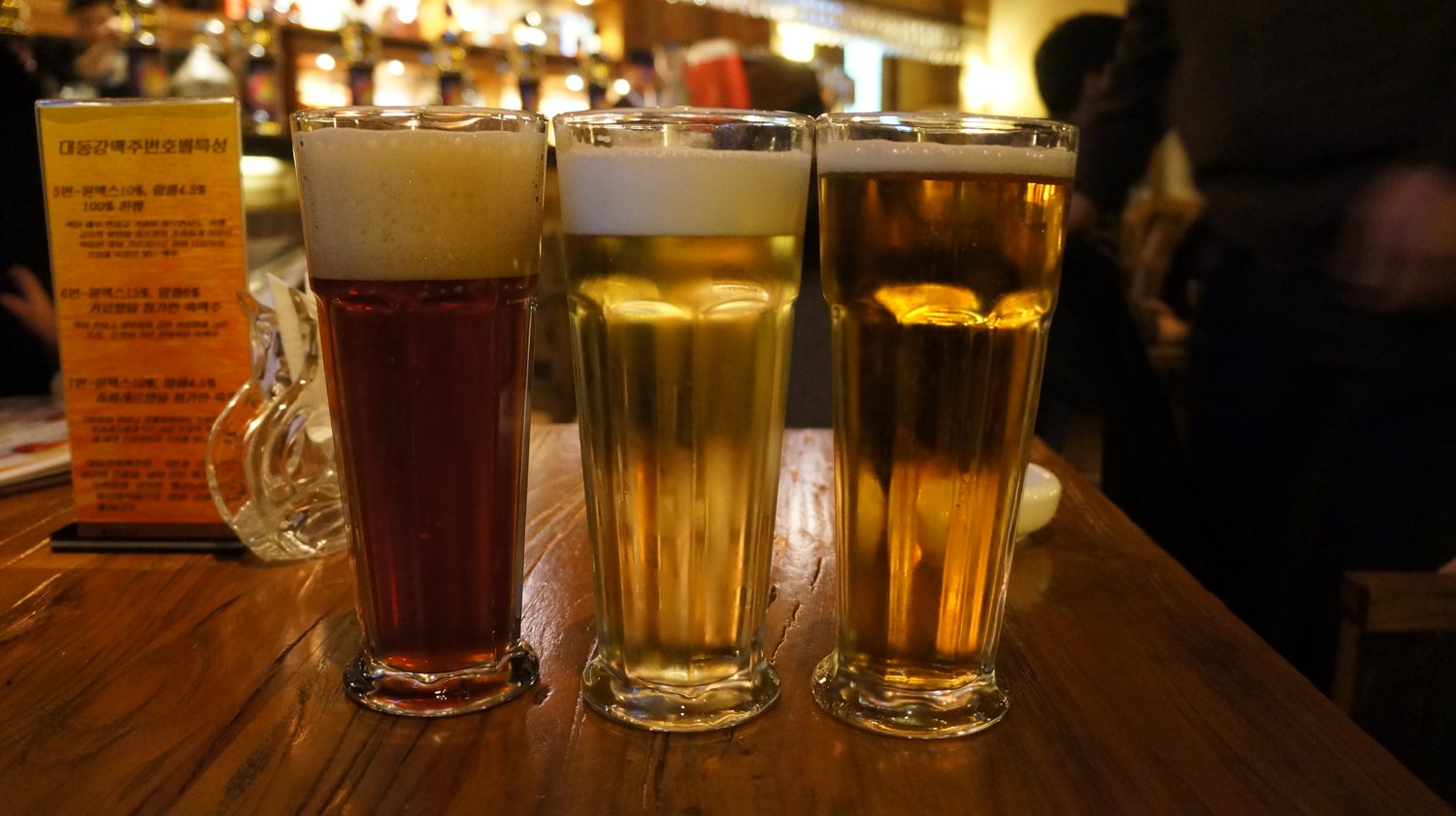
Seven styles on tap at Taedonggang Microbrewery No. 3, Pyongyang, January 2014. Photo: Uri Tours, CC BY-SA 2.0, via Wikimedia Commons.
You might like: Why Korean Highballs Cost More Than Beer: A Tax Story
You might like: Why Korean Soju Keeps Getting Weaker, Pricier, and Less Drunk: The 100-Year Slide from 35% to 15.7%
What to order, in one table
| Situation | Order this | Not this |
|---|---|---|
| Fried chicken, group, somaek likely | Cass or Terra, whatever is on draft; it is a mixer | Anything you would notice |
| You want to taste a Korean lager on its own | Kelly, in the bottle, cold | Filite, which is not beer |
| Convenience store, one can, something interesting | Seoul Brewery or a Budnamu can if your GS25 has them; OBC's helles for a lager | The cheapest collaboration can with a cartoon on it |
| Bar in Seongsu, Hapjeong, Itaewon or Busan's Gwangalli | Ask for the local brewery's tap; Seoul Brewery, Magpie, Gorilla | Imported Guinness at three times the price |
| Someone offers you Taedonggang | Yes | Asking where they got it |
One honest note against buying. Korean craft cans have a freshness problem that the convenience-store model makes worse: an IPA that has sat under fluorescent lights for three months is not the beer the brewery made. Check the date on the bottom of the can, and if you are in Seoul, the same beer on tap at the brewery's own bar will be better and about the same price.
Korea: The Impossible Country — the book by the man who wrote the beer column Daniel Tudor's account of how South Korea went from a failed state to a rich democracy in fifty years, with a chapter on why Koreans work, drink and compete the way they do. He later co-founded a Seoul craft brewery, The Booth, whose first beer was a pale ale named after the Taedong River. As an Amazon Associate, EpicKor earns from qualifying purchases.
See the book on AmazonFAQ
Q: Is Korean beer actually worse than North Korean beer? In 2012 the comparison was fair: Taedonggang is a proper European-style lager made on British equipment, and Cass and Hite were adjunct lagers with no aroma. In 2026 it is not. Kelly is an all-malt lager as good as Taedonggang, and the South has around 170 small breweries against the North's one. The insult did its job.
Q: Cass vs Terra: which is better? Neither by much. Both are 4.5 to 4.6 percent lagers brewed with corn starch, and both cost ₩2,500 for a 355 ml can in a Korean convenience store (October 2026). Terra is fizzier and slightly sharper, Cass softer. Pick Terra for somaek with Chamisul, Cass for fried chicken, and Kelly if you want an all-malt beer.
Q: Is Terra all-malt? No. Its malt is 100 percent Australian, but the recipe also contains corn starch. Kelly, from the same company, is the all-malt one.
Q: What is the best mainstream Korean beer? Kelly, by most accounts including ours. All-malt, Danish barley, double-matured, and priced the same as Cass. Terra is a close second if you like harder carbonation. Cass is the default, not the best.
Q: Why is Cass so popular if it is bland? Because Korean beer is drunk with fried, spicy food and often mixed with soju, and a neutral, very cold lager is the right tool for that. It also has the best distribution in the country and its owner's costs are lower than anyone else's. One beer in two sold in Korea is Cass.
Q: Is Korean craft beer worth trying? The survivors, yes. Seoul Brewery, Gorilla (Busan), Budnamu (Gangneung), and the Mikkeller and Hitachino collaborations are all sound. Expect ₩4,500 to ₩6,300 a can, check the date, and prefer the same beer on tap if you can find it.
Q: What happened to the 4 cans for ₩10,000 deal? The 2020 tax change made it possible, Jeju Beer started it, Gompyo Wheat Beer made it a craze, and the price war then bankrupted most of the brewers who joined it. The deal still exists for imports and for Filite, which is not legally beer. Craft bundles now run ₩13,000 to ₩17,200.
Bottom Line
The Economist was right in 2012 and Korea knew it. The answer took fourteen years and went in two directions: the big brewers made one genuinely good lager, Kelly, and a market that had no craft beer at all built two hundred breweries, lost most of them, and kept the ones worth keeping. If you drink one Korean beer, make it Kelly. If you drink two, make the second a can from Gangneung or Busan with a date on the bottom that is less than two months old. And if you are eating fried chicken, order the Cass and stop worrying about it; that is what it is for.
You might like: How to Buy Alcohol in Korea: The Rule Nobody Tells Tourists and Korea Drinks Guide: Makgeolli, Somaek, Beer, and More.
Sources
- The Economist, "Fiery food, boring beer," 24 November 2012 (Daniel Tudor); The Korea Times, "Tasteless Korean beer, wrong call," 1 December 2017.
- Asia Economic Daily (아시아경제), IWSR market figures, 29 July 2025; Taxtimes and Nielsen Korea on Cass Fresh's 48.8% home share, Q2 2025; Kukinews on the 2025 Hite Jinro price rise, 28 May 2025; New Daily on the Cass price rise, 31 March 2025; KPI News on Terra's NON-GMO renewal, September 2026; Hankyung on Terra Zero, 6 July 2026; Global Epic, "Why Terra could not stop Cass," 13 November 2025; Hite Jinro brand pages for Kelly and Terra specifications.
- Chosun Biz, "Forget 4 cans for ₩10,000," 21 June 2026; Electronic Times (전자신문), GS25 Nationwide Craft Beer Journey launch, 8 April 2026; Biz Hankook on the Amazing Brewing bankruptcy, 28 April 2026; Seoul Economic Daily on Seven Brau's delisting, August 2025.
- Seoul Shinmun and Hankook Ilbo on the Gompyo Wheat Beer licence dispute, 2023; Kyunghyang Shinmun on beer taxation and the 4-can price gap, 28 January 2018.
- Wikipedia, "Taedonggang" and "Beer in North Korea," cross-checked with Namu Wiki's Korean beer history for tax rates and brand launch years.
You Might Also Like
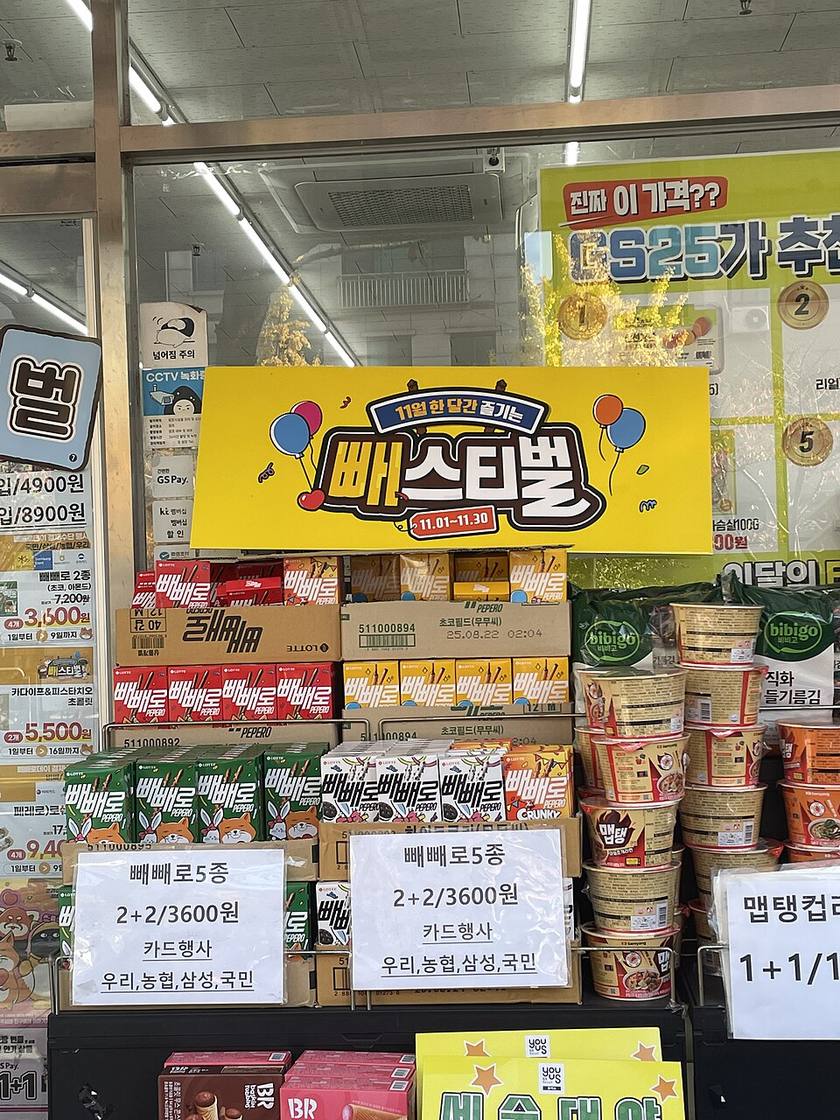
Pepero: Korea's Chocolate Stick — Flavours, Prices and Pepero Day 2026
Pepero (빼빼로) is Lotte's chocolate biscuit stick, made in Korea since 1983. In October 2026 every flavour costs ₩2,000 at CU, Lotte's own 2026 Pepero Day sets cost exactly the sum of their boxes, and the deep 11/11 discounts need a Korean card.

K-Drama Foods Explained: Chimaek, the Ramyeon Line, and That Sandwich
Every K-drama serves the same meals: chicken and beer on a bad day, ramyeon as an invitation, a Subway sandwich nobody ordered. What each food actually is, the scenes that made them famous, and which ones you can buy tonight.
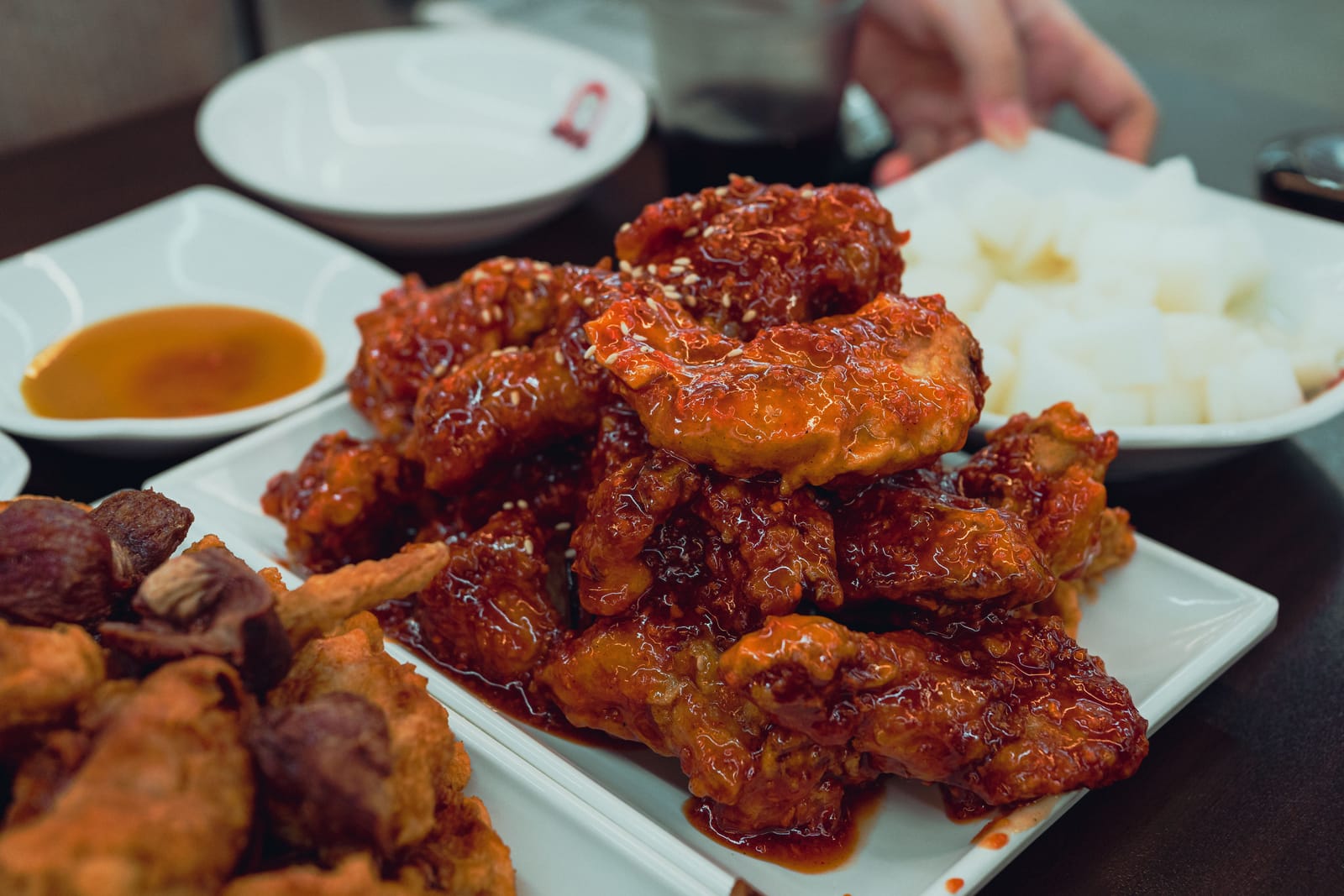
Korean Fried Chicken Brands Compared: BHC vs BBQ vs Kyochon Prices
Live chicken prices fell 37.7% this year, yet Korea's big three chicken chains still charge about ₩23,000 for a signature box. BBQ, BHC and Kyochon compared, with the delivery-app markup most visitors never notice.