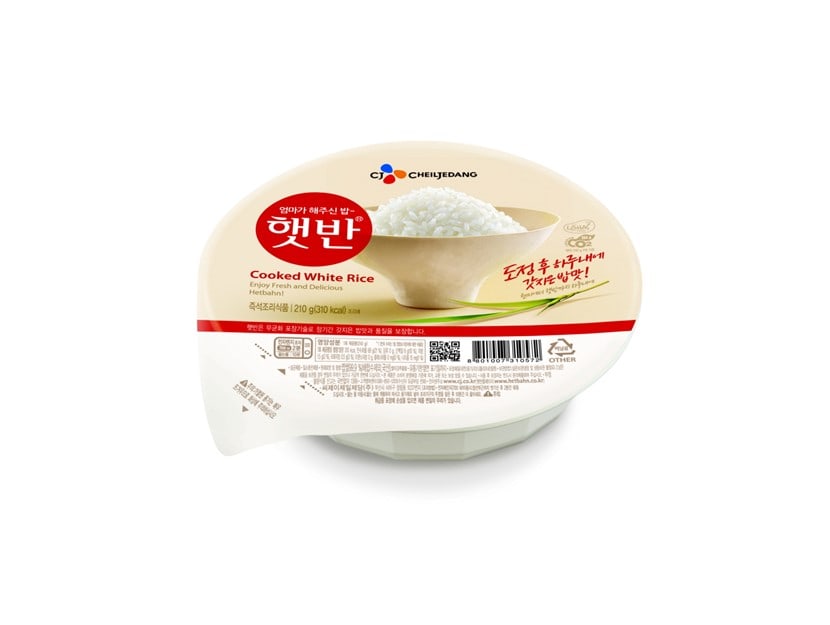
Hetbahn: What Korea's Instant Rice Is Made Of, and How to Heat It Without a Microwave
햇반 — Hetbahn — is a plastic bowl of cooked white rice that sits on a shelf for nine months without refrigeration and is ready in about two minutes. In Korea it is not a novelty item. It is the default, to the point where the brand name has become the ordinary word for instant rice regardless of who made it.
English speakers search for it. hetbahn returns nine autocomplete branches, cj hetbahn another nine, korean instant rice nine more, and they are asking practical things: instructions, how to cook, cupbahn, porridge, and, repeatedly, without microwave.
What comes back is Amazon listings, CJ's own corporate newsroom, and one short shopping post. Nobody has answered the questions. So here they are, starting with the one the Korean package answers on the lid and no English page mentions.
| Korean name | 햇반 — haet-bahn, roughly "fresh-sun rice" |
|---|---|
| Maker | CJ제일제당 (CJ CheilJedang) |
| Launched | December 1996 |
| Standard size | 210 g, about 310–315 kcal, printed on the lid |
| Ingredients | 99.9% Korean rice and water + 0.1% rice bran extract (미강추출물) |
| Shelf life | 9 months, unrefrigerated, sealed |
| Microwave | 2 minutes for one bowl, 3 minutes for two |
| No microwave | 10 minutes in boiling water, film left on |
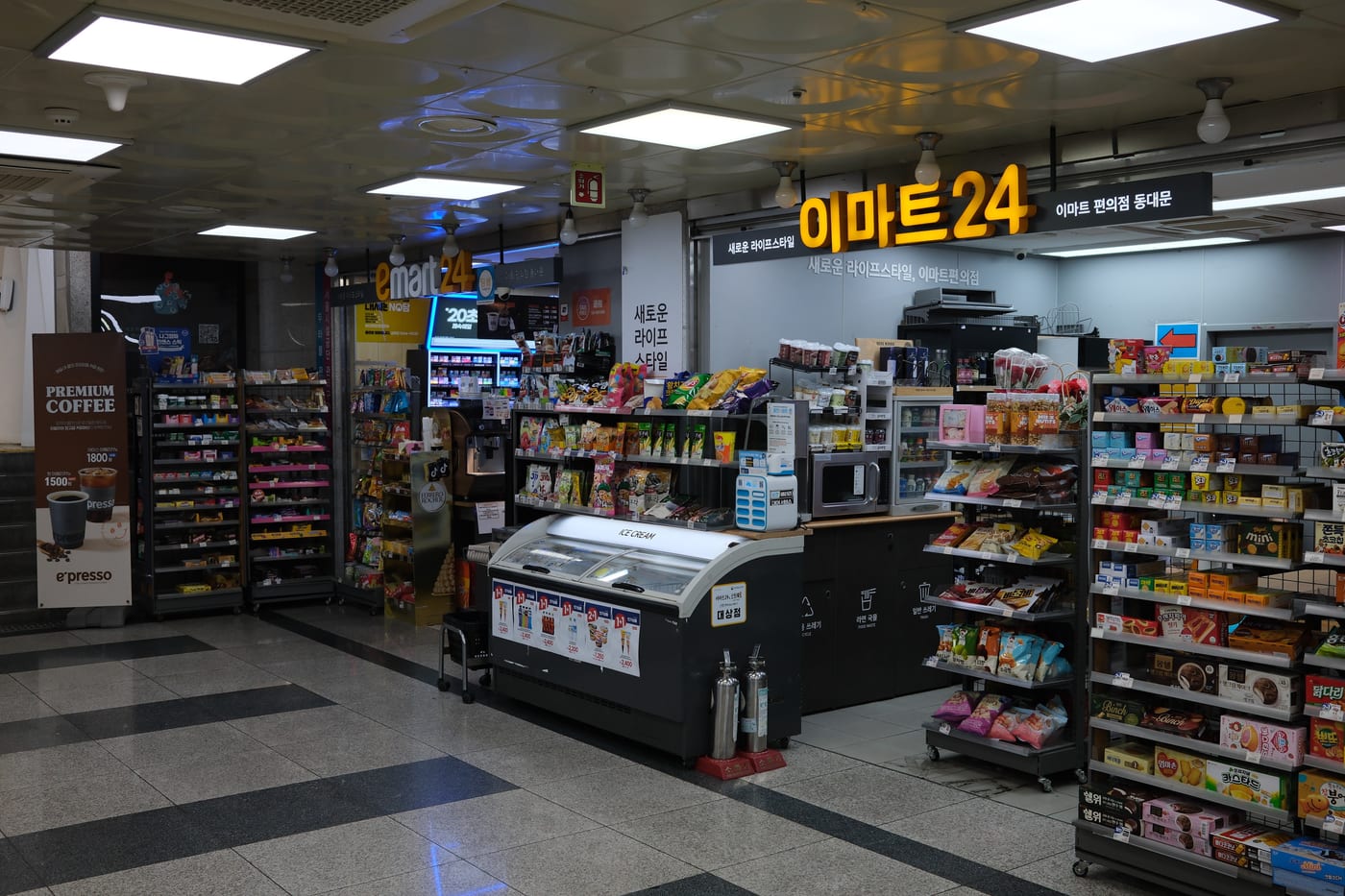
| Convenience store price | ₩1,700 for 210 g (emart24, August 2026) |
| Cheapest per bowl | About ₩1,079 buying 24 online (Coupang, August 2026) |
| Market share | 66.9% — 오뚜기밥 is second at 30.7% |
Korea Built a Category in December 1996
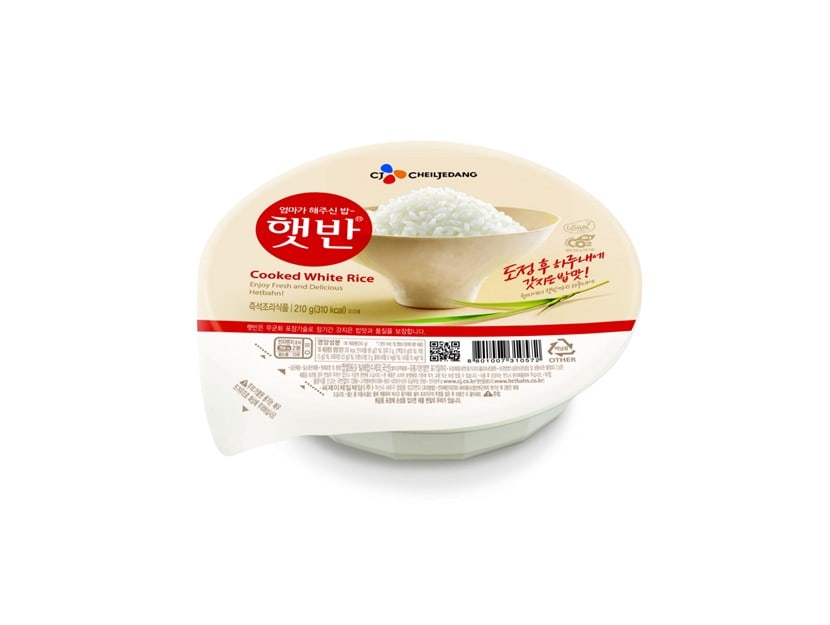
CJ Hetbahn cooked white rice, 12-pack, on Amazon — on AmazonAffiliate link. As an Amazon Associate, EpicKor earns from qualifying purchases at no extra cost to you.
Shelf-stable rice existed before 1996. What did not exist was rice that tasted enough like rice for a country that eats it three times a day.
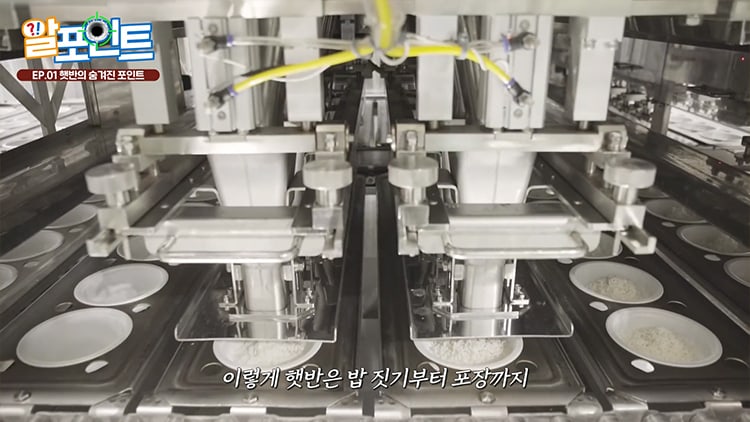
In March 1996, CheilJedang put about ₩10 billion into a facility for aseptic packaging — 무균화 포장. Hetbahn launched in December of that year and became the company's best-selling product.
The technique is the interesting part, and it borrows its standard from an unrelated industry. Retort food is sealed and then heated, which cooks the contents a second time and costs you texture. Aseptic packaging inverts that: the rice is sterilised with high-temperature, high-pressure steam, cooked in purified water, and then sealed inside a clean room — one CJ describes as cleaner than a hospital operating theatre and comparable to a semiconductor fab.
Nothing is cooked after sealing. That is why it tastes like rice and not like a boil-in-bag.
The container carries the rest of the load. The bowl is a three-layer structure and the lid film is four layers, which is what keeps air, temperature and humidity out for nine months on a warm shelf.
One consequence matters if you are buying: the seal is the entire preservation system. A bowl with a punctured or lifted film is not a bargain, it is a spoiled product waiting to happen. CJ's own consumer explainer makes exactly this point — mould gets in through a hole in the film. Check the lid before you pay.
You might like: Korean Dosirak: The Lunchbox a Teacher Could Confiscate, and What Replaced It
What Is Actually In It
This is the question the label raises and no English page answers, because the answer is printed in Korean.
햇반 is 99.9% Korean rice and water. The remaining 0.1% is 미강추출물 — rice bran extract, which functions as an acidity regulator.
That single ingredient caused a genuine controversy in Korea in 2021, and the shape of it is worth knowing.
The extract was imported from Japan, because Japanese producers had the higher-purity extraction technology. When Korean consumers noticed 산도조절제 and a Japanese origin on a product marketed on Korean rice, it became a news story. CJ's response at the time was that the extract came from a plant roughly 800 km from Fukushima and that it constituted 0.1% of the product.
Then the company changed the answer instead of repeating it. CJ developed a domestic extraction process for Hetbahn, applied it first to the multigrain line, then to about 20% of total volume, then targeted 50% within the quarter and 100% domestic by the end of that year.
Two things follow for a reader deciding whether to buy it.
First, "acidity regulator" on a Korean instant-rice label is not a preservative in the sense people fear. The preservation is done by the sterile packaging, not by chemistry. The extract is there to hold the rice at the right acidity.
Second, the ingredient list really is that short. Rice, water, and a rice-derived extract at one part in a thousand. If you have been avoiding instant rice on the assumption that it must be full of additives, the Korean label does not support that assumption.
The plain 210 g white rice bowl is the one to start with — it is the default in Korean kitchens and the version everything else in the range is built on. Shelf-stable, no refrigeration, and useful to have in a cupboard whether or not you are cooking Korean food that night. As an Amazon Associate, EpicKor earns from qualifying purchases at no extra cost to you.
CJ Hetbahn cooked white rice, 12-pack, on Amazon
CJ Hetbahn cooked white rice, 12-pack, on AmazonYou might like: Chaltteok Pie: The Korean Mochi Snack Behind the Dubai Chocolate Craze
You might like: Gooun Gamja: What Korea's Baked Potato Snack Is Actually Made Of
You might like: Kkokkalcorn: Korea's Cone Snack, and Why Each Convenience Store Has a Different Flavor
You might like: Korean Food Prices in August 2026: What Already Rose, and What Changes on the 25th
You might like: Korean McDonald's: Why the Burgers Are Named After Farm Counties, and What to Order Now
You might like: Postick: The Korean Snack That Used to Come With a Ketchup Packet
How to Cook It, Including Without a Microwave
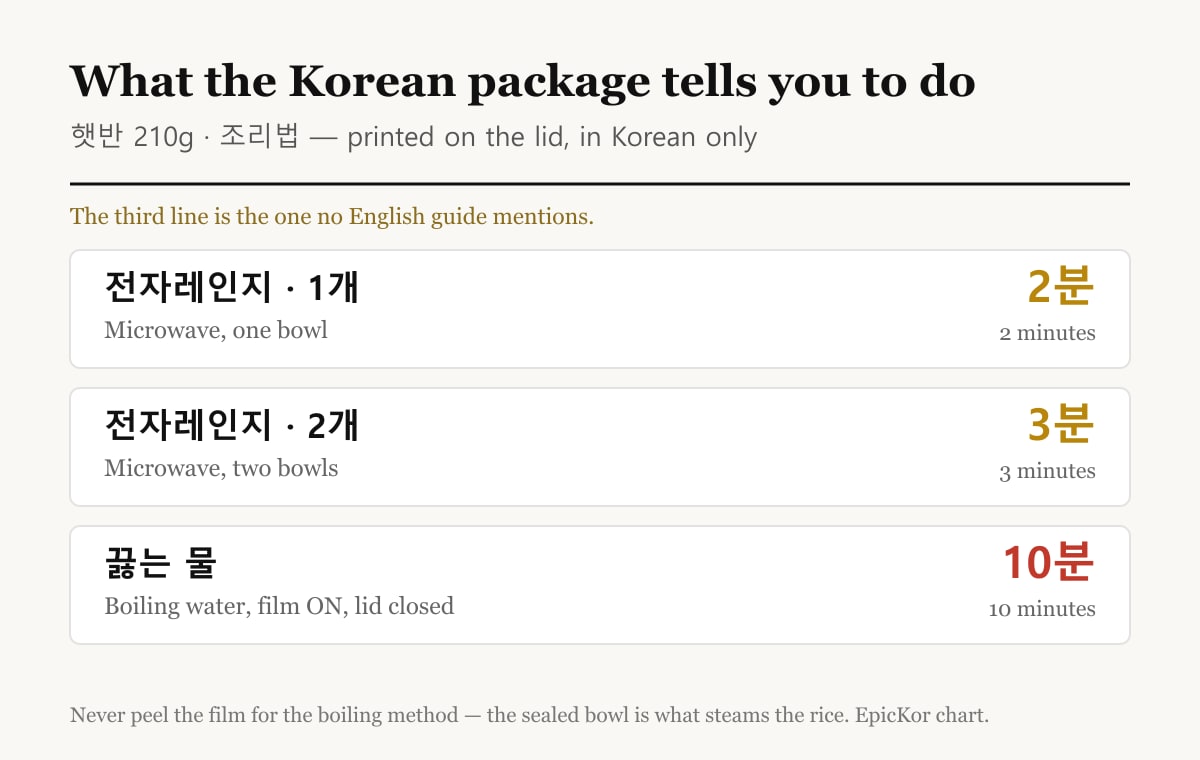
The Korean lid prints three numbers. English-language listings print one.
- Microwave, one bowl — 2 minutes.
- Microwave, two bowls — 3 minutes.
- Boiling water — 10 minutes.
The third line is why this article exists. If you are in a guesthouse kitchen, a dorm, a hotel room with a kettle and no microwave, or camping, you do not need a microwave to eat Hetbahn. Put the sealed bowl in a pan of boiling water, leave the film on, put the pan lid on, and give it about 10 minutes. Korean cooking sites put the practical range at 10 to 12 minutes and report the rice comes out firmer and more separated than the microwave version, which is a fair description.
Two things to get right with the boiling method:
- Do not peel the film. The sealed bowl is what steams the rice. Open it and you are boiling rice in water, which is a different and worse outcome.
- Keep the pan lid closed. It is the difference between 10 minutes and considerably longer.
One discrepancy worth flagging honestly: the US Amazon listing for Hetbahn says 90 seconds in the microwave, while the Korean lid says 2 minutes. Neither is wrong — they assume different oven wattages. If 90 seconds leaves cool patches in the middle, that is what the extra 30 seconds is for.
The Lid Is the Part People Get Wrong
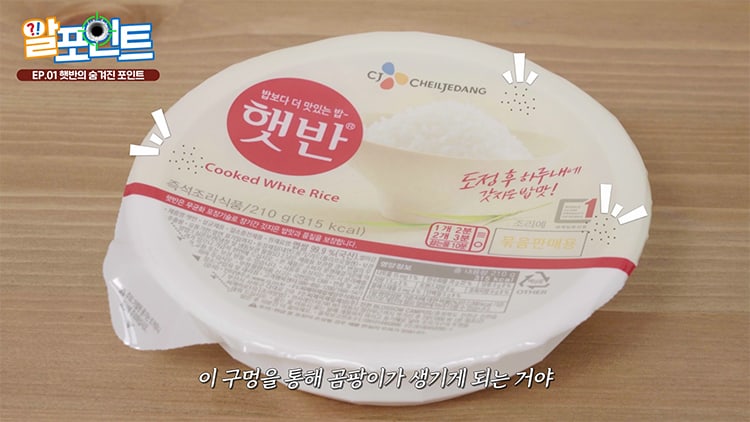
For the microwave, the correct move is neither of the two obvious ones.
Tear the lid film only as far as the dotted line (점선). That is what the printed instruction says, and there is a reason on each side of it:
- Leave it fully sealed and pressure builds inside. The bowl swells, and in the worst case it pops.
- Peel it fully off and too much moisture escapes. The rice dries and hardens at the edges.
Opening to the dotted line vents the steam at the rate the container was designed for. It is a small thing that changes the result, and it is printed in Korean only, which is why so many first-time users abroad get a bowl that is either bulging or dry.
What ₩1,700 Buys, and Where It Is Cheaper
Prices below were read in August 2026. Instant rice is a commodity in Korea and the spread between channels is real.
| Where | What | Price | Per bowl |
|---|---|---|---|
| Convenience store (emart24) | 210 g, single | ₩1,700 | ₩1,700 |
| Coupang | 210 g × 12 | ₩13,980 | ₩1,165 |
| Coupang | 210 g × 24 | ₩25,900 | ₩1,079 |
| Coupang | 작은공기 130 g × 12 | ₩11,500 | ₩958 |
| Coupang | 큰공기 300 g × 30 | ₩44,400 | ₩1,480 |
| Costco Korea | 매일 잡곡밥 210 g × 36 | ₩30,490 | ₩847 |
| CU (own brand) | HEYROO instant rice | ₩990 | ₩990 |
The convenience store is the most expensive way to buy it and also the only one that matters to a visitor. ₩1,700 for a bowl of rice you can eat in the store, with hot water and a microwave on the counter, is not a bad deal — it is the price of convenience, working exactly as designed.
If you live here, the arithmetic is different. Buying 24 at a time cuts the per-bowl price by about 37%, and the multigrain packs at Costco go lower still.
Note the size ladder while you are choosing. 작은공기 is 130 g — a smaller portion, and per-bowl the cheapest thing on this list, though you are buying less rice. 큰공기 is 300 g, for one large appetite or two modest ones.
Cupbahn is the format worth trying next — rice and a Korean stew together in one container, which is what makes it a meal rather than a side. The soft tofu stew version is the one you will see most often on a Korean convenience-store shelf, and it travels better than the bowl format if you are stocking a desk drawer.
CJ Hetbahn Cupbahn on AmazonThe Rest of the Family
The brand now covers eight product lines, according to CJ's own brand page, and they are not variations on one idea.
- 밥 (cooked rice) — the plain 210 g bowl, and the size ladder above.
- 잡곡밥 (multigrain) — added in 2003. Black rice, brown rice, mixed grains.
- 햇반 컵반 (Cupbahn) — rice plus a stew or topping in a cup. This is the one that turns instant rice into a meal.
- 햇반 솥반 (Sotbahn) — the premium line, styled after 솥밥, stone-pot rice.
- 곤약밥 (konjac rice) — rice cut with konjac for lower energy density.
- 볶음밥 (fried rice), 주먹밥 (rice balls), 죽 (porridge) — brought under the Hetbahn name in 2022.
For a visitor, the practical shortlist is short. Plain white 210 g if you want rice to go with something. Cupbahn if you want a whole meal from a convenience store shelf. Multigrain if you would eat brown rice at home anyway.
You might like: Korean Convenience Store 1+1: How It Works and Who Can Bank the Free One
When Not to Buy It
Here is the argument against, which the brand pages will not make for you.
If you cook rice regularly, a rice cooker is cheaper by a wide margin. A 210 g bowl of Hetbahn costs ₩1,079 at the best online price. The same weight of cooked rice from a bag of Korean rice costs a fraction of that. The premium buys you shelf stability and two minutes, not rice.
If you only need rice and do not care whose it is, the convenience-store own brands are cheaper. CU's HEYROO instant rice is ₩990, roughly ₩700 less than a branded bowl at the same counter. Korean coverage has framed it as instant rice priced below a pack of gum. If you are buying one bowl to eat right now in a GS25 or a CU, the own brand does the same job.
And there is packaging. Each bowl is a multilayer plastic container plus a multilayer film lid, per portion. CJ has published on the recyclability of the bowl, but the honest framing is that a household eating instant rice daily generates a meaningful amount of packaging that a rice cooker does not.
Where Hetbahn genuinely wins: one person cooking for one, a household where nobody wants to run a cooker for a single portion, a camping trip, a hotel room, a desk drawer, or the specific Korean situation of eating at 11pm after work. That is not a small set of cases — it is why the category exists, and why 66.9% of it belongs to one brand.
FAQ
Q: Can you cook Hetbahn without a microwave? A: Yes, and the method is printed on the Korean lid. Put the sealed bowl into boiling water with the film left on, cover the pan, and heat for about 10 minutes — Korean sources put the practical range at 10 to 12 minutes. Do not peel the film; the sealed bowl is what steams the rice.
Q: Do you peel the lid before microwaving? A: Only to the dotted line. Fully sealed builds pressure and the bowl can swell or burst. Fully peeled lets too much moisture escape and the rice dries out. Tearing to the printed 점선 vents it at the designed rate.
Q: What is actually in Hetbahn? A: 99.9% Korean rice and water, plus 0.1% rice bran extract (미강추출물) acting as an acidity regulator. There is no preservative doing the shelf-life work — that is done by sterilising and sealing the bowl in a clean room, with nothing reheated after sealing.
Q: Why does it last nine months without a fridge? A: Aseptic packaging. The rice is sterilised with high-temperature, high-pressure steam, cooked in purified water and sealed in a clean room CJ compares to a semiconductor plant. The bowl is a three-layer structure and the lid film four layers. If the film is damaged, none of that holds — check the lid before buying.
Q: How much does it cost in Korea? A: About ₩1,700 for a single 210 g bowl in a convenience store as of August 2026, falling to roughly ₩1,079 per bowl buying 24 online. Convenience-store own brands such as CU's HEYROO sell instant rice at ₩990.
Q: What is the difference between Hetbahn and Cupbahn? A: 햇반 is rice alone in a bowl. 햇반 컵반 is rice plus a stew, sauce or topping in a cup, so it is a complete meal rather than a side. Sotbahn is the premium line styled after Korean stone-pot rice.
Sources Checked
- CJ CheilJedang brand page (cj.co.kr/en/brands/hetbahn) — the December 1996 launch date, the 2003 multigrain extension, the 2021 renewal, the 2022 move of porridge, fried rice and rice balls into the brand, and the eight current product lines.
- CJ Newsroom — the aseptic packaging account: the ₩10 billion March 1996 facility investment, high-temperature/high-pressure steam sterilisation, clean-room sealing with no reheating after seal, and the three-layer bowl with four-layer lid film.
- Korean-language reporting on the 미강추출물 controversy, 2021 — 뉴시스, 민중의소리 and others, covering the 99.9%/0.1% composition, the Japanese origin of the extract, CJ's response, and the staged localisation to 100% domestic supply.
- Korean cooking sources on the boiling-water method — 10–12 minutes, film on, pan lid closed; and on the microwave film rule, tearing only to the printed 점선.
- Prices, August 2026 — emart24 convenience-store price via Pyony, Coupang multipack listings, Costco Korea, and Korean reporting on CU's HEYROO ₩990 instant rice.
- Market share — Korean trade reporting placing 햇반 at 66.9% and 오뚜기밥 at 30.7% of the domestic instant-rice market.
- Imagery — CJ Newsroom photography and stills from CJ's own consumer explainer video.
Final Take
Korea did not invent shelf-stable rice. It invented shelf-stable rice that a rice-eating country would accept, by borrowing a clean-room standard from electronics manufacturing and refusing to reheat anything after the seal.
What is in the bowl is short enough to read in one line: rice, water, and a rice-derived extract at one part in a thousand. What is on the lid is three cooking times, and the third one — 10 minutes in boiling water, film on — means you never actually needed the microwave.
And if you are standing in a Korean convenience store with ₩1,700 in your hand, that is the right price for the situation you are in. The bulk maths is for people who live here.
You Might Also Like
Korean Food Prices in August 2026: What Already Rose, and What Changes on the 25th
Four Korean food makers raised prices within three weeks, and Paris Baguette's 127-item increase lands on 25 August. The exact brands, dates and won amounts, why wheat and corn are behind it, and what it actually changes for a visitor.
Kkokkalcorn: Korea's Cone Snack, and Why Each Convenience Store Has a Different Flavor
Lotte split one snack across three convenience store chains on purpose, and Koreans started touring stores to collect all four flavors. Which chain has which, what 꼬깔콘 costs in August 2026, and why the convenience store is the worst value per gram.
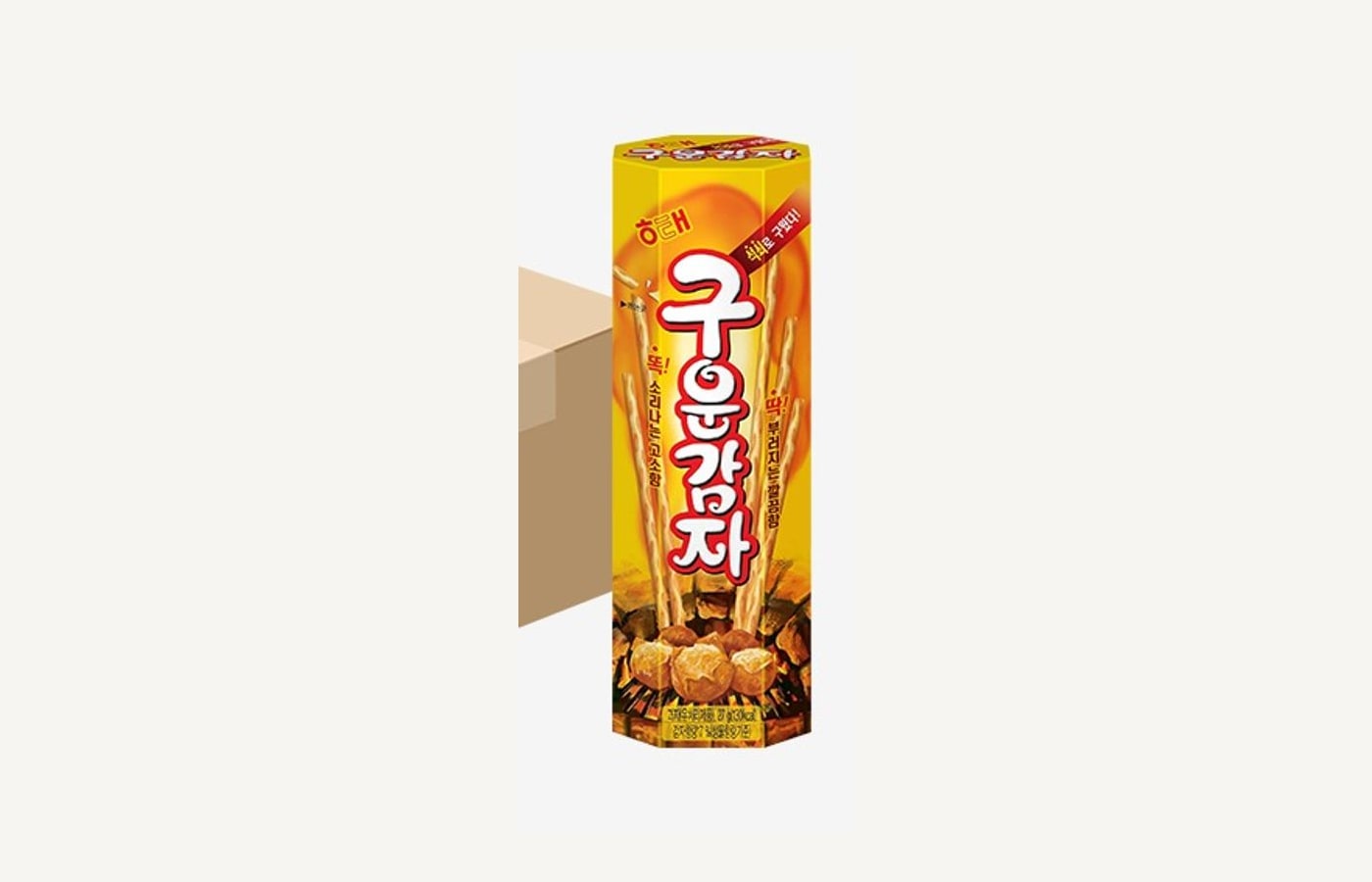
Gooun Gamja: What Korea's Baked Potato Snack Is Actually Made Of
구운감자 means baked potato and the label says 32.6% potato starch, 5.2% dried potato powder, palm oil and margarine. Haitai has been extending the word 구운 since 1997 — through sweet potato, corn and soy milk. Here is what baked buys you.