Jagalchi: The Korean Octopus Snack That Contains No Octopus
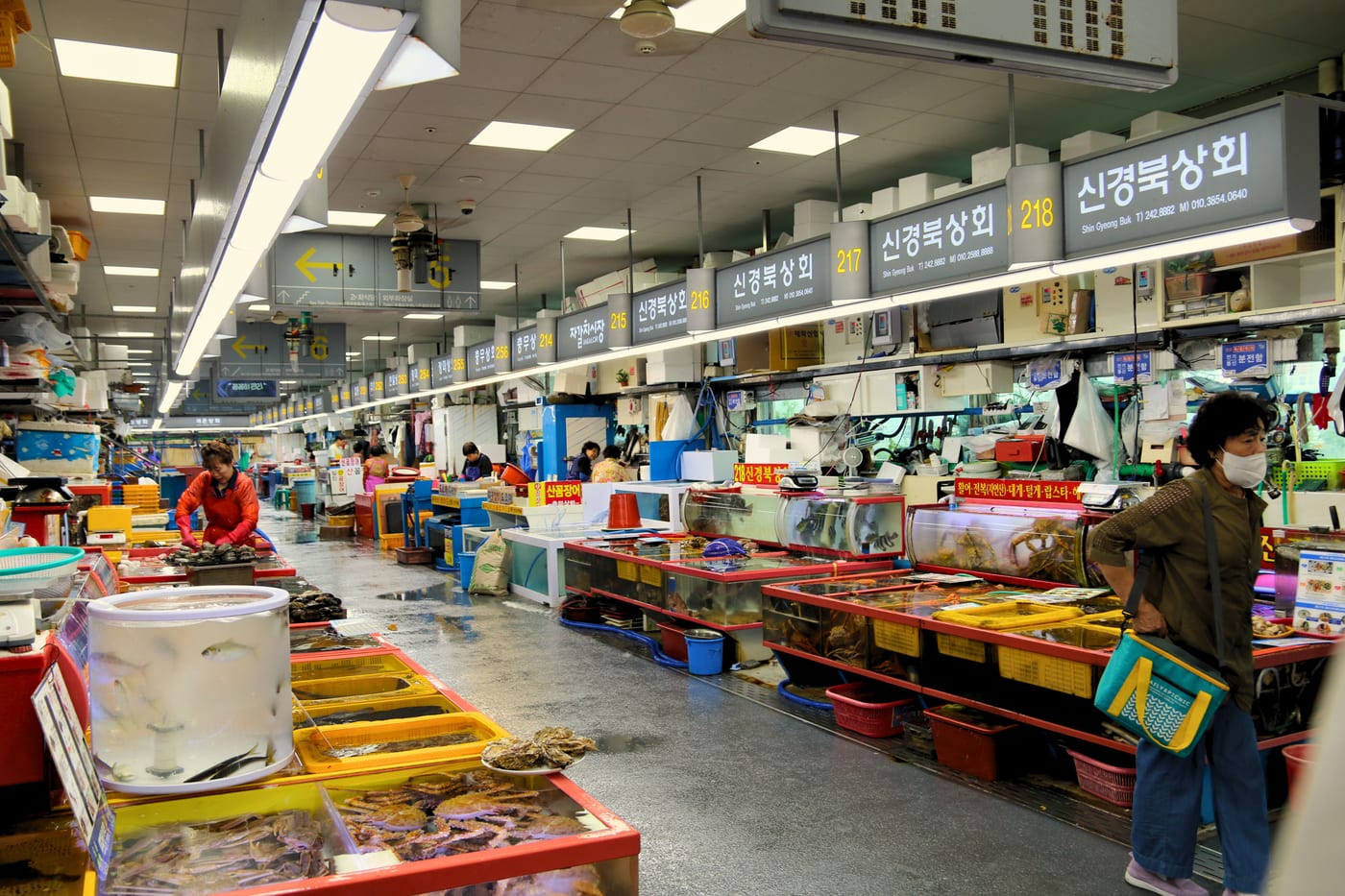
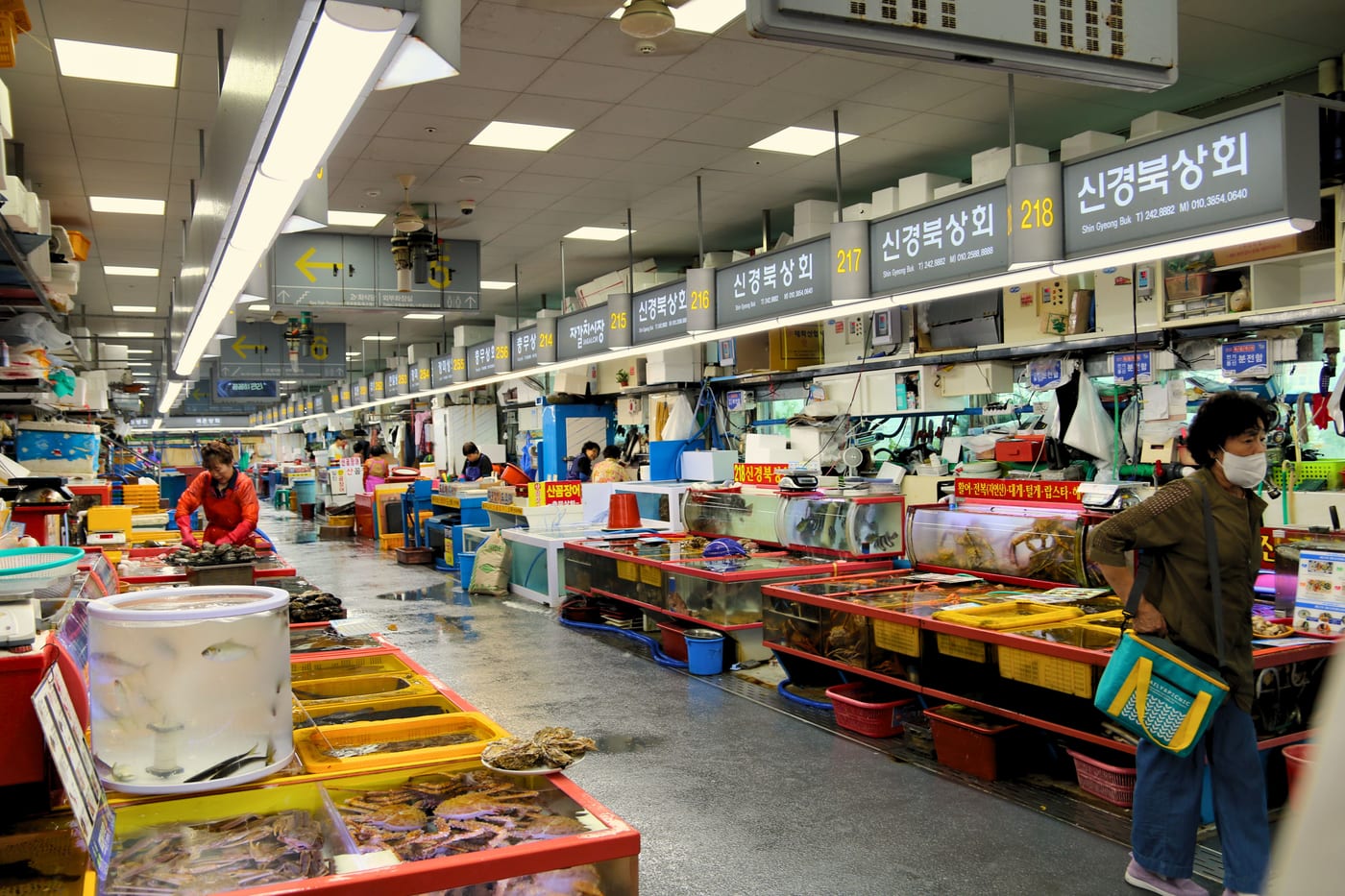
Search Jagalchi in English and you will get Busan. Wikipedia, guidebooks, a dedicated tourism domain, a hundred blog posts about Korea's largest seafood market and its famous rows of tanks and knives.
You will not get the snack. Which is a shame, because 자갈치 is also a bag of ridged, octopus-shaped crackers that Nongshim has been making since 1983, that is a household name in Korea, that is a genuine phenomenon in Russia, and that is sold in the United States under a completely different name.
It is also not made of octopus.
| Korean name | 자갈치 |
|---|---|
| Sold abroad as | Tako Chips — tako is Japanese for octopus |
| Maker | Nongshim (농심) |
| Launched | 5 August 1983 — the company's big follow-up to 새우깡 |
| Named after | Busan's 자갈치시장 fish market. Not the fish also called 자갈치 |
| Shape | A small octopus, ridged |
| Actual seafood in it | Corvina, anchovy, cutlassfish, pollock, shrimp — no octopus or squid in the US formulation |
| Price | About ₩1,700 for 90 g as recorded in 2023 |
The Name Is Three Steps Away From a Fish
Nongshim Tako Chips, family bag, on Amazon — on AmazonAffiliate link. As an Amazon Associate, EpicKor earns from qualifying purchases at no extra cost to you.
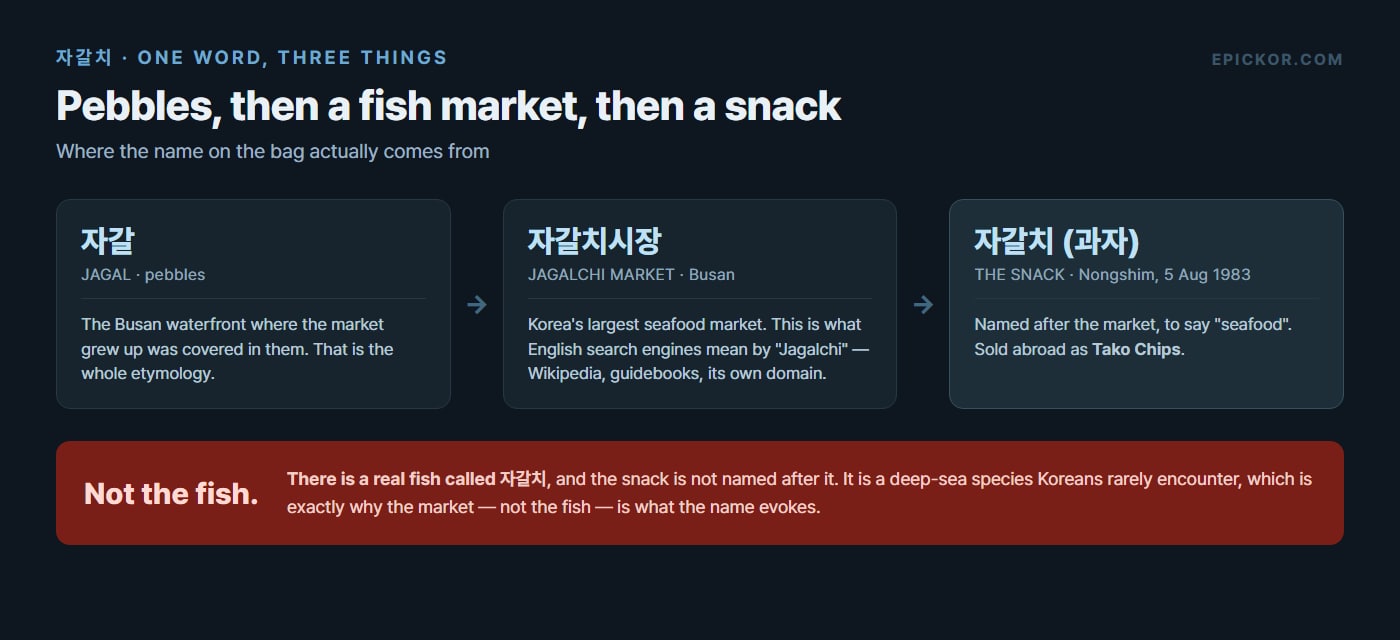
Start at the end and work backwards.
자갈 means pebbles. The stretch of Busan waterfront where the market grew up was covered in them, and that is the entire origin of the place name — 자갈치시장, the pebble market.
That market became Korea's most famous seafood market, and in 1983 Nongshim borrowed its name for a snack, because in Korean the word instantly says seafood the way "Billingsgate" or "Fulton" might to an English speaker.
There is also a real fish called 자갈치, and the snack is not named after it. Korean sources are explicit about this, and the reason is practical: it is a deep-sea species most Koreans will never see, so it carries no association at all. The market does.
So the chain is pebbles → market → snack, and English-language search has only ever known about the middle one.
You might like: Samanco: Korea's Fish-Shaped Ice Cream Is Named "Cheap and Plentiful"
Abroad It Is Called Something Else Entirely
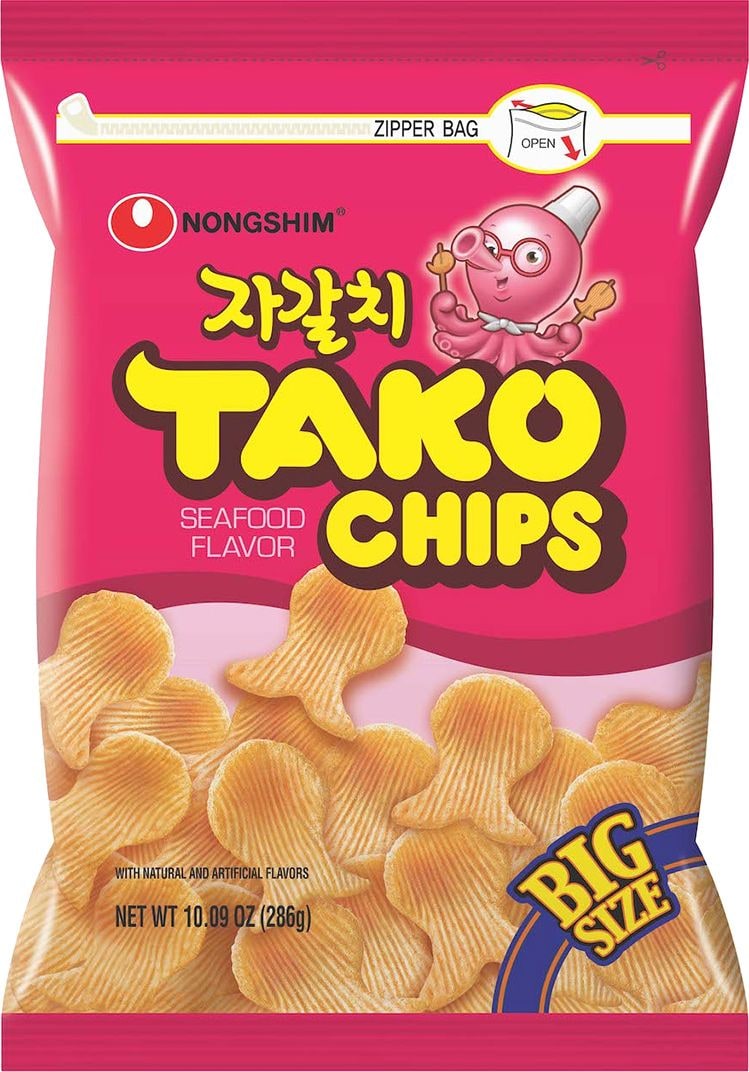
The American bag is worth reading carefully, because it makes three separate naming decisions at once.
자갈치 stays, in Korean, above everything else — so the Korean shopper still finds the product they know.
The English name is Tako Chips. Tako (たこ) is the Japanese word for octopus. Nongshim did not translate 자갈치, did not romanise it, and did not use an English word: it reached for a Japanese one, presumably because Western consumers already knew it from takoyaki.
The descriptor is "seafood flavor", not octopus flavour. That turns out to be a very carefully chosen phrase.
There is a further twist recorded in Korean sources. At launch, Korea marketed the flavour as octopus because takoyaki — which is what it actually tastes like — was an unfamiliar food in Korea in 1983, so the ingredient was easier to name than the dish. Forty years later the export name went to the dish's own language.
Read the Allergen Line
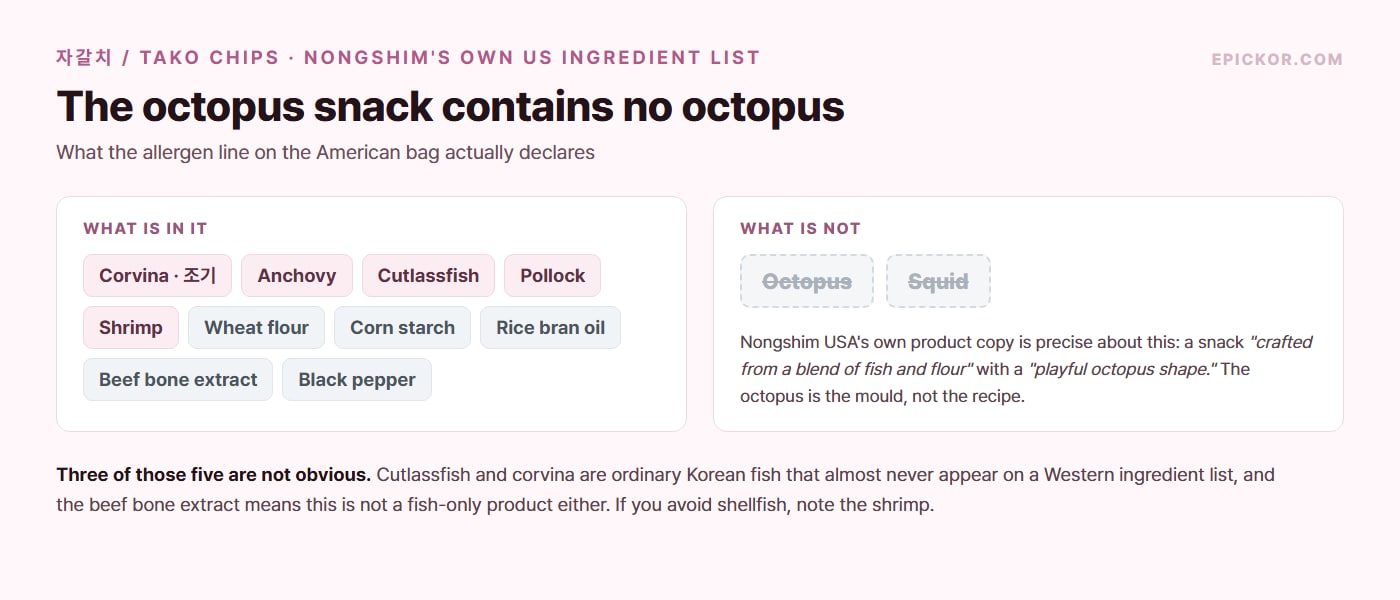
Nongshim USA lists the ingredients for Tako Chips as wheat flour, corn starch, rice bran oil, minced corvina, palm oil, rice flour and sugar, plus under 2% each of anchovy extract, artificial flavour, beef bone extract, black pepper and fish paste.
The allergen line reads: contains wheat, fish (corvina, anchovy, cutlassfish, pollock), shrimp, soy and milk.
There is no octopus and no squid in it. Four fish and a crustacean, and the octopus is the shape.
Nongshim's own product copy does not pretend otherwise. It describes a snack "crafted from a blend of fish and flour" with a "playful octopus shape." Read closely, the company is being exact — it is the English brand name that does the implying.
Two practical notes fall out of that list. Corvina is 조기, a croaker, and cutlassfish is 갈치 — both completely ordinary Korean fish that almost never appear on a Western label, which is a good short description of what this snack tastes of. And there is beef bone extract in it, so this is not a fish-only or pescatarian product, plus shrimp, which matters if you avoid shellfish.
The Korean bag makes the opposite claim, in the largest type on the front. It is sold domestically as 자갈치 문어맛 — octopus flavour — under the headline 맛도 모양도 문어!, "both the taste and the shape are octopus." Korean-language sources agree the domestic formulation does contain some octopus.
So the two markets are not saying the same thing about the same product. Korea says octopus twice on the front of the bag; the American bag says seafood flavor and its ingredient list has no cephalopod in it. Formulations differ by market and change over time, and the packet in your hand is always the authority — but it is worth knowing that the honest version of the claim is the export one.
This is the bag in the photograph above — the US family size, 자갈치 still on the front in Korean with Tako Chips underneath. If you want to test the claim this article makes, that a snack named after a fish market and shaped like an octopus contains neither, the ingredients panel is on the back. As an Amazon Associate, EpicKor earns from qualifying purchases at no extra cost to you.
Nongshim Tako Chips, family bag, on Amazon
Nongshim Tako Chips, family bag, on AmazonIt Is Bigger in Russia Than You Would Guess
자갈치 launched on 5 August 1983 as Nongshim's major follow-up to 새우깡, and it settled into the small group of Korean snacks — with 바나나킥, 새우깡, 양파링 and 포스틱 — that Koreans call 국민과자, national snacks. A 2006 poll of Korean internet users in their twenties and thirties put it fourth among long-running snacks.
The more surprising fact is where else it took hold. Korean sources describe 자갈치 as a major hit in Russia, alongside 꽃게랑 and Choco Pie, with the usual explanation being that inland regions have little access to seafood flavours and these fill the gap.
The reception in English-speaking markets has been less warm. The American YouTube duo Smosh tried it and hated it — their summary was that they had hoped it would not taste like octopus, and it did. That is a fair description of the risk. This is a savoury, briny, faintly spicy snack with a distinct fish-paste base, and it is not trying to be mild.
There is one more layer to the name. In 2025 Nongshim's parent group opened a seafood-focused supermarket in the United States using the same name. So Jagalchi now denotes a Busan market, a Nongshim snack, and an American grocery chain.
You might like: Tornado Potato: The Korean Invention Everybody Thinks Is Generic Fair Food
What It Looks Like, and Where It Came From
The crackers are small, ridged and unmistakably shaped like a little octopus — a body and splayed legs, deep-scored so they stay rigid.
Korean sources note that the form closely resembles 타이아라레 (鯛あられ), a traditional Japanese arare moulded in the shape of a sea bream, and suggest Nongshim looked at it when designing the product. The joke that follows is a real one: Korean students in Japan buy 타이아라레 expecting 자갈치 and get a shock, because the Japanese version is sweet.
Korean descriptions of 자갈치's own shape vary between an octopus and a 쭈꾸미, the webfoot octopus — which is smaller, and which Koreans eat far more often than they eat octopus.
What It Costs and How to Eat It
A Korean record from 2023 puts the 90 g bag at ₩1,700, which is standard territory for a Nongshim snack bag and has not moved dramatically since. The US export bag is a 286 g "BIG SIZE" zipper pack, which is roughly three times the Korean one — worth knowing before you assume the sizes are comparable.
Eat it with beer. This is the standard Korean use and it is not a throwaway line: the snack is salty and savoury enough that it works as 안주, drinking food, in a way sweet snacks do not. Korean commentary about 자갈치 mentions beer more often than it mentions children.
Buy the smallest bag first if you are unsure. The fish-paste flavour is the entire product. If you like Korean fish cake, dried anchovy stock or 어묵, you will probably like this. If those are not for you, the size of the bag is not going to help.
One cultural footnote worth having. The late President Roh Moo-hyun was known to be fond of it, and photographs of him eating 자갈치 with his granddaughter circulate in Korea. It is that kind of snack — unglamorous, specific, and attached to people's memories rather than to marketing.
Honest Notes
The English name oversells the octopus. Tako Chips means octopus chips. The US ingredient list has no octopus. Nongshim's own descriptive copy is accurate about this, but the brand name on the front is doing something else.
It is a fish snack, not a seafood-flavoured potato snack. The base is wheat and starch bound with minced corvina and fish paste. That is a fundamentally different thing from a potato chip with seasoning powder, and it is why reactions to it are so strongly split.
It has shrimp and beef bone extract in it. Neither is implied by the name. Check the packet if either matters to you.
The 자갈치 you find in a search engine is a market, not this. If you are trying to buy the snack online, search Tako Chips or Nongshim 자갈치; searching Jagalchi will send you to Busan travel guides and now, in the US, to a supermarket.
Formulations differ by market. Korean sources describe the domestic version as containing some octopus while the published US ingredient list does not. Do not treat one bag as evidence about the other.
If the fish-paste flavour is what appeals, Korean 어묵 and dried-anchovy stock are the same taste in a form you can cook with, and they explain why this snack tastes the way it does better than any description will.
FAQ
Q: Does 자갈치 contain octopus? A: Not in the US version. Nongshim USA's allergen statement lists fish (corvina, anchovy, cutlassfish, pollock) and shrimp, with no cephalopod. Korean sources say the domestic formulation includes some octopus. The shape is an octopus in both.
Q: Why is it called Jagalchi? A: After Busan's 자갈치시장 seafood market, whose own name comes from 자갈, the pebbles on that stretch of shore. It is not named after the fish that shares the name.
Q: What is it called in English? A: Tako Chips, from the Japanese word for octopus. The Korean name stays on the bag in Hangul.
Q: What does it taste like? A: Salty, savoury and faintly spicy, with a clear fish-paste base — closer to takoyaki than to plain octopus. Korean sources say the original 1983 marketing called it octopus flavour only because takoyaki was unfamiliar in Korea at the time.
Q: How much does it cost? A: About ₩1,700 for a 90 g bag as recorded in 2023. The US export bag is a 286 g resealable size.
Sources Checked
- Nongshim USA's official product page for the English brand name Tako Chips, the "seafood flavor" descriptor, the 286 g big-size zipper bag, the product description as a blend of fish and flour with an octopus shape, and the full ingredient and allergen statement: wheat flour, corn starch, rice bran oil, minced corvina, palm oil, rice flour and sugar, with under 2% each of anchovy extract, artificial flavour, beef bone extract, black pepper and fish paste; allergens declared as wheat, fish (corvina, anchovy, cutlassfish, pollock), shrimp, soy and milk.
- The Korean retail bag for the domestic product name 자갈치 문어맛 and the front-of-pack line 맛도 모양도 문어!, and for the 부산갈매기 부기 mascot tie-in with the Busan-dialect line 자갈치 한마리 몰고 가이소~.
- Korean-language reference sources for the 5 August 1983 launch by Nongshim, the position as the major follow-up to 새우깡, the name deriving from Busan's 자갈치시장 rather than the deep-sea fish of the same name, the market's own name coming from 자갈 (pebbles), the early parallel squid-flavour version, the 2023 record of ₩1,700 for 90 g, the popularity in Russia alongside 꽃게랑 and Choco Pie, the Smosh reaction, the resemblance to Japan's sweet 타이아라레 (鯛あられ), the takoyaki explanation for the original octopus-flavour marketing, the 2025 opening of a same-named seafood supermarket in the United States, and the association with the late President Roh Moo-hyun.
- Korean Wikipedia for the classification among Korea's 국민과자 alongside 바나나킥, 새우깡, 양파링 and 포스틱, the description of the shape as modelled on a 쭈꾸미, and the 2006 poll placing it fourth among long-running Korean snacks.
Ingredients and formulations vary by market and change over time; the packet is always the authority. Verified August 2026.
You Might Also Like
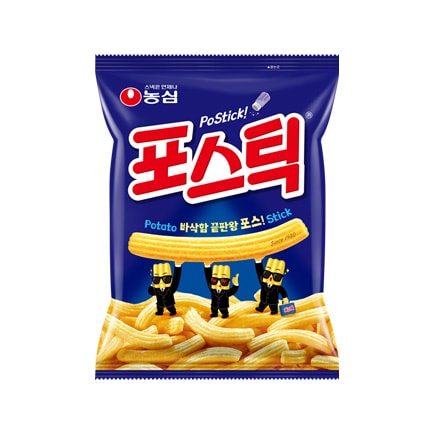
Postick: The Korean Snack That Used to Come With a Ketchup Packet
Postick (포스틱) has been on Korean shelves since 1980, it is only 23% potato, and it shipped with a ketchup sachet until the sachet got too expensive. What it costs now, and the ramyun-powder trick Koreans use on it.
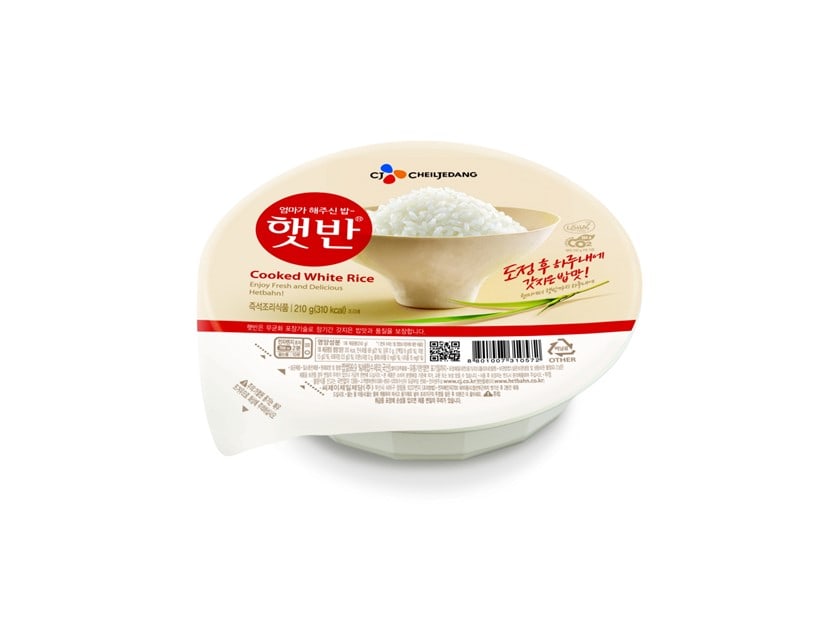
Hetbahn: What Korea's Instant Rice Is Made Of, and How to Heat It Without a Microwave
햇반 is 99.9% Korean rice and water plus 0.1% rice bran extract, sealed in a room cleaner than a hospital ward. The lid prints three cooking times and one of them needs no microwave at all. Prices, varieties, and the mistake almost everyone makes with the film.
Korean Food Prices in August 2026: What Already Rose, and What Changes on the 25th
Four Korean food makers raised prices within three weeks, and Paris Baguette's 127-item increase lands on 25 August. The exact brands, dates and won amounts, why wheat and corn are behind it, and what it actually changes for a visitor.