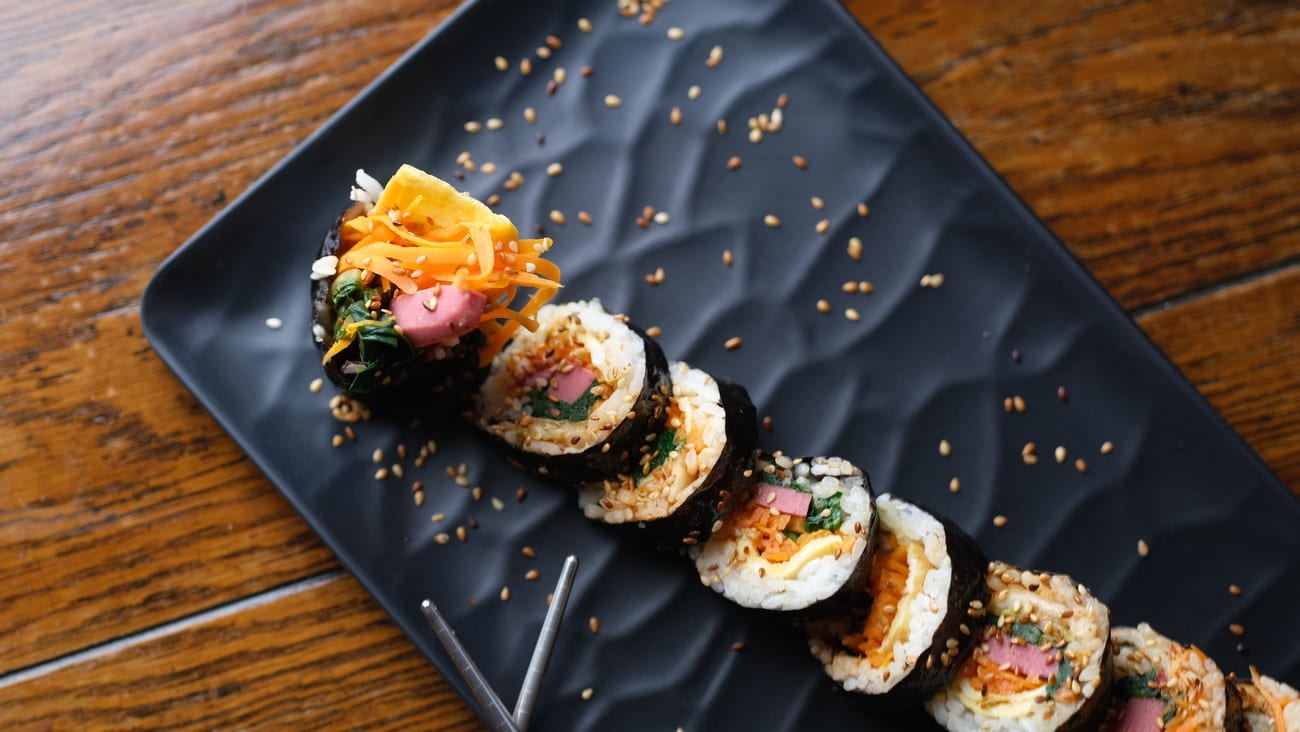
Kimbap Cheonguk: Korea's Most Common Restaurant Name Belongs to Nobody
Last updated: 18 August 2026
You will pass one within ten minutes of walking almost anywhere in urban Korea. Red or blue sign, photographs of forty dishes taped inside the window, lights on at three in the morning, and the same four characters over the door: 김밥천국, Kimbap Cheonguk — "gimbap heaven."
Visitors reasonably assume it is a chain, the Korean equivalent of a Subway or a Denny's. It is not, and the reason is one of the best small stories in Korean food business: the man who invented it was refused the trademark, and after that anybody could use the name. They did.
Here is what to order, what it costs in 2026, and why the shop you walk into has no corporate relationship with the identical shop two subway stops away.
| Detail | |
|---|---|
| Korean name | 김밥천국 (Gimbap Cheonguk), literally "gimbap heaven" |
| Started | 1995, Juan-dong, Nam-gu, Incheon — by 유인철 |
| The innovation | ₩1,000 gimbap, achieved by prepping in-store instead of buying factory-processed filling |
| Why it is not a chain | The trademark was refused for lack of distinctiveness (식별성). Anyone may use the name. |
| Hours | Many branches run 24 hours; this is the point of the format |
| Typical 2026 prices | Gimbap around ₩3,800 in Seoul · ramyeon ₩4,500 · 모듬김밥 ₩5,000 |
| The classic order | Gimbap plus ramyeon — about ₩9,500 together in 2025 reporting |
| What to expect | Thirty-plus dishes, one small kitchen, fast, unfussy, no reservations |
If you only remember one line: it is not a brand, it is a format — and the price on the wall is the only one that applies to that specific shop.
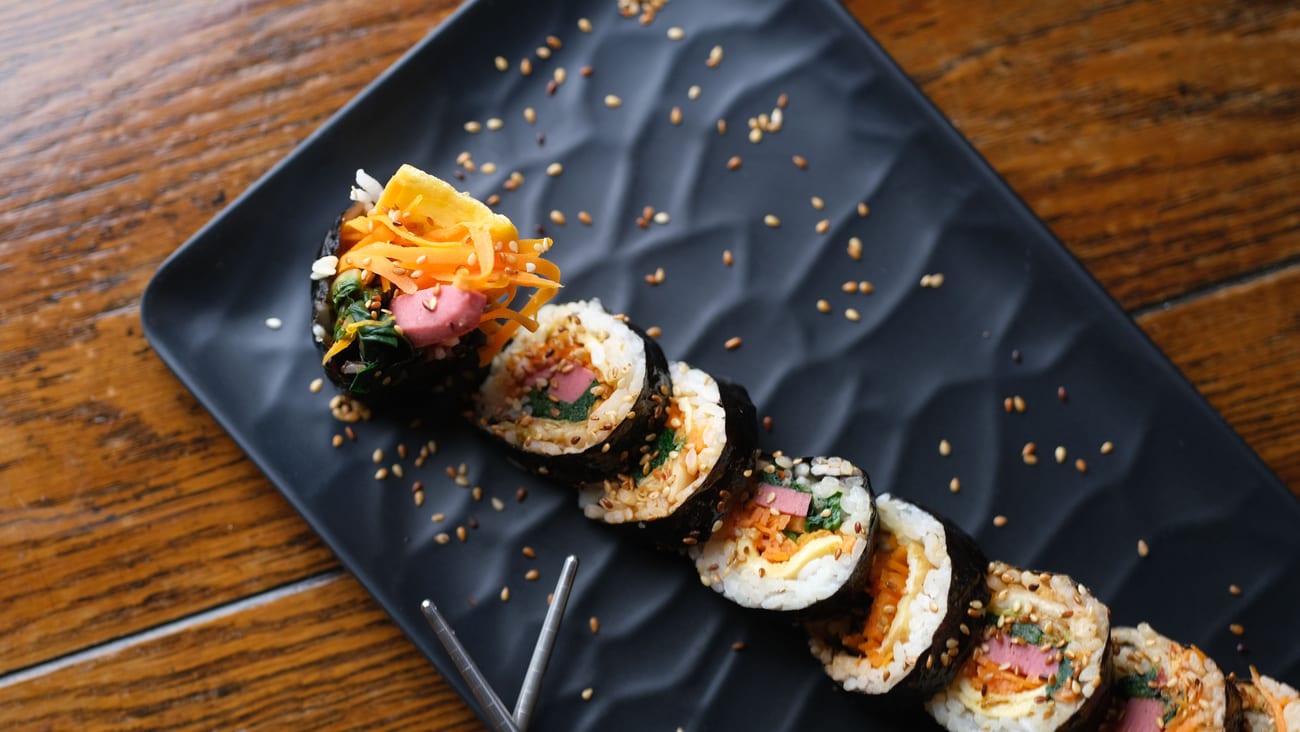
The ₩1,000 Gimbap, and the Trademark That Was Refused
The origin is specific and it is not a corporation.
In 1995, a man named 유인철 opened a small shop in 주안동, 남구, 인천. His idea was a price: gimbap for ₩1,000, at a time when that was startling. He got there by refusing the industry-standard shortcut — instead of buying pre-processed fillings from a factory, he prepped everything in the shop, which cut his input costs enough to sell at a number nobody else could match.
It worked. 박리다매 — thin margins, high volume — did what it is supposed to do, and he moved to turn it into a franchise.
The Korean Intellectual Property Office refused the trademark. The grounds were 식별성 — distinctiveness. "Gimbap heaven" describes what the shop sells in ordinary words; it does not identify one trader's goods from another's. You cannot own it, any more than you could own "Bread Shop."
So the originator incorporated under a different name — 김밥 만드는 사람들, "the people who make gimbap" — and carried on.
And then the inevitable happened. With no trademark standing in the way, shops all over the country hung up a sign reading 김밥천국, in the same lettering, selling the same menu, with no connection to Incheon or to 유인철. The name spread faster than any franchise could have spread it, and the man who created it could not build the systematic business the name deserved. Korean writing about him is unusually sympathetic on this point.
That is why your local 김밥천국 is not anyone's branch. Some are loosely affiliated groups, some are entirely independent, and the variation you will notice in price and quality between two shops with identical signage is not inconsistency. They are different restaurants.
The Copies, and How to Read a Sign
Once a name cannot be owned, the market fills the space, and Korean streets carry the evidence.
Walk a single neighbourhood and you will find 김밥천국 alongside near-identical signs playing on the same idea — 김밥나라 ("gimbap country"), and other variations on heaven, country and paradise, in the same red-and-white or blue-and-white palette, with the same photo boards. Some belong to organised groups with real supply chains. Some are one family. From the pavement they are indistinguishable, and that is not an accident: the visual language is as unprotectable as the words.
This sounds like chaos and mostly is not. What it produces is a format rather than a brand — a set of expectations any shop can opt into. Thirty-plus dishes, photographs instead of English, fast service, a price band, long hours. A traveller does not need to know which company runs the shop; they need to know that walking through that particular kind of door produces a hot meal in eight minutes for under ₩10,000. The sign is a promise about the format, and the format is remarkably reliable.
It also explains something visitors find strange: the same dish at two 김밥천국s can taste noticeably different. At a chain that would be a failure of quality control. Here there is no control to fail. They are separate kitchens making the same dish from the same tradition, the way two neighbourhood pubs make different chips.
Picking a good one
Four things separate the shops worth walking an extra block for.
Look at who is inside. Taxi drivers and older regulars at an odd hour is the strongest signal in Korean casual dining, and it costs nothing to check through the window.
Look at the photo boards. Faded, sun-bleached, curling boards mean a menu nobody has revisited in years. Recently printed ones usually mean somebody is still paying attention.
Count the staff. One person cooking forty dishes at lunchtime is a different experience from two or three. Speed is the product here.
Trust the ordinary items. Order gimbap, ramyeon or 김치찌개 on a first visit. Those are made constantly, so they are made well; the fifth-most-ordered dish on a fifty-item card has been sitting in the freezer waiting for you.
What It Costs in 2026, and Why the Number Moves
The honest headline is that Korea's byword for cheap food is no longer especially cheap.
Reported 2026 figures put ramyeon around ₩4,500, 돈까스김밥 around ₩4,500, and 모듬김밥 around ₩5,000, with plain gimbap averaging near ₩3,800 in Seoul. The classic order — a gimbap and a ramyeon — was reported at ₩9,500 in early 2025 and read at the time as a small scandal, because that combination is the Korean shorthand for the cheapest hot meal there is.
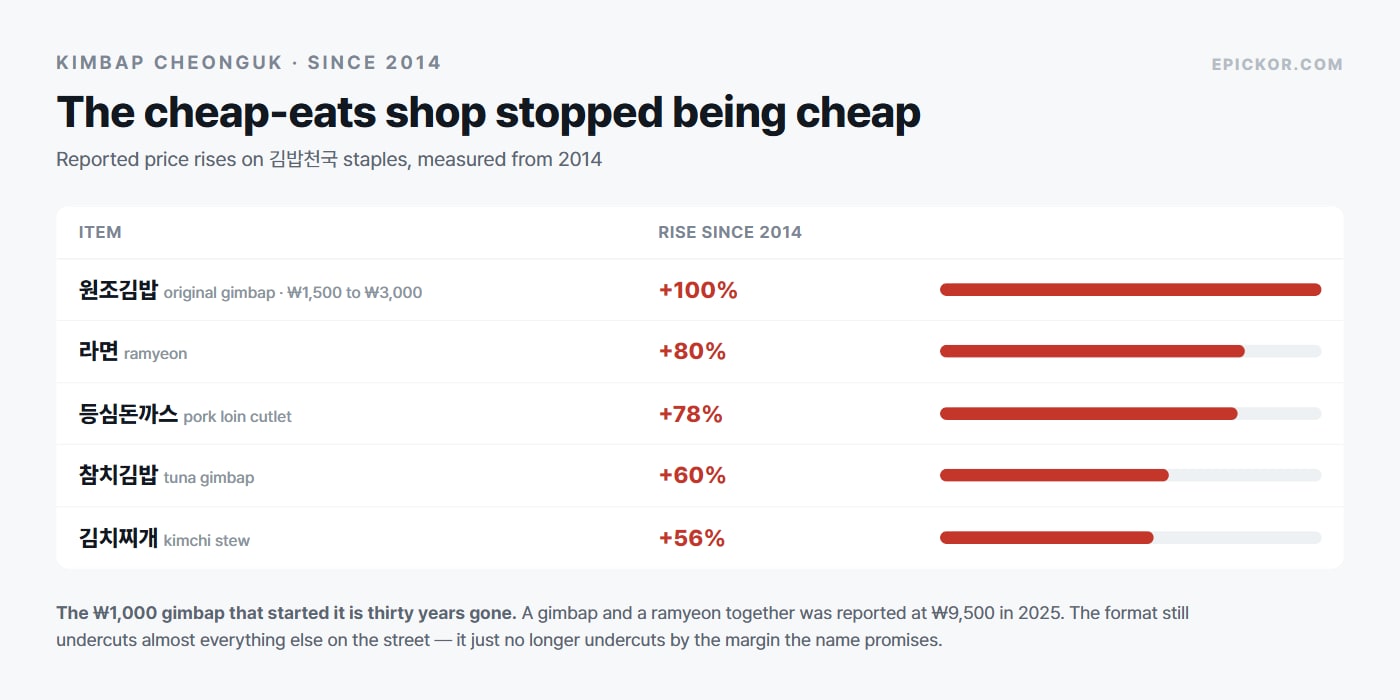
Measured from 2014 the rises are steep: the original gimbap doubled, from ₩1,500 to ₩3,000, and ramyeon rose about 80%.
But there is no national price list, because there is no national company. Two shops with the same sign can differ by ₩1,000 on the same dish, and neither is wrong. Korean coverage of the pricing is explicit that variation between branches is very large. Read the wall.
You might like: Korean Convenience Store Breakfast: What Locals Buy
Also: Coolpis — what arrives when you order something spicy
What to Actually Order
The menu is enormous — thirty to fifty items is normal — and that breadth is the format's real product. One kitchen, one cook, and a card that covers gimbap, ramyeon, 떡볶이, 쫄면, 찌개, 볶음밥, 덮밥, 오므라이스, 돈가스, 우동 and 만두.
Gimbap plus ramyeon. The default and the correct first order. You get the cold roll and the hot soup, and it is the combination the format exists to sell.
김치찌개 or 된장찌개 with rice. The best value on most walls if you want a full meal rather than a snack, and the version here is unpretentious in a way that is genuinely pleasant.
돈까스. Korean-style cutlet — thin, wide, brown sauce, shredded cabbage. Not the Japanese thing and not trying to be.
오므라이스. Ketchup-orange omelette rice. If you are travelling with a child who has run out of patience for Korean food, this is the escape hatch.
What to skip: anything that needs a long cook and a careful hand. A shop doing forty dishes from one range is optimised for speed, not for the one item that wants twenty minutes of attention.
The Part Travellers Actually Need
It is open when nothing else is. Many branches run 24 hours, and that is not a gimmick — it is the reason the format exists in a country where people finish work late and drink later. At 4am your options are convenience-store food or this.
Nobody will speak much English, and it does not matter. The window and the wall are covered in photographs of every dish. Point.
Sit-down, not takeaway, unless you say so. Gimbap travels well and 포장 (pojang, takeaway) is normal; the hot dishes do not.
Cash is fine, card is fine. These are ordinary registered restaurants.
Making gimbap at home? The one thing that does not improvise is the mat and the seaweed — the roll either holds or it does not, and that is equipment rather than skill. As an Amazon Associate, EpicKor earns from qualifying purchases at no extra cost to you.
Honest Notes
It is not a hidden gem and nobody claims it is. This is functional food at a functional price, cooked fast. Going in expecting a discovery is the surest way to be disappointed; going in expecting a hot meal at 2am for under ₩10,000 is the correct expectation.
Quality varies more than at any chain, precisely because it is not one. The good ones are very good. Ask which shop locals use rather than walking into the first sign you see.
The cheapest food in Korea is no longer here. A convenience-store 도시락 undercuts it, and so does a bowl of 국밥 in a market. 김밥천국 wins on hours, breadth and the fact that it is everywhere — not on the bottom price.
Planning a Seoul trip around cheap eating? Where you stay decides how often you can walk to a late-night meal rather than pay for a taxi to one. EpicKor may earn a commission from qualifying bookings at no extra cost to you.
FAQ
Q: Is Kimbap Cheonguk a franchise? A: No. The name was refused trademark protection in Korea for lack of distinctiveness, so any restaurant may use it. Shops with identical signage often have no corporate relationship at all.
Q: Who started it? A: 유인철, in Juan-dong, Nam-gu, Incheon, in 1995. His innovation was the ₩1,000 gimbap, achieved by prepping ingredients in-store rather than buying factory-processed fillings.
Q: Is it still cheap? A: Cheaper than most alternatives, but not what the name implies. Gimbap plus ramyeon was reported at ₩9,500 in 2025, and the original gimbap has doubled in price since 2014.
Q: Are they really open 24 hours? A: Many are, not all. Since the shops are independent, hours vary by branch — check the door rather than assuming.
Q: What should a first-time visitor order? A: Gimbap and ramyeon together. It is the combination the whole format is built around, and it is on every wall.
Sources Checked
- Korean-language reference sources for the 1995 origin in 주안동, 인천, the founder 유인철, the ₩1,000 gimbap and the in-store prep that made it possible, the trademark refusal on 식별성 grounds, and the incorporation as 김밥 만드는 사람들.
- Korean price reporting for the 2026 menu figures, the ₩9,500 gimbap-and-ramyeon combination reported in 2025, and the rises since 2014: original gimbap +100%, ramyeon +80%, pork cutlet +78%, tuna gimbap +60%, kimchi stew +56%.
Because these shops are independent, prices differ substantially between branches. The board on the wall is the only authority for the shop you are standing in. Verified August 2026.
You Might Also Like
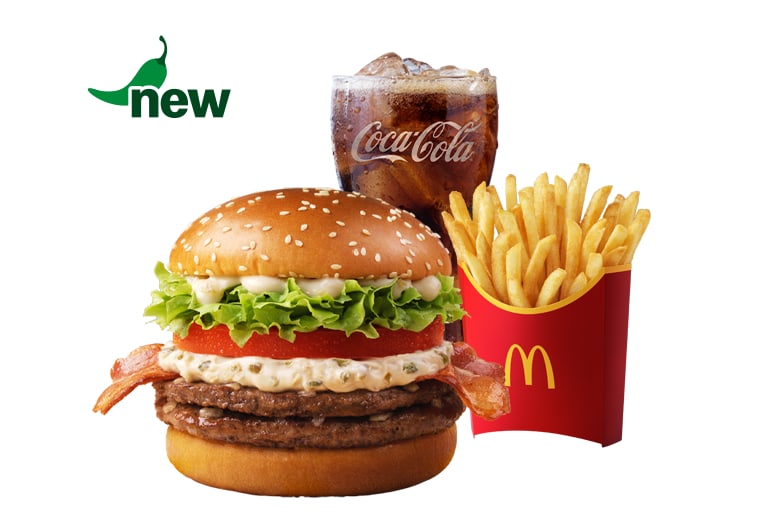
Korean McDonald's: Why the Burgers Are Named After Farm Counties, and What to Order Now
McDonald's Korea has bought 459.2 tonnes of named Korean produce since 2021 and prints the county on the burger — Changnyeong garlic, Jindo spring onion, Jinju pepper. 24 million sold, ₩61.7 billion of measured regional value. Here is what is on the menu now.
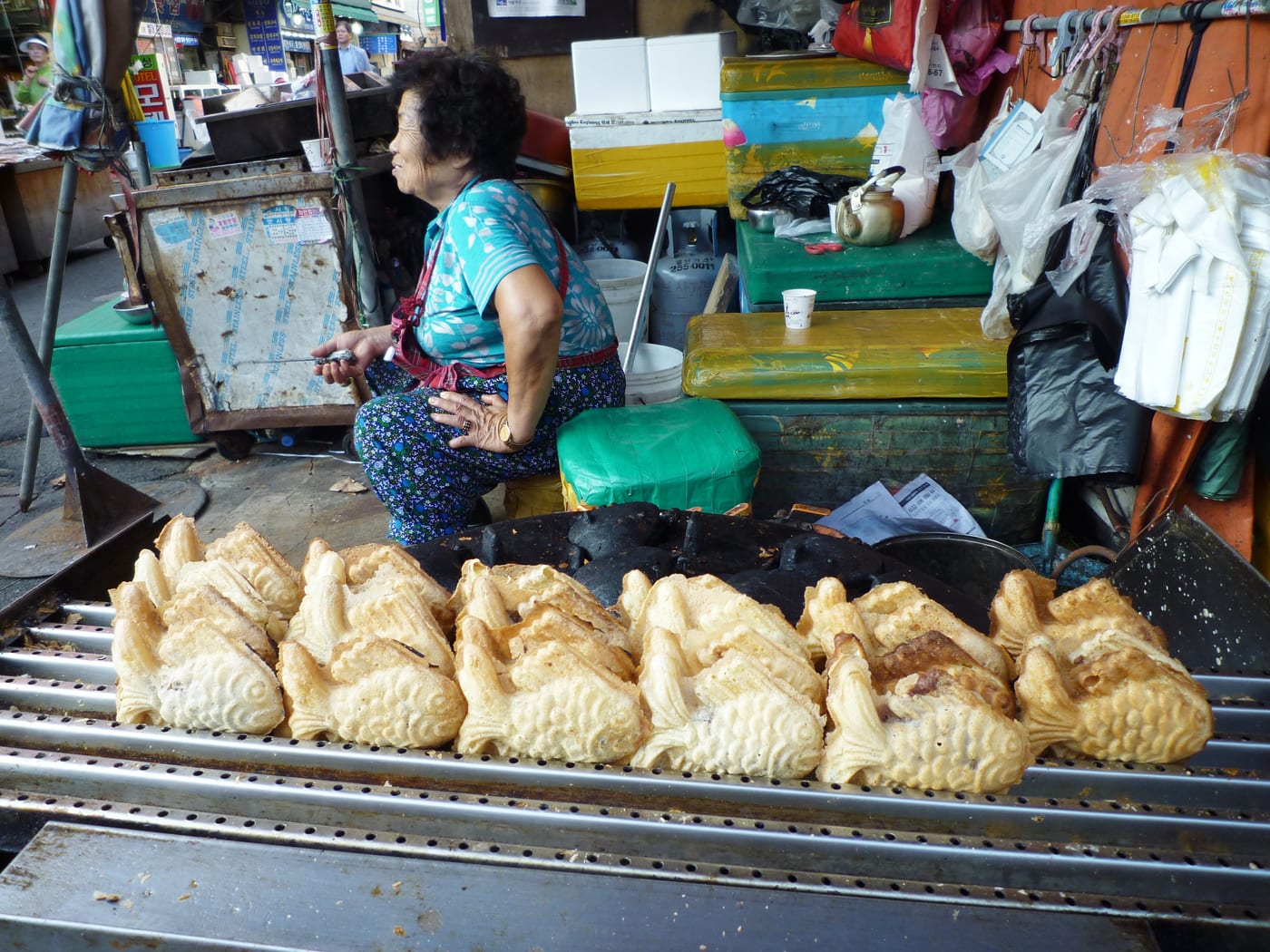
Cham Bungeoppang: The Korean Fish Snack That Is Four Different Fish Abroad
붕어빵 is a winter street food you have to find a cart for. Orion boxed it in 2011, released it in May on purpose, and sold 640 million packs — then renamed it after a different fish in China, Vietnam and Russia.
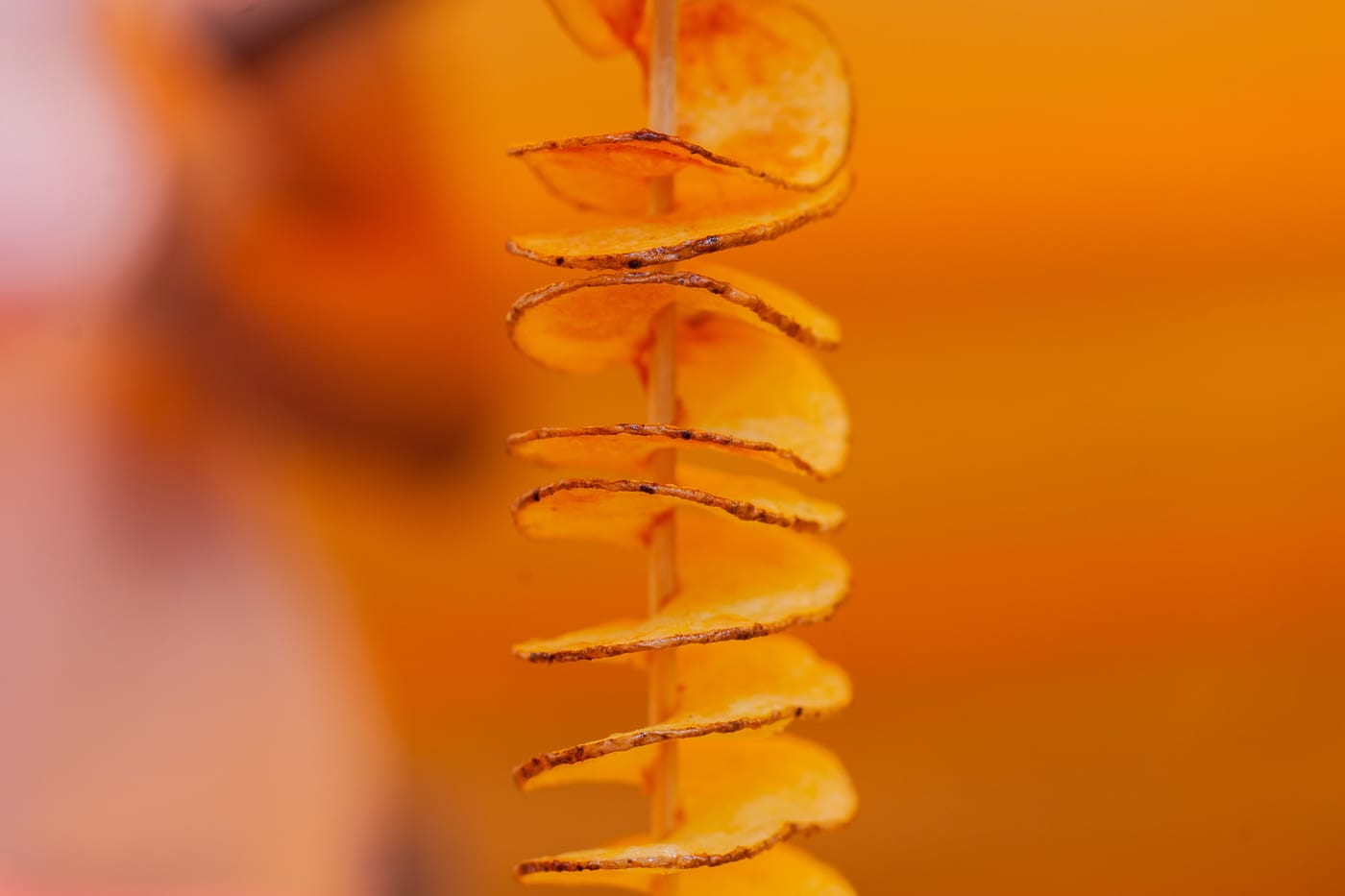
Tornado Potato: The Korean Invention Everybody Thinks Is Generic Fair Food
The spiral potato on a stick has a named inventor, a debut date in Myeongdong, and patents in six jurisdictions. 회오리감자 was designed in Korea in 2006, and the word itself is a trademark — which is why Korean vendors write 스프링감자 instead.