Korean McDonald's: Why the Burgers Are Named After Farm Counties, and What to Order Now
Walk into a McDonald's in Seoul and the board will offer you something called a 진주 고추 크림치즈 버거. Jinju is not a flavour. It is a city of about 340,000 people in South Gyeongsang province, and the pepper in that burger was grown there.
This is not a one-off marketing stunt. Since 2021, McDonald's Korea has run a programme called 한국의 맛 — Taste of Korea — that buys a named regional Korean crop, builds a limited-run burger around it, and prints the county's name on the product. Changnyeong garlic. Boseong pork. Jindo spring onion. Iksan sweet potato. Jinju pepper.
Over four years it has moved 459.2 tonnes of Korean produce and 24 million burgers.
English-language searches for the Korean McDonald's menu are busy — people want the item list, the English names, and the prices. What comes back is mostly listicles about Lotteria and Mom's Touch, which are Korean-owned chains and a different subject. Nobody has explained the thing that is actually strange here: a global fast-food chain in Korea is operating as a produce buyer with the receipts published.
| Programme | 한국의 맛 (Taste of Korea), McDonald's Korea, since 2021 |
|---|---|
| Produce bought | 459.2 tonnes over four years, from named counties |
| Burgers sold | 24 million cumulative, projected 27–28 million by year end |
| Measured value | ₩61.7 billion (2021–2024), assessed by impact firm Triplelight |
| On the menu now | The Jinju pepper line — beef, chicken, breakfast muffin, and a nugget dipping sauce |
| Also Korea-only | McSpicy Shanghai Burger, Bulgogi Burger, Jeju Green Tangerine McFizz |
| Cheapest burger | ₩3,800 — the Bulgogi Burger |
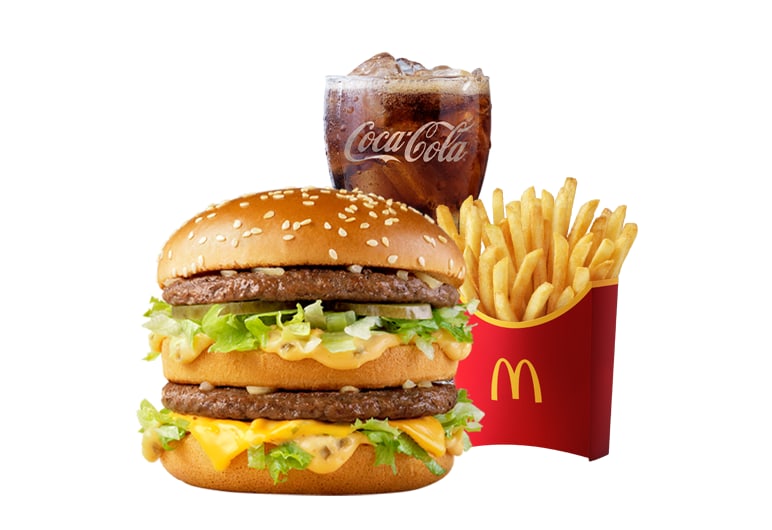
| Big Mac | ₩5,700 alone, ₩7,600 as a meal |
| Prices from | McDonald's Korea's own 20 February 2026 price announcement |
The Programme Buys by the Tonne, and Says So
Korean gochujang chilli paste on Amazon — on AmazonAffiliate link. As an Amazon Associate, EpicKor earns from qualifying purchases at no extra cost to you.
Most fast-food localisation is a flavour note. A chain takes a national cliché, puts it in a sauce, and calls it local. 한국의 맛 is doing something more specific: it names the administrative district the ingredient came from and reports how much it bought.
Here is the record, with the figures published in Korean-language business coverage in 2026.
| Year | County | Product | Units sold |
|---|---|---|---|
| 2021 | 창녕 Changnyeong | Garlic Burger | 5.37 million over three years |
| 2022 | 보성 Boseong | Green Pork Burger | 1.19 million |
| 2023–24 | 진도 Jindo | Spring Onion Cream Croquette Burger | 4.86 million |
| 2024 | 진주 Jinju | Pepper Cream Cheese Burger | 1.66 million |
| 2025 | 익산 Iksan | Sweet Potato Mozzarella Burger | 2.4 million in one month |
And the purchasing, over the same four years: 창녕 garlic 169.8 t, 진도 spring onion 142.4 t, 보성 pork 137 t, 진주 pepper 10 t. Total 459.2 tonnes.
The economics were measured by an outside impact firm, Triplelight, which put the socioeconomic value at ₩61.7 billion for 2021–2024 and broke it down: ₩56.7 billion in regional brand value, ₩4.49 billion in additional farm income, and ₩460 million saved in avoided crop disposal.
Read that split carefully, because it is the honest part. The overwhelming majority of the value is brand value for the region — the fact that people now associate Changnyeong with garlic — rather than cash in farmers' hands. Both are real. They are not the same thing, and the headline figure blends them.
The clearest evidence that the first kind is real: the Changnyeong Garlic Research Association gave McDonald's a plaque of appreciation for what the burger did to the town's image. Very few countries produce that sentence.
You might like: Korean Food Prices in August 2026: What Already Rose, and What Changes on the 25th
What Is on the Menu Right Now
Read off McDonald's Korea's own menu pages on 24 August 2026. The Jinju pepper line first ran in 2024 and is back, this time spread across four different products rather than one burger.
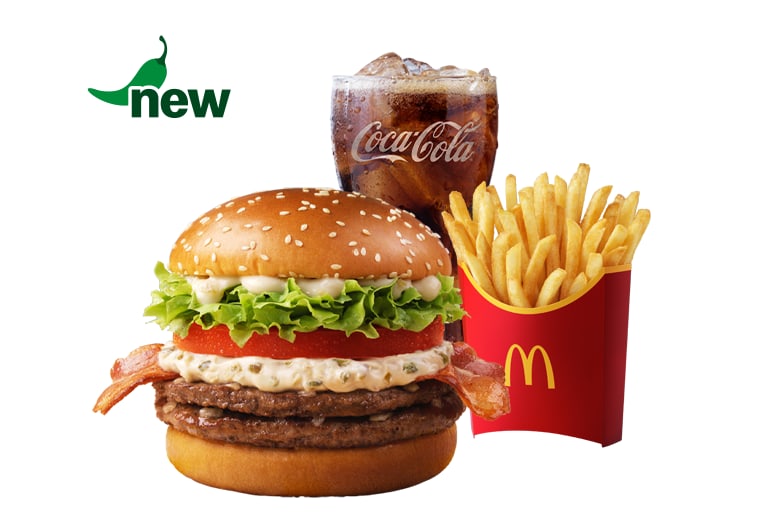
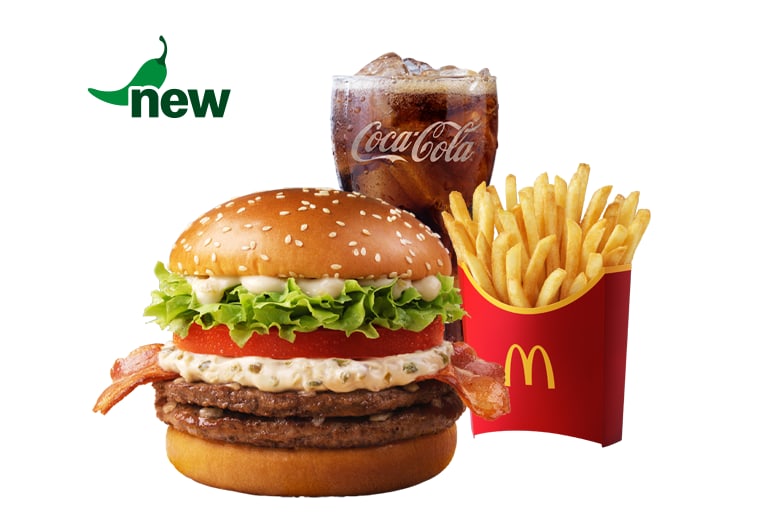
- 진주 고추 크림치즈 비프 버거 — Jinju Pepper Cream Cheese Beef Burger. Two beef patties, bacon, and a cream cheese sauce visibly flecked with green pepper. 910–1,049 kcal as a meal, depending on what you pick with it.
- 진주 고추 크림치즈 치킨 버거 — Jinju Pepper Cream Cheese Chicken Burger. Same sauce, chicken patty. 914–1,053 kcal as a meal.
- 진주 고추 크림치즈 머핀 — the same idea in the breakfast range, served with a hash brown and drip coffee.
- 진주 고추 매콤 소스 맥너겟 세트 — six nuggets with a Jinju pepper dipping sauce, which is the cheapest way to taste the thing.
The English names are printed on the Korean site. That matters more than it sounds: you do not need to translate anything or mangle a romanisation at the counter. The official English name is right there under the Korean one, and you can point at it.
Alongside the programme items, two permanent fixtures are Korea-only or close to it.
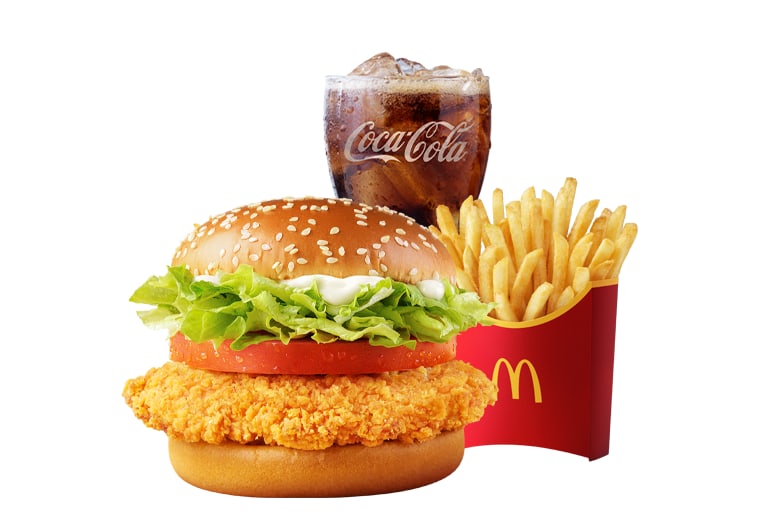
맥스파이시 상하이 버거 — the McSpicy Shanghai Burger — is a spicy chicken fillet burger that has been a Korean menu fixture for years, with a 더블 상하이 double version. Americans do not have it. It is the single item most worth ordering if you only order one thing, because it is the Korean McDonald's palate in one object: fried chicken, heat, and not much sweetness.
불고기 버거 — the Bulgogi Burger — is the other one, and it is the cheapest burger on the board at ₩3,800. Sweet soy-marinated pork patty. It is not trying to be a premium item and it is not sold as a novelty; it is the thing a Korean high school student buys.
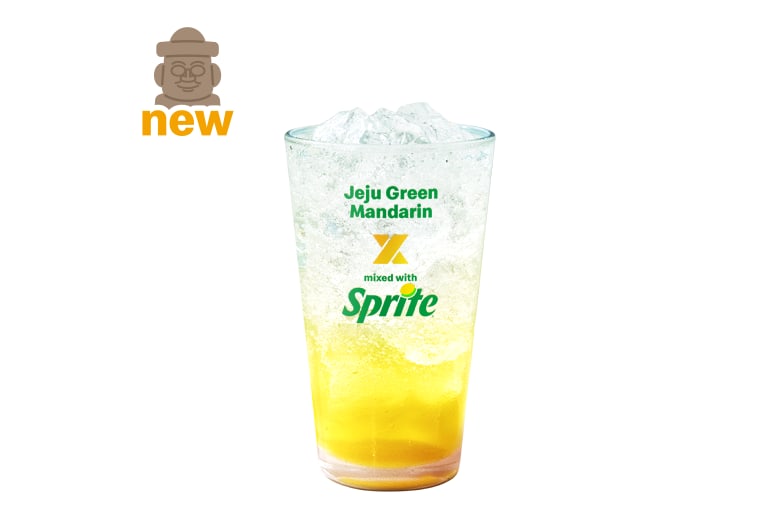
And on the drinks side right now: 제주 풋귤 맥피즈, a sparkling drink made with 풋귤, the green unripened Jeju tangerine picked before it colours. It is tarter than the ripe fruit, which is the reason it works in a fizzy drink and the reason Koreans treat it as a distinct ingredient rather than an unripe mistake.
The Jinju pepper sauce is a cream cheese base carrying a green chilli, which is a very Korean way to handle heat — cut it with dairy rather than pile it on. If you want to understand the flavour rather than just eat it once, a jar of Korean chilli paste is the cheapest way to see what Korean heat is built on, and it keeps. As an Amazon Associate, EpicKor earns from qualifying purchases at no extra cost to you.
Korean gochujang chilli paste on Amazon
Korean gochujang chilli paste on AmazonYou might like: Kimbap Cheonguk: Korea's Most Common Restaurant Name Belongs to Nobody
What It Costs
Here is the part every English page skips, and there is a reason: McDonald's Korea does not print prices on its menu pages. The figures below come from the company's own price announcement, which took effect on 20 February 2026 and raised 35 items by ₩100–400, an average of 2.4%. They are the most recent published prices, not an August recount.
| Item | Before | From 20 Feb 2026 |
|---|---|---|
| 불고기 버거 Bulgogi Burger | ₩3,600 | ₩3,800 |
| 빅맥 Big Mac, burger only | ₩5,500 | ₩5,700 |
| 맥스파이시 상하이 버거 | ₩5,500 | ₩5,900 |
| 빅맥 세트 Big Mac meal | ₩7,400 | ₩7,600 |
| 후렌치후라이 fries (M) | ₩2,500 | ₩2,600 |
| 탄산음료 soft drink (M) | ₩1,900 | ₩2,000 |
The company gave its reasons plainly: the won exchange rate, raw material costs, and labour. The McSpicy Shanghai took the largest single increase in that round — ₩400 — which is worth knowing if you remember it being cheaper.
Two caveats before you budget from this table. Delivery through McDelivery is priced higher than counter prices, as it is almost everywhere. And limited-run 한국의 맛 items are priced individually at launch and are not in the February list.
You might like: Korean Fried Chicken Brands Compared: BHC vs BBQ vs Kyochon
Ordering Without Korean
The practical version is short.
- Use the kiosk. Most Korean McDonald's branches order through touchscreen kiosks rather than a counter queue, and the flow is picture-led.
- Point at the English name. The official English names — Jinju Pepper Cream Cheese Beef Burger, McSpicy Shanghai Burger — are published on McDonald's Korea's own menu pages next to the Korean. Screenshot the one you want before you go in.
- 세트 means meal, 단품 means the burger alone. Those two words appear on every listing and are the only decision most people need to make.
- 맥런치 (McLunch) is a weekday lunchtime discount tier. If a listing shows it, the same item is cheaper in that window.
What This Is Not
Three honest qualifications, because the programme is easy to over-read.
It is not a permanent menu. 한국의 맛 items are limited runs. The Jinju line is on the board now; the Iksan sweet potato burger sold 2.4 million in a single month and then went. If you are planning a trip around a specific one, check before you count on it.
The tonnage is small next to a national crop. 10 tonnes of Jinju pepper over four years is a rounding error in Korean agriculture. The value the impact assessment measured is overwhelmingly reputational — ₩56.7 billion of brand value against ₩4.49 billion of actual farm income. That is a real effect and a genuine one, but it is publicity working as publicity, not a subsidy programme.
And Korea has its own burger chains, which this article is not about. 롯데리아 (Lotteria) invented a bulgogi burger category of its own in the 1990s, and 맘스터치 has more stores in Korea than McDonald's does. They are covered elsewhere in English and they are a different story — the interesting thing about McDonald's Korea is precisely that it is not a Korean company and is behaving like one.
If the county-named ingredients are what caught your interest, the useful next step is the three Korean pastes rather than any single burger — gochujang, ssamjang and doenjang carry the chilli, garlic and fermented soy in the proportions Korean cooking actually uses. It is the difference between recognising a flavour and being able to make it.
O'Food gochujang, ssamjang and doenjang set on Amazon
See the O'Food paste set on AmazonFAQ
Q: What is on the Korean McDonald's menu that I cannot get at home? A: Right now, the Jinju pepper cream cheese line (beef burger, chicken burger, breakfast muffin, and a nugget dipping sauce), the McSpicy Shanghai Burger and its double version, the Bulgogi Burger, and the Jeju Green Tangerine McFizz. The Jinju items are a limited run; the Shanghai and Bulgogi burgers are fixtures.
Q: Why is a burger named after a Korean city? A: Because the ingredient came from there. McDonald's Korea's 한국의 맛 programme, running since 2021, buys a named regional crop and builds a limited-run product around it — Changnyeong garlic, Boseong pork, Jindo spring onion, Jinju pepper, Iksan sweet potato — and puts the county name on the product.
Q: How much does a Big Mac cost in Korea? A: ₩5,700 for the burger alone and ₩7,600 as a meal, following McDonald's Korea's price increase effective 20 February 2026. The cheapest burger on the board is the Bulgogi Burger at ₩3,800.
Q: Is there an English menu at McDonald's in Korea? A: The official English names are published on McDonald's Korea's own menu pages alongside the Korean, so the simplest approach is to screenshot the item you want before you go in. Ordering is mostly through touchscreen kiosks rather than a counter queue.
Q: What does 진주 고추 taste like? A: It is a green chilli, and McDonald's pairs it with a cream cheese base rather than a hot sauce — so it reads as a mild, savoury heat carried in dairy rather than a sharp burn. That dairy-cut approach to chilli is common in Korean cooking.
Q: Is the Taste of Korea programme actually helping farmers? A: Partly. The independent impact assessment put four-year value at ₩61.7 billion, but ₩56.7 billion of that is regional brand value and only ₩4.49 billion is additional farm income. The tonnage — 459.2 tonnes across four crops in four years — is small relative to national production. The reputational effect is real; it is not a farm subsidy.
Sources Checked
- McDonald's Korea menu pages (mcdonalds.co.kr) — the current burger and drink line-up, the Korean and official English product names, and the calorie ranges, read directly on 24 August 2026.
- Korean-language business coverage of 한국의 맛, 2026 — 한국경제 매거진 and MD투데이 among others, for the 2021 start, the year-by-year county and product list, unit sales, the 459.2-tonne purchasing total, and the Changnyeong Garlic Research Association's plaque.
- Triplelight impact assessment — the ₩61.7 billion socioeconomic figure for 2021–2024 and its split into ₩56.7 billion regional brand value, ₩4.49 billion farm income, ₩460 million avoided disposal cost, as reported in Korean coverage.
- McDonald's Korea price announcement, 19 February 2026 — 35 items raised ₩100–400 effective 20 February, average 2.4%, with the itemised figures reported by 디지털데일리 and 서울신문.
- Imagery — McDonald's Korea official product photography.
Final Take
The Big Mac is on the Korean menu so you can measure the rest of it. Next to a burger that costs ₩5,700 and tastes the same in forty countries sits one named after a county of 340,000 people, made with ten tonnes of its peppers, that a local growers' association gave the company a plaque for.
That is the thing worth ordering. Not because it is better than a Big Mac — it may not be — but because it is the only item on the board that could not exist anywhere else, and it will be gone by the time you next visit.
You Might Also Like
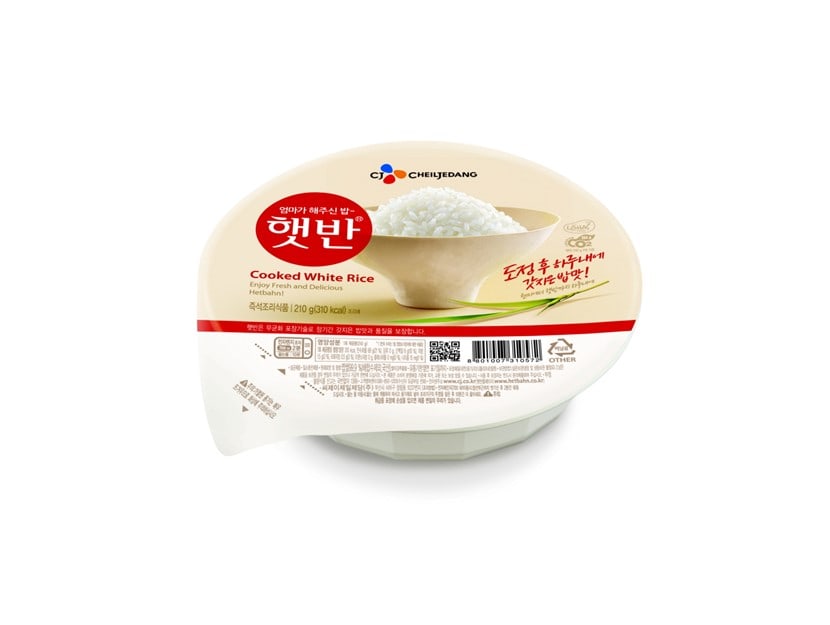
Hetbahn: What Korea's Instant Rice Is Made Of, and How to Heat It Without a Microwave
햇반 is 99.9% Korean rice and water plus 0.1% rice bran extract, sealed in a room cleaner than a hospital ward. The lid prints three cooking times and one of them needs no microwave at all. Prices, varieties, and the mistake almost everyone makes with the film.
Korean Food Prices in August 2026: What Already Rose, and What Changes on the 25th
Four Korean food makers raised prices within three weeks, and Paris Baguette's 127-item increase lands on 25 August. The exact brands, dates and won amounts, why wheat and corn are behind it, and what it actually changes for a visitor.
Kkokkalcorn: Korea's Cone Snack, and Why Each Convenience Store Has a Different Flavor
Lotte split one snack across three convenience store chains on purpose, and Koreans started touring stores to collect all four flavors. Which chain has which, what 꼬깔콘 costs in August 2026, and why the convenience store is the worst value per gram.