Euljiro Seoul Guide: Why the Machine Shops Become Bars at Night
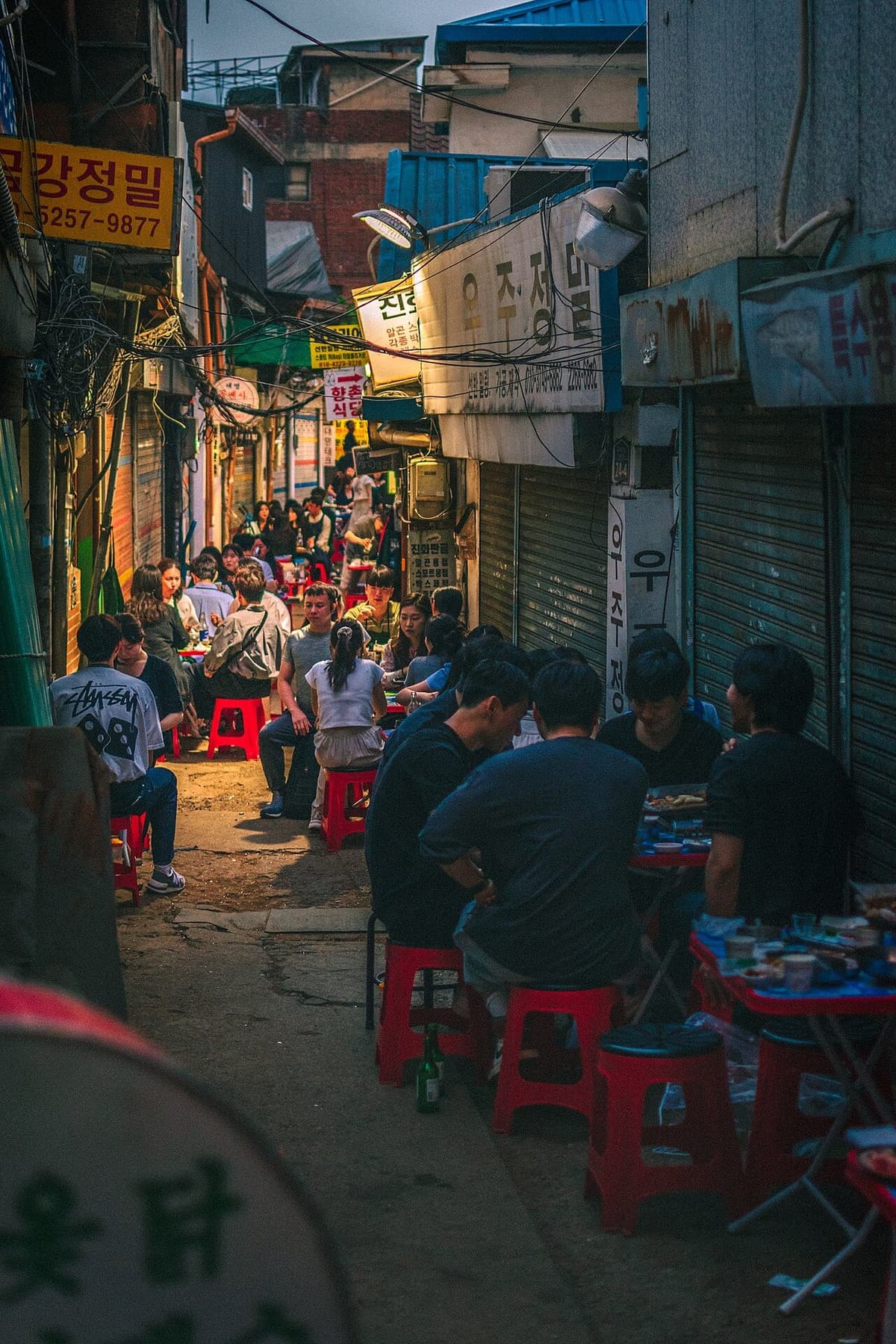
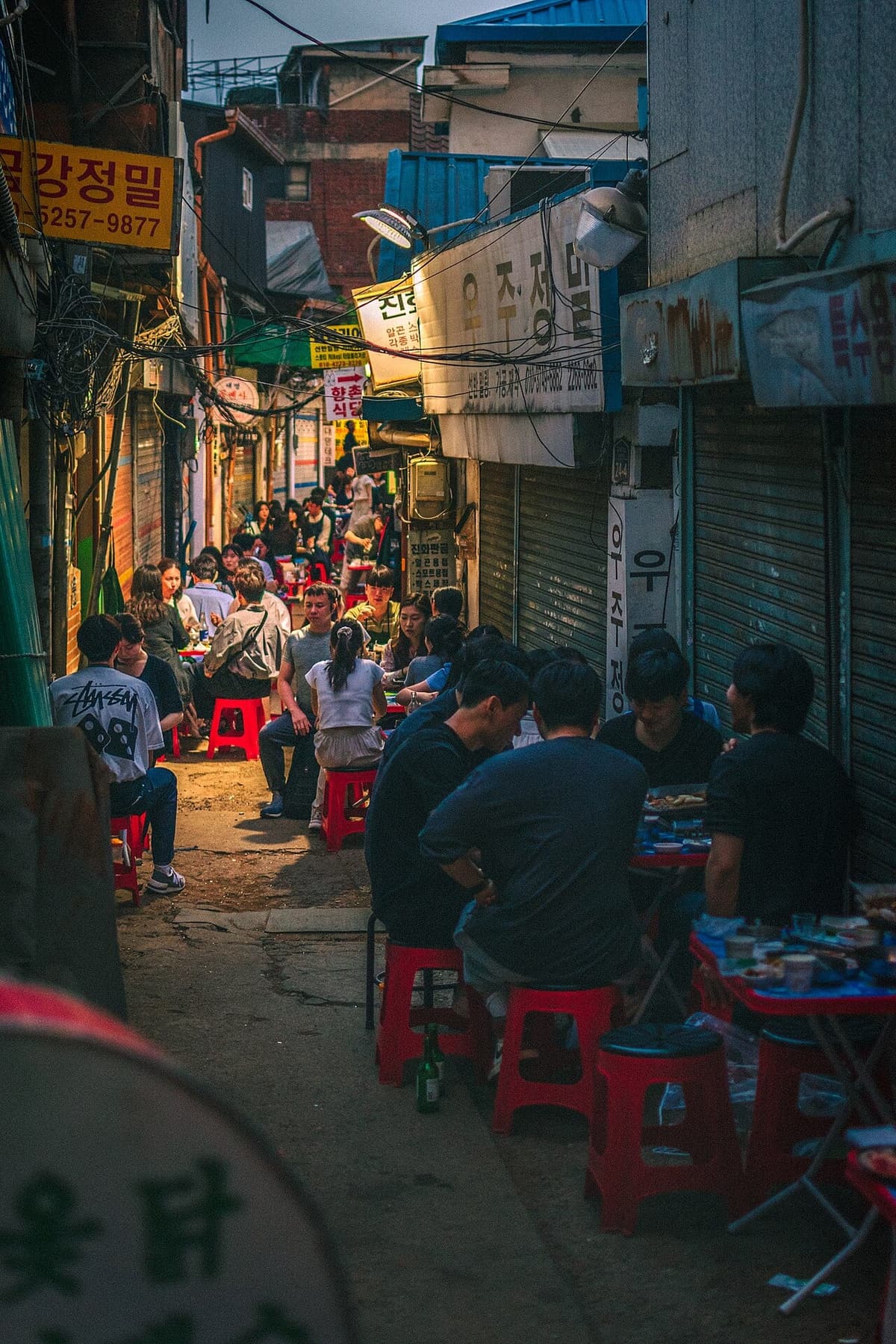
Nogari Alley at dusk. The shutters behind the tables belong to precision machining workshops — 금강정밀, 오주정밀 — closed for the day. Photo: Seoul Tourism Organization, KOGL Type 1.
Walk through Euljiro (을지로) at two in the afternoon and you will wonder why anyone told you to come. It is a working district: pallets of paper, compressors stacked on the pavement, LED strips and drill bits and industrial motors, men moving stock on handcarts, the sound of metal being cut.
Come back at seven in the evening and the same alley has red plastic stools down the middle of it, folding tables, and people drinking beer in front of the shutters that closed an hour ago.
Both are Euljiro. That is the entire point of the place, and most guides only describe one of them.
Koreans call the nightlife version 힙지로 (Hipjiro) — a portmanteau of "hip" and "Euljiro". But the hip part only exists because the working part was there first, and understanding that connection is the difference between a good night here and a confusing one.
The Short Answer
| Detail | |
|---|---|
| Korean | 을지로 (Euljiro) |
| Where | Jung-gu, central Seoul — walkable from Myeongdong and City Hall |
| Subway | Euljiro 3-ga Station (을지로3가역), Lines 2 and 3 |
| Main alley exit | Exit 4 for Nogari Alley; Exit 10 for the original bar, Euljiro OB Bear |
| Typical hours | Bars roughly 17:00–24:00 weekdays, from 16:00 weekends. Varies by shop |
| Easiest time to get a seat | Weekdays 17:00–18:00, or right at opening on weekends |
| What it costs | Nogari from about ₩1,000–1,500, draft beer about ₩3,000–4,000 |
Korean dried seafood snacks — compare on AmazonAffiliate link. As an Amazon Associate, EpicKor earns from qualifying purchases at no extra cost to you.
Go in the early evening on a weekday. The alley fills fast, seating is outdoors and first-come, and there is no reservation culture here.
Why There Are Bars in a Machine District
This is the causal link that English coverage almost always skips, and it explains everything about the atmosphere.
Euljiro was — and still partly is — Korea's largest printing district. Books, leaflets, business cards, packaging: an enormous share of what got printed in Korea passed through these blocks. Printing runs to deadlines, which means night shifts.
Workers coming off those shifts wanted a cheap, fast drink near where they worked. So the drinking spot grew where the labour was.
The origin point is documented: Euljiro OB Bear (을지OB베어) opened in November 1980 as the first nogari beer house here. What followed became 노가리 골목 — Nogari Alley — and Seoul designated it a Seoul Future Heritage (서울미래유산) site in 2015.
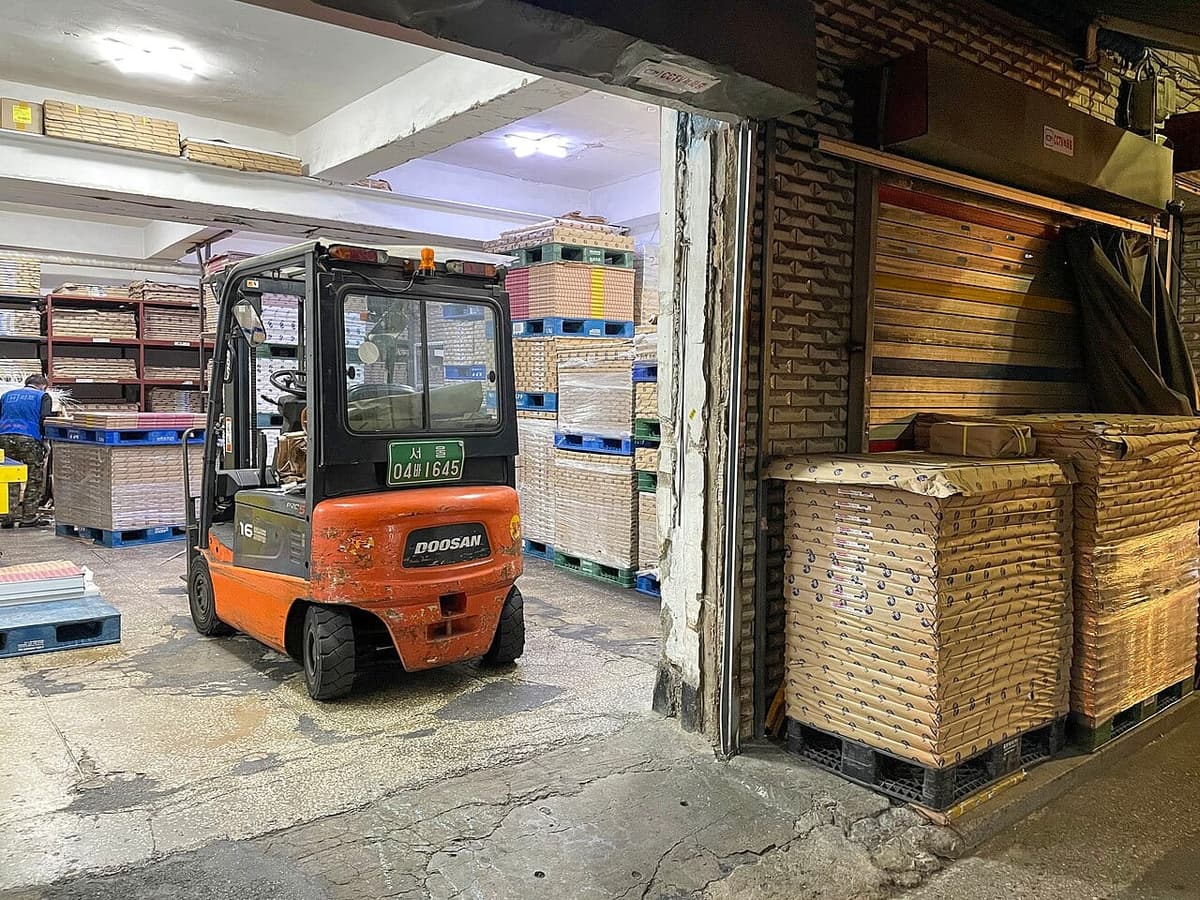
A paper wholesaler in the printing alley. This industry is the reason the bars are here. Photo by Aaaatu, CC BY-SA 4.0.
So the sequence is: printing district → night shifts → cheap beer near the presses → decades later, that alley becomes the atmosphere young Seoulites travel across the city for. The retro look is not styling. It is what a working district actually looks like.
What Nogari Actually Is
노가리 (nogari) is dried juvenile pollack. It arrives in a small pile, often lightly grilled, sometimes with a gochujang-mayo dip, and it is chewy, salty and strongly savoury.
It is not a meal. It is engineered to be eaten slowly while drinking, which is why it costs about ₩1,000–1,500 and why nobody orders one each and stops.
The pairing has its own name — 노맥 (nomaek), nogari plus maekju (beer) — following the same construction as chimaek for chicken and beer.
How to order without stress:
- Sit down first. Seating is outdoors, first-come, and nobody will seat you
- Order 생맥주 (saengmaekju), draft beer, by the glass or pitcher
- Order nogari to share. One or two plates for a table of three or four
- Most shops have a small menu of other anju — 골뱅이 (sea snails), 계란말이 (rolled omelette), grilled items. Add one if you want something more substantial
If you do not eat dried fish, this specific alley is not for you — and that is fine, because Euljiro has far more than the nogari street. See below.
Trying nogari at home: As an Amazon Associate, EpicKor may earn from qualifying purchases. Dried pollack is hard to find outside Korea, but compare Korean dried seafood snacks if you want the beer-and-anju pairing before your trip.
Compare on AmazonWhat Else Is Actually There
Nogari Alley gets the photographs, but treating Euljiro as one alley wastes the trip.
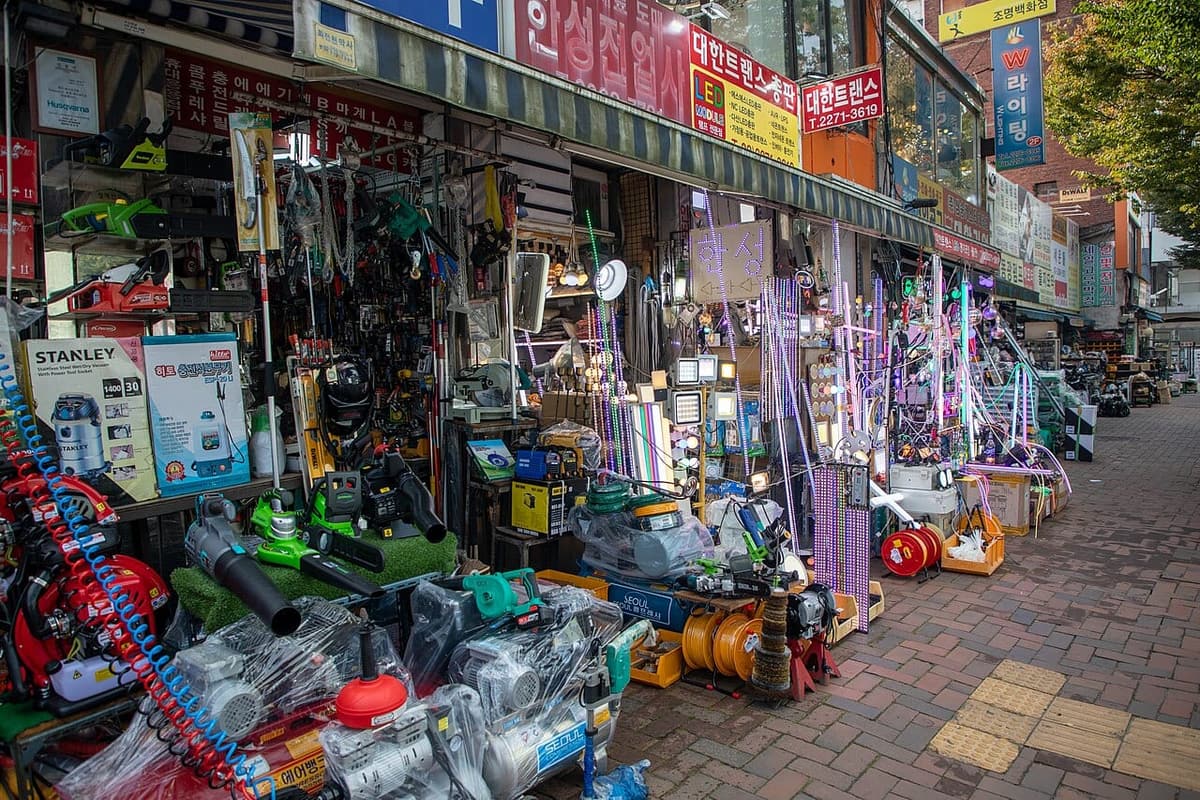
The daytime district — tools, motors, transformers and lighting, spilling onto the pavement. Photo by Aaaatu, CC BY-SA 4.0.
- The tool and lighting streets. Compressors, drills, LED strips, industrial transformers, shop signs for 조명백화점 (lighting department stores). Genuinely interesting to walk even if you buy nothing
- The furniture street (을지로 가구거리), a long run of furniture and interior suppliers
- The printing alleys, where paper wholesalers and small presses still operate
- The hidden bars and cafes. This is the Hipjiro part: small, deliberately unmarked places, frequently on the second floor or up a back staircase, behind a door that looks like a workshop entrance
That last point is the practical one. Many of Euljiro's best-known bars have no visible sign. You find them by address and by looking up. If you are expecting a shopfront, you will walk past them.
How to Actually Do a Night Here
A workable plan rather than a list of names, since individual shops open and close constantly.
Arrive around 17:00–18:00 on a weekday. You will get a seat outdoors, watch the alley fill, and see the transition from working district to drinking district happen in real time. That transition is the single most memorable thing about Euljiro and it is over by about 19:30.
Walk the daytime streets first, while some are still open. Fifteen minutes through the tool and lighting blocks before you sit down completely changes what the alley means when you do.
Start in the alley, then go up. Nogari and beer outdoors first, then find one of the upstairs bars for the second round. That order matches how the neighbourhood actually works.
Bring cash. Card is widely accepted, but the smallest and oldest stalls are the ones where cash is smoothest.
You might like: Pojangmacha Guide: Korean Street Tent Food and Etiquette
How to Find a Bar With No Sign
The single most practical skill for Euljiro, and the thing that separates people who enjoy it from people who wander for an hour.
Assume the entrance looks wrong. Many of the well-regarded places are behind a door that reads as a workshop, a stairwell beside a shopfront, or a corridor between two wholesalers. There is often no English, no menu outside, and sometimes no name at all.
Look up, not along. Ground floors here belong to businesses that need loading access, so bars and cafes concentrate on the second and third floors. If you only scan at eye level you will miss most of them.
Use the address, not the name. Korean map apps navigate by address reliably; searching a bar's name in English often fails. Get the address first, walk to the building, then find the stairs.
Signals that a door is a bar: a small warm light above it, a doorbell or intercom, a hand-lettered paper sign, shoes or a doormat that does not belong to a workshop, or simply people going in wearing clothes nobody wears to move pallets.
And a warning worth taking seriously: because these are small rooms in old buildings, many hold ten to twenty people. A full bar is full. There is rarely a waiting list — you leave and try the next one, which is why having two or three addresses beats having one.
The shutters are part of it
Look at the shutters themselves as you walk. Euljiro has been the site of shutter-art projects, and painted roller doors are a common sight along these blocks.
It is a neat physical summary of the whole neighbourhood: the shutter is a working door by day and a canvas at night, visible only during the hours the businesses are closed. You cannot see the art while the district is doing its actual job.
How Euljiro Compares to Seoul's Other Neighbourhoods
Useful for deciding whether to spend an evening here at all.
| Neighbourhood | Korean | What it is | Best for |
|---|---|---|---|
| Euljiro | 을지로 | Working district that becomes a drinking alley | Atmosphere, cheap beer outdoors, unpolished |
| Seongsu | 성수 | Former factories converted to cafes and flagship stores | Design, coffee, shopping — daytime |
| Hongdae | 홍대 | Student nightlife, live music, chain-heavy | Late nights, younger crowd, energy |
| Itaewon | 이태원 | International food and bars | Variety, English-friendly service |
Euljiro is the least polished of these, and that is the reason to go. Seongsu has done the conversion — the factories are cafes now. Euljiro has not: the workshops are still workshops, and the bars are squeezed in around them. If you want to see a neighbourhood mid-transition rather than after it, this is the one.
For the converted-factory version of the same idea, EpicKor compares two of the trend districts in the Seongsu vs Hannam guide.
Walking Seoul properly: Euljiro is a walking neighbourhood on uneven working streets — compare comfortable walking shoes before a Seoul trip built around districts like this one.
Compare on AmazonWhen to Skip Euljiro
Being straight about this saves a wasted evening.
- Skip it in the afternoon if you only have one visit. Between roughly 10:00 and 16:00 this is a wholesale district doing business. Interesting to walk, not what you came for
- Skip it in heavy rain or deep winter. The alley experience is outdoor seating on plastic stools. Indoor bars exist, but the thing that makes Euljiro special does not happen under an umbrella
- Skip it on a Friday night if you dislike crowds. It is genuinely packed, and there is no queue system — people wait by standing near tables
- Do not come looking for a specific viral bar. Small unmarked places here open, move and close often, and building a night around one address is how people end up disappointed
- This is not a family dinner destination. It is an adult drinking street with outdoor seating in a working district
The Redevelopment Question
Worth knowing, because it affects what you will find and because Koreans feel strongly about it.
Euljiro sits in the middle of long-running redevelopment planning. Rents rose after area redevelopment schemes advanced from around 2014, and a further urban improvement project approved in 2018 put much of the Nogari Alley frontage at risk. Even Euljiro OB Bear, the 1980 original and a designated Seoul Future Heritage site, became a conflict case.
The tension is genuine: the same industrial texture that makes the neighbourhood atmospheric is old, low-rise, and sitting on extremely valuable central Seoul land.
Practical implication for a visitor: what is here now may not be here in a few years, and specific shops change hands more often than guidebooks update. Go for the district, not for a checklist.
FAQ About Euljiro
Q: What is Euljiro known for?
A: Two things at once. By day it is a working district of printing houses, tool and lighting wholesalers, and metal workshops in central Seoul. By night, the same alleys fill with outdoor tables serving beer and dried pollack, which is why Koreans nicknamed it Hipjiro.
Q: Which subway exit should I use?
A: Euljiro 3-ga Station on Lines 2 and 3. Exit 4 leads toward Nogari Alley; Exit 10 is nearest Euljiro OB Bear, the original nogari beer house that opened in November 1980.
Q: What is nogari and what does it cost?
A: Dried juvenile pollack, served as a chewy salty snack to eat while drinking. Roughly ₩1,000–1,500 a plate, with draft beer around ₩3,000–4,000, though prices vary by shop.
Q: When should I go?
A: Early evening, ideally a weekday between 17:00 and 18:00, or right at opening on a weekend. You will get a seat and you will see the district change from work to drinking, which is the most distinctive thing about it.
Q: Why are there bars in an industrial area?
A: Because the industry came first. Euljiro was Korea's largest printing district, printing runs to deadlines on night shifts, and workers wanted a cheap drink near the presses when they finished. Nogari Alley grew from that, and Seoul designated it a Future Heritage site in 2015.
Q: Is Euljiro being redeveloped?
A: Parts of it, and it has been contested for years. Redevelopment plans advancing from around 2014 and a further project approved in 2018 have put much of the old frontage under pressure. Visit for the district rather than for a specific shop, since individual places change often.
The One Thing to Remember
Go at six in the evening, not at two in the afternoon.
Euljiro's appeal is not a bar or a photograph. It is watching a district of workshops and paper wholesalers close its shutters and put tables out in front of them — the same street doing a completely different job an hour later.
The bars are there because the work was there. Walk the working streets first and the alley stops being retro decoration and starts being the actual history of the block.
Sources and Further Reading
- Korean coverage of Nogari Alley's origin, including Euljiro OB Bear opening in November 1980 as the first nogari beer house, and the connection to overnight shifts in Korea's largest printing district
- Seoul's designation of the alley as a Seoul Future Heritage (서울미래유산) site in 2015
- Korean reporting on redevelopment pressure from schemes advancing around 2014 and a further urban improvement project approved in 2018
- Korean listings for typical nogari and draft beer pricing, opening hours, and Euljiro 3-ga Station exits
- Image sources and licensing are documented in this post's
image-sources.md
Prices and hours checked 2026 and vary by shop. Small businesses here open and close frequently; confirm on arrival.
Euljiro is one of the neighbourhoods compared in EpicKor's Seoul neighbourhood guide — character, nearest station, whether it is worth staying in, and how long each actually takes.
Next in the series: Yeonnam-dong and Ikseon-dong.
You Might Also Like

Korean McDonald's: Why the Burgers Are Named After Farm Counties, and What to Order Now
McDonald's Korea has bought 459.2 tonnes of named Korean produce since 2021 and prints the county on the burger — Changnyeong garlic, Jindo spring onion, Jinju pepper. 24 million sold, ₩61.7 billion of measured regional value. Here is what is on the menu now.
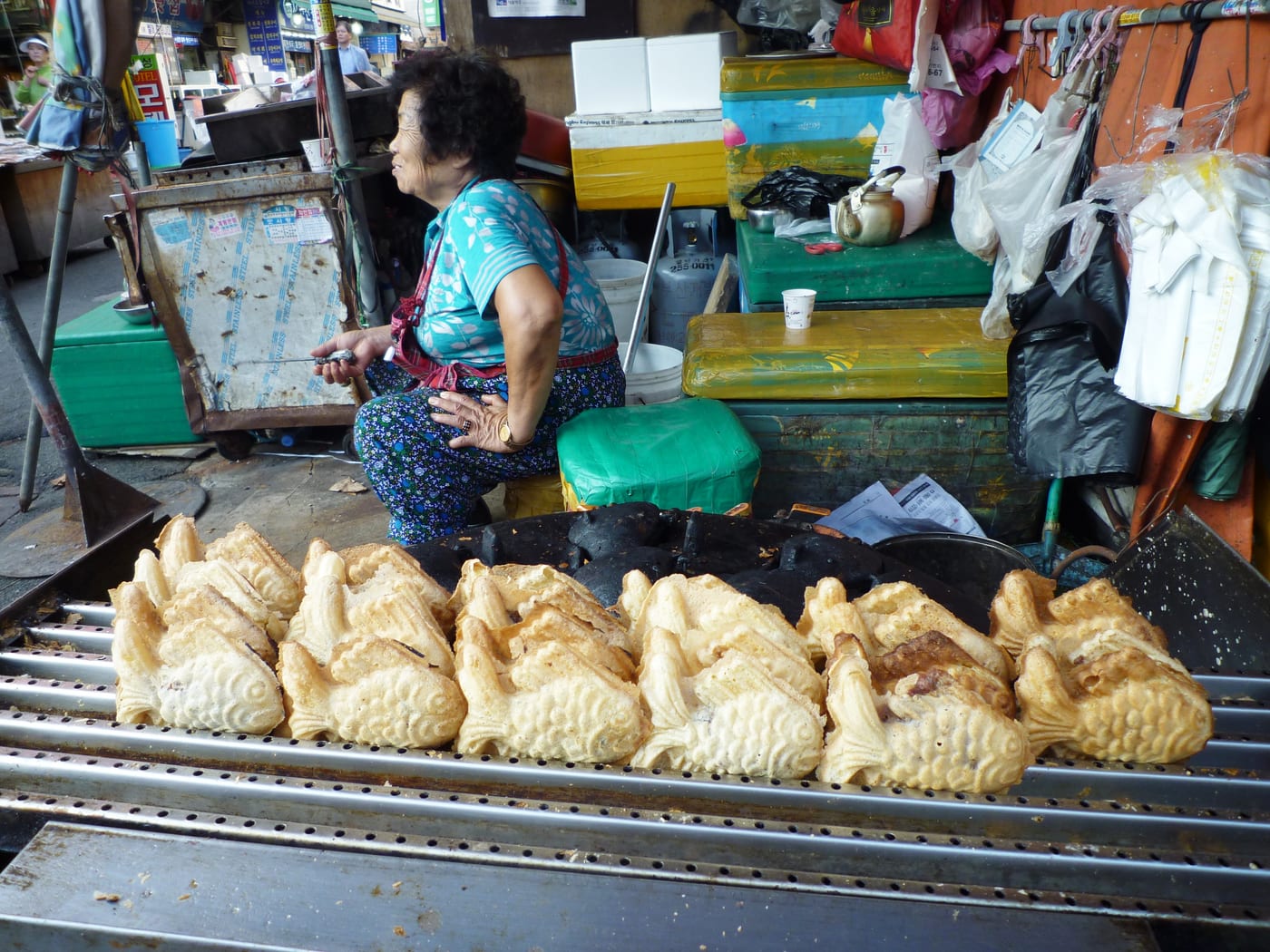
Cham Bungeoppang: The Korean Fish Snack That Is Four Different Fish Abroad
붕어빵 is a winter street food you have to find a cart for. Orion boxed it in 2011, released it in May on purpose, and sold 640 million packs — then renamed it after a different fish in China, Vietnam and Russia.
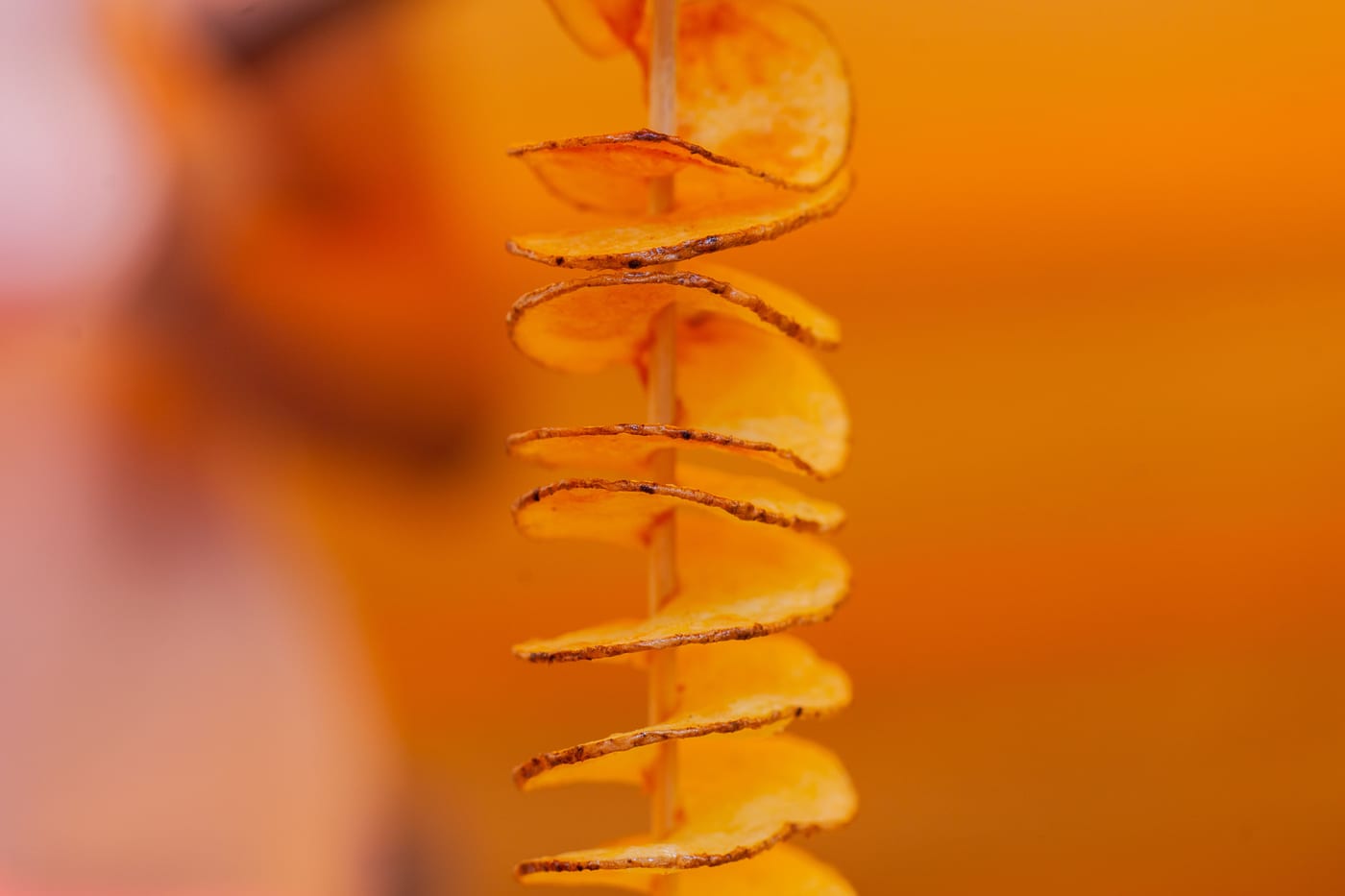
Tornado Potato: The Korean Invention Everybody Thinks Is Generic Fair Food
The spiral potato on a stick has a named inventor, a debut date in Myeongdong, and patents in six jurisdictions. 회오리감자 was designed in Korea in 2006, and the word itself is a trademark — which is why Korean vendors write 스프링감자 instead.