Yeonnam-dong Seoul Guide: The Park Built on a Buried Railway
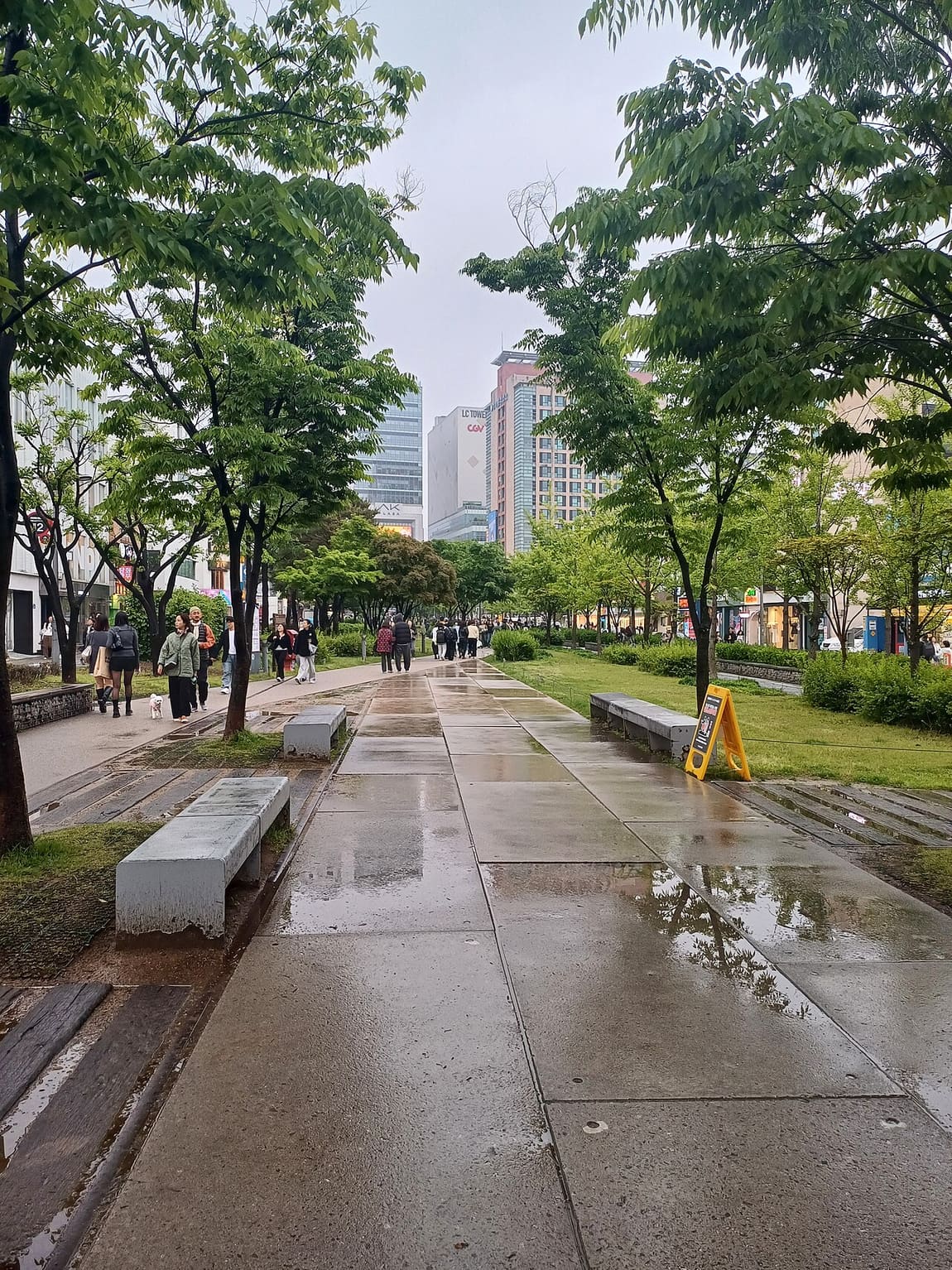
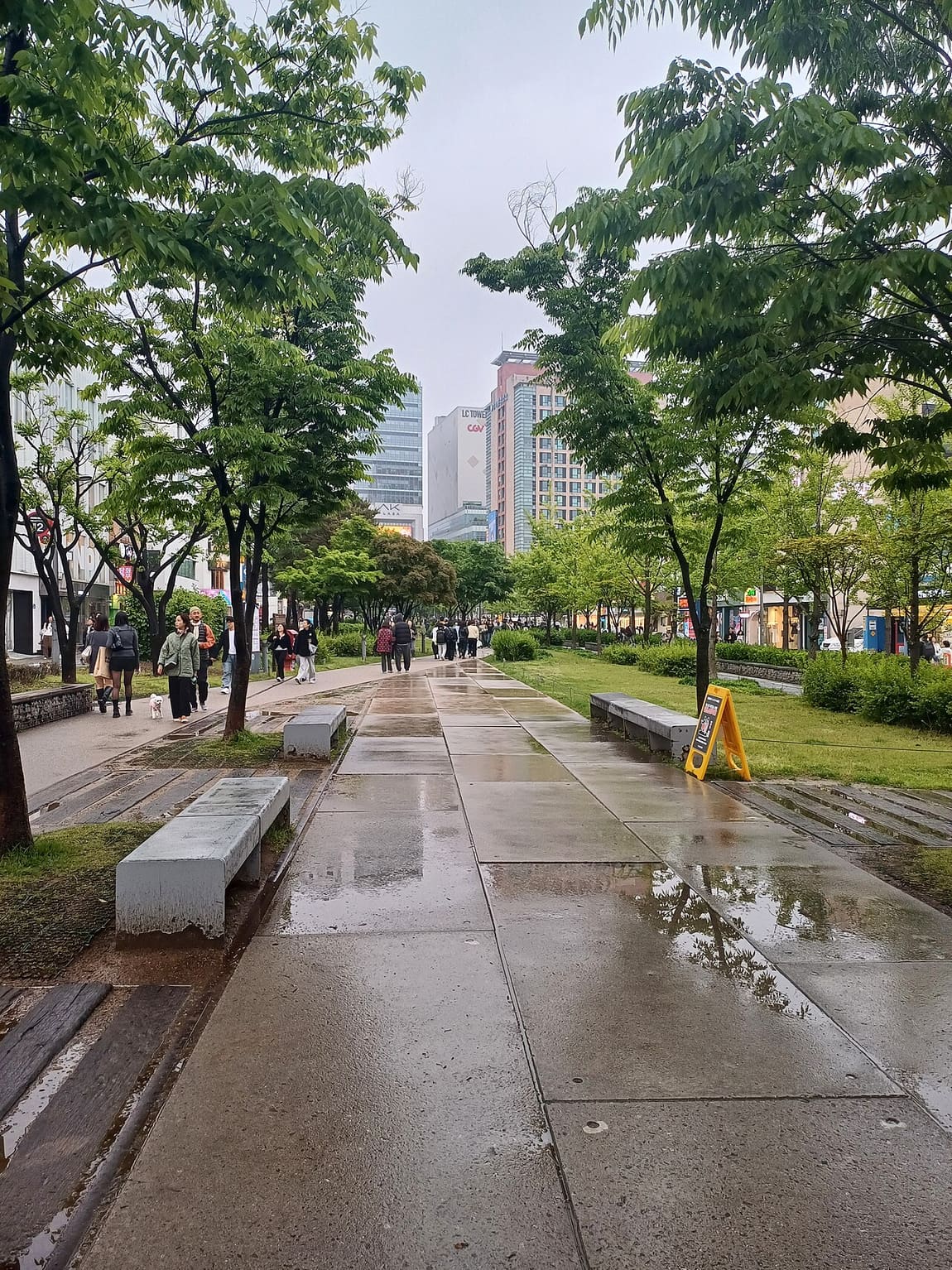
Look at the ground. Those are the original railway sleepers, left in the paving. Photo by Striker9498, CC0.
The first thing to know about Yeonnam-dong (연남동) is that its famous park is a railway.
Not "used to be near a railway" — is one. Walk the path and you are walking on the old Yongsan Line, and the sleepers are still set into the pavement on both sides, deliberately left there. Seoul buried the line underground in the 2000s, the surface track sat abandoned, and an urban regeneration project turned the empty corridor into a park.
Koreans nicknamed the Yeonnam stretch 연트럴파크 (Yeontral Park) — Yeonnam plus Central Park — because it became the longest and busiest section, with the same function a big city park has: people simply go there and sit.
And that is the whole appeal. Yeonnam-dong is ten minutes from Hongdae and feels nothing like it, because the thing at its centre is a long green strip rather than a nightlife street.
The Short Answer
| Detail | |
|---|---|
| Korean | 연남동 (Yeonnam-dong), Mapo-gu |
| The park | 경의선숲길 (Gyeongui Line Forest Park), nicknamed 연트럴파크 |
| Subway | Hongik University Station (홍대입구역), Lines 2 / AREX / Gyeongui-Jungang |
| Exit | Exit 3 — the park entrance is a short walk from it |
| Best for | Walking, cafes, sitting on grass, unhurried afternoons |
| Not for | Nightlife and loud bars — that is Hongdae, next door |
| Best time | Afternoon into early evening, especially spring and autumn |
ZAZE waterproof picnic mat — on AmazonAffiliate link. As an Amazon Associate, EpicKor earns from qualifying purchases at no extra cost to you.
Go in the afternoon, not at night. Yeonnam-dong's character is daylight and greenery. If you arrive at 10pm expecting Hongdae energy, you will find a quiet residential street and wonder what the fuss was.
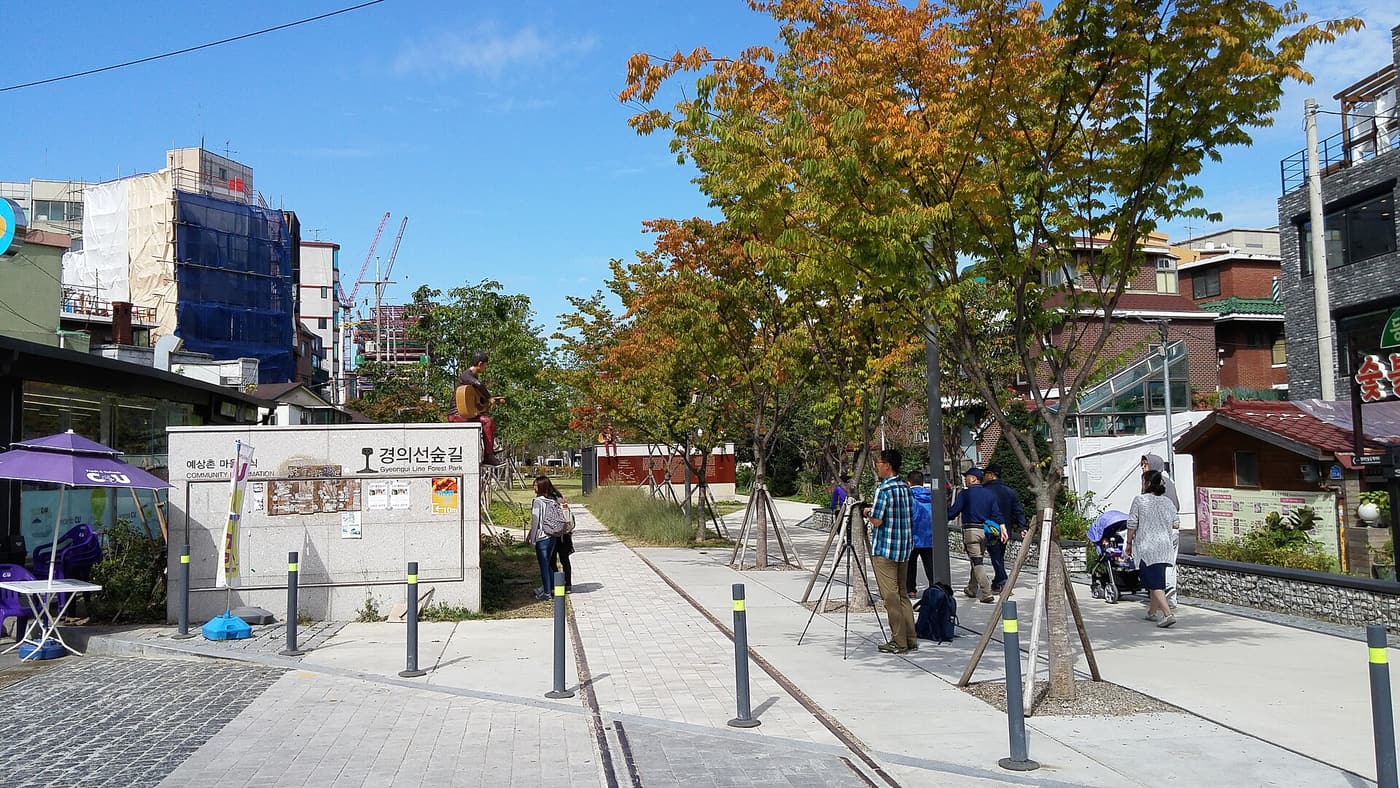
The Gyeongui Line Forest Trail. The shape gives it away — this is a railway corridor, not a park anyone laid out. Photo by Christian Bolz, CC BY-SA 4.0.
How a Railway Became a Park
The sequence is worth knowing because it explains the neighbourhood's shape.
The Yongsan Line ran at street level through this part of western Seoul. In the 2000s the Yongsan–Gajwa section was moved underground, and what remained on the surface was a long, narrow, abandoned strip of railway land running through dense neighbourhoods.
Seoul turned it into a linear park. Construction ran in stages — the Daeheung-dong section opened first in March 2012, and the full route including Yeonhui-dong, Saechang-gogae, the Yeonnam-dong section, Wonhyo-ro, Sinsu-dong and Waugyo was completed in 2016.
The result is a park with an unusual geometry: very long, quite narrow, and threaded directly between buildings. You are never far from a shopfront, which is exactly why cafes and small shops colonised both edges of it.
That geometry is the neighbourhood's engine. A conventional park has an inside and an outside. This one is all edge.
The Part Almost No English Guide Mentions
Before the park, Yeonnam-dong was known for something else entirely: it is one of Seoul's historic Chinese-community neighbourhoods.
A Chinese school operated in the area, and around it clustered the community it served. Along the railway, small unglamorous restaurants opened selling Chinese home cooking and dumplings — food aimed at residents rather than visitors — alongside 기사식당, the cheap driver-canteen restaurants that cluster wherever working traffic passes.
That history is still edible. The Chinese food in Yeonnam-dong is not a trend import; it predates the park by decades, and some of it is closer to Chinese home cooking than to the Koreanised Chinese food most visitors meet elsewhere.
Practical consequence: if you only eat at the photogenic cafes fronting the park, you are eating the newest layer of the neighbourhood and missing the oldest one. Walk a block or two off the park.
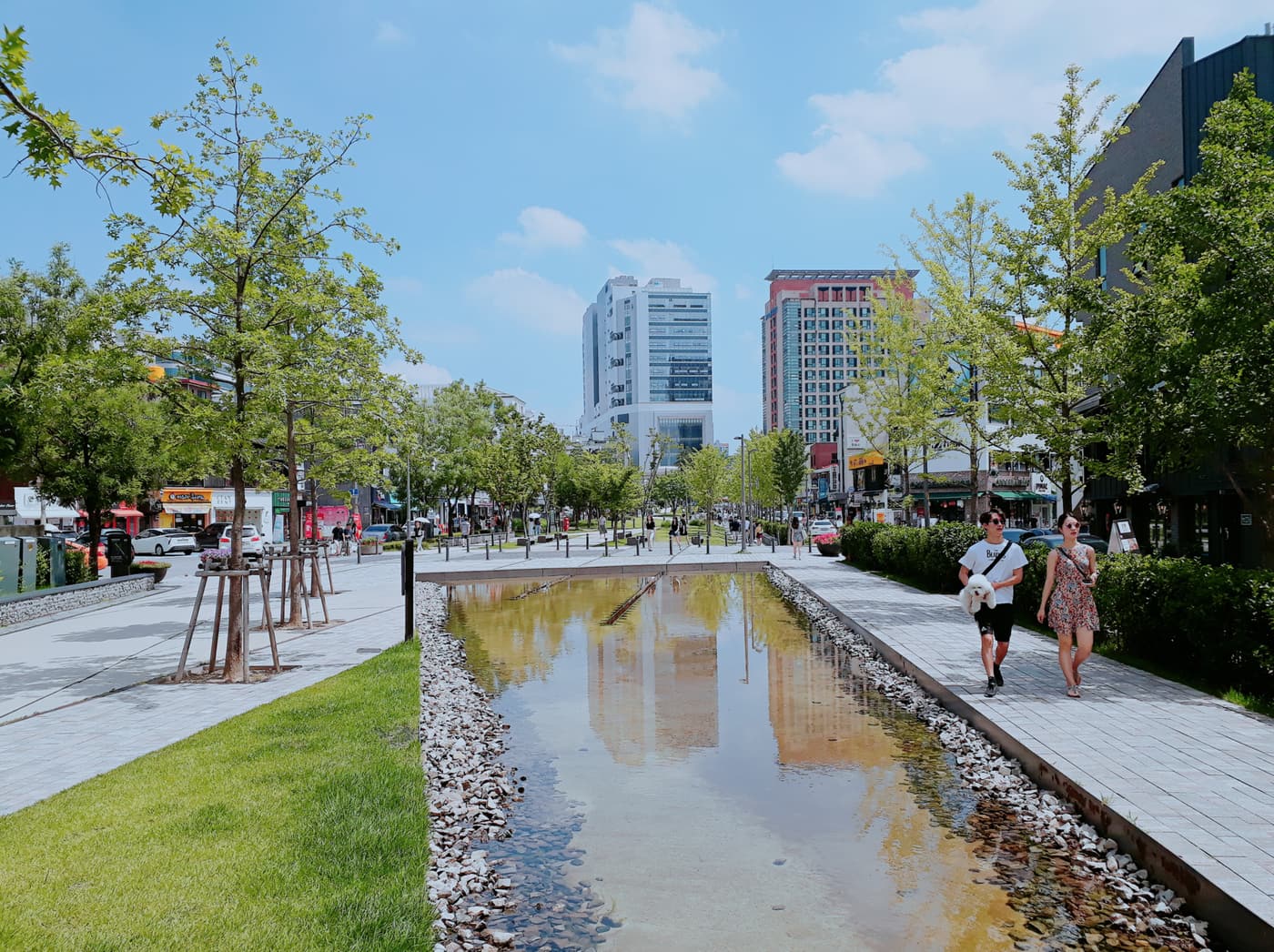
Locals call this stretch Yeontral Park. Sitting on the grass is the activity; everything else in the neighbourhood grew around it. Photo by Brit in Seoul, CC BY-SA 4.0.
Why It Became Fashionable
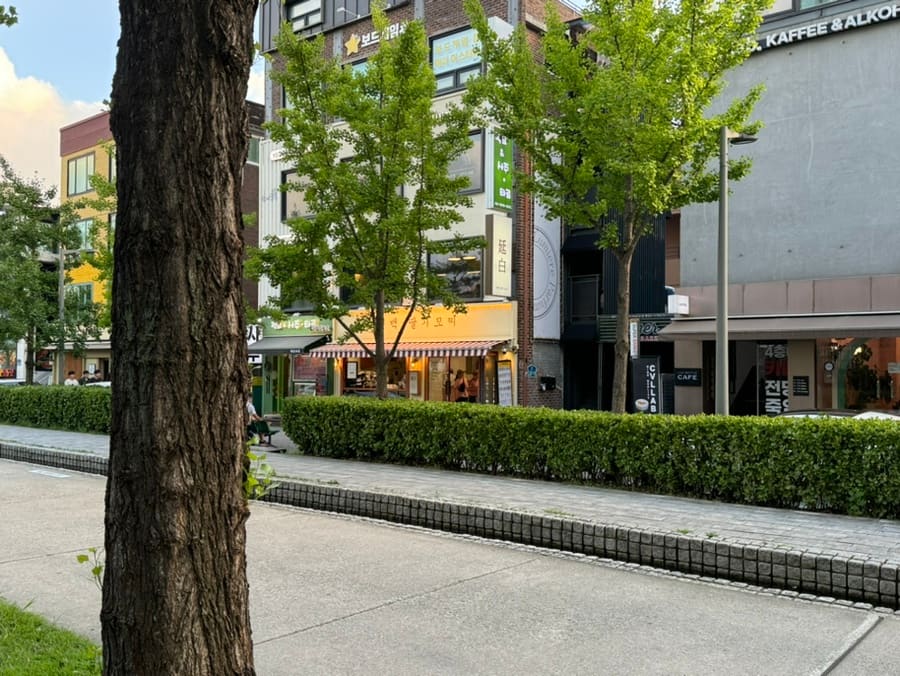
Low buildings, small independent shopfronts. This scale is the difference from Hongdae. Photo by azer0, CC BY 2.0 KR.
The transformation is recent and the mechanism is unremarkable, which is the interesting part.
Yeonnam-dong sits beside Hongdae but not in it. It was quieter, more residential, and rents were relatively cheap. Small workshops, independent cafes and one-person shops moved in for exactly that reason — the same drift that has reshaped fringe neighbourhoods in every large city.
Then the park opened, gave the district a spine and a reason to walk, and the drift accelerated.
What survived is the scale. The buildings are low, the shops are small, and almost nothing is a chain. That is why it reads as calm despite being busy.
What to Actually Do Here
The honest answer is: not much, deliberately.
Walk the park end to end in the Yeonnam section. It takes far less time than you expect and it is the point of the visit.
Sit on the grass. This is a genuine local behaviour, not a tourist instruction. People bring coffee, food and blankets and stay for hours. Convenience stores nearby exist largely to supply this.

Busking beside the park. Sitting and watching is the main activity here. Photo by Explicit, CC BY-SA 4.0.
Pick a cafe by looking, not by list. The density is high enough that walking until something appeals works better than navigating to a specific name — and small places here open and close often.
Eat Chinese food at least once, for the reason above.
Then walk into Hongdae if you want the evening. They are adjacent. The natural shape of a day is Yeonnam in daylight, Hongdae after dark.
You might like: Euljiro Seoul Guide: Why the Machine Shops Become Bars at Night
How to Walk It Without Getting It Wrong
The park is 6km end to end across all its sections, and visitors regularly make one of two mistakes: walking too much of it, or not finding it at all.
You want the Yeonnam section, not the whole thing. The full Gyeongui Line Forest Park runs through several districts, most of which are ordinary residential neighbourhoods with a pleasant green path. The Yeonnam-dong stretch nearest Hongik University Station is the part with the cafes, the crowds and the atmosphere. Walking further out is a nice walk and not what you came for.
The park is easy to miss from the station. Exit 3 puts you on an ordinary street; the park is a short walk and reads as a gap between buildings rather than an entrance. Head away from the main Hongdae drag and look for the tree line.
Walk one direction, then cross and walk back. The two sides of the strip have different shops, and the park is narrow enough that you can see both but not shop both. Doing one edge out and the other edge back covers it properly.
Budget less time than you think for the park and more for the streets. The green strip itself is a twenty-minute walk. The blocks on either side are where the afternoon actually goes.
Sitting on the grass: As an Amazon Associate, EpicKor may earn from qualifying purchases. The local version of this neighbourhood is a mat, a coffee and a few hours — compare foldable picnic mats if you are travelling in spring or autumn.
Compare on AmazonWhat It Costs
Yeonnam-dong is a cheap neighbourhood to spend an afternoon in, which is part of why people linger.
| Korean | Rough cost | |
|---|---|---|
| The park | 경의선숲길 | Free, open, no gate |
| Independent cafe, coffee | 카페 | around ₩5,000–7,000 |
| Convenience store coffee and snacks for the grass | 편의점 | ₩3,000–5,000 total |
| Chinese home-style meal | 중국 가정식 | commonly ₩8,000–15,000 |
| Subway from central Seoul | 지하철 | about ₩1,500 |
The cheapest good version of this neighbourhood costs almost nothing. Buy coffee and something to eat at a convenience store, sit on the grass, and watch. That is what a large share of the people around you are doing, and it is not a downgrade from the cafe version.
The honest counter-recommendation: do not queue. Some Yeonnam cafes run long waits at weekends. The neighbourhood's density means there is almost always an equally good place two minutes away with no line, and the queue is rarely buying you a better afternoon.
Yeonnam-dong vs the Other Neighbourhoods
| Neighbourhood | Korean | Character | Go for |
|---|---|---|---|
| Yeonnam-dong | 연남동 | Low-rise, park-centred, calm | Daytime walking and cafes |
| Hongdae | 홍대 | Student nightlife, live music, chains | Evenings and energy |
| Seongsu | 성수 | Converted factories, design, flagship stores | Shopping and coffee |
| Euljiro | 을지로 | Working district that becomes a drinking alley | Atmosphere after dark |
Yeonnam is the one you visit without a plan. Seongsu rewards a shopping list, Euljiro rewards arriving at the right hour, Hongdae rewards stamina. Yeonnam rewards having an afternoon free.
For the converted-factory version of a trend district, EpicKor compares two of them in the Seongsu vs Hannam guide.
Planning a Seoul walk: Yeonnam pairs with Euljiro, Mullae and Haebangchon into a walking-led trip rather than a landmark one — compare Seoul guidebooks if you want the rest of the city mapped that way.
Compare on AmazonWhen to Skip It
- Skip it at night. The park is unlit theatre after dark and the shops close early by Seoul standards. Go to Hongdae instead
- Skip it in deep winter or heavy rain. The entire attraction is an outdoor strip. There is no indoor version of this neighbourhood
- Skip it if you want landmarks. There is no monument, no tower, no museum. If your trip is built around sights, this is an afternoon you could spend elsewhere
- Skip weekends if you dislike crowds. The grass fills, and the narrow park concentrates people rather than dispersing them
- Do not build the visit around one viral cafe. Small independents here turn over quickly, and the neighbourhood is the attraction rather than any single address
FAQ About Yeonnam-dong
Q: What is Yeontral Park?
A: A nickname for the Yeonnam-dong section of Gyeongui Line Forest Park, combining Yeonnam with New York's Central Park. It stuck because the Yeonnam stretch is the longest and busiest part, used the way a large city park is used.
Q: Was it really a railway?
A: Yes. The Yongsan Line ran at surface level here until the Yongsan–Gajwa section was moved underground in the 2000s. The abandoned surface corridor became the park, and the original sleepers were left set into the paving.
Q: When did the park open?
A: In stages. The Daeheung-dong section opened in March 2012, and the full route — including the Yeonnam-dong section, Yeonhui-dong, Saechang-gogae, Wonhyo-ro, Sinsu-dong and Waugyo — was completed in 2016.
Q: How do I get to Yeonnam-dong?
A: Hongik University Station on Line 2, the AREX airport line, or the Gyeongui-Jungang line. Take Exit 3 and walk a short distance to the park.
Q: How is it different from Hongdae?
A: Hongdae is loud, late and chain-heavy; Yeonnam is low-rise, quiet and centred on a park. They are adjacent, so the practical answer is to do Yeonnam in the afternoon and Hongdae in the evening.
Q: Is there anything to eat besides cafes?
A: Yes, and it is the older layer of the neighbourhood. Yeonnam-dong is one of Seoul's historic Chinese-community areas, with Chinese home-style restaurants and dumpling shops that predate the park by decades. Walk a block off the park to find them.
The One Thing to Remember
The park is the railway, and the neighbourhood grew along its edge.
That single fact explains the shape of Yeonnam-dong — why it is linear rather than clustered, why the cafes face a strip of grass, why the whole district feels like one long walk rather than a destination you arrive at.
Go on an afternoon, walk the length of it, sit down somewhere, and eat Chinese food a block off the park.
Sources and Further Reading
- Korean coverage of Gyeongui Line Forest Park's construction, including the Daeheung-dong section opening in March 2012 and completion of the full route in 2016
- Korean documentation that the Yongsan–Gajwa section of the Yongsan Line was moved underground in the 2000s, leaving the surface corridor for urban regeneration
- Korean writing on the origin of the Yeontral Park nickname and on Yeonnam-dong's Chinese-community history, including the Chinese school and the Chinese home-style restaurants and driver canteens that clustered along the railway
- Seoul city park information for the Gyeongui Line Forest Park route and access via Hongik University Station Exit 3
- Image sources and licensing are documented in this post's
image-sources.md
Small independent shops in this neighbourhood open and close frequently. Confirm anything specific before travelling for it.
Yeonnam-dong is one of the neighbourhoods compared in EpicKor's Seoul neighbourhood guide — character, nearest station, whether it is worth staying in, and how long each actually takes.
Next in the series: Mullae and Mangwon-dong.
You Might Also Like
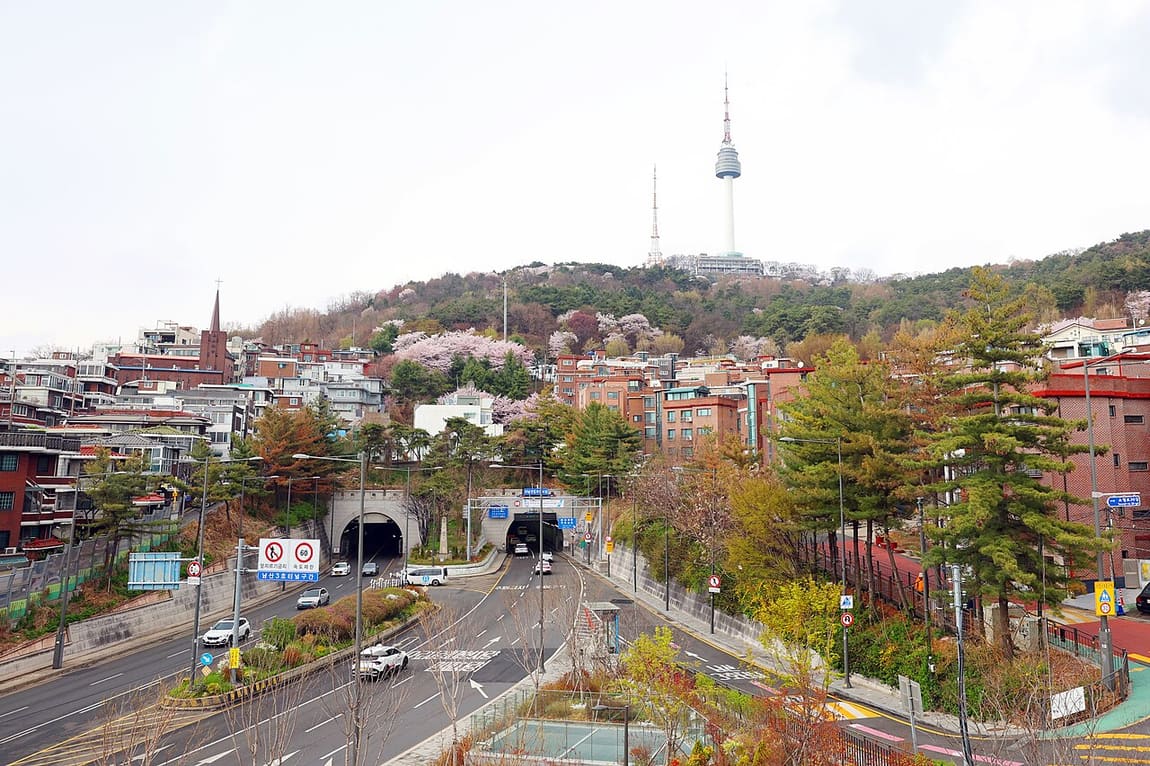
Haebangchon Seoul Guide: The Village Named After Liberation
Haebangchon means Liberation Village — built by refugees on Namsan's slope after 1945. Its famous 108 steps are the surviving approach path to a Japanese colonial shrine, and its market opened in 1953. Here is how to visit and what you are walking on.
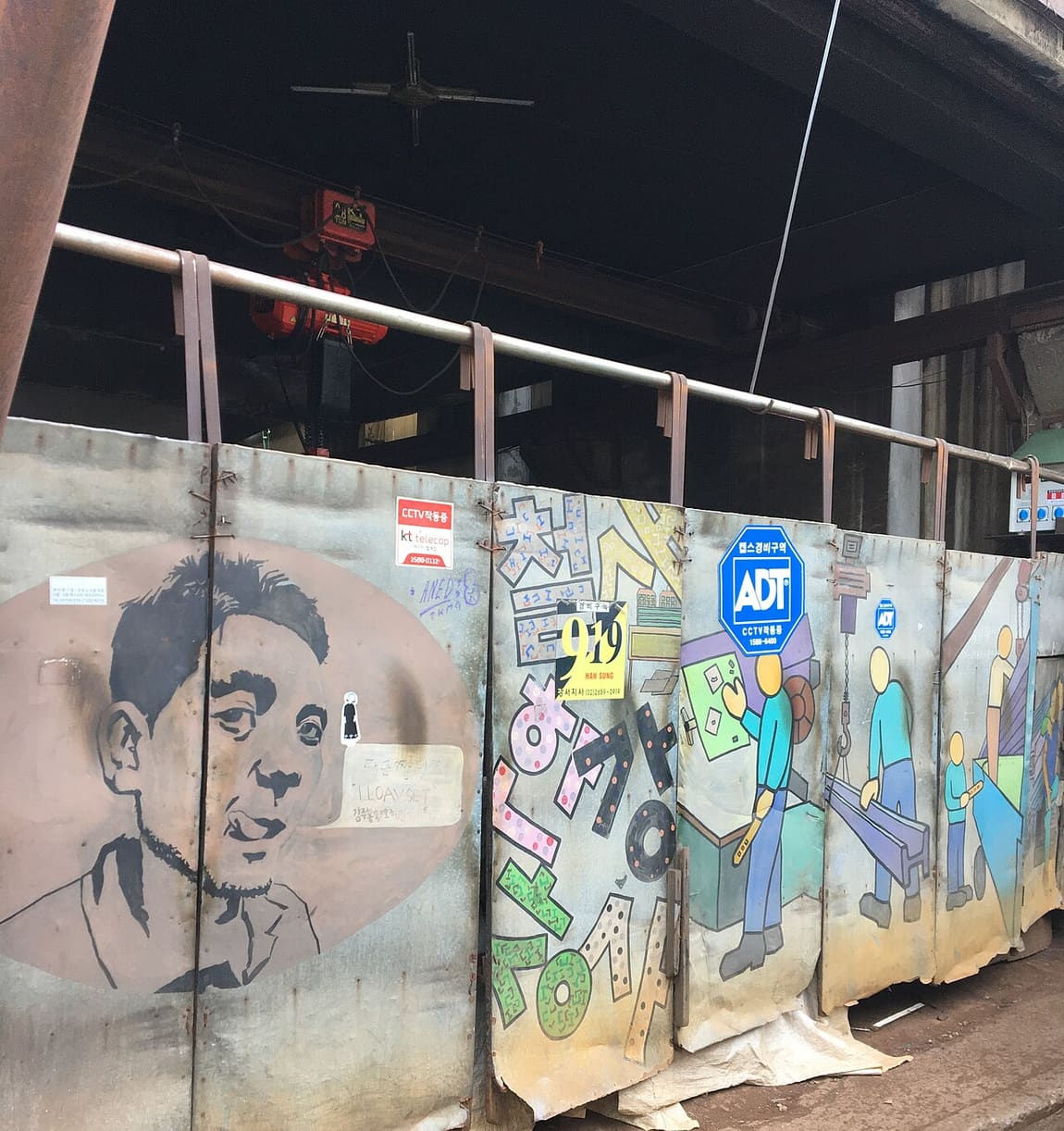
Mullae Seoul Guide: The Steel District That Grew an Art Village
Mullae is named after a spinning wheel, became Seoul's steel district in the 1960s, then filled with artists when Chinese imports emptied the workshops. The metal shops are still working. Here is how to visit without getting it wrong.
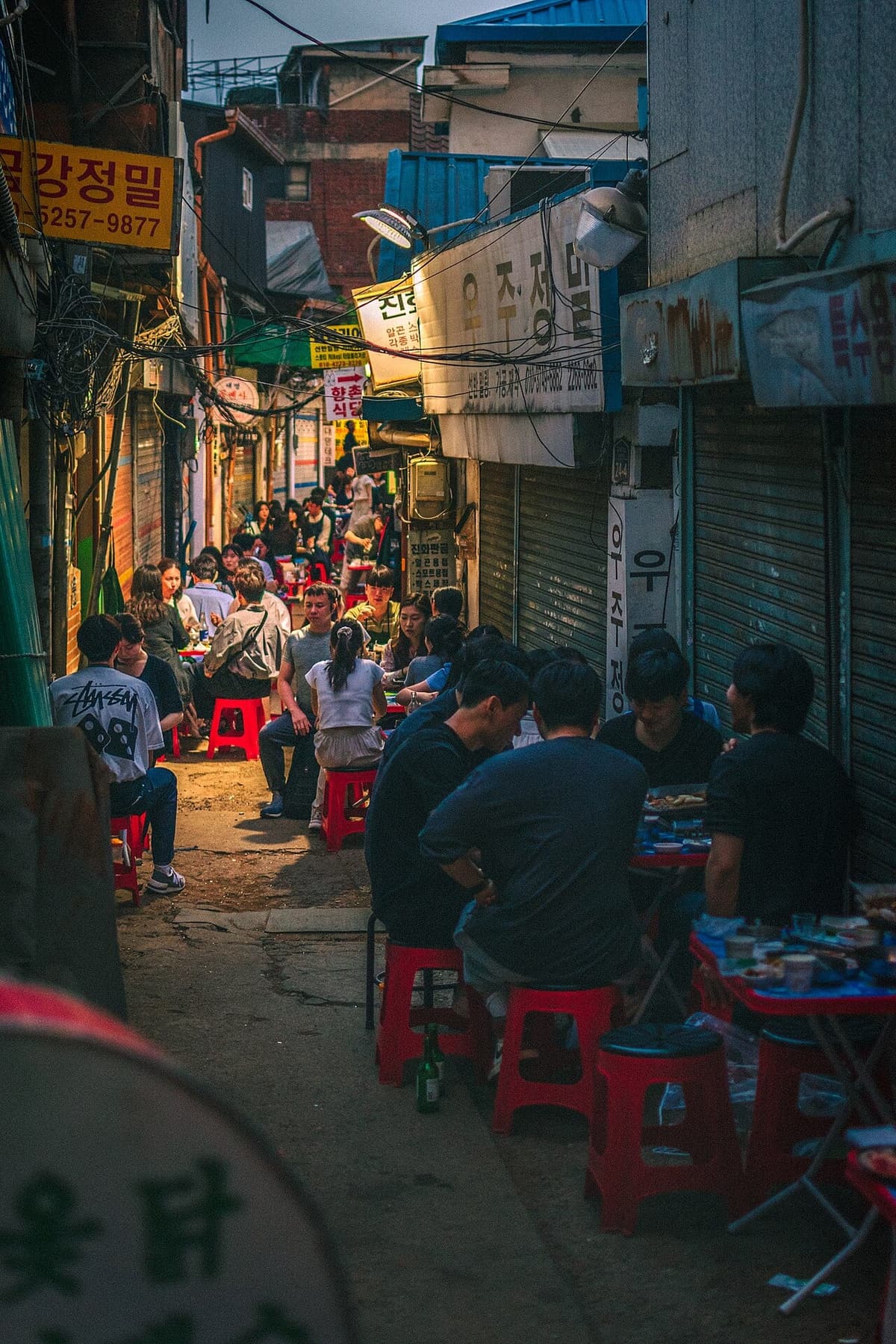
Euljiro Seoul Guide: Why the Machine Shops Become Bars at Night
Euljiro is a working district of print shops, tool sellers and metal workshops that turns into Seoul's most atmospheric drinking alley after 6pm. The bars are there because print workers finished night shifts here. Here is how to visit it properly.