Ikseon-dong, Seoul: The Hanok Village a Developer Mass-Produced in the 1920s
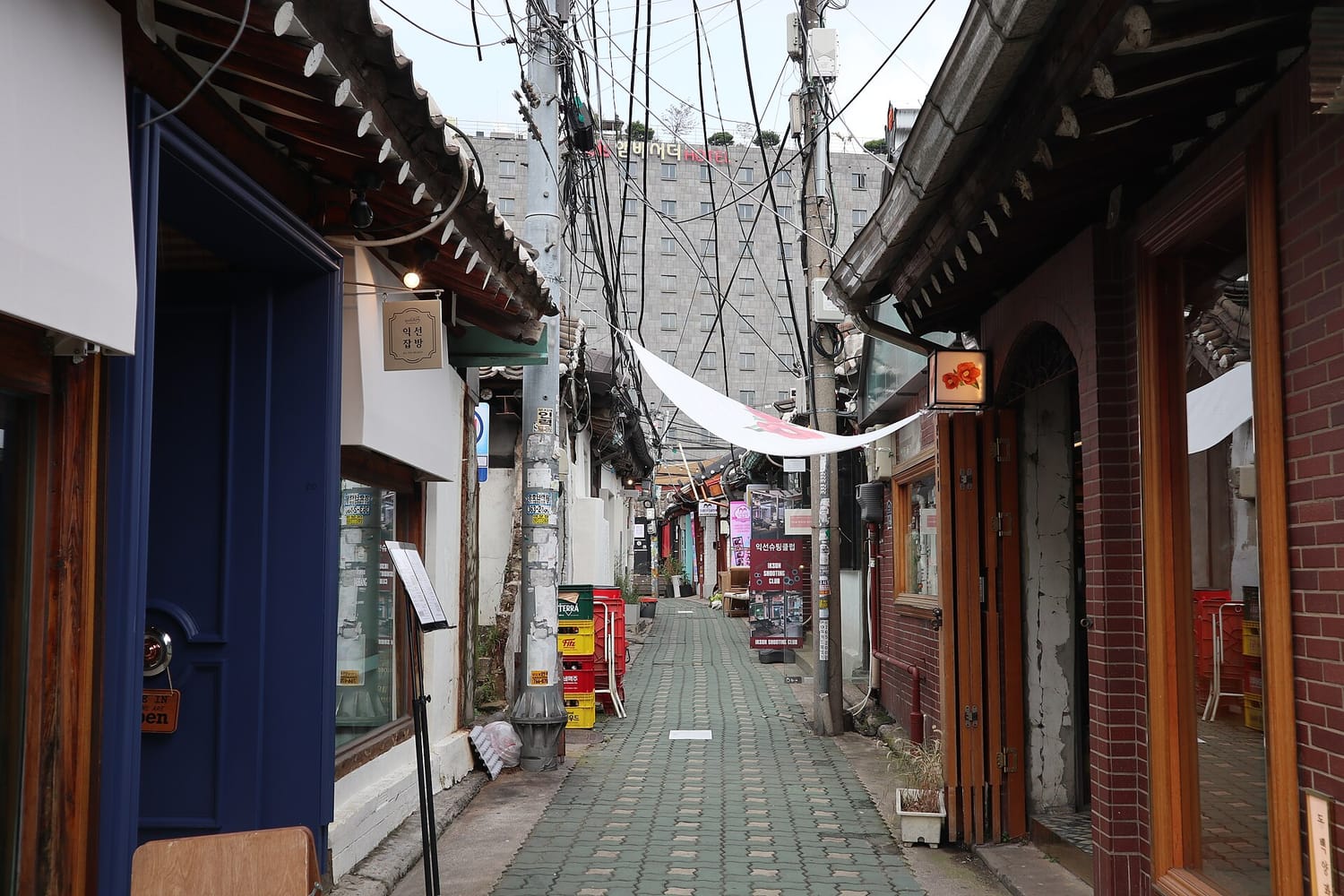
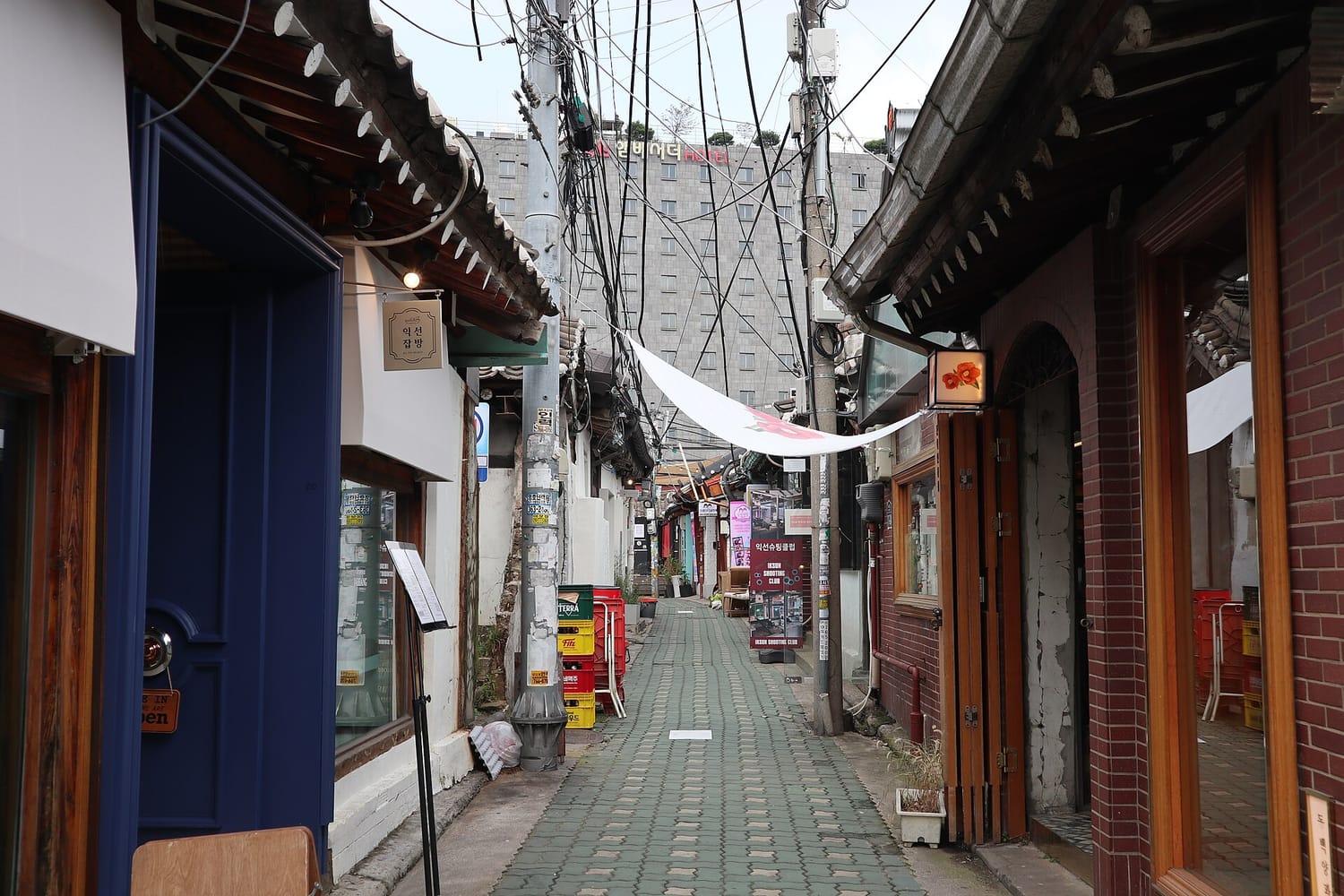
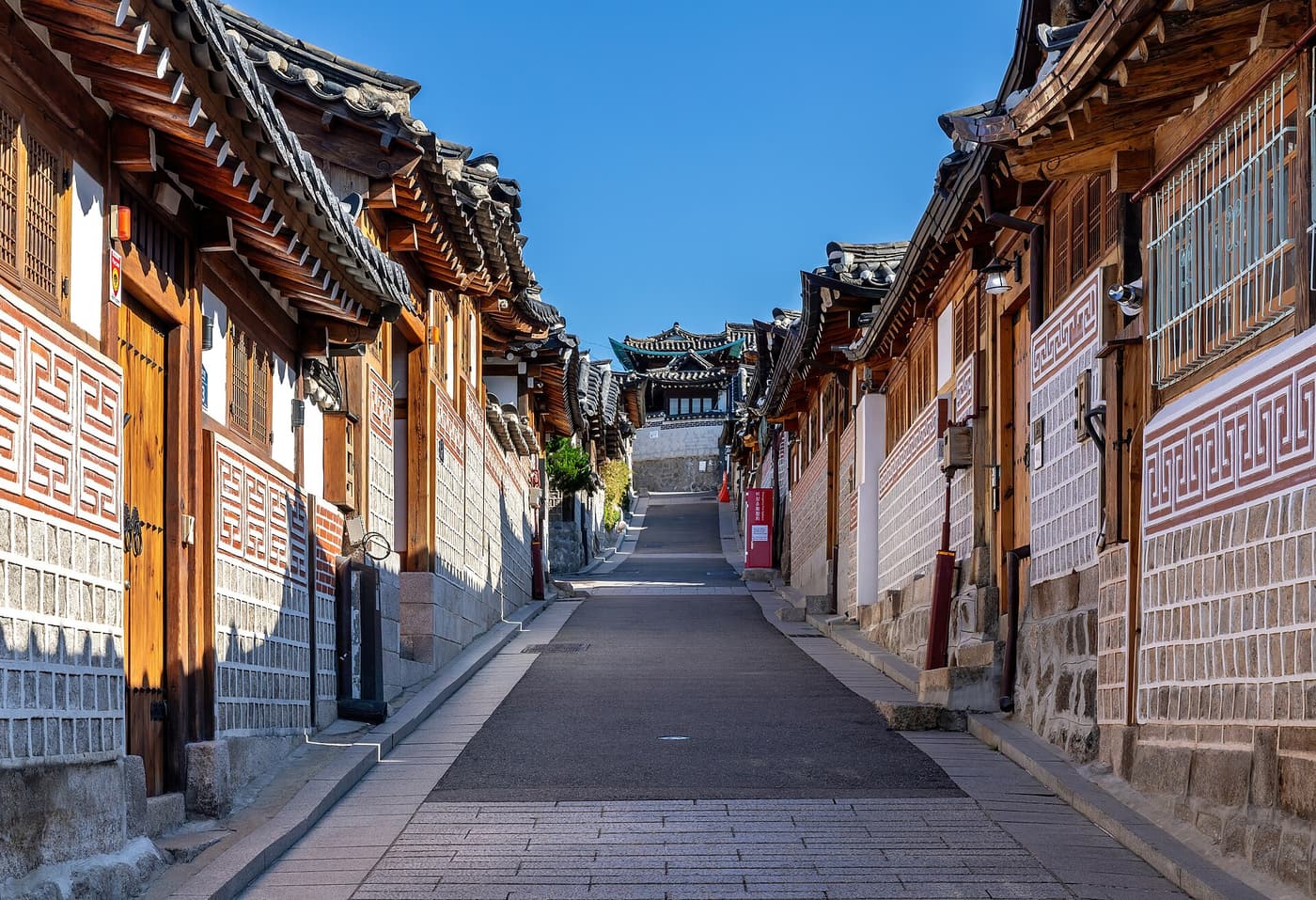
Ikseon-dong. The alleys are narrow because the houses were laid out to fit as many onto the land as possible. Photo by S h y numis, CC BY-SA 4.0.
Almost every English description of Ikseon-dong calls it a preserved Joseon-era hanok village.
It is not. Ikseon-dong is a 1920s property development — speculative, mass-produced, laid out by a company, and sold to buyers who wanted an affordable house near the centre of the city. The alleys are narrow because narrow alleys fit more units on the land.
That makes it more interesting, not less. It also makes it the oldest surviving hanok village in Seoul, older than the Bukchon most visitors go to instead — and the reason it still exists is that developers spent nearly twenty years trying to demolish it and kept failing.
The Short Answer
| Question | Answer |
|---|---|
| Where is it? | Jongno-gu, central Seoul, between Jongno 3-ga and Changdeokgung |
| Getting there | Jongno 3-ga Station (종로3가역) — Lines 1, 3 and 5 |
| What is it? | Seoul's oldest surviving hanok village, built from the late 1920s |
| Who built it? | Jeong Se-gwon (정세권) of Gunyangsa (건양사), Korea's first modern property developer |
| Why is it still here? | Redevelopment plans failed repeatedly; the city withdrew the plan in January 2018 |
| What is in it now? | Cafés, restaurants and bars inside converted hanok |
| Time needed | 1 to 2 hours — it is small |
| Skip it if | You want quiet, or you are here for architectural authenticity |
Books on Korean architecture — compare on AmazonAffiliate link. As an Amazon Associate, EpicKor earns from qualifying purchases at no extra cost to you.
The Man Who Built It, and Why
The story starts with Jeong Se-gwon (정세권), who founded the property firm Gunyangsa (건양사) around 1920 and became known as a "building king" for the hanok clusters he put up across Gyeongseong — the colonial-era name for Seoul.
He was Korea's first modern real-estate developer in the recognisable sense: acquire land, subdivide, build to a repeating plan, sell the units. What he applied that method to was the hanok — the traditional Korean courtyard house — shrunk, standardised and packed onto small urban lots.
The Ikseon-dong site came to him in the late 1920s. The land had been part of Nudonggung (누동궁), a residence occupied by descendants of the royal line until 1929. Jeong acquired the block, and within about six years — by 1935 — dozens of hanok filled ground that had been effectively empty.
The political dimension is what makes this more than a business story. This was the colonial period, and Japanese settlement was expanding through Seoul. Building dense, affordable Korean housing in the centre of the city was a way of holding ground — keeping Korean residents in Korean houses in the middle of the capital. Jeong is remembered in Korean accounts as much for that as for the buildings.
So the "traditional village" reading has it backwards twice over. These houses are not survivals from a pre-modern Korea; they are an early-twentieth-century mass-housing product, and they are the physical evidence of a period when the form of the house you lived in carried a political meaning.
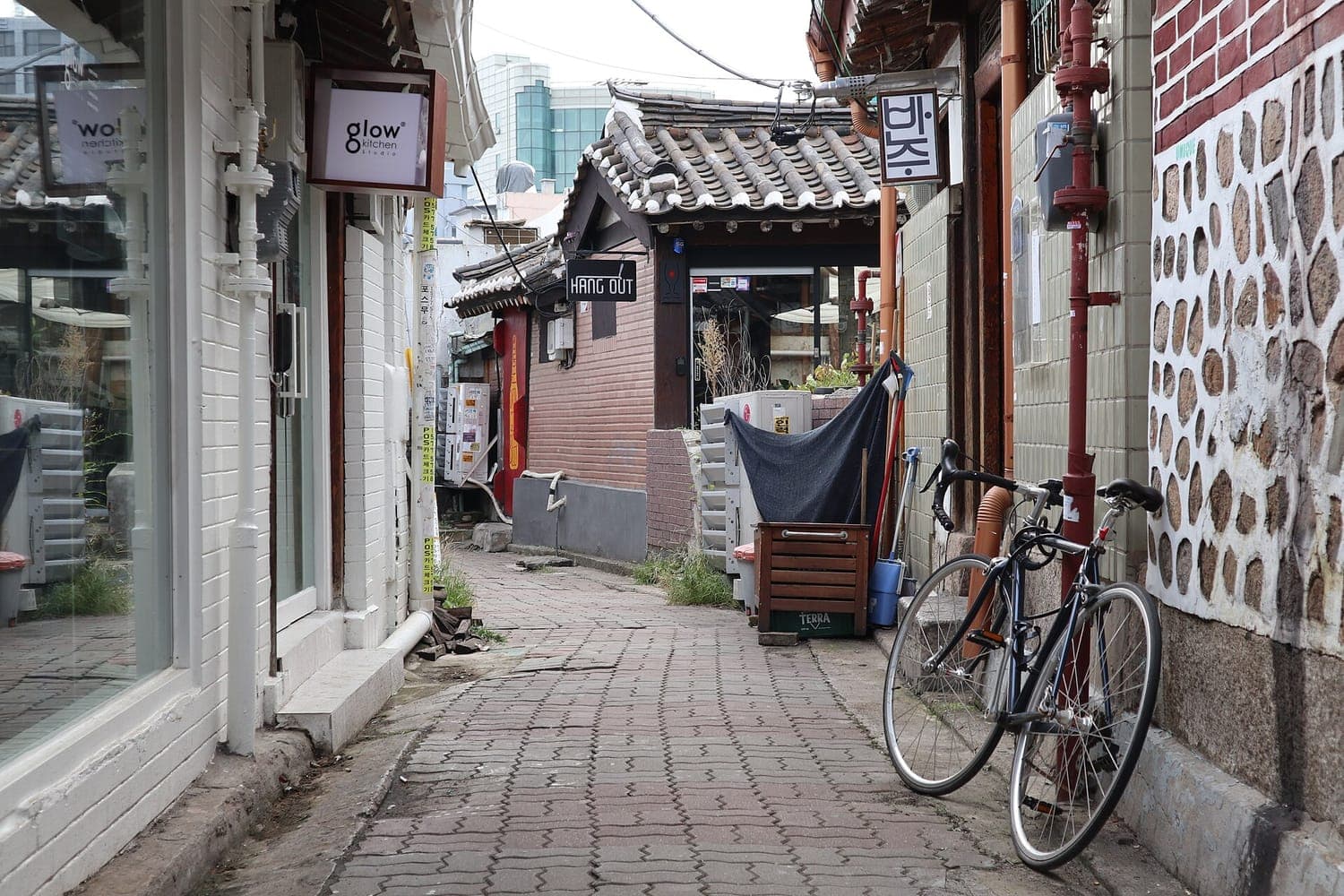
The rooflines show the method. These are the same house repeated, sized to a subdivided lot — a 1920s housing product, not a collection of individual estates. Photo by S h y numis, CC BY-SA 4.0.
It Survived by Accident, Over Nearly Twenty Years
Here is the part that no English guide covers, and it is the reason you can walk through it today.
| Year | What happened |
|---|---|
| 1997 | 63% of residents support redevelopment |
| 1999 | Redevelopment abandoned once, on hanok-preservation grounds |
| 2000s | Parts of the wider area are built out with officetel blocks |
| 2004 | Jongno-gu pushes full-scale redevelopment. On 6 May 2004, an area of 31,121.5 m² around block 165 is designated an urban environment improvement zone |
| 2010s | The plan stalls; hanok begin converting into cafés and bars |
| January 2018 | Seoul withdraws the redevelopment plan and moves to designate the village a hanok-dense area (한옥밀집지역) for preservation |
Read that table as a near-miss. A clear majority of the people living there wanted it demolished in 1997, which is worth sitting with — these were small, old, cold houses with shared walls and difficult plumbing, and redevelopment meant an apartment with heating that worked. The preservation argument was made largely from outside.
What actually saved it was time. The plans kept not happening, and while they were not happening, small businesses started renting the hanok cheaply because nobody would invest in a block scheduled for demolition. By the time the city changed its mind in 2018, the neighbourhood had already become valuable as itself.
This is a pattern worth recognising across Seoul. Several of the city's most-visited small neighbourhoods survived not because anyone protected them, but because a redevelopment plan was slow enough that a different economy grew in the gap.
You might like: Seoul in 24 Hours: A First-Timer's Route
What It Is Actually Like to Walk
Set your expectations before you go, because Ikseon-dong is small and the photographs make it look bigger.
It is a compact grid of narrow alleys, most of them a couple of metres wide, with single-storey tiled roofs on both sides. You can walk the whole thing in fifteen minutes. An hour to two hours is the realistic visit, and that includes sitting down somewhere.
Nearly everything is a business now. The hanok have been converted into cafés, restaurants, cocktail bars and small shops. Interiors vary enormously — some keep the courtyard, the beams and the floor level and work around them; others have gutted the inside entirely and kept a facade.
The alleys are the attraction, not the buildings individually. No single house here is architecturally significant. The value is the density and the scale — a piece of low-rise, human-sized city surrounded on all sides by tower blocks, which is a genuinely rare thing in central Seoul.
It is busy. This is a well-known destination, it is central, and it is small, which is a bad combination. Weekend afternoons are crowded to the point that the alleys stop being pleasant.
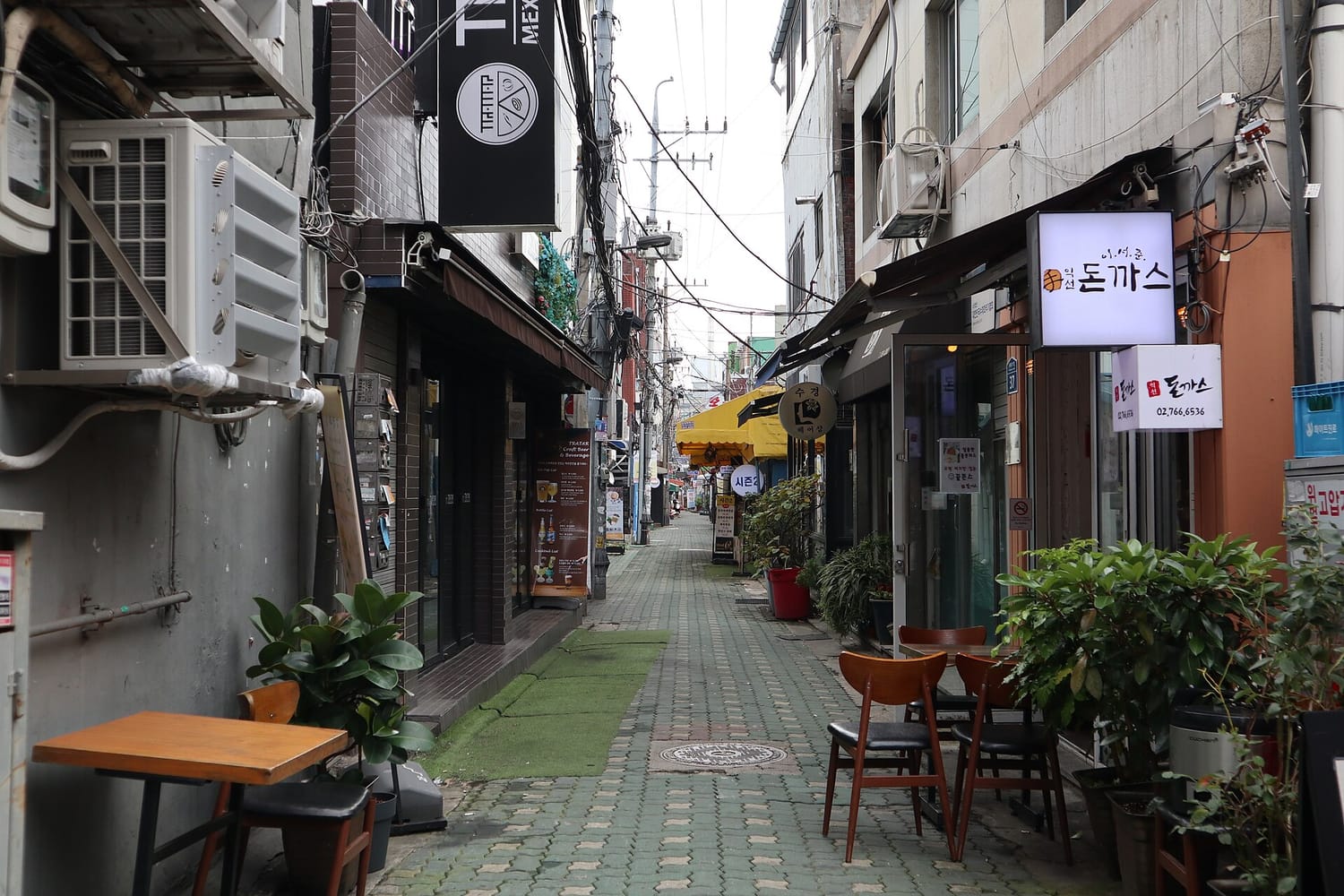
Almost every hanok in the village is now a business. How much of the original interior survives varies enormously from one door to the next. Photo by S h y numis, CC BY-SA 4.0.
Understanding what you are looking at: As an Amazon Associate, EpicKor may earn from qualifying purchases. The hanok, the colonial period and Seoul's redevelopment history are all one story here — compare books on Korean architecture and the hanok if the buildings interest you more than the cafés.
Compare on AmazonWhat the Alleys Tell You, If You Look
A short field guide, because the neighbourhood is more legible than it appears.
The width of the alley is the business plan. Traditional hanok were built around a courtyard on a generous plot. Ikseon-dong's are compressed versions on subdivided lots, and the lanes between them were made as narrow as the buildings allowed. Every metre of alley was a metre that could not be sold.
The repetition is the giveaway. Look along a roofline and you will see the same proportions, the same tile courses and the same eave height repeating. That is a builder working to a plan, not a street that accumulated house by house over centuries.
Look for where the courtyard survived. The best conversions kept the madang, the open courtyard at the centre of the house, and built the business around it — so you sit indoors and outdoors at once. Where a café is a single dark box, the courtyard has usually been roofed over.
Look at the floor level. Hanok sit on a raised platform, and you step up into the room rather than walking straight in. Where a shopfront has been flattened to street level for accessibility, the original relationship between the house and the alley has gone.
And look up at what surrounds it. The tower blocks on every side are the actual point. Ikseon-dong is a fragment of the horizontal city that central Seoul was until the 1960s, left standing in the middle of the vertical city that replaced it.
Ikseon-dong or Bukchon? They Are Not the Same Trip
These two get recommended interchangeably and they should not be.
| Ikseon-dong | Bukchon Hanok Village | |
|---|---|---|
| Origin | Late 1920s speculative development | Older, larger, higher-status housing |
| Scale of houses | Small, standardised, tight lots | Larger, more varied |
| What is inside them | Businesses — cafés, bars, restaurants | Substantially private homes |
| Terrain | Flat | Steep in places, with view points |
| What you do there | Sit down, eat, drink | Walk and look |
| Noise rules | Normal commercial street | Residents live there — quiet hours are signposted and enforced |
The distinction that matters most: Bukchon is a place where people live and visitors have caused real friction, to the point of enforced quiet hours and resident complaints about tourism. Ikseon-dong is a commercial district. You can be a customer in Ikseon-dong in a way you cannot be in Bukchon.
They are about a twenty-minute walk apart, so doing both is easy — but do them in the right frame. Bukchon in the morning while it is quiet, Ikseon-dong afterwards when you want to sit down.
Walking Jongno properly: Ikseon-dong, Bukchon, Changdeokgung and Jongmyo are all within walking distance of each other, and Bukchon is steep — compare comfortable walking shoes before a day built around this part of Seoul.
Compare on AmazonThe Honest Counter-Recommendation
Do not come here for architectural authenticity. If what you want is to understand hanok as buildings, go to a preserved house museum or Bukchon, where the structures are closer to intact. Ikseon-dong's hanok have been renovated repeatedly for commercial use, and in many the historical fabric is a facade.
Do not come on a Saturday afternoon. The alleys are two metres wide. Weekday mornings and early evenings are a completely different neighbourhood.
Do not plan a whole afternoon around it. It is fifteen minutes of walking. Pair it with Changdeokgung, Jongmyo Shrine or the Jongno 3-ga area rather than treating it as a destination in itself — all are within walking distance.
And do not expect it to be cheap. These are central Seoul cafés and restaurants in a well-known location, priced accordingly. The neighbourhood's history is one of affordable housing; its present is not.
FAQ About Ikseon-dong
Q: How old is Ikseon-dong hanok village?
A: The hanok date from the late 1920s to about 1935. It is Seoul's oldest surviving hanok village, but it is a modern development, not a Joseon-era survival.
Q: Who built Ikseon-dong?
A: Jeong Se-gwon (정세권) through his firm Gunyangsa (건양사). He is regarded as Korea's first modern property developer, and he built dense hanok housing across colonial-era Seoul.
Q: How do I get to Ikseon-dong?
A: Jongno 3-ga Station, served by Lines 1, 3 and 5. The village is a short walk from the station, between Jongno and Changdeokgung.
Q: How long should I spend in Ikseon-dong?
A: One to two hours, including sitting down somewhere. The walkable area is small enough to cover in about fifteen minutes.
Q: Is Ikseon-dong better than Bukchon Hanok Village?
A: They are different. Ikseon-dong is a commercial district of converted hanok where you eat and drink; Bukchon is largely residential and is for walking and looking, with enforced quiet hours. Doing both is easy — they are about twenty minutes apart on foot.
Q: Why was Ikseon-dong not redeveloped?
A: Not by design. Redevelopment was pursued from the late 1990s and formally designated in 2004, but the plans stalled for years, and cheap rents in the meantime let small businesses move in. Seoul withdrew the redevelopment plan in January 2018 and moved to preserve the area as a hanok-dense district.
Q: Do people still live in Ikseon-dong?
A: The hanok in the village core are overwhelmingly businesses now. The surrounding blocks remain residential and mixed-use.
The One Thing to Remember
Ikseon-dong is not a preserved village. It is a 1920s housing estate that survived because nobody managed to knock it down, and that history is more Korean, and more recent, than the version on the signboards.
Go on a weekday, walk the alleys before you sit down anywhere, and look at the rooflines — the repetition is the evidence. Then walk twenty minutes to Bukchon and see what the expensive version of the same idea looked like.
Sources
- Korean-language local-history and encyclopaedia material on 정세권 and 건양사 — his role as Korea's first modern property developer, the acquisition of the Ikseon-dong block after Nudonggung, and the build-out to roughly 1935
- Records of the Ikseon urban environment improvement zone designation of 6 May 2004 covering 31,121.5 m², the 1997 resident support figure, and the 1999 abandonment
- Seoul Metropolitan Government's January 2018 withdrawal of the redevelopment plan and move to designate the village a 한옥밀집지역
Ikseon-dong is one of the neighbourhoods compared in EpicKor's Seoul neighbourhood guide — character, nearest station, whether it is worth staying in, and how long each actually takes.
Next in the series: Bukchon — built by the same developer, with the opposite ending — and Euljiro.
You Might Also Like
Bukchon Hanok Village, Seoul: The Village That Now Has Legal Visiting Hours
Bukchon is Korea's first Special Management Area for tourism. Since November 2024 the red-zone street has been closed to sightseeing after 5pm, with a ₩100,000 fine enforced from March 2025. It was also built by the same developer as Ikseon-dong.
Seochon, Seoul: The Valley Restored From a 300-Year-Old Painting
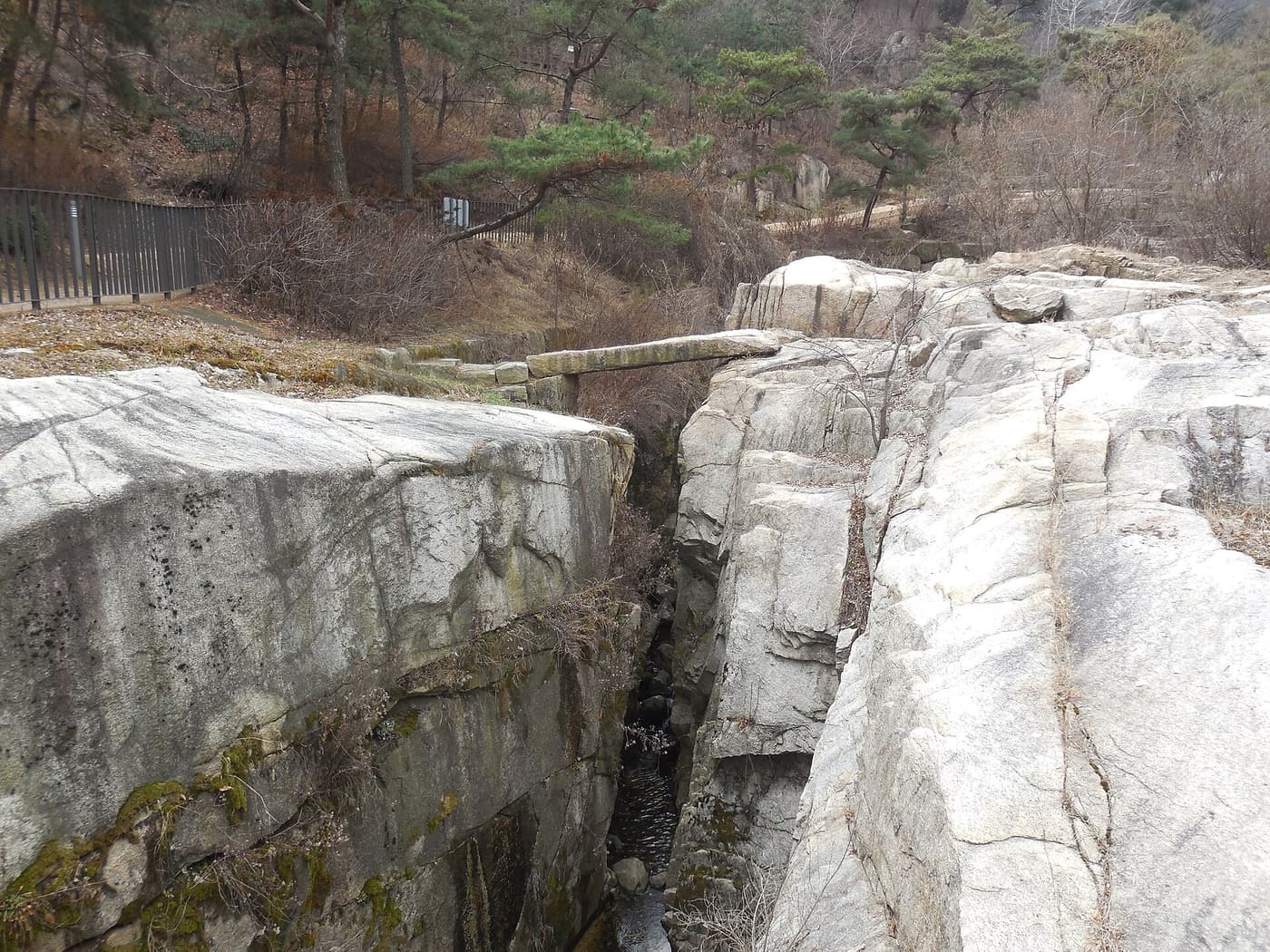
Seoul demolished a 1971 apartment block in Seochon and rebuilt the valley underneath using an 18th-century painting as the reference. The stone bridge in the painting was still there. Plus the brass-coin lunchbox at Tongin Market, from ₩5,000.
Mangwon-dong, Seoul: The Market Neighbourhood Locals Go To Instead of Hongdae
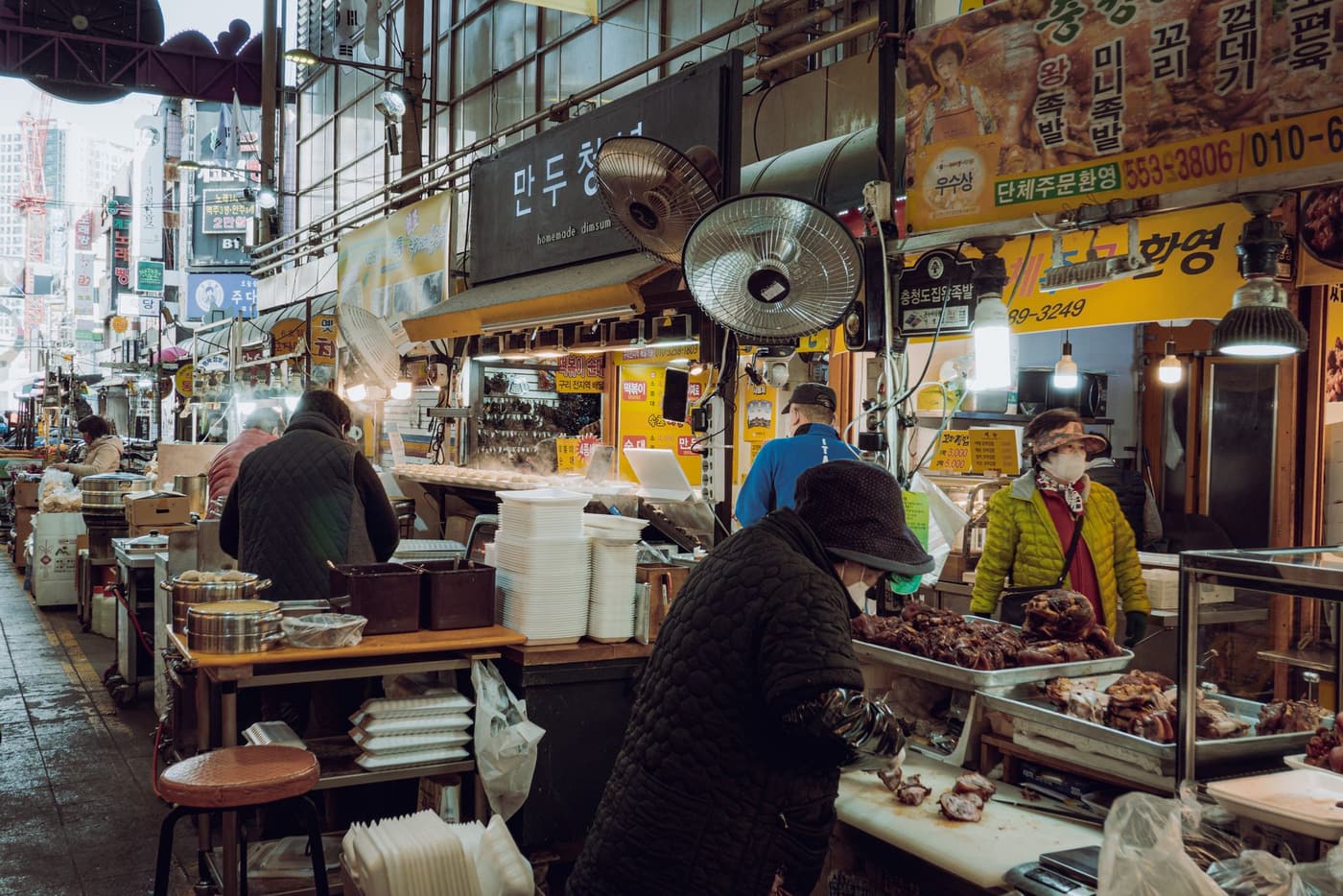
Mangwon-dong is two subway stops from Hongdae and works nothing like it. The name comes from a royal pavilion built in 1424, the market is a working grocery market rather than a tourist one, and the Mangnidan-gil nickname is borrowed from Itaewon.