Goblin K-Drama Filming Locations: What's Really in Jumunjin (And What Isn't)
Ten years after Goblin first aired, tvN sent Gong Yoo, Lee Dong-wook, Kim Go-eun, and Yoo In-na back to the coast where it all started. The reunion special aired in July 2026, and it's already sending a new wave of fans searching for the real Jumunjin locations — but here's what most of the resulting travel guides get wrong: the show's most famous scene, the buckwheat field, isn't anywhere near Gangneung at all.
Here's an accurate map of what's actually where, and what the reunion cast really visited.
The Reunion Special, Exactly What It Was
The special is a four-part series called "함께여서 찬란하神 — 도깨비 10주년 여행," airing on tvN as part of the network's 20th-anniversary programming, with episodes running July 4, 5, 11, and 12, 2026. It's a genuine travel-variety format, not a clip show — the cast physically returned to Jumunjin, and production actually filmed the trip back in April 2026, months before it aired. International fans can watch it through Rakuten Viki or Viu depending on region.
On screen, the cast visited the real Jumunjin breakwater area and a specially built "Goblin House" set decorated with props from the original drama — the red scarf, dried buckwheat stems, a silver spoon, the iconic red door — recreating the show's imagery through set decoration rather than by traveling to the buckwheat field itself. They also stopped at a local raw-fish restaurant in Jumunjin, and a surprise visit from an 85-year-old veteran actor reportedly moved Gong Yoo to tears. Kim Go-eun is said to have proposed the reunion trip idea in the first place.
Lonely Planet Korean Phrasebook & Dictionary — on AmazonAffiliate link. As an Amazon Associate, EpicKor earns from qualifying purchases at no extra cost to you.
The Real Breakwater: What You Can Actually Visit
The breakwater from Goblin's candle-summoning scene is a small stone structure, roughly 20 meters long, sitting between Yeongjin Beach and Jumunjin Beach in Jumunjin-eup, Gangneung — it's a genuine, free, unticketed public spot, not a museum or a set piece. Most navigation apps find it by searching "Jumunjin Breakwater" or the Korean "도깨비 촬영지" (Goblin filming location), and locals also refer to it by its parking area, "도깨비쉼터" (Goblin Rest Area).
Nearly a decade after the drama aired, small photo zones and trick-art installations have grown up around the site — painted onto the parking lot and even the public restroom walls — and local vendors have historically sold red scarves and dried buckwheat stems for photos. This appears to be organic, small-business-driven activity around the site rather than an official city-run attraction; there's no confirmed municipal monument or plaque specifically marking the spot. Nearly ten years on, the location is still active enough that Korean travel writers were recommending it as recently as early 2026, well before the reunion special gave it a fresh push.
Getting There From Seoul
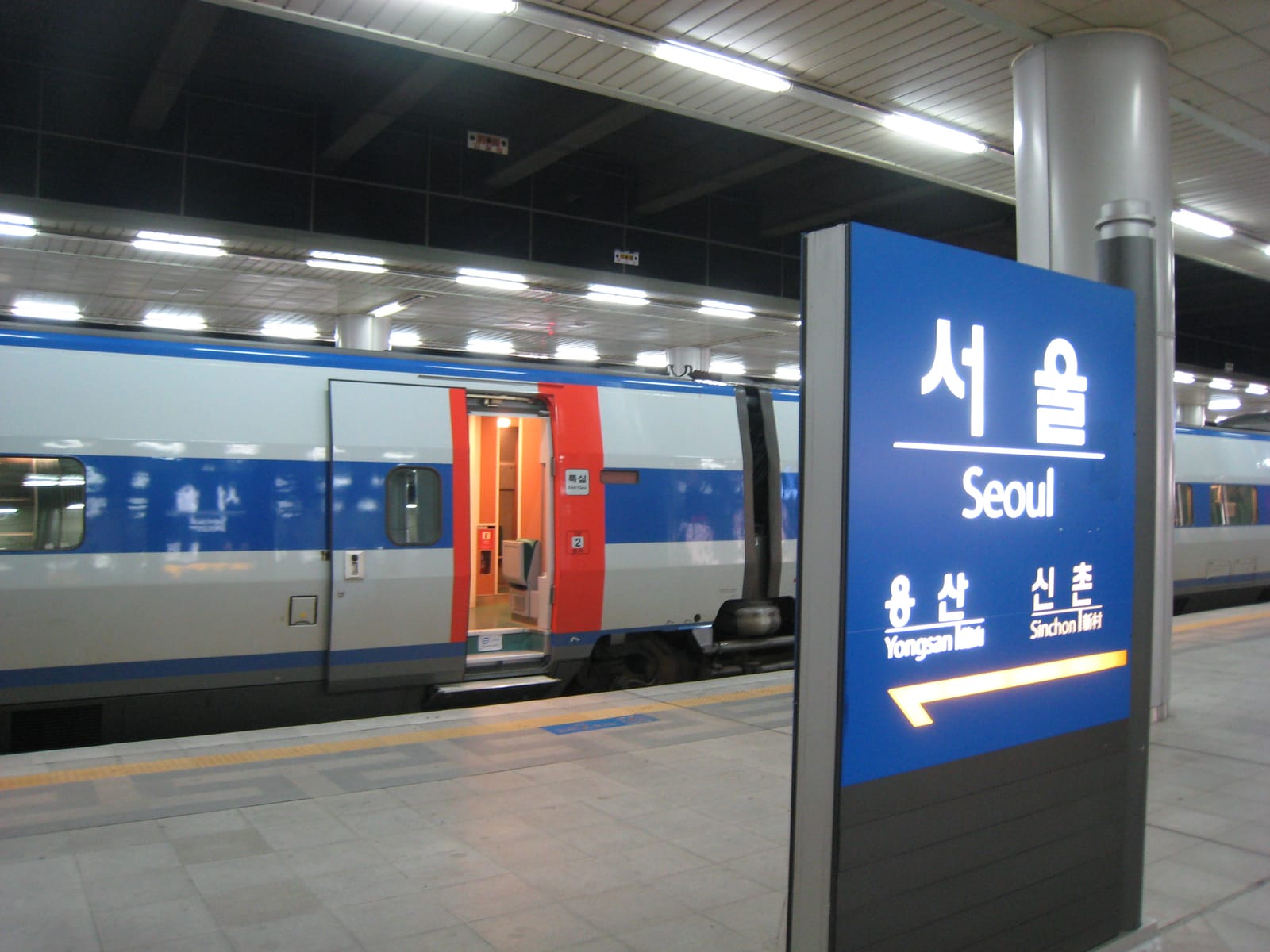
The trip is straightforward: take the KTX from Seoul Station or Cheongnyangni Station to Gangneung, about two hours direct on the Gyeonggang Line. From Gangneung Station, a local bus (routes reported as 300-2 or 314, though it's worth double-checking current numbers on Naver Map before you go, since Korean bus routes do shift) covers the roughly 40-60 minute ride out to Jumunjin, or you can take a taxi or join an organized day tour that includes the breakwater as a stop.
Planning the trip out to Gangneung? As an Amazon Associate, EpicKor may earn from qualifying purchases. A Korean phrasebook and dictionary is genuinely useful once you're off the KTX and navigating local buses in a smaller coastal town.
See A Korean phrasebook and dictionary on AmazonThe Correction: Where the Buckwheat Field Actually Is
This is the detail almost every quick travel-blog roundup gets wrong, so it's worth being precise. The buckwheat field from Kim Shin's rebirth scene, the first kiss, and the wedding scene was filmed at Hagwon Farm in Gochang County, Jeollabuk-do — a genuinely huge working buckwheat farm, reportedly Korea's largest at over 560,000 square meters. That's roughly a four-to-five-hour drive from Gangneung, on the opposite side of the country. The 2026 reunion cast did not visit it; they recreated the imagery with props at the Jumunjin set instead.
If you actually want to see real buckwheat in bloom at the Gochang farm, keep in mind it's seasonal — the flowers typically bloom in a window from late August into September, so visiting outside that stretch means fields of green stalks with no white flowers at all.
Goblin's other iconic scenes are scattered further still: a secondhand bookstore scene was filmed at Hanmi Bookstore on Incheon's Baedari Secondhand Bookstore Alley, and an exterior house scene is commonly cited as filmed in Seoul's Unni-dong neighborhood, though that specific claim rests on less rigorously sourced Korean fan-blog material and is worth treating as likely-but-not-ironclad. The honest takeaway: Goblin's filming map covers at least four real, separated locations across the country, plus scenes shot abroad in Quebec, Canada. Jumunjin is the reunion special's destination and the most concentrated cluster of real, visitable spots, not the whole story.
Why Goblin Still Gets a 10th-Anniversary Reunion at All
Ten years is a long time for a Korean drama to still command a four-part network special with its original A-list cast. Goblin's original run set the kind of nationwide-conversation ratings record that few shows since have matched, and its central image — a scarf-wrapped immortal waiting nine centuries for a bride who can finally end his curse — became one of the most referenced K-drama scenes internationally, well before Squid Game made "Korean drama" a mainstream Western search term at all. That's part of why a simple reunion trip justified a full tvN broadcast slot rather than just a nostalgia clip on social media: Goblin's cast reuniting is treated as a genuine cultural event in Korea, not just fan service.
The reunion trip's emotional beats read that way too. Kim Go-eun reportedly initiated the idea herself, and the surprise appearance from an 85-year-old veteran actor moving Gong Yoo to tears suggests the cast approached this as a real occasion, not a contractual promotional obligation. If you're curious about the show itself before planning a trip around it, both Rakuten Viki and Viu carry the original series in various regions alongside the new reunion special, so it's realistic to catch up on the source material and the anniversary trip together.
Planning a Realistic Day (or Overnight) Trip
If you're coming from Seoul, the honest logistics work out to a long day trip or a more comfortable overnight. The KTX ride alone is about two hours each way, and once you're in Gangneung, getting out to Jumunjin and back adds another hour and a half to two hours of local transit on top of however long you actually spend at the breakwater and coastal road. Doing it as a same-day round trip from Seoul is doable but tight — you're looking at roughly five to six hours of pure transit for what might be a 30-45 minute visit at the site itself, unless you build in time for Gangneung's other real draws.
And Gangneung does have plenty to fill out a full day once you're there: it's one of Korea's better-known coffee towns, with a cluster of cafes near Anmok Beach that has nothing to do with Goblin at all but is worth combining with the trip, plus Gyeongpo Lake and beach nearby if you want a second coastal stop. Framing this as "a Gangneung day trip with a Goblin detour" rather than "a Goblin pilgrimage" tends to make for a more satisfying visit, since the breakwater itself is a quick, quiet stop rather than a full attraction on its own.
What the Numbers Actually Say
There's no official Korea Tourism Organization or Gangneung city figure tracking how much traffic Goblin has driven to the area, either after the original 2016-2017 airing or following this year's reunion special — that data gap is real, and any specific percentage you see elsewhere claiming otherwise likely isn't sourced to an actual government release. What does exist is more anecdotal: a bookstore owner near the Incheon filming location told the Jakarta Post back in 2017 that weekend foot traffic on their street had increased more than tenfold after the drama aired, with weekday traffic roughly tripling. That's one merchant's account of one location, not a citywide statistic, but it's a genuine data point about how real the filming-tourism effect was at the time.
Making a night of it in Gangneung? As an Amazon Associate, EpicKor may earn from qualifying purchases, and EpicKor may also earn a commission from qualifying Agoda bookings at no extra cost to you. Compare Gangneung-area places to stay if you're turning the breakwater visit into an overnight coastal trip rather than a rushed day trip from Seoul.
Frequently Asked Questions
Q: Can I visit the Goblin buckwheat field in Jumunjin? No. The buckwheat field is a real place, but it's Hagwon Farm in Gochang, Jeollabuk-do, roughly four to five hours from Gangneung by car, not anywhere in Jumunjin or Gangneung.
Q: Where exactly is the Goblin breakwater in Jumunjin? It sits between Yeongjin Beach and Jumunjin Beach in Jumunjin-eup, Gangneung. Search "Jumunjin Breakwater" or navigate to the Goblin Rest Area parking lot nearby; it's a free, public, unticketed spot.
Q: Did the 2026 Goblin reunion special visit the buckwheat field? No. The cast returned to the Jumunjin breakwater area and a specially built set decorated with props recreating the buckwheat/red-scarf imagery, rather than traveling to the real farm in Gochang.
Q: How do I get from Seoul to the Goblin filming locations in Gangneung? Take the KTX from Seoul Station or Cheongnyangni Station to Gangneung (about 2 hours), then a local bus or taxi to Jumunjin (roughly 40-60 minutes further).
Q: Are there other real Goblin filming locations besides Jumunjin? Yes. A bookstore scene was filmed at Hanmi Bookstore in Incheon, and other scenes were shot in Seoul and even in Quebec, Canada. Jumunjin is the most concentrated real, visitable cluster, not the show's only location.
Q: How popular was Goblin originally? Extremely — its original 2016-2017 run set one of the highest domestic cable-drama ratings of its era, and the show remains one of the most internationally referenced Korean dramas even a decade later, which is part of why a cast reunion still commands a full network special rather than just a social-media clip.
Sources and Further Reading
You Might Also Like
Is Korea Kid-Friendly? What Foreign Parents Report — and What Korean Data Shows: Strangers Who Hand Out Tangerines, 114 No-Kids Zones, and the 68% Who Accept Them
Foreign parents say older Koreans shower babies with snacks and department-store nursing rooms beat London's. Korean data adds 114 no-kids zones, 68% public acceptance, and 64% of Korean parents who feel watched. What that means for your trip.
Car Seat Taxis in Korea: The Law Requires a Seat for Every Child Under 6, Ordinary Taxis Don't Carry One — What Tourists Can Actually Book in Seoul
Korea's Road Traffic Act requires a car seat for children under 6 in any car, taxis included, and fines the driver ₩60,000. Ordinary taxis carry none and police paused taxi enforcement in 2018. TADA, whose app takes foreign phones and cards, runs about 300 car-seat vans.
Seoul Subway With a Stroller: Every Seoul-Run Station Now Has a Street-to-Platform Elevator — at Half of Seoul Metro's on Just One Exit — and Only 108 Have a Nursing Room
Since December 2025 all 338 Seoul-run subway stations have a lift route from street to platform, but in Seoul Metro's own register 116 of 217 stations have it at one exit only: Myeongdong exit 1, Gyeongbokgung 4, Hongik 8. Just 108 have a nursing room.