What They Actually Eat in K-Dramas: Make It at Home
You've seen the shot. Someone gets dumped, sits on a rooftop or a convenience-store bench, and attacks a pot of instant noodles straight from the lid. Or two characters split fried chicken and beer after a terrible day and something finally gets said out loud. K-drama food isn't set dressing — Korean writers use specific dishes as emotional shorthand, and once you know the code, half the scenes read differently.
This guide covers the dishes that keep showing up, what they actually taste like, why that particular food ended up in that particular scene, and how to make a genuinely decent version at home without a trip to Seoul.
The Emotional Code Behind K-Drama Food
Korean dramas use food the way other shows use weather. Certain dishes carry fixed meanings, and directors rely on the audience recognizing them instantly.
| Dish | What It Signals On Screen | Typical Scene |
|---|---|---|
| Ramyeon at home | Loneliness, or an unspoken invitation | Late night, one person, or two people pretending it's just noodles |
| Chimaek (chicken + beer) | Friendship, venting, celebration | Group table, everyone talking at once |
| Soju with someone | Confession is coming | Two people, pojangmacha or a small restaurant |
| Jjajangmyeon | Nostalgia, being broke, being a kid again | Moving day, or a character remembering their twenties |
| Kimbap or a lunchbox | Someone cared enough to make it | Handed over wordlessly at a difficult moment |
| Budae jjigae | Shared history, making do together | Old friends, cramped table, one bubbling pot |
Samyang Buldak Carbonara — compare on AmazonAffiliate link. As an Amazon Associate, EpicKor earns from qualifying purchases at no extra cost to you.
The famous one is ramyeon. When a character says "라면 먹고 갈래?" — "want to come in for ramyeon?" — it is not about noodles, and every Korean viewer knows it. It's Korea's equivalent of "Netflix and chill," and it traces to director Hur Jin-ho's 2001 film One Fine Spring Day, where Lee Young-ae's character invites Yoo Ji-tae's up after he drives her home. Worth knowing if you want the detail right: the line in the film is actually the softer "라면 먹을래요?" — the punchier "먹고 갈래" version is how the public reshaped it afterward, and that's the form dramas quote and parody today.
Ramyeon: The Most-Filmed Dish in Korea
Instant ramyeon appears in more Korean scenes than any other food, for practical reasons as much as symbolic ones. It's cheap, it cooks in four minutes on camera, and eating it looks urgent.
What makes the on-screen version look better than yours:
- They cook it in the pot and eat from the lid. Not an affectation — the lid works as a cooling plate so you can eat immediately.
- Egg goes in during the last 60 seconds, either stirred through or dropped whole and left alone. Any earlier and it disintegrates.
- Less water than the packet says. Korean home cooks routinely under-fill for a stronger broth.
- Sliced scallion at the end, not the beginning.
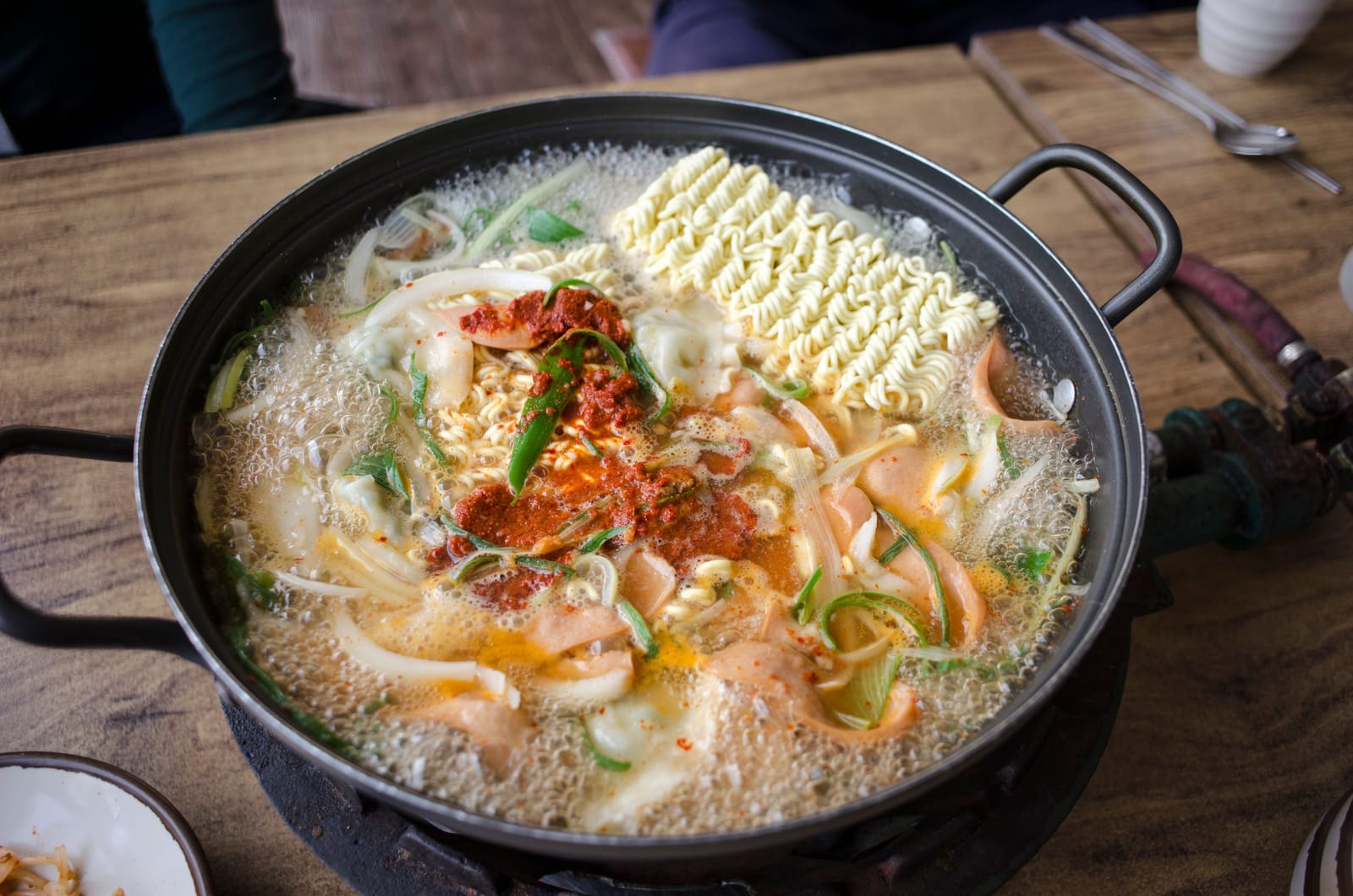
If you want the specific bowl you're seeing in a scene set in the 1990s or in a military context, that's usually budae jjigae — "army stew" — which grew out of the post-Korean War period when American base surplus like Spam and hot dogs got folded into a Korean chili-paste stew. It's now a legitimate restaurant category, not a curiosity.
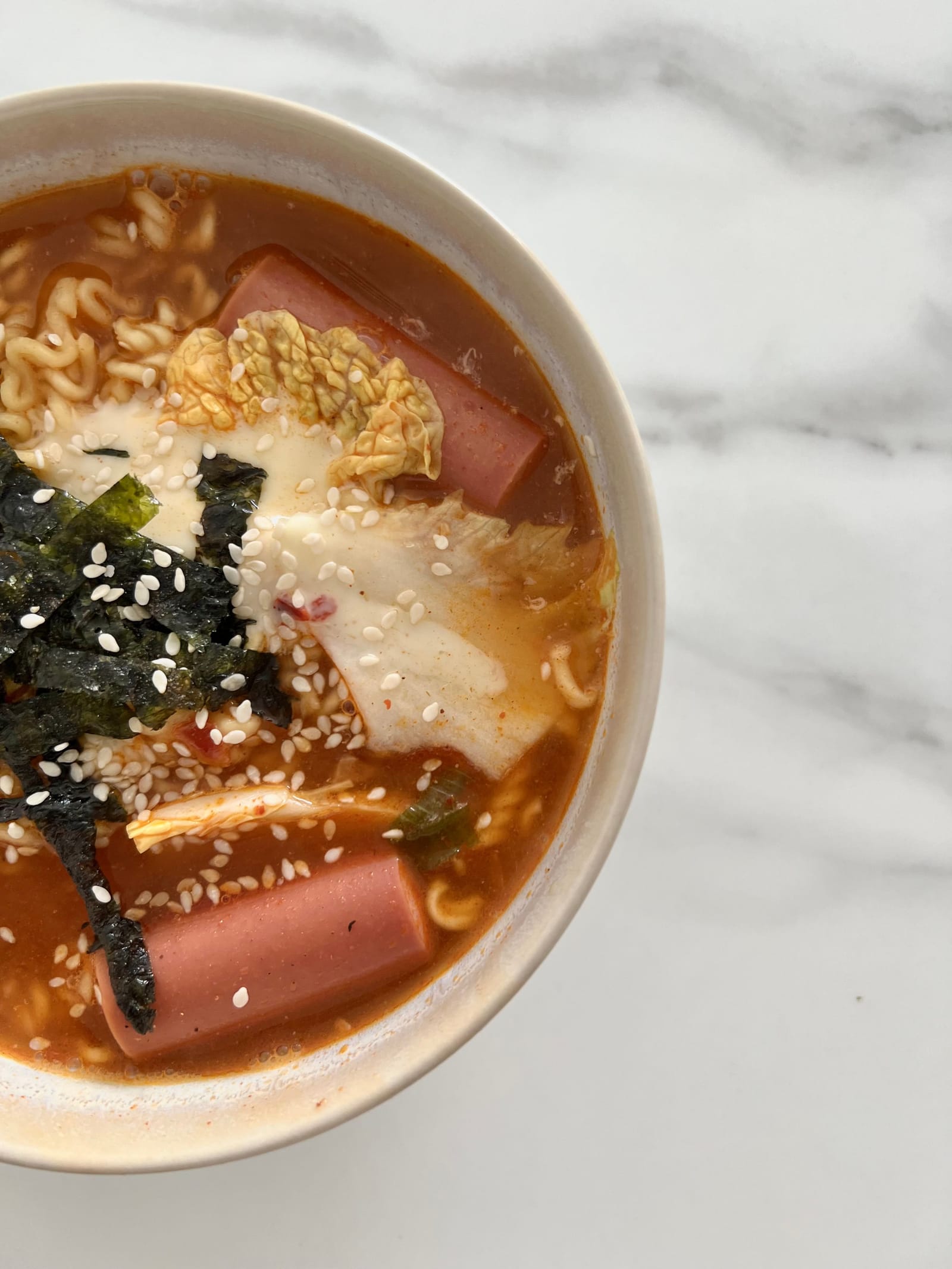
Making the on-screen bowl at home: As an Amazon Associate, EpicKor may earn from qualifying purchases. The fastest way to close the gap between your bowl and the one on screen is using actual Korean ramyeon rather than a generic instant noodle — Samyang Buldak Carbonara is the widely exported one, and a proper Korean ramyeon pot is the reason the noodles cook evenly in four minutes.
See Samyang Buldak Carbonara on AmazonChimaek: The Friendship Scene
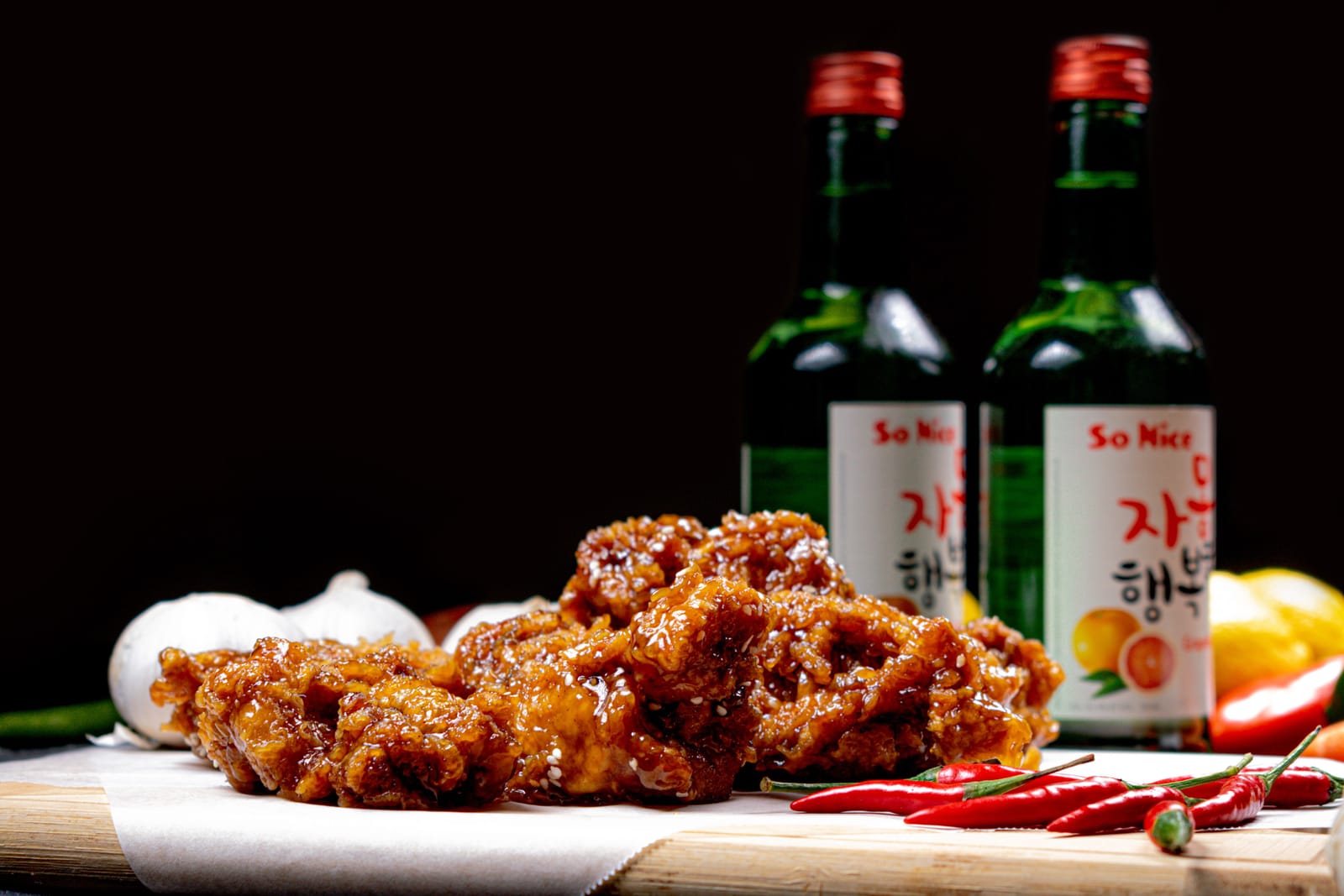
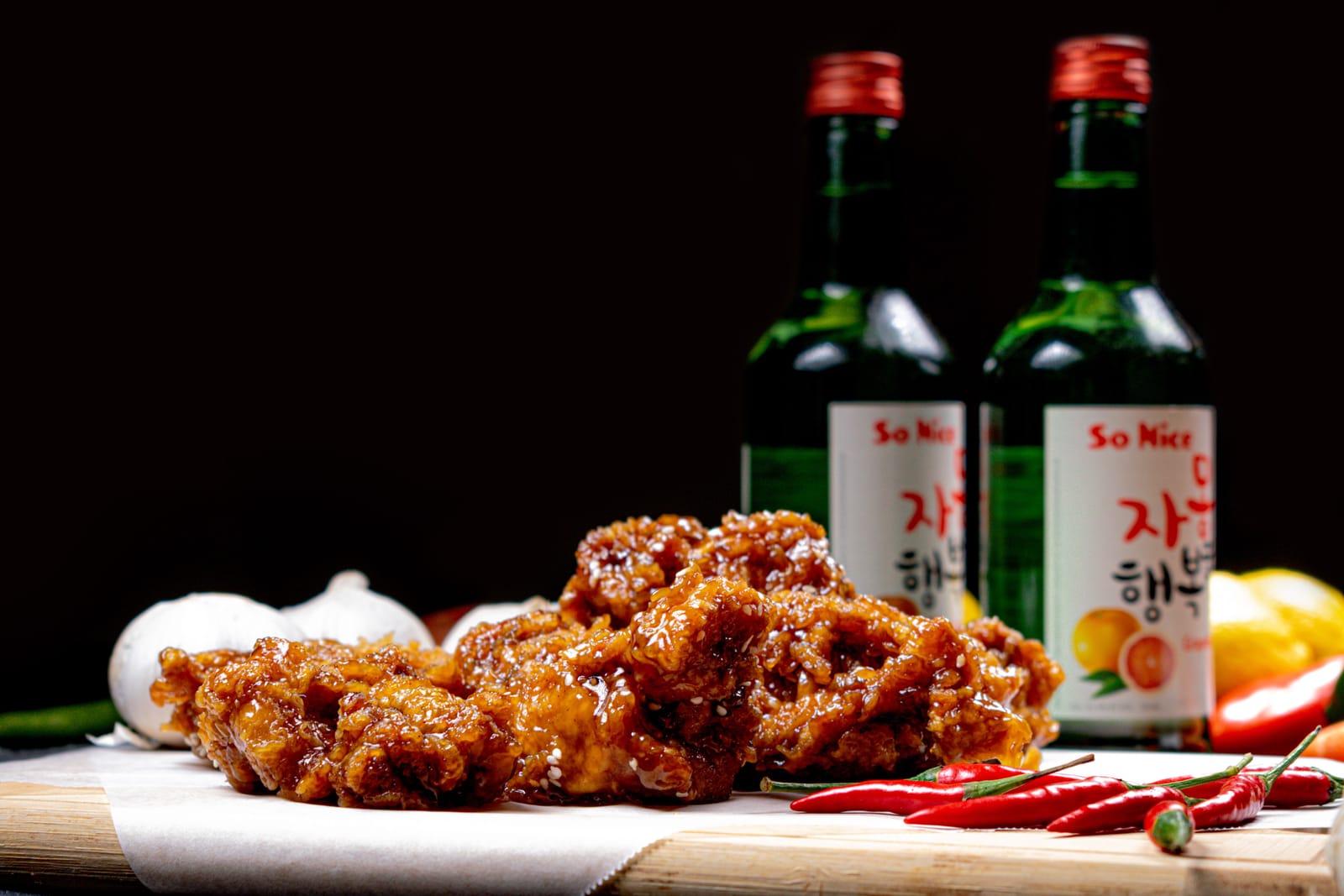
Fried chicken and beer — chicken plus maekju — is the drama shorthand for people finally relaxing together. It shows up after work, after a win, after a disaster.
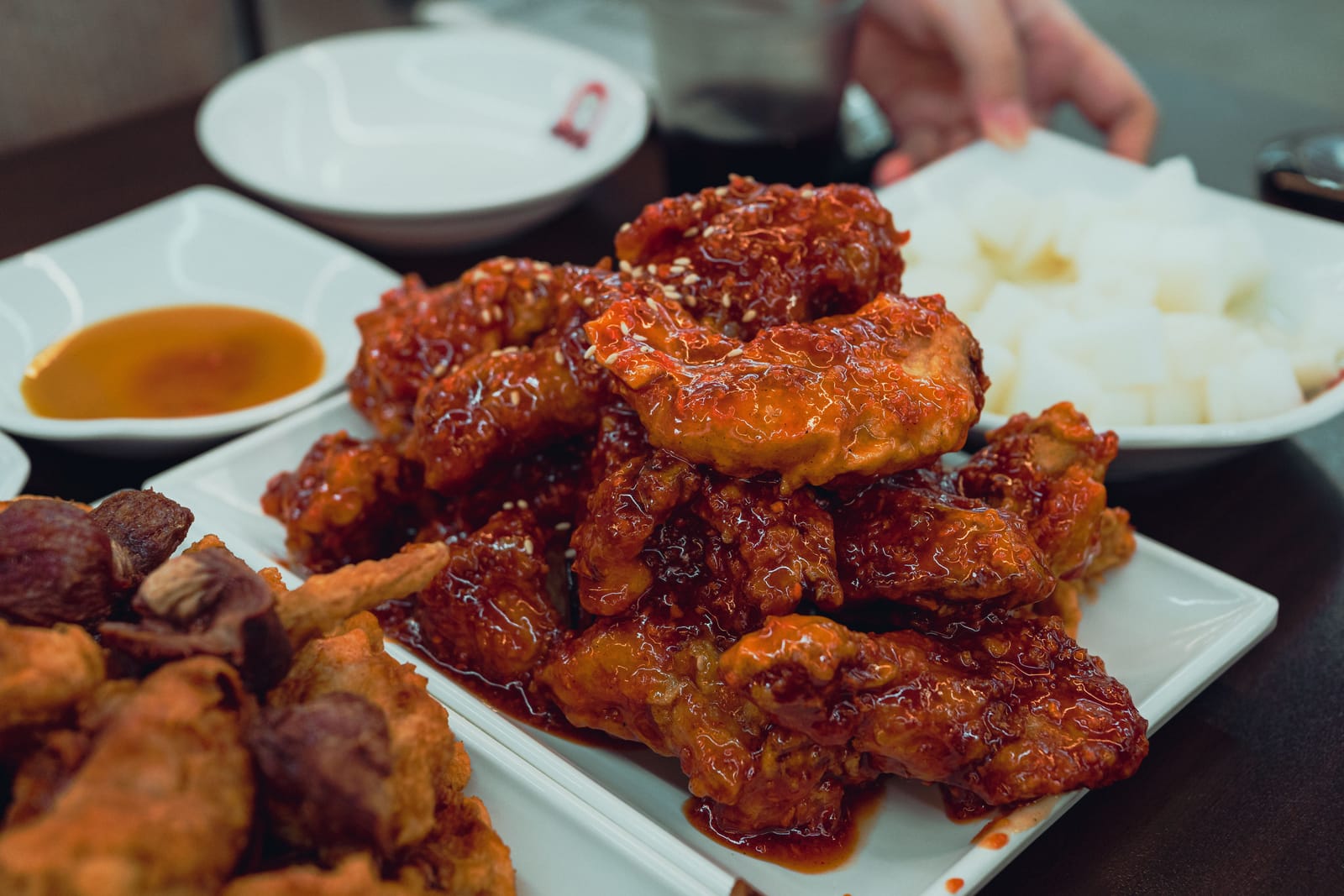
Korean fried chicken differs from American in two ways that matter if you're recreating it: the batter is thinner and fried twice, which is what produces that glassy crackle instead of a thick crust; and the sauce is applied after frying rather than mixed into the coating. The three national chains each own a different style, which our Korean fried chicken brands guide breaks down if you want to know which one a scene is showing.
At home, the shortcut most people miss is the double fry: fry once at moderate heat to cook it through, rest it, then fry again hot and fast for colour and crunch. Sauce goes on last, tossed, right before serving.
Jjajangmyeon and the Foods With a Date Attached
Some drama foods carry a specific occasion, and reading them wrong changes the scene.
Jjajangmyeon — black bean noodles — is what Koreans eat on moving day, and what a broke student eats. It's also the designated food of Black Day on April 14, when single people who received nothing on Valentine's Day or White Day eat black noodles together, half joking. A character eating jjajangmyeon alone in April is making a point.
Miyeokguk — seaweed soup — is birthday food, and it's also what new mothers eat after giving birth. When a character is served miyeokguk, someone remembered their birthday. When a character notices they weren't served it, that's the story.
Tteokguk — rice cake soup — belongs to Lunar New Year, and eating it is traditionally tied to turning a year older. Our Korean birthday seaweed soup guide covers why these two soups carry so much weight.
The Shared Pot: Why So Many Scenes Use One
Watch a Korean group meal scene and count the plates. Often there aren't many — there's one bubbling pot in the middle and everyone eats out of it.
That staging is doing work. A shared pot forces people physically closer, makes everyone move at the same pace, and means nobody can quietly leave the table. Directors use it for exactly the scenes where a group has to hash something out: budae jjigae with old friends, a kimchi stew at a family table, jjigae between coworkers who don't like each other yet.
There's also a real etiquette layer visible on screen if you know to look:
- The youngest person usually handles the burner and the scissors, cutting noodles or meat for everyone.
- Nobody starts before the eldest lifts a spoon. If a character does, that's characterization.
- The pot gets refilled with rice or noodles at the end — dropping rice into the leftover broth is the standard finish, not an afterthought.
- One person pours for others, never for themselves, which is the same rule as soju.
The endless free side dishes filling the rest of the table have their own logic too — our banchan and free refills guide explains why they keep arriving and what you're allowed to ask for.
How to Build the Basic Korean Pantry
You cannot make most of these dishes without three or four base items, and everything gets easy once you have them.
- Gochujang — fermented chili paste. The backbone of stews, tteokbokki, and most red sauces. Buy mild if you're unsure; you can always add heat.
- Gochugaru — Korean chili flakes. Not interchangeable with cayenne or generic red pepper; the flavour is fruitier and the heat is gentler.
- Doenjang or ssamjang — fermented soybean paste, for stews and for eating with grilled meat and lettuce wraps.
- Sesame oil and toasted sesame seeds — added at the end, not used for frying.
- Good soy sauce and a jar of kimchi — the kimchi does double duty as a side dish and as a stew ingredient once it gets sour.
That's genuinely the whole starter list. With those, plus rice and eggs, you can cook a large share of what you see on screen.
The five things worth stocking first: As an Amazon Associate, EpicKor may earn from qualifying purchases. If you build the base once, most drama dishes become a weeknight thing — start with Korean gochujang and ssamjang, and keep a couple of kimchi stew packs around for the nights you want the flavour without the cooking.
See Korean gochujang on AmazonWhat You Can't Really Recreate — and the Honest Substitutes
Some of the most-filmed foods don't survive the trip to a home kitchen outside Korea. Worth knowing before you chase them.
Street tteokbokki. The version simmering in a wide pan at a market stall has been reducing for hours, which is where the depth comes from. A home batch made in fifteen minutes is a different, thinner dish. It's still good — just don't expect the market flavour on the first try. Our tteokbokki guide covers the six styles and which one you're actually looking at.
Fresh deli manjoo. The corn-shaped custard cakes from subway stations are made and sold within minutes. Nothing shelf-stable reproduces them, and no, you can't order them online. This is genuinely a "eat it in Korea" food. Our Deli Manjoo guide explains why it is a station franchise rather than street food, and what a bag costs now.
Real pojangmacha atmosphere. Half of what makes tent-bar food memorable is the orange tarp, the plastic stool, and the cold. The food is simple by design; the setting is the point.
Restaurant-grade Korean fried chicken. You can get 80% of the way there at home with the double fry. The last 20% is commercial fryers holding steady temperature with a much larger oil volume.
What does travel well: stews, ramyeon, anything built on gochujang or doenjang, kimbap, and most banchan. Those are home foods in Korea too, which is exactly why they work in your kitchen.
Frequently Asked Questions
Q: What does "ramyeon meokgo gallae" actually mean? Literally "want to eat ramyeon before you go?" — it functions as an indirect invitation to stay the night, roughly Korea's "Netflix and chill." It traces to Hur Jin-ho's 2001 film One Fine Spring Day, though the film's actual line is the gentler "라면 먹을래요?"; the shorter, blunter version is a later public reworking.
Q: Is K-drama ramyeon different from Japanese ramen? Yes. Korean ramyeon usually means instant wheat noodles in a spicy, chili-based broth, eaten at home in minutes. Japanese ramen is typically a restaurant dish with a slow-simmered broth. Different foods that share a borrowed name.
Q: What is the Spam-and-cheese stew I keep seeing? Budae jjigae, or "army stew." It combines Korean chili paste and kimchi with processed meats that entered Korea through American military bases after the Korean War. It's now a mainstream restaurant category with dedicated chains.
Q: Why do characters eat jjajangmyeon on moving day? It's practical tradition — cheap, delivered fast, requires no dishes or unpacking. It's also linked to Black Day on April 14, when single people eat black noodles together, which is why it can read as a "single and fine about it" signal.
Q: Can I make Korean fried chicken without a deep fryer? Yes, but the double-fry matters more than the equipment. Fry at moderate heat until cooked, rest, then fry hot and briefly for crunch. Sauce goes on after frying, never mixed into the batter.
Q: What should I buy first if I want to cook Korean food at home? Gochujang, gochugaru, and a fermented soybean paste. Those three plus rice, eggs, and kimchi cover a large share of everyday Korean home cooking and most of what appears in dramas.
The Bottom Line
K-drama food isn't there to look pretty. Ramyeon means someone is alone or about to not be. Chicken and beer means the truth is coming out. Seaweed soup means somebody remembered. Once you can read it, the food scenes stop being filler and start being dialogue.
Pick one dish, buy the three pantry items, and cook it this week. The next time that scene comes on, you'll know exactly what's in the pot.
Sources and further reading:
You Might Also Like
K-Drama Foods Explained: Chimaek, the Ramyeon Line, and That Sandwich
Every K-drama serves the same meals: chicken and beer on a bad day, ramyeon as an invitation, a Subway sandwich nobody ordered. What each food actually is, the scenes that made them famous, and which ones you can buy tonight.
Korean Spice Levels Explained: How Hot Is Korean Food Really?
Korean spice levels explained with real Scoville numbers: gochugaru, gochujang, kimchi, and buldak ramen compared to jalapeño and ghost pepper.
Korean Fried Chicken Brands Compared 2026: BHC vs BBQ vs Kyochon
Korean fried chicken brands compared: BHC's Bburinkle, BBQ's olive oil chicken, and Kyochon's soy-garlic style, plus how to order like a local.