Korean Spice Levels Explained: How Hot Is Korean Food Really?
Here is the number that should reset your expectations before you order anything in Korea: the original Samyang Buldak fire noodle — the ramen that launched a thousand crying-face challenge videos — measures at roughly 4,404 Scoville Heat Units. A single jalapeño pepper tops out at 8,000. The noodle that YouTube treats like a dare is, by the actual chemistry of capsaicin, milder than the top end of a pepper you can buy at any US grocery store.
That gap between reputation and reality is the entire story of Korean spice. Some of it is genuinely hot. Some of it just looks hot, or has a reputation built by internet challenge culture rather than the Scoville scale. This guide sorts out which is which, using actual heat-unit numbers instead of vague warnings, so you can order with real information instead of guessing.
The Scoville Scale, Quickly
The Scoville scale measures capsaicin concentration — the compound that makes chili peppers burn — in Scoville Heat Units (SHU). It's not a Korean-specific system; it's the same scale used to rate every pepper worldwide, which is exactly why it's useful here. A few fixed reference points make the whole scale usable:
| Reference point | SHU range |
|---|---|
| Bell pepper | 0 |
| Jalapeño | 2,500 – 8,000 |
| Serrano | 10,000 – 23,000 |
| Cayenne | 30,000 – 50,000 |
| Tabasco sauce | 30,000 – 50,000 |
| Habanero | 100,000 – 350,000 |
| Ghost pepper (bhut jolokia) | 855,000 – 1,041,427 |
This mild gochujang — compare on AmazonAffiliate link. As an Amazon Associate, EpicKor earns from qualifying purchases at no extra cost to you.
Keep the jalapeño number in your head — 2,500 to 8,000 SHU — because almost everything below compares back to it.
Korean Spicy Food Isn't Actually That Old
Here's the part that surprises most people, including plenty of Koreans who've never looked it up: chili peppers are not a traditional, centuries-deep Korean ingredient. They're a New World crop, and they didn't reach Korea until Portuguese traders carried them through Japan in the late 16th century. The earliest known written mention of chili pepper in Korea appears in the Jibong yuseol, an encyclopedia published in 1614. Cultivation spread through the 18th century, but by most food-history accounts, chili didn't become the dominant force on Korean tables until the postwar era — meaning the fiery, gochugaru-heavy version of Korean food that international audiences now think of as ancient and essential is, in the arc of Korean culinary history, a relatively recent development of the last seventy-some years, not a multi-century tradition.
That timeline matters for how you should think about "authentic" Korean spice. The pre-chili Korean table relied on other sources of heat and pungency — black pepper, mustard, ginger, and horseradish-relative plants — and dishes like white (non-spicy) kimchi and mild broths still represent an older, parallel tradition that never disappeared. When a Korean grandmother's recipe is described as "not that spicy," she isn't watering down the real thing. She may be closer to how the dish tasted before chili became the default.
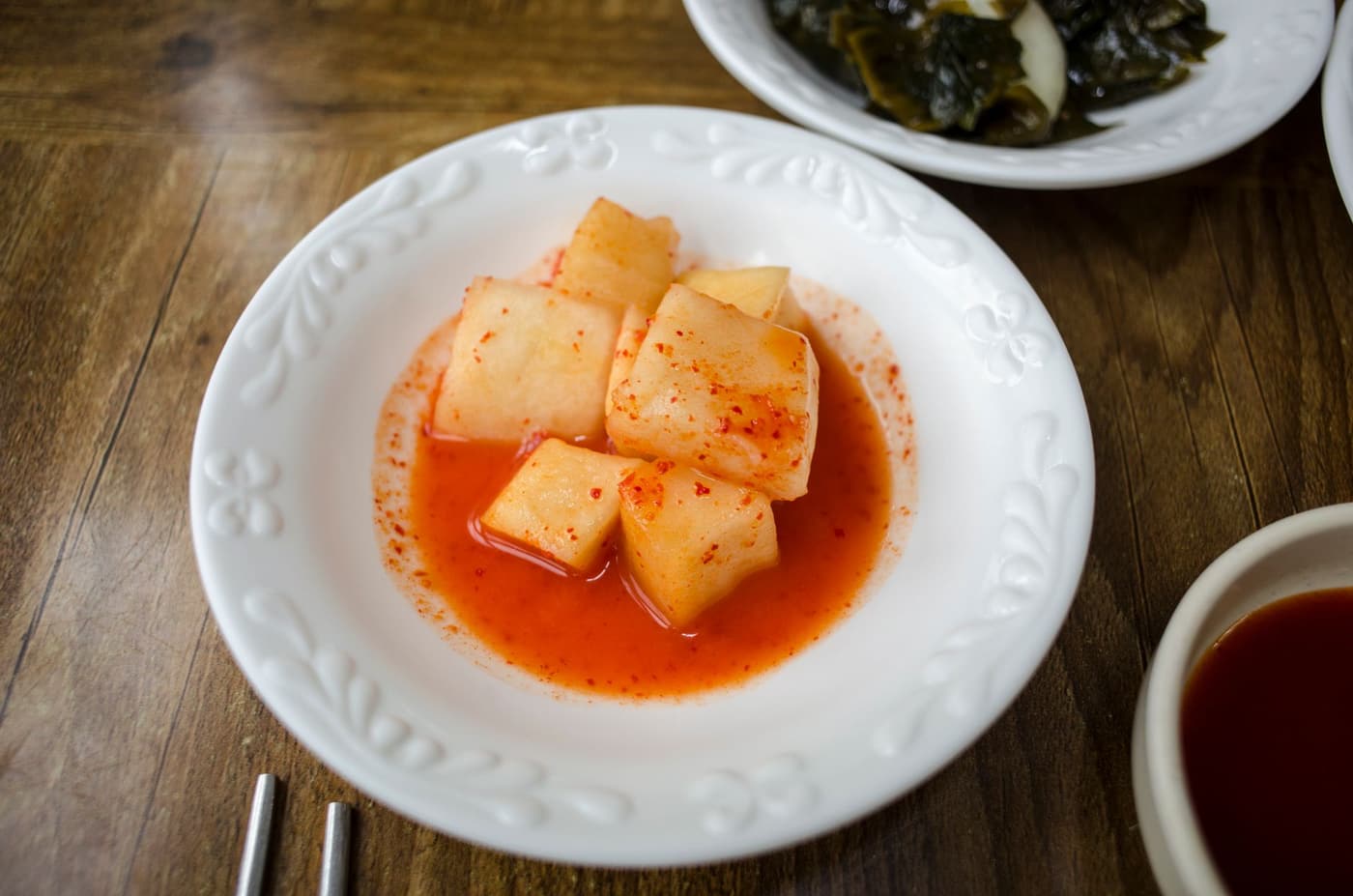
Red does not mean hot. Radish kimchi looks fierce and sits low on the scale — the colour comes from gochugaru, which is mild by international standards. Photo by makafood, Pexels.
Korean Ingredients and Dishes, Ranked by Actual Heat
| Item | SHU range | How it compares |
|---|---|---|
| Gochujang (fermented chili paste) | 1,000 – 2,500 | Milder than a jalapeño; close to Sriracha |
| Gochugaru (dried chili flakes) | 1,500 – 10,000 | Roughly jalapeño-level to noticeably hotter |
| Kimchi (varies widely by recipe) | 1,000 – 30,000 | Depends entirely on how much gochugaru went in |
| Original Buldak fire noodles | ~4,404 | About one jalapeño's worth of heat |
| Buldak 2x Spicy | ~10,000 | Past jalapeño, into serrano territory |
| Buldak 3x Haek (hottest official version) | ~13,200 | Firmly serrano-range, still far from habanero |
| Fresh cheongyang pepper | 10,000 – 23,000 | Korea's actual hottest common ingredient — about 5x a jalapeño |
Two things jump out from this table. First, the ingredient Koreans actually reach for when they want real heat isn't a sauce or a noodle brand — it's the fresh cheongyang pepper, sliced raw into stews and dipping sauces, sitting at 5 times a jalapeño's punch. Second, gochujang, the thick red paste that looks like it should be the fiercest thing on the table, is often the mildest number here. That's worth its own explanation.
Start where the numbers say to start: As an Amazon Associate, EpicKor may earn from qualifying purchases. If you want the actual paste behind Korean spice without guessing your tolerance, this mild gochujang sits at the low end of the range in the table above — a reasonable place to begin.
See this mild gochujang on AmazonWhy Gochujang Feels Different Than Its Number Suggests
A 1,000-to-2,500 SHU rating sounds almost tame, and yet gochujang has a reputation as a serious, adult-strength condiment. The reason is fermentation, not capsaicin. Gochujang is made from red chili powder mixed with fermented soybeans, glutinous rice, and salt, aged for months. That fermentation produces sugars and umami compounds that round out the heat instead of letting it hit as a sharp, isolated burn the way a fresh chili or a vinegar-based hot sauce does. You're tasting sweetness, saltiness, and savoriness arriving at the same moment as the capsaicin, which makes the same SHU number feel deeper and more complex rather than simply "hot." This is the opposite of what raw dried gochugaru flakes do, which hit closer to their number at face value since there's no fermentation softening the edges.
That's also why kimchi's heat is so unpredictable dish to dish. A mild, quick-fermented cabbage kimchi meant for a first-timer can sit near 1,000 SHU. A heavily-seasoned, gochugaru-loaded kimchi built for a spice-seeking household can push past 20,000. There's no single "how spicy is kimchi" answer, because Korean home cooks and restaurants don't standardize the ratio — they adjust it to taste, the same way a home cook anywhere adjusts salt.
The Buldak Ladder, and Why the Challenge Videos Are Misleading
Samyang built an entire product line around escalating heat, and the marketing around it — crying-face thumbnails, "extreme" branding, viral eating-challenge videos — implies a much steeper climb than the actual Scoville numbers show. Original Buldak sits at roughly 4,404 SHU: essentially a jalapeño in noodle form. The 2x Spicy version jumps to around 10,000, crossing into serrano-pepper range. The 3x Haek version, the hottest currently sold, lands around 13,200 — still short of a single fresh cheongyang pepper, and nowhere close to a habanero, let alone a ghost pepper.
None of this means Buldak doesn't burn. Capsaicin's effect also depends on quantity eaten, how fast you eat it, and whether you're pairing it with something that cuts the heat (dairy and starch help; water does not). A full bowl of noodles delivers far more total capsaicin than a single bite of pepper, which is part of why the reaction looks so dramatic on camera. But if you're deciding whether to try the original, the 2x, or the 3x based on the packaging alone, the honest comparison is: one jalapeño, one serrano, or one serrano-plus. That's a very different decision than what the marketing implies.
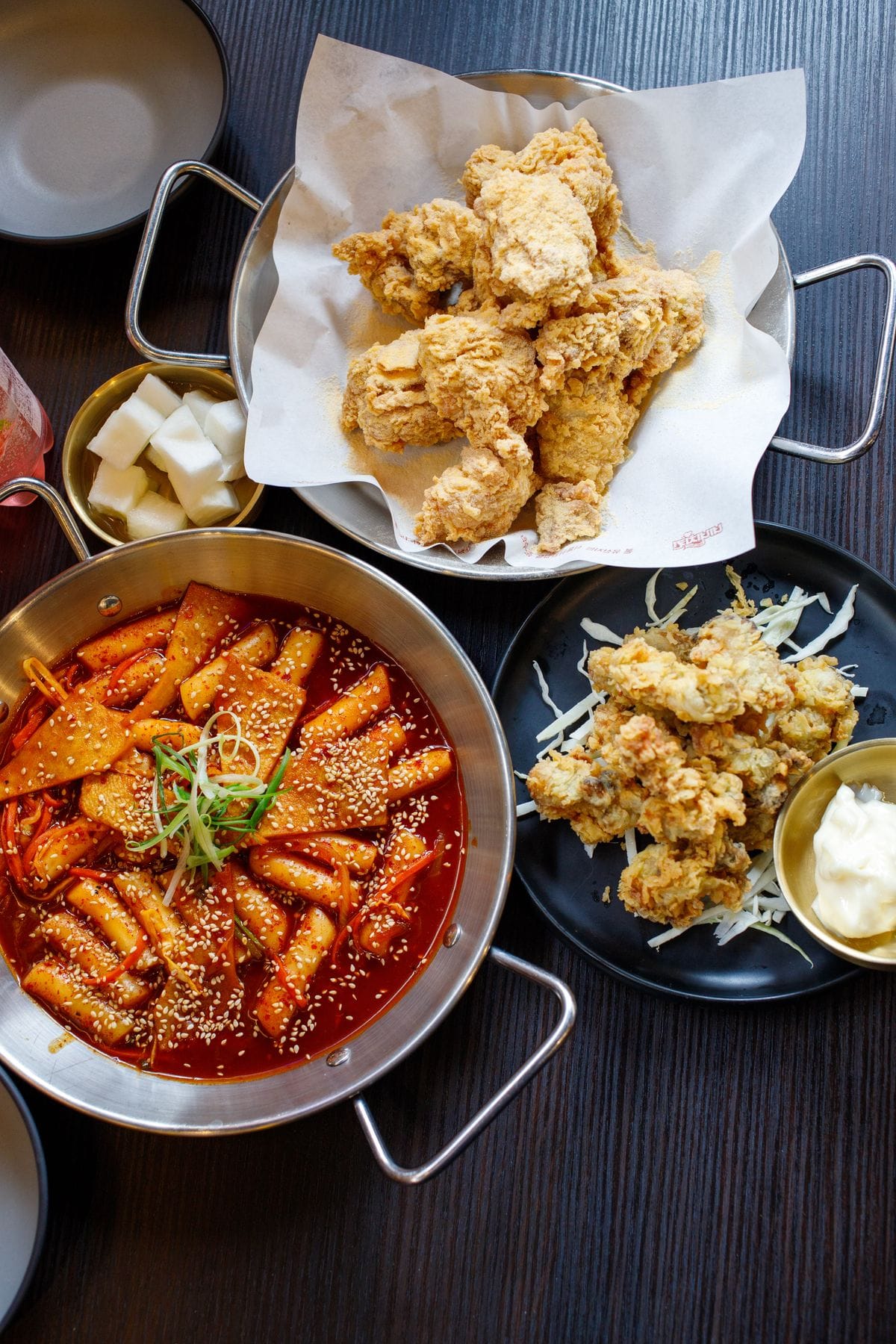
The same brand logic applies to Buldak-flavored tteokbokki (spicy rice cakes), which generally carries roughly the same ~4,404 SHU sauce as the original noodles. Not every tteokbokki is built the same way, though — a carbonara-style version leans on cream to soften the heat noticeably, while a homemade or restaurant version can swing anywhere from mild to sharp depending on how much gochugaru and gochujang the cook actually used. There's no fixed "tteokbokki spice level" any more than there's a fixed kimchi one; the name of the dish tells you the format, not the heat.
See where you actually land on the scale: As an Amazon Associate, EpicKor may earn from qualifying purchases. Original Buldak carbonara ramen is the ~4,400 SHU starting point from the table above, and Buldak tteokbokki rice cakes deliver the same heat family in a different format if noodles aren't your thing.
See Original Buldak carbonara ramen on Amazon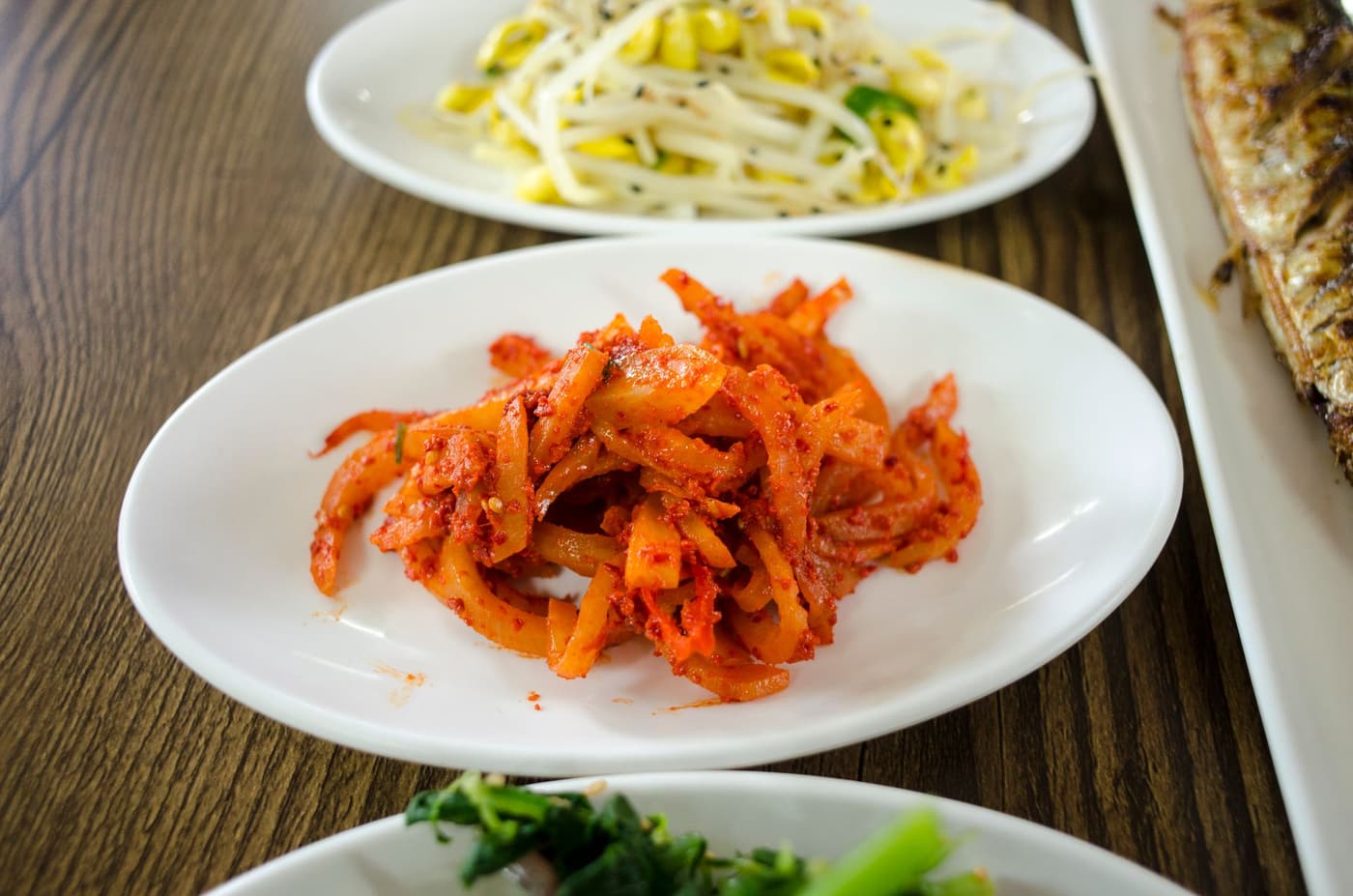
The banchan spread is the practical defence. Rice and the non-spicy side dishes are what actually reset your mouth mid-meal. Photo by makafood, Pexels.
How to Actually Navigate Spice Levels While Traveling
A few practical phrases and habits do more for your trip than memorizing SHU numbers:
- 매워요 (maewoyo) means "it's spicy" — useful as a question with rising intonation, or said flatly by a server warning you.
- 안 맵게 해주세요 (an maepge haejuseyo) means "please make it not spicy" — most restaurants that cook to order can genuinely adjust this; some fixed-recipe dishes (many kimchi jjigae, certain stews) cannot.
- 순한 맛 (sunhan mat) on packaging or a menu means "mild flavor" — look for it on instant noodle and sauce shelves specifically, since most major brands sell a toned-down version alongside the original.
- Dairy (milk, yogurt drinks) and starch (rice, bread) both bind capsaicin better than water does. Carrying a small milk-based drink is a more effective backup plan than ordering extra water.
- Menus rarely print SHU numbers, so restaurant "spicy" labels are relative to a Korean palate that eats gochugaru daily. A dish marked only mildly spicy on a Korean menu can still land past a first-timer's jalapeño-level comfort zone.
- Instant noodle and snack packaging often marks heat with a simple number of chili icons or a color-coded label rather than SHU — treat those as relative within that one brand's own lineup, not as a cross-brand or cross-dish comparison.
- If a dish arrives hotter than expected, plain steamed rice does more real work than anything liquid. It's the same starch-over-water logic as the milk tip above, and it's sitting on almost every Korean table already.
For the wider convenience-store and street-food landscape these dishes come from, EpicKor's Korean convenience store guide and Korean fried chicken guide cover where to actually find and order them.
Frequently Asked Questions
Q: Is Korean food always very spicy?
No. Plenty of staples — plain rice, most banchan, many soups and stews before chili is added — carry no heat at all. Spice in Korean cuisine is concentrated in specific dishes and condiments (kimchi, tteokbokki, certain stews, buldak-branded products) rather than spread evenly across everything.
Q: What is hotter, gochugaru or gochujang?
Gram for gram, gochugaru (1,500–10,000 SHU) is generally hotter than gochujang (1,000–2,500 SHU). Fermentation softens gochujang's perceived heat even further, so the gap in how they actually taste is often larger than the SHU numbers alone suggest.
Q: Is Buldak fire noodle really as spicy as its reputation?
Not by Scoville numbers. Original Buldak measures around 4,404 SHU — comparable to a single jalapeño. Even the hottest widely-sold version, 3x Haek, sits around 13,200 SHU, well below a habanero and far below a ghost pepper.
Q: What is the actual spiciest common Korean ingredient?
Fresh cheongyang pepper, at 10,000–23,000 SHU — roughly five times hotter than a jalapeño. It's the ingredient Korean cooks reach for when they want real heat, more than any packaged sauce or noodle brand.
Q: How do I order Korean food without it being too spicy?
Ask for 순한 맛 (sunhan mat, "mild flavor") versions where available, or say 안 맵게 해주세요 (an maepge haejuseyo, "please make it not spicy") at restaurants that cook to order. Not every dish can be adjusted, so it helps to ask before ordering rather than after the food arrives.
Q: Has Korean food always been this spicy?
No. Chili peppers are a New World crop that reached Korea through Portuguese trade routes via Japan in the late 16th century, first documented in Korean writing in 1614. Chili didn't become the dominant force in Korean cooking until the postwar era, making today's heavily gochugaru-forward version of Korean food a development of roughly the last seventy years, not an ancient tradition.
Korean spice levels is part of EpicKor's Korean ramyun guide — every packet compared by soup base and verified Scoville, with current Korean prices.
Also in the section: The ramyun guide and Carbo Buldak.
You Might Also Like
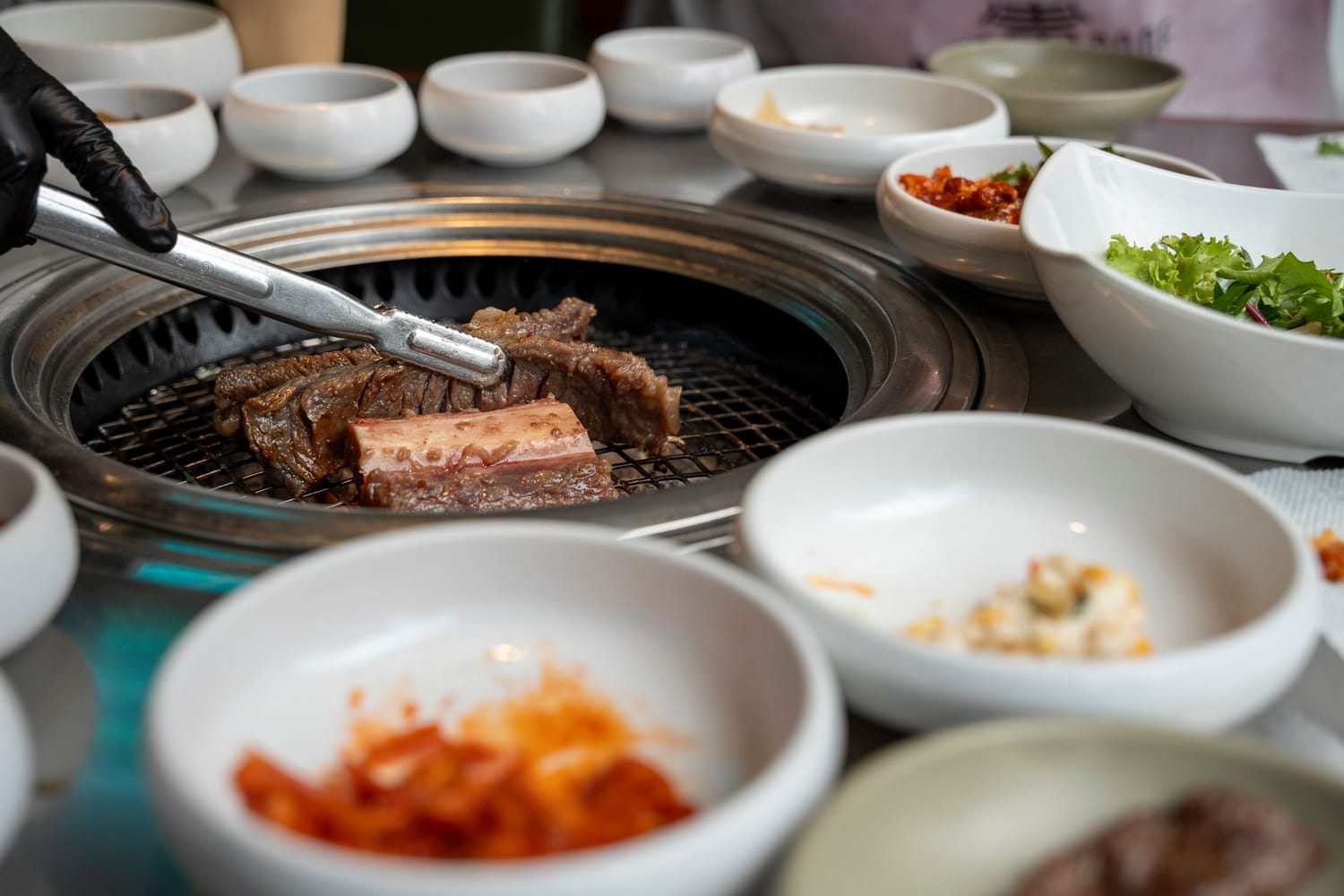
Korean Kitchen Scissors: Why Koreans Cut Meat and Noodles at the Table, and Why It Is Not an Office Scissor
Scissors on a restaurant table look wrong to most of the world and normal to every Korean. The tool is not a desk scissor: thick blades, one serrated edge, big rings, often detachable, built for galbi and cold noodles. Where it came from, and which one to buy.
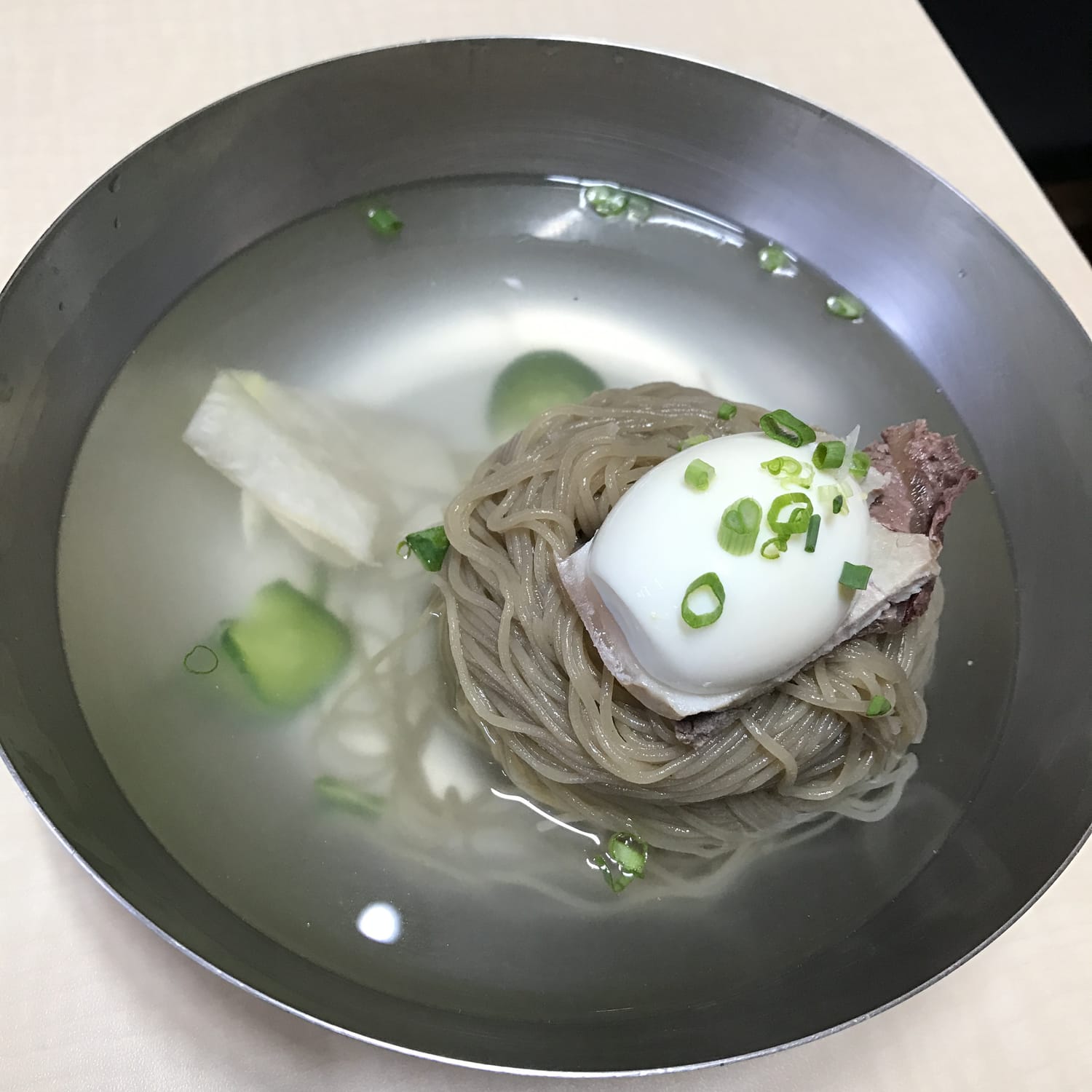
The One Korean Food Foreigners Never Learn to Love: Hamheung Naengmyeon, and Why Koreans Can't See the Problem
Foreigners who eat cheonggukjang and even hongeo still will not pay for this twice. A Korean creator who fed foreigners for years says naengmyeon was the overwhelming number one refusal, and Koreans, who rank it first every summer, cannot see why.
Postick: The Korean Snack That Used to Come With a Ketchup Packet
Postick (포스틱) has been on Korean shelves since 1980, it is only 23% potato, and it shipped with a ketchup sachet until the sachet got too expensive. What it costs now, and the ramyun-powder trick Koreans use on it.