
What Is Deli Manjoo? Korea's Subway Custard Snack
The closest thing that ships: Korean custard cake (카스타드), 12-pack — on AmazonAffiliate link. As an Amazon Associate, EpicKor earns from qualifying purchases at no extra cost to you.
What is Deli Manjoo — or Delimanjoo, which is how the brand itself writes it?
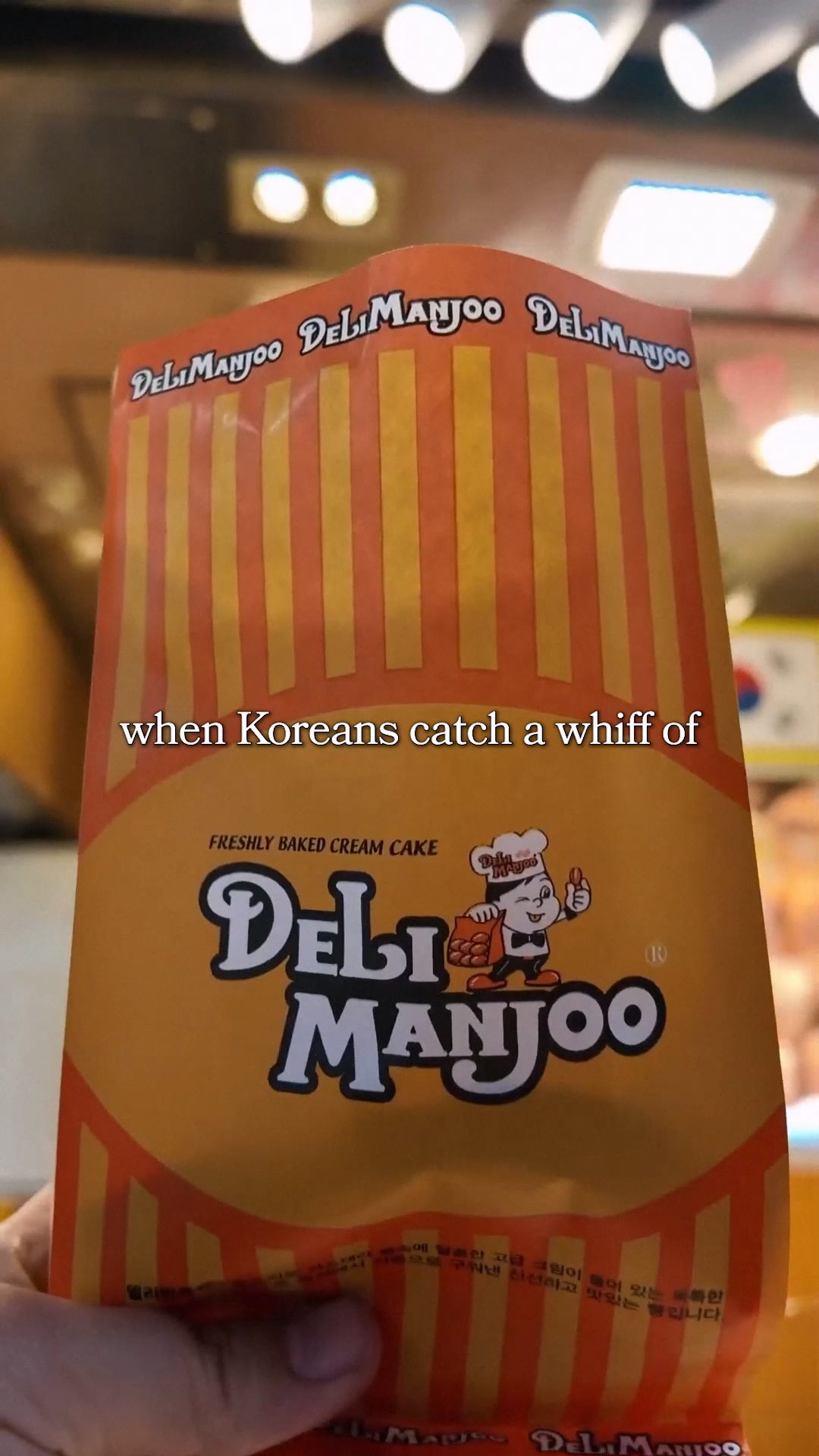
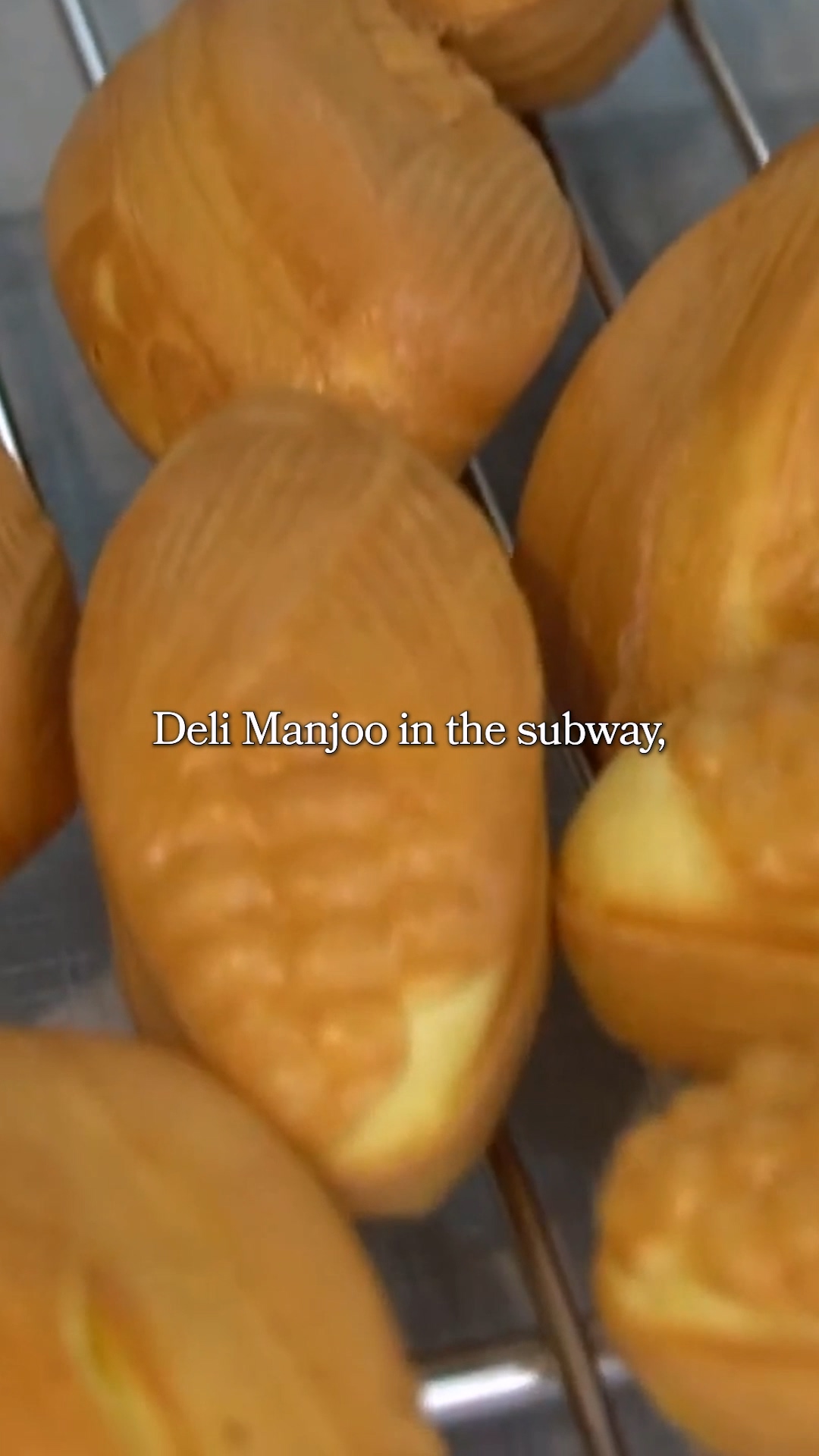
Simply put, Deli Manjoo is a warm Korean snack shaped like a tiny ear of corn and filled with sweet custard cream. You often find it in subway stations, near bus terminals, or in places where commuters are moving fast and suddenly get ambushed by the smell of hot vanilla cake.
That smell is the whole story.
Before you see the yellow stall, before you read the sign, before you decide whether you are hungry, Deli Manjoo reaches you through the air. It smells like custard, sponge cake, sugar, and a childhood snack memory you may not even have. That is why it has become one of Korea's most recognizable commuter snacks.
It is small. It is simple. It is not trying to be fancy.
But if you have walked through Myeongdong Station or a busy Seoul subway corridor and suddenly wanted something sweet, you understand why people search for it.
What Does Deli Manjoo Taste Like?
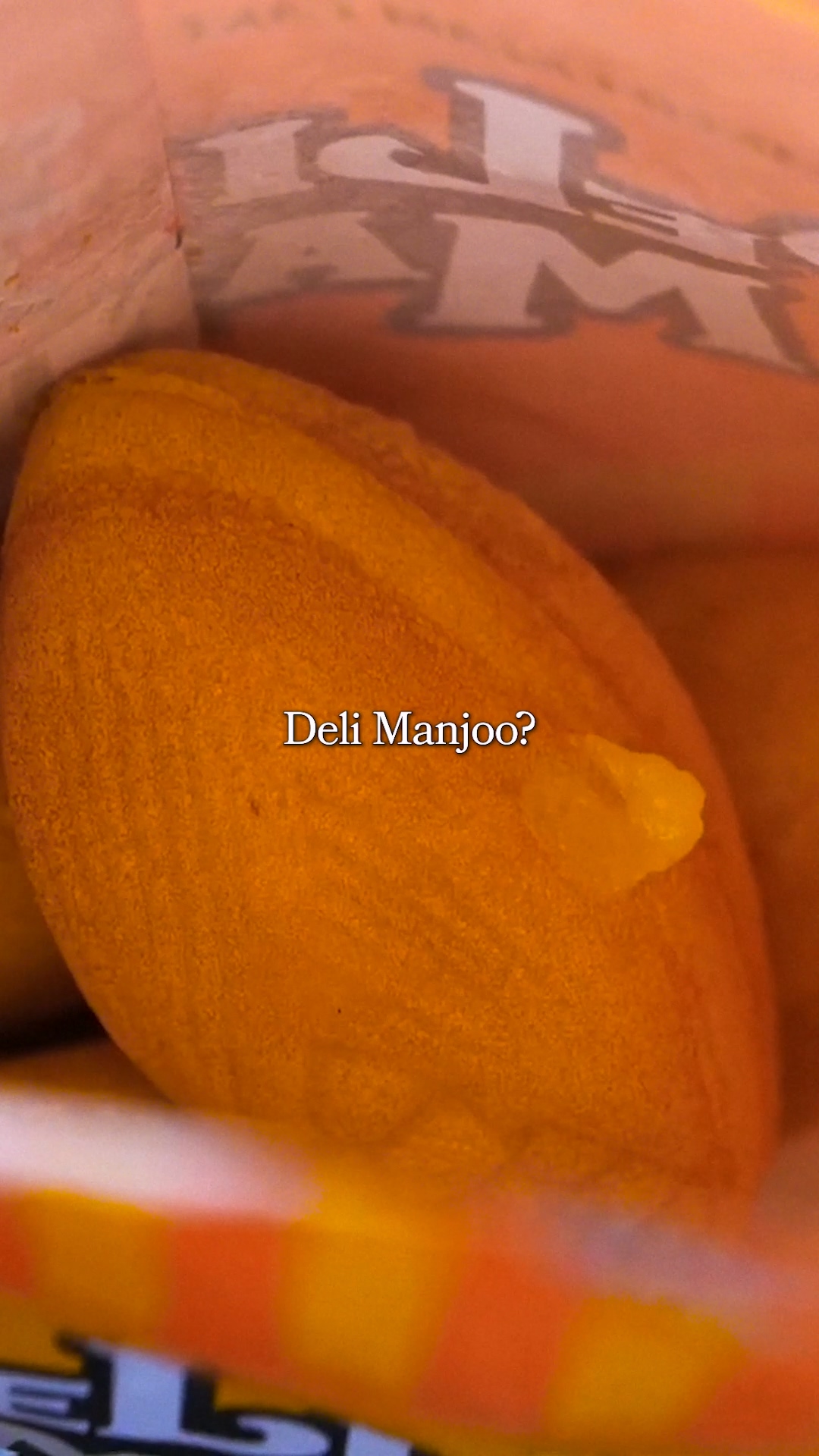
Deli Manjoo tastes like soft sponge cake wrapped around warm custard.
The outside is not crispy like a cookie or flaky like a pastry. It is closer to a soft cake shell: tender, lightly sweet, and shaped in a corn mold. The inside is the main pleasure: creamy custard that feels warmer and sweeter because you usually eat it right after baking.
The best version has three things working together:
- a thin cake shell
- enough custard to feel generous
- a fresh, hot center that makes you slow down
It is not a complicated dessert. That is part of its charm. It is the kind of snack you can eat while walking, standing near a subway exit, or waiting for a friend who is late.
For visitors, Deli Manjoo can feel like a Korean street-food cousin of taiyaki, imagawayaki, or small custard cakes. The difference is the corn shape, the subway setting, and the very specific smell that makes it almost impossible to ignore.
Why Is It Called Deli Manjoo?
The name is usually written as Deli Manjoo or Delimanjoo in English, and 델리만쥬 in Korean.
"Deli" suggests delicious or deli-style convenience, while "manjoo" refers to a small filled pastry or cake. It is not mandu, the Korean dumpling, even though the words can sound a little similar to newcomers.
This matters because many travelers search "what is manjoo" after seeing the word at a station. Manjoo is generally a sweet filled snack, not a savory dumpling. Deli Manjoo's version became famous because it is baked in small corn-shaped molds and sold hot.
That corn shape is not only cute. It makes the snack instantly recognizable. Even if you do not know the Korean name, you may remember it as "that little corn-shaped custard snack in the subway."
That is good branding.

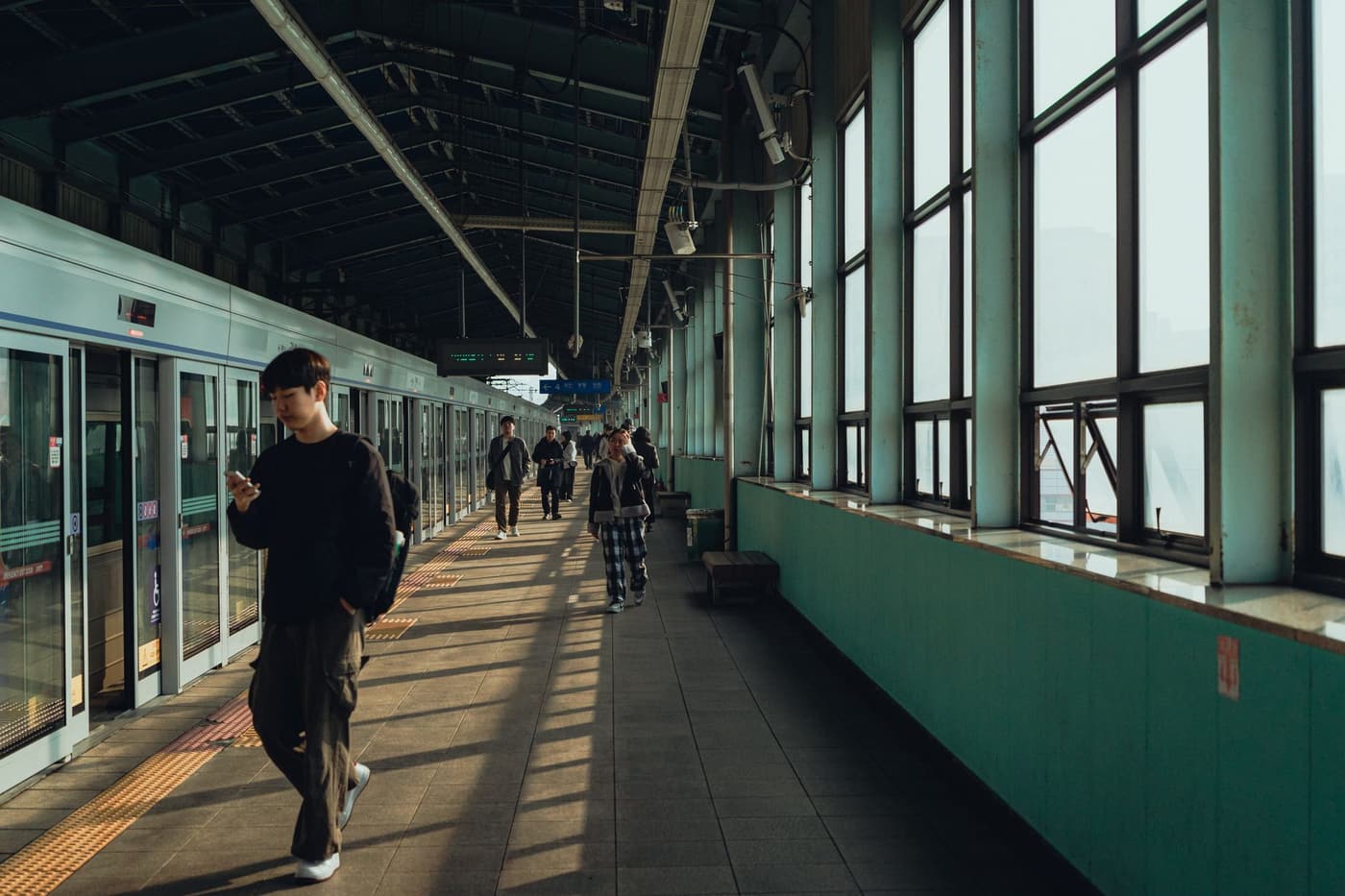
A Seoul metro station. Enclosed, warm, and full of moving air — which is exactly why one small machine can scent an entire concourse. Photo by Theodore Nguyen, Pexels.
Why Deli Manjoo Smells So Strong in Subway Stations
Deli Manjoo is famous because of smell more than sight.
Fresh batter and custard are heated in small molds, and the scent spreads quickly through enclosed station corridors. Subway stations are perfect for this kind of snack because people are already walking, waiting, transferring, and slightly hungry.
The smell works because it is:
- warm
- sweet
- familiar
- easy to recognize
- stronger than most visual advertising
You may not be planning to buy anything. Then the scent reaches you, and suddenly your plan changes.
That is why Deli Manjoo feels like accidental sensory marketing. A poster asks for your attention. Deli Manjoo does not ask. It just fills the corridor.
In a city built around speed, that smell creates a tiny pause.
Why Koreans Associate Deli Manjoo With Commuting
Deli Manjoo belongs to movement.
It is not usually a sit-down cafe dessert. It is not a formal bakery purchase. It is a snack for people between places: between work and home, subway and street, school and academy, shopping and the next appointment.
That is why it fits Korea's commuter culture so well.
Seoul's subway system is efficient, crowded, and full of small temptations. Convenience stores, bakeries, fish-shaped bread stalls, coffee stands, and snack shops all compete for the tired commuter's attention. Deli Manjoo wins by smell.
For some Koreans, it is nostalgic. It brings back childhood memories, weekend trips, school commutes, or the feeling of asking a parent to buy a small bag before getting on the train. For office workers, it can be a small reward after a long day.
The snack is cheap enough to be casual and warm enough to feel comforting.
That combination is powerful.
The Myeongdong Station Connection
The most famous Deli Manjoo location is connected with Myeongdong Station in Seoul.
This is not just the most famous branch — it is the first one. The original Deli Manjoo store opened inside Myeongdong Station on Line 4 in 1998, and everything else grew out of it. That location matters because Myeongdong is already a district of shopping, tourists, cosmetics, street food, and constant foot traffic.
In that setting, Deli Manjoo makes perfect sense.
It is fast. It is portable. It smells good from a distance. It gives tourists an easy Korean snack experience without needing to sit down, order in complicated Korean, or commit to a full meal.
If you are visiting Seoul and want to try it, Myeongdong Station is the obvious place to start. But you may also find Deli Manjoo-style snacks near other transit areas, highway rest stops, or busy commercial spaces.
Since you will be surfacing into the district anyway, EpicKor's Myeongdong street food and K-beauty guide has the current price ladder up on the street — useful context for why the station snack stays cheap.
The setting is part of the flavor.
Orion custard cake (카스타드), 12-pack — the sponge-and-custard combination Deli Manjoo is chasing, in a box that travels. Deli Manjoo is best hot from a kiosk and does not survive a suitcase; this is the same flavour, softer and colder, no corn shape. We compare the two Korean brands in our custard cake guide. As an Amazon Associate, EpicKor earns from qualifying purchases at no extra cost to you.
See the custard cake on AmazonHow to Eat Deli Manjoo
Eat it warm if you can.
That is the easiest rule. The custard is softest when fresh, and the cake shell feels more fragrant while still hot. Many shops sell it in small, medium, or larger bags, so you can buy a few pieces for yourself or share with friends.
Be careful with the first bite. Fresh custard can be hotter than you expect.
Here is the simple tourist guide:
| Question | Simple answer |
|---|---|
| Best time to eat it | Right after it is baked, while the custard is warm |
| Best place to try it | Myeongdong Station is the classic tourist-friendly choice |
| What it tastes like | Soft cake plus sweet custard cream |
| What to watch for | The filling can be very hot when fresh |
Some fans also like it after cooling down or even frozen, but for a first try, warm is the classic version.
The closest relative is seasonal rather than year-round: bungeoppang (붕어빵), the fish-shaped winter cart pastry, runs the same hot-iron-mould logic and splits its fans between red bean and the identical 슈크림 custard filling. For another Korean snack culture guide, see EpicKor's article on Korean snacks and texture culture. If the old-but-new dessert angle interests you, the yakgwa guide explains how a traditional honey cookie became a modern Gen Z cafe and convenience-store trend. For a more everyday morning version of this grab-and-go logic, read the guide to Korean convenience store breakfast. If you want to recreate the snack break at home rather than chase the station kiosk, pair it with the Korean instant coffee mix guide, the Korean tea and grain drinks guide, or the broader Korean pantry starter kit.
Bellemain 12-cavity madeleine pan — for the people who searched "deli manjoo recipe". No home pan makes the little corn shape; that mould is commercial. Home bakers use a madeleine pan: fill each well halfway, drop in a teaspoon of custard, cover, bake. The station smell is mostly vanilla and butter, and that part transfers. As an Amazon Associate, EpicKor earns from qualifying purchases at no extra cost to you.
See the madeleine pan on AmazonWhy Deli Manjoo Feels So Korean
Deli Manjoo feels Korean because it solves a very Korean problem: how do you add a small moment of pleasure to a fast day?
Korea has many snacks like this. They are not always luxurious, but they are perfectly timed. A convenience store triangle gimbap before class. A hotteok in winter. A walnut cake at a rest stop. An iced Americano after lunch. Deli Manjoo belongs to that family of small, practical comforts.
It also fits the Korean love of sensory contrast.
The station is busy, gray, and functional. The snack is warm, yellow, sweet, and soft. That contrast makes the smell stronger emotionally. It is not just food. It is a tiny interruption in the commute.
That is why people remember it.
What It Costs, and What to Ask For
Deli Manjoo is sold by size rather than by piece, and prices are set per store, so this is a range rather than a fixed tariff. The sizing you will see on the board is 소 / 중 / 대 / 특대 — small, medium, large, extra-large.
| Size on the board | Roughly | Good for |
|---|---|---|
| 소 (small) | around ₩3,000 | one person, a taste |
| 중 (medium) | around ₩5,000 | one hungry person or two sharing |
| 대 (large) | around ₩8,000 | a group, or taking some back |
| 특대 (extra-large) | around ₩10,000 | sharing properly |
Some stalls price in flat ₩2,000 / ₩3,000 / ₩5,000 increments instead of named sizes. Either way, ₩3,000–5,000 is the normal entry point, which puts it below a single café coffee almost anywhere in Seoul. Prices checked July 2026; individual franchise stores set their own, so treat these as the range to expect rather than a quote.
You do not need Korean to order. Point at the size, pay, take the bag. If you want to say it, the brand is 델리만쥬 (delli-manjyu).
The Company Behind It, and Why Stations
One detail that rarely makes it into English write-ups: Deli Manjoo is a franchise brand, not a generic street snack. It belongs to a Korean food company called 델리스 (Delis), and the first store opened in 1998 inside Myeongdong Station on Line 4.
From there it expanded to roughly 90 franchise locations concentrated in subway stations through the early 2000s. That is why the snack feels inseparable from the metro — it was not a coincidence of street vending, it was a deliberate station-based franchise strategy. The smell you notice on the stairs is a business model.
It also explains the inconsistency travelers notice. Because these are independently operated franchise stores rather than one company-run chain, the exact price, size naming, and even how fresh the batch is will vary from station to station.
How to Find and Order It as a Visitor
For travelers, Deli Manjoo is one of the easiest Korean snacks to try because it does not require much language confidence. You usually point to the size you want, pay, and receive a bag of warm pieces. The smell will probably guide you before the map does.
If you are in Myeongdong, look around the station and underground shopping area first. If you are elsewhere in Seoul, check busy transfer stations, transit corridors, department-store food areas, rest stops, or snack stalls near heavy foot traffic. Deli Manjoo is not as universal as convenience-store triangle gimbap, so do not panic if every station does not have it. It is more of a "when you find it, try it" snack.
The ordering style is simple:
- choose a small bag if you only want a taste
- choose a larger bag if you are sharing
- eat the first pieces slowly because the custard can be hot
- keep the bag slightly open if you are walking, so steam does not make the cake soggy too quickly
It also travels better than many street foods. Tteokbokki can spill, hotteok can leak syrup, and fried snacks can get oily. Deli Manjoo is tidy enough to carry onto a walk, though you should still be considerate on crowded trains. Korea's subway etiquette is quiet and clean, so it is better to eat near the stall or outside the gate rather than making a full snack session inside a packed car.
That tiny etiquette detail is part of the experience too. Deli Manjoo is a commuter snack, but the best moment to eat it is usually before the ride, not during it.
When to skip it
Being honest about this makes the recommendation worth more. Deli Manjoo is best within a few minutes of coming off the griddle, and it declines fast. Warm, the shell is soft and the custard is loose. Twenty minutes later in a closed bag it goes dense and slightly damp, and the smell that sold it to you is gone.
So: buy it when you can see it being made and you intend to eat it standing there or shortly after. Do not buy a large bag as a souvenir to bring home — it will not be the same snack by the time anyone else tries it. If you want something to actually carry back, the supermarket sells shelf-stable 만쥬-style packaged cakes that are a different, drier product but survive the trip.
And if the stall you find has a tray of pieces sitting out rather than a griddle running, it is worth walking on. The whole point of this snack is that it is hot.
FAQ About Deli Manjoo
Q: What is Deli Manjoo?
Simply put, Deli Manjoo is a Korean corn-shaped snack filled with sweet custard cream. It is often sold warm in subway stations and busy transit areas.
Q: Is Deli Manjoo the same as mandu?
Simply put, no. Mandu is a Korean dumpling, usually savory. Deli Manjoo is a sweet cake-like snack with custard filling.
Q: Where can I try Deli Manjoo in Seoul?
Simply put, Myeongdong Station is the most famous place to try it. You may also find it in other stations, transit areas, and commercial spots.
Q: Why does Deli Manjoo smell so strong?
Simply put, it is baked fresh with sweet batter and custard, and the warm scent spreads easily through enclosed subway corridors.
Q: What does Deli Manjoo taste like?
Simply put, it tastes like a soft mini cake filled with warm vanilla-like custard. The best version is fresh, sweet, and slightly nostalgic.
The Easiest Way to Understand It
Deli Manjoo is not famous because it is the most complex dessert in Korea.
It is famous because it appears at exactly the right moment.
You are walking through a station. You are tired, late, hungry, or just bored. Then a sweet smell cuts through the underground air. A small bag of warm custard cakes suddenly feels like a perfectly reasonable decision.
That is Deli Manjoo's real power.
It turns a commute into a snack break.
Video Insight: The Deli Manjoo Scent
Sources and further reading:
- 델리만쥬 (Korean Wikipedia) — the Delis company, the 1998 Myeongdong Station first store, and the subway franchise expansion
- 델리만쥬 official site
- EpicKor Korean subway snacks guide
- EpicKor Korean convenience store breakfast guide
You Might Also Like

Isaac Toast Sauce: Korea's Famous Sweet Breakfast
Isaac Toast will not sell its signature kiwi sauce inside Korea — it exports it instead, so a bottled version cannot undercut its own franchisees. Here is where the sauce actually exists, what the toast costs in 2026, and what to order first.
Korean Seollal Guide: Age, Customs and Travel
Plan Korean Lunar New Year with accurate age rules, tteokguk, sebae, diverse family customs, holiday closures, and transport advice.
Korean Drinking Culture: Hoesik, Choice and Safety
Korean hoesik, drinking rounds, and refusing politely — plus the number visitors get wrong: Korea prosecutes from 0.03% blood alcohol, roughly one drink, less than half the US and UK limit. Night buses, last trains and 대리운전 costs included.