Lookism in Korea: Resume Photos, Surgery Numbers and Beauty Standards
Last updated: October 2026. Survey figures are from Gallup Korea's own report on appearance and cosmetic surgery (fieldwork February 2020, the latest in a series that began in 1994). Hiring rules are from the Fair Hiring Procedure Act as amended in July 2019. Foreign-patient figures are the Ministry of Health and Welfare's 2025 results, released in April 2026.
Here's what nobody tells you about lookism in Korea: since July 2019 it has been illegal for a Korean company with 30 or more employees to ask a job applicant for their height, weight or appearance — and the same law still lets the company ask for a photo. That one contradiction sums the subject up. Koreans have a word for the problem, oemo jisang juui (외모지상주의, literally "appearance-first-ism"), they argue about it in the news and in schools, they legislate against it — and the beauty economy keeps growing anyway.
This guide covers what the word means, the numbers behind it from Korean polls and government data, where it shows up, the pushback, and what a visitor actually runs into — a companion to our guide to ahjussi and Korean address terms.
An English book on exactly this topic: Elise Hu's Flawless, reported from SeoulAffiliate link. As an Amazon Associate, EpicKor earns from qualifying purchases at no extra cost to you.
Quick Guide: What You'll Actually Encounter
| What you'll see or hear | What it means | How to handle it |
|---|---|---|
| "You look tired" / "You've lost weight!" | Small talk and concern, not a verdict | Treat it like "how are you?" — a light answer is fine |
| Clinic ads in subway passages | Clinics advertise openly; 87.2% of Korea's foreign patients in 2025 were treated in Seoul | Ignore them, or read our price guides before booking anything |
| Mirrors everywhere — lifts, stations, restrooms | Quick grooming in public is normal | Use them; nobody will look twice |
| A job ad asking for a photo (증명사진) | Legal for an ID photo; asking for height, weight or looks is not (unless the job needs it) | Check the format; public-sector and "blind" postings say so |
| Short hair, bare faces, "탈코르셋" posts | Escape the Corset, the pushback movement | Don't assume it's a style choice only — it's often a statement |
| A clinic offering you a "foreigner VAT refund" | That refund on cosmetic procedures ended 31 December 2025 | Ask for the price including VAT |
What "Lookism" Means in Korea
Oemo jisang juui (외모지상주의) is usually translated as lookism: judging or ranking people primarily by physical appearance. The English word exists too, but the Korean term carries more weight because it's everyday vocabulary, not academic jargon. Korean media uses it in headlines. Students write essays about it. One of the most popular webtoons of the last decade is literally titled Lookism (외모지상주의) — a body-swap story about a bullied student who wakes up in a handsome body and discovers how differently the world treats him.
What makes the Korean conversation distinctive isn't that appearance matters — it matters everywhere. It's the directness. Appearance is treated as something close to a qualification, openly discussed and historically attached to gatekeeping moments like job applications. Comments on your looks from family and coworkers ("Your face looks tired," "Did you gain weight?") are common, and often meant as care rather than cruelty — which is what makes the topic complicated.
True Beauty, Vol. 1 — the webtoon about hiding a bare face behind makeup If Lookism is the male side of this story, Yaongyi's True Beauty (여신강림) is the other hit webtoon built on the same pressure, now in print. As an Amazon Associate, EpicKor earns from qualifying purchases at no extra cost to you.
See True Beauty Vol. 1 on AmazonThe Numbers: What Koreans Say in Gallup's Polls
Most English articles on this topic repeat one line: Korea has the world's highest rate of cosmetic surgery per person. That ranking rests on older estimates from the International Society of Aesthetic Plastic Surgery (ISAPS) — Korean health media were still quoting a figure of 8.9 procedures per 1,000 people in 2024, taken from a US investment site's re-ranking of ISAPS data — and there is no recent official per-capita count behind it. The better evidence is Korean, and it comes from Gallup Korea (한국갤럽), which has asked the same questions about appearance in 1994, 2004, 2015 and 2020.
The latest round interviewed 1,500 adults face to face between 7 and 20 February 2020. The results:
| Question | 2020 answer | Trend |
|---|---|---|
| Appearance is important in life (외모가 중요하다) | 89% (men 88%, women 91%) | "Very important" fell from 42% in 1994 to 19.8% |
| I pay attention to my appearance | 61% overall; 89% of women in their 20s; 49% of men | 56% in 1994 |
| Surgery for a job or marriage is acceptable (할 수도 있다) | 67% (women 73%, men 59%) | Highest among women in their 30s and 40s, 80% |
| Have had cosmetic surgery | Women 18%, men 2% | Women: 4% in 1994, 14% in 2015 |
| Women in their 20s who have had surgery | 25% | 5% in 1994, 31% in 2015 — the first fall in the series |
| Women in their 30s who have had surgery | 31% | 16% in 2015 |
Two things stand out. First, Koreans are near-unanimous that appearance matters, but the share calling it very important has more than halved since 1994 — the pressure is widespread but less absolute than the stereotype. Second, the 20s-to-30s shift: in 2015 the women most likely to have had surgery were in their 20s; in 2020 it was women in their 30s. Among people who had never had surgery but had considered it, the eyes came first (51%), then the nose (29%).
A caveat on dates: Gallup Korea has not repeated this survey since 2020, so these are the most recent comparable figures, not this year's.
The Resume Photo: Where Lookism Meets the Job Market
The clearest institutional example is the resume photo. For decades, standard Korean resumes included a formal ID-style photo (증명사진, jeungmyeong sajin), and photo studios near universities still do brisk business shooting them, usually with retouching included. The Korea JoongAng Daily has covered why the custom exists and why it's contested: employers defend it as convention and identification, while critics point out that a photo tells you nothing about whether someone can do the job.
The pushback came in two steps:
| Rule | Who it covers | What it removes | What it still allows |
|---|---|---|---|
| Blind hiring (블라인드 채용), July 2017 | Public institutions — 332 of them, plus 149 local public enterprises, in the first year | Photo, hometown, family details, physical traits on the application | Job-related skills and certificates |
| Fair Hiring Procedure Act (채용절차법) Article 4-3, from 17 July 2019 | Any workplace that ordinarily employs 30 or more workers (government hiring of civil servants is excluded) | Asking for appearance, height or weight (용모·키·체중), hometown, marital status, assets, or parents' and siblings' jobs and education | An ID photo "to confirm identity"; physical details where the job genuinely needs them |
As of October 2026, the fine for an employer who demands those details is ₩3,000,000 for a first offence, ₩4,000,000 for a second and ₩5,000,000 from the third (up to ₩5,000,000 under the Act). Removing photos from private-sector applications altogether has been debated and proposed, but it has not become law: the Act still says nothing about photos, and the ministry's guidance allows one for identification.
If you're job-hunting in Korea as a foreigner, the practical takeaway is to check each employer's format rather than assuming. Public-sector and blind-hiring postings will say so; many private postings still ask for a photo, and they're allowed to. What they're not allowed to ask a 30-plus-employee company's applicant for is your height, weight or a judgement of your looks, unless the job itself requires it (modelling, security work, some sports roles).
The Beauty Economy: Why the Pressure Has an Industry Behind It
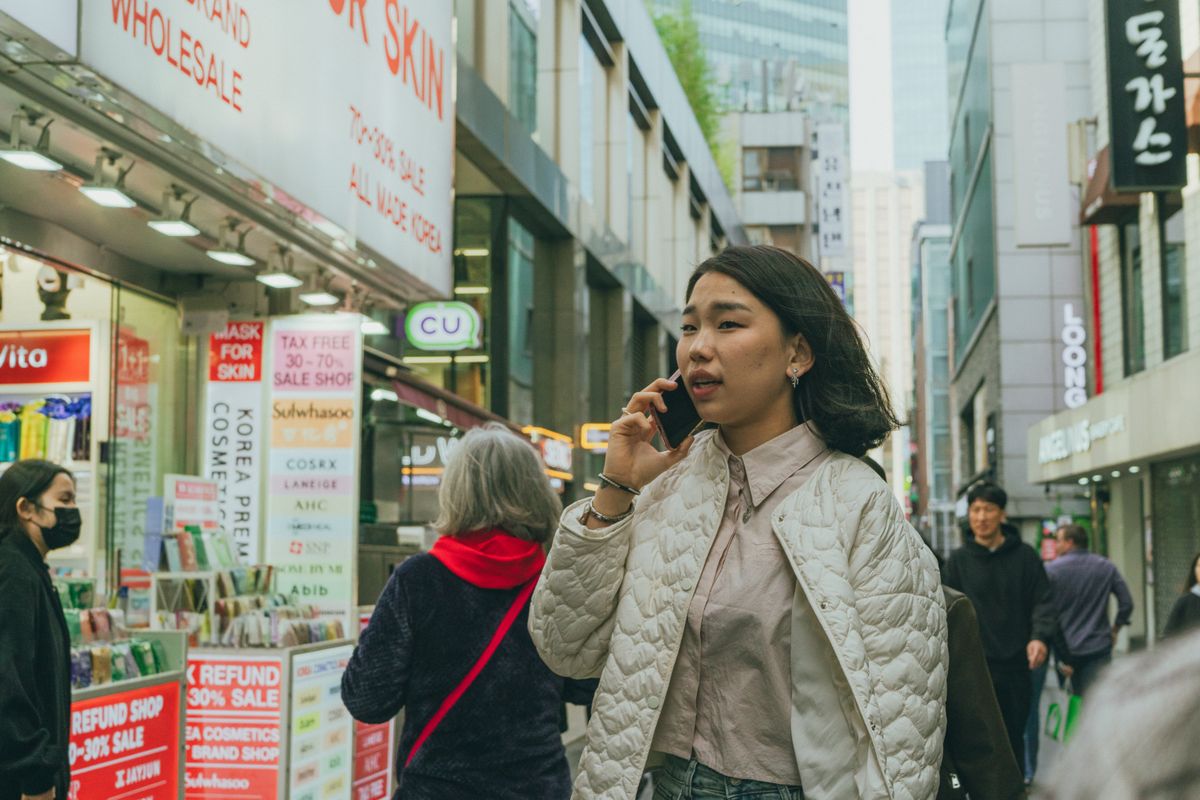
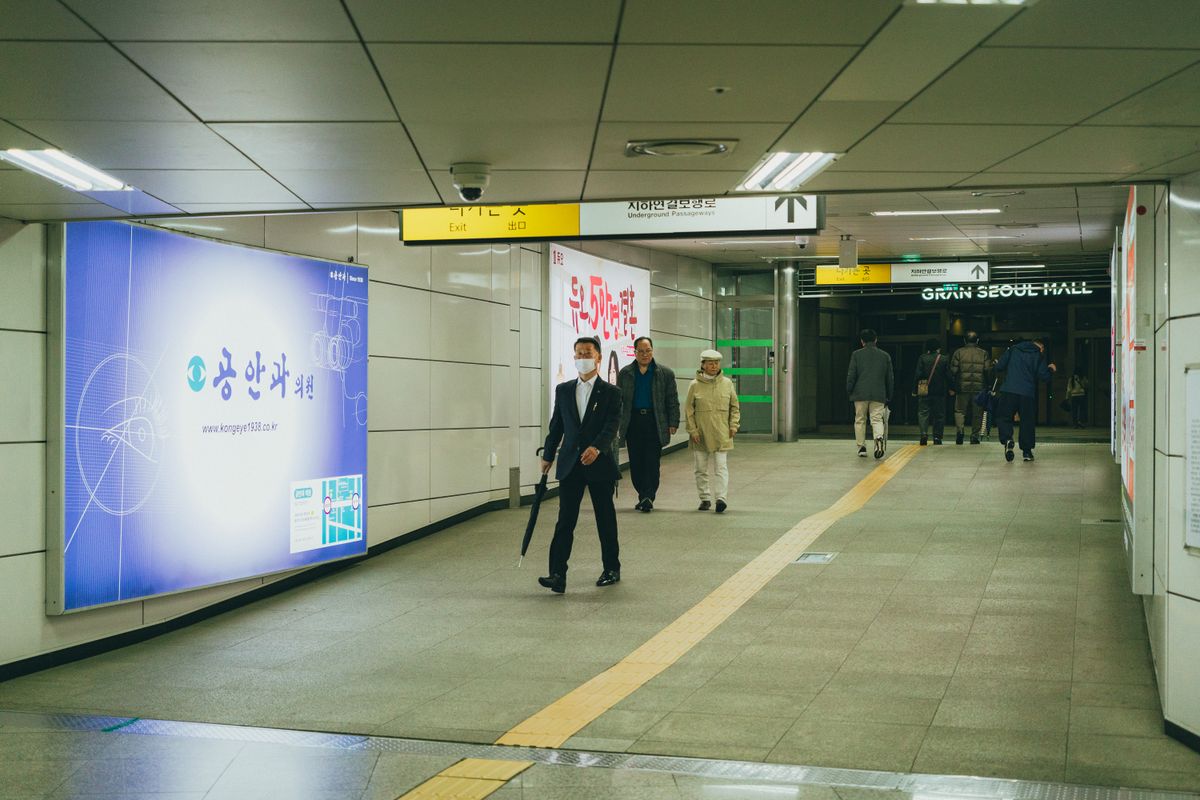
Lookism in Korea can't be separated from the scale of the beauty and clinic economy around it. Clinics cluster around Gangnam in Seoul — we walk through that district and its history in our Gangnam plastic surgery district guide — and subway ads, "before and after" campaigns, and skincare marketing are part of the visual landscape.
The newest numbers come from foreign patients, not Koreans. According to the Ministry of Health and Welfare (보건복지부), 2.01 million foreign patients were treated in Korea in 2025, up from 1.17 million in 2024 and about 610,000 in 2023 — the first time the figure passed two million since records began in 2009. In the ministry's count by specialty, dermatology (피부과) accounted for 62.9% (about 1.31 million) and plastic surgery (성형외과) for 11.2% (about 233,000). A patient can be counted under more than one specialty, so treat these as shares of specialty visits rather than of people — but either way, roughly three in four were for skin or surgery. 87.2% were treated in Seoul.
What does it cost? Here the official data has a gap that matters. The Health Insurance Review and Assessment Service (건강보험심사평가원, HIRA) publishes every clinic's reported price for 753 non-covered items, but it is built around medical items; the ministry said in 2021 that cosmetic items in it were limited to a few, such as hair transplants. We could not find a government median for double-eyelid surgery (쌍꺼풀 수술), so any "average price" you read for it comes from clinics or booking sites. Where HIRA does have a line, the numbers are useful: as of October 2026 its 2026 release puts LASIK at a national median of ₩2,500,000 for both eyes — the procedure behind the eye-clinic ad in the photo above (our LASIK cost guide shows how to check any clinic). One more thing visitors should know: the 10% VAT refund foreign patients could claim on cosmetic procedures ended on 31 December 2025.
Journalist Elise Hu, who covered Seoul for NPR and wrote Flawless, describes Korean lookism as unusually explicit: a huge beauty industry, direct appearance feedback, and a job market that asked for your face on page one reinforce each other. None of that is a critique of K-beauty products themselves (our K-beauty ingredients guide covers why they earn their reputation); it's about what happens when appearance becomes a gate to jobs and respect.
You might like: LASIK Cost in Korea (2026): ₩2.5 Million for Both Eyes, by the Government's Own Price Data
Beyond the Job Market: School, Screens, and Everyday Talk
School is where most Koreans first meet appearance as a rule system. Uniform and grooming codes — hair length, makeup bans, sock colours — have been argued over for years. Student-rights ordinances (학생인권조례), first passed in Gyeonggi Province in 2010, limit how far schools can police appearance in the regions that adopted them, and the ordinances themselves are now a political fight. In 2024 the councils of South Chungcheong and Seoul voted to abolish theirs; both education offices took the votes to the Supreme Court, which suspended the abolitions, so both ordinances remain in force while the cases are pending (no ruling as of October 2026). In Seoul a second abolition bill was voted down on 25 August 2026.
Media both amplifies and critiques the standard. The drama My ID is Gangnam Beauty follows a student who has surgery before university and finds the "Gangnam beauty" label is its own stigma — a mainstream hit, which tells you how self-aware the conversation is.
Everyday talk is the layer visitors feel first. Weight, skin and style comments circulate freely among family and friends, and "pretty" and "handsome" (예쁘다 / 잘생겼다) get said out loud more readily than in most Western settings. Younger Koreans increasingly call appearance comments rude, and workplaces have grown more careful, but the baseline is still franker than most English-speaking visitors expect.
Escape the Corset: The Pushback
The most visible resistance arrived in the late 2010s with Escape the Corset (탈코르셋, tal-koreuset) — a movement in which Korean women cut their hair short, destroyed their makeup on camera, and rejected the daily beauty labour expected of them. The BBC and CNN both covered it: the "corset" isn't clothing but the invisible expectation that a woman's baseline for leaving the house includes makeup, styled hair, and constant self-monitoring.
A 2024 peer-reviewed paper on the movement and women's agency in Women's Studies International Forum takes its title from the way it felt: "I feel free and comfortable." The movement remains a minority position and drew real backlash, but bare-faced selfies, short haircuts, and open criticism of appearance comments are all more normal in Korea than a decade ago.
Even the entertainment industry — the biggest amplifier of Korean beauty ideals, from idol visuals to the "Wonyoungism" phenomenon — now produces stars who question those ideals in public.
What Visitors Actually Notice (and What to Do With It)
For a traveller, Korean lookism mostly surfaces in small, navigable ways:
- Appearance small talk. "You look tired today" or "You've lost weight!" is common social currency, including toward foreigners. It's rarely a judgement; treat it as a greeting.
- Mirror density. Lifts, subway stations, restrooms — Korea is generously mirrored, and fixing your hair in public is completely normal.
- The compliment economy. Koreans compliment appearance readily and specifically. Enjoy it; return it if it feels natural; don't overread it.
- Marketing exposure. Clinic advertising is everywhere and franker than Western equivalents about promising transformation.
- Zero pressure on tourists. Nobody expects visitors to meet Korean grooming standards. The pressure in this guide is something Koreans apply to themselves and each other, not to you.
When not to act on the pressure. If the ads make you think about a procedure while you're here, don't book from a street poster or a commission-paid agent. Korean clinics have to post their non-covered prices, and any clinic that solicits foreign patients must be registered with its city or provincial government — ask to see it. Budget the price including VAT now that the refund is gone. And for anything surgical, plan the recovery days you'd need before flying, not after.
If the topic comes up with Korean friends, it's not taboo; genuine questions ("Is the resume photo thing still common?") open better conversations than announcing conclusions.
ROUND LAB 1025 Dokdo Toner — one of the plain, famous K-beauty basics The easiest way to understand the product side of this story is a widely sold everyday toner, not a Gangnam consultation. Check the current price on the listing. As an Amazon Associate, EpicKor earns from qualifying purchases at no extra cost to you.
See Round Lab Dokdo Toner on AmazonFrequently Asked Questions
Q: What does "lookism" mean in Korea? Lookism — oemo jisang juui (외모지상주의) — means treating physical appearance as a primary measure of a person's worth. In Korea it's everyday vocabulary used in news, schools and conversation. In Gallup Korea's 2020 survey, 89% of adults said appearance is important in life.
Q: Do Korean resumes really require a photo? Many still ask for one, and that's legal. Since July 2017 public institutions use blind hiring with no photo, and since 17 July 2019 the Fair Hiring Procedure Act bars workplaces with 30 or more employees from asking for appearance, height or weight unless the job needs it — but an ID photo to confirm identity is still allowed.
Q: Is South Korea really the plastic surgery capital of the world? The per-capita ranking comes from older ISAPS estimates, and there's no recent official per-capita count. Korean data shows 18% of women and 2% of men had had cosmetic surgery in 2020 (Gallup Korea), and 11.2% of the 2.01 million foreign patients treated in Korea in 2025 came for plastic surgery, 62.9% for dermatology.
Q: What is the Escape the Corset movement? Escape the Corset (탈코르셋) is a Korean movement from the late 2010s in which women rejected expected beauty labour — cutting their hair short, giving up makeup, and challenging grooming norms. The BBC and CNN covered it and it has been studied in peer-reviewed research.
Q: Can foreigners still get a VAT refund on cosmetic procedures in Korea? No. The refund of the 10% VAT on cosmetic procedures for foreign patients ended on 31 December 2025. Ask any clinic for a price that includes VAT.
The Bottom Line
Lookism in Korea is real, named, measured and loudly contested from inside. The same society where 89% say appearance matters wrote a law that stops employers asking your weight and built a movement against beauty labour. That tension, not the stereotype of a beauty-obsessed monolith, is the accurate picture — the clinic ads in the subway are one half of an argument Korea is having with itself.
Sources
- Gallup Korea (한국갤럽), 외모와 성형수술에 관한 인식 (Appearance and cosmetic surgery), 1994/2004/2015/2020 — fieldwork 7–20 February 2020, 1,500 adults; full report PDF dated 9 April 2020.
- Newsis, 개정 채용절차법 17일 시행 (16 July 2019) — banned items, fines of ₩3/4/5 million, ID photo allowed.
- Fair Hiring Procedure Act (채용절차의 공정화에 관한 법률), Articles 3, 4-3 and 17, and the Enforcement Decree fine schedule (₩3/4/5 million), via the National Law Information Center (law.go.kr), current text checked October 2026.
- Kyunghyang Shinmun on the Seoul student-rights ordinance vote (25 August 2026) and South Chungcheong's pending case (18 June 2026).
- Ministry of Health and Welfare, 2025 foreign-patient results (April 2026), as reported by Korean press, 24 April 2026 — 2.01 million patients, specialty and Seoul shares.
- Health Insurance Review and Assessment Service (건강보험심사평가원), non-covered fee disclosure, 2026 release (753 items) — LASIK median; Medical Times, ministry on cosmetic items in the disclosure (September 2021).
- Kormedi, ISAPS-based per-capita figure as quoted in Korean media (2024).
- Why Korean Companies Ask Applicants for Photos (Korea JoongAng Daily)
- Why Women in South Korea Are Cutting "The Corset" (BBC News)
- How South Koreans Are Pushing Back Against Beauty Standards (CNN Style)
- "I Feel Free and Comfortable": The Escape the Corset Movement (Women's Studies International Forum)
You Might Also Like
Seoul Deleted Its Women-Only Parking: What Korean Gender Policy Actually Is in 2026
Most English writing on Korean gender policy describes rules that were removed, renamed, or never existed. Seoul scrapped women-only parking in 2023, the ministry was renamed in 2025, and the famous five-point exam bonus went to men and ended in 1999.
Kkondae (꼰대) Explained: Korea's Word for the Boss Who Knows Best
Kkondae (꼰대) explained: Korea's word for a condescending senior who won't listen — and why survey data shows it's about behavior, not age.
Jeong (정) Explained: The Korean Bond That Has No English Word
Jeong (정) explained: the untranslatable Korean bond of warmth and attachment, where you'll feel it as a visitor, and why it can turn sour too.