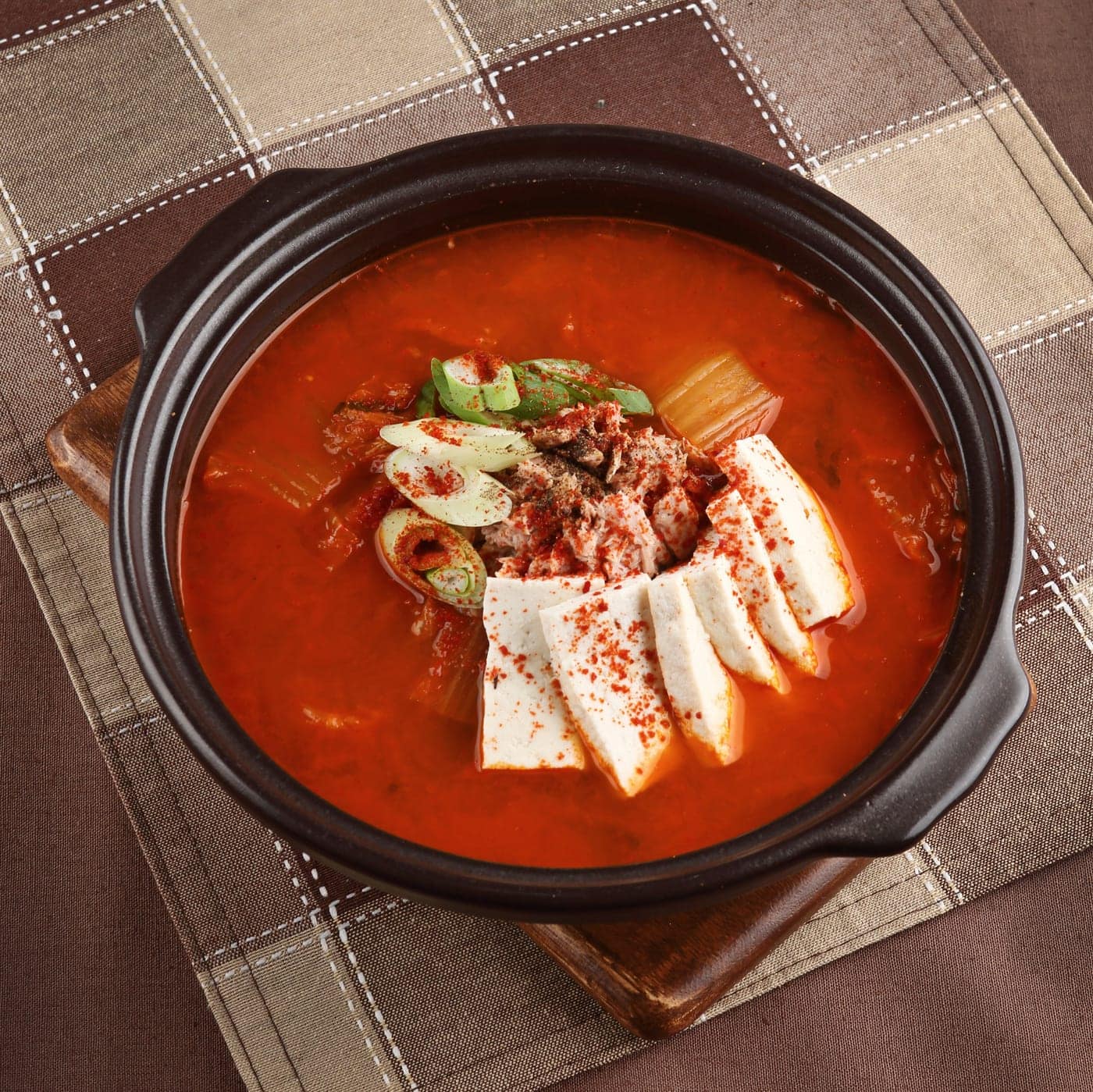
Korean Kimchi Jjigae at Home: You Want 묵은지, Not Just Old Kimchi
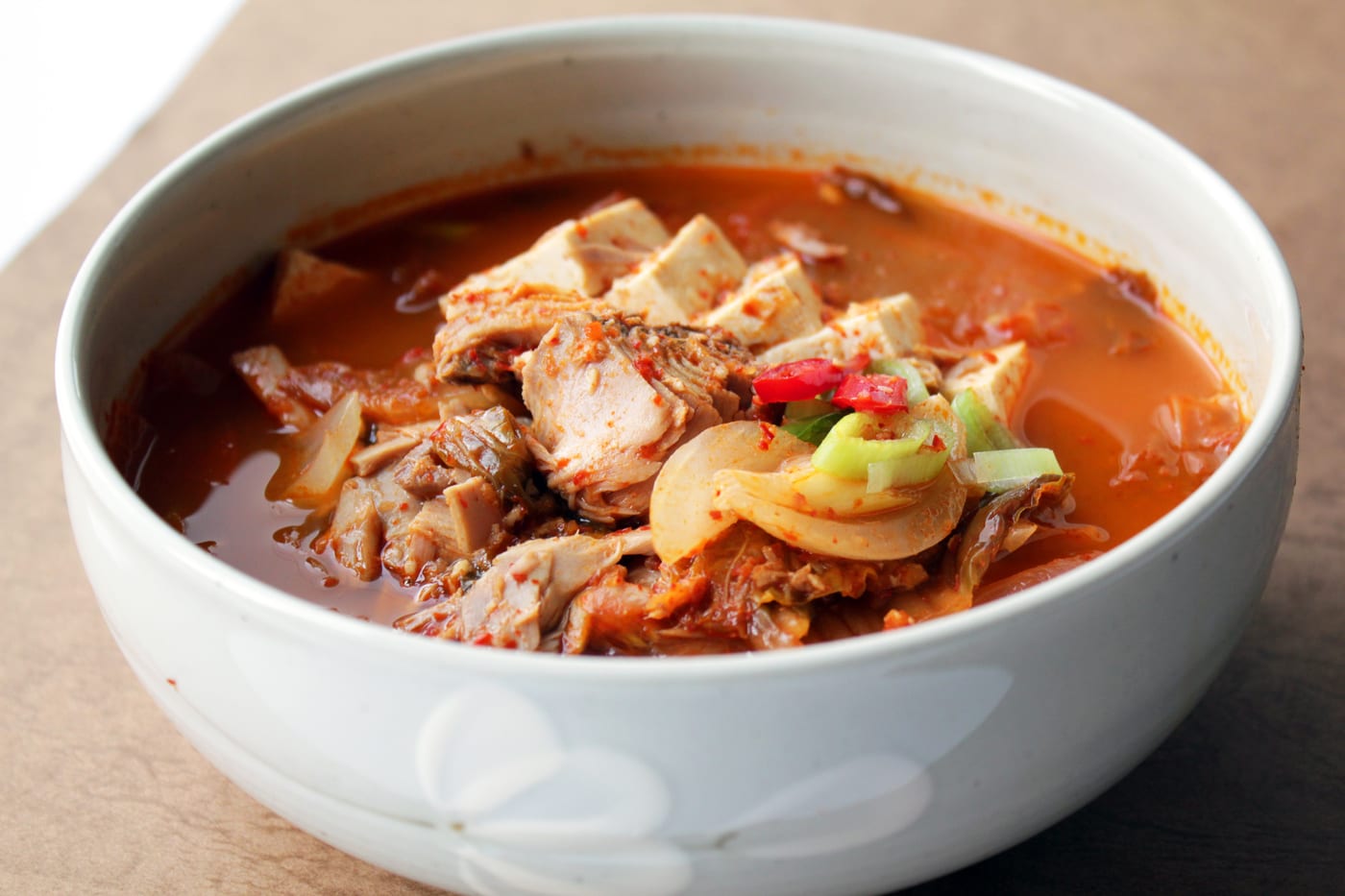
Every English recipe for kimchi jjigae tells you to use "old kimchi" or "sour kimchi," as though those are one thing that happens by accident when a jar sits too long.
Korean has two words, and they are not interchangeable.
- 신김치 (sin-kimchi) — kimchi that turned sour. Under six months, fermented faster than intended, whether at room temperature or slowly in a fridge. It is an outcome.
- 묵은지 (mukeunji) — kimchi aged deliberately at low temperature for six months to three years. It is a decision.
They taste different and they behave differently in a pot. 신김치 gets eaten as it is or thrown into a quick stir-fry. 묵은지 is what goes into jjigae and jjim, because long cold ageing breaks the cabbage down into something that can season an entire pot of broth rather than just float in it.
If your homemade kimchi jjigae has ever tasted thin — sour but not deep — this is usually why. You used kimchi that went sour, not kimchi that was aged.
This guide covers what to actually buy, August 2026 Korean prices, when the instant pouch beats cooking, and the one piece of equipment that changes the result.
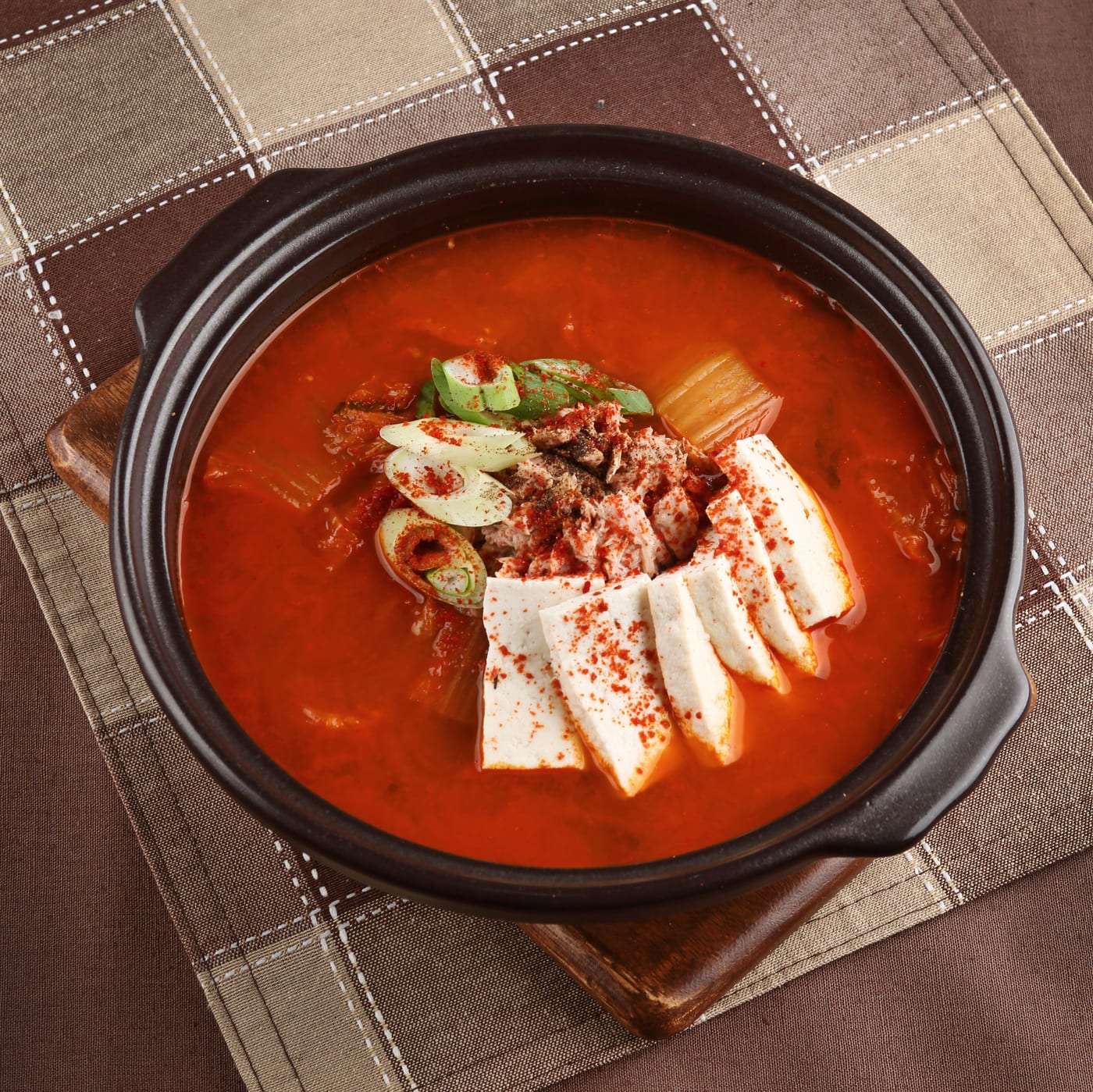
Korean kimchi stew with tofu 2-pack — compare on AmazonAffiliate link. As an Amazon Associate, EpicKor earns from qualifying purchases at no extra cost to you.
What to Buy, and What It Costs in Korea
Korean prices checked August 2026. Grocery pricing moves with promotions, so read the discount column as the shape of the market.
| Item | Korean | Korea price | Why |
|---|---|---|---|
| Aged kimchi, 1.6kg | 종가집 묵은지 | ₩16,900 list, around ₩11,900 on offer | The load-bearing purchase. Everything else is support. |
| Instant pork kimchi stew pouch | 오뚜기 옛날 돼지고기 김치찌개 | 480g, 235 kcal, roughly ₩3,000 | Shelf-stable, one serving, no cooking. The low-risk first taste. |
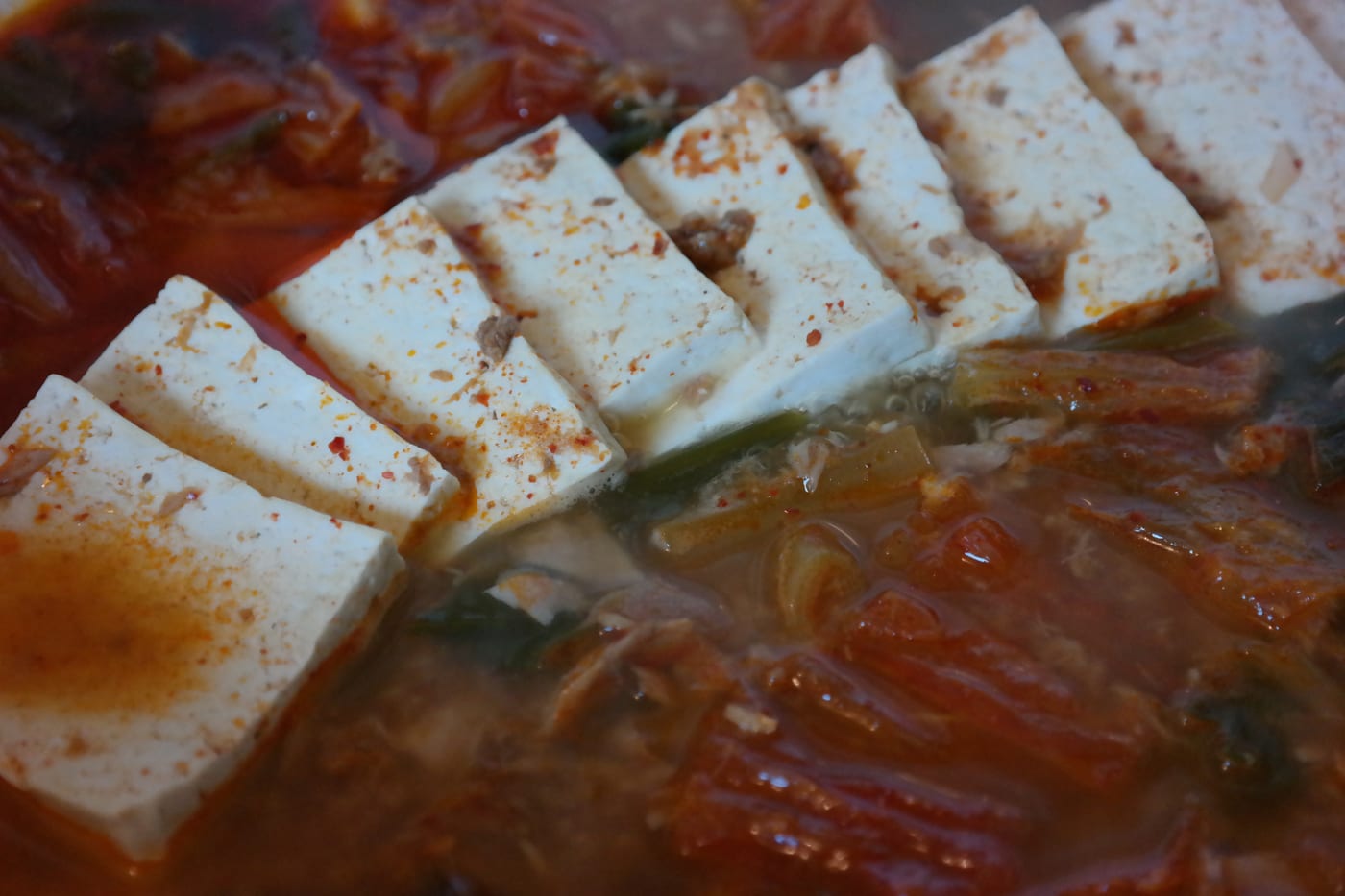
| Firm tofu | 두부 (찌개용) | Around ₩2,000–3,000 a block | Buy the block marked 찌개용, not 부침용 — it holds shape. |
| Canned tuna | 동원 참치 | Around ₩2,000–3,000 | The classic no-fresh-meat version. Drain most of the oil. |
| Pork belly or shoulder | 삼겹살 / 목살 | Varies | Fat is what carries the sourness. Lean pork makes a flat stew. |
Two labels are worth learning before you shop. Korean tofu is sold by intended use: 찌개용 (for stew, firm) versus 부침용 (for pan-frying) and 순두부 (silken). Grabbing the wrong block is the most common first mistake and it dissolves in the pot.
And if a kimchi package says 김치찌개용 on the front, that is the shop telling you it is sour enough. Buy that rather than guessing.
The Instant Pouch Is a Real Answer
There is a slight snobbery in English-language Korean cooking content about instant stew. Korean households do not share it — retort pouches are ordinary, and for one person they are often the sensible choice.
오뚜기 옛날 돼지고기 김치찌개 is 480g for one serving at 235 kcal, shelf-stable, and needs a pot of hot water or a microwave. That calorie number is the useful tell: 235 kcal for 480g means it is mostly liquid. It is a stew, not a meal. It becomes a meal with rice, and it becomes a good meal with a block of tofu dropped in and two minutes of simmering.
The honest limit is depth. A pouch tastes like a competent restaurant's weekday lunch. It does not taste like a pot that started with 묵은지 and pork fat, and no amount of adding things will get it there. Use it for a first taste, a small kitchen, or a Tuesday.
The Four Ways to Make It
| Path | Best for | Buy | What goes wrong |
|---|---|---|---|
| Instant pouch | First taste, one person, no kitchen | Pouch, rice, tofu | Expecting restaurant depth |
| Kimchi + tuna | Pantry meal, no fresh meat | 묵은지, canned tuna, tofu, rice | Leaving all the tuna oil in |
| Kimchi + pork | The standard home version | 묵은지, pork belly or shoulder, tofu, rice | Using lean pork — no fat, no body |
| Kimchi + anchovy broth | Best depth, most steps | 묵은지, 멸치 dried anchovy, 다시마 kelp, tofu | Boiling the kelp too long, which turns it bitter |
The pork version is the default in Korean homes, and the reason is mechanical rather than traditional: fat carries the sourness. Kimchi jjigae made with lean meat tastes sharp and one-dimensional. Pork belly or shoulder renders enough fat to round the acid off, which is also why the tuna version works — canned tuna is packed in oil.
If you go the tuna route, drain most of the oil but not all of it. Emptying the can straight in is the standard beginner error and it makes the broth greasy rather than rich.
Why the Sour Kimchi Problem Exists at All
This dish exists to solve a household problem, and understanding it makes the shopping obvious.
Kimchi keeps fermenting. A Korean household buying kimchi in quantity will always have some that has gone past the crisp, bright stage into sharply sour. That kimchi is unpleasant as a side dish and excellent as a base for a stew, because heat and fat convert the acid into depth.
So kimchi jjigae is not a recipe someone designed. It is what Korean kitchens do with kimchi that is no longer good for eating plain — which is why the Korean word for the ideal ingredient describes an age, not a flavour.
The practical consequence for a home cook outside Korea: if you buy fresh supermarket kimchi and cook it immediately, you are making the dish with the wrong ingredient. Either buy 묵은지 deliberately, or open a jar of ordinary kimchi and leave it in the fridge for a few weeks first.
The Pot Matters More Than You Expect
A 뚝배기 (ttukbaegi) — the earthenware pot Korean stews arrive in at restaurants — is not decoration.
It holds heat, so the stew keeps bubbling at the table for several minutes after it leaves the stove. That sustained heat is part of the experience and part of the flavour: the broth continues reducing while you eat, and the last spoonful is more concentrated than the first.
You do not need one. A small heavy saucepan makes the same stew. But if you find yourself cooking this often, a ttukbaegi is the single piece of equipment that changes the result rather than just the presentation. Treat it carefully — it is porous earthenware, so it goes on a cold hob and heats gradually, never onto a hot burner from cold water.
The Reason to Cook It Now: It Got Expensive
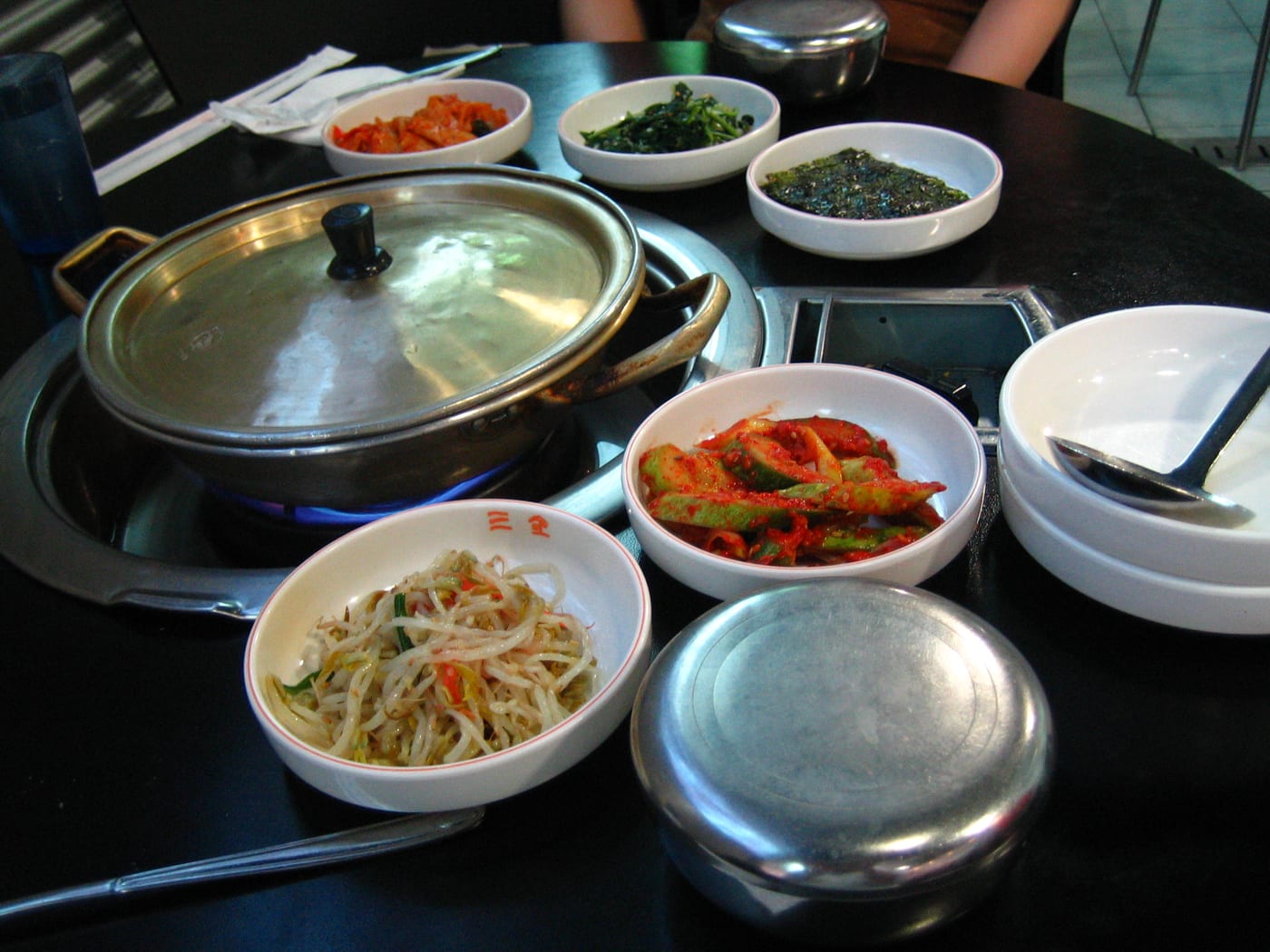
Kimchi jjigae has always been the cheap restaurant meal in Korea — the default lunch at a 백반집 or a 기사식당, the thing you eat when you are not making a decision.
That is changing, and the numbers are unusually clean. By the Korea Consumer Agency's dining-price tracking, the average kimchi jjigae set meal in Seoul went from ₩6,904 in 2021 to about ₩8,654, and one recent twelve-month reading had it up 4.7% from ₩8,192 to ₩8,577. In July 2026 the Korea Economic Daily framed it more sharply: while the minimum wage rose 18%, kimchi jjigae rose 25%.
The stated reason is structural rather than about kimchi. Restaurants selling cheap menus carry a higher labour-cost share relative to the ticket price, so wage increases hit them hardest — which is why the cheapest menu items have been rising fastest.
For a visitor that is context. For anyone living in Korea, it is the argument for the shelf above:
- Restaurant set meal: around ₩8,600
- Instant pouch: around ₩3,000
- From scratch: a ₩11,900 bag of 묵은지 makes several pots, and the tofu and pork are the cheap part
The gap is why kimchi jjigae is having a moment as a home dish rather than a restaurant one.
Building the Shelf, in Order
Do not buy ten Korean sauces before your first bowl. Kimchi jjigae needs remarkably little, and the additions people reach for first are usually the wrong ones.
You need: aged kimchi, a protein, tofu, rice, and a pot.
You probably need: garlic, spring onion, onion.
You might need, depending on the kimchi: a spoon of 고춧가루 (gochugaru) for colour and heat if the kimchi is mild, or 국간장 (guk-ganjang, soup soy sauce) for salt without darkening the broth.
You almost certainly do not need: 고추장 (gochujang). This is the most common addition in English recipes and the most questionable. Gochujang is sweet and thick; kimchi jjigae is sour and thin. Adding it makes the stew heavier and muddies the sourness that the whole dish is built on. Some households add a little; many add none.
For the broader shelf, use the Korean pantry starter kit. For rice, the Korean rice cooker guide. For the same rice-and-side logic in a lunchbox, the Korean dosirak guide. For the drink beside the bowl, the Korean tea and grain drinks guide. And for why the garlic quantity looks alarming, why Koreans eat so much garlic.
Mistakes That Actually Ruin It
- Cooking with fresh kimchi. The single biggest one. Fresh kimchi has no sourness to convert; the stew comes out bland and vegetal.
- Buying 부침용 or 순두부 tofu. It disintegrates. Look for 찌개용.
- Using lean pork. No fat means no body. Belly or shoulder.
- Adding gochujang by default. Sweetens and thickens a dish that should be sour and thin.
- Emptying the whole tuna can including oil. Greasy, not rich.
- Too much water. This is a stew, not a soup. The liquid should come partway up the ingredients, not cover them.
- Boiling kelp for a long time. If you are making anchovy-kelp broth, the kelp comes out early or the broth turns bitter.
Sources Checked
- Korean reference material on 묵은지 and a Korean chef's explanation of 신김치 versus 묵은지 for the distinction: six months to three years of deliberate low-temperature ageing versus kimchi that simply turned sour, and the convention that 묵은지 is the stew-and-braise ingredient.
- E-mart Mall listing for 종가집 묵은지김치 1.6kg for the August 2026 list and promotional prices.
- Korea Economic Daily, 2026-07-13, on dining-out inflation and YTN on Seoul set-meal averages for the ₩6,904 to ₩8,654 move, the 4.7% twelve-month rise, the minimum-wage comparison, and the labour-cost-share explanation. Underlying data is the Korea Consumer Agency 참가격 dining price service.
- Danawa product record for 오뚜기 옛날 돼지고기 김치찌개 for the 480g single-serving format and 235 kcal figure.
Korean grocery sites block automated price checks, so the prices above are as listed at the retailers named on the date given rather than measured in store. Verify before relying on any of them.
FAQ
Q: What kind of kimchi do I need for kimchi jjigae?
A: 묵은지 (mukeunji) — kimchi aged deliberately at low temperature for six months to three years. It is not the same as 신김치, which is simply kimchi that turned sour early. If a package says 김치찌개용, that is the shop confirming it is sour enough.
Q: Can I use fresh kimchi?
A: You can, but it will not taste like the dish you are expecting. Fresh kimchi has no sourness to convert into depth. Either buy 묵은지, or leave an open jar of ordinary kimchi in the fridge for a few weeks first.
Q: What does aged kimchi cost in Korea?
A: As of August 2026, 종가집 묵은지 in a 1.6kg pack listed at ₩16,900 with promotional pricing around ₩11,900. Kimchi is the expensive part of this dish; everything else is cheap.
Q: Is the instant kimchi jjigae pouch any good?
A: Yes, for what it is. 오뚜기 옛날 돼지고기 김치찌개 is 480g and 235 kcal for around ₩3,000 — competent, shelf-stable, and mostly liquid, so serve it with rice and add tofu. It will not match a pot made with 묵은지 and pork belly.
Q: Should I add gochujang?
A: Usually no. Gochujang is sweet and thick; kimchi jjigae should be sour and thin. If the kimchi is mild, a spoon of 고춧가루 (chilli flakes) fixes colour and heat without the sweetness.
Q: Which tofu do I buy?
A: The block marked 찌개용 (for stew). 부침용 is for pan-frying and 순두부 is silken; both break apart in a simmering pot.
Q: Pork or tuna?
A: Pork belly or shoulder is the home standard because the fat rounds off the sourness. Canned tuna works for the same reason — the oil does the same job — which is why 참치김치찌개 is a genuine version rather than a substitute.
Q: Do I need a ttukbaegi?
A: No, a small heavy saucepan makes the same stew. A 뚝배기 holds heat so the stew keeps bubbling at the table and reduces while you eat, which is a real difference if you cook this often.
The Short Version
Buy 묵은지, not whatever kimchi is nearest. Buy 찌개용 tofu. Use fatty pork or leave some oil in the tuna. Skip the gochujang. Use less water than feels right.
And if you are not sure you like it yet, spend ₩3,000 on the pouch before you spend ₩12,000 on a bag of aged kimchi.
You Might Also Like
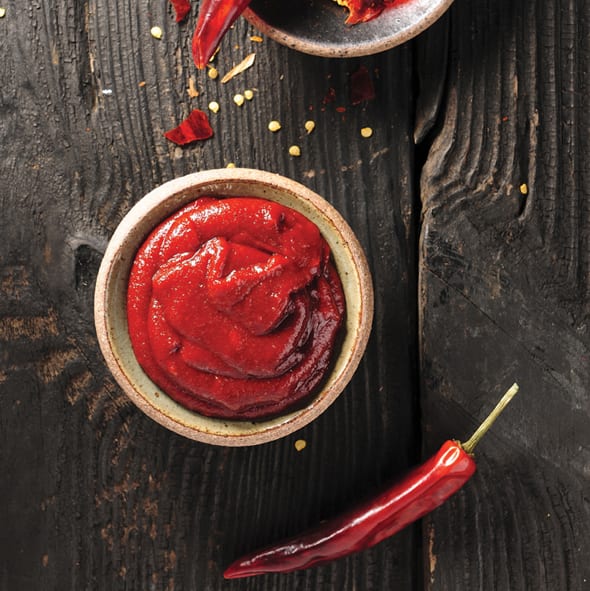
Korean Pantry Starter Kit: Gochujang Has a Printed Heat Number, and Nobody Tells You
Korea standardised gochujang spiciness in 2010 and prints the grade on the tub, so you can buy heat by number. Plus which of Korea's three soy sauces you actually need, and why jang prices jumped 16.8% this year.
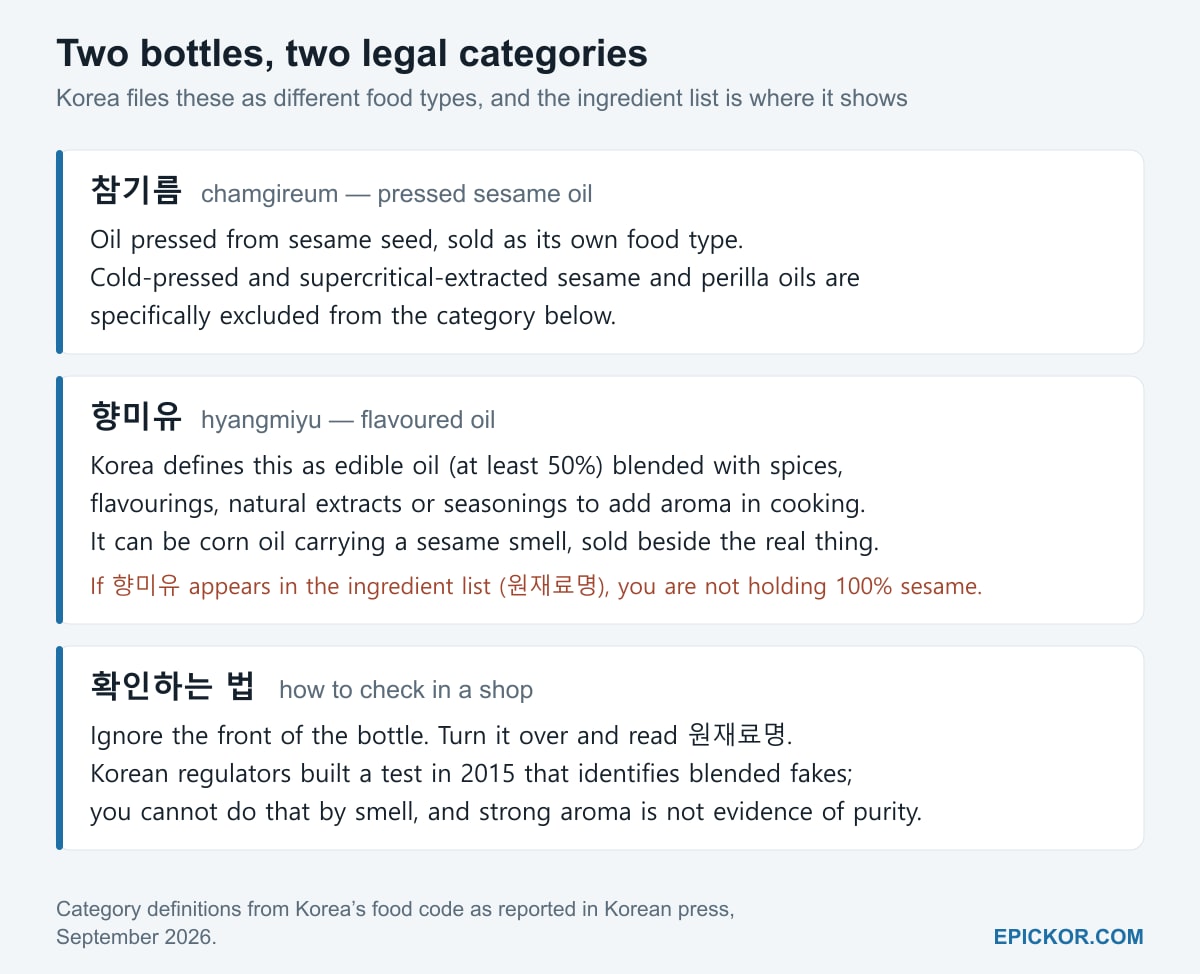
Korean Sesame Oil: The Label Word That Means It Isn't Sesame Oil
A bottle can look like Korean sesame oil and legally be corn oil carrying a sesame smell — Korea files that as 향미유, a separate food type. Imported oil runs ₩700–1,100 per 100ml; Korean-grown runs ₩5,500–6,700, because Korea grows 8–12% of its own sesame.
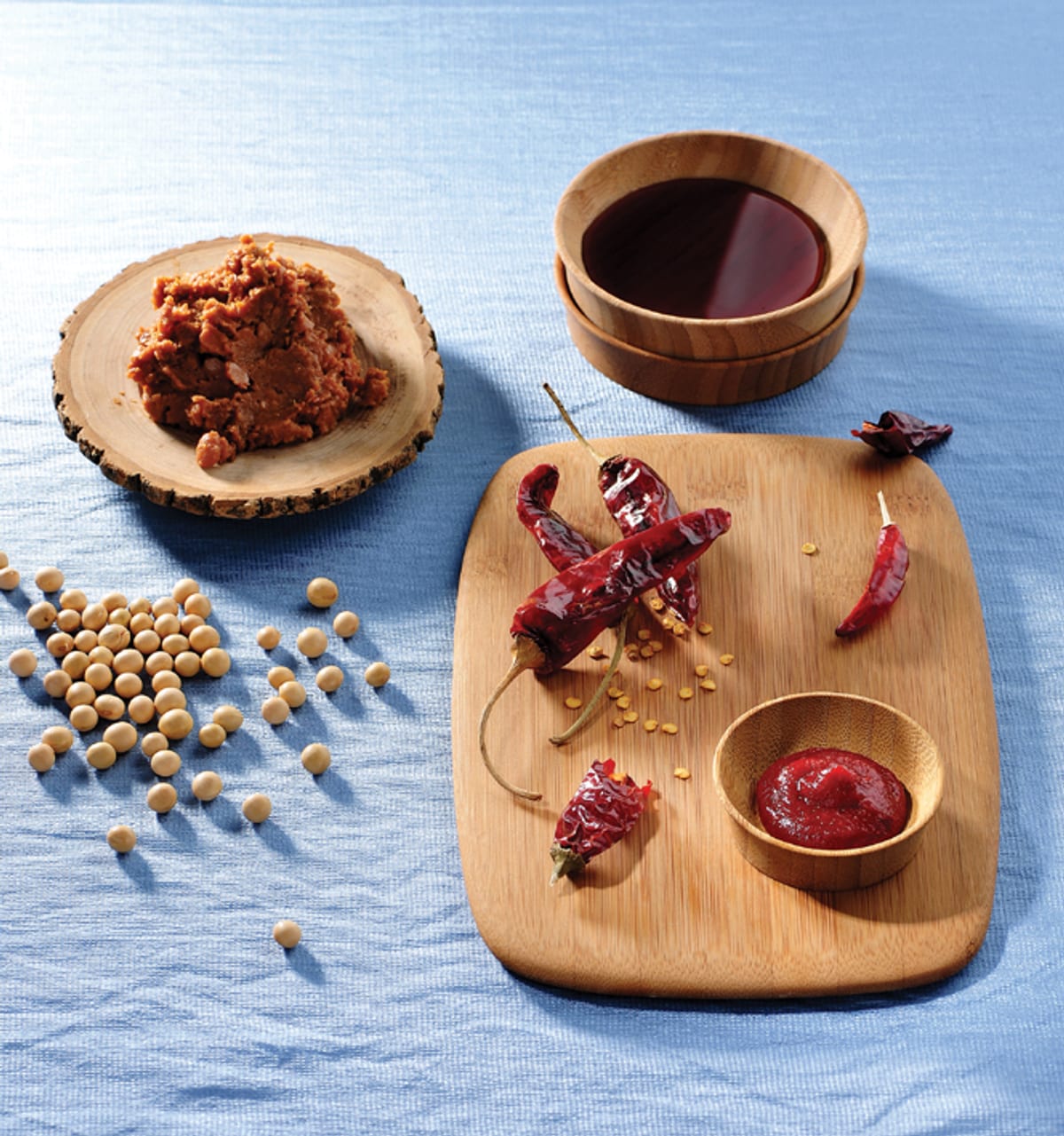
Doenjang vs Gochujang: Which Korean Paste Does Your Dish Need?
Doenjang and gochujang sit side by side on the same shelf, but one is roughly two thousand years old and the other could not exist before the 1600s. What each paste actually is, which dish needs which, and what a tub costs in 2026.